Fender Design Challenge
Fender:
A fender is the part of a car, truck, motorcycle, or other vehicles that frames or covers a wheel well. Its main purpose is to prevent debris, rocks, mud, liquids, sand, and other road debris from getting thrown in the air while the tires rotates.
The fender typically refers to the front panel that covers the front wheels, and the quarter panel typically refers to the rear panel that covers the wheel that also includes the roof pillar. The bumper is the front and rear ends of a motor vehicle to absorb impact in a minor collision.
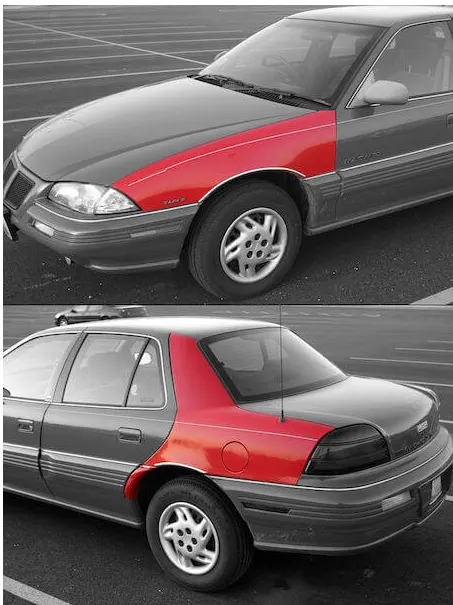
Fig. Front and Rear Fender
Types of Fender:
- Full Bumper
- Half bumper
Mounting:
- Bumper
- Drip
- A piller
- Sill
- Baffle
Drip Area:
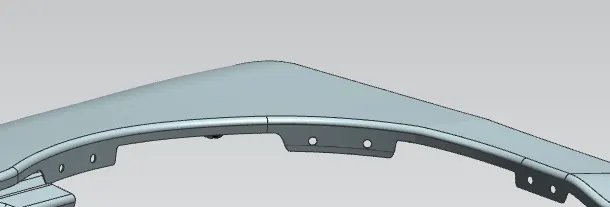
- The area at which the fender gets attached to the engine housing through fasteners. It is the major mounting for the fender. Mountings at the drip area are designed leaving a clearance of 200mm from the back of the fender for the cowl setup. And clearance of 150mm from the front of the fender for a headlamp housing unit.
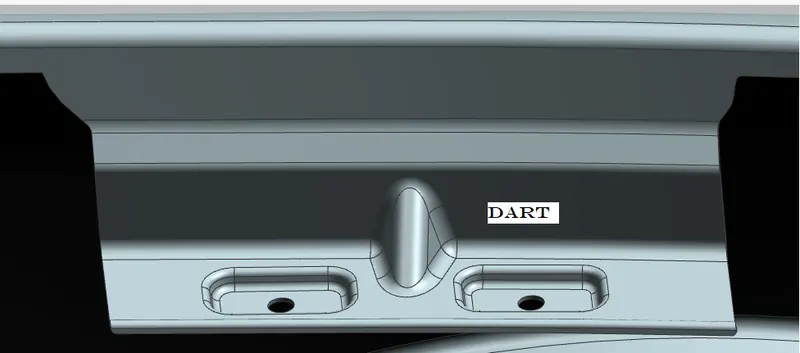
- Darts are provided at the bends to stiffen the sheet metal at that region.
A-Pillar Mounting Area:
This Mounting region is located near the cowl of the vehicle where the fender is fastened with the bottom edge of the windshield. This mounting is covered with the side rear-view mirror.
Sill Mounting Area:
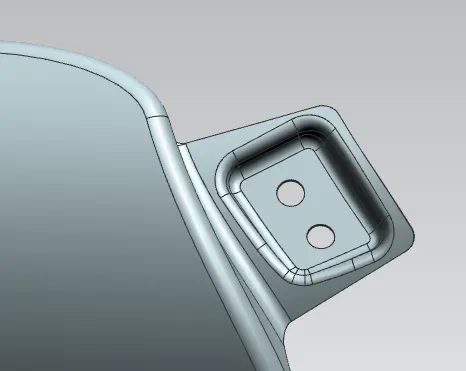
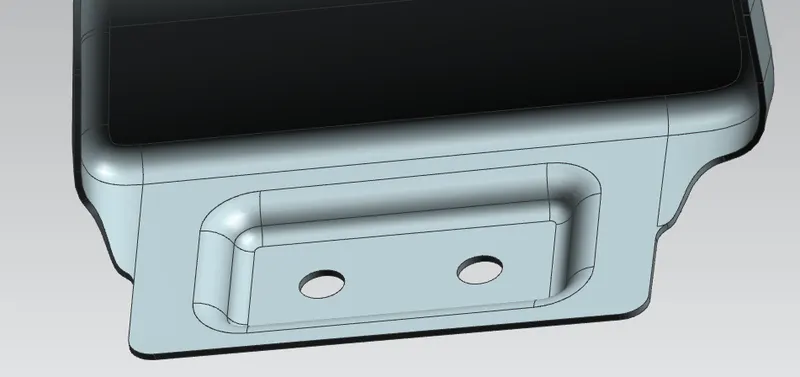
The area at which the bottom of the fender gets connected to the floor near the bottom edge of the door. The Embossed sill mounting of the fender is attached with the fasteners.
Bumper Mounting Area:
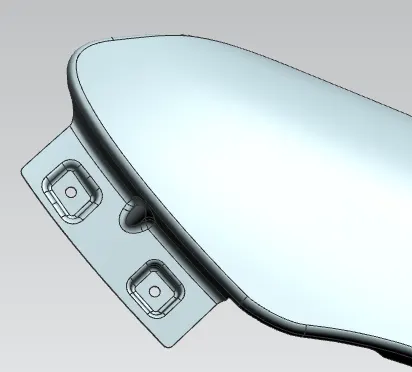
The bumper mounting region is located beneath the bumper. The fender gets attached before the installation of the bumper. After fixing the fender with fasteners the bumper will cover the bumper mounting.
Baffle Mounting Area:
In this region, the baffle gets installed to the fender with the help of clips which holds the baffle with the fender along the wheel arch.