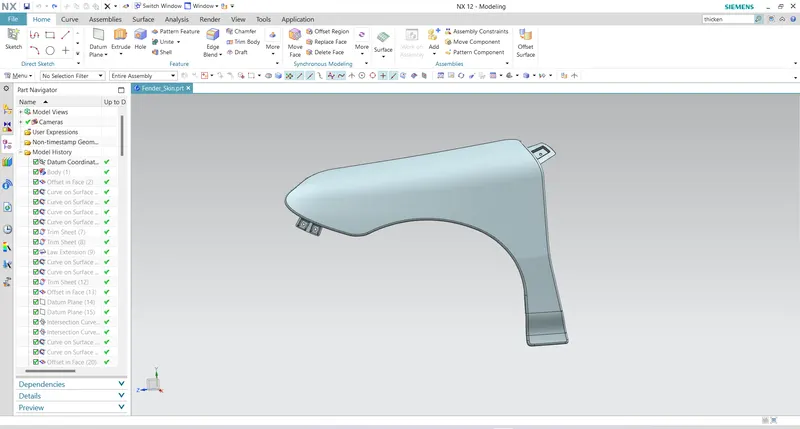
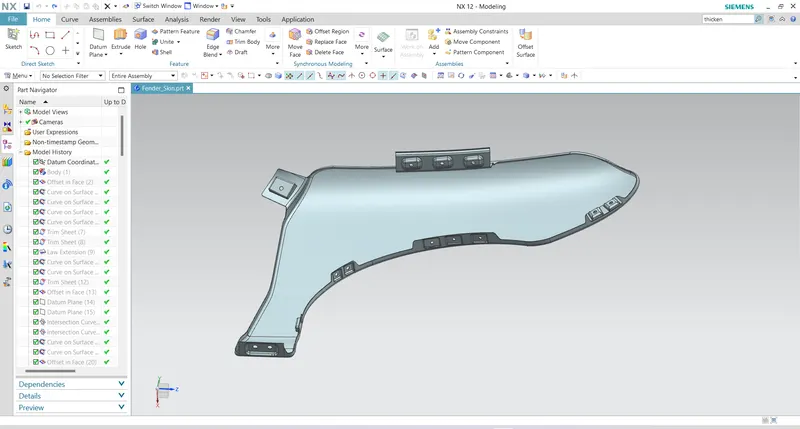
Fender Design Challenge
FENDER:
The fender is the car body part that frames the wheel. Its purpose is to prevent sand, dirt, rocks, and other roads spray from being thrown into the air by the rotating tire and close the engine component. When a vehicle is moving, tires pick up stones and others and hurl them in all directions. Fenders are basically present to prevent any injuries to pedestrians and contain the motion of these particles. A pair of front and rear fenders can be found on each side of a vehicle.
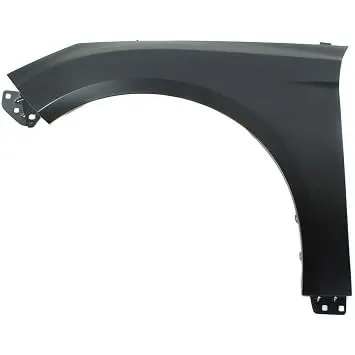
Types of Fenders :
There are two types of fenders.
- Full Bumper Type
- Half Bumper Type
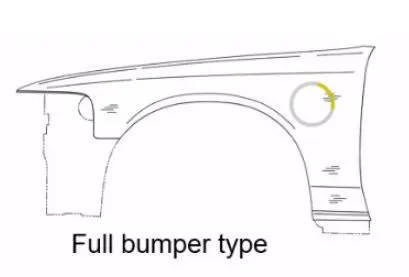
Full Bumper Type :
This type of bumper is not commonly used because this design is more scrap producing one during manufacturing. The blank of steel or aluminum usedto produce this type has more wastages. This type is not economically good to manufacture.
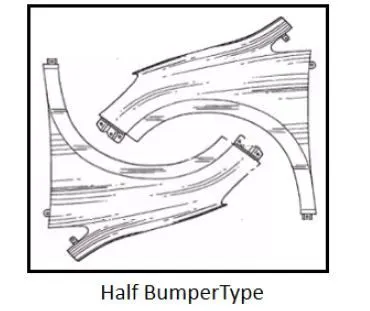
Half Bumper Type :
This types of fenders most commonly used. The con's of full bumper type is satisfied in this design, and the blank area of wastage while producing the part is drastically reduced by scrap management.
Purouse OF Fender :
- Get other vehicles or pedestrians on the road side dirty
- Hurt pedestrians
- Scratch the bodies of other vehicles
- Cause minor, and even major damage to other vehicles
Design Criteria :
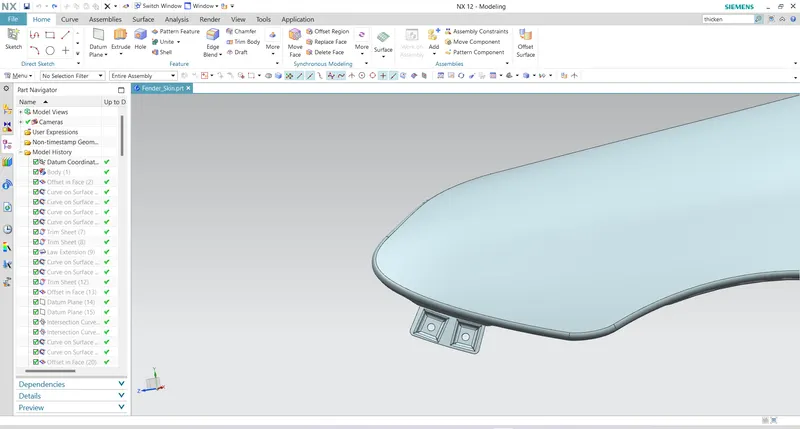
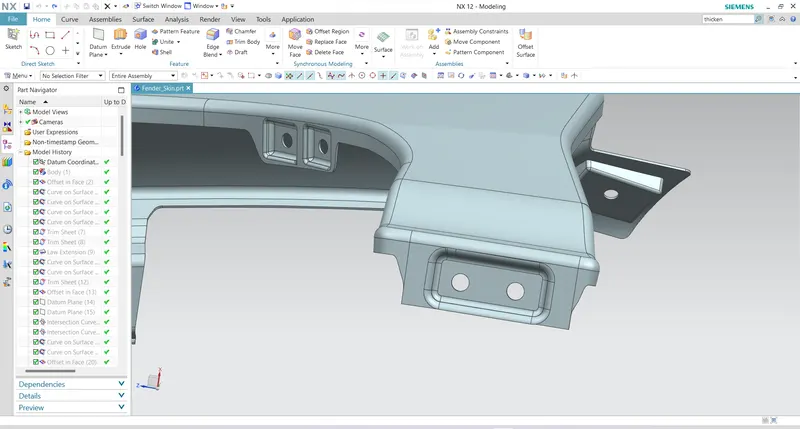
- Embosses are provided to increase the strength.
- Smooth curves are designed for easy manufacturing of panel.
- Ribs are provided to drip area mount to give structual support and extra strengh.
- Maintain extra 10mm from the flat surface for the fastner holes.
- All fillets should maintain 2 or 3mm radius in most regions.
- Thickness of fender is 0.75mm.
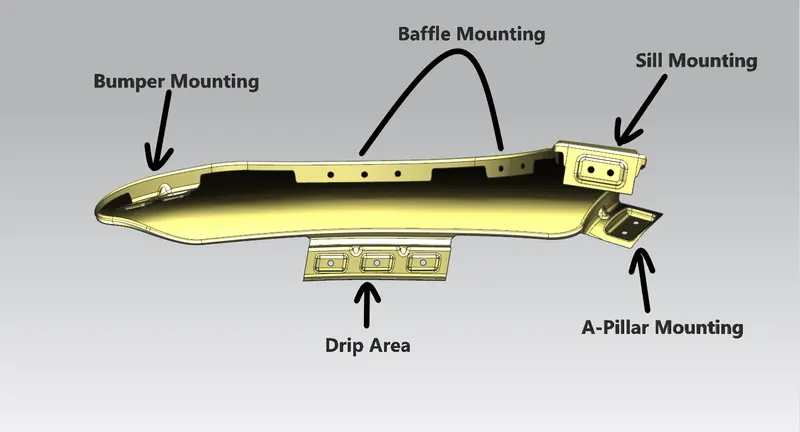
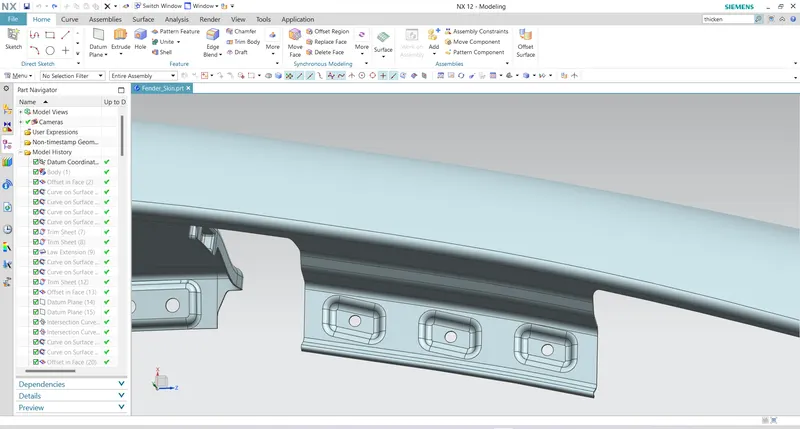
It is most important mounting unit of a fender. Its connected with the engine compartment and therefore a lot of design constraints are to be followed while designing the drip area
While designing the drip area, a 150mm clearance is maintained from the front-end for headlight fittings and 200mm clearance from the rear-end for the wiper motor assembly. It is to be observed that no sharp corners persist so that machining can be carried out easily.