Fender Design Challenge
FENDER DESIGN
Fender
A fender is the part of a car, truck, motorcycle, or other vehicle that frames or covers a wheel well. Its main purpose is to prevent debris, rocks, mud, liquids, sand, and other road debris from getting thrown in the air while the tires rotate.
The "fender” typically refers to the front panel that covers the front wheels, and the “quarter panel” typically refers to the rear panel that covers the wheel that also includes the roof pillar.
There are two types of fender:
- Full Bumper Type
- Half Bumper Type
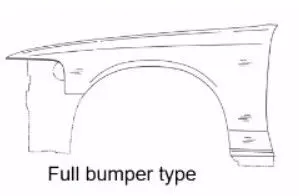
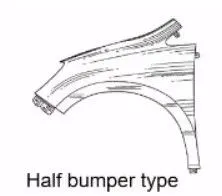
In the early days, we use full bumper types, but now mostly we use half bumper types because the blank used for creating is small compared to the full bumper type and helps to reduce scrap which is called scrap management. In half bumper type, we need less steel material and use lots of plastics in bumper to reduce the car weight and increase the performance.
Mounting Points
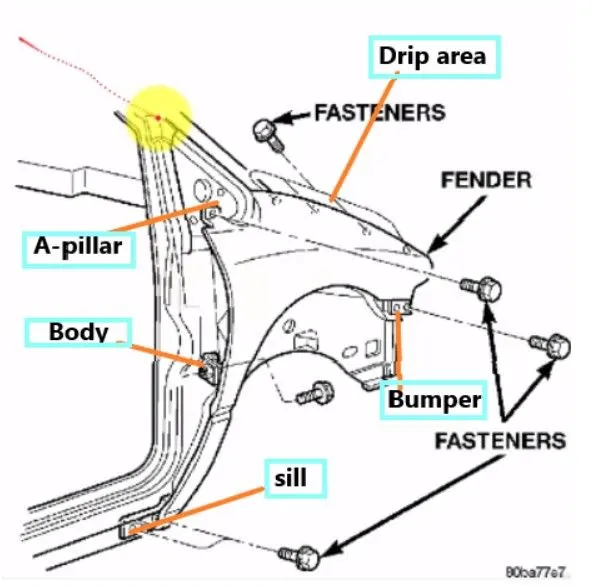
- Drip
- Bumper
- Sill
- Body
- A-Pillar
Manufacturing Processes
The manufacturing process includes the following steps firstly, unfolding and shearing are carried out on a plate, wherein a proper cold roll specification is selected at first, a cold roll is unfolded, and then the unfolded cold roll is sheared to a plate of the corresponding size according to production material specifications; secondly, oil pressing and punching are carried out, wherein the plate is extended at first, then side shearing and punching are conducted on the plate, folding and shaping are carried out on the plate, and finally reshaping is carried out on the plate; thirdly, small first parts of the fender are machined, wherein first of all, the plate is punched to a needed outer contour blank, then the plate completing the outer contour blank is further shaped, and the plate is punched at last; fourthly, installation and welding of a metal plate are conducted. The manufacturing process for the car fender is simple and high in production efficiency; the body of the fender and the small parts can be separately machined, so waiting time is shortened; the working efficiency of production is improved.
Master section to create the Drip Area
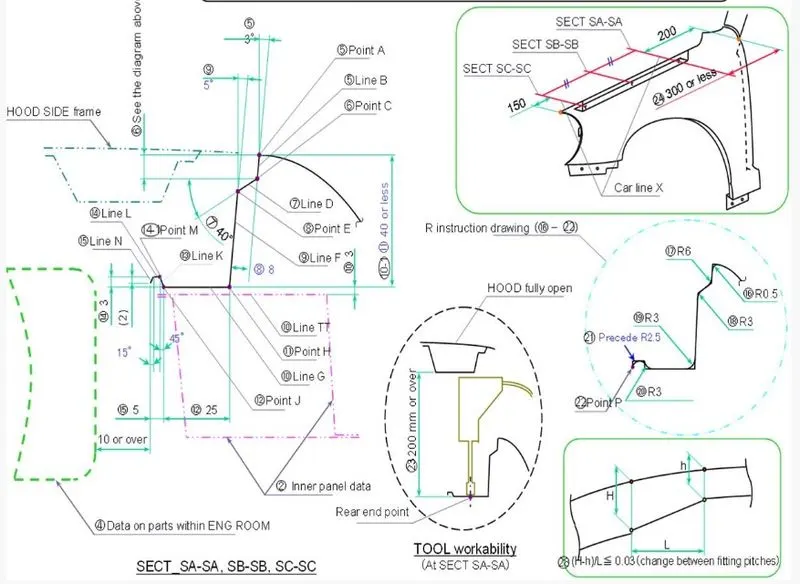
Design of Drip Area Mounting:
- Drip area mounting is an important unit in fender design that connects the fender with the engine compartment, we need to follow some design constraints while designing the fender.
- While designing drip area mounting it should be 200 to 300 mm away from the cowl top and 150 mm away from the front for placing the headlamp.
- The cowl is an area where the viper is attached.
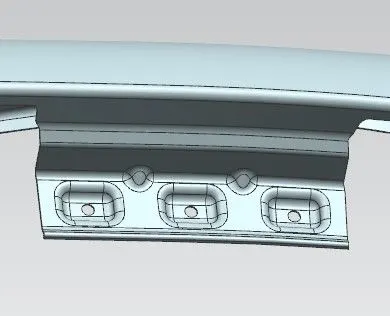
- Two darts are provided on the drip area to give extra strength and stiffness. It helps to avoid vibration and the impact of force outside of the fender.
- Embosses are provided to give strength during fastening.
Design of Sill Area Mounting:
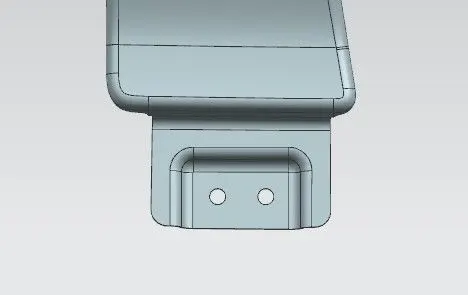
The sill area is the portion underneath the door side, the bottom portion in the fender is mounted on the sill body for the reinforcement of the fender panel.
Design of Bumper Mounting:
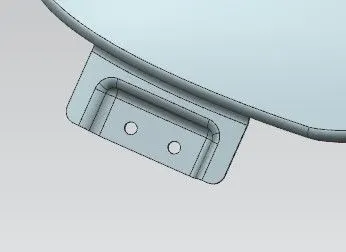
Bumper Mounting is used to fix the plastic bumper to the fender with help of fasteners.
Design of A-Pillar Mounting:
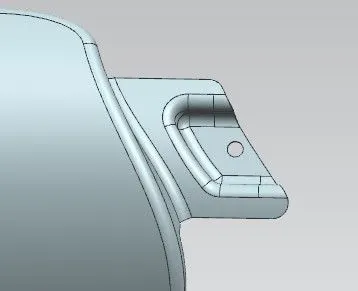
An A-pillar is the structural pillar that connects the roof and body. The A-pillar mounting helps connect the fender with the pillar.
Design of Baffle Mounting:
It is a clip-type mounting inside the fender, it lies on the arch portion. Mudguards are fixed on this portion to protect the car engine compartment and protect pedestrians from causing injuries. For mounting locking pins are used.
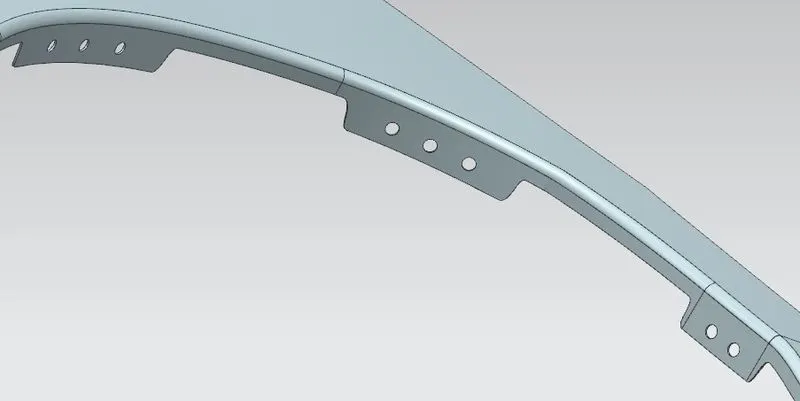
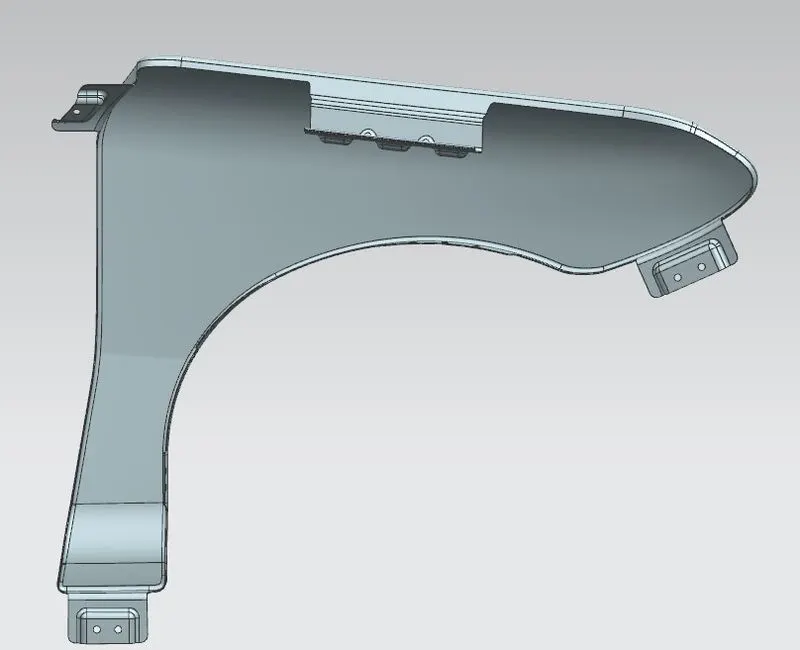
Different views of the fender:
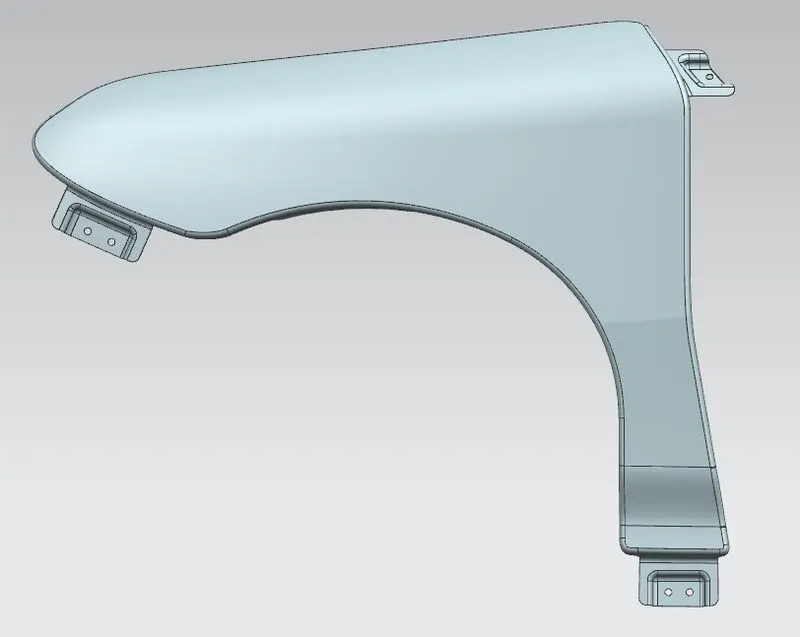
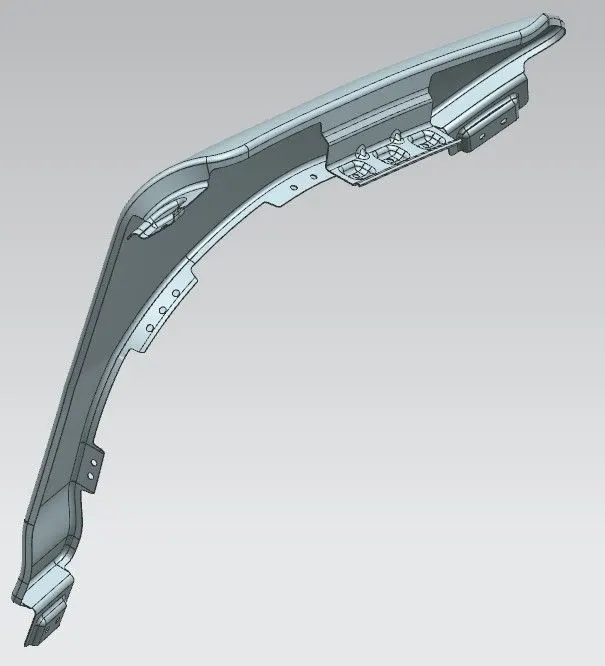
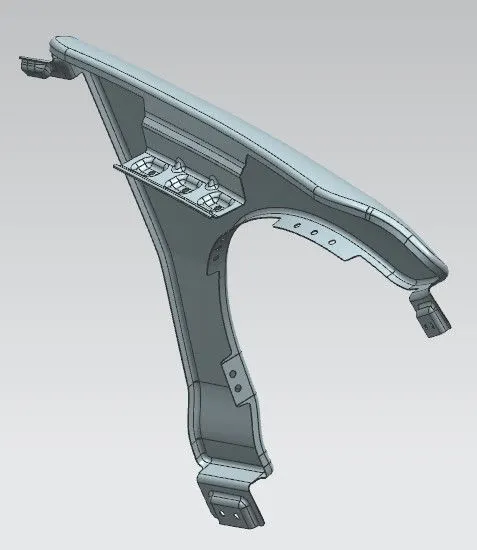
CONCLUSION:
Fender design is done using NX-CAD software using the master section.