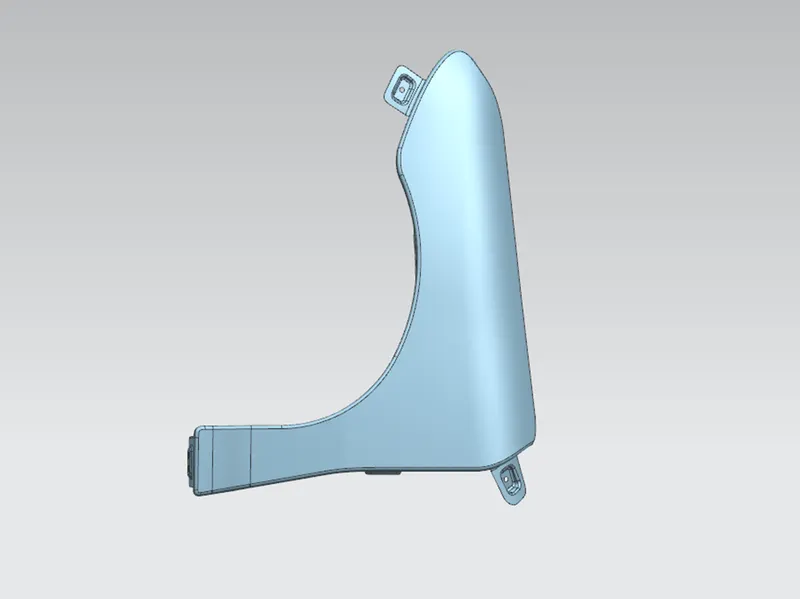
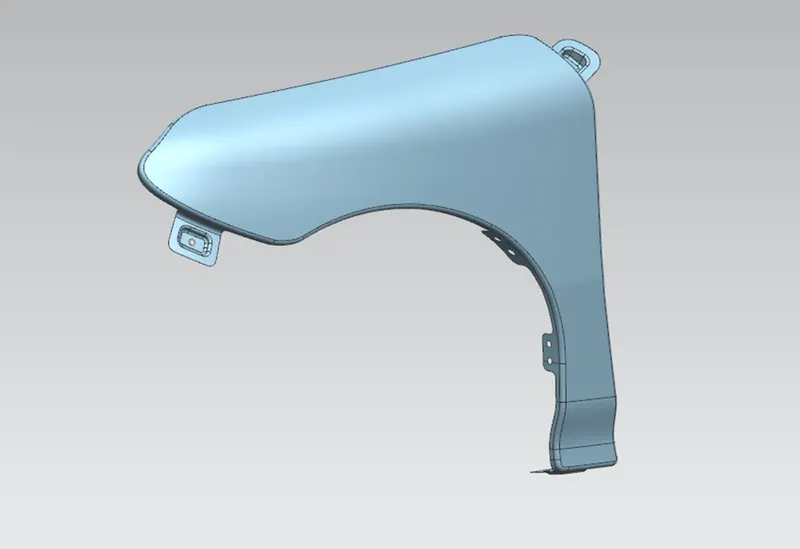
Fender Design
Objective:
- The main objective of this project to design the Fender mountings by using NX cad software.
- To design the mountings of given fender at sill area, body, bumper area, baffle area, and drip area.
Introduction:
Design of any component depends on the requirements of consumer. A design engineer sketches the components based on the consumers requirement. Then the 2D sketch is designed and the proper dimensions should be given to the sketch. Now the 2D sketch is converted into the 3D model with proper dimensions with the help of advanced Cad software.
The important thing in the design is that every component that is designed to be easily manufactured. So, the role of design engineer is to design the component that meets the customer requirements and to be easily manufactured with effective cost. This is the place where the Design for Manufacturing and Design for assembly takes a role while developing any product. In this project, the product that we are going to develop is a car fender and mountings for it.
Introduction of Fender:
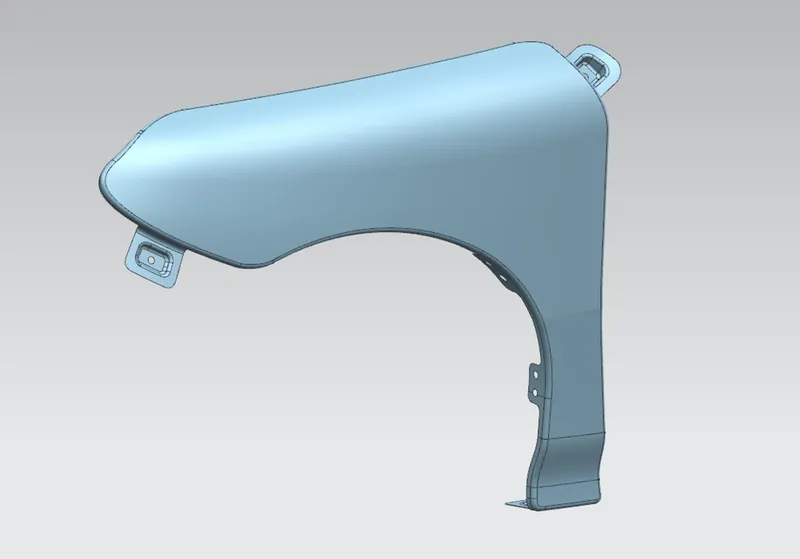
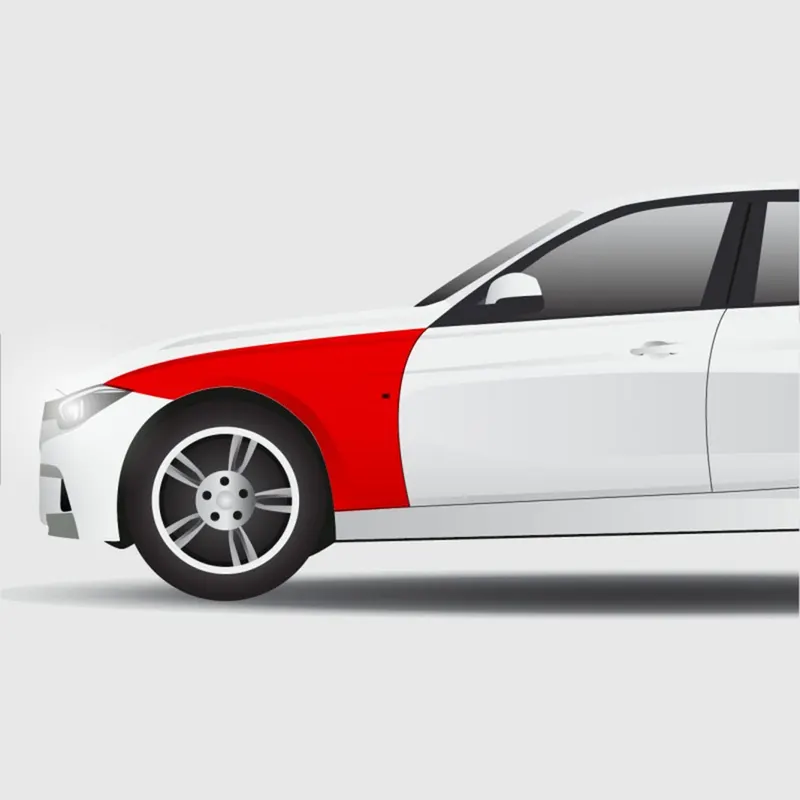
Fender is a BIW component used as a frame for the wheel. The main purpose of the fender is to prevent the sand, mud, rocks, liquids and any other road debris from being thrown around by the rotating tyres. In other words, the fender is a housing for the wheels that keeps road debris contained.
If there was nothing covering the wheels, all kinds of debris would be kicked up by the rotating tires. The fender not only protects your car from sustaining damage from road debris but it prevents this debris from being thrown up at other vehicles on the road.
Types of Fenders:
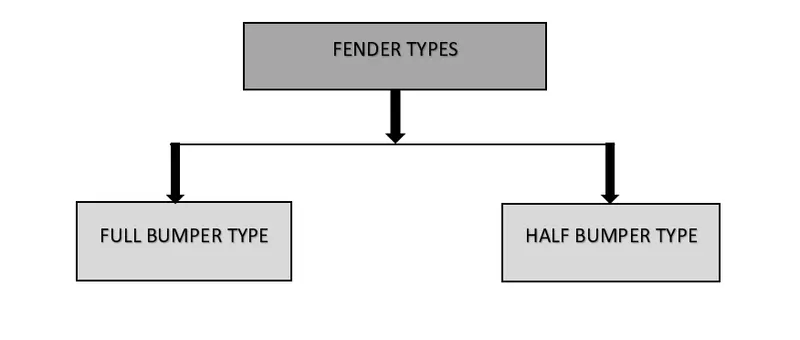
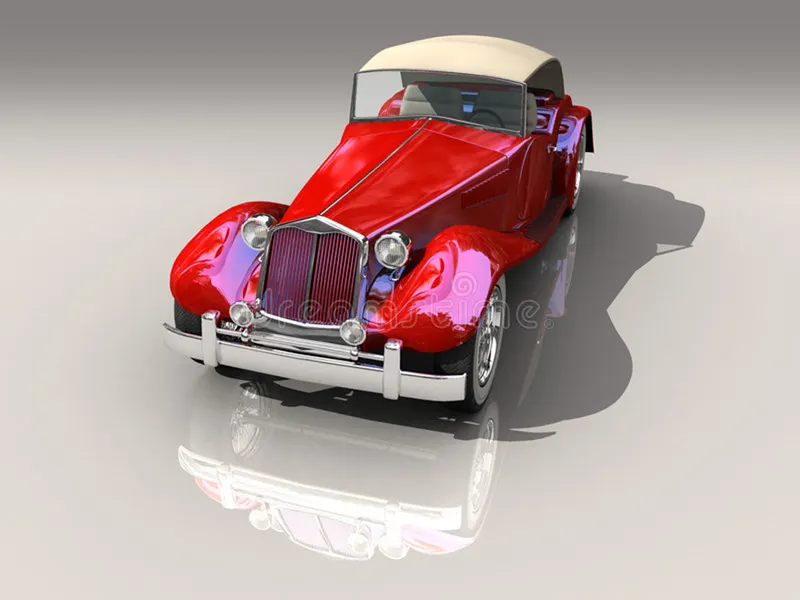
Full Bumper type fender:
- A full bumper type fender was used in old cars at the early stages. It covers the full area until the front headlamps. So, it has a lot of sheet metal material which is unnecessary and increases the over all weight of the car.
- Due to the excess sheet metal material required for the full bumper type fender, the overall cost of vehicle manufacturing also increases.
- These types of fenders are no longer used in the automobiles.
Half Bumper type fender:
- Presently we are using the half bumper type fender. The reason for choosing the half bumper type is that when we choose the full bumper type fender, the blank used for creating is very large and also has the lot of wastage. But in the case of half bumper type fender, we have a possibility to reduce the scrap. This is what we call as a scrap management.
- In half bumper type fender, we reduce the unwanted sheet metal material and will replace it by plastic material which reduces the metal scrap and also reduces the weight of the vehicle and also cost effective.
Mountings regions of Fender:
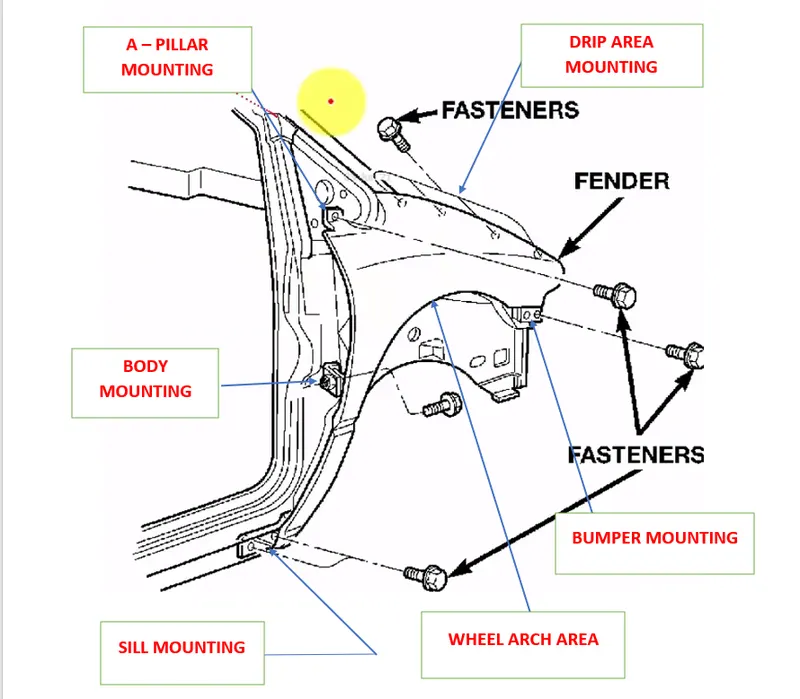
There are 5 mounting regions on the fender. They are mentioned below.
- A-pillar mounting.
- Sill mounting.
- Body mounting.
- Bumper mounting.
- Drip area mounting.
DESIGN METHODOLOGY:
Given components:
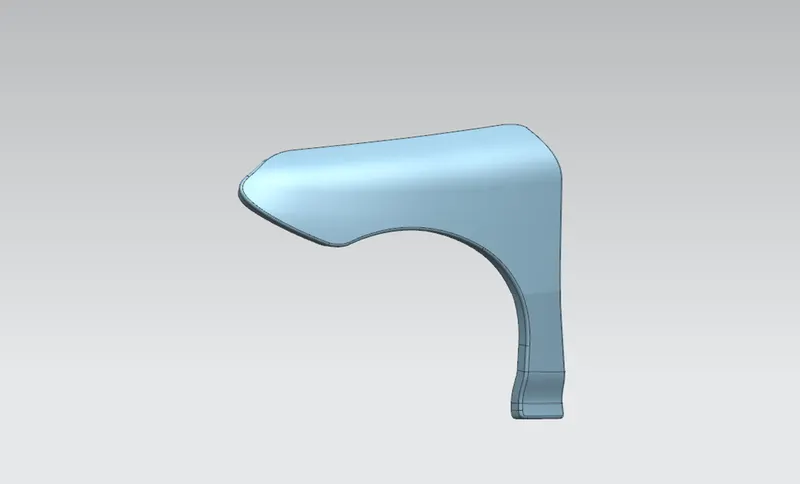
- Fender.
Given data:
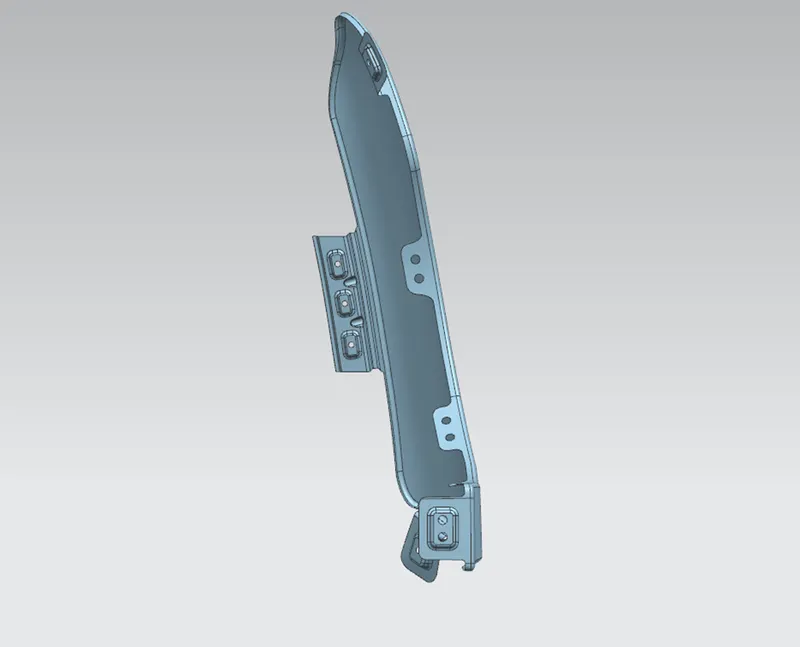
DRIP AREA MOUNTING DESIGN:
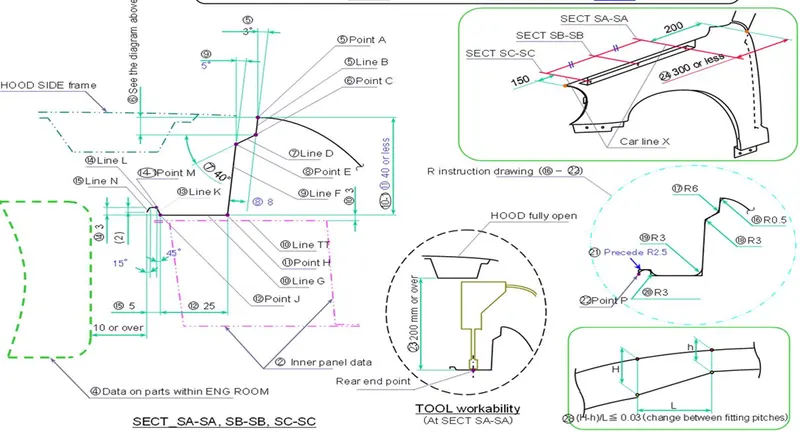
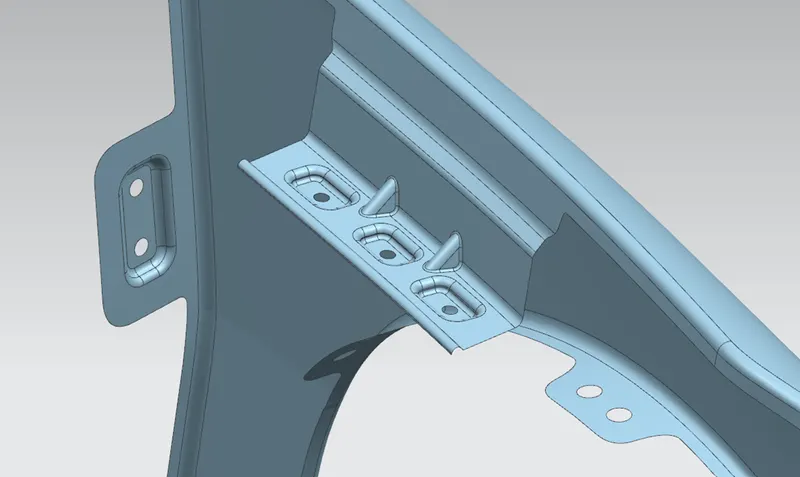
- It the important area of the fender which is connected with the engine housing through fasteners. Therefore, a lot of considerations should be followed while design the drip area mounting of the fender.
- From back side of the front fender, there should be 200mm clearance for the cowl top (for wiper motor mounting).
- From front side of front fender, there should be at least 150mm clearance for head lamp housing unit.
- In the remaining area, we need to design the drip area mounting of the fender.
- Drip area will not to reach the engine assembly, we need to maintain 10mm or more distance. So, there will be a L-shaped bracket to connect with it.
- Two darts are added to the drip area mounting to provide stiffness and strength to the part. This helps the fender to reduce the vibrations and impact of force to the fender during the motion of the vehicle.
- Embosses are provided on the mountings to strengthen the mounting part and to avoid any bending of part while fastening them.
DESIGN OF SILL MOUNTING:
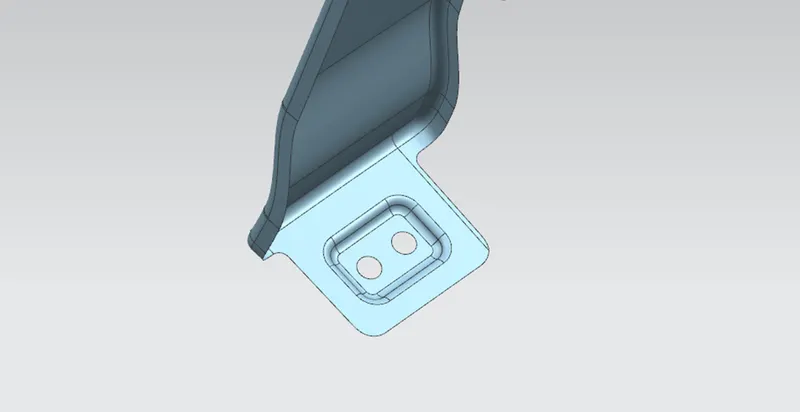
- Sill is the panel directly below the bottom of the door which supports the floor and used to combine the floor and the body.
- The bottom end of the fender is mounted on the sill body for reinforcement of the fender panel, thus the sill mounting position is designed with the holes and embosses.
- The sill mounting is fixing with the help of fasteners.
- The sharp edges of corners of sill mounting causes damage to other parts. So the edges are blended.
DESIGN OF BUMPER MOUNTING AREA:
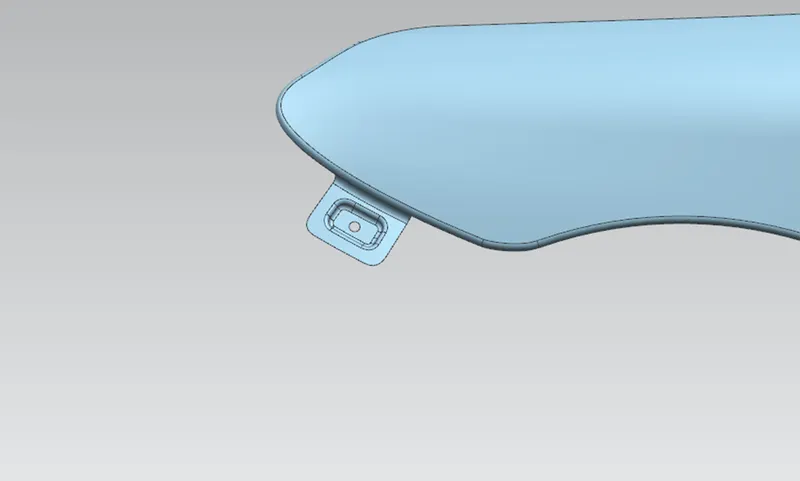
- Bumper mounting area is used to fix the plastic bumper to the fender with the help of fasteners.
DESIGN OF A-PILLAR MOUTING:
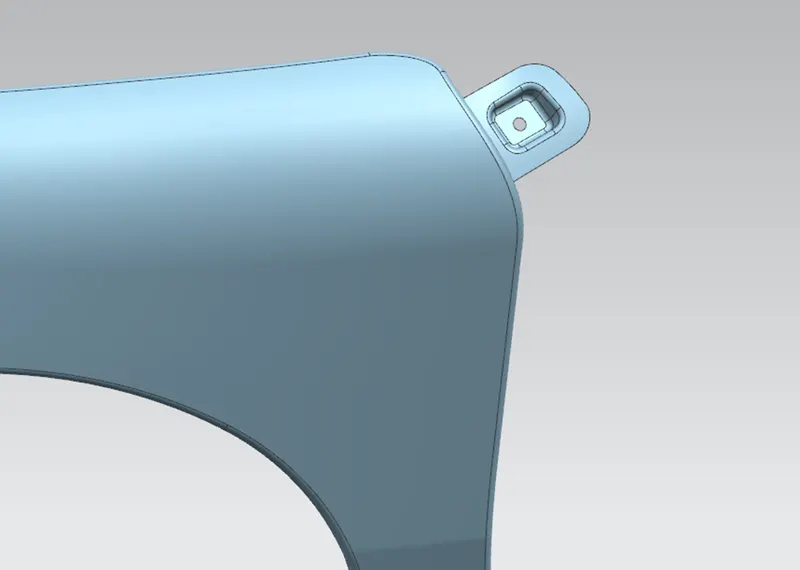
- The A-pillar is a structural pillar that combines body to the roof. This makes the sides of the windshield rest and front fenders are fastened to the A-pillar to form a robust structure.
DESIGN OF BAFFLE MOUNTING AREA:
- Baffle mounting or the mudguard are clip fit type of mounting on the inner side of the fender arch over the tyre.
- It protects the car engine compartment and pedestrians from causing injuries from chip out debris on the road when the vehicle is in motion.
- They are mounted on the fender using a special type of locking clips which are made up of plastics.
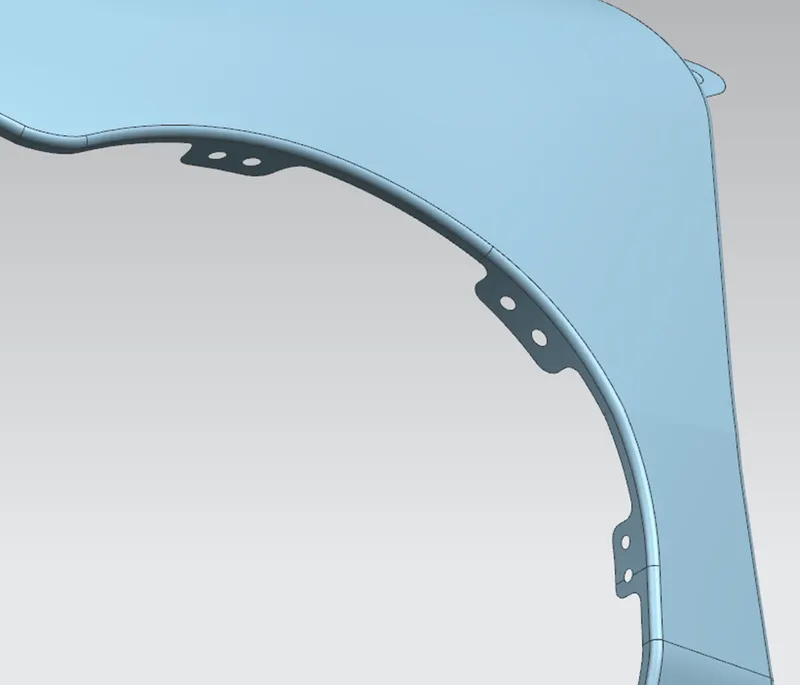
THICKENING OF SURFACE:
Finally, 0.75mm of thickness is applied to the fender towards inwards.
FENDER MANUFACTURING PROCESS:
- A car Fender bumper is made by a process called reaction injection molding (RIM), which basically consists of making a special polyurethane compound and introducing it into a large fender.
- RIM is a process that conserves raw materials and reduces costs. It is similar to injection molding except thermosetting polymers are used, which requires a curing reaction to occur within the mold. Common items made via RIM include automotive bumpers, air spoilers, and fenders
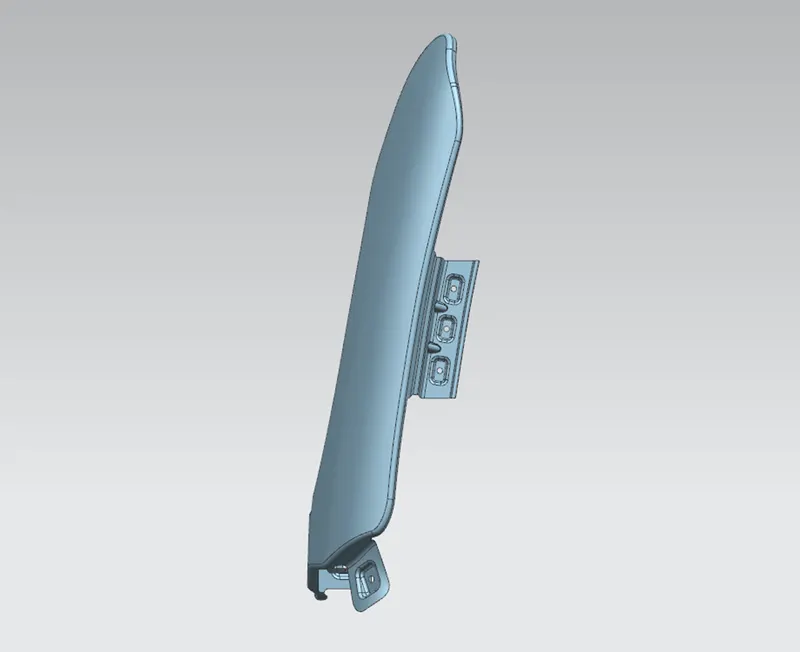
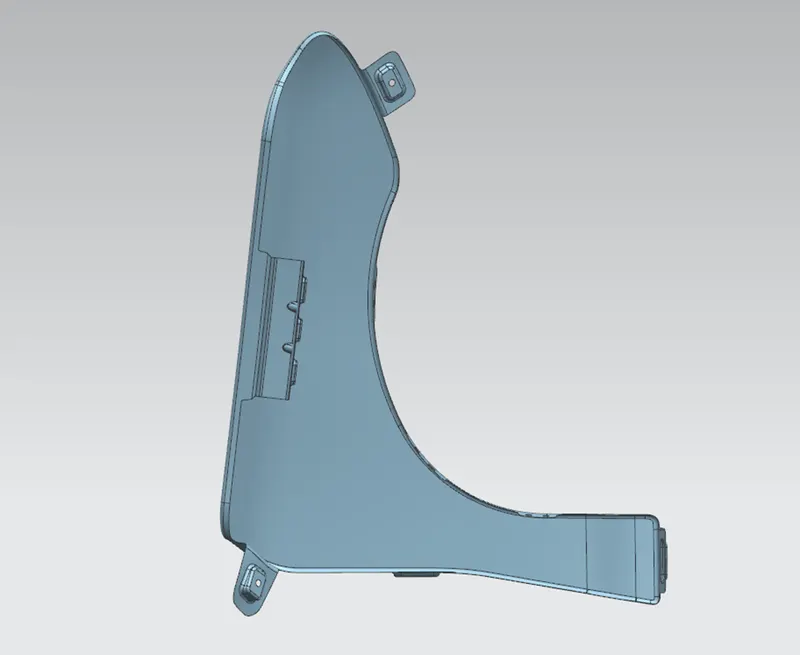
DIFFERENT VIEWS OF FENDER: