Fender Design Challenge
Aim :- To design the front fender of a car using fender skin data and given master section.
Objective :-
To design various mounting points on the fender according to the design parameters.
Introduction :-
Fender is the U.S english term for the part of an automobile that frames a wheel well. It is the curved portion of the vehicle body that sits over and houses the wheels.
The purpose of a fender is to is to keep mud, rocks, and other road debris from being thrown around by the tires. The fender is a housing for the wheels that keeps road debris contained. If there was nothing covering the wheels, all kinds of debris would be kicked up by the rotating tires.
One of the primary functions of a fender is to keep dirt, dust, and road debris away from the wheel, Engine compartment and front braking system.
The tire’s kinetic energy ejects these foreign matters into the air at high velocities. As this thing is happening, the moisture and debris that fly in the air can cause Hurt pedestrians, Scratch the bodies of other vehicles, Cause minor, and even major damage to other vehicles. Fender prevents this debris from being thrown up at other vehicles and pedestrians.
Depending on the design, fenders can also act to make a car more aerodynamic. Many sports cars have very sleek fenders for this reason.
Fender also improves the asthetic look of car. It covers the sides of the engine compartment and can also be used to add flair and style to a car.
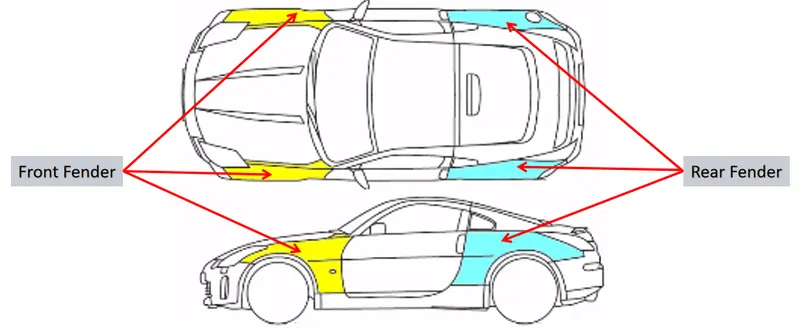
Types of Fenders :-
There are two types of fenders
- Full Bumper Type
- Half Bumper Type
1. Full Bumper Type:-
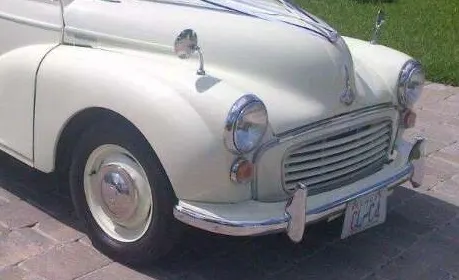
Full bumper type fender covers the full area until the front portion of a car. It was mostly used in old cars. Full bumper type fender also plays huge role in the frontal collision situations so it is also designed according to the frontal collision design considerations. this type of fender has more weight compared to the half bumper type fenders.
2. Half Bumper Type :-
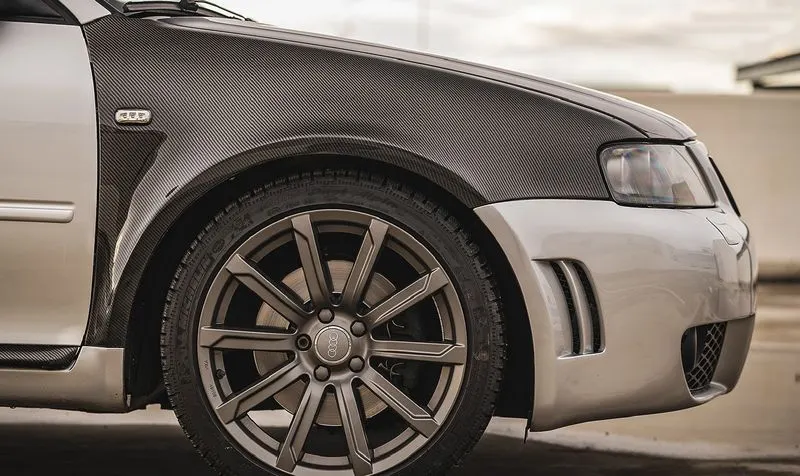
Half Bumper Type is mostly used in automobiles now a days. It occupies less space so there is opportunity to use plastic for bumper area. This type of fender requires less steel as the blank size of sheet metal is reduced. This type of fender has less weight as well as it is economical compared to the full bumper type fenders.
Front Fender Design :-
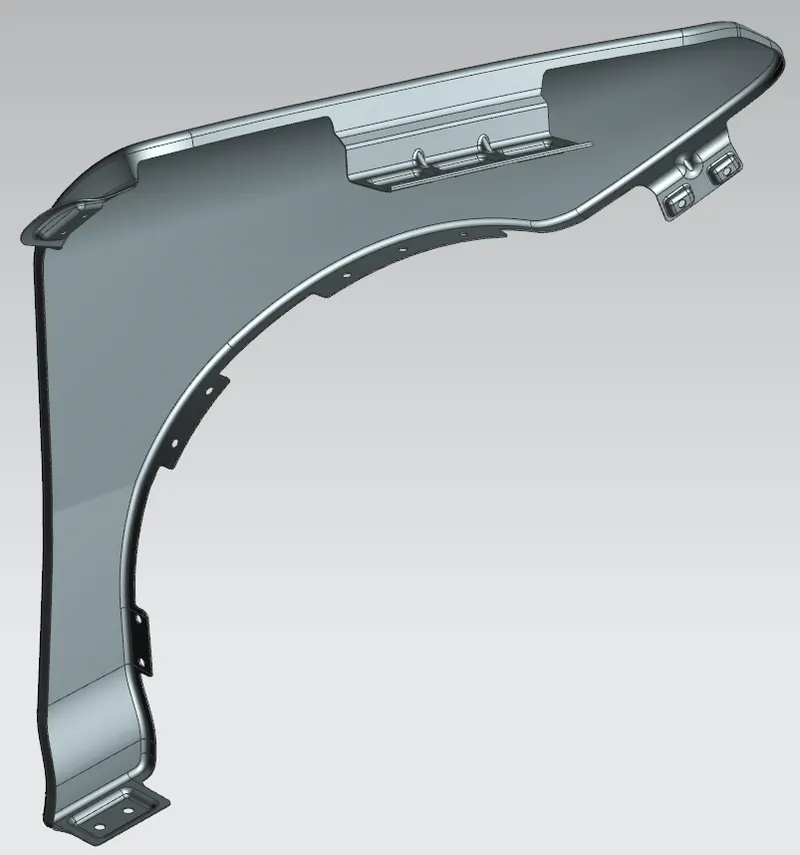
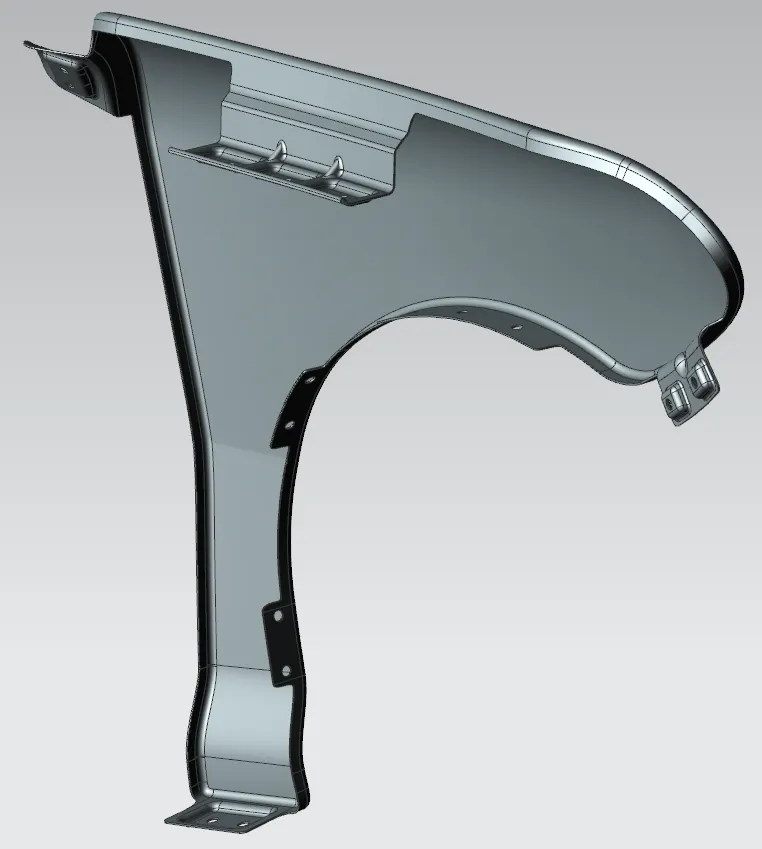
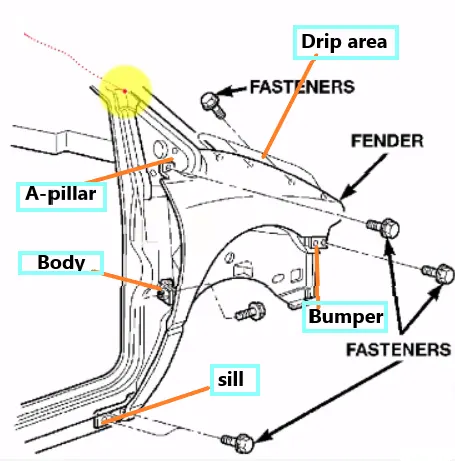
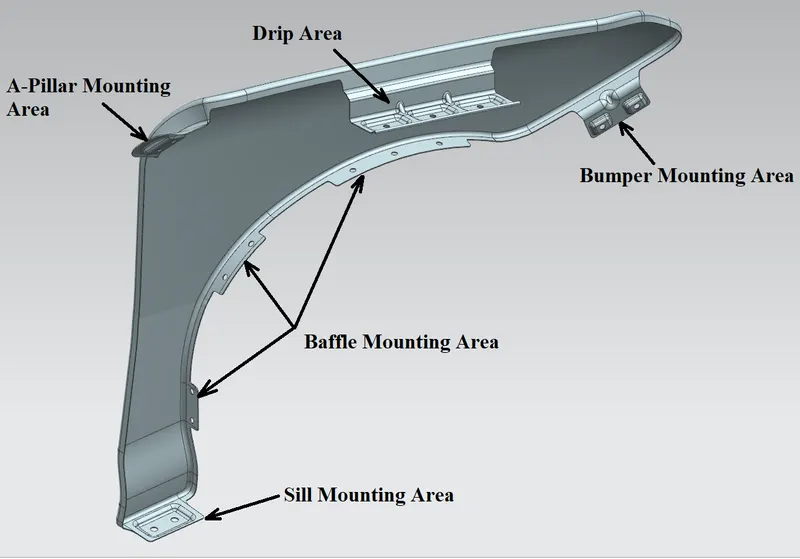
Fender is mounted on five important regions
- Drip Area
- Sill Mounting Area
- Bumper Mounting Area
- A-Pillar Mounting Area
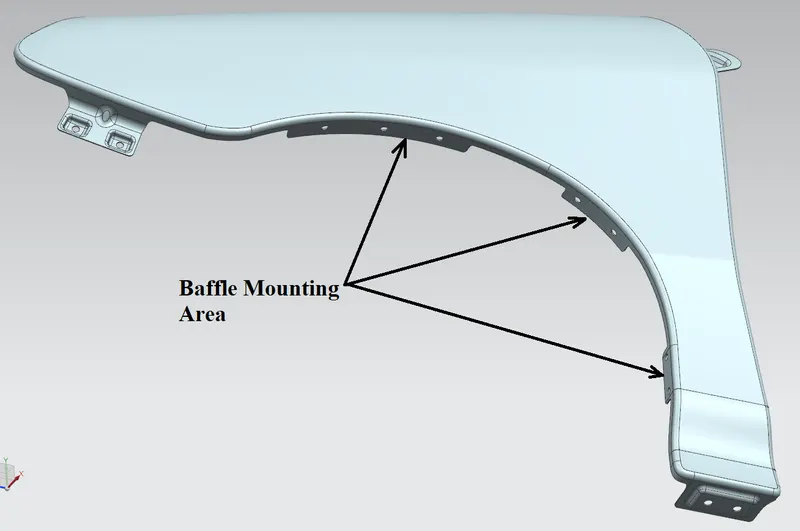
- Baffle Mounting Area
1. Drip Area :-
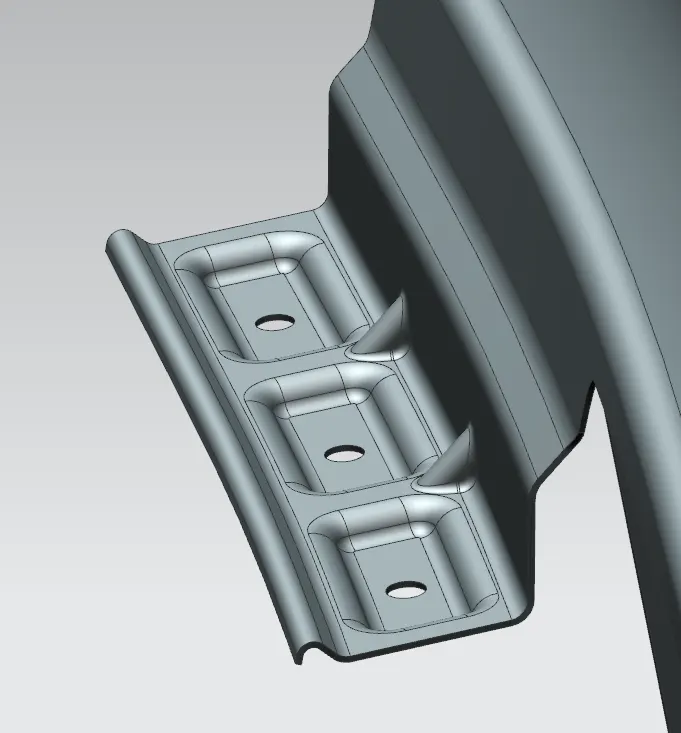
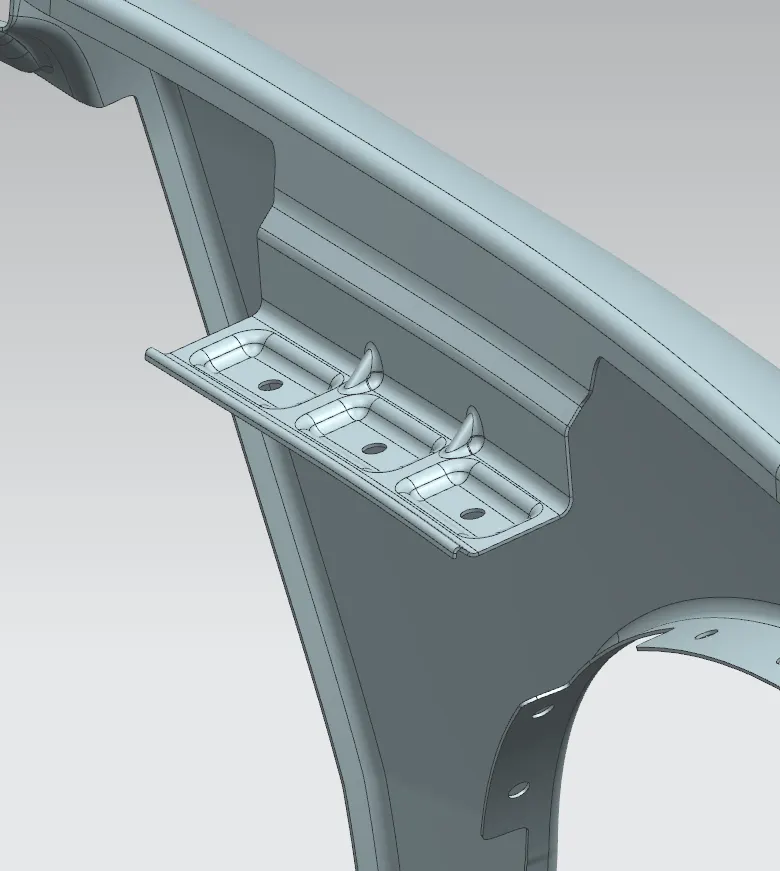
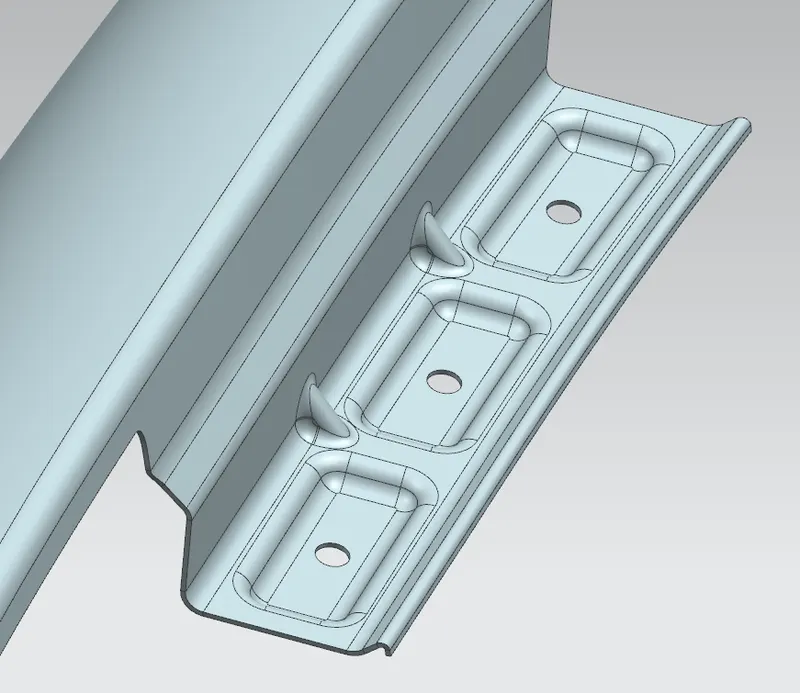
Drip area is the area at which the fender is connected to the engine compartment through fasteners. It is important mounting for fender therefore lot of design constraints are to be followed while designing the drip area. Clearance should be provided from the front and rear end of the fender to accomodate the cowl mountings and the headlamp housing unit respectively.
Master section to design Drip Area :-
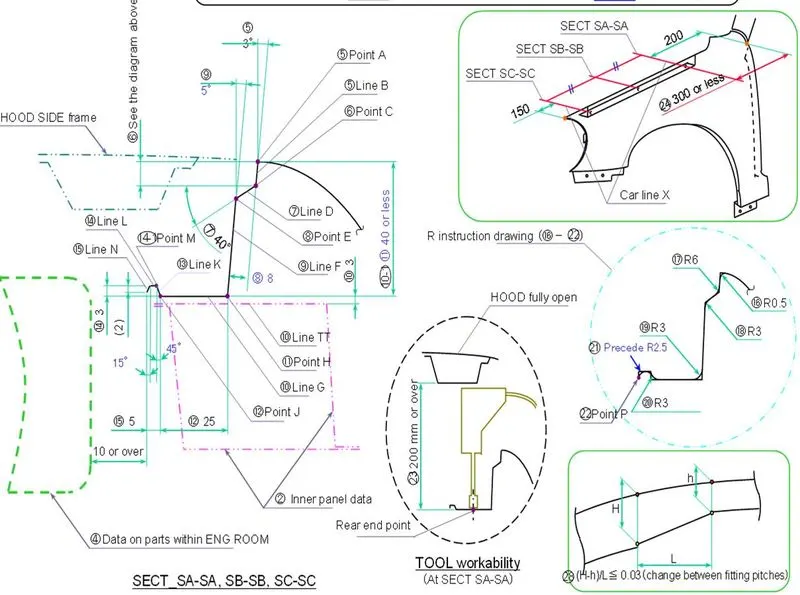
Fender drip area should have at least 10mm clearance from engine room.
Flange is created to prevent the visibility of fasteners and other engine components from outside of car and improve the appearance of parting gap between hood and front fender.
When the drip surface is stamped 3 deg must be secured for spring back, angle can be increased in order to make expected modification possible.
Embosses are provided to increase the strength.
Minimum 200mm gap should be provided between hood and drip area when hood is in open condition to access the tool.
Ribs are provided to improve the structural strength.
Hood side drip depth must be 40mm or less as maximum productivity is acheived at the depth of 40mm. If depth exceeds 40mm, rigidity bead is to be provided. If depth exceeds 60mm then forming is not feasible and wrinkling and spring back effects are observed. Springback is the geometric change made to a part at the end of the forming process when the part has been released from the forces of the forming tool. Upon completion of sheet metal forming, deep-drawn and stretch-drawn parts spring back and thereby affect the dimensional accuracy of a finished part.
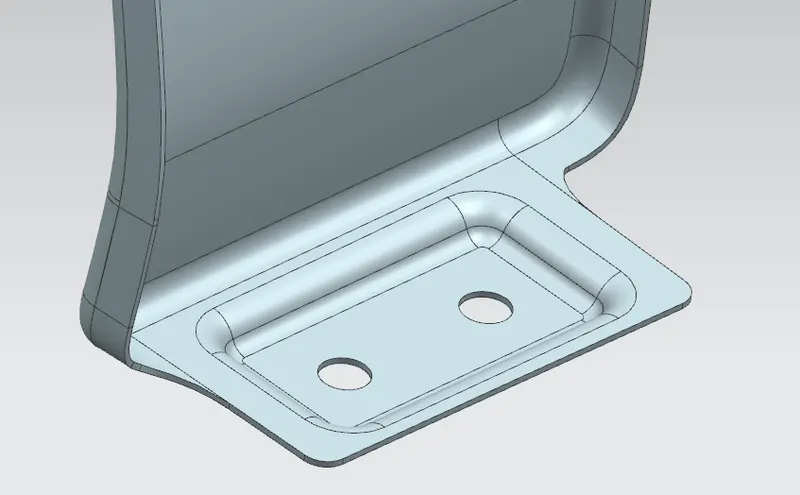
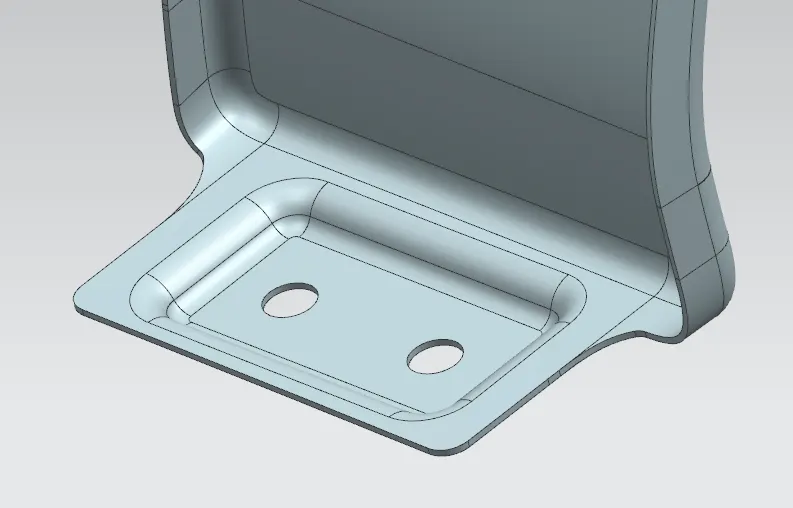
2. Sill Mounting Area :-
It is the area at which bottom side of the fender is connected to the bottom part of the vehicle body. It is attached with the fasteners. Fasteners are used as they are covered by the car body so there is no impact on the asthetic aspect of a car.
3. Bumper Mounting Area :-
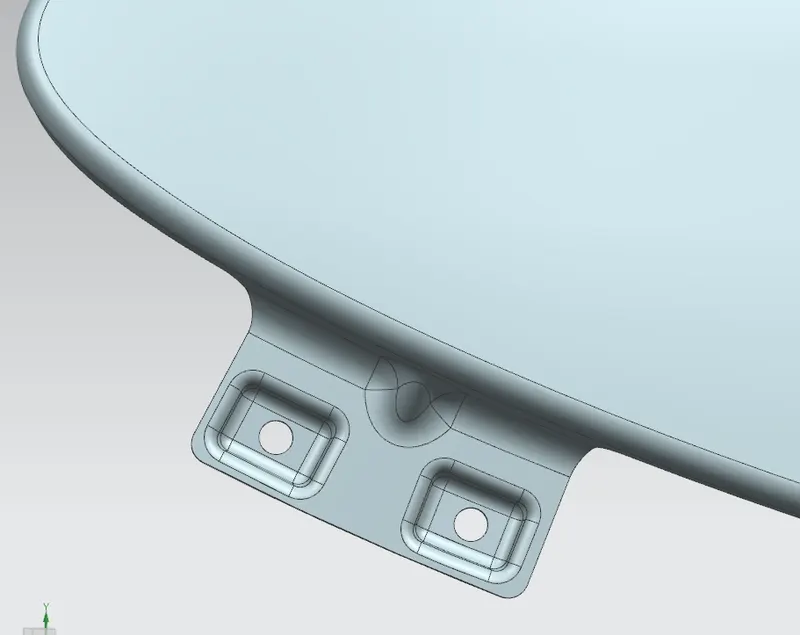
Bumper mounting area is provided to attach bumper to front fender. it located to the side of bumper. Fender is assembled first then bumper is attached by covering the bumper mounting area through fasteners. Rib is provided on bumper mounting area to improve the structural strength.
4. A-Pillar Mounting Area :-
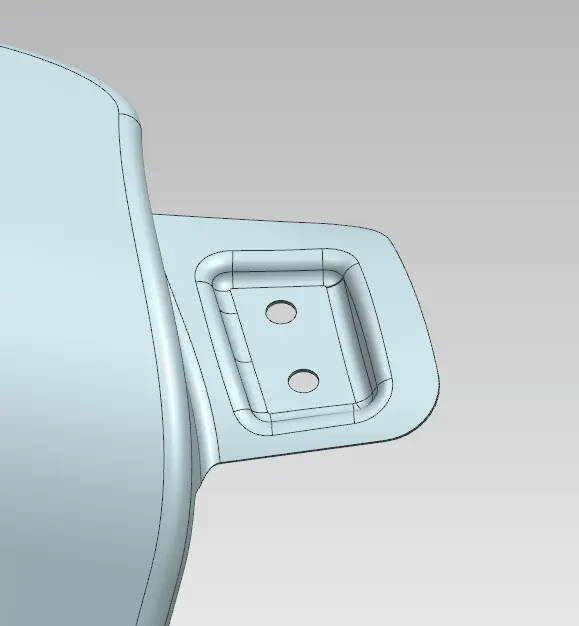
A-Pillar is the foremost pillar of the car, the one that holds the windscreen. This mounting region is located near the cowl which is a plastic area which accommodates the wiper motor and other instruments related to wiper. Fender is connected to the A-Pillar through fasteners.
5. Baffle Mounting Area :-
Baffle is a plastic part which is mounted along the wheel arch area. Baffles are mounted on the fender using locking clips.
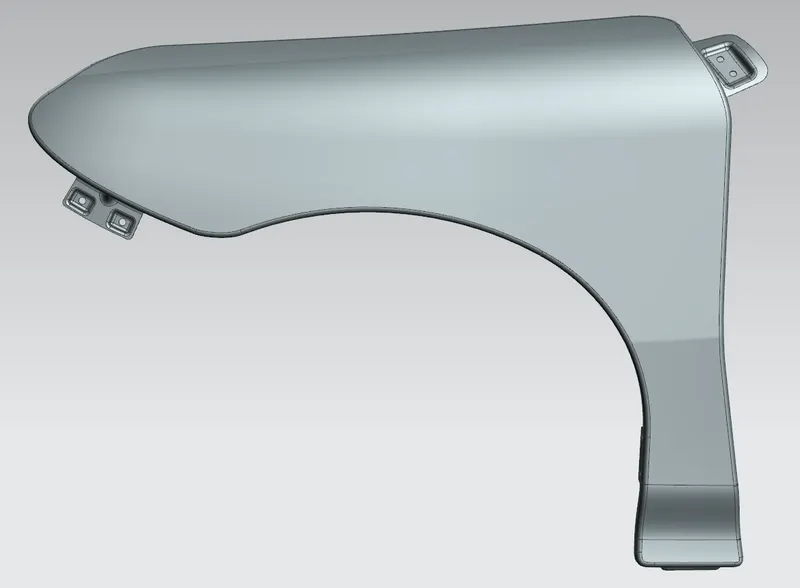
Different views of Fender :-