Fender Design Challenge
AIM: FENDER DESIGN
INTRODUCTION:
Design of any product starts from an requirement. The design engineer sketches the product based on the requirement. Then the 2D sketch with the proper dimensions is converted into the 3D model using the advanced CAD software's. The another important thing in the design is that, every product that is designed should be able to manufactured. This is the place where the Design for manufacturing and Design of assembly takes a role while developing any product. The process of development of design carries on until the design satisfies the customer needs. Here in this project the product that we are going to develop is a car fender.
OBJECTIVES:
The main objective of the project is to design a fender using CATIA V5
FENDER:
A fender is the part of an automobile which may be a car, motorcycle or any other vehicle body which frames the wheel well The primary purpose of this part is to prevent mud, rock, sand, or other road sprays from being thrown into the air by the rotating tire. Fenders are typically rigid and can be damaged by contact with the road surface. Sticky materials, such as mud, may adhere to the smooth outer tire surface, while smooth loose objects, such as stones, can become temporarily embedded in the tread grooves as the tire rolls over the ground. These materials can be ejected from the surface of the tire high velocity as the tire imparts kinetic energy to the attached objects. For a vehicle moving forward, the top of the tire is rotating upward at and forward and can throw objects into the air at other vehicles or pedestrians in front of the vehicle. This may cause injury to the pedestrians and also damage other vehicles which are nearby to avoid this Fender is provided on the top of the wheel which covers the wheel well and avoids all the road stuff to be thrown into the air.
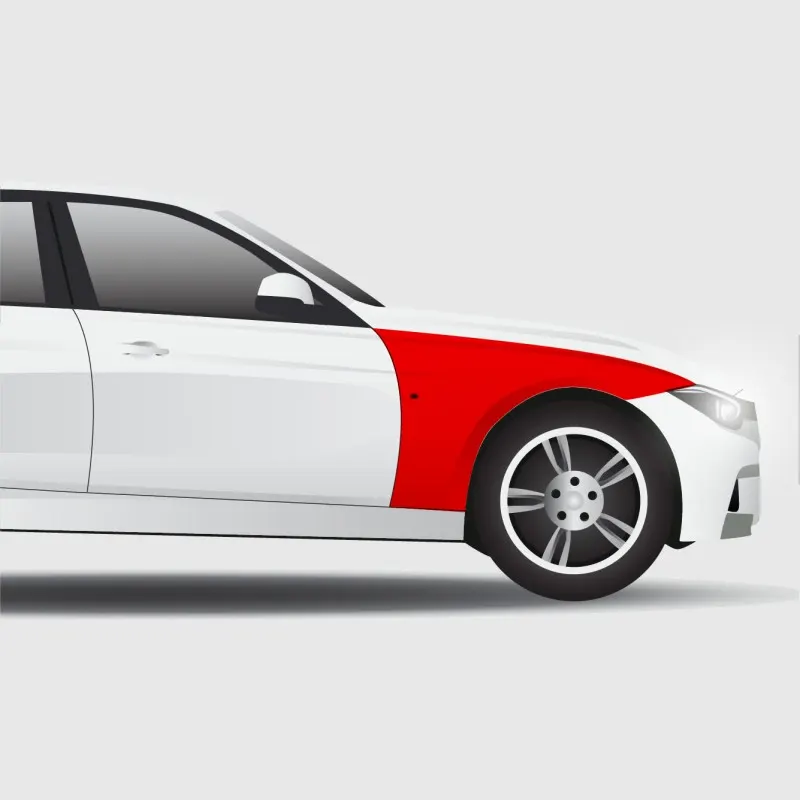
There are two types of fenders, they are
1) Full bumper type
2) Half bumper type
Full bumper type:
The full bumper type model is used in the olden days this creates much wastage of material and the unnecessary cost is increased.
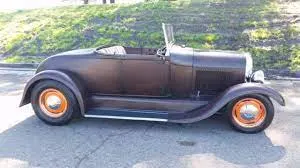
Half bumper type:
This half bumper type is used for mainly cost and material cutting purpose as this type is also provides ease of manufacturing and the strength is also improved for half bumper type fender.
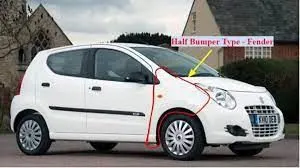
DESIGN PARAMETERSL:
FENDER MOUNTING REGIONS
There are 5 mounting regions on the fender, they are
- A-pillar mounting
- Body mounting
- Sill mounting
- Bumper mounting
- Drip mounting
DESIGN OF A-PILLAR MOUNTING AREA:
The A-pillar is the structural pillar that combines the body to the roof this make the sides of the windshield rest. Front fenders are fastened to the A-pillar to form a robust structure.
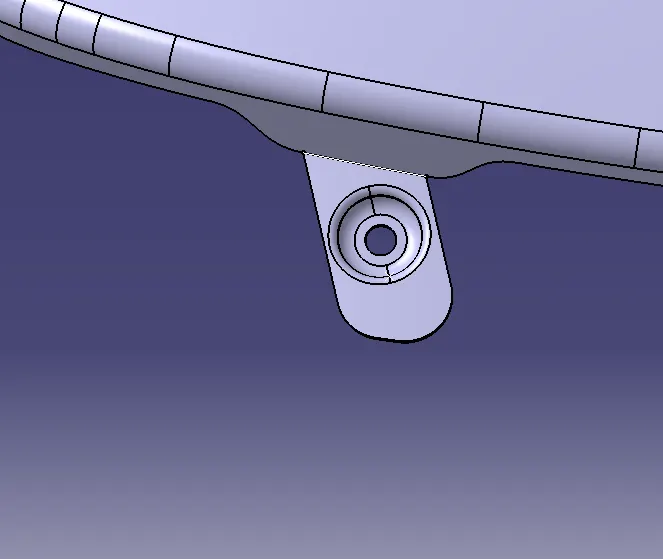
DESIGN OF DRIP MOUNTING AREA:
It is the most important mount of fender which is attached to the car body and near the engine compartment. This is designed by following the considerations such as the distance between the fender and engine room. clearance length between the hood, and the base area of the drip.
DESIGN OF SILL MOUNTING AREA:
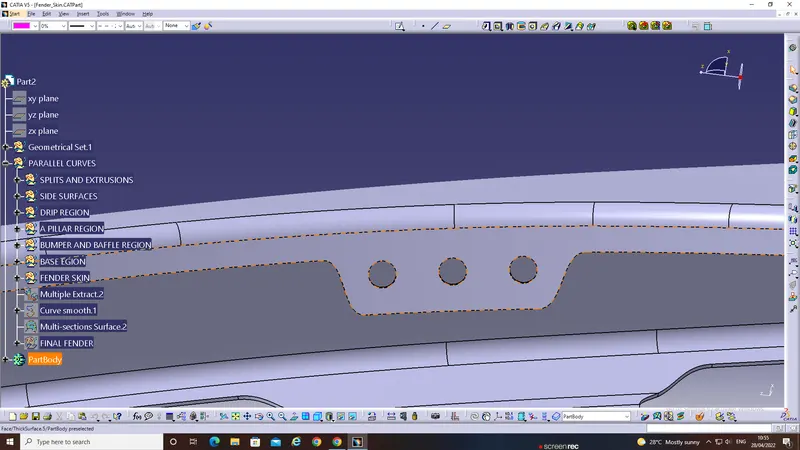
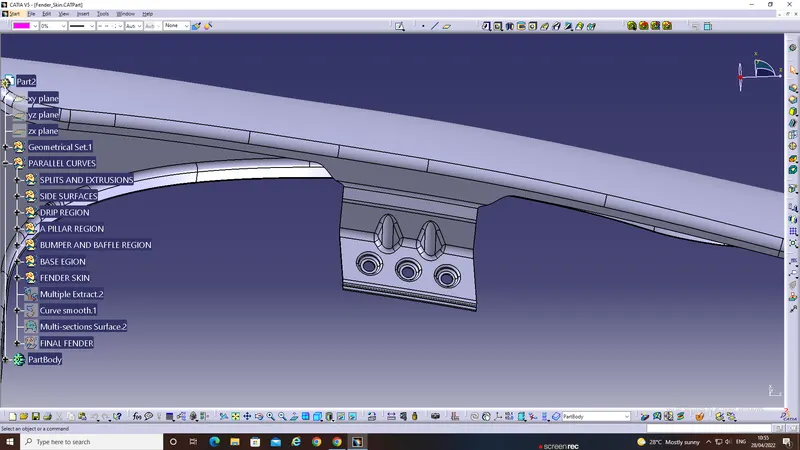
Sill is the panel directly below the bottom of the door supporting the floor and may be used to combine the floor and the body. The bottom end of the fender is mounted on the sill body for reinforcement of the fender panel, thus the sill mounting position is designed with holes and emboss . M5 fasteners are used to fix the fenders on the sill body.
DESIGN OF BUMPER MOUNTING AREA:
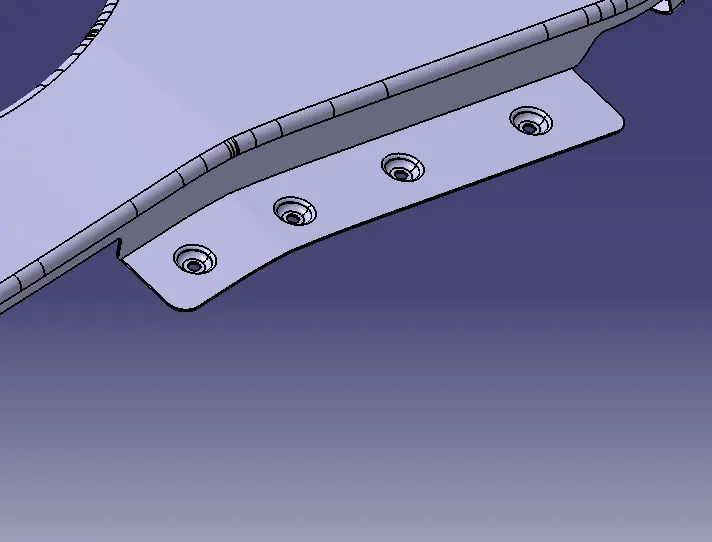
Bumper mounting area is used to fix the plastic bumper to the fender with the help of the fasteners
DESIGN OF BAFFLE MOUNTING AREA:
Baffle mounting or mudguard are clip fit type of mounting on the inner side of the fender arch over the tyre it protects the car engine compartment and pedestrians from causing injuries from chip out debris on the road when the car is in motion, they are mounted on the fender using a special.
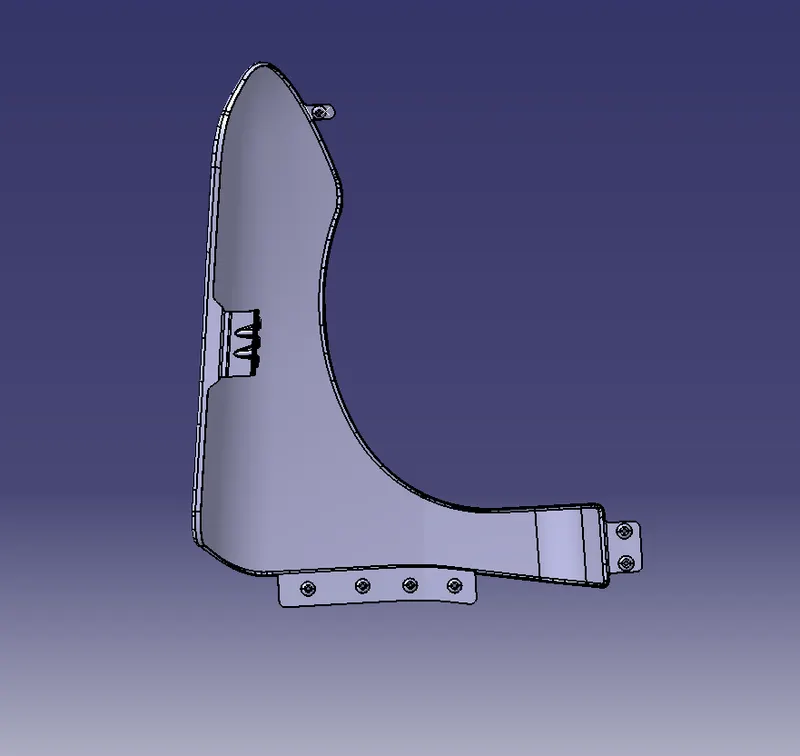
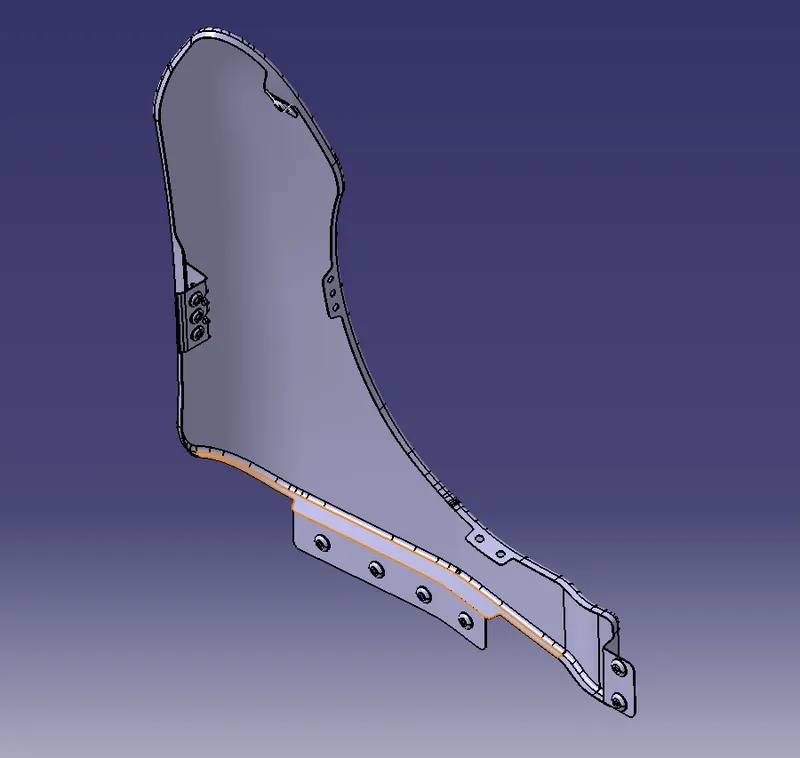
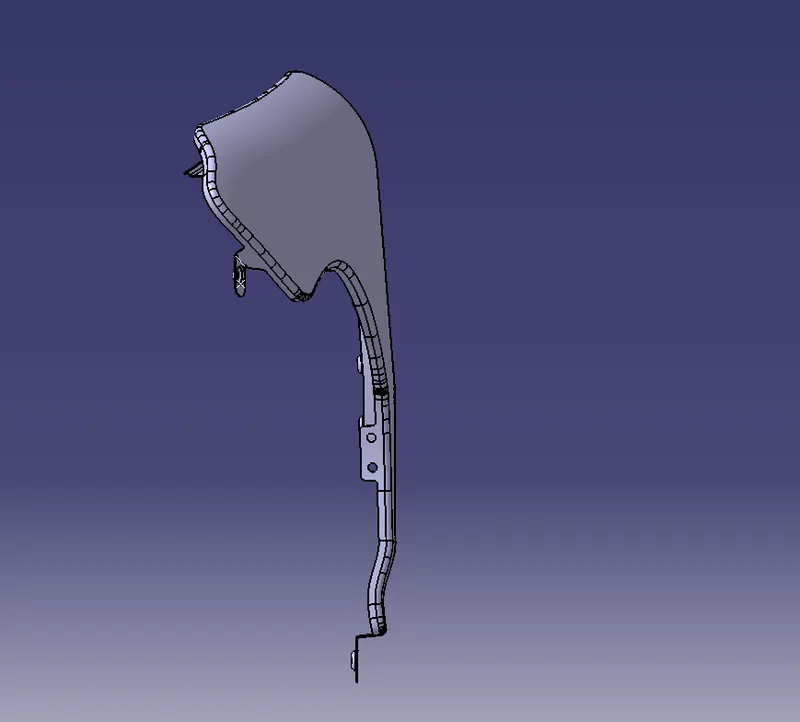
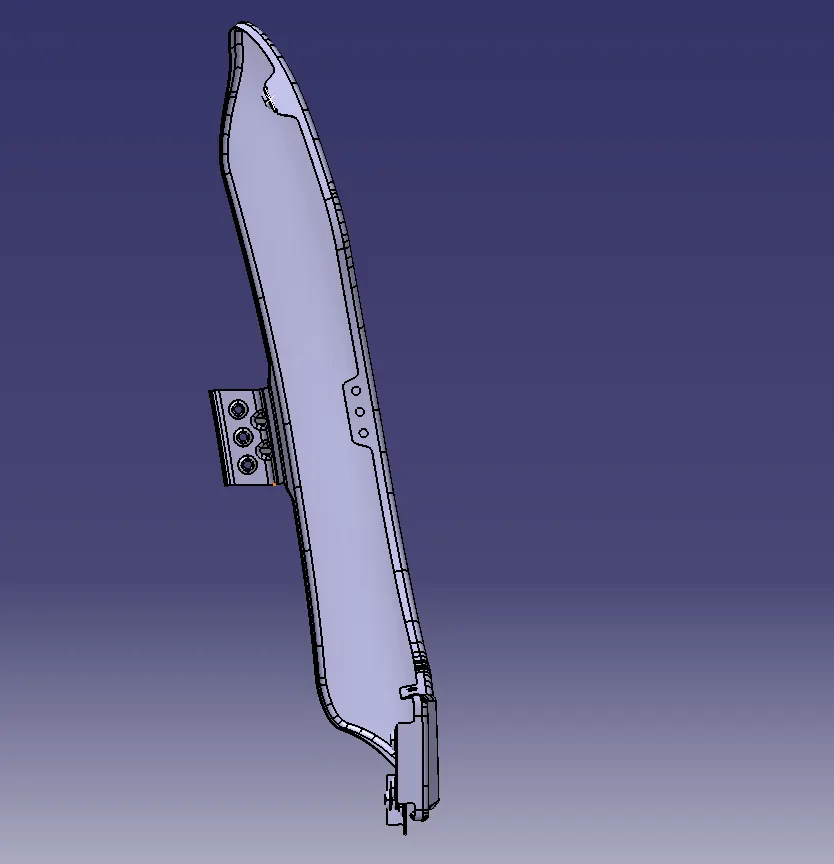
VIEWS OF FENDER
CONCLUSSION
Finally design of fender is done with the help of CATIA V5 software by following the master section