Fender Design Challenge
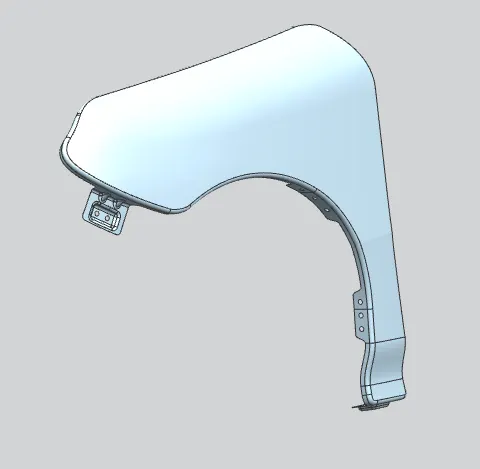
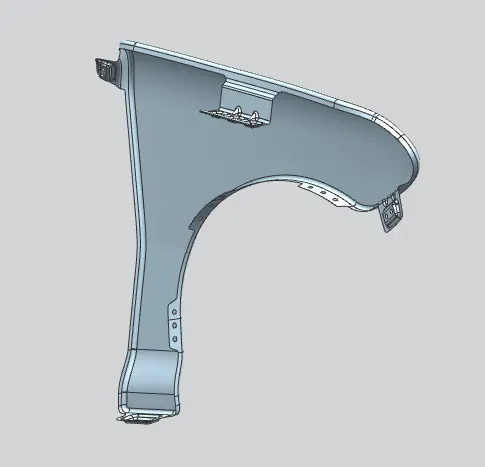
AIM - To design the front fender of a car with the given skin data and master section with appropriate mountings.
INTRODUCTION - A fender is different than a bumper because it's a metal structure that frames the wheel of a car, instead of the front or back. The fender extends between the front door to the front bumper covering the front wheels of the vehicle.
A fender has many functions to carry,
1.It should provide the asthetic looks to the car.
2.It should provide pedestrian safety during accidents.
3.It acts as a covering to the wheels, so while the wheel is rotating, the wheel may splash the mud, water and can even throw the sand particles and rocks.
4.Provide support to the splash coverings.
The fenders are present in front and back portions of the car
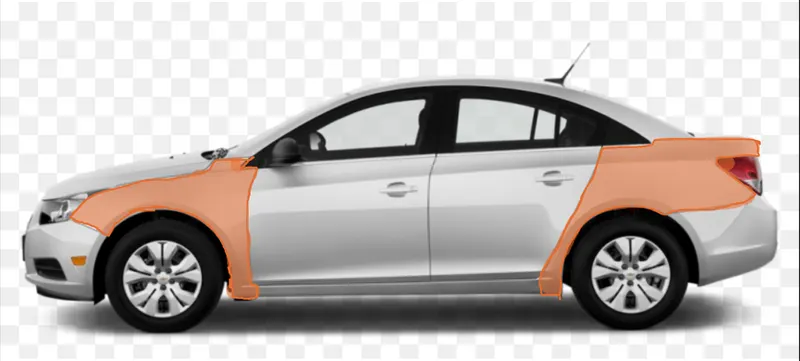
There are two types of front fenders
1. Half Fender :
In the half fender type the fender starts from the from front lamp and ends until the sill of the door which does not cover full portion of the wheel.
these are the upgrades of the full fenders to minimalise the Design structure, Design feasibility, manufactureability and production cost.
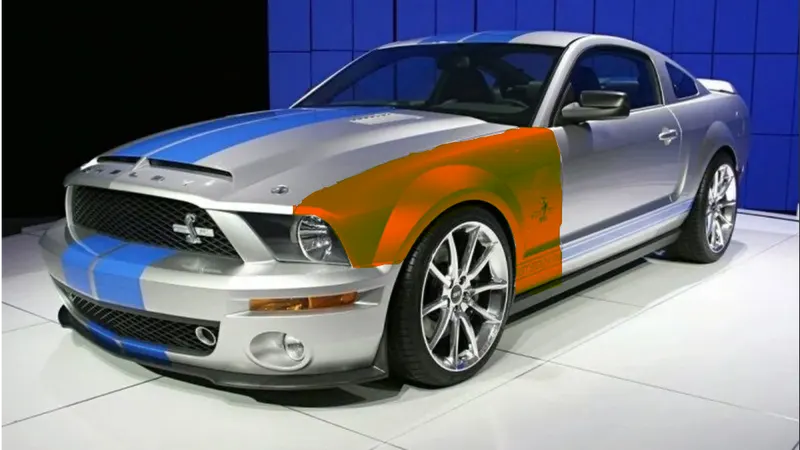
2. Full Fender :
These are old type fenders which are nnot used now a days.
These type fenders are those which covers the complete wheel, and they also provide the space for the head lamp.
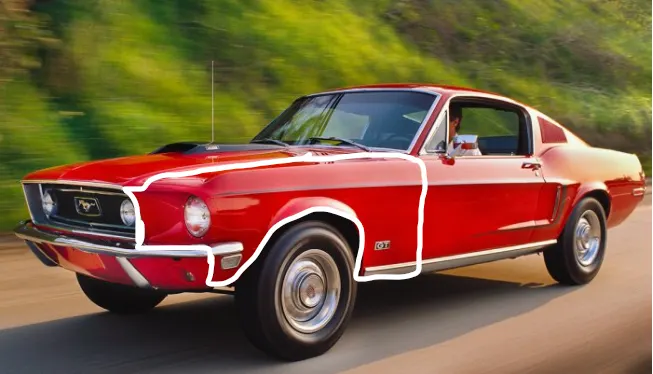
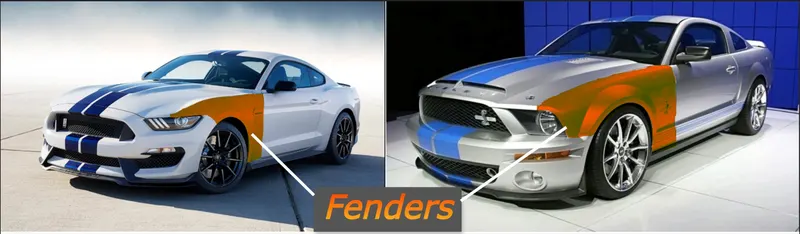
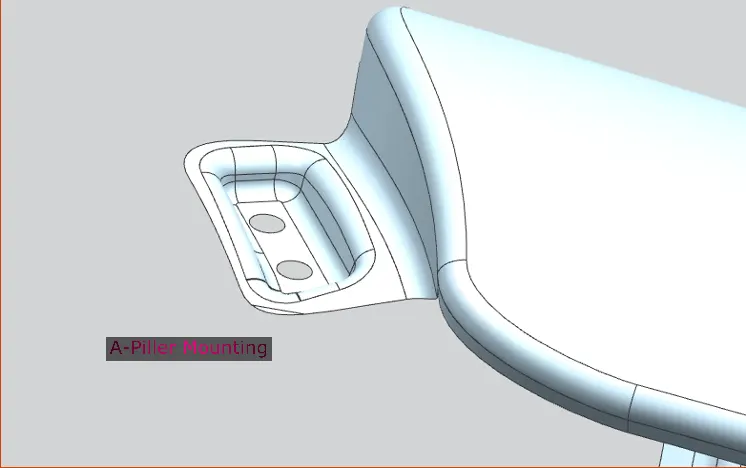
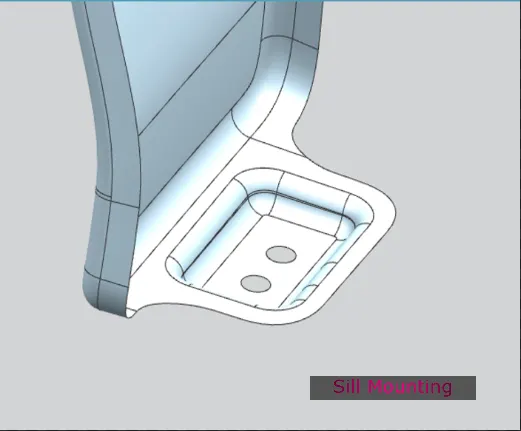
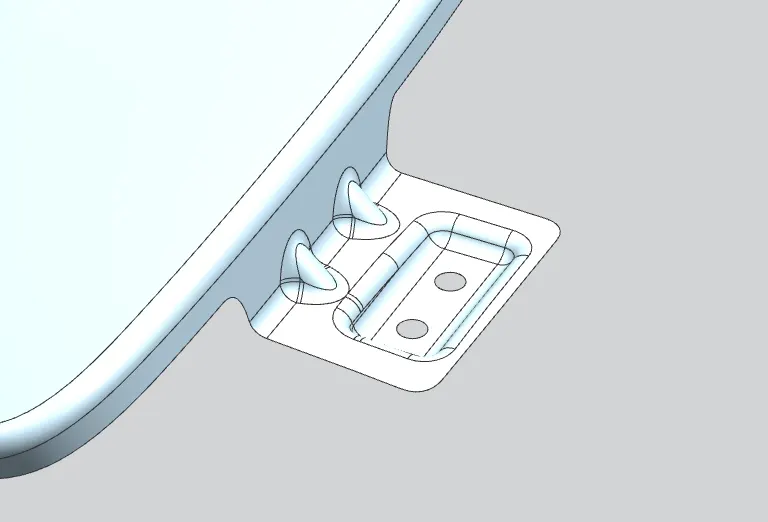
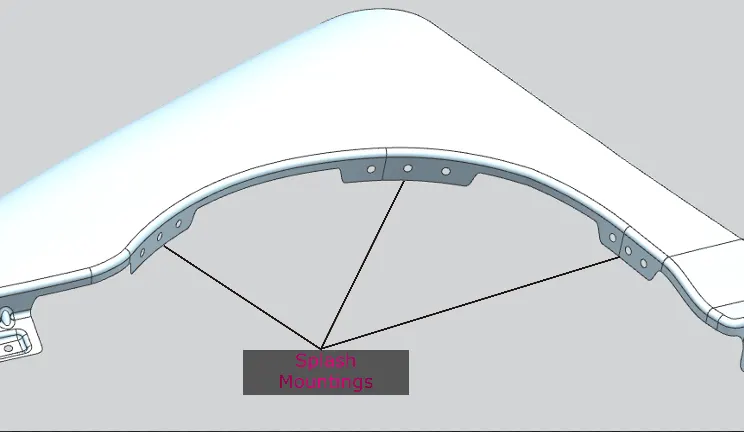
The Fender is to be designed with different mounting points
1.Drip area mounting
2.A - Piller mounting
3.Sill mounting
4.Bumper mounting
5.Splash mountings
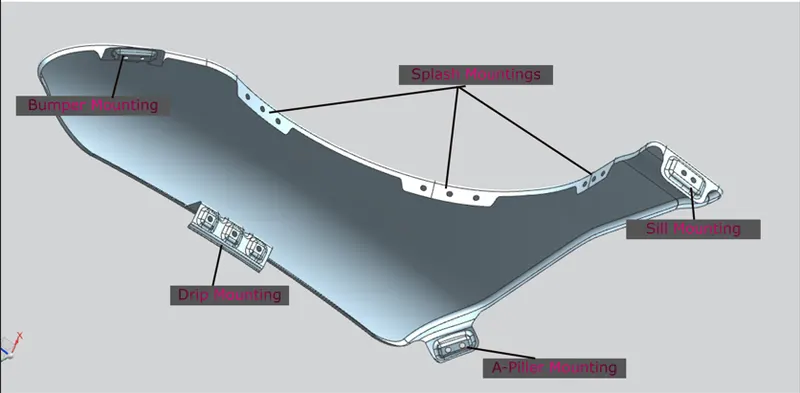
The fender is designed with some standard rules
The Drip mounting
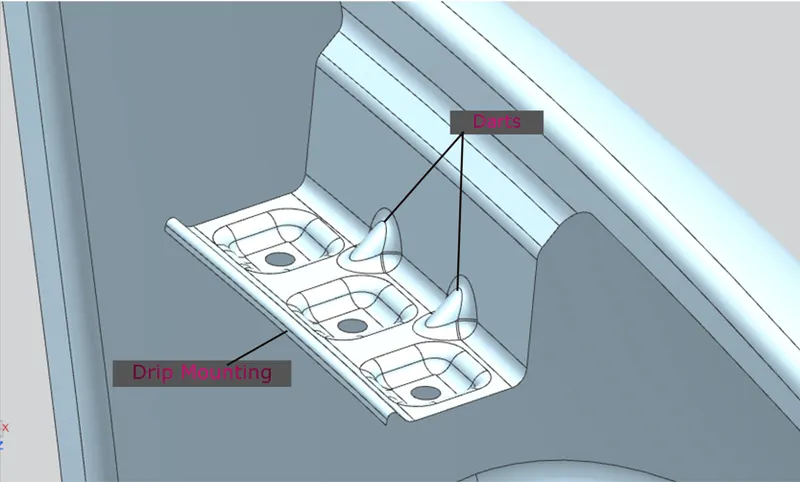
A-Piller mounting
Sill mounting
Bumper mounting
Splash mountings
after the surface design with all the mountings, the fender is thickened with 0.75mm.
Manufacturing process
The manufacturing process includes the following steps that firstly, unfolding and shearing are carried out on a plate, wherein a proper cold roll specification is selected at first, a cold roll is unfolded, and then the unfolded cold roll is sheared to an iron plate of the corresponding size according to production material specifications.
secondly, oil pressing and punching are carried out, wherein the iron plate is extended at first, then side shearing and punching are conducted on the iron plate, folding and shaping are carried out on the iron plate, and finally reshaping is carried out on the iron plate.
thirdly, small first parts of the fender are machined, wherein first of all, the iron plate is punched to a needed outer contour blank, then the iron plate completing the outer contour blank is further shaped, and the iron plate is punched and formed at last.
Conclusion : Hence the Fender is designed by attaining standard rules.