Fender Design
Fender Design

A car fender, also known as a wing or quarter panel in some regions, is a key exterior component of a vehicle that covers and protects the wheel well and the area surrounding it. Fenders play both functional and aesthetic roles in automotive design.
Function:
- Wheel Protection: Fenders provide protection to the wheels from road debris, water, mud, and other contaminants that could be kicked up while driving. This helps prevent damage to both the wheels themselves and other vehicles on the road.
- Safety: Fenders help contain the debris that is thrown up by the rotating wheels, reducing the risk of these objects impacting other vehicles, pedestrians, or the car itself.
- Structural Support: Fenders contribute to the structural integrity of the vehicle's body, helping to maintain the overall shape and stability of the car's exterior.
- Impact Absorption: In the event of a minor collision or contact with another object, the fenders can absorb some impact energy, minimizing potential damage to the vehicle's body and other components.
Aesthetics and Design:
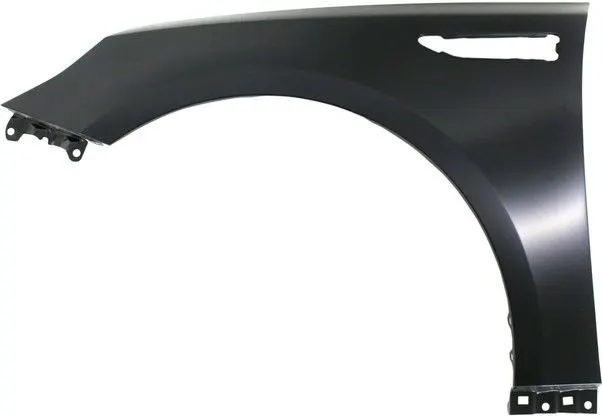
- Visual Appearance: Fenders play a significant role in defining the visual character of a vehicle. They contribute to the overall design language, shape, and aesthetics of the car's exterior.
- Design Differentiation: Different vehicle models and brands often have distinct fender designs that help differentiate them in the market. Fenders contribute to a car's unique identity and brand recognition.
- Wheel Arch Design: The shape of the fender often determines the design of the wheel arch, affecting the size and style of wheels that can be fitted to the vehicle.
- Aerodynamics: Fenders can influence the vehicle's aerodynamics by directing airflow around the wheels, reducing drag and improving fuel efficiency.
Materials and Manufacturing:
- Materials: Fenders are typically made from materials like steel, aluminum, plastic, or composite materials, depending on the manufacturer's design choices and performance requirements.
- Manufacturing Techniques: Fenders are manufactured using processes like stamping, molding, and forming. Advanced manufacturing technologies ensure that fenders are produced accurately and efficiently.
The manufacturing methods for automotive fenders can vary based on factors such as the material used, the complexity of the design, and the manufacturer's capabilities.
Stamping (Sheet Metal Forming):
Stamping is a widely used manufacturing method for producing fenders from sheet metal, usually steel or aluminum. The process involves pressing a flat sheet of metal into a die using a press machine. The die's shape and contours define the final shape of the fender. Stamping is capable of creating complex geometries and precise details. The process includes the following steps:
- Blanking: Cutting the sheet metal into the desired shape, roughly resembling the fender's profile.
- Forming: The blank is placed in a die and shaped using a press, which applies force to deform the metal and create the fender's contours.
- Trimming and Piercing: Excess material is removed, and holes for mounting points and other components are punched.
- Bending: Bending operations may be performed to create curved sections and flanges.
Injection Molding (Plastic Fenders):
Plastic fenders are produced using injection molding, which is a process of melting plastic pellets and injecting the molten material into a mold cavity. Once cooled and solidified, the plastic part takes the shape of the mold. The process includes these steps:
- Material Preparation: Plastic pellets are loaded into the injection molding machine's hopper.
- Melting and Injection: The plastic pellets are heated and melted, and the molten material is injected into the mold cavity.
- Cooling: The plastic material cools and solidifies within the mold.
- Ejection: The molded fender is ejected from the mold.
Composite Layup (Carbon Fiber Fenders):
Carbon fiber composite fenders are manufactured using a process called composite layup. This involves layering pre-impregnated carbon fiber sheets (prepregs) onto a mold, then curing the layers under heat and pressure. The process includes these steps:
- Mold Preparation: A mold is prepared with a release agent to prevent sticking.
- Layup: Prepreg carbon fiber sheets are manually or robotically placed onto the mold in a specific pattern.
- Consolidation: The layers are consolidated by applying pressure or vacuum, ensuring proper bonding between layers.
- Curing: The mold with the layup is placed in an autoclave or oven for curing at elevated temperature and pressure.
- Trimming and Finishing: The cured carbon fiber part is trimmed and finished to achieve the final shape and surface quality.
Hydroforming (Aluminum Fenders):
Hydroforming is used for producing aluminum fenders with complex shapes. The process involves using fluid pressure to shape a metal tube or sheet into a die. For aluminum fenders, sheet hydroforming is common. The steps include:
- Blank Preparation: A flat sheet of aluminum is prepared.
- Placing in Die: The aluminum sheet is placed in a die cavity.
- Hydroforming: Fluid pressure is applied to the inside of the sheet, causing it to conform to the shape of the die.
- Trimming: Excess material is trimmed from the formed fender.
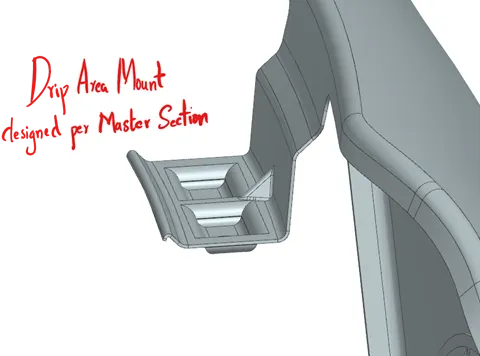
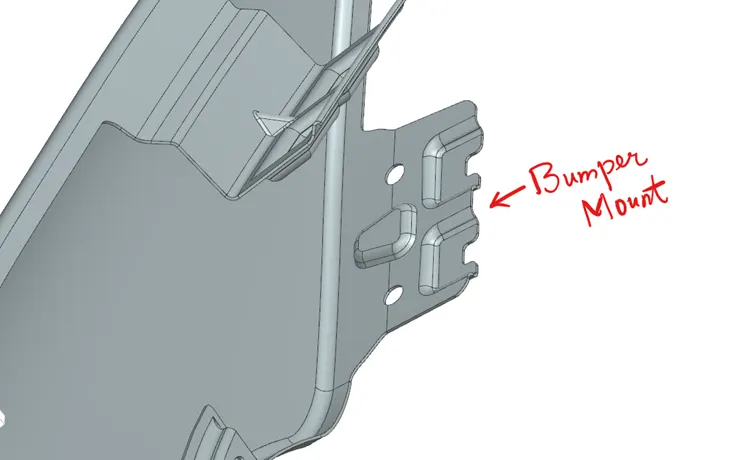
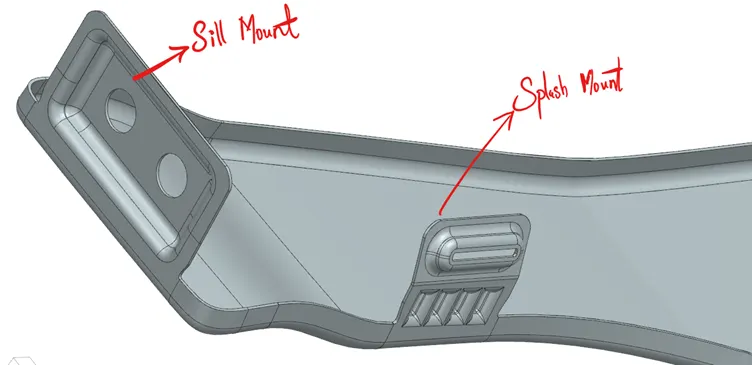
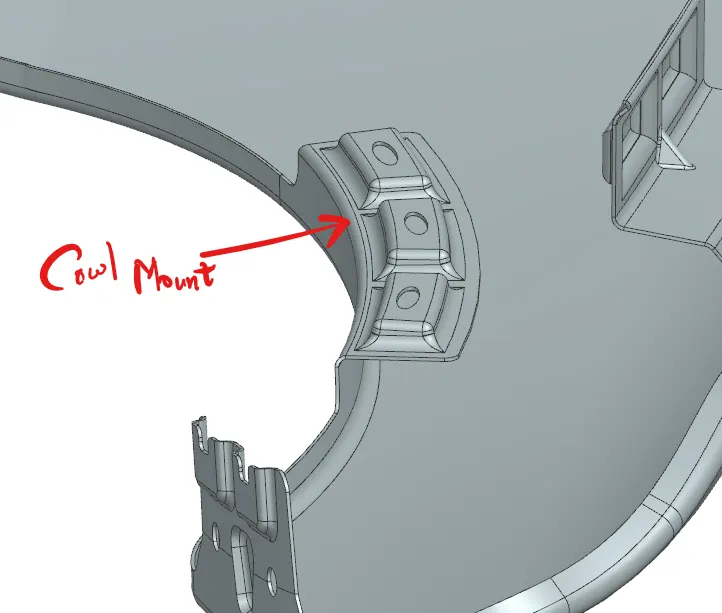
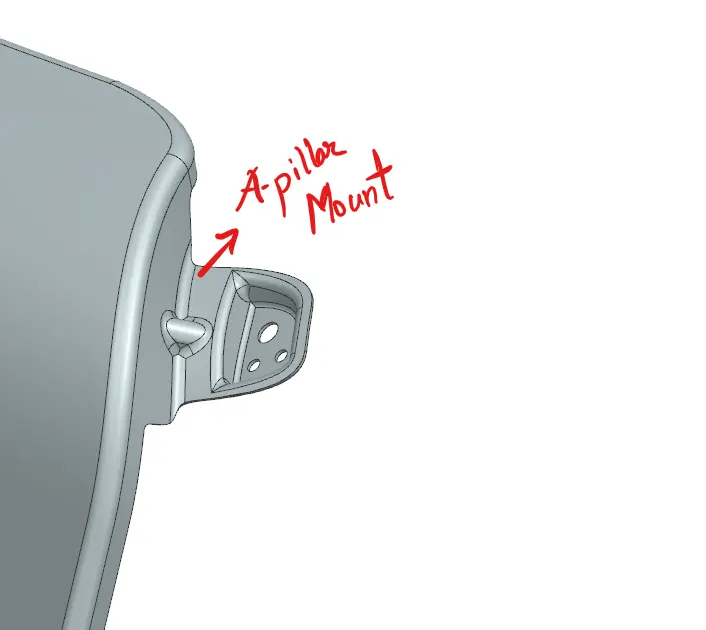
Fenders are connected to the vehicle body using mountings on different parts of the automotive body. The area includes A pillar, Sill, Cowl, Drip, Bumper unit etc.
Drip Area:
The drip area, also known as the drip rail or rain channel, is a raised or indented section along the upper edge of the door opening on a vehicle's body. Its purpose is to channel rainwater away from the interior of the vehicle when the doors are open. Rainwater that accumulates on the roof is directed along the drip area, preventing it from entering the cabin when the doors are opened. The design of the drip area helps minimize water infiltration into the vehicle's interior. Drip area also indicates the engine compartment region where the fender mounts on the as well as the edge of the hood side meets.
Cowl Area:
The cowl area, also referred to as the windshield cowl or cowl panel, is the space between the bottom edge of the windshield and the hood. It's often characterized by a raised panel that spans across the width of the vehicle. The cowl area serves several functions, including:
- Allowing air intake for the vehicle's HVAC (heating, ventilation, and air conditioning) system.
- Directing rainwater and debris away from the windshield, preventing water from entering the cabin.
- Providing structural support and reinforcement to the windshield and surrounding components.
A Pillar Area:
The A-pillar area refers to the vertical structural components at the sides of the windshield that connect the roof to the vehicle's body. These pillars play a critical role in maintaining the structural integrity of the vehicle's cabin and supporting the roof. The A-pillar area is an important consideration in vehicle safety, as it affects the car's ability to withstand impacts and rollovers. The design of the A-pillar area can impact visibility and aerodynamics as well.
Sill Area:
The sill area, often known as the rocker panel or sill panel, is the lower horizontal section of the vehicle's body located between the wheel wells. The sill area serves both functional and aesthetic purposes:
- Structural Support: The sill area provides structural support to the vehicle's body, enhancing rigidity and strength. It also helps distribute forces in the event of a side impact.
- Aesthetics: The design of the sill area can contribute to the overall visual appeal of the vehicle's exterior. Many vehicles feature distinctive styling elements or cladding in this area.
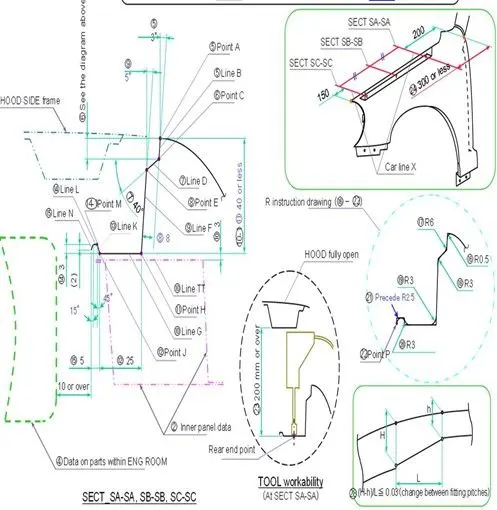
Master Section of the given fender design;
As per the skin data and master section given, a fender of thickness 0.75 mm was designed using NX Cad as shown below;
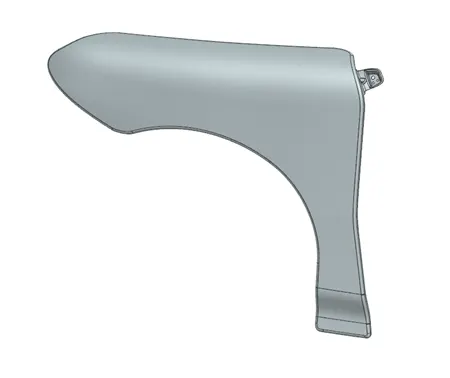
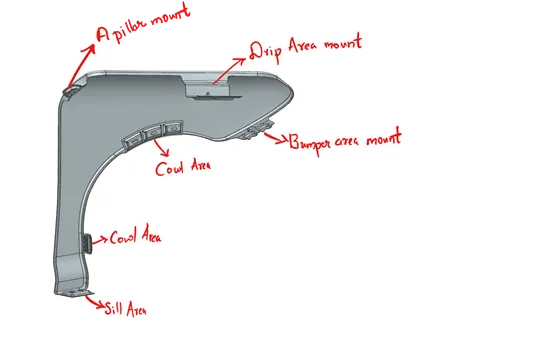
Mountings are designed as such for the area; drip area, cowl, sill, A-pillar, spalsh area etc.,