Fender Design
To design the fender with provided Master section data and Styling surface of fender as Input.
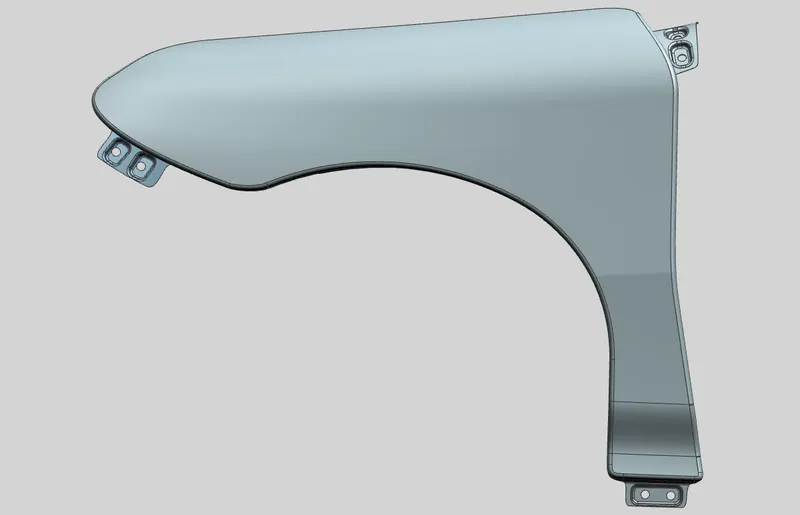
Front fender:
Front fender is a part of the vehicle that frames the wheel. The primary purpose of the fender is to prevent sand, mud, rock etc. from being thrown away into the air by rotating tire. Fender can be 2 types
Types of fenders:
1.Full bumper type.
2.Half bumper type.
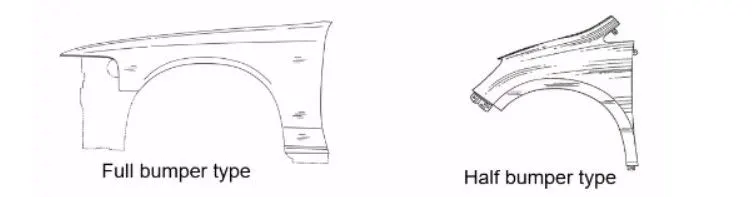
- Presently we are using the half bumper type, the reason for choosing the half bumper type is that when we choose the full bumper type the blank is used for creating is very large and also has the loss of wastage, but in the case of the half bumper type we have the possibility to reduce the scrap. This is what we call scrap management.
- In half bumper type we reduce the usage of the steel material and use lots of plastic on the bumper which in term decreases the car's weight and increases the performance.
FENDER WHEEL ARCH:
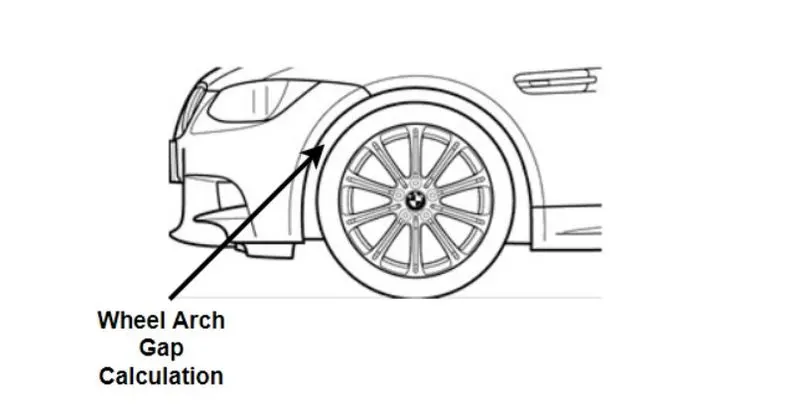
- Fender wheel arch has some standard specifications, for example if you see the car from the front, if you see the wheel outside fender, it does more chipping and it causes lots of damage to the pedestrians and also to the car.
- In order to maintain the pedestrians' safety, we have to position the tire wheel inside the fender.
- For the European requirement the clearance between the wheel and the fender outer most skin is 5mm.
- This requirement changes from country based on the road conditions.
MOUNTING REGIONS ON FENDER:
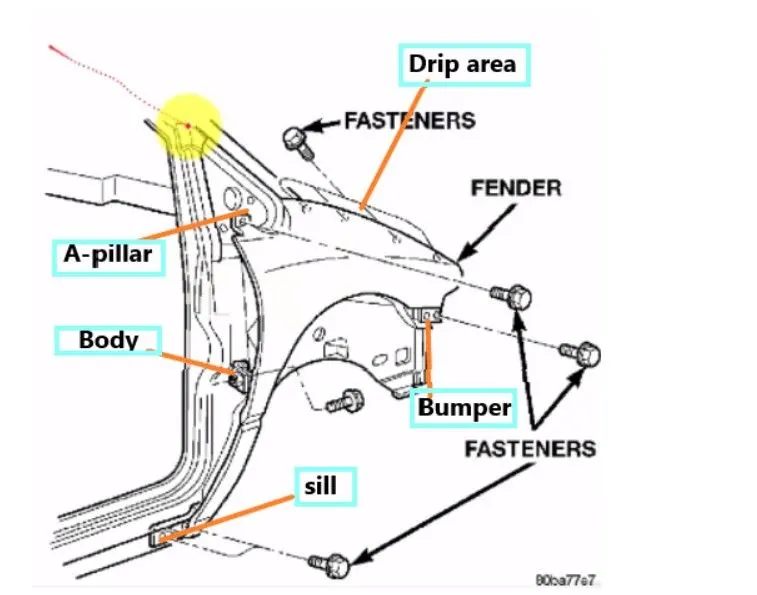
There are 5 mounting regions on the fender they are
- A-pillar mounting
- Body mounting
- Sill mounting
- Bumper mounting
- Drip mounting
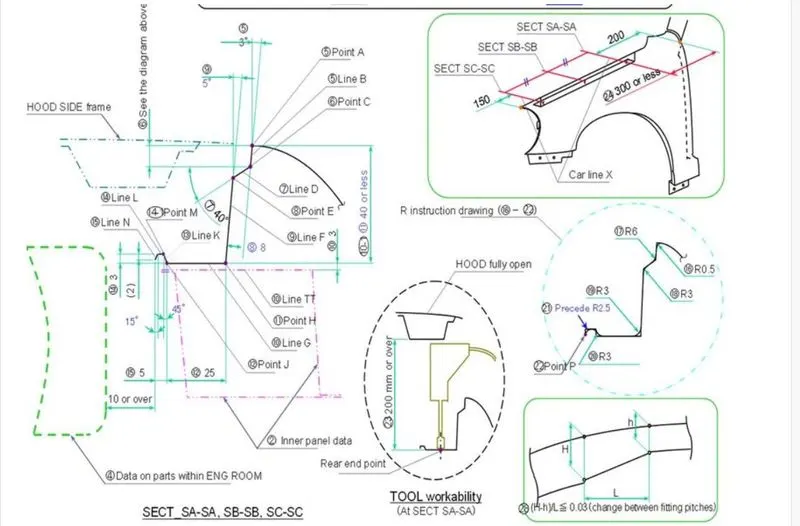
MASTER SECTION
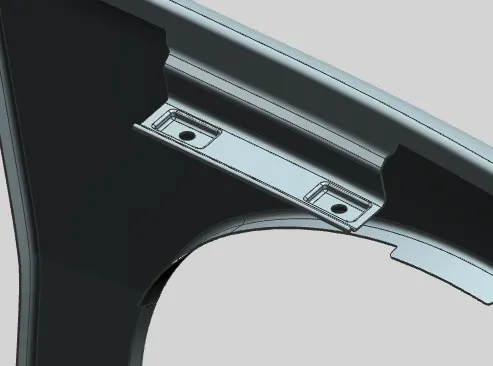
1) Design of drip area mounting:
- It is the important mounting unit of the fender. It is connected to the engine compartment therefore a lot of design constraints are to be followed while designing the fender.
- While designing the drip area we have to initially leave 200-300mm for cowl part.
- For fitting of headlamp, we have to leave at least 150mm at the front.
- And the Drip area length should be 10- or 20-mm gap from Engine room.
DRIP AREA
- Two darts are added on the longer side of the drip area in order to provide stiffness and add strength to the part. This helps the fender to not vibrate and impact the forces outside to the fender during motion of the vehicle.
- Embossing is provided on the mounting to strengthen them during fastening.
2) Design of sill mounting area:
Sill is the panel directly below the bottom of the door supporting the floor and may be used to combine the floor and the body. The bottom end of the fender is mounted on the sill body for reinforcement of the fender panel; thus the sill mountings position is designed with holes and emboss. M5 fasteners are used to fix fenders on the sill body.

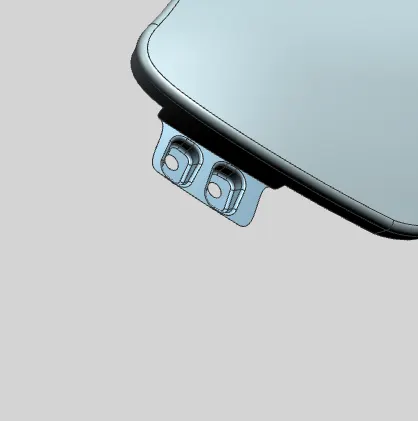
3) Design of Bumper mounting area:
Bumper mounting area is used to fix near the head lamp area.
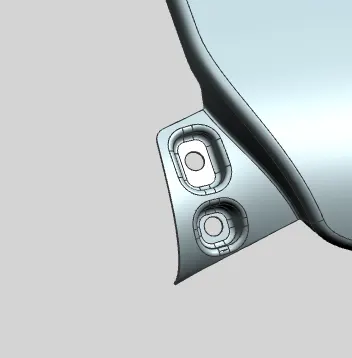
4) Design of A-pillar mounting area:
The A-pillar is the structural pillar that combines the body to the roof. Front fenders are Fastened to the A-pillar to form a robust structure.
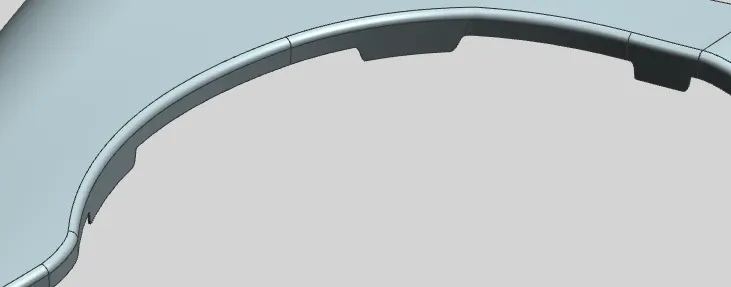
5) Design of Baffle mounting area:
Baffle mounting or mudguard are clip fit type mounting on the inner side of the fender arch over the Tyre. It protects the Engine compartment and pedestrians from chipping of stones, mud. It is mounted on the fender baffle mounting using a special type of locking of pins which are made of plastics.
FRONT VIEW
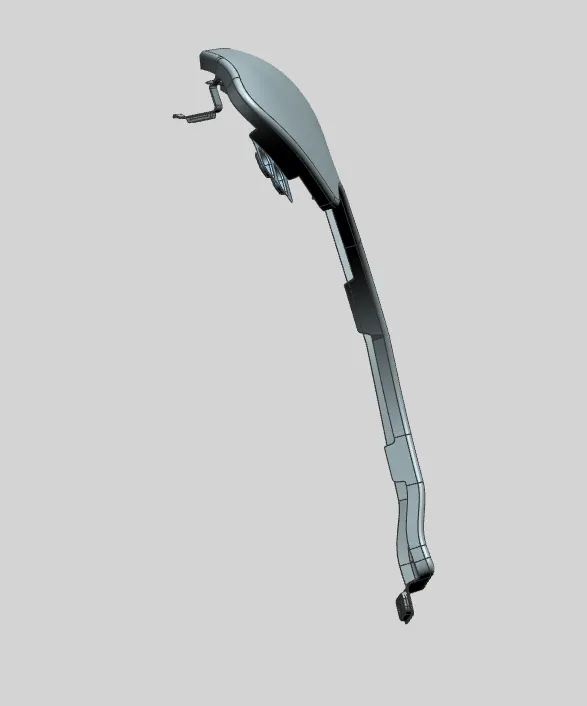
SIDE VIEW
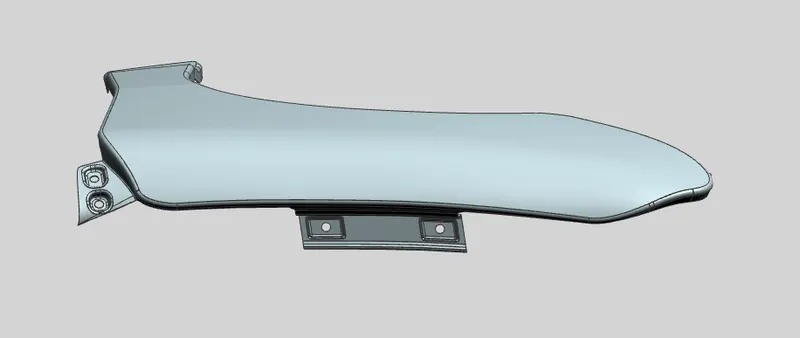
TOP VIEW
ISOMETRIC VIEW
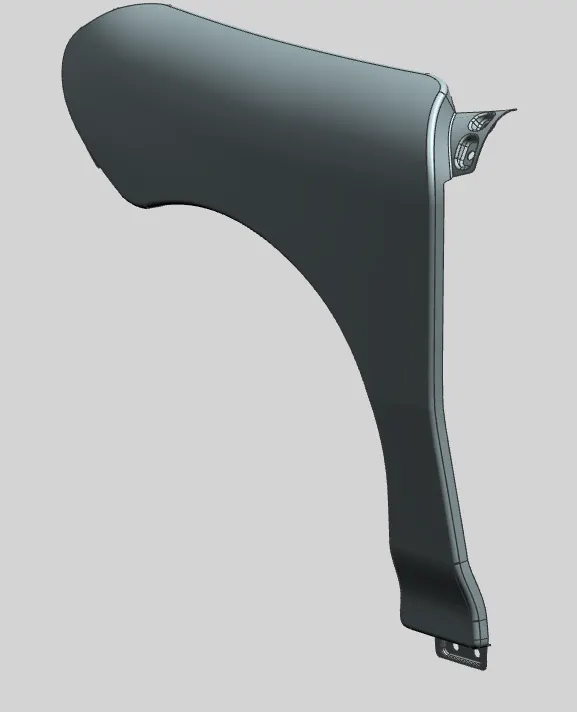
Thereby I completed the design of fender challenge by using given master section and styling surface as an input.