Fender Design
FENDER DESIGN
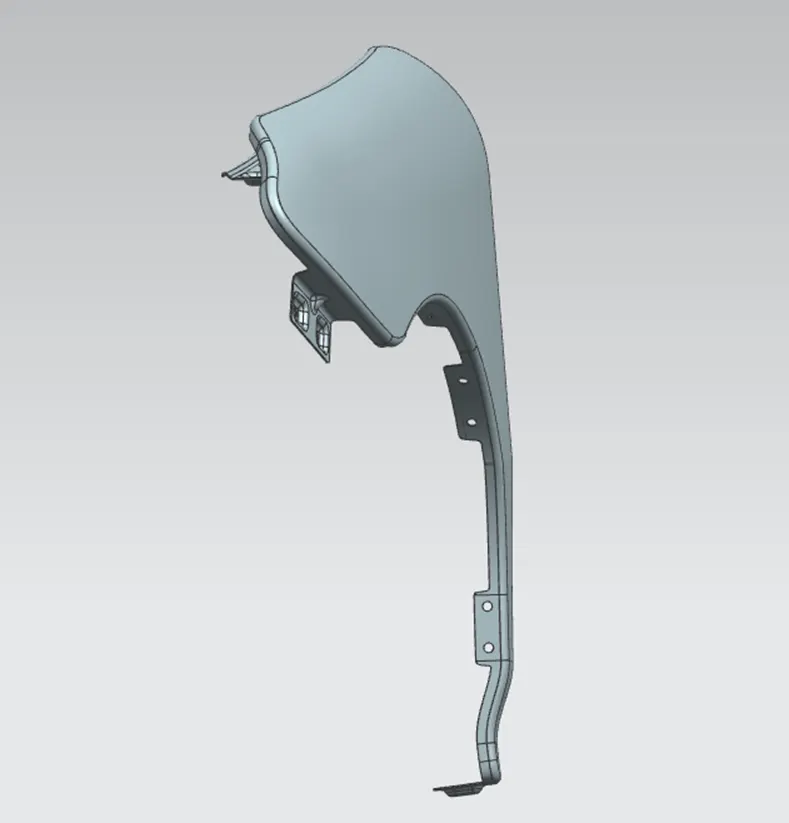
AIM- Design a front fender from the given skin data and the master section provided with Drip mounting, A-pillar, Sill, Bumper and Baffle (splash) Mounts.
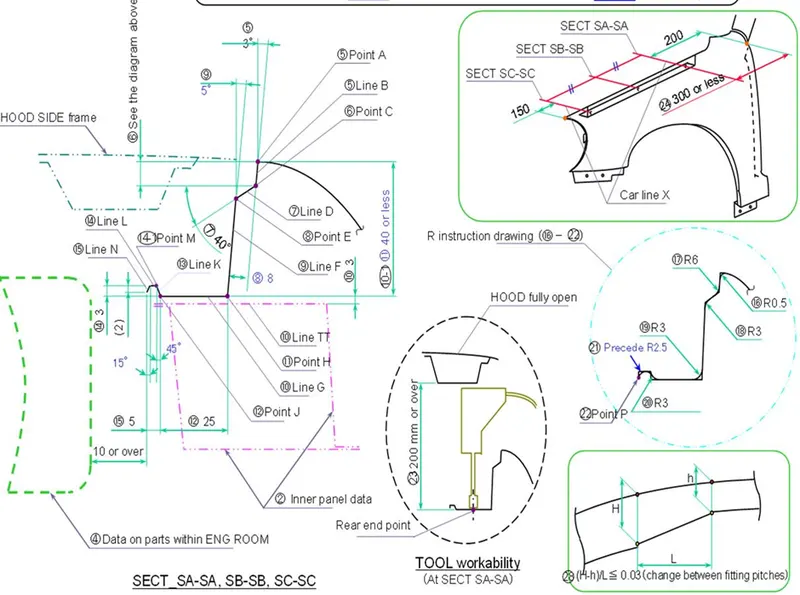
INPUTS- We have given a skin data and provided the master section of drip mounting, A-pillar, sill, Bumper and Baffle mounting which is given below.
SOFWARE USED-
NX-CAD
INTRODUCTION-
FENDER- It is an aesthetic component/part of a car that frames the wheels. Prevention of sand, mud particles, and other road contaminants from being thrown into the engine compartment and also to the pedestrians by the rotating tires are the main purpose served by the fenders.
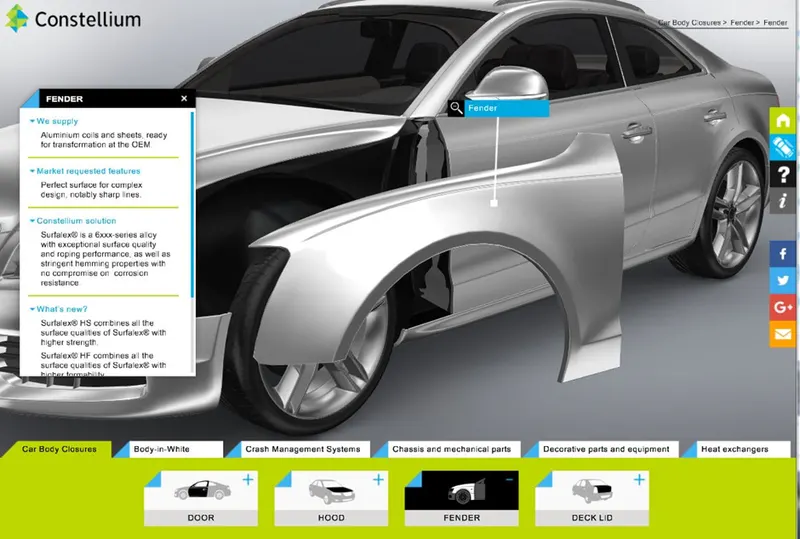
The front fenders are separate components whereas the rear fenders are integrated with the body sides.
Fenders are classified as two types-
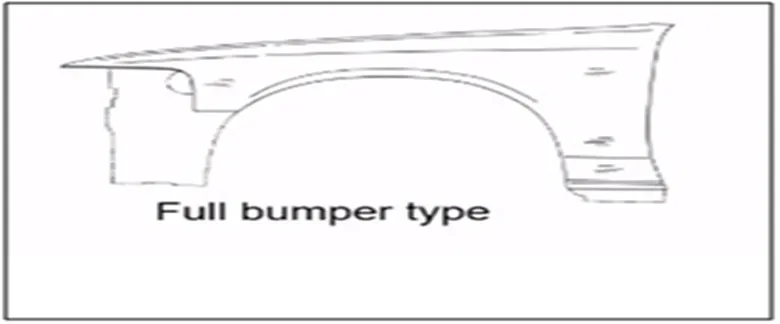
- FULL BUMPER TYPE- These types of fenders were used in earlier models of vehicles. They contribute to the major increment of the steel weight by just covering the front headlights with respect to the bumper region. The problem associated with this kind of fender is there is a lot of wastage in the blank and every inch of a material is a cost to the industry.
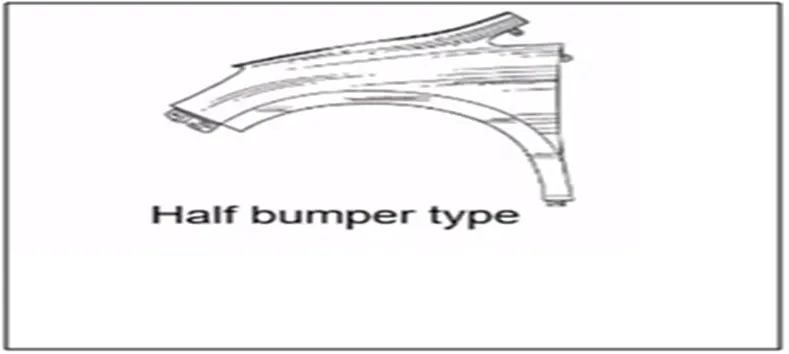
- HALF BUMPER TYPE- These fenders are mainly used for serving the purpose of cost-cutting and reducing enough proportions of the steel wait resulting in a reduction of the weight of the vehicle slightly. They can be economically manufactured, i.e by slightly increasing the blank size, we can produce two fenders at a time.
PURPOSE OF A FENDER-
The purpose of a fender is pretty simple. Its purpose is to keep mud, rocks, and other road debris from being thrown around by the tires. In other words, the fender is a housing for the wheels that keeps road debris contained. If there was nothing covering the wheels, all kinds of debris would be kicked up by the rotating tires.
The fender not only protects your car from sustaining damage from road debris but it prevents this debris from being thrown up at other vehicles on the road. This is why vehicles with large, oversized tires are often required by law to install fender flares.
DESIGN CONSIDERATION-
- Embosses are provided to increase strength.
- The corners of the flanges are smoothened to ease the producibility of part.
- Fillet of 2-3mm is provided to avoid sharp corners and edges.
- Cut outs are provided at certain regions in order to save material as possible.
- Uniform wall thickness of 0.75 mm is maintained.
FENDER MOUNTING POINTS-
- DRIP AREA MOUNTING- The Drip area of the fender attached with engine compartment. It should be 150mm away from the from the front end of the fender for headlamp housing gap and 200mm from the rear end of the fender for wiper equipment gap.
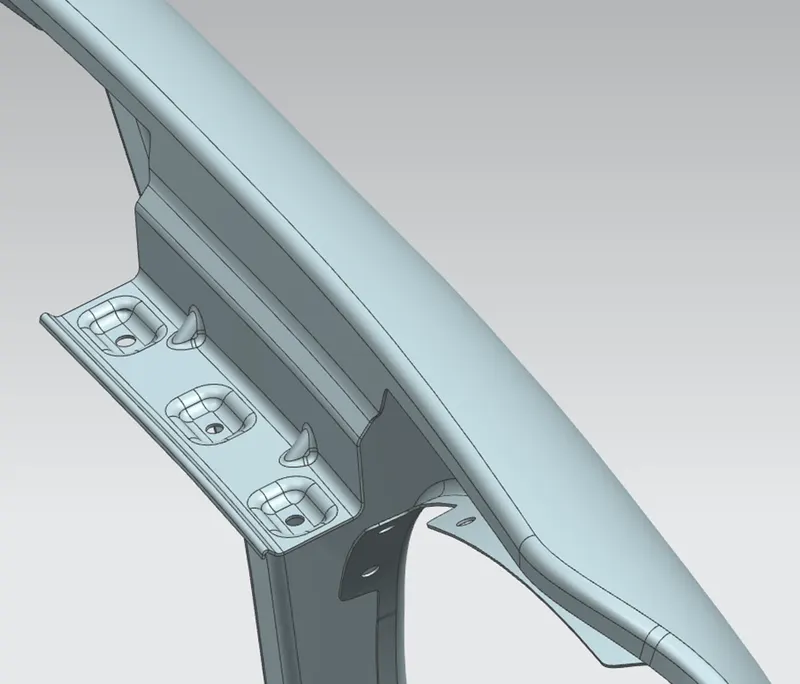
- A PILLAR MOUNTING- The A Pillar mounting of a fender is attached with A Pillar of the car. This mounting has to be created by taking reference from A Pillar.
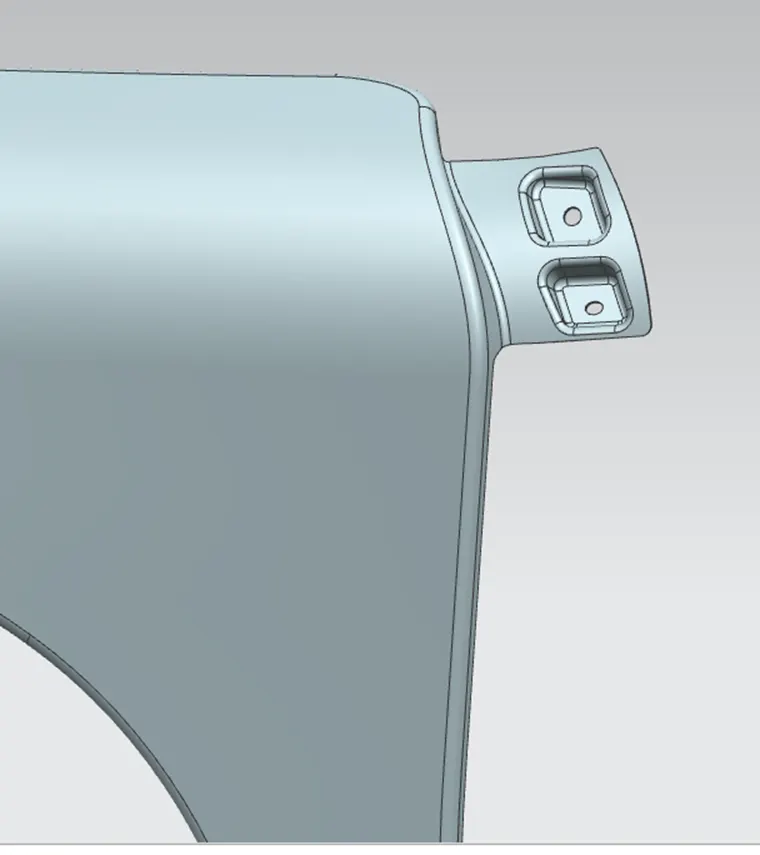
- Sill Mounting- Sill mounting is created on the bottom portion of the fender for attaching to the sill.
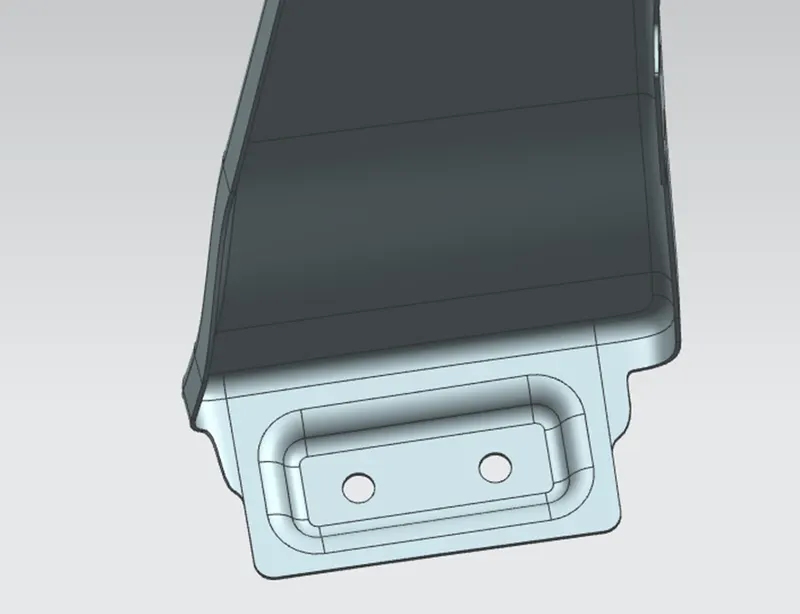
- Bumper Mounting- This mounting point is created for attaching the bumper to the fender. It should have enough strength to hold the bumper steadily.
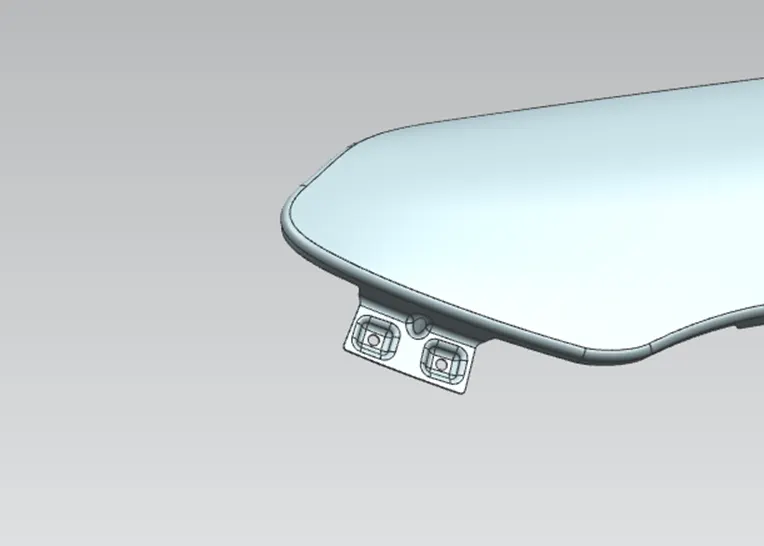
- Baffle Mounting- These mounting points are created for attaching plastic components i.e baffle which prevents chipping inside the engine compartment.
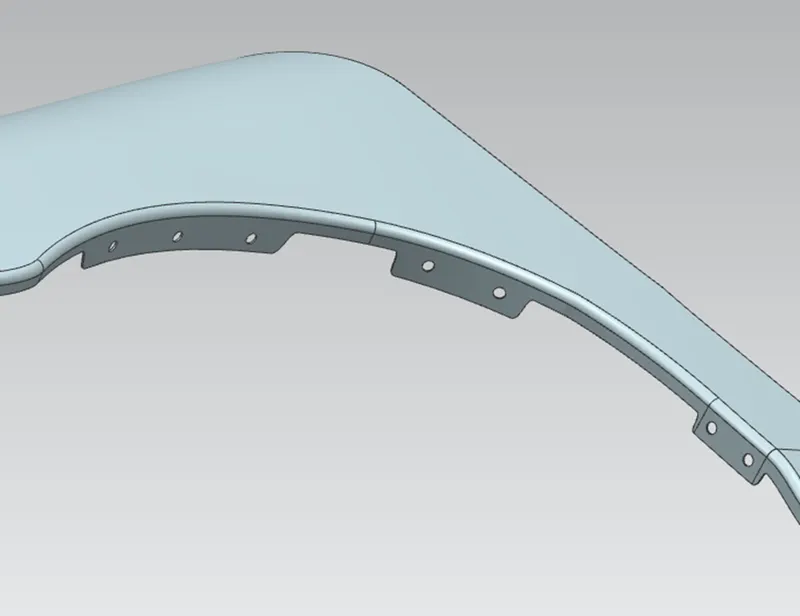
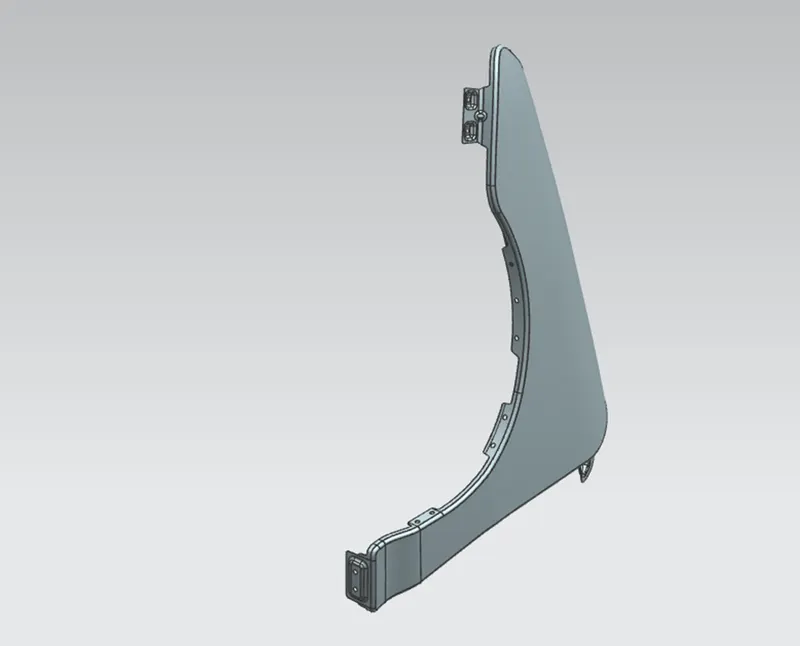
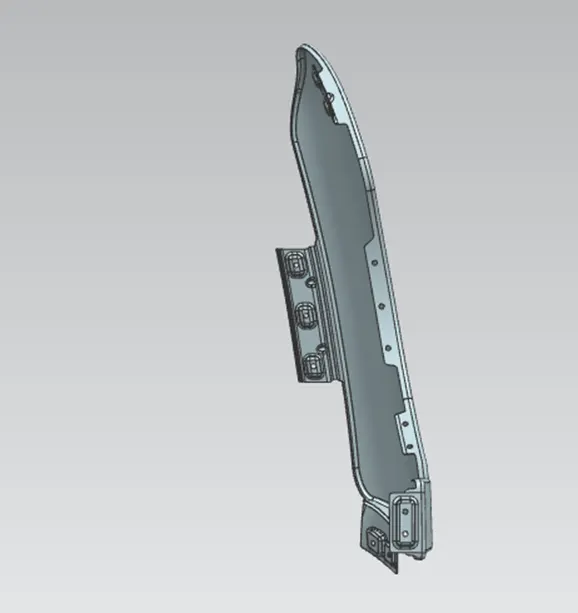
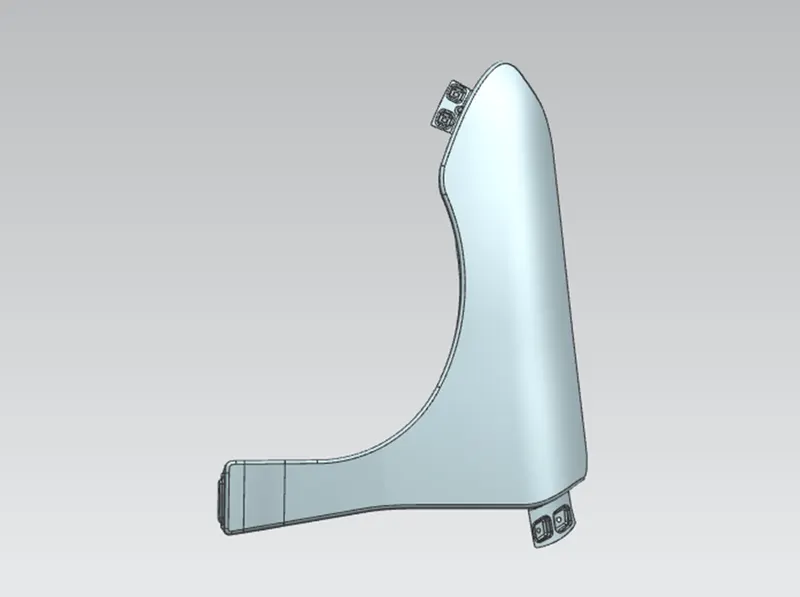
VARIOUS VIEWS OF DESIGN-
- ISOMETRIC VIEW-
- FRONT VIEW-
- SIDE VIEW-
- TOP VIEW-
CONCLUSION-
The front fender is designed according to the given master section and skin data as per the OEM Standards.