Genetic Algorithm
AIM:-To study about genetic algoritm and to calculate the global maxima of stalagmite function.
OBJECTIVE:-
THEORY:-Genetic algorithm (GA) is search bassed optimization techniquebassed on the principles of genetics and natural sections.It is frequently used to find optimal or near-optimal solutionms to difficult problems which otherwise wou;d take life time to solve.
Concept of genetic algorithm:-
4.Genetic Algorithms are sufficiently randomized in nature, but they perform much better than random local search (in which we just try various random solutions, keeping track of the best so far), as they exploit historical information as well.
Flow chart of genetic algorithm

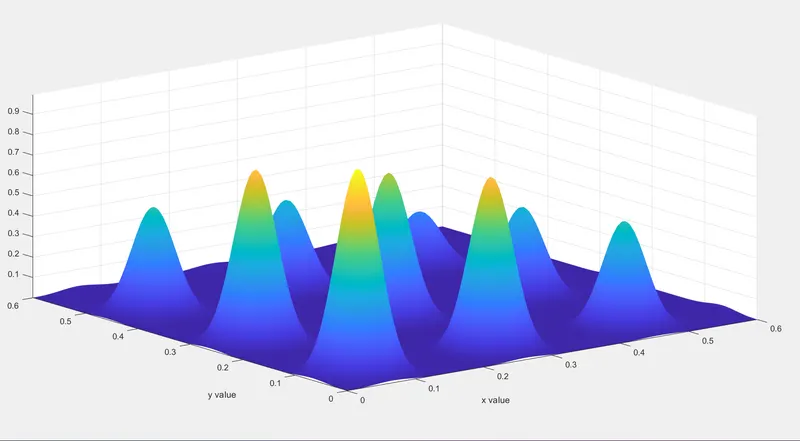
Stalagmite function:-A stalagmite function generally refers to the function with which we are generating values over a stalagmite kind of surface for finding out the local and global maxima and minima of that particular given function.
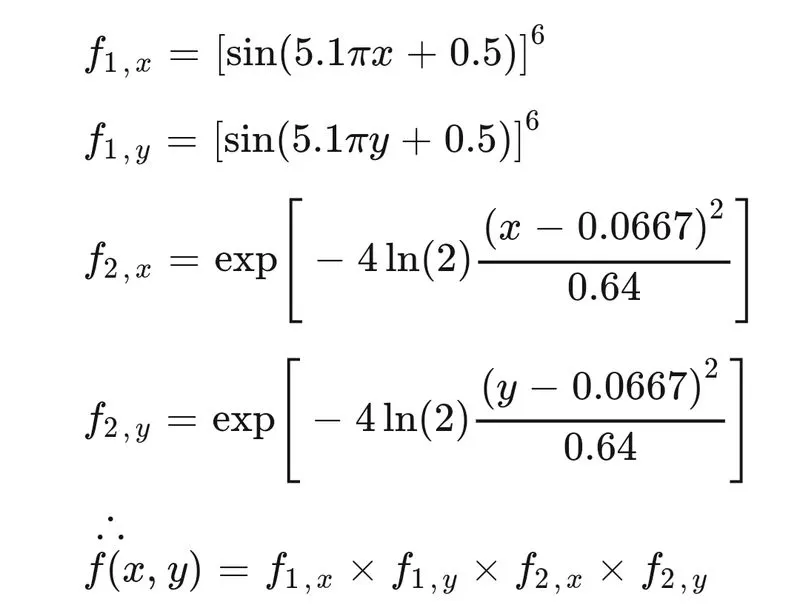
A stalagmite function is given as,
syntax for ga in MATLAB
X = ga(FITNESSFCN,NVARS) finds a local unconstrained minimum X to the
FITNESSFCN using ga. NVARS is the dimension (number of design
variables) of the FITNESSFCN. FITNESSFCN accepts a vector X of size
1-by-NVARS, and returns a scalar evaluated at X.
X = ga(FITNESSFCN,NVARS,A,b) finds a local minimum X to the function
FITNESSFCN, subject to the linear inequalities A*X <= B. Linear
constraints are not satisfied when the PopulationType option is set to
'bitString' or 'custom'. See the documentation for details.
X = ga(FITNESSFCN,NVARS,A,b,Aeq,beq) finds a local minimum X to the
function FITNESSFCN, subject to the linear equalities Aeq*X = beq as
well as A*X <= B. (Set A=[] and B=[] if no inequalities exist.) Linear
constraints are not satisfied when the PopulationType option is set to
'bitString' or 'custom'. See the documentation for details.
X = ga(FITNESSFCN,NVARS,A,b,Aeq,beq,lb,ub) defines a set of lower and
upper bounds on the design variables, X, so that a solution is found in
the range lb <= X <= ub. Use empty matrices for lb and ub if no bounds
exist. Set lb(i) = -Inf if X(i) is unbounded below; set ub(i) = Inf if
X(i) is unbounded above. Linear constraints are not satisfied when the
PopulationType option is set to 'bitString' or 'custom'. See the
documentation for details.
X = ga(FITNESSFCN,NVARS,A,b,Aeq,beq,lb,ub,NONLCON) subjects the
minimization to the constraints defined in NONLCON. The function
NONLCON accepts X and returns the vectors C and Ceq, representing the
nonlinear inequalities and equalities respectively. ga minimizes
FITNESSFCN such that C(X)<=0 and Ceq(X)=0. (Set lb=[] and/or ub=[] if
no bounds exist.) Nonlinear constraints are not satisfied when the
PopulationType option is set to 'bitString' or 'custom'. See the
documentation for details.
X = ga(FITNESSFCN,NVARS,A,b,Aeq,beq,lb,ub,NONLCON,options) minimizes
with the default optimization parameters replaced by values in OPTIONS.
OPTIONS can be created with the OPTIMOPTIONS function. See OPTIMOPTIONS
for details. For a list of options accepted by ga refer to the
documentation.
X = ga(FITNESSFCN,NVARS,A,b,[],[],lb,ub,NONLCON,INTCON) requires that
the variables listed in INTCON take integer values. Note that ga does
not solve problems with integer and equality constraints. Pass empty
matrices for the Aeq and beq inputs if INTCON is not empty.
X = ga(FITNESSFCN,NVARS,A,b,[],[],lb,ub,NONLCON,INTCON,options)
minimizes with integer constraints and the default optimization
parameters replaced by values in OPTIONS. OPTIONS can be created with
the OPTIMOPTIONS function. See OPTIMOPTIONS for details.
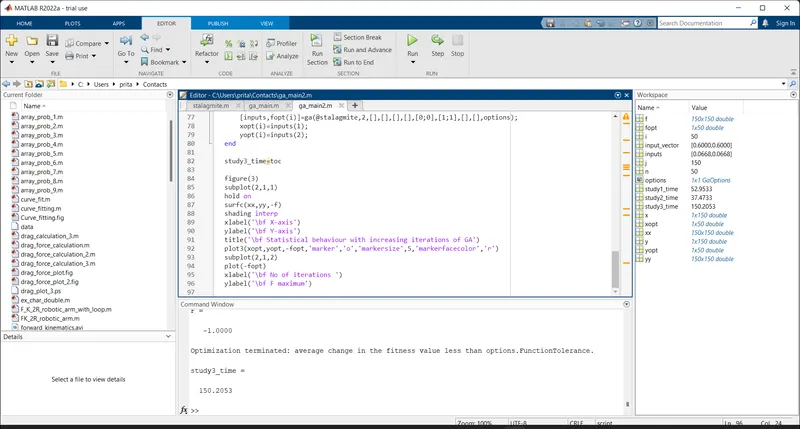
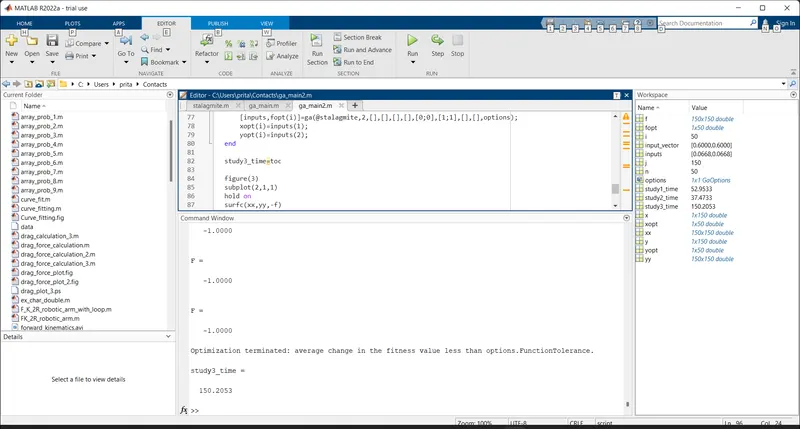
Stalagmite function code