Fender Design
AIM
- To create the Drip Area for front fender as per the given master section
- To create Sill, Bumper, Baffle(Splash), and A-Pillar mount
THEORY
Fender
Fender is the American English term for the part of an automobile, motorcycle or other vehicle body that frames a wheel well. In other words, a fender is the curved portion of the car's body that sits over and houses the wheels. The purpose of a fender is to keep mud, rocks, and other road debris from being thrown around by the tires. i.e, the fender is a housing for the wheels that keeps road debris contained. If there was nothing covering the wheels, all kinds of debris would be kicked up by the rotating tires. The fender not only protects your car from sustaining damage from road debris but it prevents this debris from being thrown up at other vehicles on the road. This is why vehicles with large, oversized tires are often required by law to install fender flares.
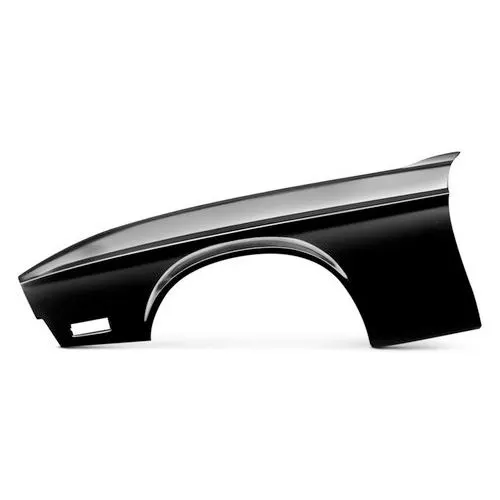
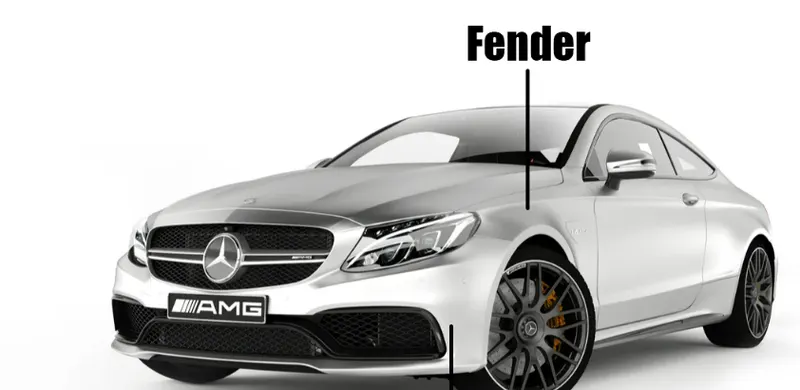
The fender will also help to keep debris off of the rest of the car as well, which be useful when a car throws up a rock or stick from the road. Depending on the design, fenders can also act to make a car more aerodynamic. Many sports cars have very sleek fenders for this reason, and they may have additional features such as grooves or grillwork which are designed to enhance the car's performance at high speed.
Types Of Fender
Full Bumper Type: The full bumper type fender was used in old cars, it covers the full area until the front lighting. But it has a lot of sheet metal material which is unnecessary and increases the weight of the fender. These type fenders are no longer used in the automobiles.
Half Bumper Type: In full bumper type fenders the blank used to create fender is more and there will be more wastage of material. So in order to reduce the material we are using half bumper type. Half bumper type is the modern design where less material is used. Here the productivity is more as compared to full bumper type.
By using half bumper type we can use a lot of plastic on the bumper which reduce the proportion of weight there by increasing performance.
The other function of fenders is of course aesthetic. Most people do not want to look at the framework of a car, and the panels cover the frame and the sides of the engine block.
Depending on the make of the car, fenders may be made from fiberglass steel, or other materials. Many of these materials are designed to crumple in a crash, distributing the impact across the frame of the car to make the crash more survivable for the occupants of the vehicle. Depending on the materials used, fenders can sometimes be bent back into shape after a minor accident; in other cases, they will probably need to be replaced.
Mounting Of Fenders
Fenders are mainly mounted at 5 points
- Body
- A piller
- Sill
- Cowl
- Drip
DESIGN CONSIDERATION
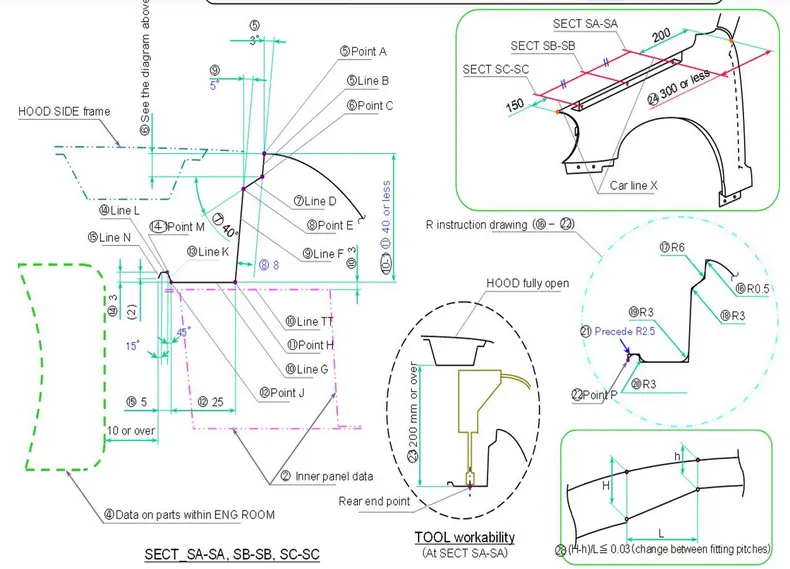
- To have sufficient mounting space of cowl top there should be 300mm or less from A piller.
- To place head lamp housing unit we need at least 150mm
- 5 degree is given to prevent visibility to dirty area and engine compartment from outside.
- The depth from top point must be less than 40mm. The tool has the tendency to punch. If it is more than 40mm tool cannot punch that much depth. More deep, more difficult part is. If it is more than 60mm there will be spring back effect.
SOFTWARE USED
Siemens Nx 12
DESIGN
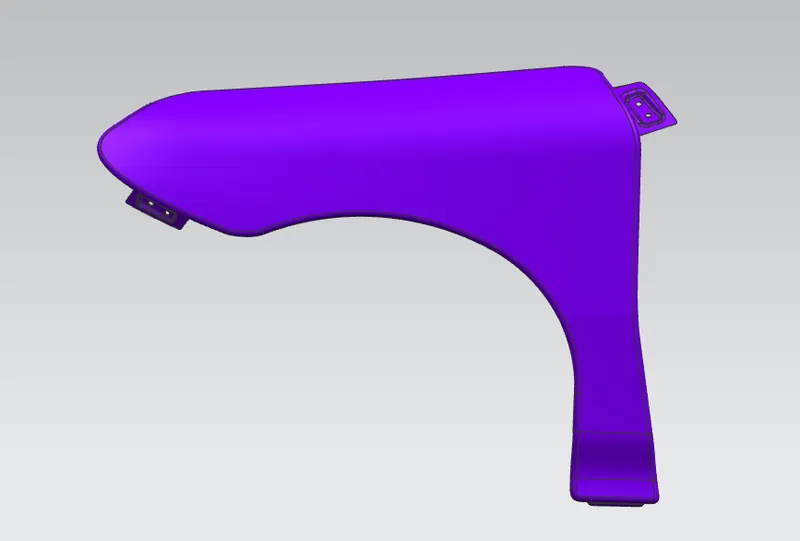
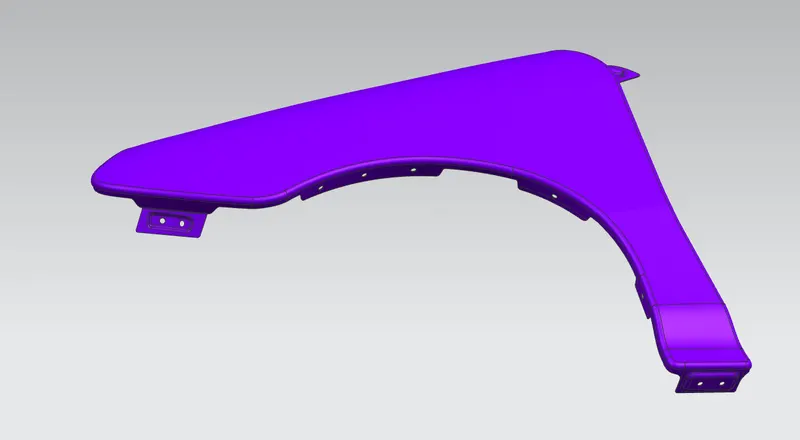
Drip Area Mounting
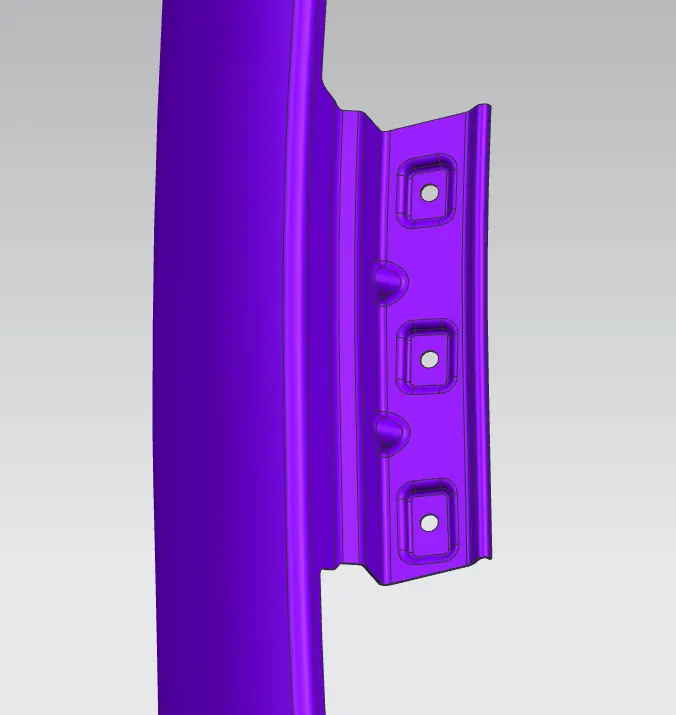
Sill Area Mounting
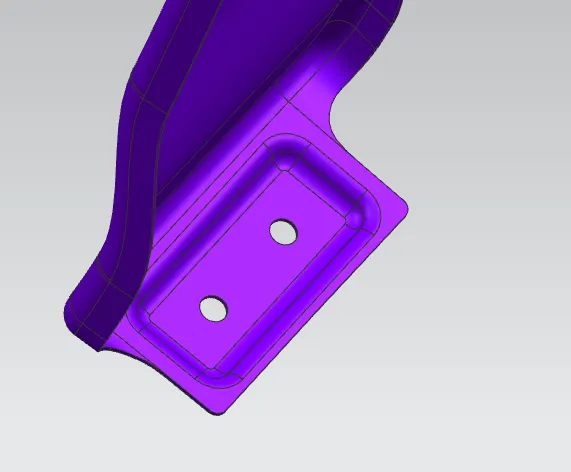
A-Pillar Area Mounting
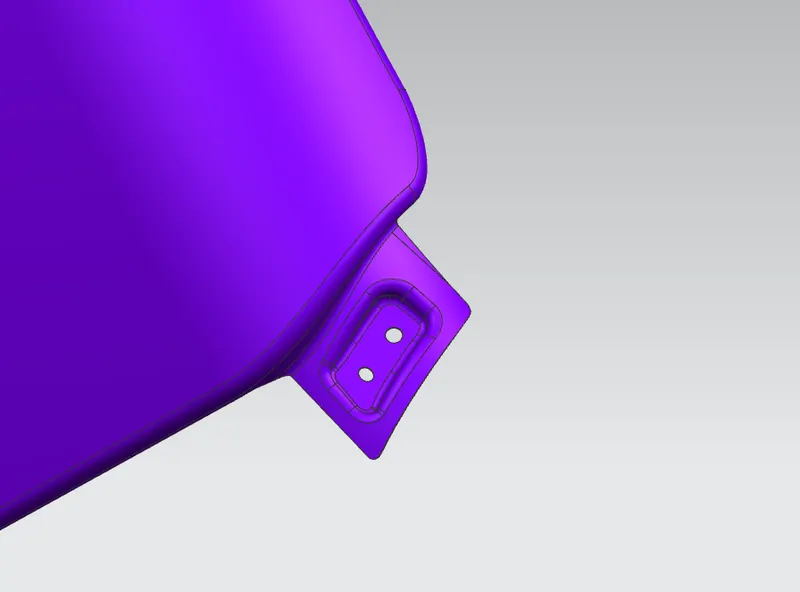
Bumper Area Mounting
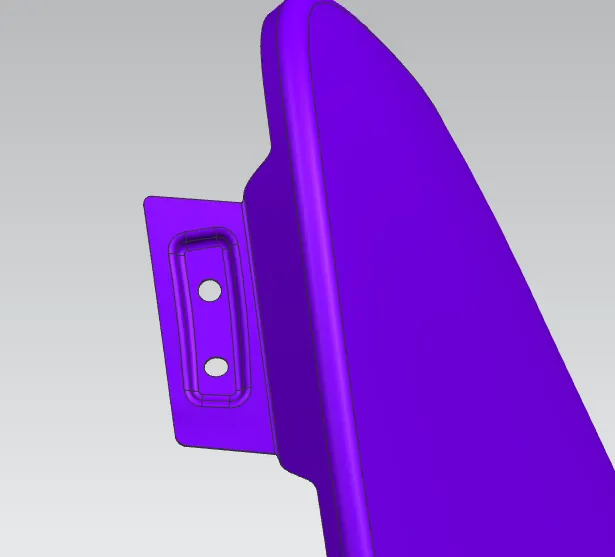
Baffle Mounting
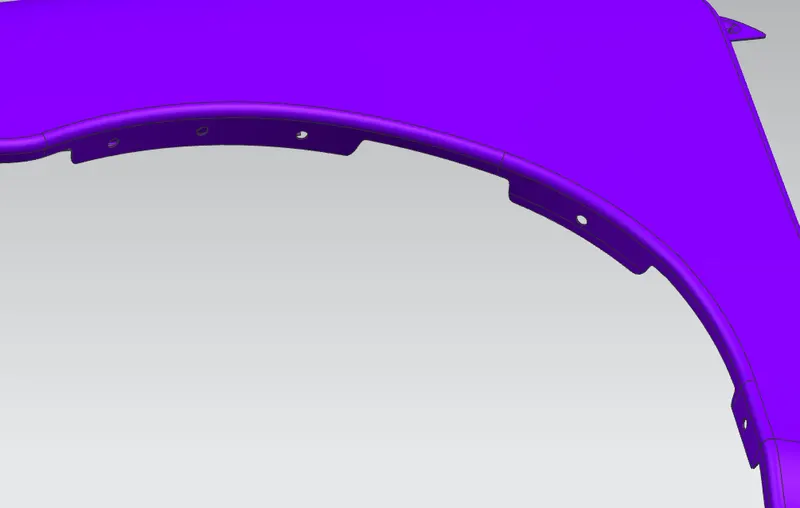
CONCLUSION
Drip Area for front fender as per the given master section has been created along with the Sill, Bumper, Baffle(Splash), and A-Pillar mountings.