Fender Design
Aim:-
To design a front fender from the given skin data and the master section provided with Drip mounting, A-pillar, Sill, Bumper, and Cowl mountings.
INTRODUCTION:-
A fender is a part of the automobile that is placed just above the tyres/wheels (both at the front and back). The purpose of the fender in an automobile is to prevent sand, mud, rocks, liquids, and other roads spray from being thrown into the air by the rotating tire.
Below is an example image of the front fender of a car:
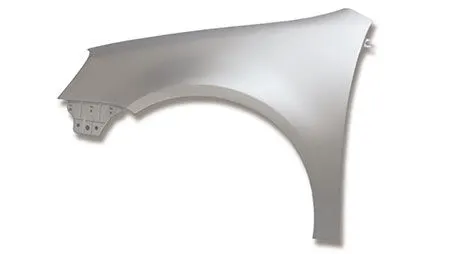
Fender is an American English term whereas n Britan and india it is called Wing and Mudguard respectively. The fender's openings for the wheel wells tend to be much larger than the diameter of the tire because they do not move with the tire suspension and consequently must be large enough to allow the full range of tire motion on the suspension without touching the interior of the wheel well.
Typers of Fender:
There are different fender styles. While appearance may be one of the first things on a person mind when choosing a fender style, but one should aslo be thinking about the amount of coverage that will need to cover enough to stop water spray, rocks, and other debris from hitting your truck, trailer, and other vehicles on the road.
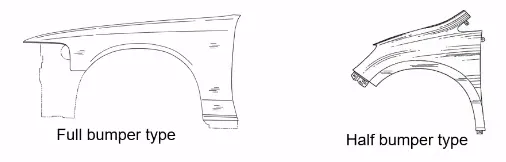
Full Fender:
A full fender means they will be covering more area of the wheel in cmparision to the half fender and it also extends towards the ground a lot more. The main advantage is increased coverage, less water on you and importantly less water on your feet, meaning less road dirt and stuff stays drier longer. Since they cover more it also has the benefit of shielding your bike a bit more form that gritty wearing road dirt so your bike components will also benefit. But due to its bulks shape, the full fender increases the weight of the component which in turn increases the overall weight of the car's body.
Half Fender:
As the name itself refer, the half fender will be covering only the half portion of the wheel's area while the remaining part will be covered with the bumper part. This is done to make sure the weight of the vehicle is reduced without comprising on the quality and service. Most of the modern day vehicles come with half fender because of thier rich aesthetic finish and low overall weight.
Mounting Regions on Fender:
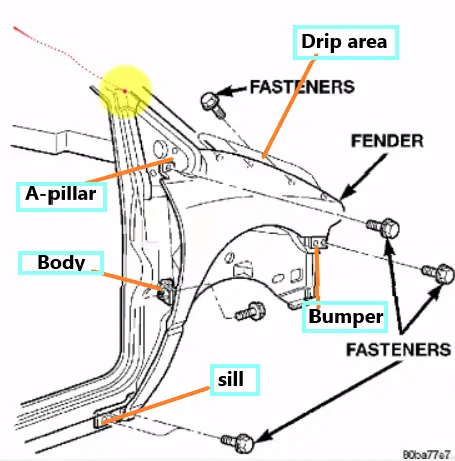
Drip:
It is the area through which the fender is attached to engine housing through fasteners. There should be some consideration followed to design the drip area of the fender. From the backside of the front fender, there will be 200mm clearance for the cowl (wiper motor) mounting area.
A-Pillar:
The roof support structure on either side of a vehicle's windshield. On a typical sedan, additional pillars are located between the front and rear doors (B pillar) and on either side of the rear window (C pillar).
Sill:
The rocker panel, or sill, is the part of the car traditionally running between the wheel-arches beneath the doors.
Bumper:
A bumper is a structure attached to or integrated with the front and rear ends of a motor vehicle, to absorb impact in a minor collision, ideally minmizing repair costs.
Cowl:
A cowl is a panel that covers the gap between your car's hood and windsheld. It supports both the windshield and the dashboard while also protecting the area between the windshield and the hood.
Embosses:
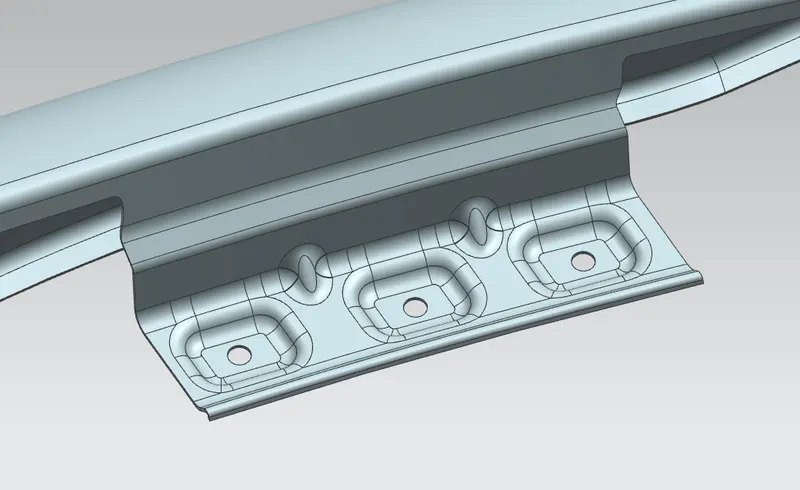
Sheet metal embossing is a stamping process for producing raised or sunken designs or relief in sheet metal. This process can be made using matched male and female roller dies, or by passing a sheet or a strip of metal between rolls of the desired pattern. It is often combined with foil stamping to create a shiny, 3D effect.
Beaks:
Beaks are similar to ribs which improves the strength of a bend or a flange. The beak needs to be centred on the bend it is placed on. More ribs on the same bend offer more stiffness. If two or more ribs are placed on the same bend, they need to be symmetrically placed around the centre of the bends.
Procedure:
Given Fenter Skin:
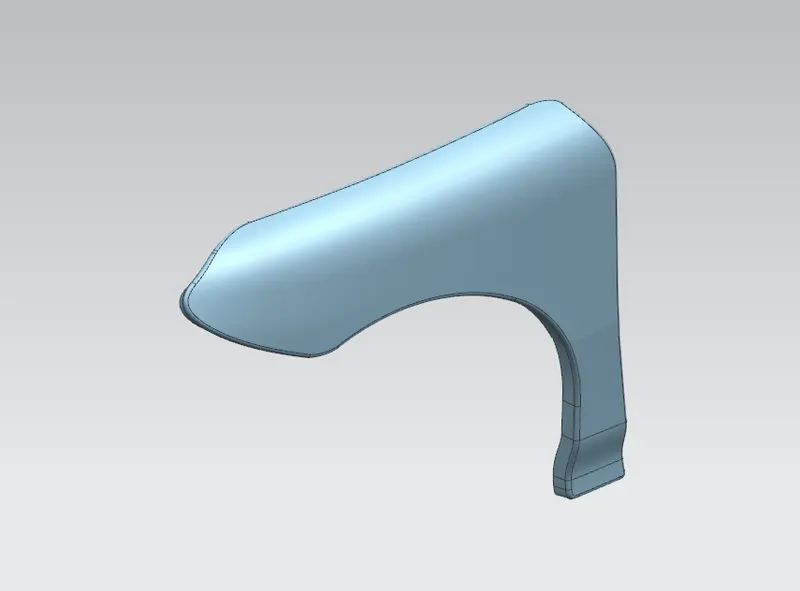
Given Data:
Design of Drip Area Mounting:
- It is the important unit of the fender. It is connected with the engine compartment, therefore the lot of design constraints are to be followed while designing the fender.
- While designing the drip we have to initially leave 200mm for cowl top.
- For placing the headlamp we have to leave at least 150mm at the front while designing the fender.
- Cowl top part consists of wiper motor and its instruments.
Embosses:
Sheet metal embossing is a stamping process for producing raised or sunken designs or relief in sheet metal. This process can be made using matched male and female roller dies, or by passing a sheet or a strip of metal between rolls of the desired pattern. It is often combined with foil stamping to create a shiny, 3D effect.
Beaks:
Beaks are similar to ribs which improves the strength of a bend or a flange. The beak needs to be centred on the bend it is placed on. More ribs on the same bend offer more stiffness. If two or more ribs are placed on the same bend, they need to be symmetrically placed around the centre of the bends.
Design of Sill Mounting Area:
Sill is the panel directly below the bottom of the door supporting the floor and may be used to combine the floor and the body. The bottom end of the fender is mounting on the sill body for reinforcement of the fender panel thus the sill mounting position is designed with holes and emboss, M5 fasteners are used to fix the fenders on the sill body.
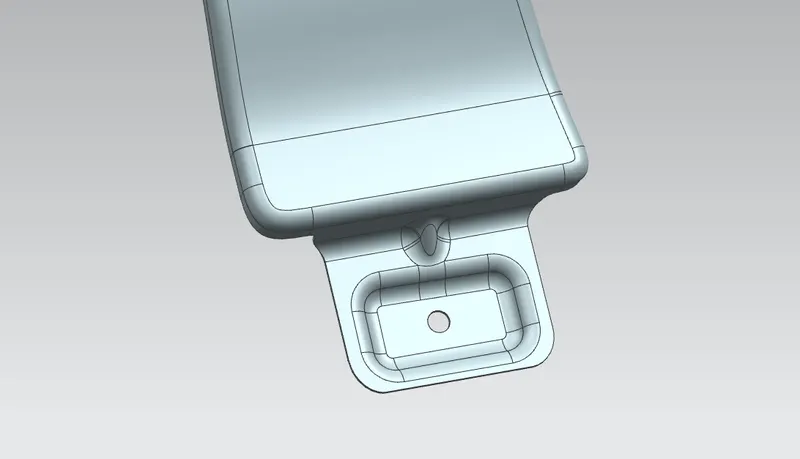
Design of Bumper Mounting Area:
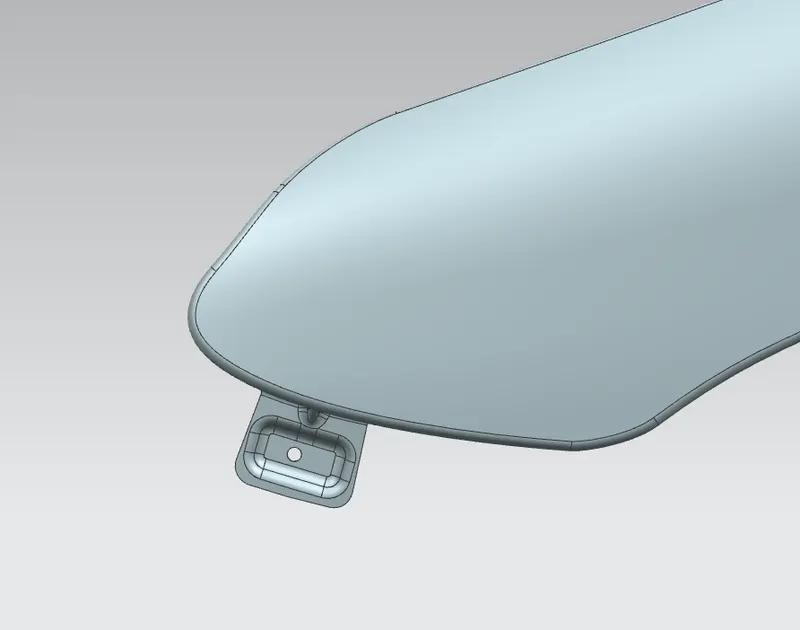
Design of A-piller Mounting Area:
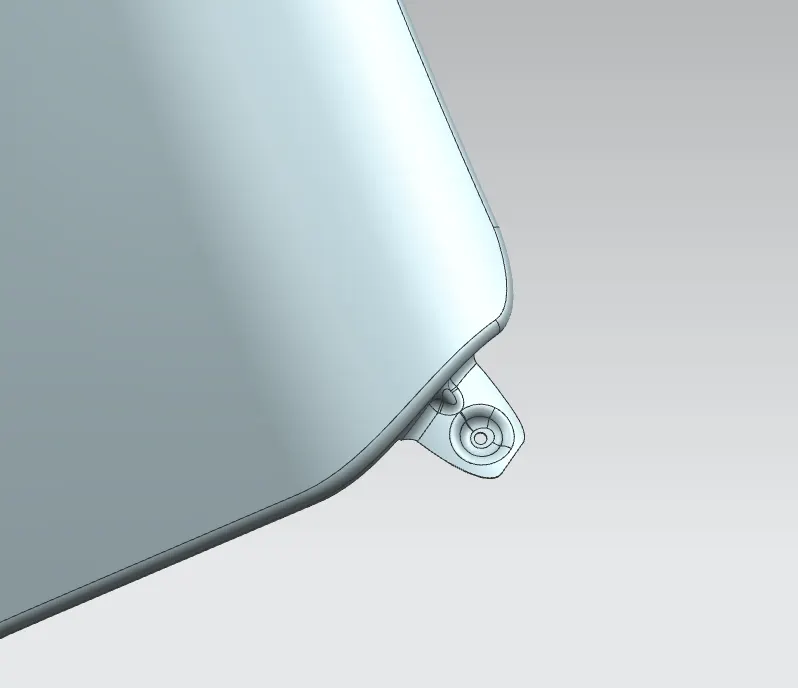
Design of Baffle Mounting Area:
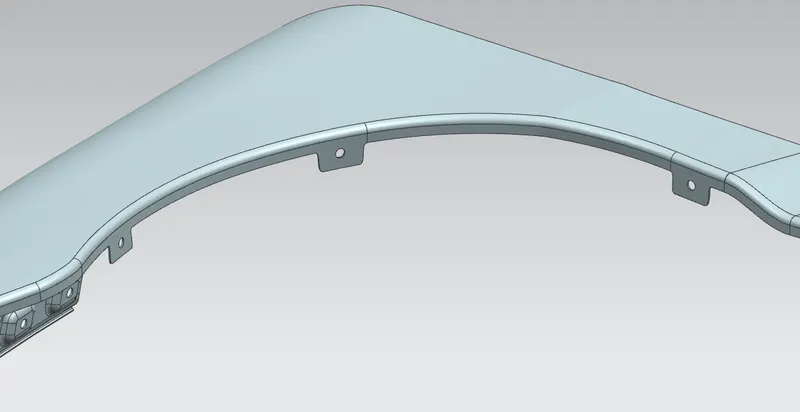
Applying of Thickness to the Surface:
The thickness of 0.75mm inward on the final sewed surface of the fender to the sheet metal parameters.
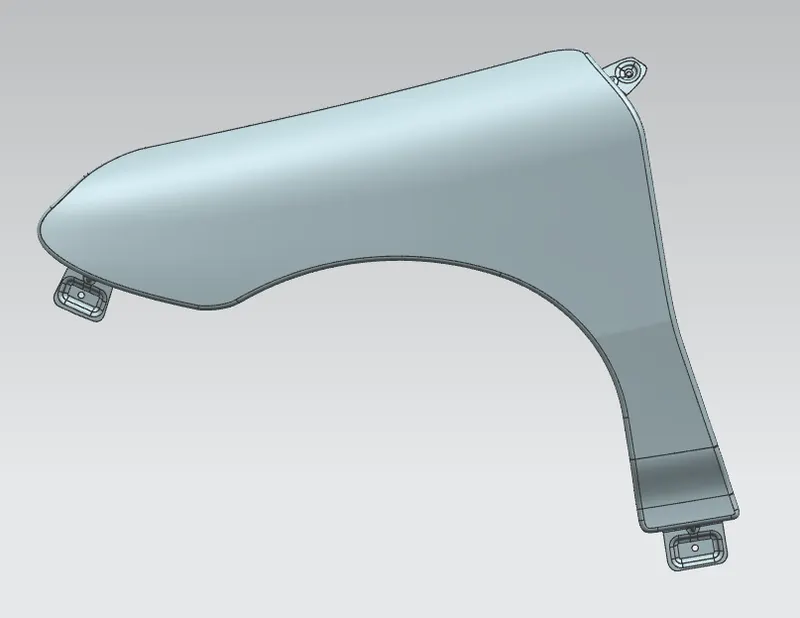
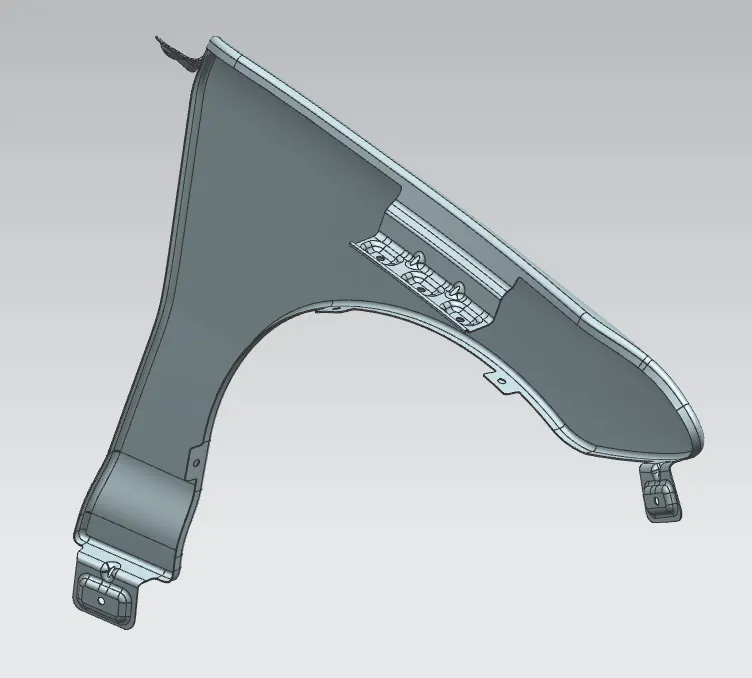
Final Output of The Fender:
CONCLUSION:
Finally design of fender is done with the help of NX-CAD software by following the master section.