Electric Vehicles -Cargo Three wheeler
ELECTRIC VEHICLE:
An electric vehicle (EV) is a vehicle that uses one or more electric motors or traction motors for propulsion. An electric vehicle may be powered through a collector system by electricity from off-vehicle sources or may be self-contained with a battery, solar panels, fuel cells, or an electric generator to convert fuel to electricity. EVs include, but are not limited to, road and rail vehicles, surface and underwater vessels, electric aircraft, and electric spacecraft.
TYPES OF E-VEHICLES:
There are three types of electric vehicles available such as,
- Battery Electric Vehicles(BEVs)
- Plug-in Hybrid Electric Vehicles(PHEVs)
- Hybrid Electric Vehicles(HEVs)
👉Battery Electric Vehicles(BEVs)
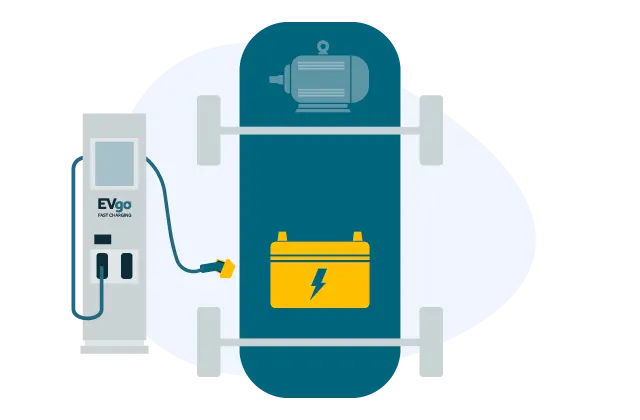
Battery Electric Vehicles also called BEVs and more frequently called EVs, are fully electric vehicles with rechargeable batteries and no gasoline engine. All energy to run the vehicle comes from the battery pack which is recharged from the grid. BEVs are zero-emissions vehicles, as they do not generate any harmful tailpipe emissions or air pollution hazards caused by traditional gasoline-powered vehicles.
👉Plug-in Hybrid Electric Vehicles(PHEVs)
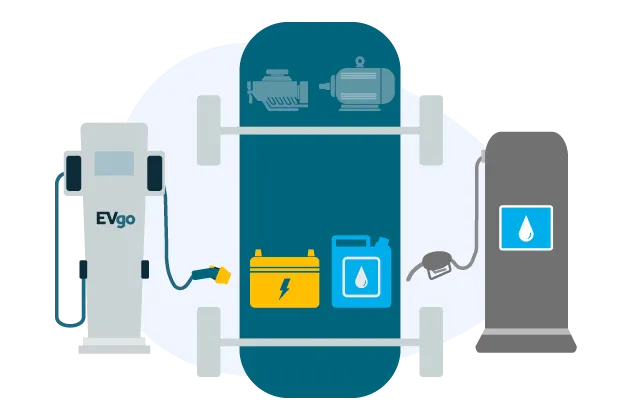
Plug-in Hybrid Electric Vehicles, or PHEVs, have both an engine and electric motor to drive the car. Like regular hybrids, they can recharge their battery through regenerative braking. They differ from regular hybrids by having a much larger battery and being able to plug into the grid to recharge. While regular hybrids can travel 1-2 miles before the gasoline engine turns on, PHEVs can go anywhere from 10-40 miles before their gas engines provide assistance. Once the all-electric range is depleted, PHEVs act as regular hybrids, and can travel several hundred miles on a tank of gasoline. All PHEVs can charge at an EVgo L2 charger, but most PHEVs are not capable of supporting fast charging.
👉Hybrid Electric Vehicles(HEVs)
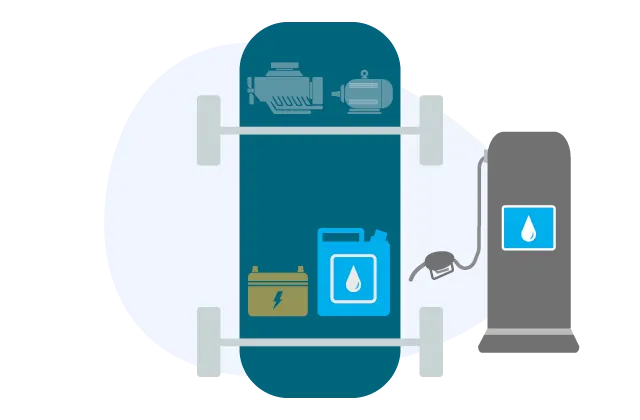
Hybrid Electric Vehicles have both a gas-powered engine and an electric motor to drive the car. All energy for the battery is gained through regenerative breaking, which recoups otherwise lost energy in braking to assist the gasoline engine during acceleration. In a traditional internal combustion engine vehicle, this braking energy is normally lost at heat in the brake pads and rotors. Regular hybrid cannot plug into the grid recharge and cannot charge with EVgo.
Three-Wheeled Cargo Vehicles:
E-rickshaws are small vehicles, with three wheels and use electric power from batteries to run. They use an electric motor as the engine which draws electric power from the rechargeable batteries installed in the rickshaw body. These battery-operated vehicles are perfect for small distant transport. They are perfect for running on narrow streets because of their small size. But the biggest reason for their popularity is low operating cost and zero pollution. They are like normal rickshaws but powered by an electric motor instead of a petrol or diesel motor. They are best for the pollution-free, environmentally friendly transport system in short distances. Actually, they are not capable of running long distances.
Components in E-rickshaw cargo:
- Electric Motor
- Chasis
- Electric Motor Controller
- Battery
- Differential
- Front Shock Absorbers
- Rear Suspension
- Brakes
- Speedometer
- Steering
- Miscellaneous Spare parts
👉Electric Motor:
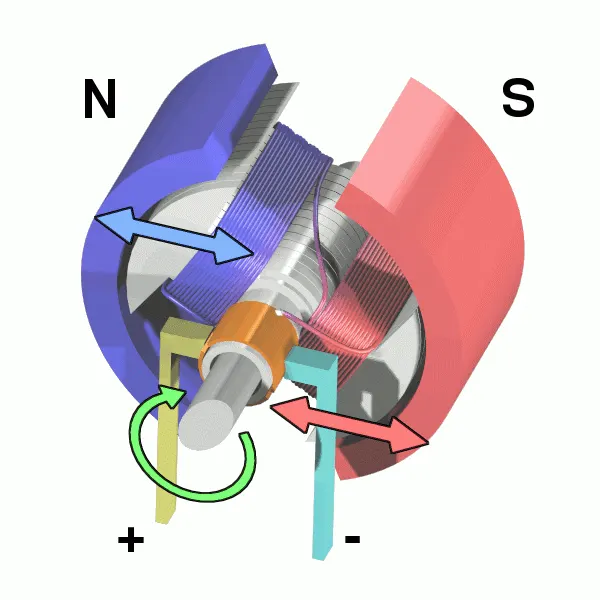
An electric motor is an electrical machine that converts electrical energy into mechanical energy. Most electric motors operate through the interaction between the motor's magnetic field and electric current in a wire winding to generate force in the form of torque applied on the motor's shaft.
1.Brush Less Direct Current(BLDC)
A BLDC Motor is also known as an electronically commutated motor(ECM or EC motor) or synchronous DC motor using a direct current(DC) electric power supply. It uses an electronic closed-loop controller to switch DC currents to the motor windings producing magnetic fields which effectively rotate in space and which the permanent magnet rotor follows. The controller adjusts the phase and amplitude of the DC current(brushes) used in many conventional electric motors.
The advantages of a brushless motor over brushed motors are high power to weight ratio, high speed, nearly instantaneous control of speed(rpm) and torque, high efficiency, and low maintenance.
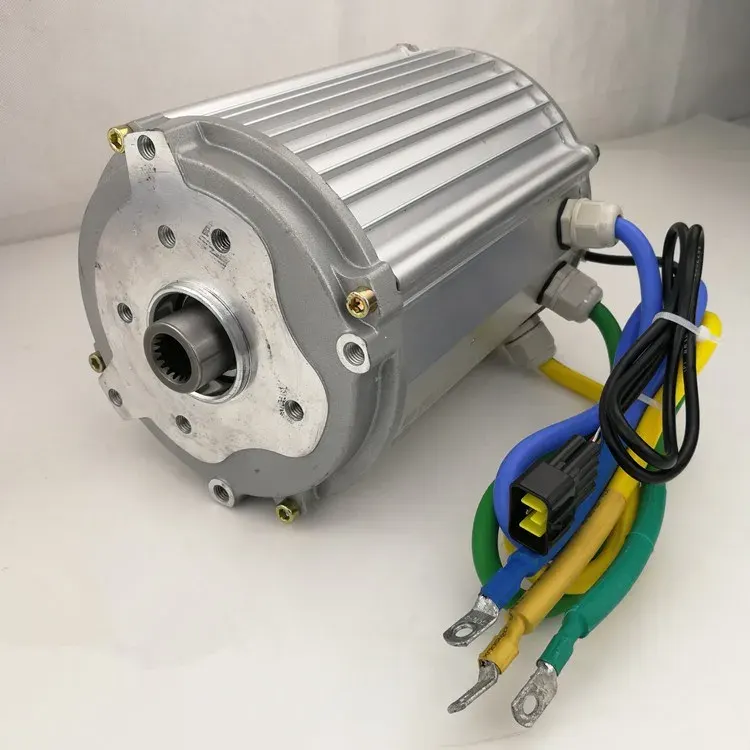
Capacity of motor >>> 1520w & 48V input
Why BLDC?
- High starting torque
- Suitable for high power design density approach
- High efficiency around 95-98%
- No commutator and brush arrangement, so it is maintenance-free (Electronic commutation)
👉Chassis:
The chassis is the main support structure of the vehicle. It bears all the stresses on the vehicle in both static and dynamic conditions. In a vehicle, it is analogous to the skeleton in living organisms. The origin of the word chassis lies in the french language. Every vehicle whether it is a two-wheeler or a car or a truck has a chassis frame. However, its form obviously varies with the vehicle type.
Types of chassis:
- Ladder frame chassis
- Backbone chassis
- Monocoque chassis
- Tubular chassis
1.Ladder Frame chassis/Body on Frame:
The Ladder chassis gets its name from the shape of has which simply put, is like a ladder. It has two long and heavy beams which are supported by two short beams. The main selling point of the ladder chassis was how easy it was to manufacture. During the beginning of the era of the automobile, technology was not really advanced and the simplicity of the ladder chassis made it easier to mass-produce. The chassis also makes the car assembly easier. The ladder chassis is quite heavy and thus finds use in vehicles that need to tow heavy stuff around. Steel is the material used for fabricating the chassis.
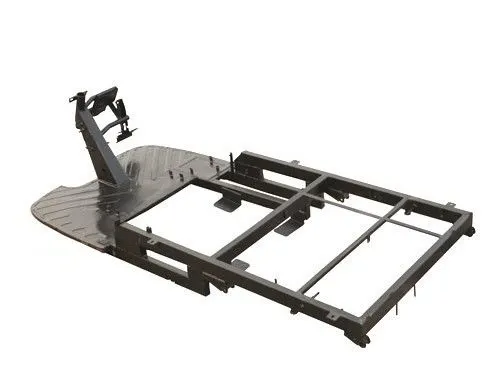
Advantages:
- Easier to assemble as parts can be easily put in
- The construction method makes it quite tough
- Easier to fix as parts are not permanently attached
Disadvantages:
- It has a week of torsional rigidity making it bad for cornering
- Heavyweight makes it not ideal for sports cars or hatchbacks
2.Backbone chassis:
Backbone tube chasis is a type of automobile construction chassis that is similar to the body-on-frame design. Instead of a two-dimensional ladder-type structure, it consists of a strong tubular backbone(usually rectangular in cross-section) that connects the front and the rear suspension attachment areas
Advantages:
- Due to its construction, the half axle has better contact with the ground when off-roading
- The driveshaft is covered by the chasis makes it more likely to survive off-roading
- The structure has good torsional rigidity allowing it to withstand more twist than ladder chassis
Disadvantages:
- The driveshaft repair is complicated if it fails as the main chassis covers the entire shaft which makes it necessary to open it
- The manufacturer of backbone chassis is quite expensive which increases the cost of the vehicle
3.Monocoque chassis
Monocoque is a shell around the car made by using both chasis as the frame in a single construction. This is the most commonly used chassis right now due to tht number of advantages of has over the other chassis
Advantages:
- It's safer than both the other chassis due to its cage-like construction
- The chassis is easy to repair as well
- It has a superior torsional rigidity
Disadvantages:
- The chassis is obviously heavy as it's both the frame and chasis as one single entity
- Producing it in small quantities is not financial chassis is obviously heavy as it's both the frame and chasis as one single entity
4.Tubular chassis:
Tubular chassis were mainly used in race cars due to the unrivaled safety they provide. These were an upgrade from the ladder chassis as they were three-dimensional and were stronger than the ladder chassis. They employed the use of a strong structure below the doors to get more overall strength. It was rarely used in passenger cars
Advantages:
- Better rigidity compared to other chassis in the same weight.
- Offers the best weight/rigidity ratio allowing the car to be lightweight while being strong.
- Best choice for race cars due to lightweight and better rigidity than other chassis
Disadvantages:
- Tubular chassis are complex structures and cannot be made using autonomous methods
- Tubular chassis are time-consuming to build and cannot be mass-produced
- Not feasible to be used on passenger cars
- The structure raises the door which makes it difficult to access the cabin
👉Brakes:
A brake is a mechanical device that inhibits motion by absorbing energy from a moving system. It is used for slowing or stopping a moving vehicle, wheel, axle, or to prevent its motion, most often accomplished by means of friction
Types of brakes:
They are four types of brakes are present such as,
- Disc Brakes
- Drum Brakes
- Emergency Brakes
- Anti-lock Brakes
1.Drum Brakes:
A Drum brake is a brake that uses friction caused by a set of shoes or pads that press outward against a rotating cylinder-shaped part called a brake drum. The term drum brake usually means a brake in which shoes press on the inner surface of the drum. This type of Brake system is used on Scooters, commuter bikes, three-wheelers including Auto rickshaws.
They are three types present in Drum brakes such as,
- Mechanical Drum Brake
- Pneumatic Drum Brake
- Hydraulic Drum Brake
>>> Mechanical Drum Brake
In the mechanical system such as in the two-wheeler & auto-rickshaw, the brake shoes are actuated by a cam, which is attached to the brake linkage & pedal. When you press the brake pedal, the cam turns. Thus, it causes the brake shoes to expand outwards and rub against the drum.
The friction between the brake linings and the drum causes the drum to stop rotating; thereby stopping the wheel. When you release the brake pedal, the retracting springs bring the brake shoes back to their original position. This results in a gap between them and the drum and to again spin it freely.
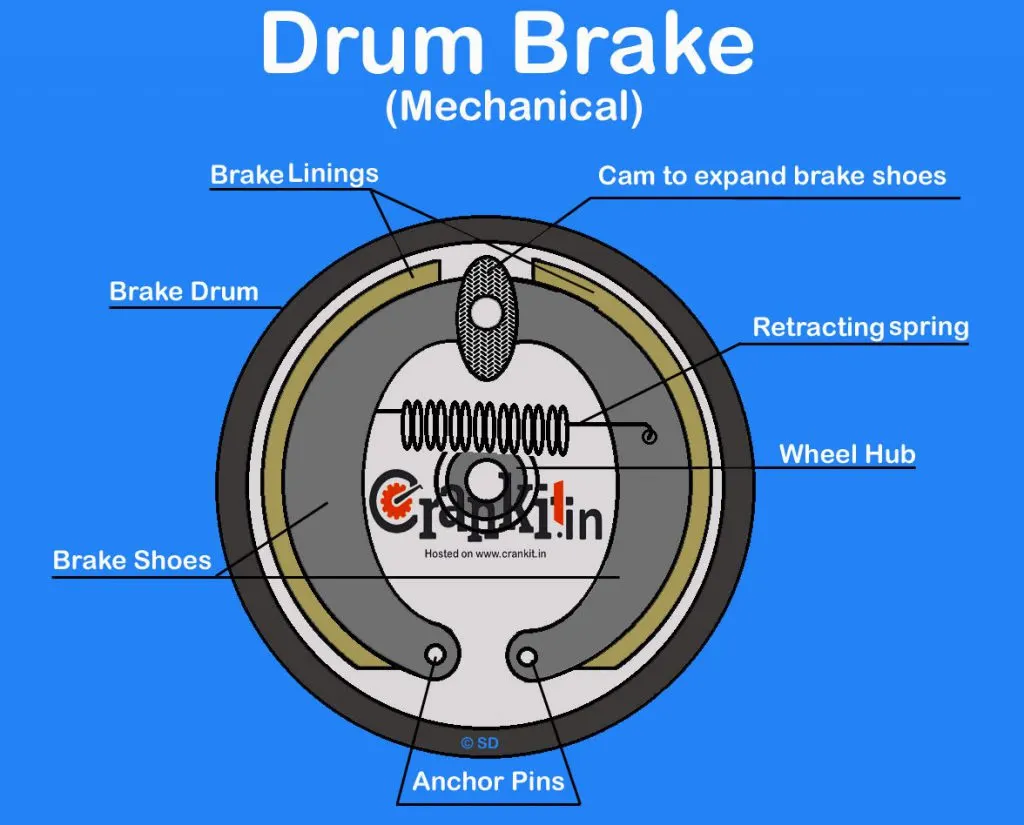
Parts:
- Cam
- Brake Drum
- Retracting Spring
- Brake shoes
- Anchor pins
- Wheel Hub
- Brake Linings
>>> Hydraulic Drum Brakes
The hydraulic brake system such as in cars is a bit superior to the mechanical one. In this design, the hydraulic wheel cylinder replaces the cam. In the hydraulic system, instead of a cam, the wheel cylinder’s pistons push the brake shoes outwards.
The brake shoes fit on the anchor plate or braking plate. It holds the brake system parts together and onto the car’s axle. When you press the brake pedal, the oil in the brake master cylinder multiplies the hydraulic force sent to the wheel cylinders. Thus, it causes its pistons to push outwards. The pistons, in turn, cause the brake shoes to expand and rub against the drum. The friction between the brake linings and the drum causes the drum to stop rotating, thereby the wheel to stop
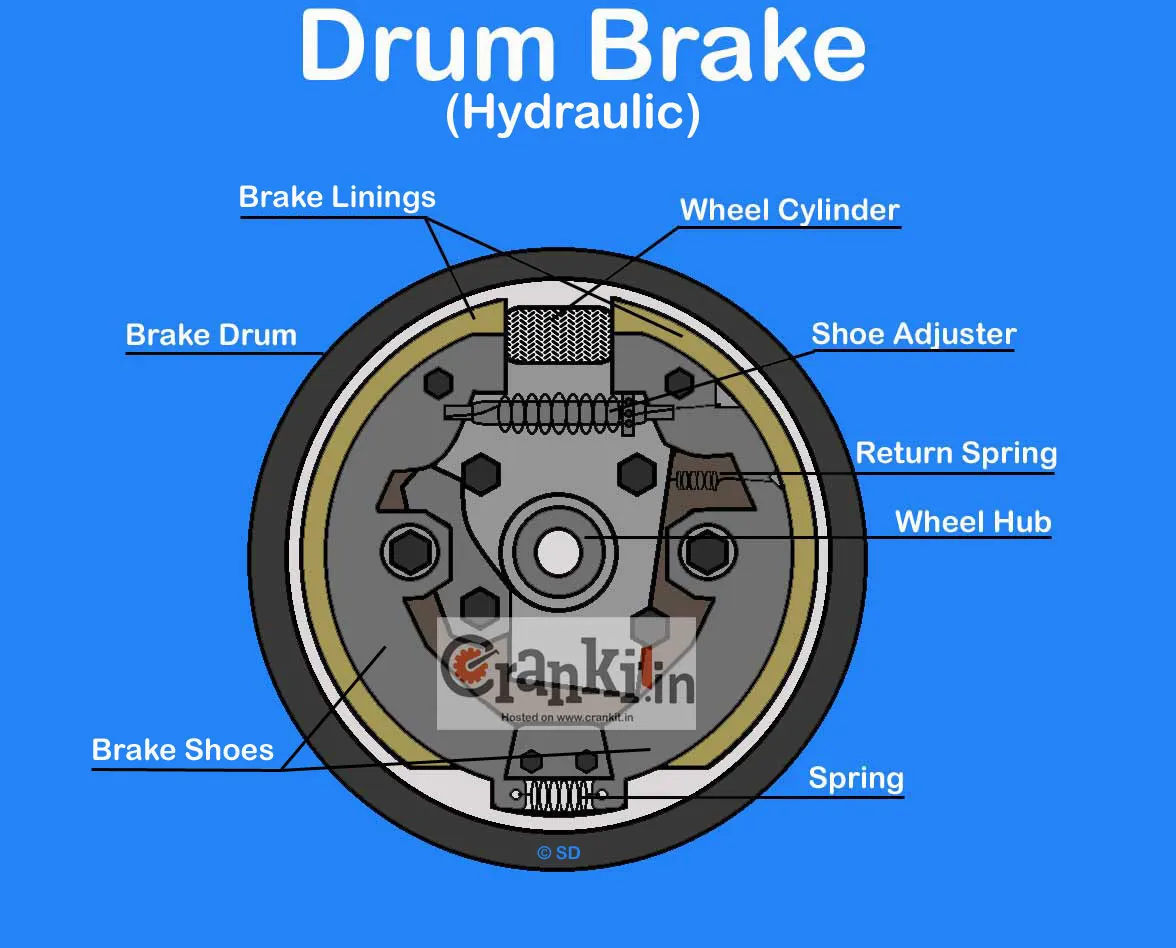
Parts:
- Wheel Cylinder
- Brake Drum
- Retracting Spring
- Brake shoes
- Anchor plate
- Shoe adjuster
- Wheel Hub
- Brake Linings
Advantages of Brake Drum:
- simple Design
- Low maintenance cost
- Easy & cheaper to manufacture
- Comparatively longer life
Disadvantages of Brake Drum:
- Low braking force compared to disc
- Brakes 'fade' when the driver applies them for a prolonged time.
- The brake shoe lining made of asbestos is harmful to humans
Note: Asbestos refers to a group of fibrous minerals used to strengthen and fireproof materials. When inhaled over long periods of time, asbestos fibers become trapped in the body and cause diseases such as mesothelioma, lung cancer, and asbestosis
- When wet, the braking grip reduces considerably
- Non-asbestos linings catch moisture; causing the brakes to grab suddenly.
👉Suspension:
Suspension is the system of tires, tire air, springs, shock absorbers, and linkages that connects a vehicle to its wheels and allows relative motion between the two. Suspension systems must support both road holding/handling and ride quality, which is at odds with each other
Types of Suspension we used in the E-Rickshaw are,
- Shock absorbers/Damper
- Leaf Spring
>>>Shock Absorbers:
A shock absorber or damper is a mechanical or hydraulic device designed to absorb and damp shock impulses. It does this by converting the kinetic energy of the shock into another form of energy(typically heat) which is then dissipated. Most shock absorbers are a form of dashpot(a damper that resists motion via viscous friction)
- Mono Suspension
- Dual Suspension
Dual Suspension:
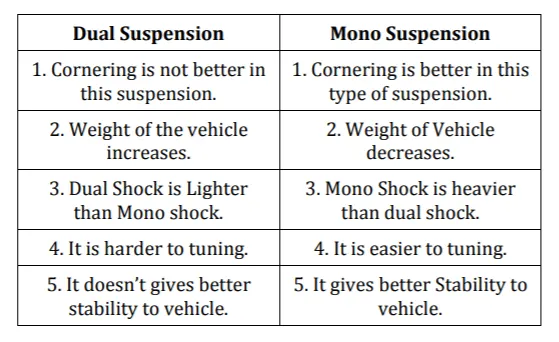
It is a widely used suspension in 2 wheeler vehicle. There is no type of harm to this suspension if we increase the load on the vehicle. It is widely preferred in the vehicle which is used in rough terrain vehicle. As in rough roads there are continuously changing loads on the vehicle, so its suspension transfers the load properly to get better ride comfort. The adjustment of this suspension is difficult. We can drive the vehicle if any one of the suspensions gets oil leaked or damaged or failed while driving. The lifespan of this suspension is more that is why it's used more. of vehicles. It is a cost-effective suspension. The two-piston also completely separates the shock fluid and the gas components. Whenever we encounter the bump on a motorcycle with two shocks, both the shock compress but there is a very rare situation when both of them compress for an equal length. This leads to downgraded dynamics when it comes to stability
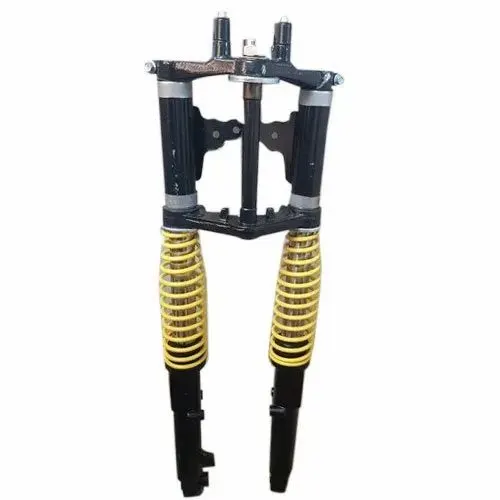
Dual Suspension 33 inch
Advantages:
- Load Bearing capacity of dual suspension is more.
- If one of the shock absorbers leaks oil then the other can still carry the load.
- The cost is less.
- Maintenance of dual suspension is easy as compare to mono shocks. Give a smooth ride through rough terrain.
Disadvantages:
- Tuning has to be done in dual suspension.
- Adjustment is difficult on the vehicle frame.
- Does not provide proper cornering.
- The ride is compromised at high speed.
Mono Suspension
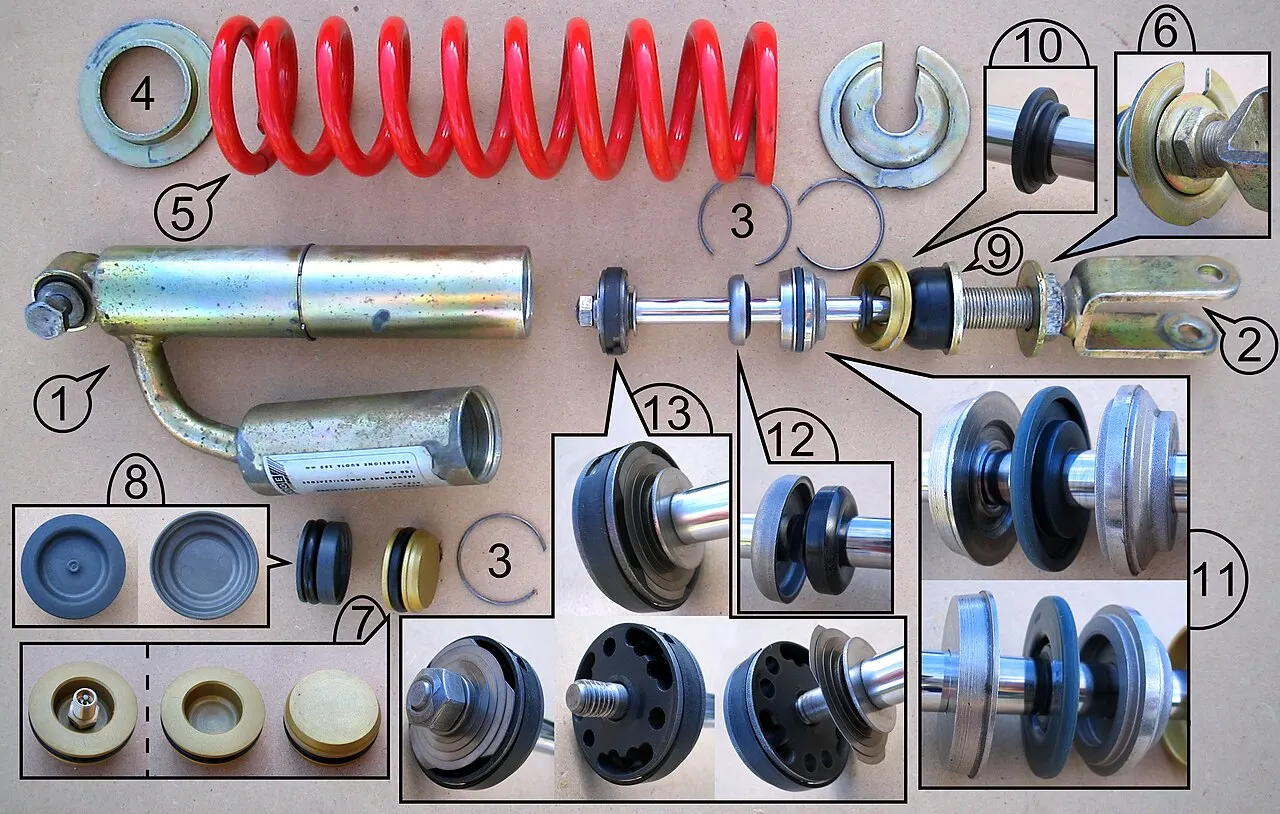
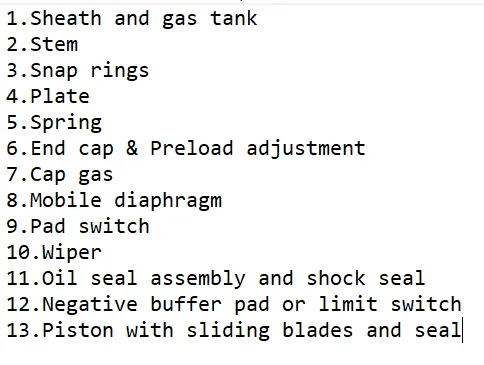
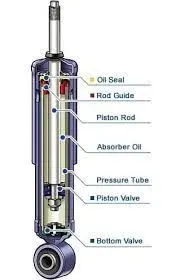
Traditionally telescopic suspension is used in two-wheelers motorcycles with only one shock absorber and helical coil springs over it are called mono shocker absorbers. It also eliminates torque and provides more consistent handling and braking. It is also a gas-pressurized shock, the piston in the shock is also called a working piston and it moves in relative synchrony inside the pressure tube in response to changes in road smoothness. The length of the mono-shock absorber is more than the dual shock absorber. The mono-shock absorber can be mounted in either way i.e. it does not have any directionality. It does not have any directionality. It does not have any compression valve, whose role has been taken up by dividing piston, and the gas in a monotube shock is under high pressure which can actually help it to support some of the vehicles' weight
Advantages:
- Mono shock eliminates torque to the swing arm and improves braking and handling of the vehicle
- Easier to adjust on the vehicle as there is only one shock to adjust
- The Linkage used to connect the shock to the swingarm are frequently designed to give a rising rate of damping for the rear
- It has better cornering ability
Disadvantages:
- Initial cost and maintenance cost is high
- May get failed If excess load applied
>>>Leaf Spring:
A leaf spring takes the form of a slender arc-shaped length of spring steel of a rectangular cross-section. In the most common configuration, the center of the arc provides the location of the axle, while loops formed at either end provide for attaching to the vehicle chassis. The overall purpose of a leaf spring is to provide support for a vehicle. It also creates a smoother ride, absorbing any bumps or potholes in the road. Additionally, leaf springs are used to locate the axle, control the height at which the vehicle rides and keep the tires aligned on the road.
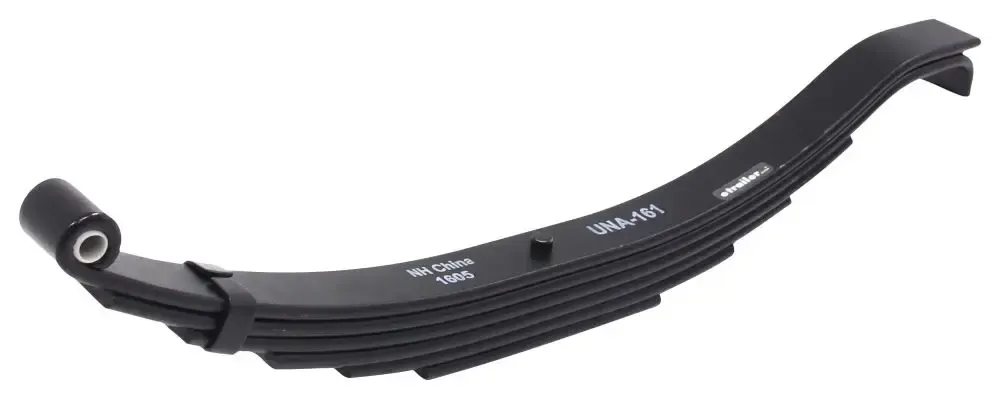
6 Leaf slipper spring
Advantages:
The structure is simple, relatively low cost of manufacture, and easy maintenance, It not only played the role of shock absorption buffer, as well as the effectiveness of guidance agencies. So the use of leaf springs more widely, trucks buses, sport utility vehicles, vans, and pickups are very useful.
Disadvantages:
The structure is only applicable to non-independent suspension, the use of certain limitations; leaf spring by the name suggests is a combination of steel, the overall quality and stiffness are great, resulting in relatively poor comfort, The vertical size is too long, is not conducive to shortening the car before the overhang and rear suspension, in addition to the framework of the steel leaf spring connection is also very easy to wear.
👉Differential:
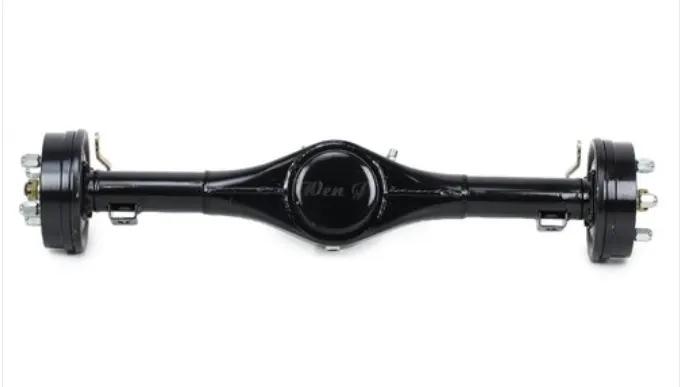
The driving axle is one of the cross members which supports the load of the tractor and has the driving wheels at its ends. The driving axle consists of a housing, a differential, two-axle shafts (half axles), and final drives (if required).
The differential is an important component of the driving axle. The main functions performed by the differential system are:
- Further reduces the rotations coming from the gearbox before the same is passed on to the rear axles.
- Changes the direction of the axis of rotation of the power by 90o i.e. from being longitudinal to the transverse direction.
- To distribute power equally to both the rear driving axles when the tractor is moving in a straight-ahead direction.
- To distribute the power as per the requirement to the driving axles during turning i.e. more rotations are required by the outer wheel as compared to the inner wheel – during turns.
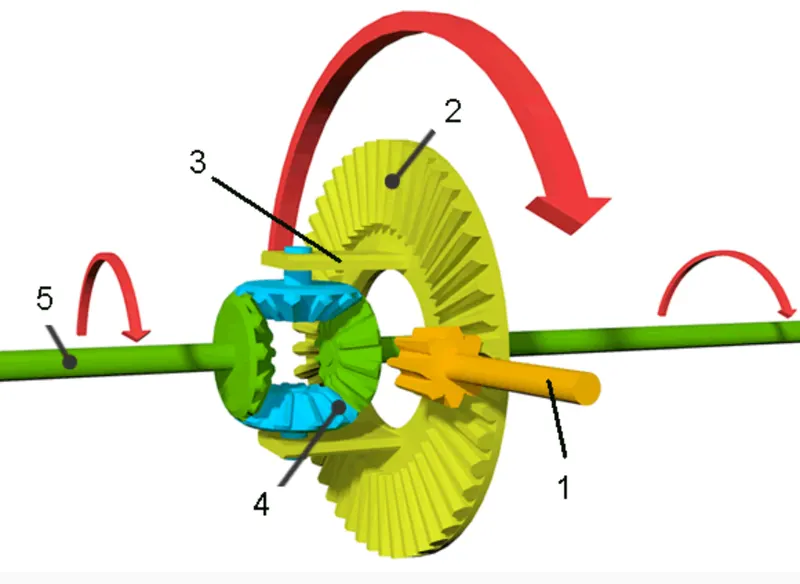
The main components of the differential (Fig. 18.1) are:
- Input pinion gear
- Crown wheel gear
- Differential cage
- Differential star
- Differential axle (sun) gear
👉Vehicle Ergonomics:
Vehicle Ergonomics is being comfortable and well-positioned in a vehicle that aims to reduce driver fatique and the development of musculoskeletal disorders. It is imperative that everyone using a vehicle for work observes adequate ergonomic requirements to minimize the risk of injury.
Three-wheeled auto-rickshaws are primarily used in suburban areas for short-range transportation. Given the varying types of road conditions that rickshaws traverse, the vibrations, the prolonged hours involved, and poor ergonomic design choices, drivers report various musculoskeletal disorders.
The purpose of this study was to identify the prevalence of musculoskeletal disorders in autorickshaw drivers in relation to the number of years they have been driving. We have also tried to trace the origin of musculoskeletal disorders to elements within the workspace that might require design intervention.
According to existing literature the most prevalent musculoskeletal disorder in auto-rickshaw was reported at shoulder joints (50.6%), neck (42%) and in lower back (40.7%) The presence of MSD was significantly associated with age, years of driving, age of vehicle and BMI. The risk of developing musculoskeletal disorder increases with increase in years of driving. Autorickshaw drivers have a lifestyle that is not conducive to good health, given the sheer number of individuals engaged in this profession it is crucial that an intervention take place.
Rapid Upper Limit Assessment (RULA):
The RULA ergonomic assessment tool considers biomechanical and postural load requirements of job tasks/demands on the neck, trunk and upper extremities. The Rapid Upper Limb Assessment tool uses a systematic process to evaluate required body posture, force, and repetition for the job task being evaluated.
Abbreviations:
- MSD – Musculoskeletal Disorder
- LBP – Lower Back Pain
- WBV – Whole Body Vibrations
The RULA was designed for easy use without the need for an advanced degree in ergonomics or expensive equipment. Using the RULA worksheet, the evaluator will assign a score for each of the following body regions: upper arm, lower arm, wrist, neck, trunk, and legs. After the data for each region is collected and scored, tables on the form are then used to compile the risk factor variables, generating a single score that represents the level of MSD risk as outlined below:
Getting Ready:
The evaluator should prepare for the assessment by interviewing the worker being evaluated to gain an understanding of the job tasks and demands and observing the worker’s movements and postures during several work cycles. Selection of the postures to be evaluated should be based on: 1) the most difficult postures and work tasks (based on worker interview and initial observation), 2) the posture sustained for the longest period of time, or 3) the posture where the highest force loads occur.
The RULA can be conducted quickly, so multiple positions and tasks within the work cycle can usually be evaluated without significant time and effort. When using RULA, only the right or left side is assessed at a time. After interviewing and observing the worker, the evaluator can determine if only one arm should be evaluated or if an assessment is needed for both sides.
Using the RULA – Example:
The RULA worksheet is divided into two body segment sections on the labeled A and B. Section A (left side) covers the arm and wrist. Section B (right side) covers the neck, trunk and legs. This segmenting of the worksheet ensures that any awkward or constrained postures of the neck, trunk or legs which might influence the postures of the arms and wrist are included in the assessment.
The evaluator should score Group A (Arm & Wrist) postures first, then score Group B (Neck, Trunk & Legs) postures for left and right. For each region, there is a posture scoring scale and additional adjustments outlined on the worksheet which need to be considered and accounted for in the score.
- Steps 1-4: Right Arm & Wrist Analysis:
Note: In step 1, a +3 score was used for the upper arm position (45+ degrees). For step 2, a +2 score was given for the lower arm position (15 degrees), and +1 was added for ulnar deviation. The step 4 wrist score is +2 because the wrist is twisted near the end range. Each score should be circled in Table A.
Steps 5-8: Calculate the score for Group A as outlined below:
Step 5: Using values from steps 1-4, locate the score for this step in table A:
Step 6: Add the muscle use score to this box. In this example, the posture is not sustained for more than 10 minutes, and not repeated 4x per minute. Therefore, the score is 0.
Step 7: In this example, the load is greater than 4.4 lbs. and repeated. Therefore, the score is +2.
Step 8: Add the values in steps 5-7 to obtain the Wrist / Arm Score. Steps 9-11: Neck, Trunk, and Leg Analysis
Note: In step 9, a +3 score was used for the neck position (>20 degrees). The step 10 score is +1 due to a trunk position of 0-20 degrees. Each score should then be circled in Table B.
Steps 12-15: Calculate the total score for Group B as outlined below:
Step 12: Using values from steps 9-11, locate the score for this step in table B.
Step 13: Add the muscle use score to this box. In this example, the posture is not sustained for more than 10 minutes, and not repeated 4x per minute. Therefore, the score is 0.
Step 14: In this example, the load is greater than 4.4 lbs. and repeated. Therefore, the score is +2.
Step 15: Add the values in steps 12-14 to obtain the Neck, Trunk, & Leg Group B Score.
Determine Final RULA Score
Use Table C to determine the final RULA score as shown below.
Final RULA Score = 7
In this example, the final RULA score of 7 indicates high risk and calls for engineering and/or work method changes to reduce or eliminate MSD risk as outlined in the chart on page 17.
Implemented ergonomic improvements:
The assembly process was changed to install the access plate prior to riveting the can together. A fixture was fabricated to hold the can open while the access plate is being installed. A straight or “in-line” pneumatic screw driver (on a tool balancer) is now used to improve upper extremity work postures and eliminate the force required. A follow-up analysis using the RULA worksheet was performed upon completion of this ergonomic process and tool improvement. When using the new work process and tools, the RULA total score is reduced from 7 to 1.