Design of backdoor
AIM:
To design the back door of the car and make the inner panel for the back door and also design the necessary reinforcements.
Car Back Door and Components:
The back door is a hinged door/tailgate at the rear of the vehicle. It may be used for loading and unloading cargo, or to get passengers in and out, in case there are seats present at the rear. The back door comprises certain components which form the back door assembly together.
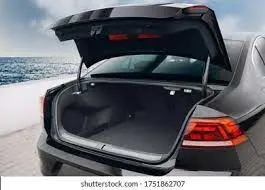
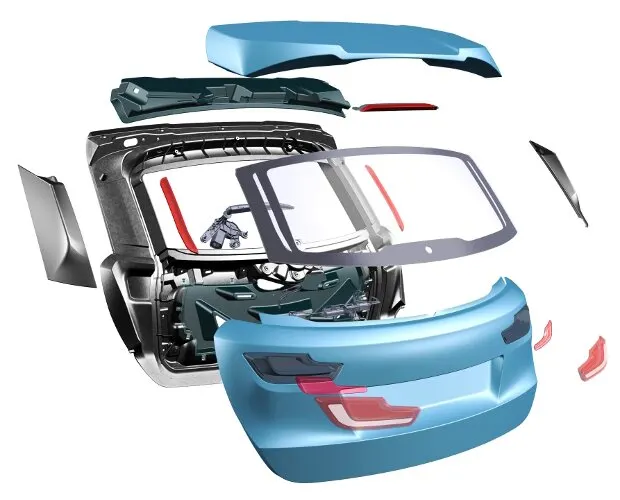
The components of back door are as follows,
Inner Panel
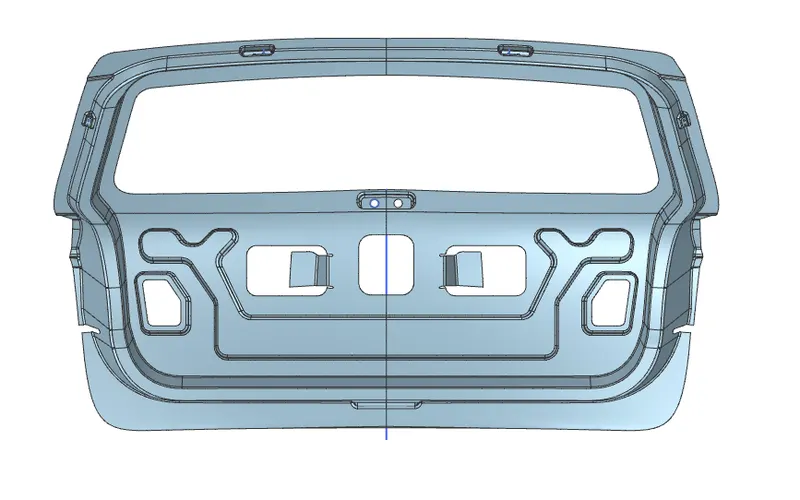
The inner panel, as the name suggests, is the inner part of the door. It is where most of the reinforcements and components are mounted. It is manufactured either by casting (aluminum) or sheet metal stamping (steel). Thickness of inner panel is 0.75 mm.
Outer Panel
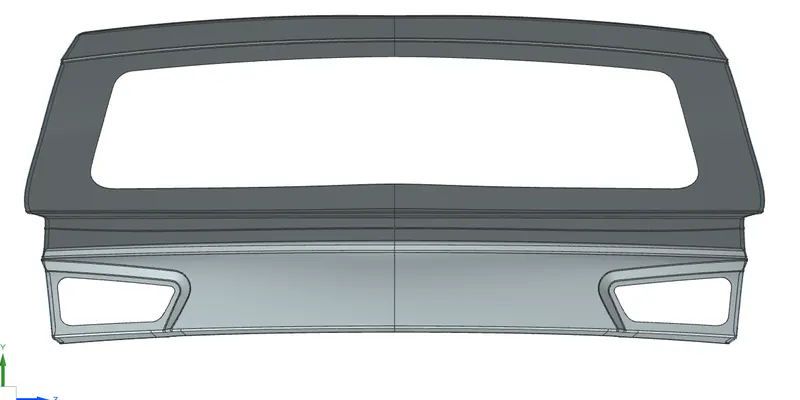
It is the outer styling skin surface of the back door. It is provided with multistage coatings which has property of scratch resistance, rust prevention etc. Furthermore, it is wrapped around the inner panel through a hemming process.
It can further be separated into Upper outer panel and upper lower panel.
Reinforcements:
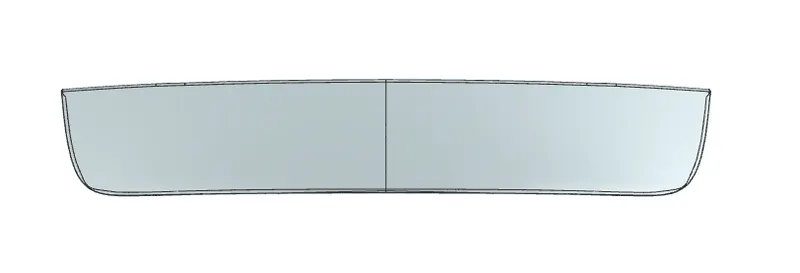
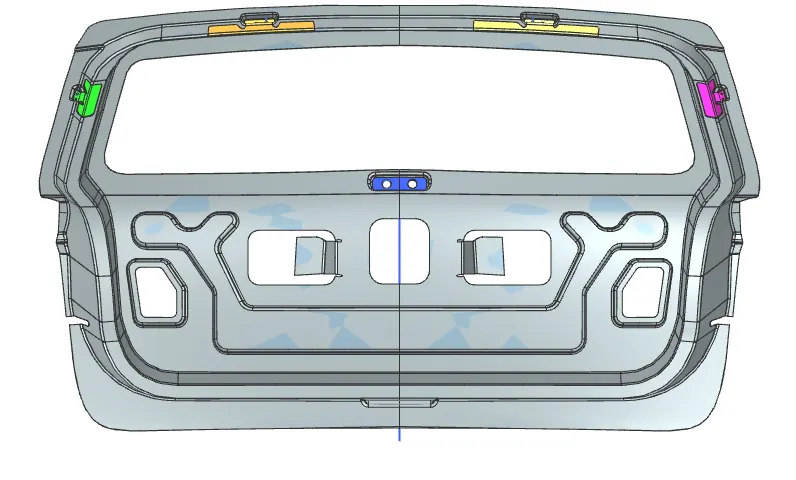
Reinforcements are provided to provide support and add extra material to the sheet metal part to increase its strength near component installation regions and minimize the impact of collisions. We have considered following reinforcements during our design. The reinforcements maybe manufactured by stamping.
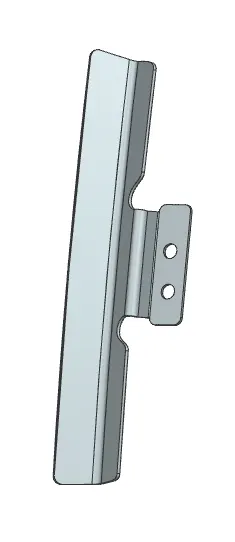
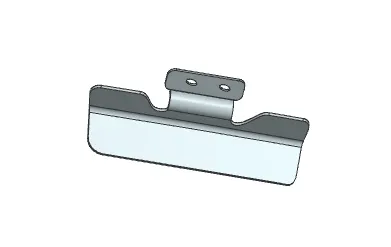
Here, we are using Hinge reinforcements (LH & RH), Gas Stay reinforcement (LH & RH), Latch Striker Reinforcement, and Back Wiper Motor Reinforcement.
Hinge Reinforcement:
Gas Stay Reinforcement:
Wiper Motor reinforcement:
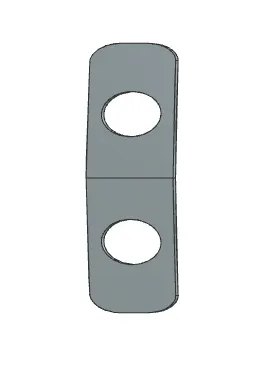
Striker reinforcement:
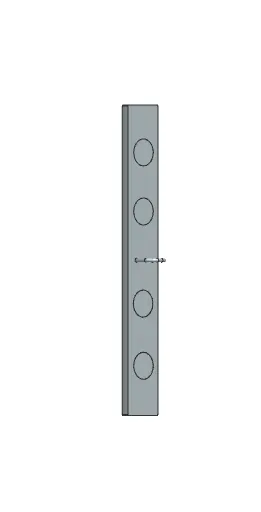
JOINING PROCESS USED:
Hemming: Hemming is a forming operation in which the edges of the sheet are folded over another part in order to achieve a tight fit. Usually, hemming operations are used to connect parts together, to improve the appearance of a part and to reinforce part edges. In car part production, hemming is used in assembly as a secondary operation after deep drawing, trimming and flanging operations to join two sheet metal parts (outer and inner) together. Typical parts for this type of assembly are hoods, doors, trunk lids and fenders.
Mastics: Automotive adhesive and sealant.
Welding: Spot welding
Design Methodology:
We start with the styling Class A surface that is provided to us, and consider a top-down approach for this assembly modeling. First, we create the assembly and then create the components in the assembly file itself. Inner and outer panel are the largest parts and all other parts depend on them, so we start with them. Also, the given styling surface is part of the outer panel, so we create it first. Using various commands and features, we design the outer panel from the styling surface. We have 2 parts for outer panel, which are separated by a flange, hence we create outer panel upper and lower respectively. They will be spot welded with each other. It is necessary to make sure that all the surfaces are properly joint to their adjacent surface and there are no disjoints at their intersection edges to avoid further errors. Also, Inner and outer panels are connected by hemming process, so we can come back to outer panel and do that after completion of inner panel.
Draft Analysis:
In order to make sure the drawing of inner panel body is proper; we do draft analysis. We need to define the drawing direction and select the inner panel body.
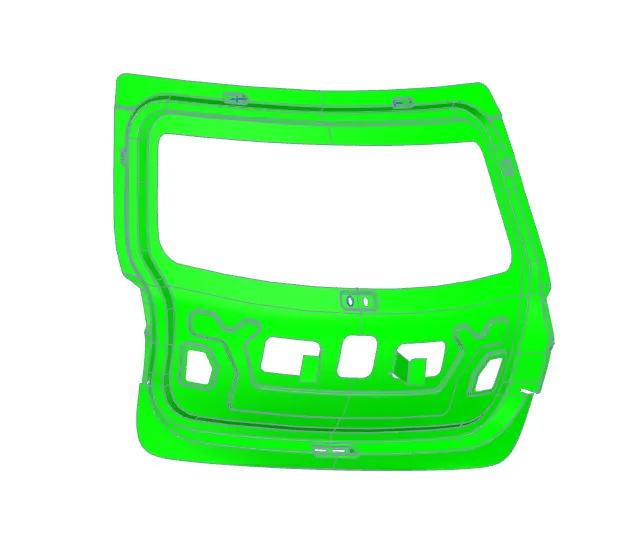
Tooling Direction:
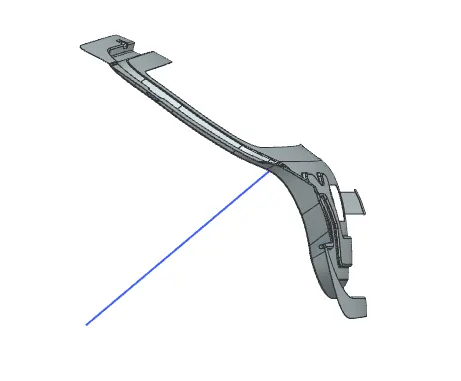
The Blue line indicates the tooling direction.
Conclusion:
Car back door was designed using the given styling surface, and under provided design regulations.