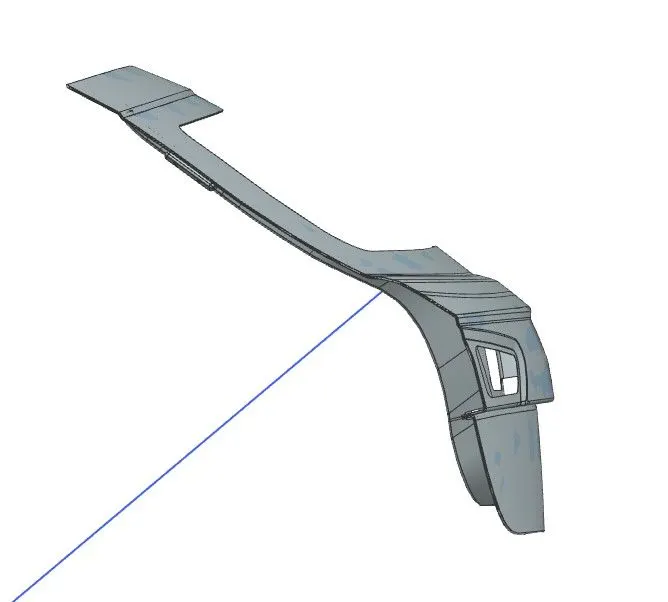
Design of backdoor
AIM
To design the back door of a car by using the given class A surface and to provide necessart reinforcements and embosses.
Theory
The back door is a hinged door/tailgate at the rear of the vehicle. It may be used for loading and unloading cargo, or to get passengers in and out, in case there are seats present at the rear. The different types of back doors available in the car markets are:
1. Top mounted back door -

2. Bottom mounted back door -
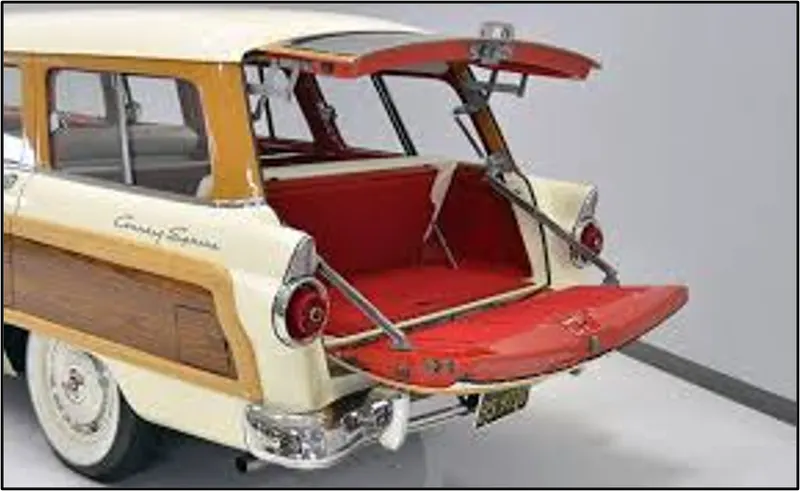
3. Side mounted back door -
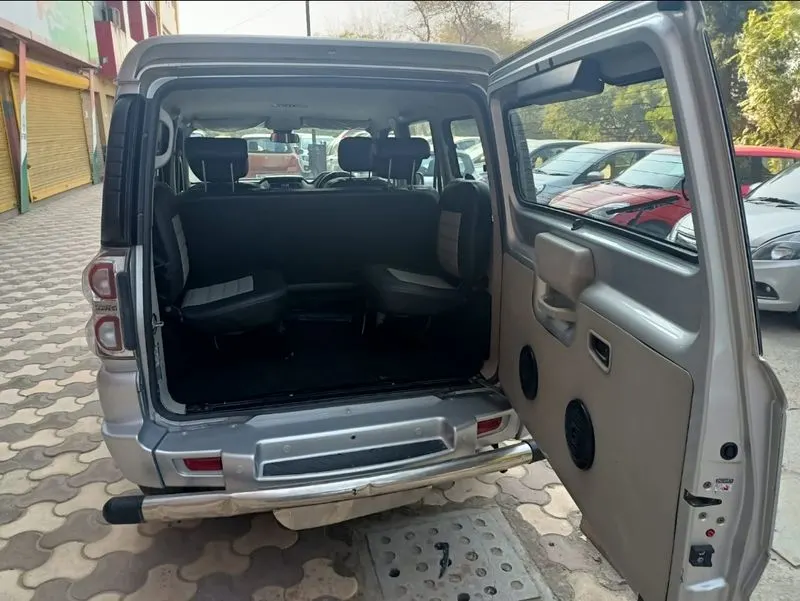 It
It
The main functions of the back door are:
- To protect the occupants and luggage from getting damaged.
- It houses assembly of tail lamps, wiper motor and other components.
- It serves as entry and exit point for luggage/passengers in some SUVs.
- It houses windshield glass which helps in rear visibility.Parking sensors, rear view camera are mounted on it.
Manufacturing processes
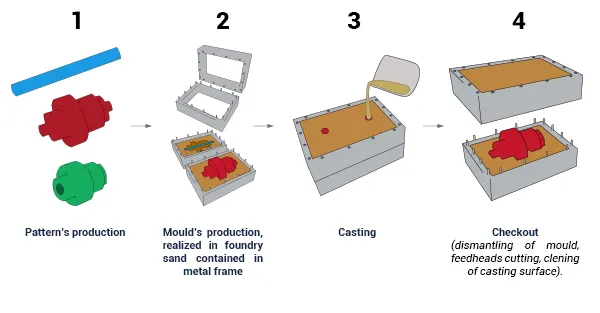
Casting
Die casting is an efficient, economical process offering a broader range of shapes and components for automotive industry as well as other applications than any other manufacturing technique. Parts have long service life and may be designed to complement the visual appeal of the surrounding part. Automotive parts designers can gain a number of advantages and benefits by specifying aluminum die casting parts.
- High-speed production – Die casting is able to produce automotive parts with complex shapes in closer tolerances than many other mass production processes. Little or no machining is required and thousands of identical automotive die castings can be produced before repairing the molds.
- Dimensional accuracy and stability – Die casting produces automotive parts that are durable and dimensionally stable, while maintaining close tolerances. They are also heat resistant.
- Strength and weight – Thin wall castings of die cast automotive parts are stronger and lighter than those possible with other casting methods. Plus, because die castings do not consist of separate parts welded or fastened together, the strength of automotive components after die casting is that of the alloy rather than the joining process.
- Multiple finishing techniques – Die cast automotive parts can be produced with smooth or textured surfaces, and they are easily plated or finished with a minimum of surface preparation.
Deep Drawing
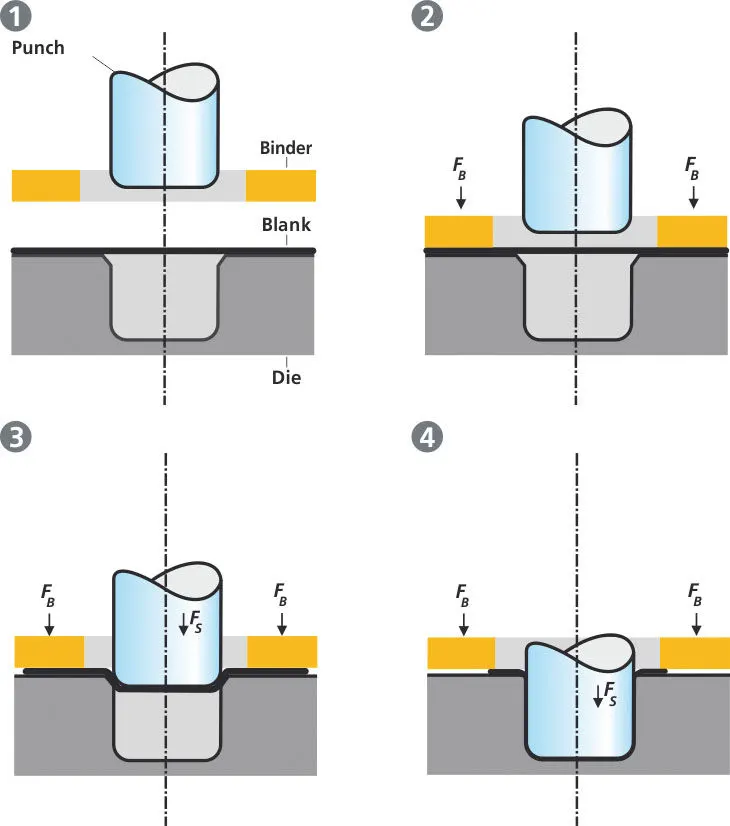
The metal deep drawing process is an effective method of manufacturing of cups, cans and other similar deep drawing products. The deep drawings having two main categories. The blank shape of metal is placed on the die and contact with the punch. When the metal specimen is flat piece of sheet metal used in forming and finish the product. Initially the punch moves in downward direction. The outer rim of blank is subjected to pure radial drawing (drawing toward in vertical axes) between die and blank metal. The metal become a bend and sliding over die and also stretched between die and punch. The metal in vicinity of punch head and contact with it bend and slide over radii and stretch over punch head. he components drawn from first stage again it is redrawn convert into more depth to form a cup shape in the die and punch. The second stage of drawing is called as redrawing.
Hemming
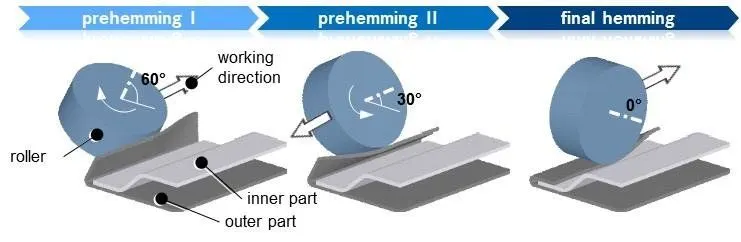
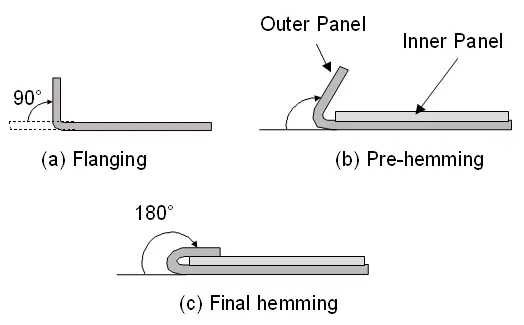
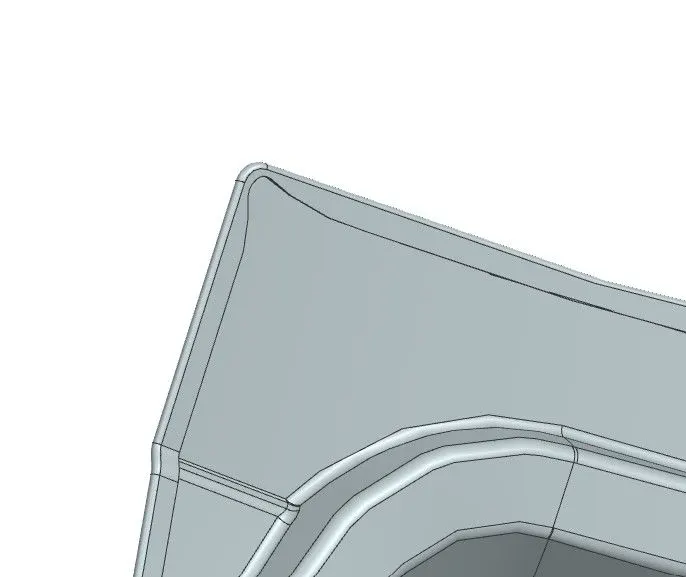
Hemming is a forming operation in which the edges of the sheet are folded or folded over another part in order to achieve a tight fit. Normally hemming operations are used to connect parts together, to improve the appearance of a part and to reinforce part edges.
In car part production, hemming is used in assembly as a secondary operation after deep drawing, trimming and flanging operations to join two sheet metal parts (outer and inner) together. Typical parts for this type of assembly are hoods, doors, trunk lids and fenders.
There are various types of hemming operations:
- Conventional die hemming: In conventional die hemming, the flange is folded over the entire length with a hemming tool.
- Roll hemming: In roll hemming, the hemming roller is guided by an industrial robot to form the flange.
Embossing
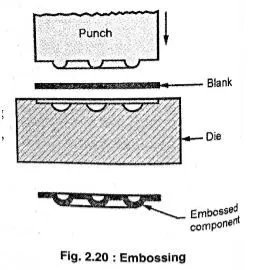
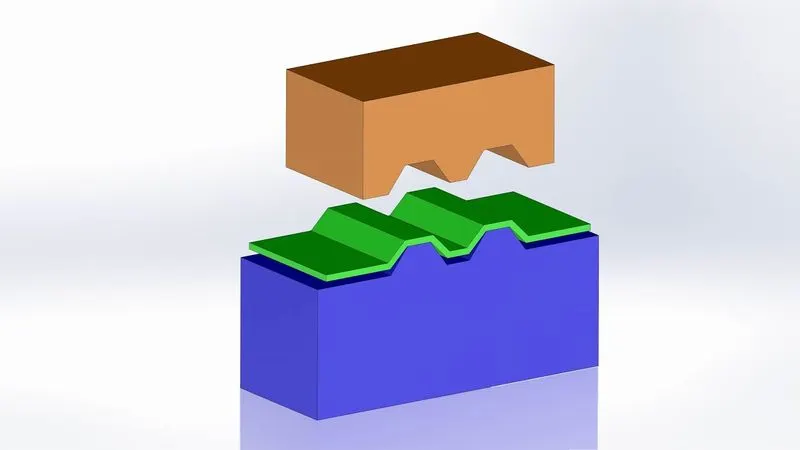
Embossing is a metal forming process for producing raised or sunken designs or relief in sheet materials by means of matched male and female roller dies, theoretically with no change in metal thickness or by-passing sheet or a strip of metal between rolls of the desired pattern. Metal sheet is drawn through the male and female roller dies producing a pattern or design on the metal sheet. Depending on the roller dies used, different patterns can be produced on the metal sheet.
Brazing
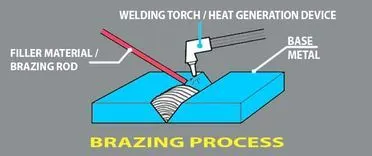
The inner panel and outer panel are joined by brazing process. It is a metal-joining process in which two or more metal items are joined together by melting and flowing a filler metal into the joint, with the filler metal having a lower melting point than the adjoining metal. Brazing differs from welding in that it does not involve melting the work pieces. Brazing differs from soldering through the use of a higher temperature and much more closely fitted parts than when soldering. During the brazing process, the filler metal flows into the gap between close-fitting parts by capillary action. The filler metal is brought slightly above its melting (liquidus) temperature while protected by a suitable atmosphere, usually a flux. It then flows over the base metal (in a process known as wetting) and is then cooled to join the work pieces together. A major advantage of brazing is the ability to join the same or different metals with considerable strength.
Material Used
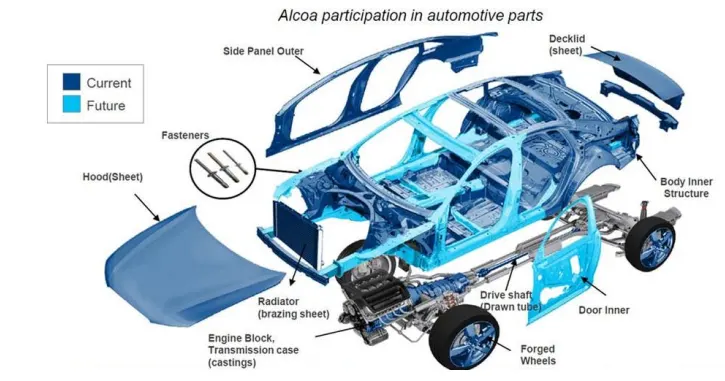
The common materials used are Steel & Aluminum. The density of Steel is higher than Aluminum thus adding more weight to the door. The material used in the manufacturing of the backdoor depends upon the budget of the car, most low cost vehicles use steel as it is cheaper compared to Aluminium. Another aspect to be noted is that, if casted Aluminum parts are used instead of deep drawn steel parts there is no need of reinforcements and the overall weight of the car is reduced by approximately 5-10kg thus increasing the performance of the vehicle. Also the draft angle for casted parts is around 3 degrees while for deep drawn parts is around 7-10 degrees which helps in increasing the luggage/ cabin space.
The difference between aluminum and steel are :
- Aluminum parts are casted whereas steel parts are stamped.
- Reinforcement can be neglected in aluminum whereas for steel its necessary.
- Local thickness can be varied in case of aluminum whereas for steel we have to maintain uniform thickness
- Aluminum is light in weight comparitively.
- Less number of components are required in case of aluminum.
- Aluminum is costlier when compared with steel.
Design Considerations
The various considerations the engineer should adhere to are:
1. Rear visibility criteria - The visibilty criteria should be kept in mind while designing the back door.
2. Rear crash regulations - It should adhere to all the regulations
3. Luggage area - Focus should be given to maximise the luggage area and the back door to not creep on the space for luggage
Design
The back door comprises of certain components which form the back door assembly together. They are:
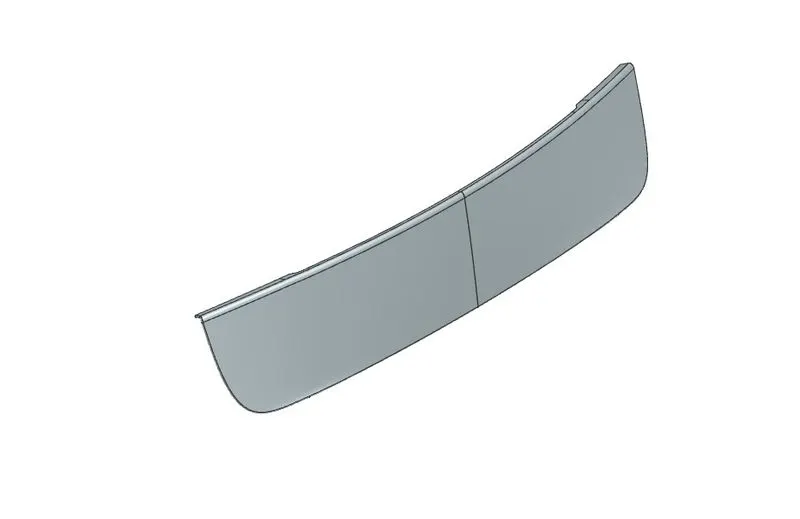
1. Back door outer pannel
Back door outer panel upper:
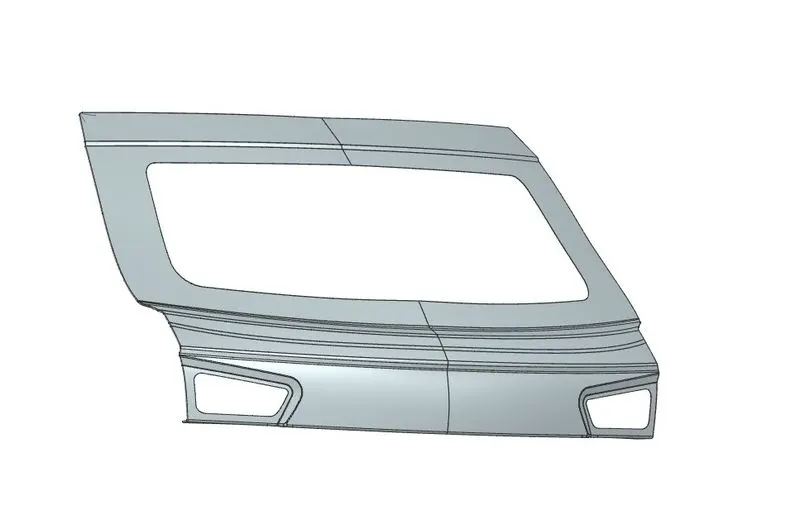
Back Door outer panel lower :
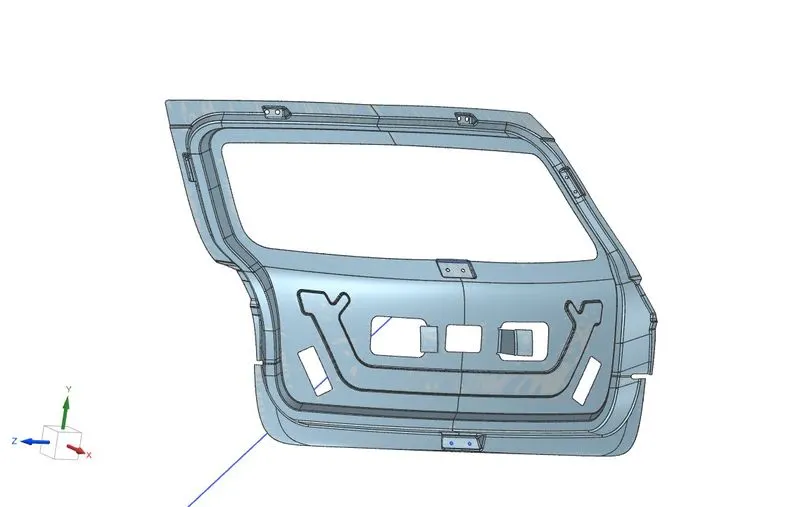
2. Back door inner panel.
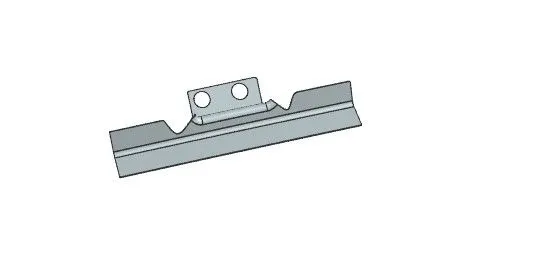
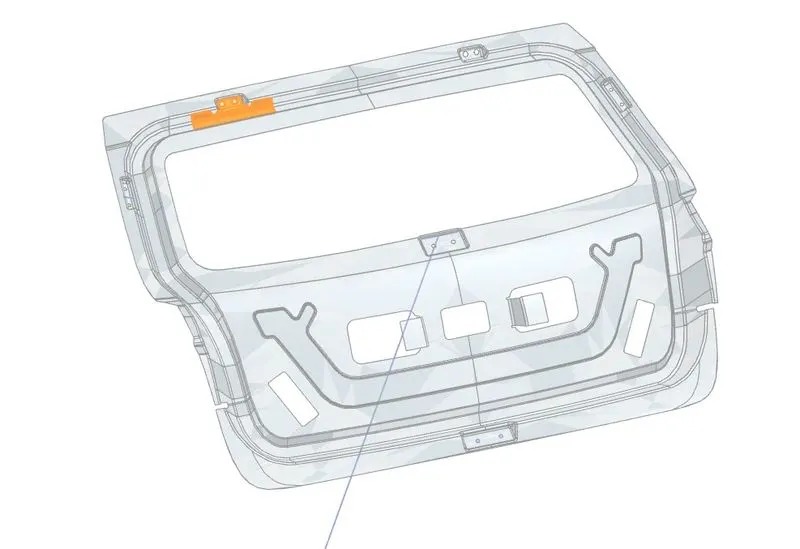
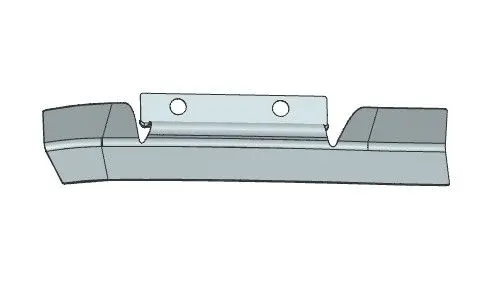
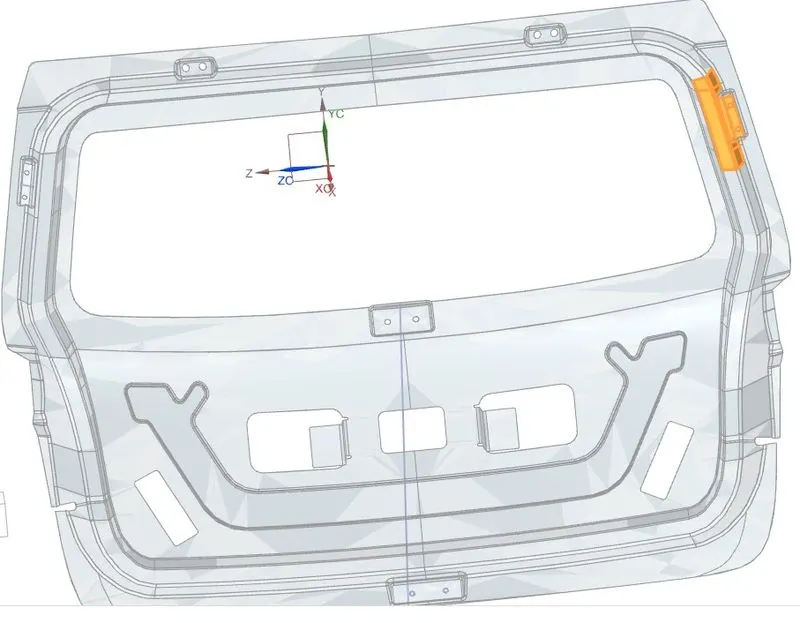
3. Hinge and its reinforcement
Left Side
Right side
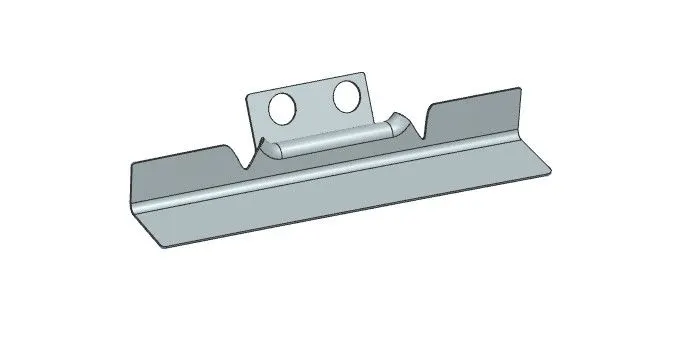
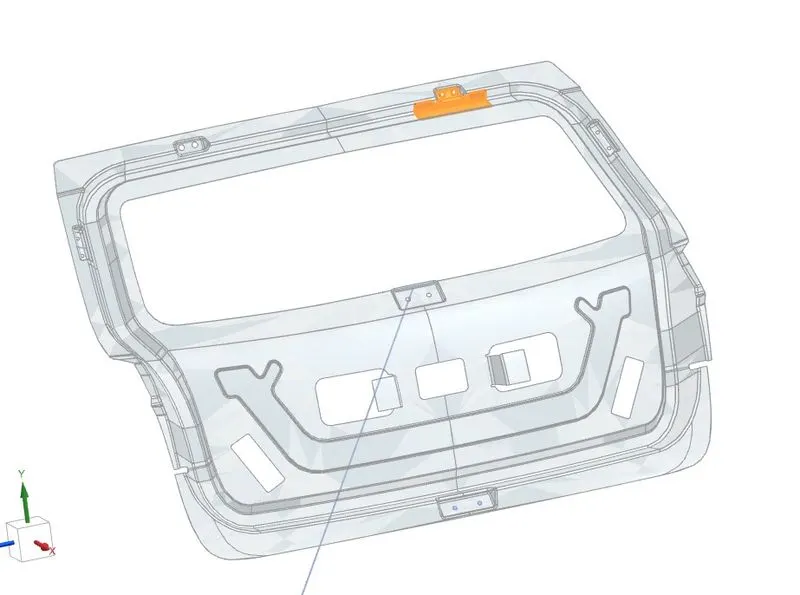
4. Wipermotor reinforcement
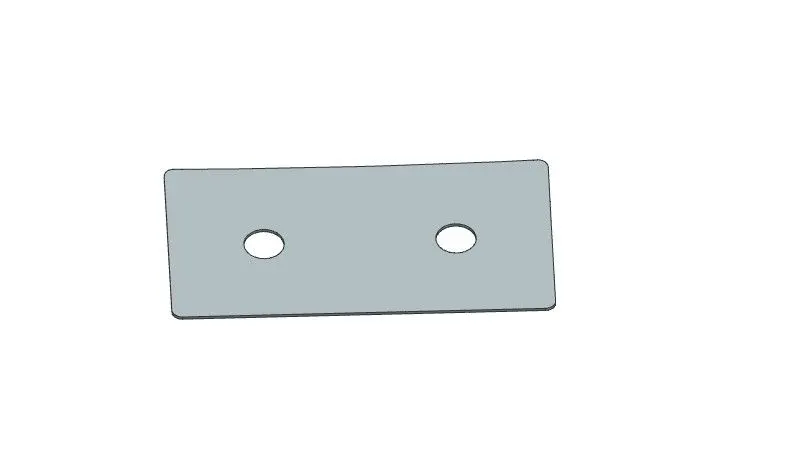
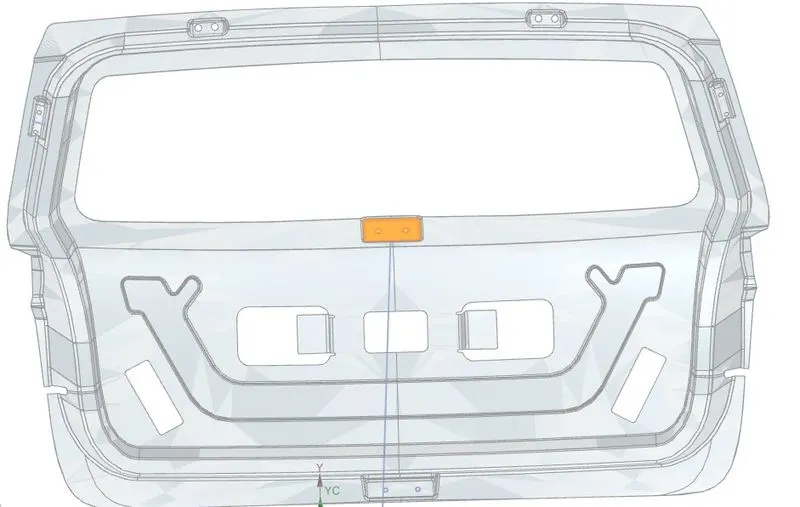
5. Lactch & striker and its reinforcement
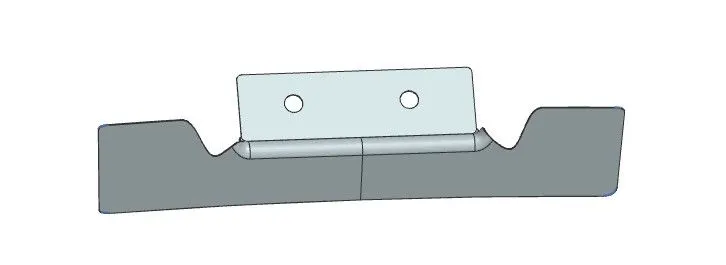
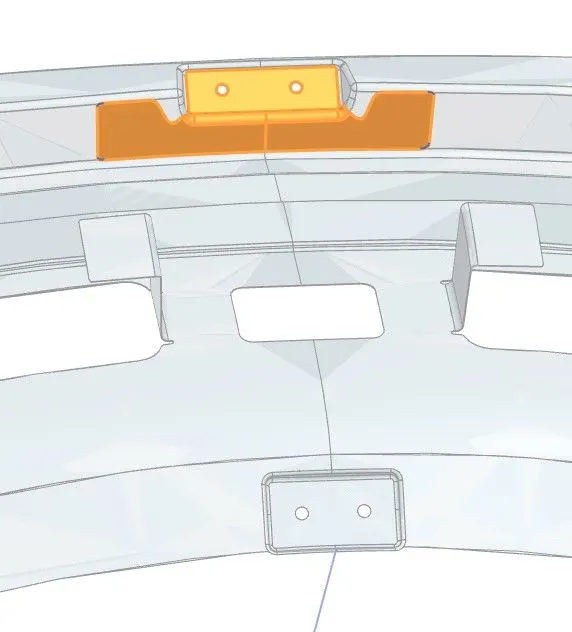
6. Gas stay reinforcement
Left Side
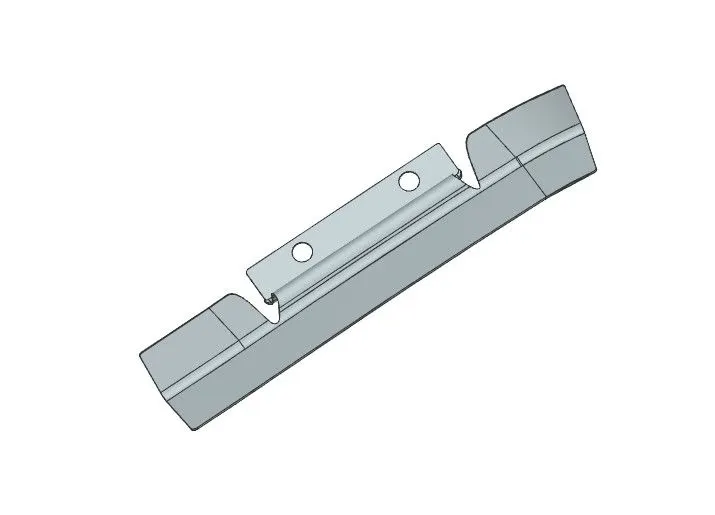
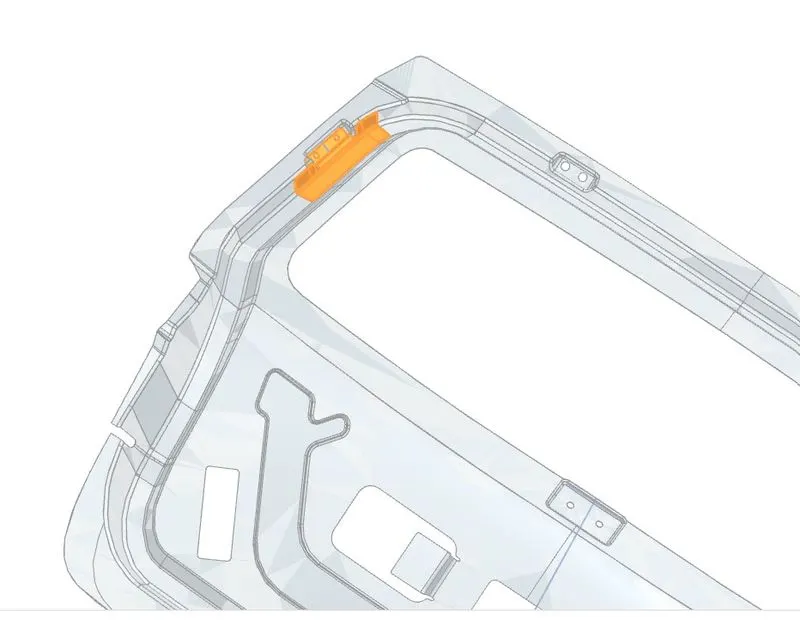
Right side
Corner Relief
Hemming
Draft Analysis
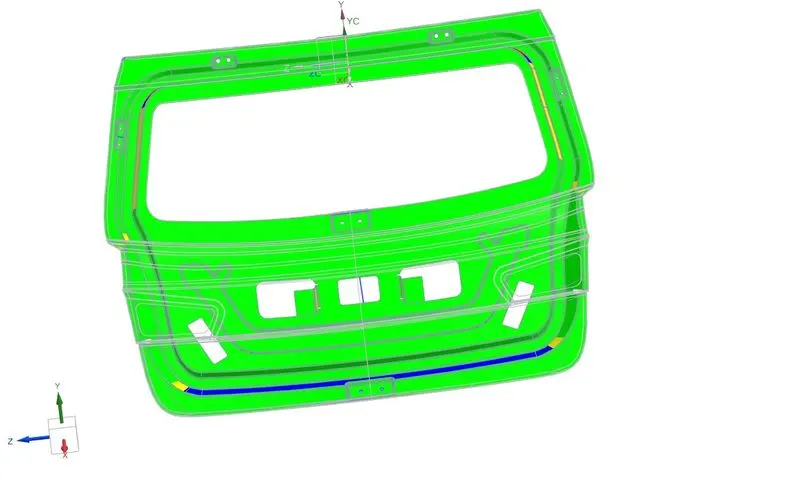
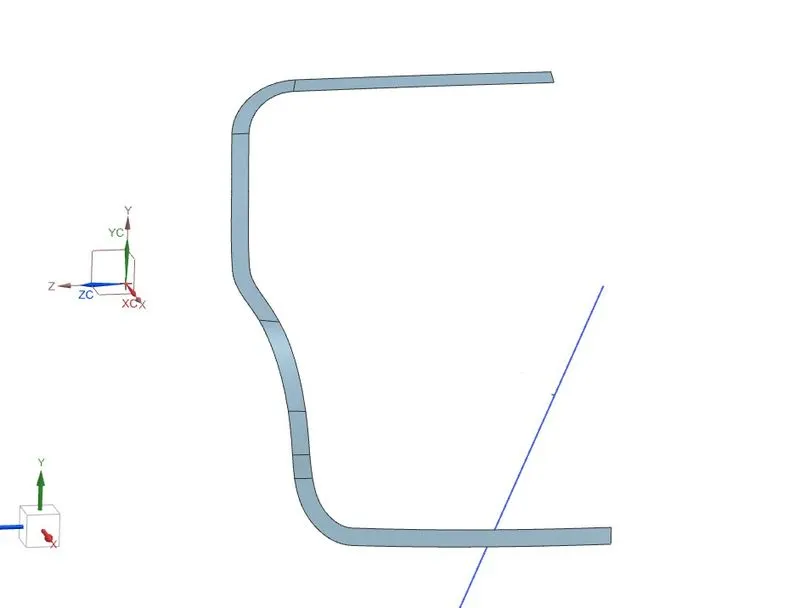
Sealing Flange
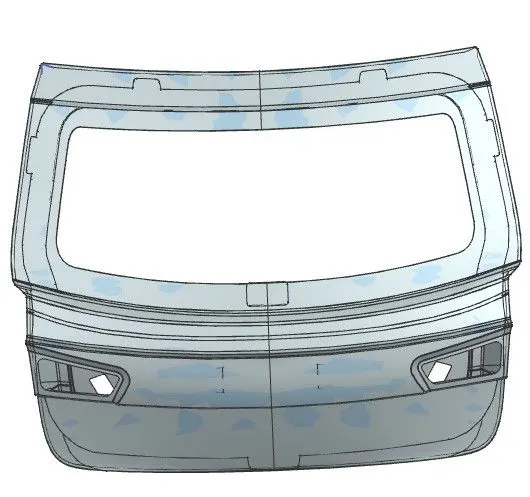
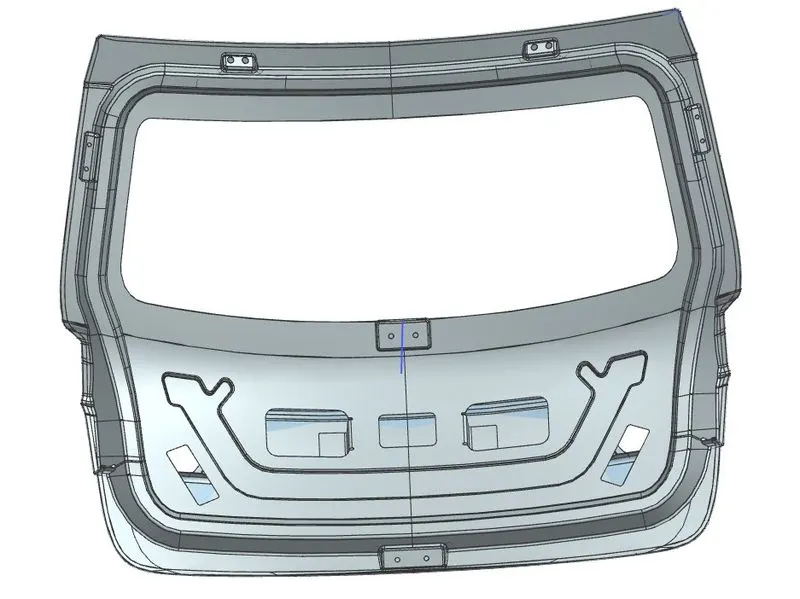
Result
1. Front View
2. Back View
3. Side view