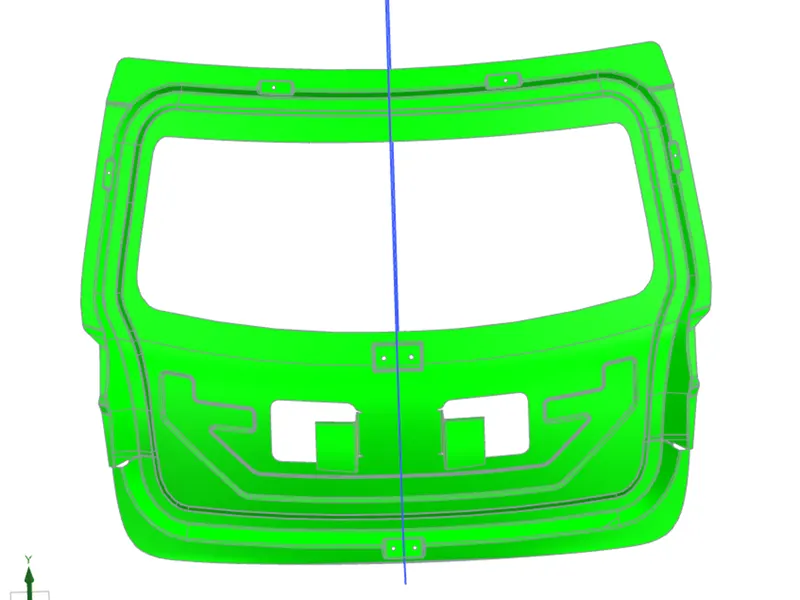
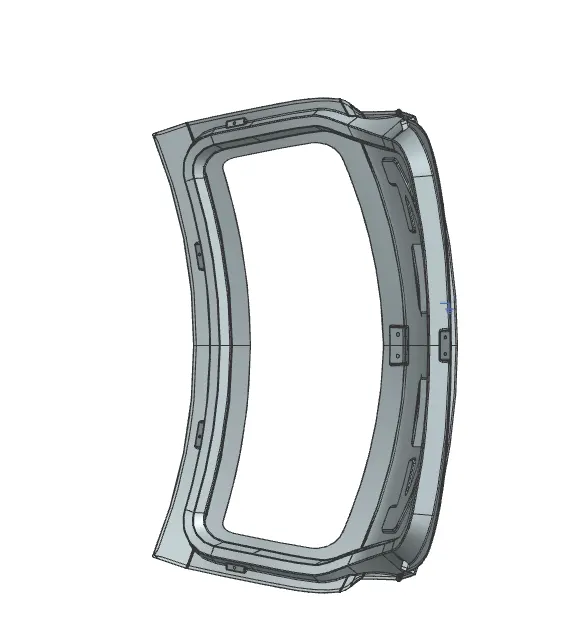
Design of backdoor
Design of Back Door of an Automotive Car
Aim:
To design the Back door (Tail gate) of a car from the styling surface provided using NX CAD. The ultimate aim is to design the Back Door by following the Industrial Standards.
Back Door:
A back door is a BIW component found in all Automotive car generally used for opening and closing of the so-called car luggage that is usually used for storing items inside a car. In general the opening and closing of the door is co-ordinated by the Latch and Stricker position and the Gas stay position that is mounted on the body and back door of the car. These positions play a major role in ensuring smooth opening and closing of the tail gate.
Parts of a Tail Gate:
- Outer Panel
- Outer panel Lower
- Inner panel
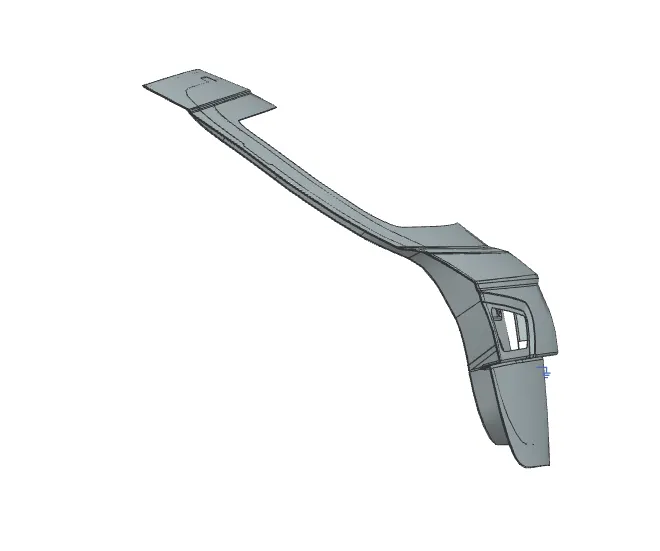
- Hinge Reinforcements
- Latch and Stricker Reinforcement
- Wiper Motor Reinforcement
- Gas Stay Reinforcements
Types of doors based on working position:
- Top Mounted Door
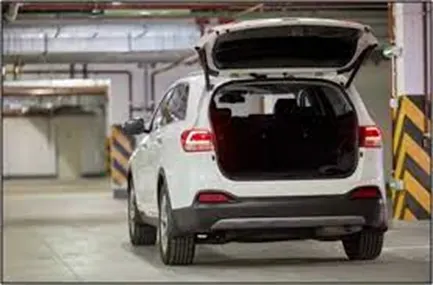
2. Side mounted Door
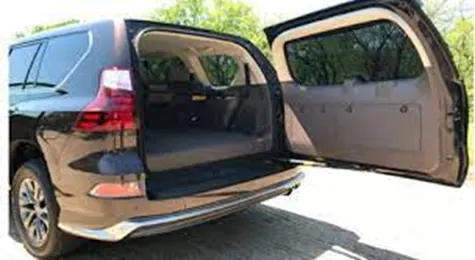
3. Bottom Door
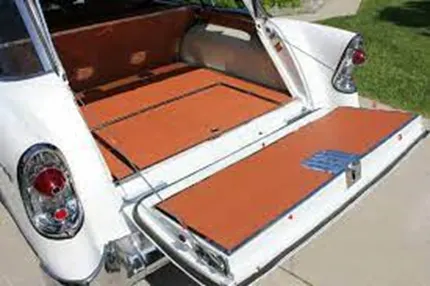
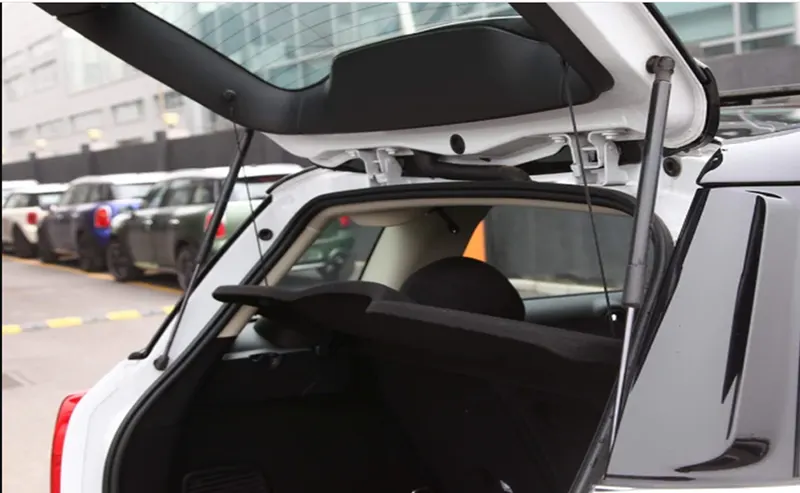
The back door is operated by two types of commodities
- Gas stay powered
- Electrically operated
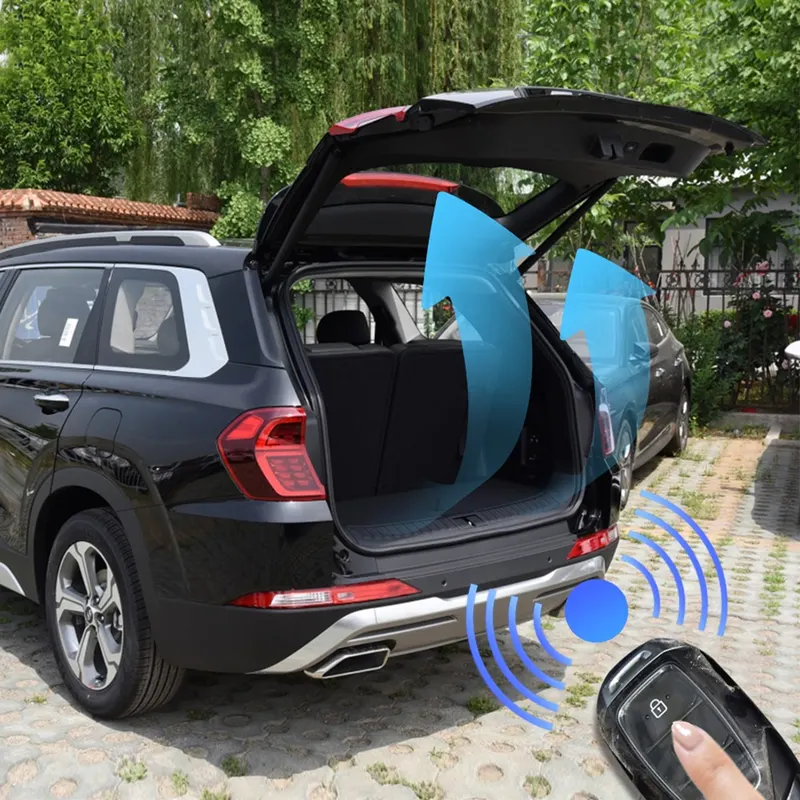
The main purpose of these mechanisms is to open the back door without heavy efforts, because the backdoor has different parts and the weight of the back door is high, so we are not able to open the back door manually, so we introduced these two types commodities. and these also decides the premium of the car, mostly the electrically operated used in premium cars.
Design Considerations in Back Door Design:
The following are the Design considerations taken while designing the Back Door. They are,
- Visibility Criteria
- Force Dissipation
- Latch and Stricker Positions
- Hinge Position
- Gas Stay Position
- Space Availability
- Hemming and Relief Areas
All these design considerations go hand in hand with each other because these positions are dependent on each other and if position gets altered all the positions has to be altered for effective opening and closing of the back door. The Latch and Stricker, Hinge Position and the Gas stay Positions has to be maintained in a proper way so that they play a major role in the opening and closing as well as the rear Visibility criteria of the car.
Force Dissipation:
The major criteria in designing the back door or any BIW part is the force dissipation during an impact or a collision. Hence studies are being done in order to dissipate the force on the sides and avoiding it reach the inner cabin of the car so that possible damage of impact inside the car is reduced. Hence in order to do that the V or Y embosses are created on the inner panel so that the force gets transmitted on to the sides instead reaching it on the cabin. This is one of the main criteria in back door design.
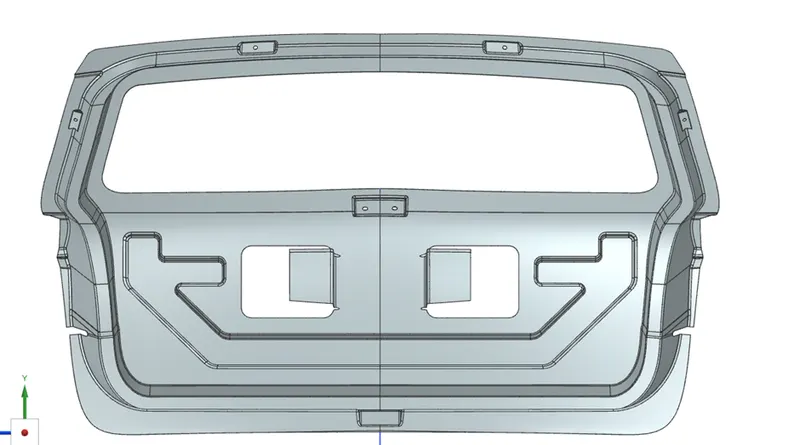
Thus, from the above image it is clear that the forces are dissipated on the sides instead of reaching inside. This is the reason to have Y or V embosses on the panel to increase the stiffness and to dissipate forces onto the sides.
Latch and Stricker Positions:
The Latch and Stricker positions play a major role in determine the opening and closing of the back door. Hence the opening and closing of the had to smooth and in order to ensure that the centre point of the latch and striker has to be at the same point and the trajectory has to be tangent to the open close circle that is drawn. This is shown in the below image. Only if the centre points and the tangent line are perfect the opening and closing of the back door is smooth and clear. Or else the Hinge positions, Gas stay positions and Latch and Stricker Positions has to be altered to meet the change.
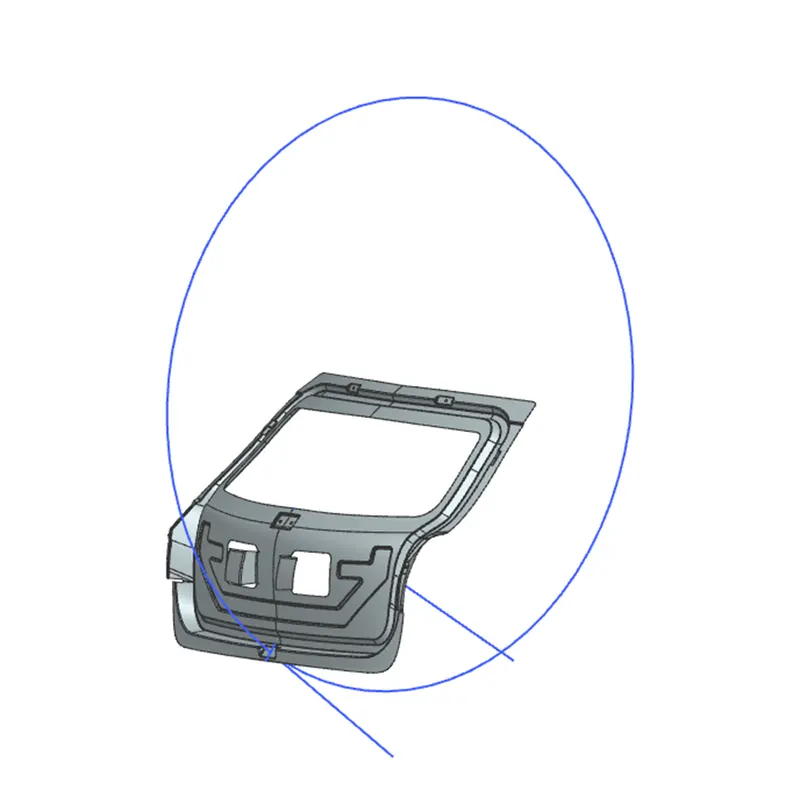
Here the hinge centre and the striker centres are in line with each other and the trajectory of the movement is clearly obtained.
Hemming and Relief Areas:
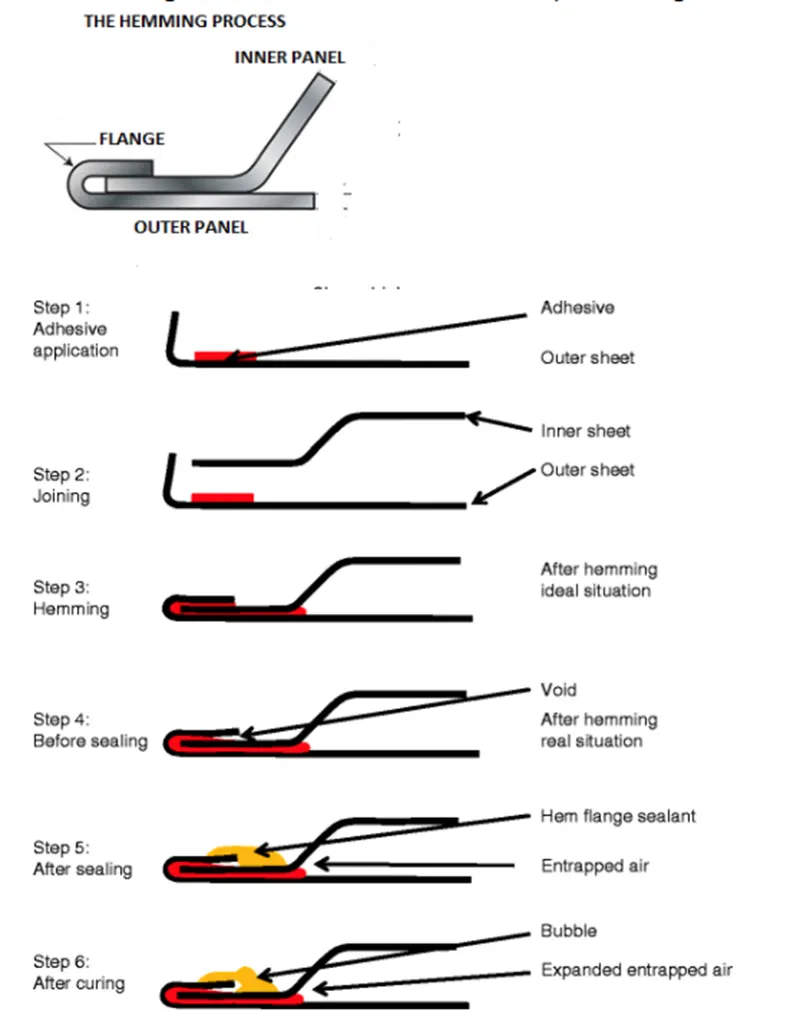
Hemming and Seaming are two similar metal working processes in which sheet metal edge is rolled onto itself. Hemming is the process in which the edge is rolled flush to itself, while a seam joins the edge of two materials.
Draft Analysis: