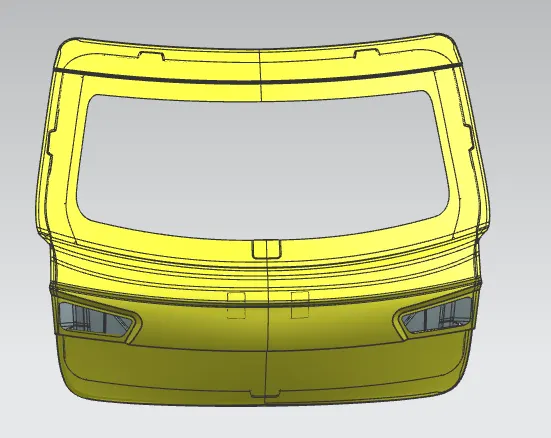
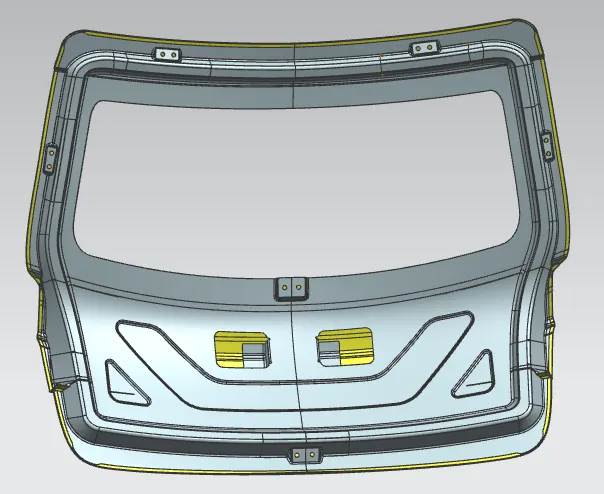
Design of backdoor
Aim:-
To use the provided styling surface to come up with a back door design, use appropriate design methodologies, and provide the necessary reinforcements and embosses.
Back Door:-
Back door (or) Tailgate is one of the component of the car which covers the rear end of the car. The windshield in the backdoor ease the rear visibility of the driver. This gives way to the boot space or luggage space to load the luggages. This backdoor is supported with support rod and gas stay.
Types of Support:-
1) Support Rod:-
This support rod is designed in the way to hold the tailgate/hood in its position in open condition because the tailgate/hood is heavy so thats an hard thing for the human to hold for a while. Support rod make the work easy only thing we have to do is to place the support rod which is fixed in the body of the car to the tailgate/hood to hold the door.
2) Gas Stay:-
Gas Stay is similar to the support rod which is semi-manual unlike the support rod. In gas stay we have to lift upto certain limit then the gas stay open the hood/tailgate by its way. This is more user friendly because we don't need to open the door all the way out. Gas stay is powered by the pneumatics which uses the air/gas to funtion properly.

Manufacturing Process:-
1) Deep Drawing:-
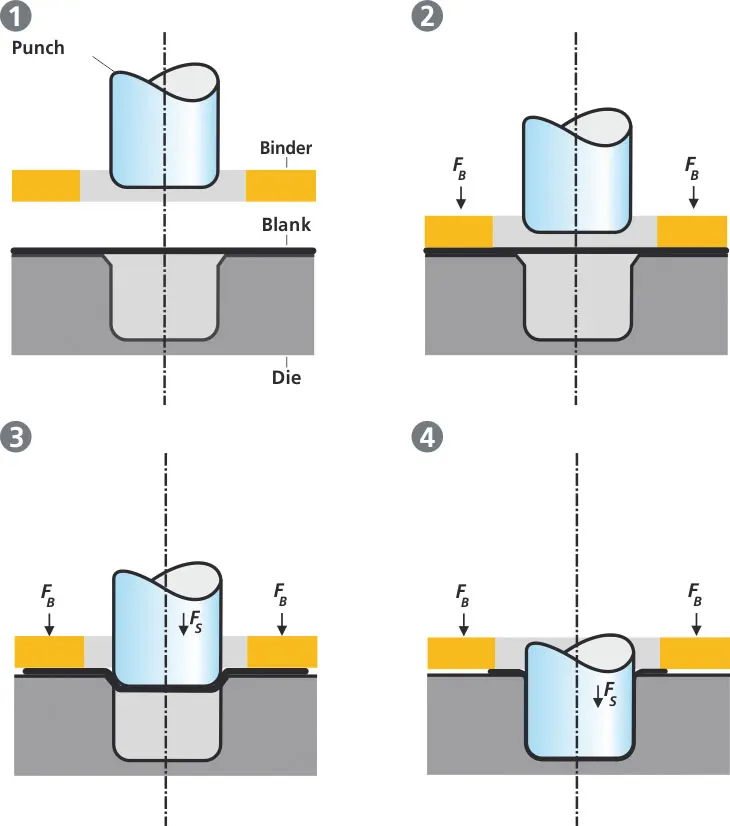
Deep drawing is the process of pressing the sheet metal vertically along the tooling axis by the hydraulic press into the die to form the desired shape in the sheetmetal. The process is considered "deep" drawing when the depth of the drawn part exceeds its diameter.
2) Embossing:-
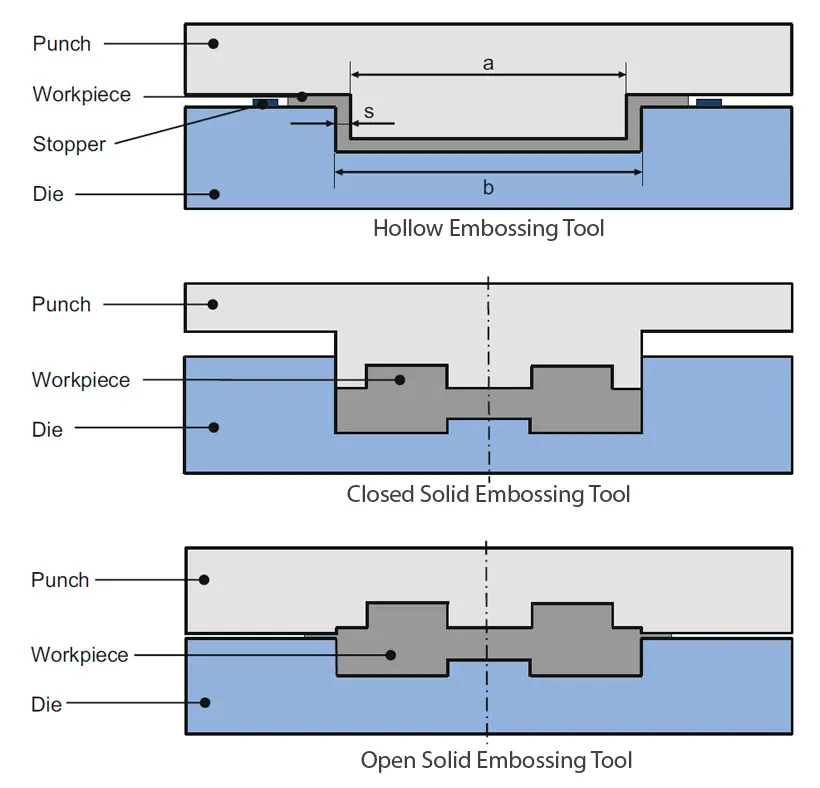
Embossin is the process of producing raised or sunked design in the sheet metal. This emboss is created to increase the strength too. Embosed component is more stronger than the plain sheet metal component. This process increase the strength of the sheet metal drastically by creating embosses on it.
3) Hemming:-
Hemming is the process of joining the two sheet metal where we cannot able to use welding or spotwelding or reveting. Hemming is the process of rooling over one sheet metal edge on the other sheet metal to make the close contact with the tolerance of 0.2mm to use the sealant to stick them both together on the edges. This sealant is used to increase the NVH(Noise, Vibrtaion, Harshness) on the component.
4) Punching:-
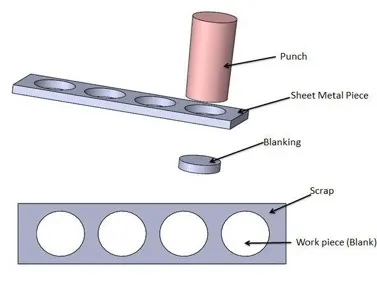
Punching is the process of creating holes for required dimension by pressing the hydraulic die against the sheet metal wherever we need to make the hole.
Design Considerations For Backdoor:-
1) Rear visibility for driver,
2) Luggage space,
3) Strength of the door,
Components in Back Door:-
1) Outer Panel,
2) Inner Panel,
3) Reinforcement,
4) Hinge,
5) Gas Stay,
6) Wiper Motor.
Back Door Designing Process:-
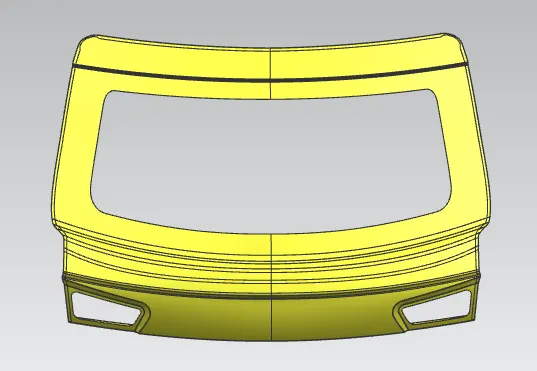
Styling Surface:-
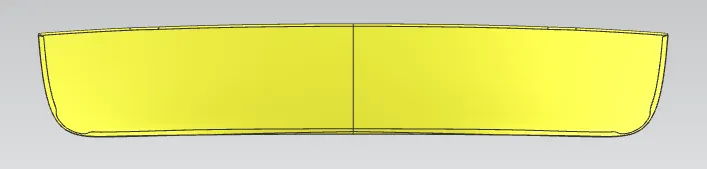
First thing we have to ensure in the styling surface is the how good the surface. We have to check each and every component individually before start to design. Things we have to check is that surface joining properly and thickening properly. If everything is done let's start the work.
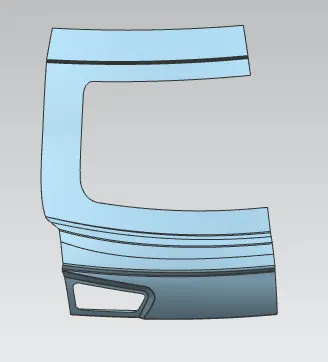
Back Door Upper:-
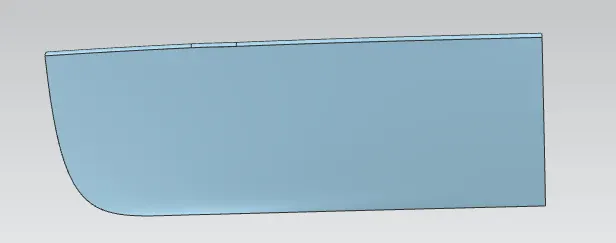
Back Door Lower:-
Both Upper & Lower:-
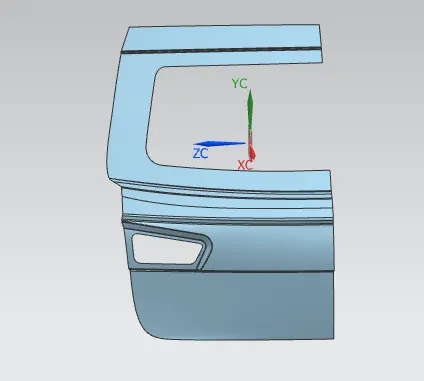
Tooling Axis:-
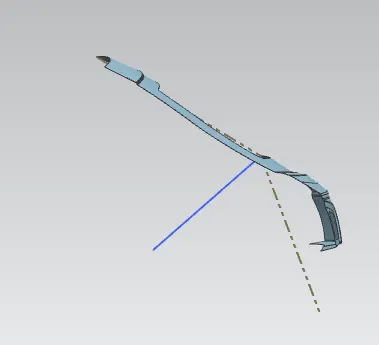
Tooling axis the direction in which the core and cavity of the mold opens and closes.
Sealing Flange:-
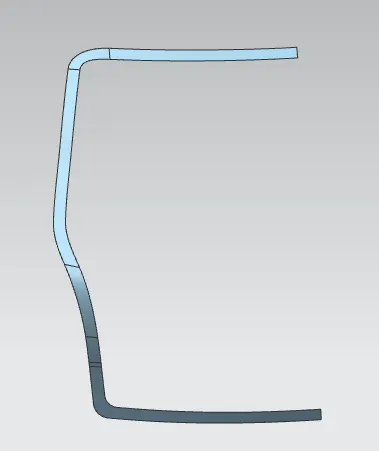
Sealing flange is the part where the tailgate is going to sit on the car body. The remaining back door is designed from the sealing flange. This should be 10-15mm inwards from the outer edge.
Inner Panel:-
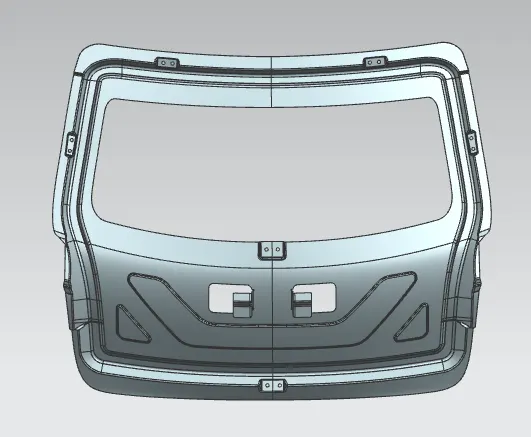
Inner panel is created on the sealing flange. This is the part which is going to get seating on the rubber bush of the car body. This rubber seal is used to prevent the water coming into the car. Embosses is created on the inner panel of the car because if is there any collision from the rear side then the embosses is going to damage first rather than the inner panel. We should create embosses for the hinge, gas stay, wiper motor, latch and striker to fix on the tailgate.
Reinforcement:-
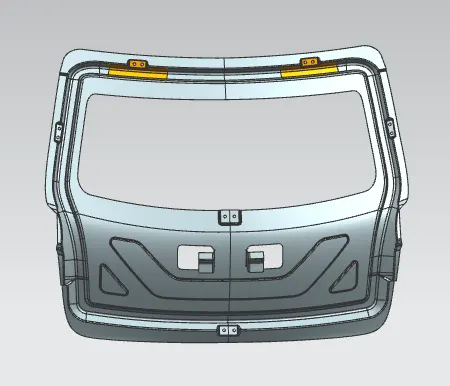
Reinforcement is given on the the embosses to create additional strength to the tailgate. While creating embosses the whole strength got increases but the strength reduces locally on the area. So we are creating the reinforcement to increase the strength on the embosses region. This reinforcement thickness can be from 0.75-1.5mm.
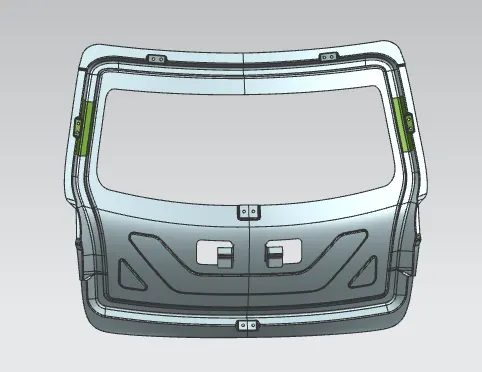
Hinge Reinforcement:-
On this area the hinge of the tailgate is going to connect with the car body. By creating reinforcement we are increasing the strength locally on the emboss region.
Gas Stay Reinforcement:-
On this area the gas stay of the tailgate is going to connect with the car body. By creating reinforcement we are increasing the strength locally on the emboss region.
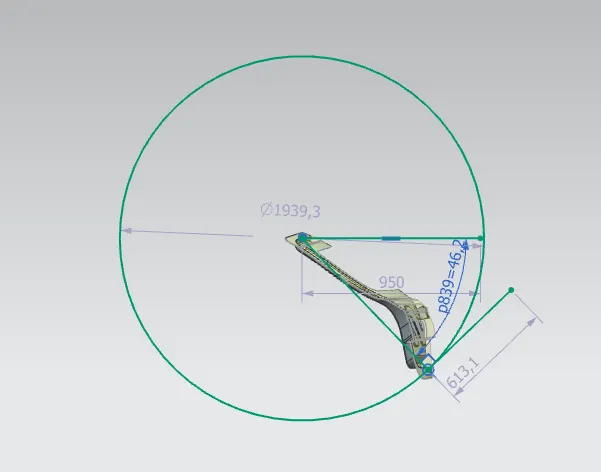
Latch and Striker Trajectory:-
Latch and striker trajectory is the path in which the tail gate opens and closes following the trajectory.
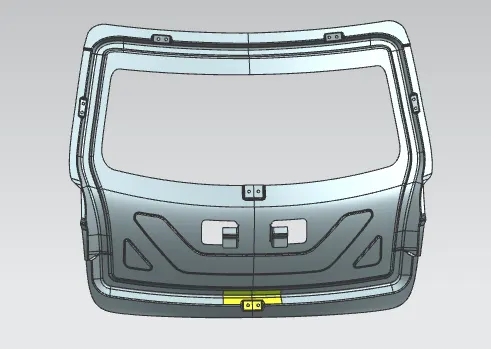
Latch and Striker Reinforcement:-
On this area the latch and striker is going to connect with the car body. By creating reinforcement we are increasing the strength locally on the embosses.
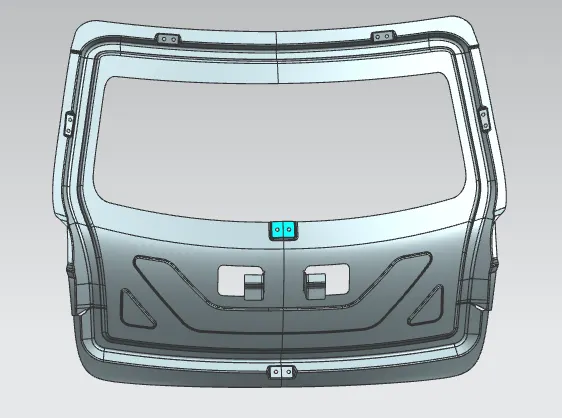
Wiper Motor Reinforcement:-
On this area the wiper motor is going to fix on the tailgate. By creating reinforcement we are increasing the strength locally on the embosses.
Outer Panel:-
Outer Panel is the Styling Surface of the back door. This is going to be attached on the inner panel by the hemming operation. The hemming flange length should be betweem 6-8mm. The clearance between the inner and outer is 0.2mm to apply the sealant which joins the upper and inner panel.
Corner Reliefs:-
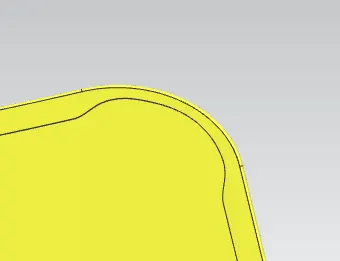
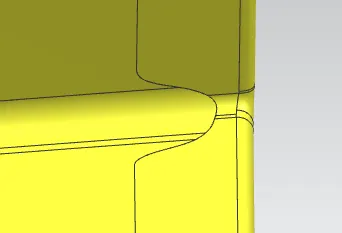
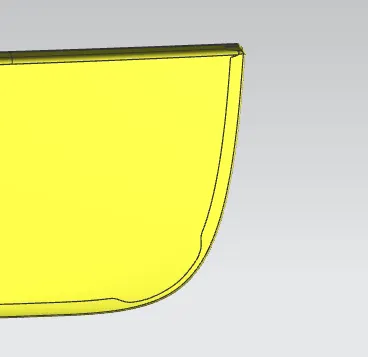
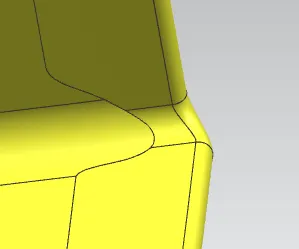
Reliefs should be given on the corners to reduce the stress concentration on the edges.
Draft Analysis:-
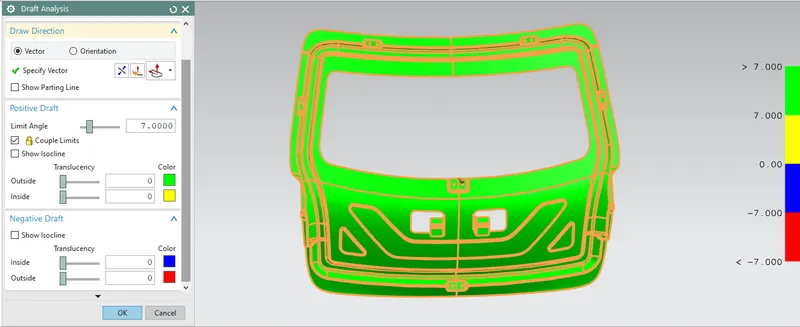
Draft analysis is performed to chech whether the part can be manufacturable or not. Draft should we given to every component with respect to the tooling axis. Yhe Min draft angle is 7° for the sheet metal. If the component is below 7° then the part may get tear while manufacturing the component. If enough draft is not given the surface finish will not be good enough.
Final Assembly:-