Design of backdoor
Car Back Door :
Introduction:
The Back Door of a car is the rear most part of the vehicle which gives access to the trunk space of the vehicle. The rear door also supports the reinforcements and added weights of the Wiper Motor, Gas Stay, Tail Lamp and Latch and Striker.
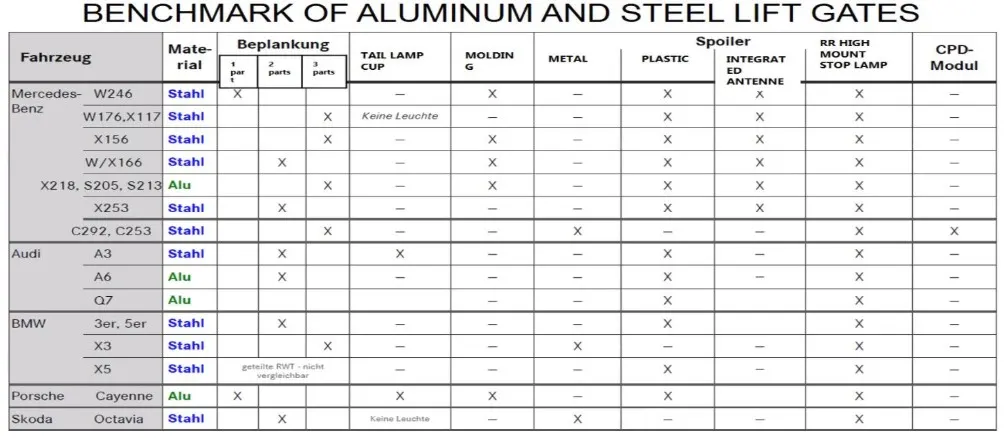
The back door is usually made of an inner panel and 2 or 3 separate inner panels joined together by hemming or spot welding wherever necessary.
The Material used for the door manufacturing depends on the budget and performance of the vehicle. Mostly Aluminium and Steel will be used whereas low budget vehicle use Steel which makes the manufacturing process easy and cost efficient since it follows the Stamping of Moulds. But Aluminium were used for high budget cars since it increases the manufacturing cost since the Aluminium parts will be mostly die casted hence it has variable thickness which reduces the requirement of reinforcements but improves the performance of the car rapidly since Aluminium is not heavy as steel.
Types of doors based on working position:
- Top Mounted Door
- Side mounted Door
- Bottom Door
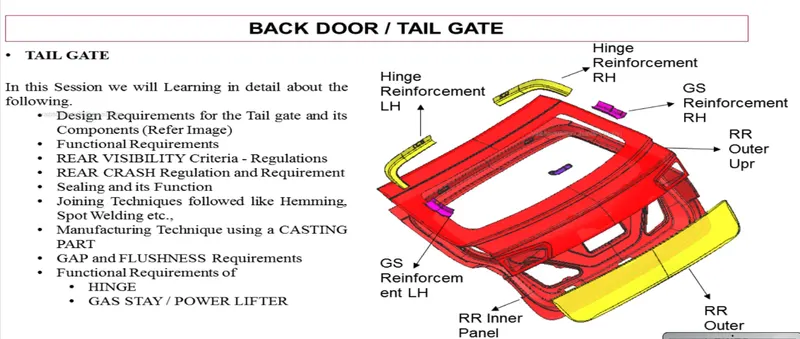
Major Parts and Reinforcements:
The backdoor consists of the following basic components:
-
Backdoor Outer Panel (Upper)
-
Backdoor Outer Panel (Lower)
-
Backdoor Inner Panel
-
Hinge Reinforcements (LH & RH)
-
Gas-Stay Reinforcements (LH & RH)
-
Latch and Striker Reinforcement
-
Wiper motor Reinforcement
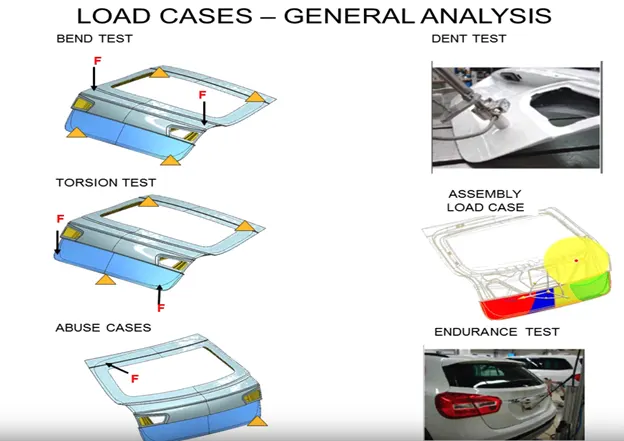
Design Consideration:
-
Functional Requirement of Hinge and gas stay
-
Rear visibility criteria
-
Luggage volume
-
Crash Analysis
-
Bend Test, Dent Test, Torsion Test & Endurance Test
-
Rear Crash Regulation
-
Gap and flushness Requirements
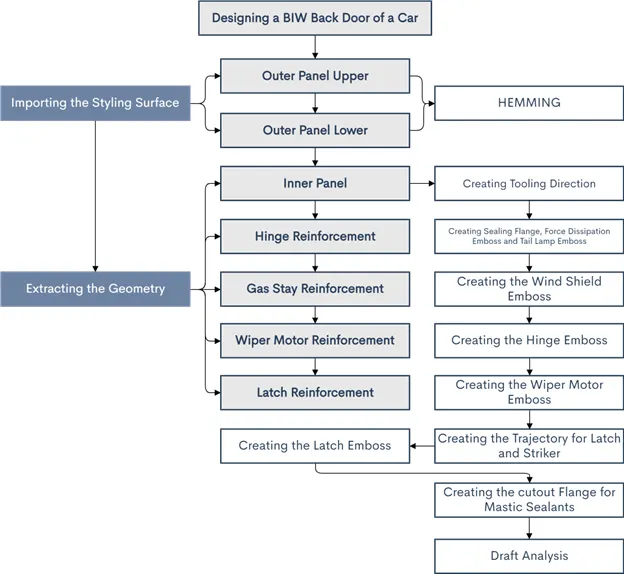
Design Methodology:
Different Sheetmetal processes used for manufacturing the Back Door:
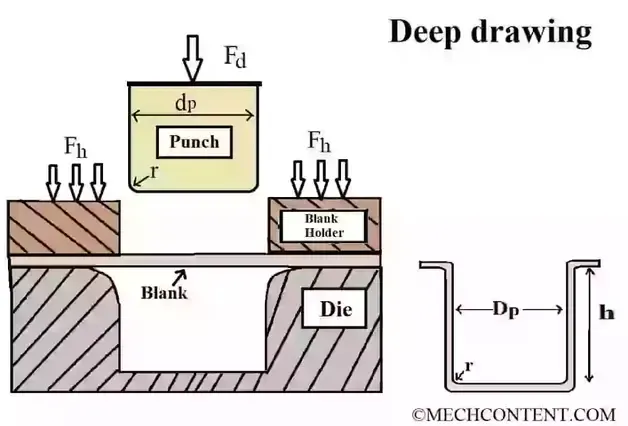
Deep Drawing:
Deep drawing is the process of converting blank of sheet metal into a cylindrical containers with a flat or hemispherical base,It is combination of metal forming process & sheet metal process.
Embossing:
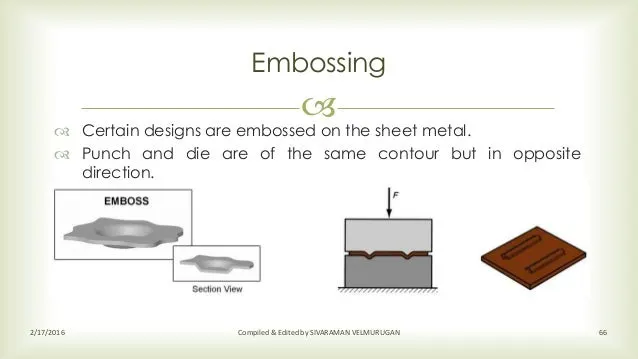
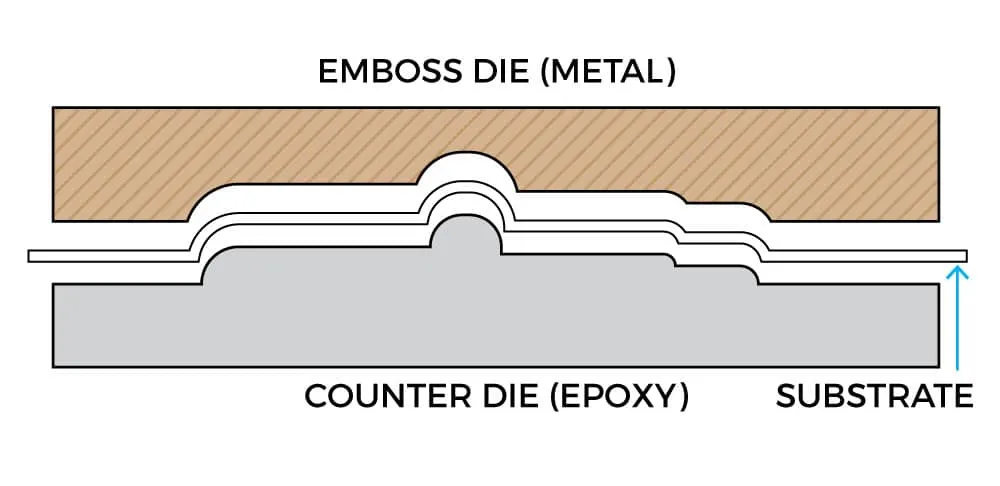
Embossing is the process of creating steps in sheetmetal panels.In most cases embossing is done with male and female dies. One die is placed above the metal and the other goes underneath. When the dies are pressed together, they create an embossed design in the shape of the dies.
For the embossing operation, following metals can be easily embossed.
- Aluminum (and its alloys)
- Brass
- Copper
- Zinc
- Steel (and its alloys)
- Hot rolled steel
- Cold rolled steel
- Galvanized steel
- High-strength low-alloy steel
Hemming:
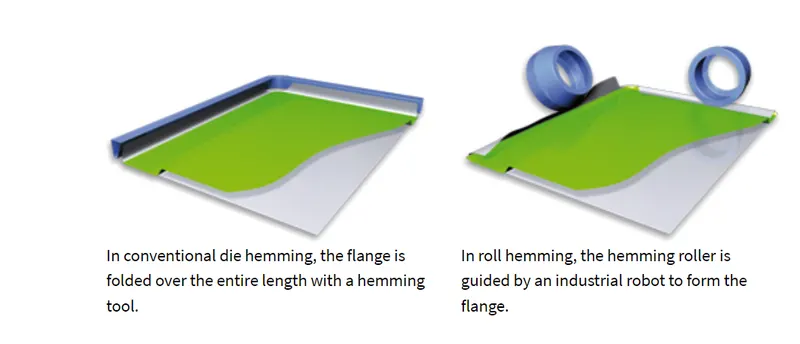
Hemming is a forming operation in which the edges of the sheet are folded or folded over another part in order to achieve a tight fit. Normally hemming operations are used to connect parts together, to improve the appearance of a part and to reinforce part edges.
In car part production, hemming is used in assembly as a secondary operation after deep drawing, trimming and flanging operations to join two sheet metal parts (outer and inner) together. Typical parts for this type of assembly are hoods, doors, trunk lids and fenders.
There are various types of hemming operations:
- Conventional die hemming
- Roll hemming
Punching:
It is a process of exerting a controlled magnitude of the force on a sheet metal thereby cutting a section of the workpiece. Mostly, the process uses dies and punches as the tooling system. Under normal circumstances, the punching proccess will leave a hole in the sheet metal workpiece.
Blanking:
Manufacturers use blanking to punch pieces in specific shapes from sheets or strips of raw material. The punched-out piece is called the “blank,” hence the term “blanking.” Blanking is most often performed with tools made from hardened steel or carbide, which work on metals like aluminum, carbon steel, stainless steel, and even plastic.
Sheet metal punching refers to a metalworking process that entails forming holes in a metal workpiece. On the other hand, sheet metal blanking is a process of metal fabrication whereby the final product is eliminated from the larger metal.
Then, the remaining material is disposed of as scrap. Additionally, in sheet metal punching, the material which is punched out is discarded and the final product is the remaining section. In sheet metal blanking, the final products tend to be removed from the larger sheet of metal and the remainder discarded as scrap.
Design Of Back door by using NX CAD:
- Inner Panel thickness=0.75mm
- Outer Panel tickness=0.75mm
- Reinforcement thickness=1.5mm
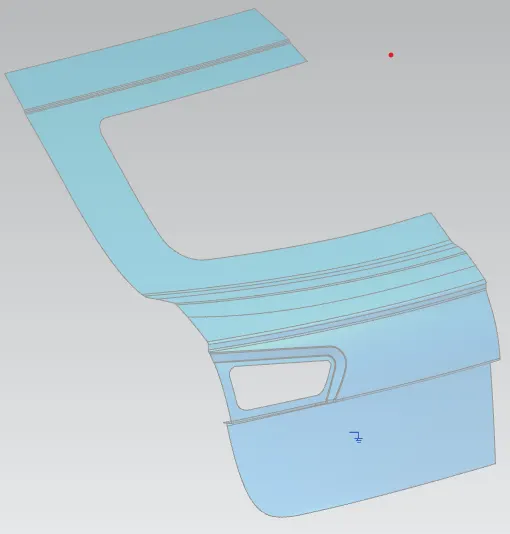
1.The styling surface needs to be checked and analyzed since it might have irregularities, hence surfaces has to be repaired according to the smoothness. After repairing the surfaces, the door is divided into two parts as Door Outer Upper and Doo Lower Panel.
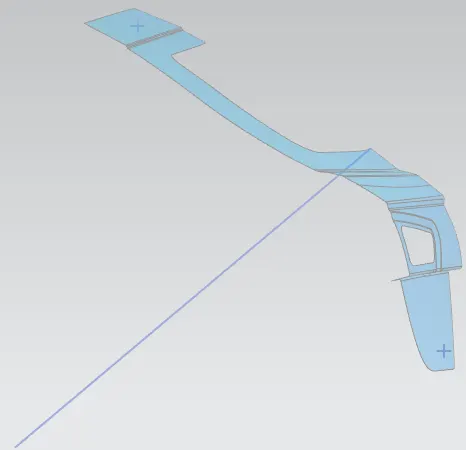
2.We need to create the Tooling direction for the Deep drawing operation. It shows that all the operations like embossing is done by considering this vector direction and it will help in manufacturing the part.
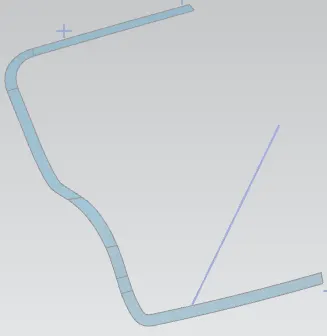
3.After creating the tooling direction the design of the inner panel will begin where we will first develop an effective sealing flange by checking all the boundaries and by following the shape of the inner panel design( By offsetting the outer panel to the specific distance).
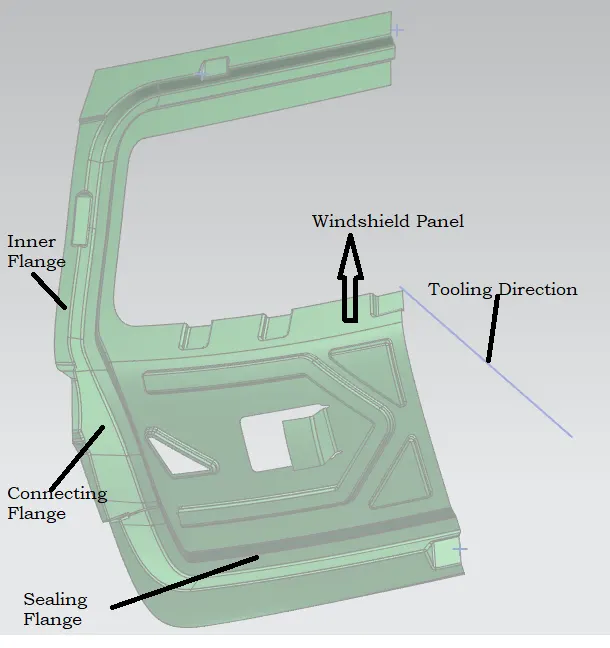
4.We will be creating the Back door inner panel flange by offsetting the outer surface at a distance considering the sheet thickness and thickening direction.
5.Created the connecting flange to join the inner panel and sealing flange.
6.For the windshield panel mounting, windshield panel is created and joined with sealing flange.
7.TO improving the strength of the inner panel and to reduce the weight emboss and other cut-outs are created. Also, for Latch and Stricker mounting cut-out is created. This cut-out is also done on other side of the inner panel to maintain the centre of gravity of the Back door.
Mastic Sealent:
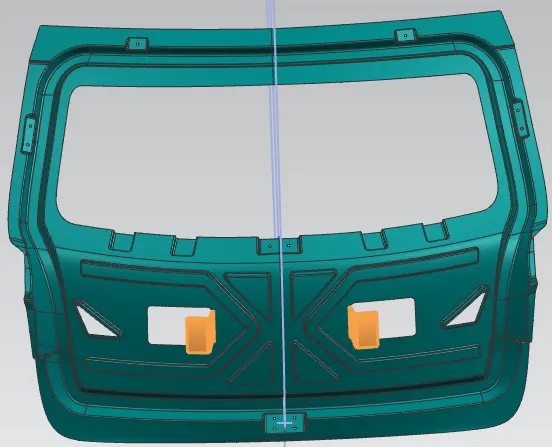
The mastic sealant is used to fix the inner panel with the outer panel which increases the NVH factor and stiffness of the back door.
Hinge,Gas stey,Wiper Motor and Latch & Stricker emboss:
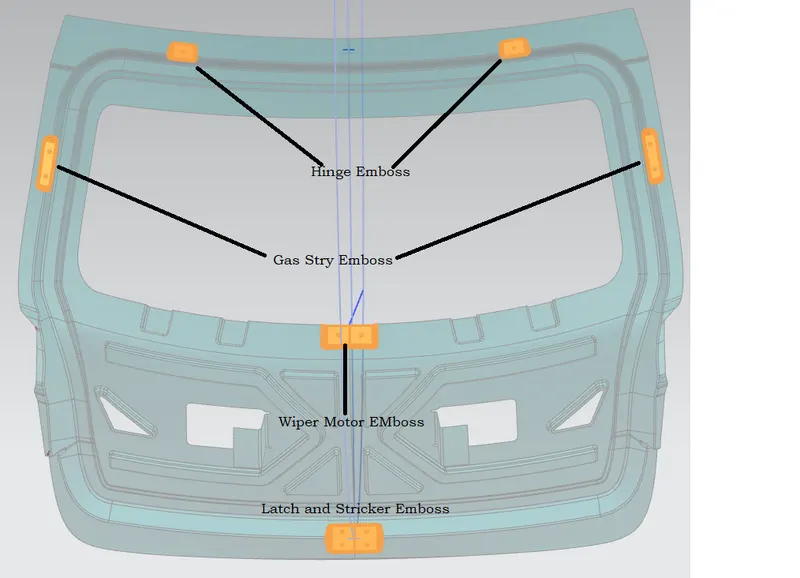
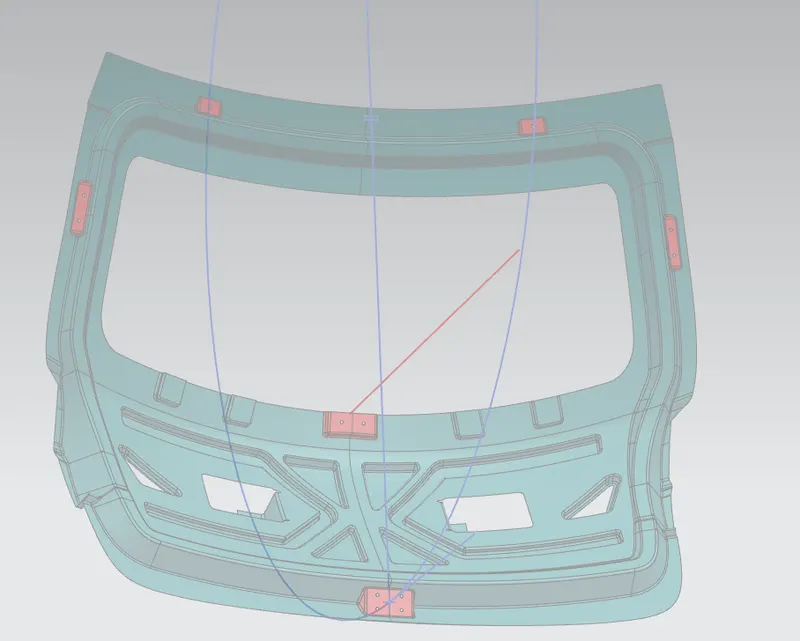
The yellow faces(Top front) denotes the hinge emboss which was created using the datum plane and emboss feature in NX. It was also designed in a way that the emboss should have a flat surface for assembling the hinges using it.
The yellow faces(Left and Right Sides) denotes the gas stay emboss which was created using the surface of the connecting flange.
The Latch and Striker emboss were designed by creating a trajectory which follows the opening and closing of the back door with respect to the hinge axis.
Stricker Position
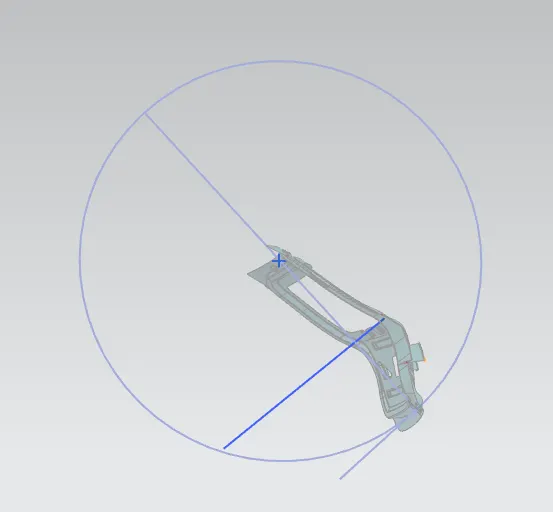
The position of the hinge should be perpendicular to the latch when the latch and striker meets. The circle is drawn from the center of the hinge axis to find the path of the striker and positioned perpendicular to the path.
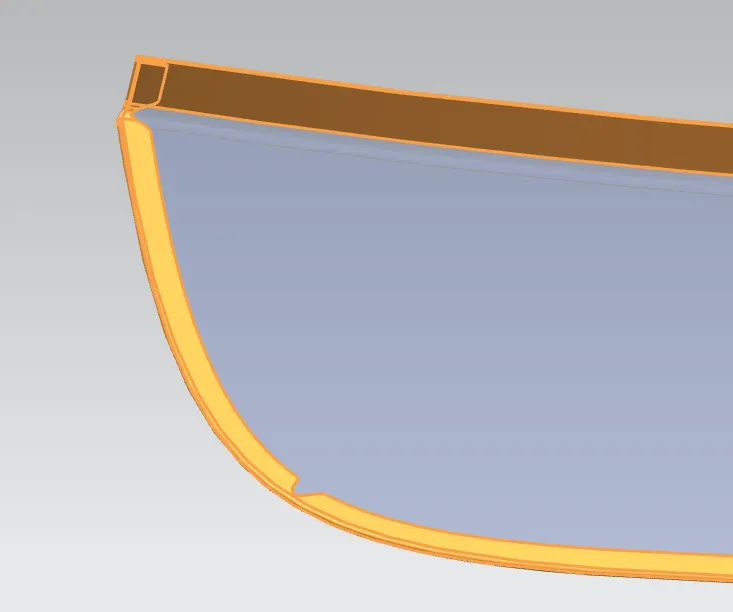
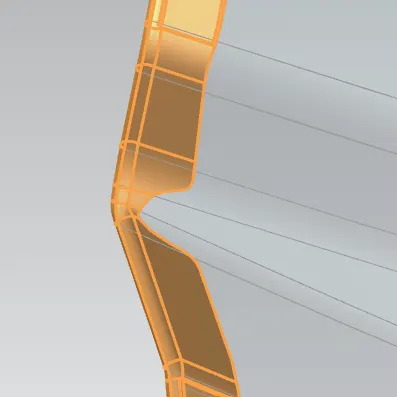
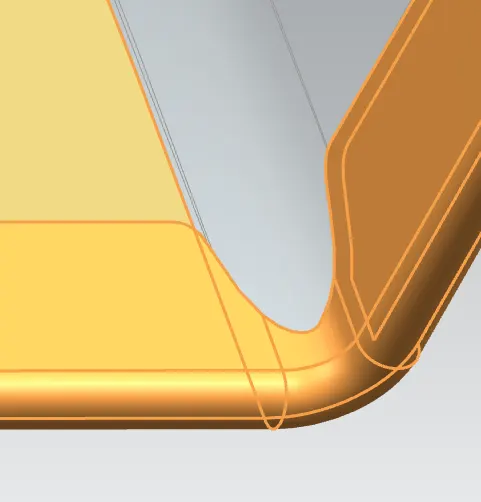
Top door Lower and Relief :
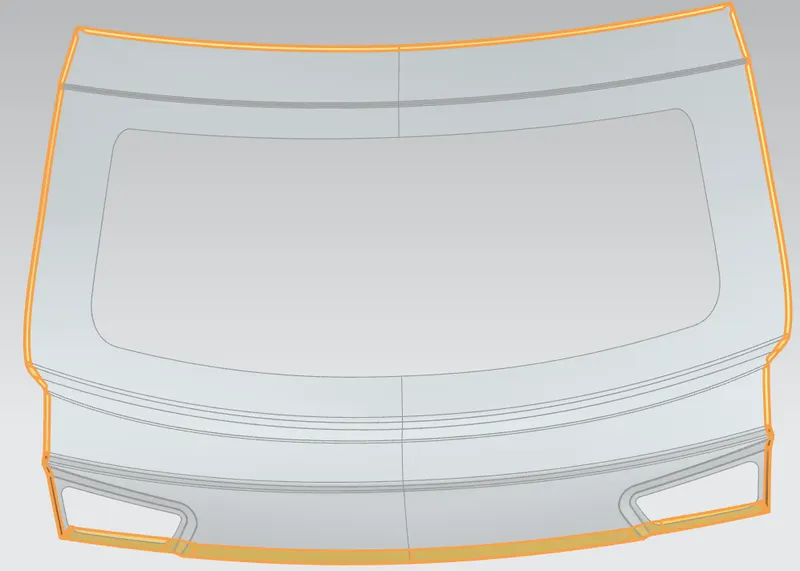
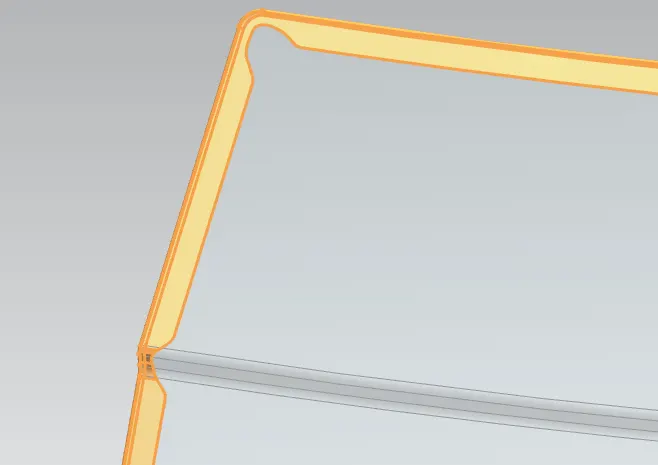
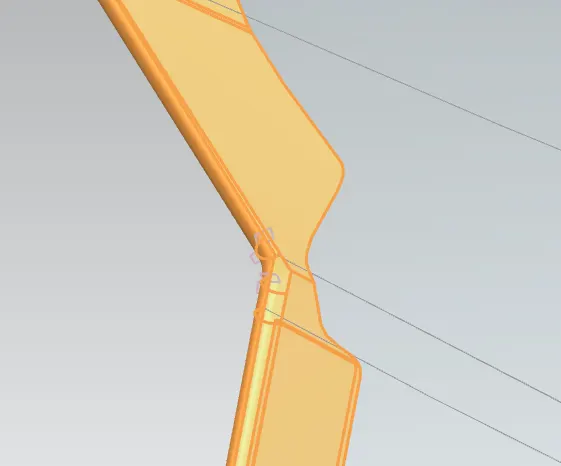
Relief helps to control sheet metal material behaviour and to prevent unwanted deformation during unbend operations.
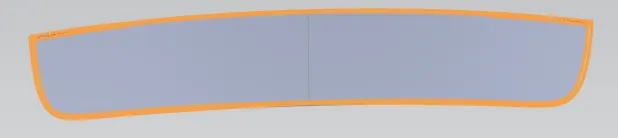
Top door Upper and Reliefs:
Reinforcement:
Reinforcements are provided to provide support and add extra material to the sheet metal part to increase its strength near component installation regions and minimize the impact of collisions. We have considered following reinforcements during our design. The reinforcements maybe manufactured by stamping. Thickness of all reinforcements is 1.5 mm.
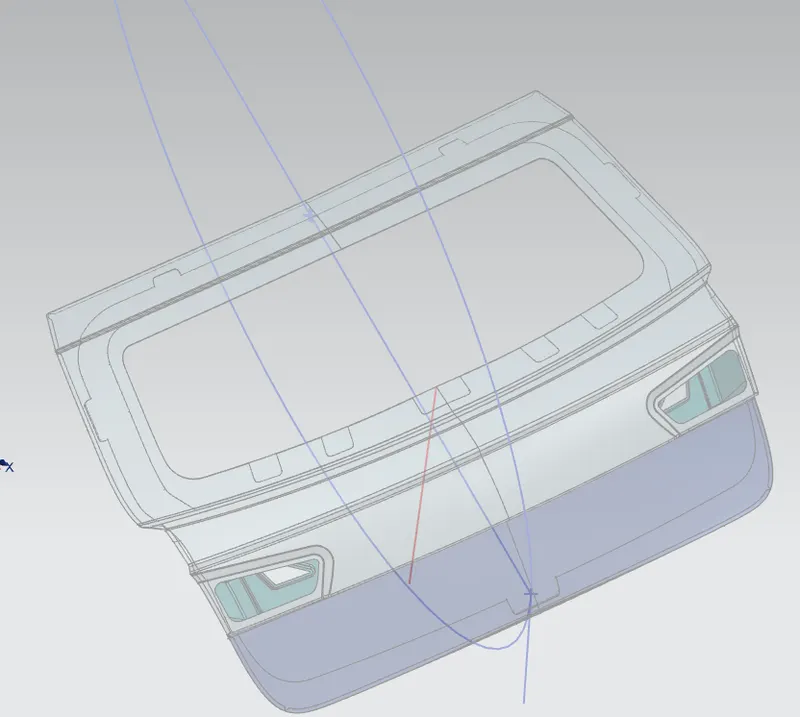
Complete Assemby:
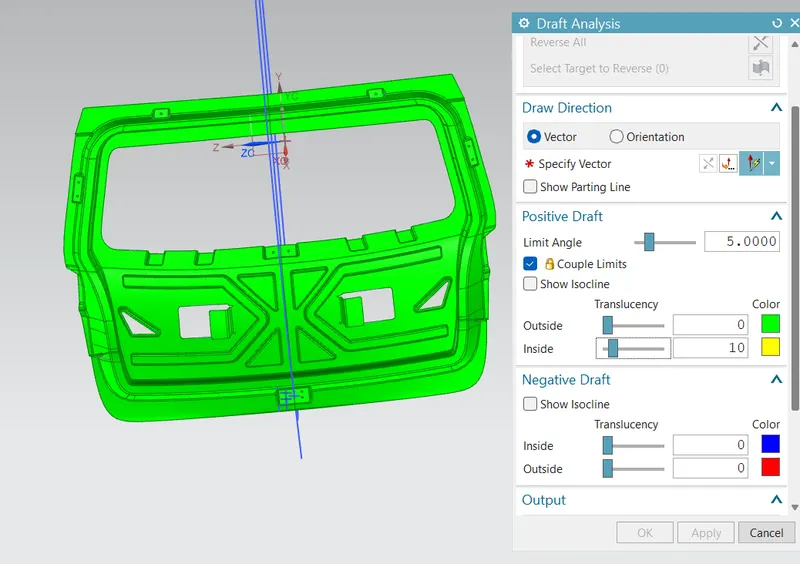
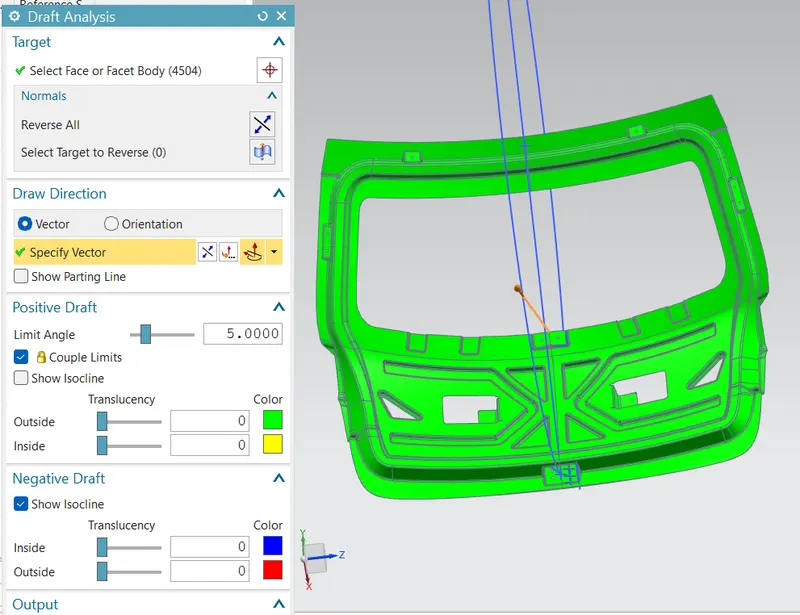
Draft Analysis:
- Draft Analysis The Draft Analysis allows the user to easily analyze a part for proper draft angle. A Draft Angle describes the amount of taper for molded or cast parts perpendicular to the parting line.
To create a Draft Analysis for any 3D part file, the user needs to:
- Select Part/Surface
- Select the Pull Direction
User can change the pull direction the Part/Surface.
A panel of gradient specifies a range of deviation from the pull direction. There is provision to change the deviation range and color of the result. With the help of mouse hover user can check draft angle on the component.
CONCLUSION:
Thus the Body In White Back Door of a car was designed following the engineering standards and also the deep drawing requirements were satisfied.