Design of backdoor
OBJECIVE:
Use the provided styling surface to come up with a back door design, use appropriate design methodologies, and provide the necessary reinforcements and embosses
INTRODUCTION:
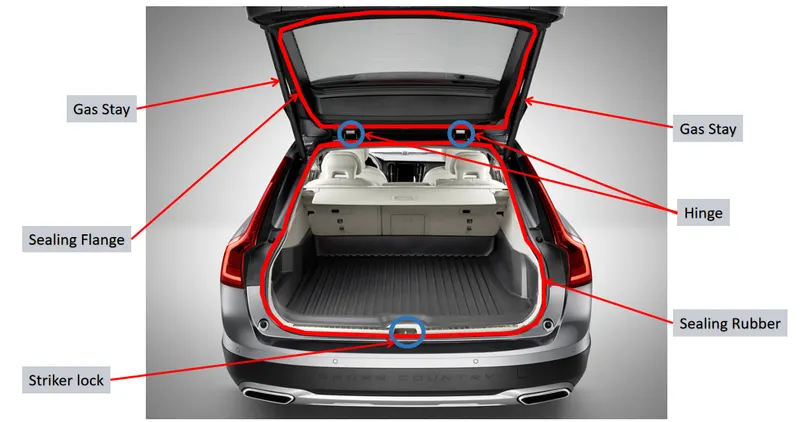
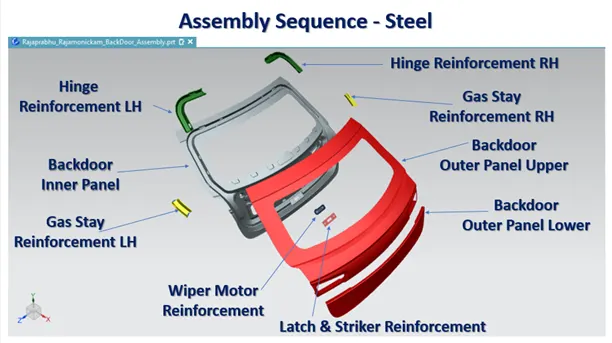
The backdoor of an automobile or popularly known as tailgate is the part which covers the backside of the car. It gives the acess to the main compartment for storing luggages. A hinge allows to boot lid to open and then certain spring mechanisms or gas cylinders helps the lid to stay opened for desired duration. The backdoor is also an aesthetic element in automobile designing and has to be made with precise measurements. The components which makes up the backdoor assembly consists of:
- Backdoor Outer panel(Upper)
- Backdoor Outer panel(Lower)
- Backdoor Inner panel
- Hinge reinforcements
- Gas stay Reinforcements
- Wiper Motor reinfocements
- Latch and striker reinforcements
There are mainly two types of backdoor oporating commodities:
- Electrically powered
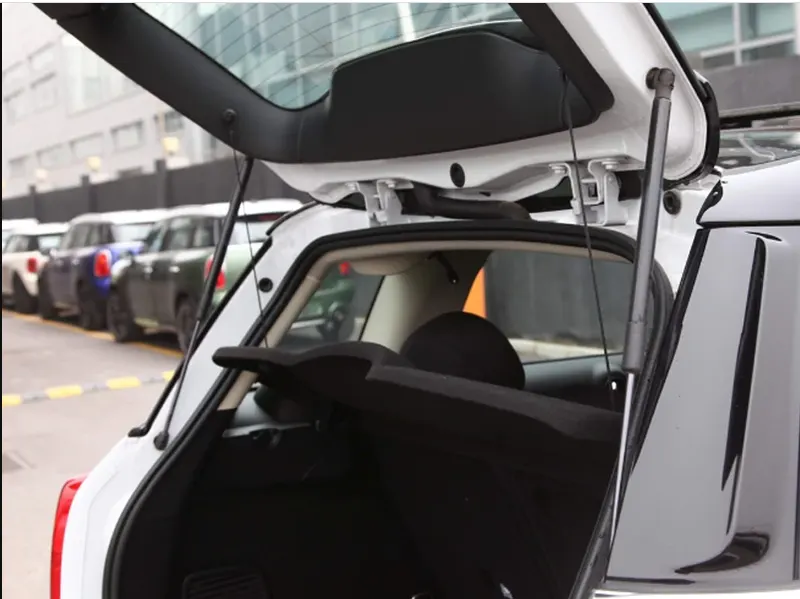
- Gas Stay powered
MANUFACTURING OF BACKDOORS:
The main material choice for designing a backdoor for a ver long time has been steel.But now many major companies are using Aluminium as the material of choice for their cars. This of because of several reasons which are discussed below:
DIFFERENCE BETWEEN ALUMINIUM AND STEEL BACKDOORS:
|
ALUMINIUM
|
STEEL
|
| parts are casted | parts are stamped |
| reinfrcements are not necessary | reinforcements are necessary |
| local thickness can be varied |
has only uniform thickness |
| less components so lighter in weight | more components compared to aluminium backdoors so heavier in weight |
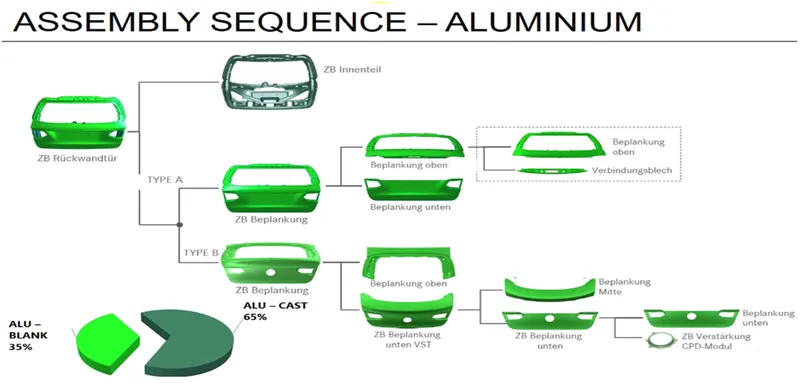
ASSEMBLY SEQUENCE FOR ALUMINIUM BACKDOORS:
ASSEMBLY SEQUENCE FOR STEEL BACKDOORS:
DIFFERENT TYPE OF SHEETMETAL OPERATIONS DONE TO BACKDOOR:
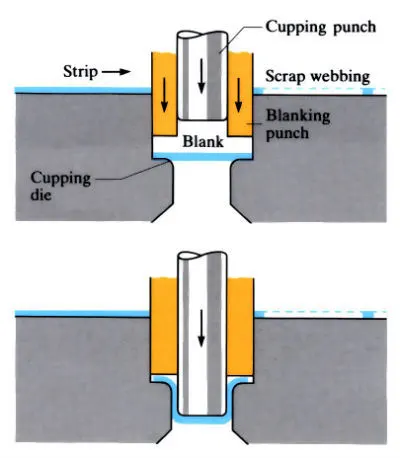
DEEP DRAWING: The metal deep drawing process is an effective method of manufacturing cups, cans and other deep drawing products. The deep drawing has 2 main categories:
1. First-Stage Drawing: The blank sheet of metal is placed on a die and contacted with a punch. When the metal specimen is a flat piece of sheet metal used in forming and finish the product. Initially the punch moves in downward direction. The outer rim of the blank is subjected to pure radial drawing (drawing toward in radial axes) between die and blank metal. The metal becomes a bend and slides over the die and also streched between die and punch. The metal in vicinity of punch head and contact with it bend and slide over radii and stretch over punch head.
2. Redrawing: The components drawn from the first stage are then redrawn and converted in cup shape with more depth in die and punch. this 2nd stage of drawing is known as redrawing.
EMBOSSING:
Embossing is a metal forming process for producing raised or sunken design or reliefs in sheet metals by means of matched male and female roller dices theoritically with no change in metal thickness or by-passing a sheet or a strip of metal between rolls of disered pattern. Metal sheet is drawn through male and female roller dies producing a pattern or design on the metal sheet. Depending on the roller or die used, different types of embosses can be created.
HEMMING:
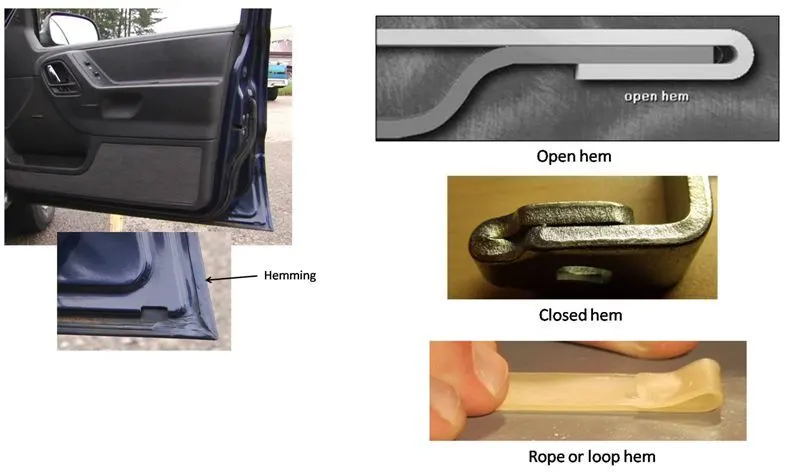
hemming is a metal working procesz in which a sheet metal edge is rolled onto itself. The outer panel is rolled 2 or 3 times over the inner panel. On the first roll, the outer panel is bend slightly. On the 2nd roll the outer panel is rolled even more and on the final time the panel is rolled completely and is attached to the inner panel. The hem is fixed with hemming glue and so a 0.2mm tolorence is provided between the outer panel and iner panel.
PUNCHING:
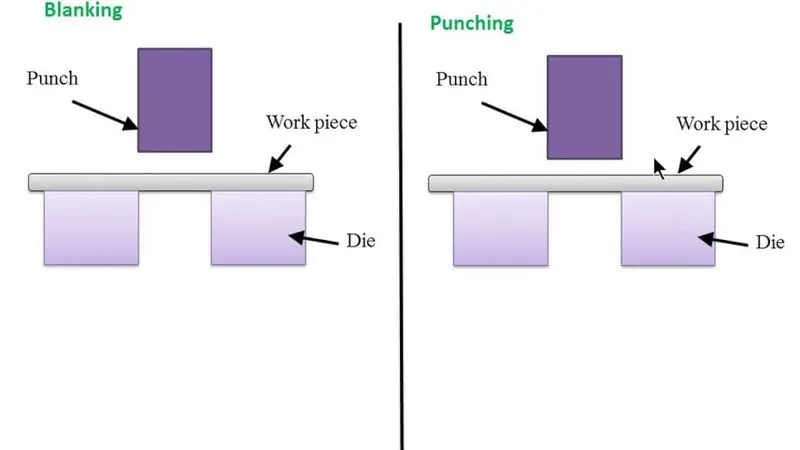
It is similar to blanking only the main difference is that, the hole is the required product and the material punched out from the hole is considered as a waste.
BLANKING:
Blanking is a cutting operation of a flat metal sheet and the article punched out is known as blank. Blank is the required product of the operation nad the meatl left behind is considered as a waste.
SPOT WELDING:
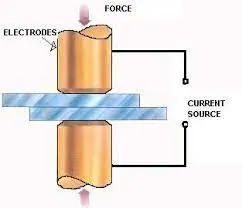
Spot Welding is a form of ressistance welding, known as ressistance spot welding. The proccess involves the heat produced by ressistance by an electric current to join two sheets of metal. The current heats the material to the point whre two sheets become malleable and then strong pressure is applied to seal them together and then they are cooled.
Spot welding is only suitable for welding small regions. Low carbon steel are the best materials to be spot welded together because of its low thermal conductivity and more electric ressistance.
BACKDOOR ASSEMBLY:
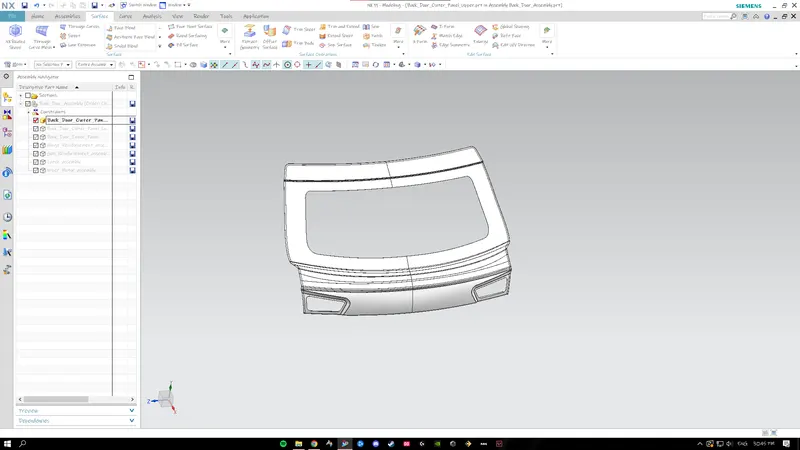
BACKDOOR OUTER PANEL (UPPER) :
Outer panel is the styling surface of the backdoor. Glass for rear visibility is mounted on the upper part of the backdoor. Tail lights are also mounted on this body.
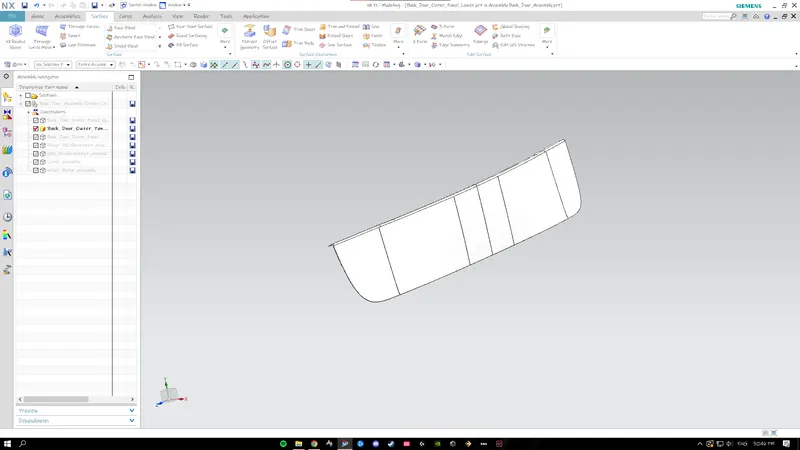
BACKDOOR OUTER PANEL (LOWER) :
The number plate is mounted on the lower part of the backdoor. Spot welds and other manufacturing processes are done only on the inner panel because the outer panel is only designed for styling purpose and it should not have any dents or scratches.
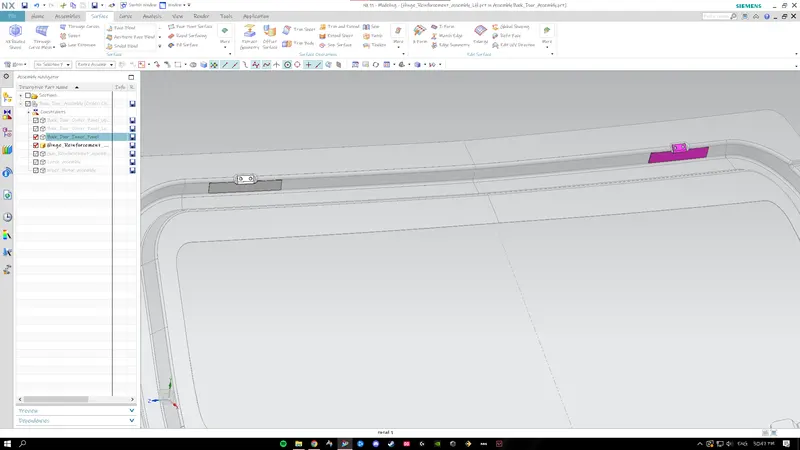
HINGE REINFORCEMENTS:
Hinge supports the whole weight of the backdoor. Hence the reinforcements are necessary to hold the weight. The emboss is provided in such a way that the hinge moves freely. The hinge is connected to the rear roof of the car.
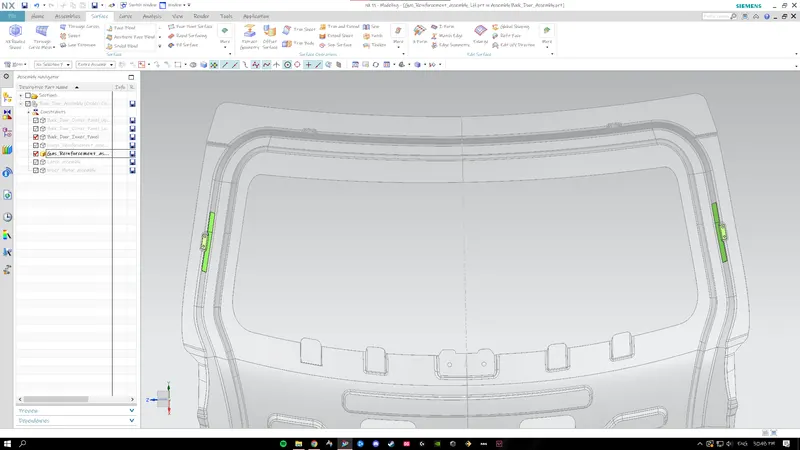
GAS STAY REINFORCEMENTS:
Gas stay is used to lift the backdoor automatically. There are two types of gas stay, one is semi-automated and the other is fully automated. In semi automatic gas stays, the backdoor needs a little force to be opened and then it opens automatically. In the fully automatic gas stay, it has a power spindle which automatically lifts the backdoor.
WIPER MOTOR REINFORCEMENTS:
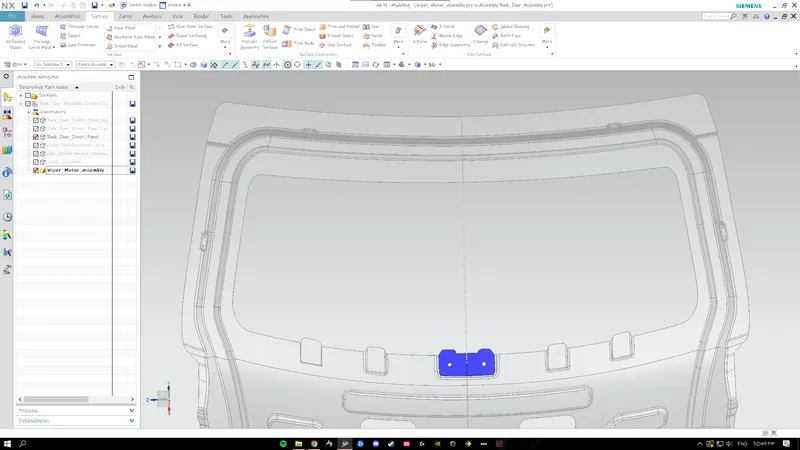
Wiper is used to wipe out the rainfall of the backdoor window. It is actuated by the motor which is mounted on the iner panel. Due to the vibration and heat created by the motor. The inner panel where the motor is mounted gets deformed and the parts attached to the motor starts to vibrate which leads to poor NVH. So we have to provide the reinforcements whre the wiper motor is placed.
LATCH AND STRIKER REINFORCEMENTS :
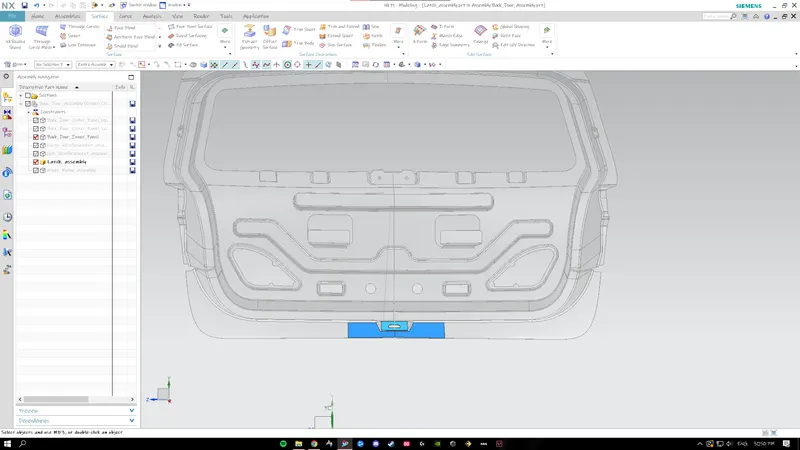
At the bottom of the panel, reinforcement and emboss are given to accomodate the latch and striker assembly. Generally key operated or automatic remotely controllable mechanism is used to keep the door open is closed. The actuators, receivers and other electronic devices are mounted on the inner panel only.
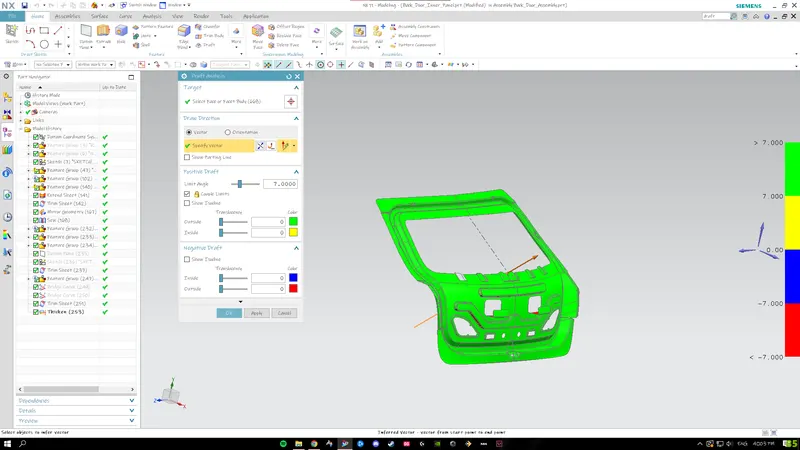
DRAFT ANALYSIS:
- The draft analysis was performed for the tooling direction created at first and checked that the model is suitable for manufacturing.
- Then to get a complete green portion the required changes to the draft angle of the embosses were carried out by optimizing the model.
- The Draft Analysis command is used to detect that the part drafted will be easily removed or not.
- This type of draft analysis is performed based on color ranges.
- The identifying zones on the analyzed element where the deviation from the draft direction at any point, corresponds to specified values.