Design of backdoor
BACKDOOR
The tailgate is located at the rear of the vehicle, allowing access to the trunk to store luggage, spare wheels, etc. These doors can be operated manually or electrically. Most luxury cars are powered by electricity.The opening and closing of the door is co-ordinated by the Latch and Stricker position and the Gas stay position that is mounted on the body and back door of the car. These positions play a major role in ensuring smooth opening and closing of the tail gate.
A backdoor is usually made up of 1 inner panel and more than 1 outer panels joined together by hemming and spot welding wherever necessary.
Types of Back Doors:
There are three types of back door based on the position of the Hinge axis. They are
- Top Mounted
- Bottom Mounted
- Side Mounted
Design Considerations In Back Door Design:
- Visibility Criteria
- Force Dissipation
- Latch and Stricker Positions
- Hinge Position
- Gas Stay Position
- Material Selection
- Space Availability
- Hemming and Relief Areas
All of the above design considerations are inter-connected to each others if we try to alter any one of the consideration then others will get affected by it. The Latch and Stricker, Hinge Position and the Gas stay Positions has to be maintained in a proper way so that they play a major role in the opening and closing as well as the rear Visibility criteria of the car.
Material Selection:
Material selection plays an important role in determining the total weight of the tailgate. Commonly used materials are steel and aluminum. Because the density of steel is higher than that of aluminum, the weight of the door increases. Basically, I use the material according to the budget of the car, because the price of steel is much cheaper than aluminum. If aluminum is used instead of steel, many details such as reinforcement for each fastener are not required, and the overall weight is reduced by 6 to 10 kg. But the draw back is Aluminium is much costlier than Steel. Hence based on the budget of the car aluminium is used. In higher end models like Benz, Audi, Porshe and BMW we can find aluminium is used instead of steel resulting in reduced weight and increased performance of the vehicle.
Another Factor to make a note is using Casted Aluminium instead of deep drawn Steel components and adding reinforcements to it is the space of the luggage commodity gets increased by a certain amount because the draft angle for Casted aluminium is much lesser (3 degree) than the deep drawn Steel inner panel (7-9 degree). Thus it reduces the space between the inner and outer panel resulting in much larger cabin space than the deep drawn steel inner panel. Therefore, material selection is one of the design considerations. This also improves the rear of the car as it reduces the space between the interior and exterior panels, leaving more space for the mirror to see.Therefore, it is not possible to afford the high cost of the tailgate structure by choosing steel for low-end vehicles
Force Dissipation:
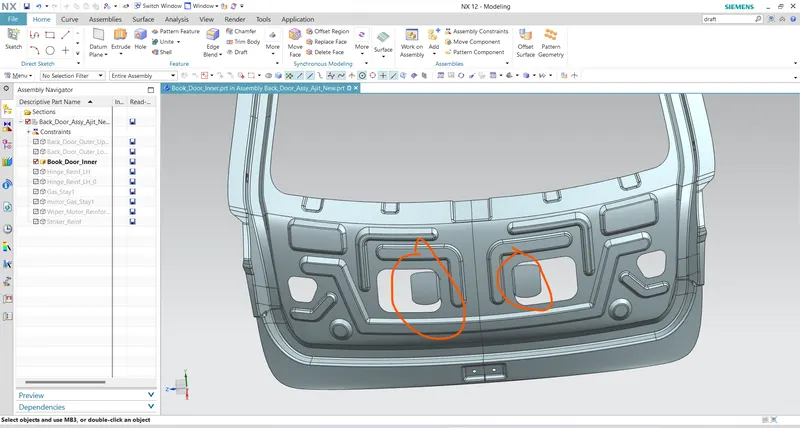
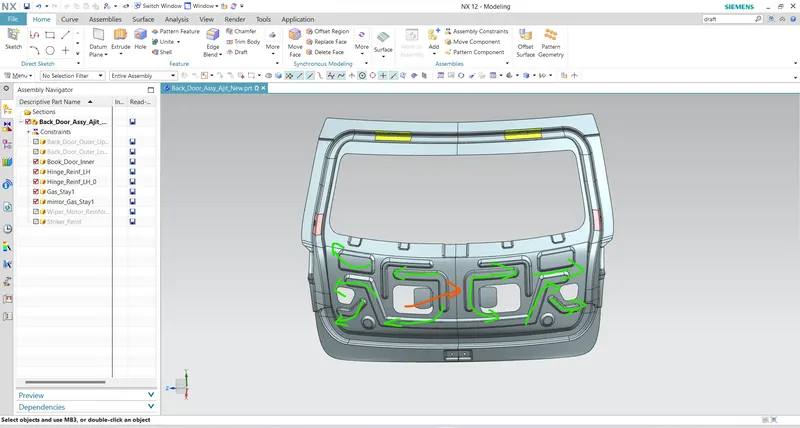
The essential criteria in designing the back door or any BIW component is the force dissipation in the course of an impact or a collision. as a result studies are being done so that you can dissipate the force on the perimeters and keeping off it reach the internal cabin of the car so that feasible harm of impact in the vehicle is decreased. consequently in order to do that the V or Y embosses are created on the inner panel so that the force gets transmitted directly to the perimeters instead reaching it at the cabin. this is one of the main criterias in lower back door layout.
Latch and Stricker Positions:
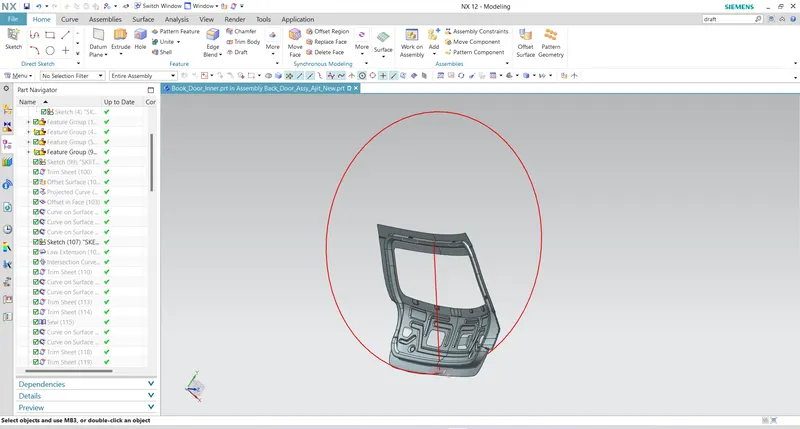
The Latch and Stricker positions play a major role in determing the opening and closing of the back door. Hence the opening and closing of the had to smooth and inorder to ensure that the the centre point of the latch and stricker has to to be at the same point and the trajectory has to be tangent to the open close circle that is drawn. This is shown in the below image. Only if the centre points and the tangent line are perfect the opening and closing of the back door is smooth and clear. Or else the Hinge positions, Gas stay positions and Latch and Stricker Positions has to be altered to meet the change.
Hemming
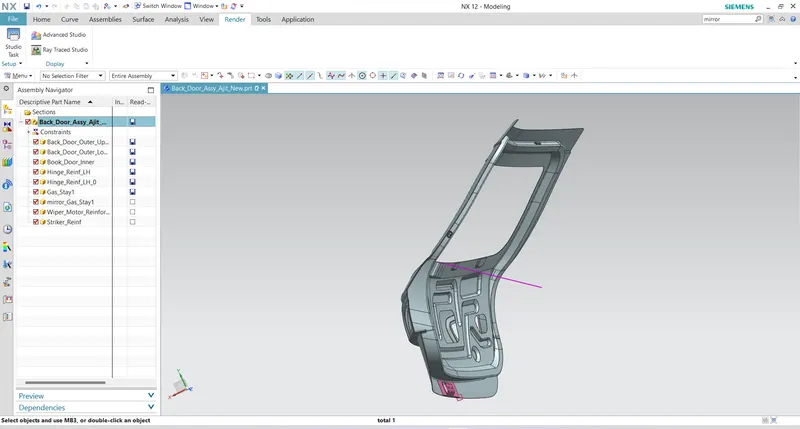
Hemming and Seaming are two similar metal working processes in which sheetmetal edge is rolled onto itself.Hemming is the process in which the edge is rolled flush to itself, while a seam joins the edge of two materials.
Inner panel draw direction:
The inner panel is produced by either casting or through deep drawn method. Mostly alumininum panel is only casted , steel inner panel is made by deep drawn process only.If it is deep drawn, then there must be a tooling direction through which that direction the panel is deep drawn.
DRAFT ANALYSIS:
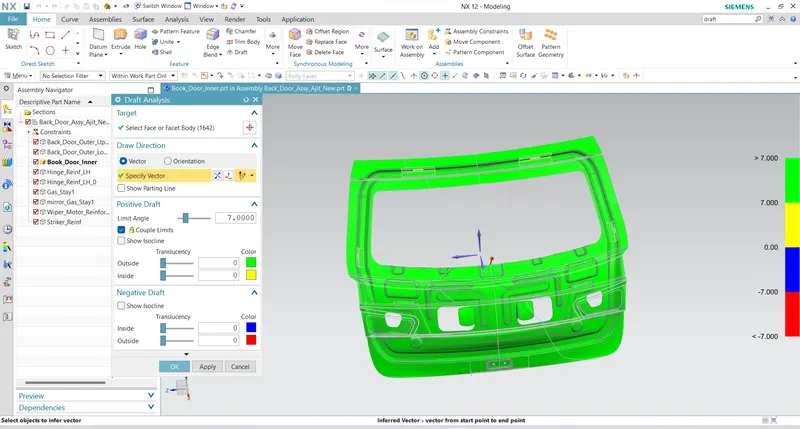
Draft analysis of inner panel is carried out through the tooling direction only.Only the green areas are acceptable and i worst cases yellow regions are accepted but the blue and red regions are never accepted.
The draft angle for aluminium casted panel is 2 to 3 degrees is enough but if it is steel then the angle is more than 7 degrees.
Components Of Back Door
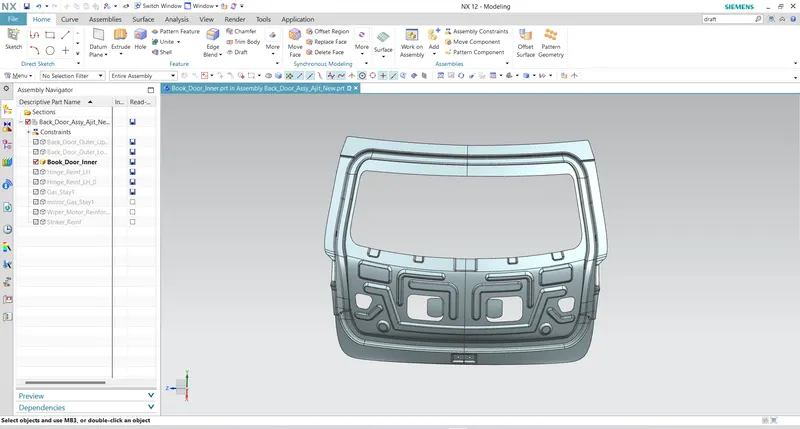
- Inner panel
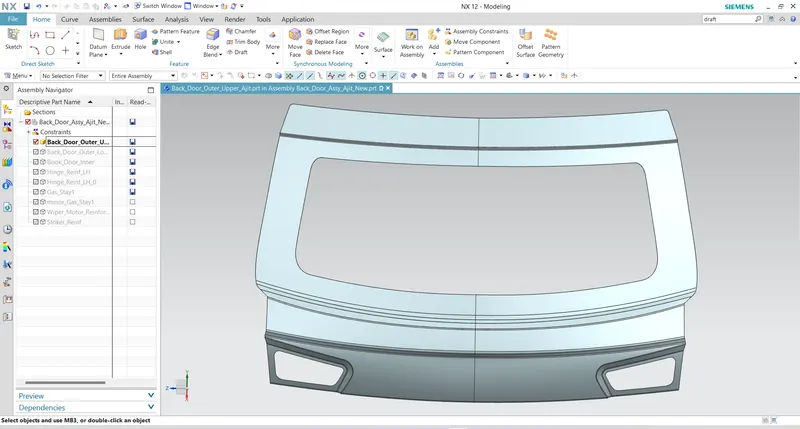
- Outter panel upper
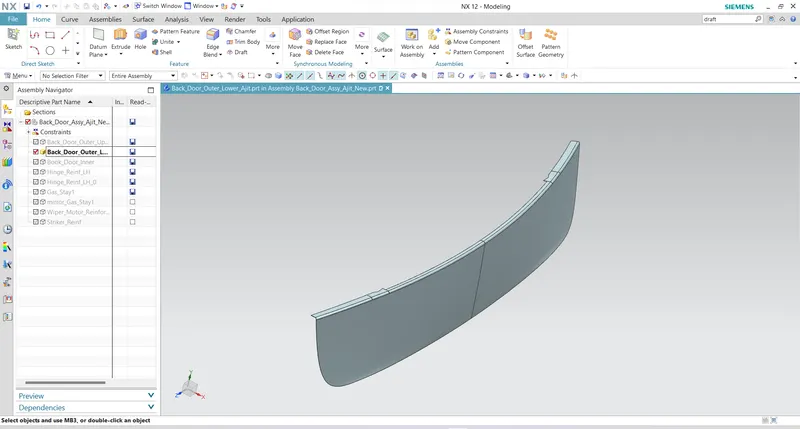
- Outter panel lower
- Hinge reinforcement LH
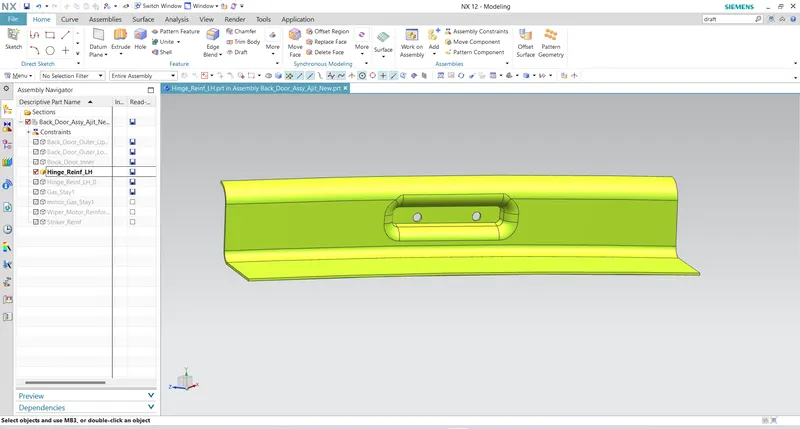
- Hinge reinforcement RH
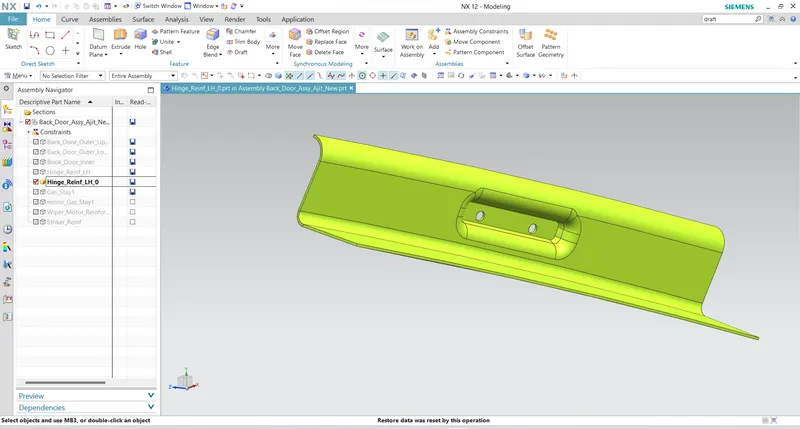
- Gas stay reinforcement LH
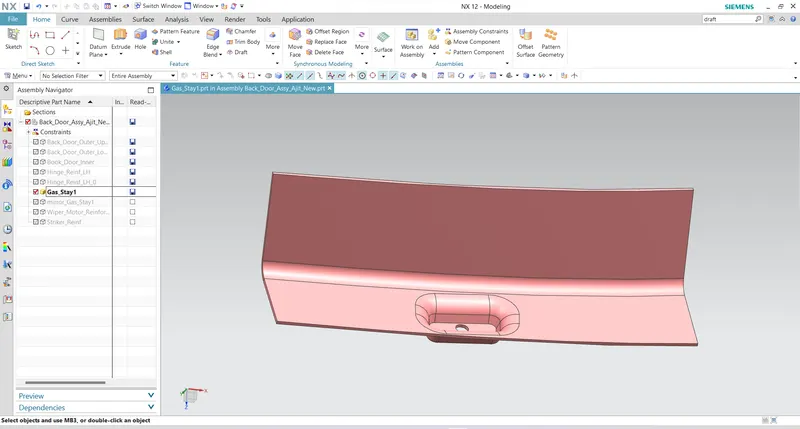
- Gas stay reinforcement RH
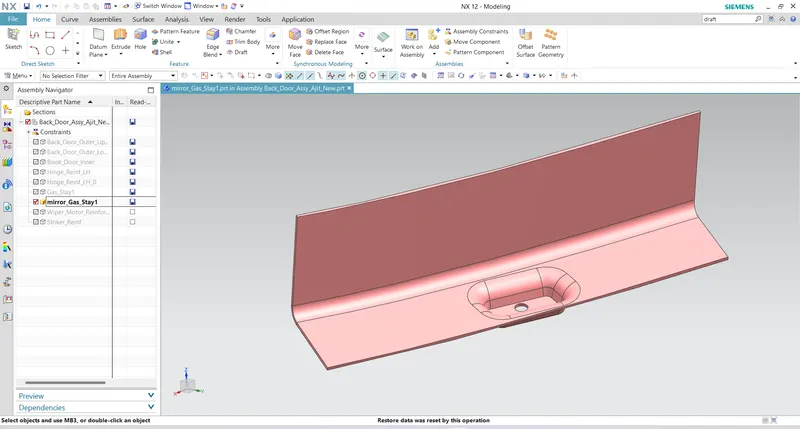
- Wiper motor reinforcement
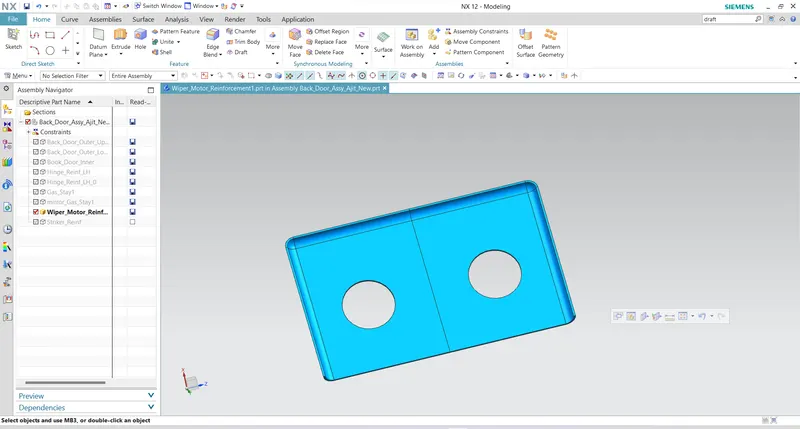
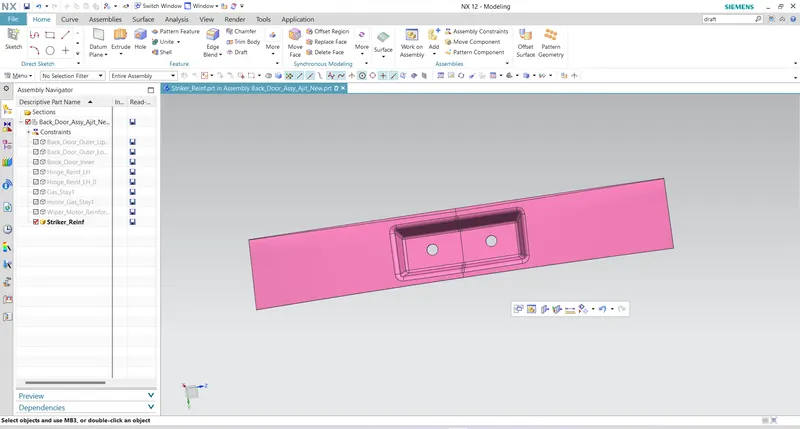
- Latch reinforcement
Mastic Sealants:
The highlighted region in the image is the region where both the inner and outer panel are joined at the centre with the help of Mastic Sealants. There is a gap of 5mm for the mastic sealants to melt and gets fixed at the surface of the panels.