Design of backdoor
BACK-DOOR DESIGN:-
Introduction-
The backdoor or tailgate is the rearmost part of the automobile which opens upwards, downwards, and sideways to give access to the luggage space or seating. In most automobiles, the backdoor opens upwards. It is hinged to the roof and a gas stay support fixed at the body side outer for keeping the backdoor in the open position. The material used in making the backdoor of the car is mainly steel but nowadays Aluminium is also used in making the panels. The main advantage of Aluminium is that the density of Aluminium is very less as compared to steel so it reduces the overall weight of the car. But Aluminium is more costly as compared to steel.
Types Of Door (Based on mounting position)-
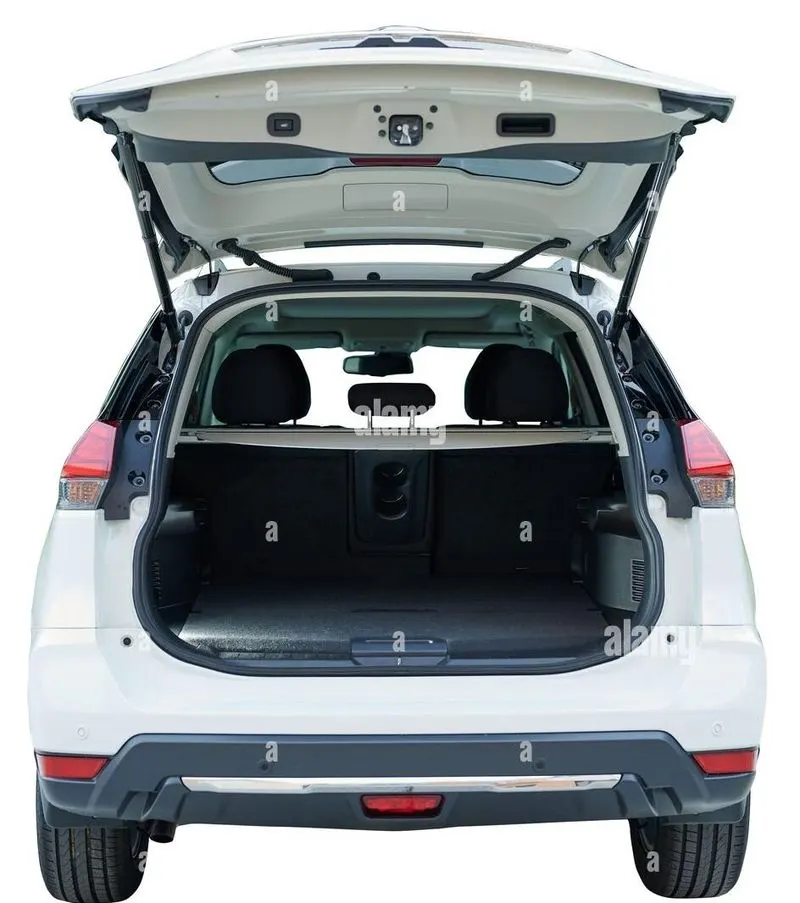
1) Top Mounted Door-
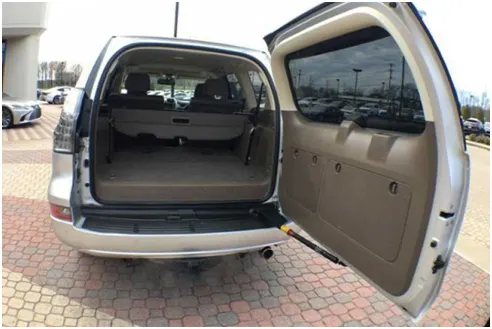
2) Side mounted Door-
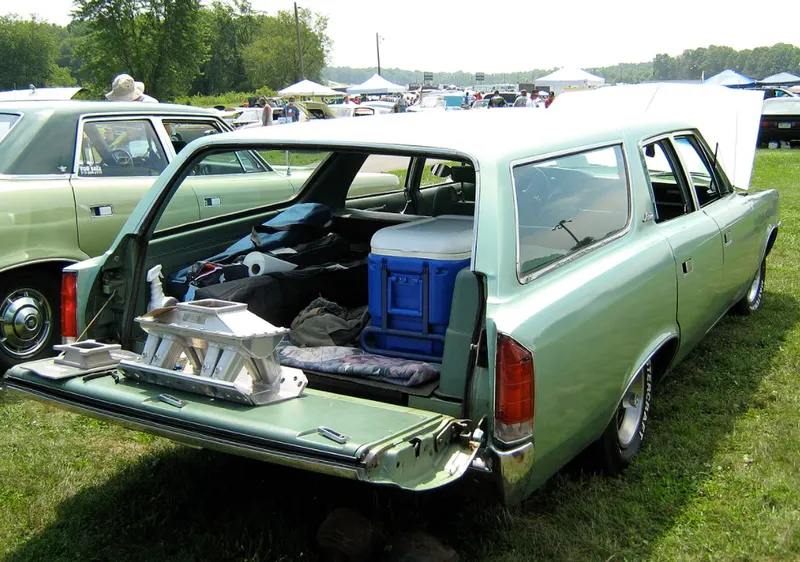
3) Bottom Mounted Door-
Components of a backdoor-
- Inner panel
- outer panel
- hinge and its reinforcement
- wiper motor and its reinforcement
- latch & Stricker and its reinforcement
- gas stay and its reinforcement
Material Selection-
The major problem in back door is material selection. mostly in past days steel is used, but it makes a very problem the steel parts have heavy weight, so it reduces the fuel economy, instead of steel presently in high end cars aluminium is used, the main objective of aluminium it has less dense material and its suitable for complex shapes, and it also gives the thickness locally because it is done catting, in case of steel we used deep drawing operation. there are some of the advantages and disadvantages are there
ALUMINIUM: -
Advantage-
- Lighter in weight
- Reduce number of components
- Local thickness can be varied
- Separate Reinforcements not needed
Disadvantage-
- Costlier material
- Complex casting process
STEEL: -
Advantage-
- Less costly material than aluminium
- Common and reliable stamping process
Disadvantage-
- Heavier in weight
- Increase number of components
- Local thickness cannot be varied
- Separate Reinforcements needed
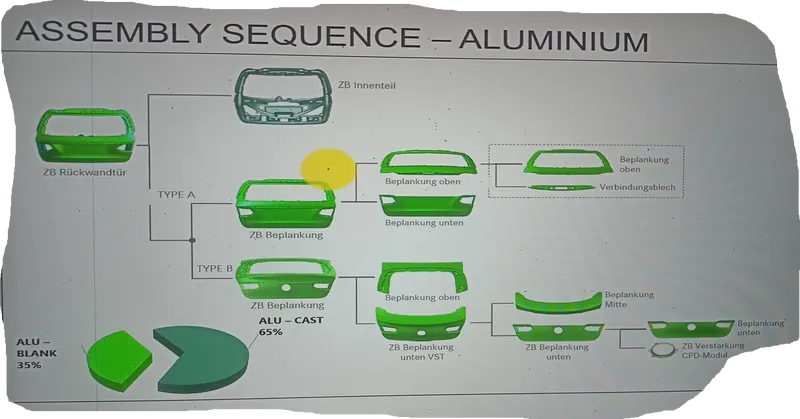
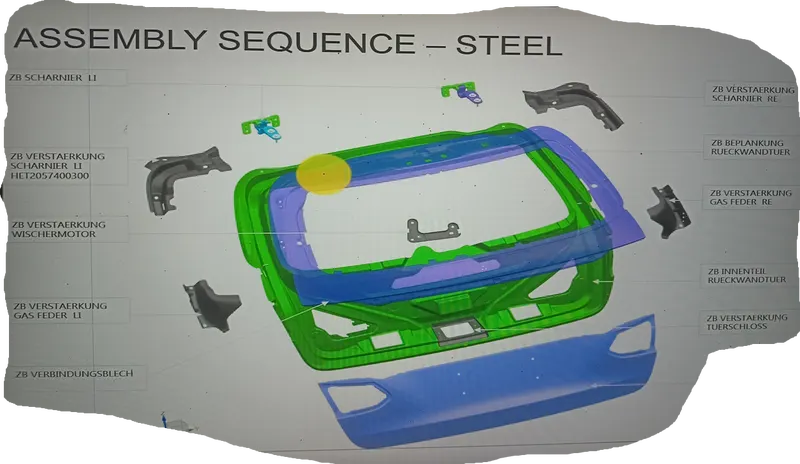
Assembly sequence-
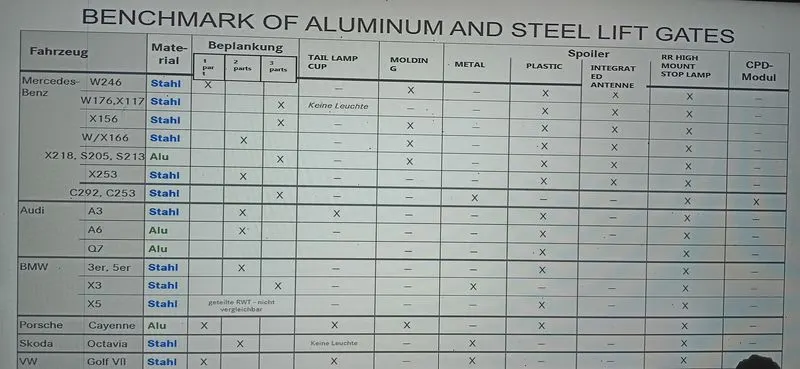
BENCHMARKING-
Load tests-
Total 6 types of load test have to perform on backdoor to ensure the strength of that part in different condition. Testes are-
- Bend Test
- Torsion Test
- Abuse Test
- Dent Test
- Assembly Test
- Endurance Test
In below figures we can see how load tests are performed and how that effects on the part.
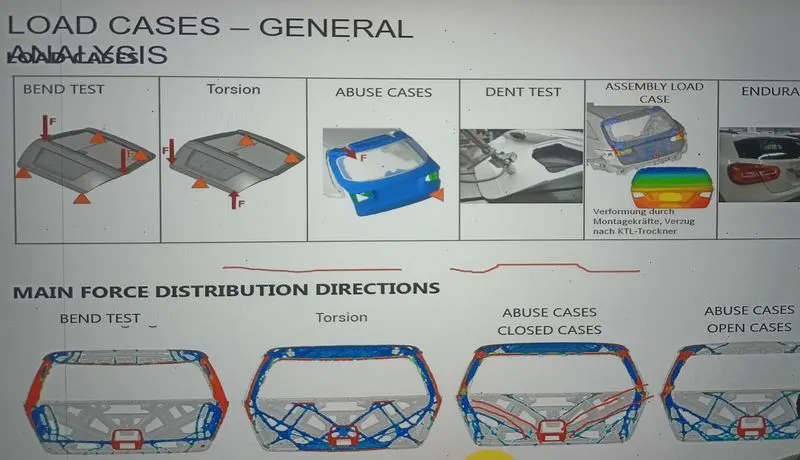
So we have to give emboss and reinforcements to those perticular areas to compancet load concentration.
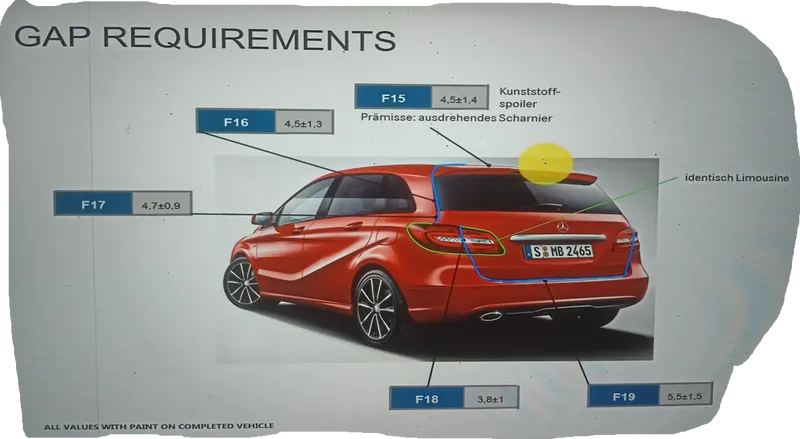
Gaps in-between parts-
There must be a range of tolerance for every gaps in a car to mentain asthatic and technical purpose.
Manufacturing process of back door-
1) DEEP DRAWING:-
Deep drawing is a sheet metal forming process in which a sheet metal blank is radially drawn into a forming die by the mechanical action of a punch.[1] It is thus a shape transformation process with material retention. The process is considered "deep" drawing when the depth of the drawn part exceeds its diameter. This is achieved by redrawing the part through a series of dies. The flange region (sheet metal in the die shoulder area) experiences a radial drawing stress and a tangential compressive stress due to the material retention property. These compressive stresses (hoop stresses) result in flange wrinkles (wrinkles of the first order). Wrinkles can be prevented by using a blank holder, the function of which is to facilitate controlled material flow into the die radius. Deep drawing presses, especially in the Aerospace and Medical industries, require unparalleled accuracy and precision. sheet hydroforming presses for complex draw work.
2) HEMMINHG:-
Hemming is a forming operation in which the edges of the sheet are folded or folded over another part in order to achieve a tight fit. Normally hemming operations are used to connect parts together, to improve the appearance of a part and to reinforce part edges.
In car part production, hemming is used in assembly as a secondary operation after deep drawing, trimming and flanging operations to join two sheet metal parts (outer and inner) together. Typical parts for this type of assembly are hoods, doors, trunk lids and fenders.
The accuracy of the hemming operation is very important since it affects the appearance of the surface and surface quality. Material deformations, which occur during the hemming process, can lead to dimensional variations and other defects in parts. Typical hemming defects are splits or wrinkles in the flange, material overlaps in the corner areas or material roll-in.
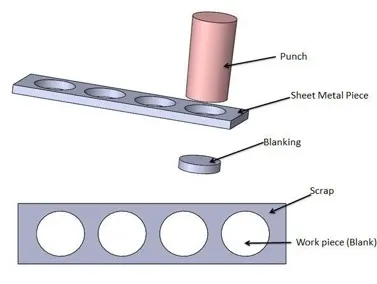
3) BLANKING:-
Manufacturers use blanking to punch pieces in specific shapes from sheets or strips of raw material. The punched-out piece is called the “blank,” hence the term “blanking.” Blanking is most often performed with tools made from hardened steel or carbide, which work on metals like aluminum, carbon steel, stainless steel, and even plastic.
Blanking has many benefits, but manufacturers must take some considerations into account before embarking on a full course of metal blanking. Although this process is a quick and cost-effective way to produce a large number of identical pieces, these punched-out pieces may have burrs or cracks on the edges. However, these drawbacks can be avoided by using high-quality tools, and they can be corrected by post-processing the blanks
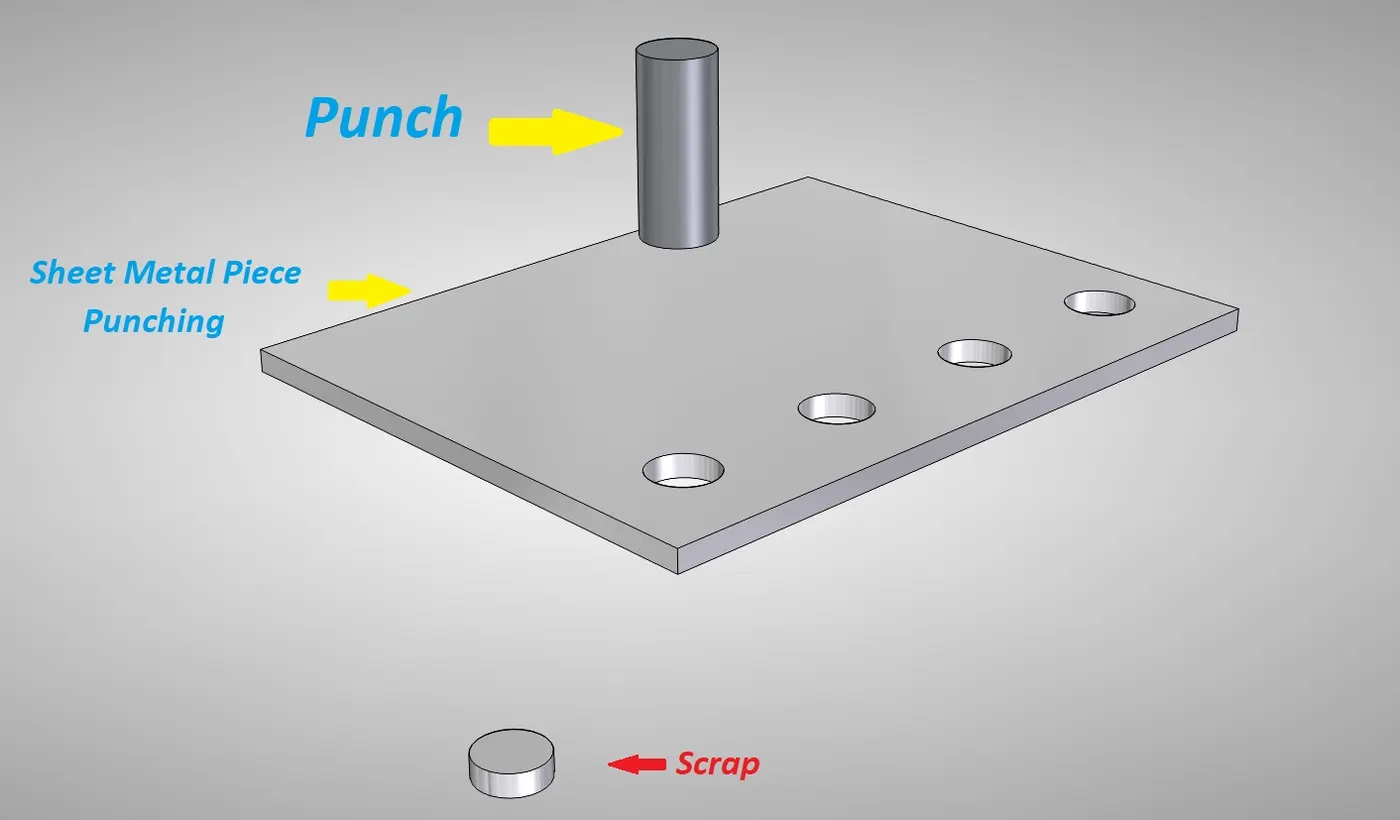
4) PUNCHING:-
Punching is a metalworking process that’s used extensively in the manufacturing industry. It’s called “punching” because it involves punching a hole through a workpiece. It can be performed either by hand or using a machine, the latter of which is preferred as it’s able to forcefully drive holes through thick, hard metals.
Design Inputs-
- Top mounting
- Inner-panel thickness=0.75MM
- Outer-panel thickness=0.75MM
- Reinforcement thickness=1.5MM
Styling Surface-
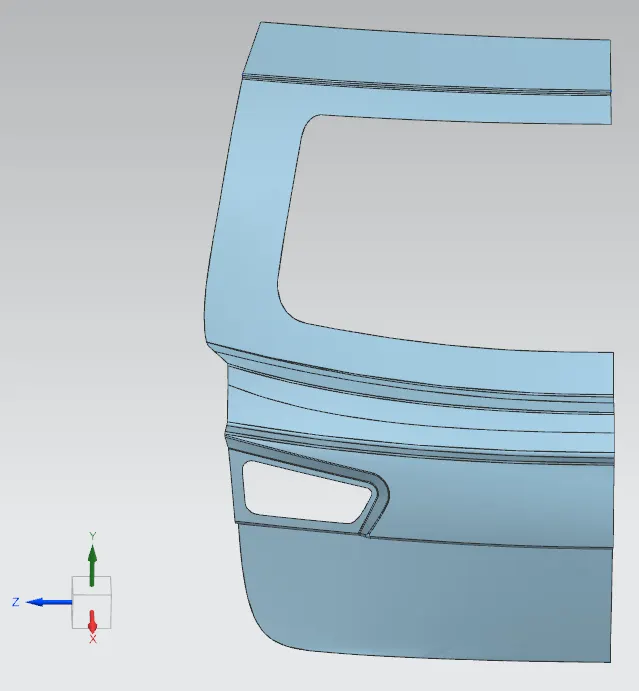
Backdoor outer upper and lower class a surface has to be repaired according to the smoothness. After repairing the surfaces, the door is divided into two parts as Door Outer Upper and Doo Lower Panel.
Tooling Ditection-
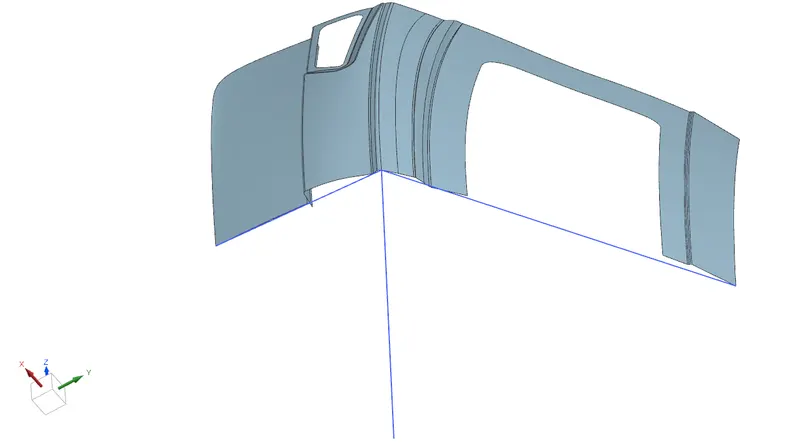
We have created a Tooling direction for the Deep drawing operation. It shows that all the operations like embossing is done by considering this vector direction and it will help in manufacturing the part.
Sealing Flange-
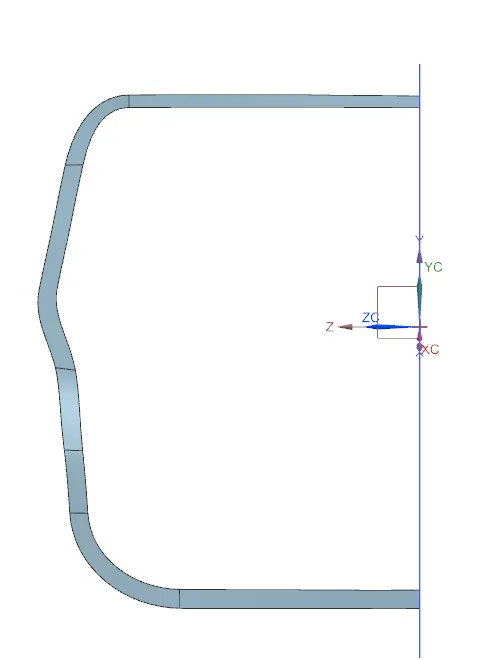
After that we have created a Sealing Flange by offsetting the outer panel to the specific distance.
Inner-panel-
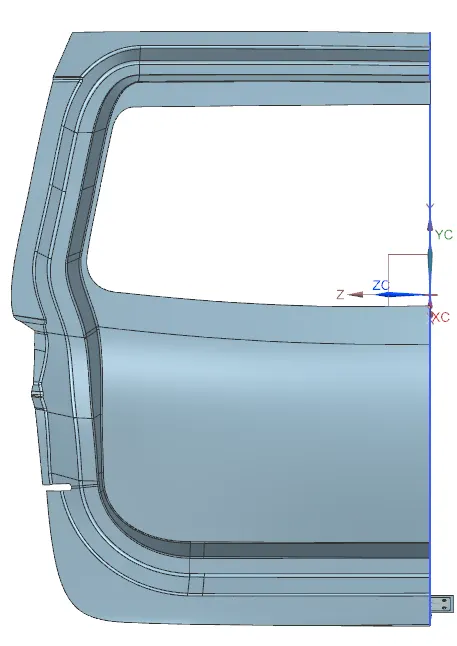
Then we will be creating the Back door inner panel flange by offsetting the outer surface at a distance considering the sheet thickness and thickening direction.
Y-emboss-
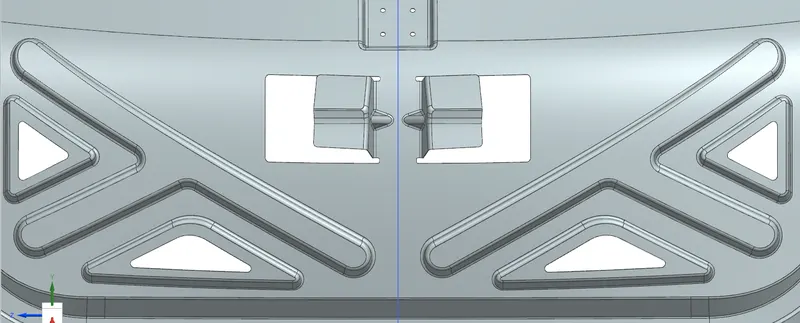
This Y-emboss are created to compancet high load to those regions.
Mastic flange-
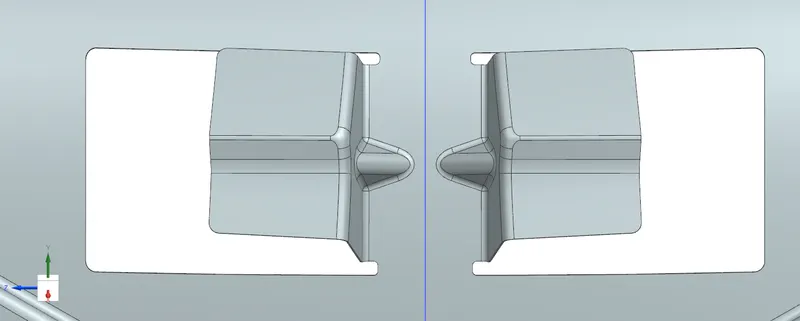
These flanges will hold the outer-panel through mastic sealent.
Wiper motor mount and reinforcement-
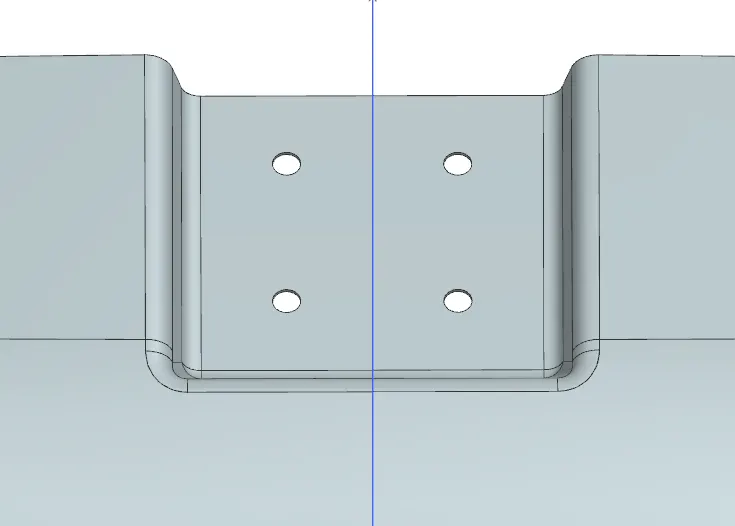
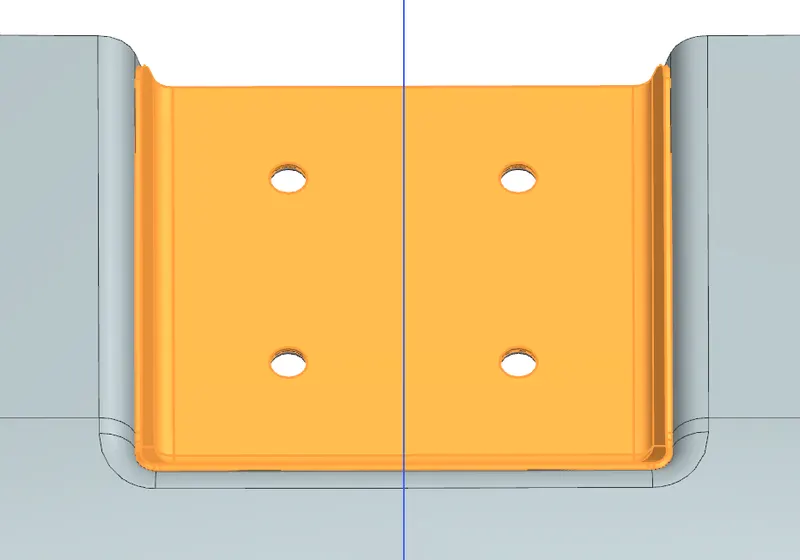
In this flange wiper motor will be mounted. Reinforcement is given here of 1.5 MM thickness for mounting area streanth.
Gasstay mounting flange & reinforcement-
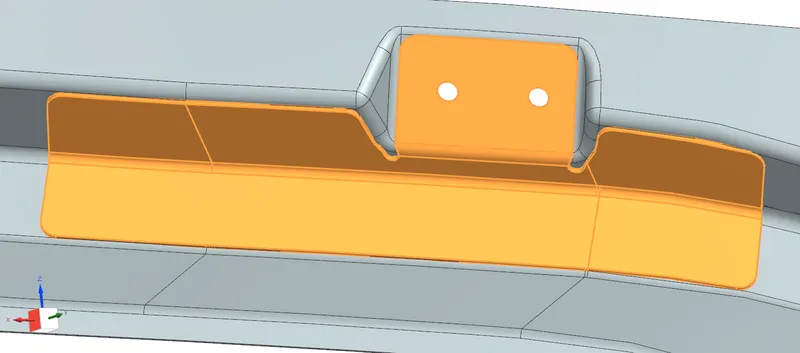
Here gasstay will be mounted on both side (LHS & RHS).
Hinge mounting flange & reinforcement-
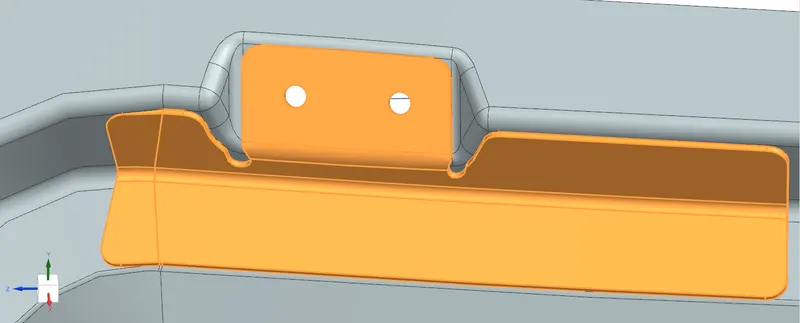
In this flange hinge will be mounted on top that is at the end of the roof.
Striker mounting & reinforcement & trajectory-
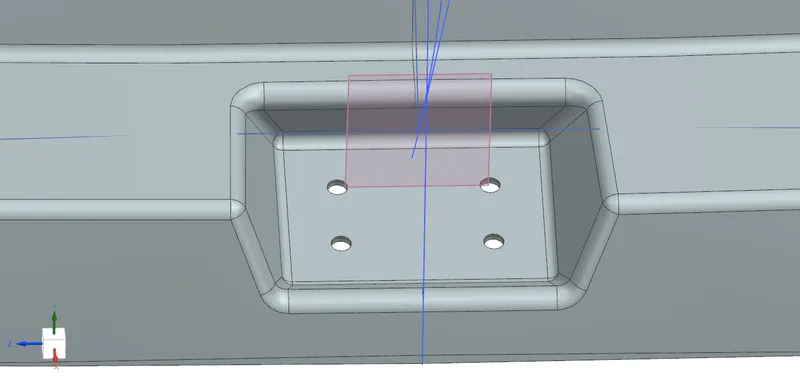
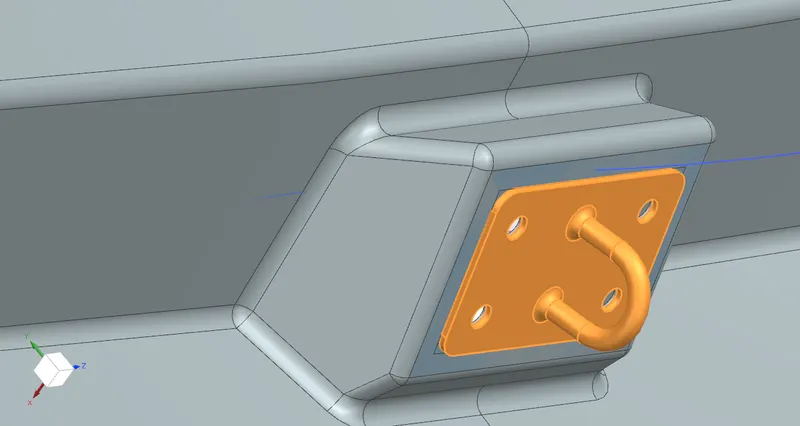
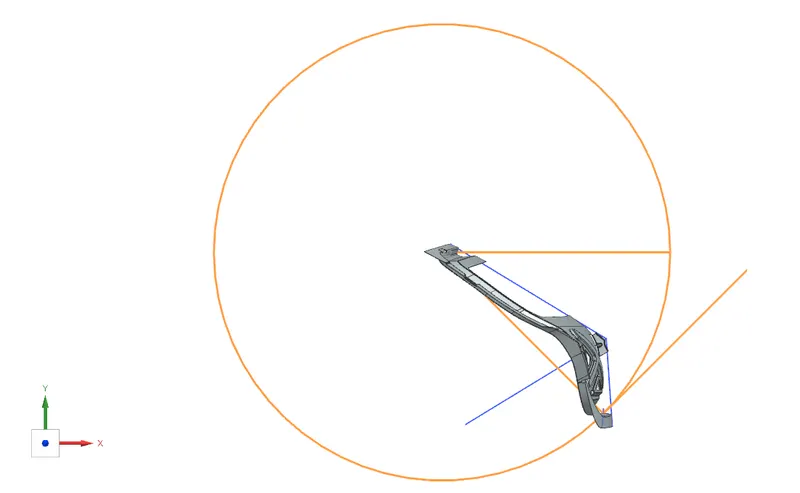
So at this perticuler flange striker will be mounted and will flow the given tragectory.
Hemming-
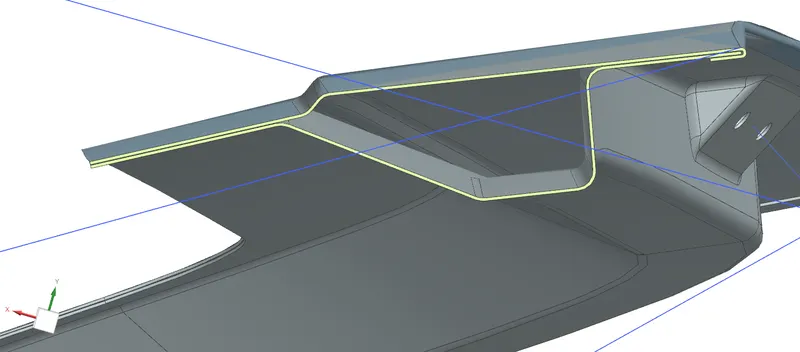
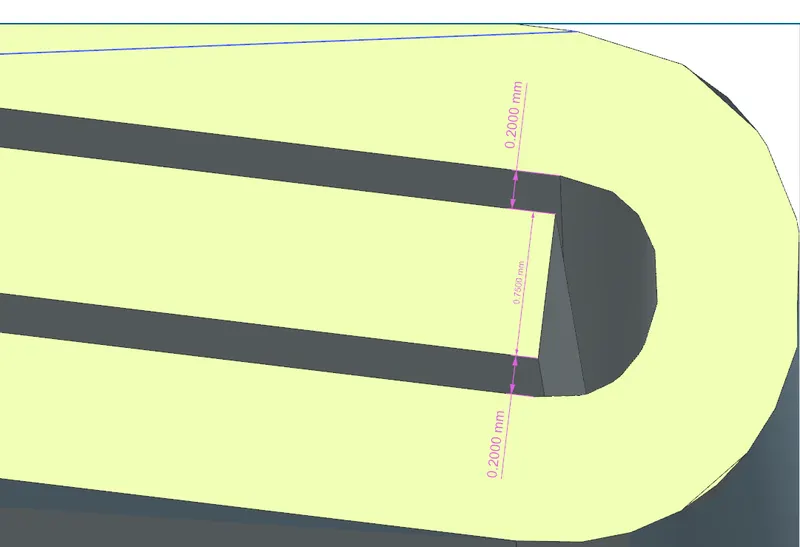
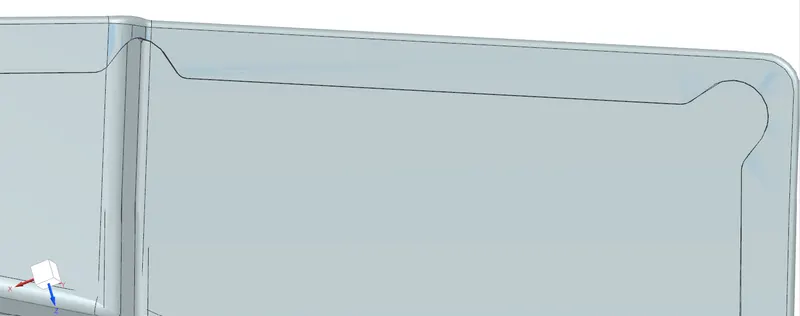
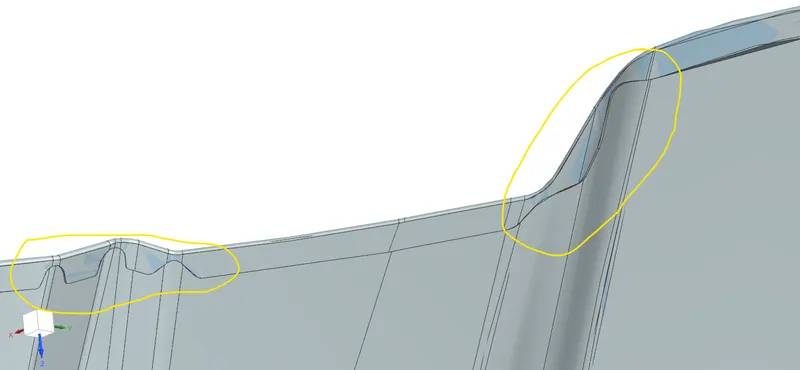
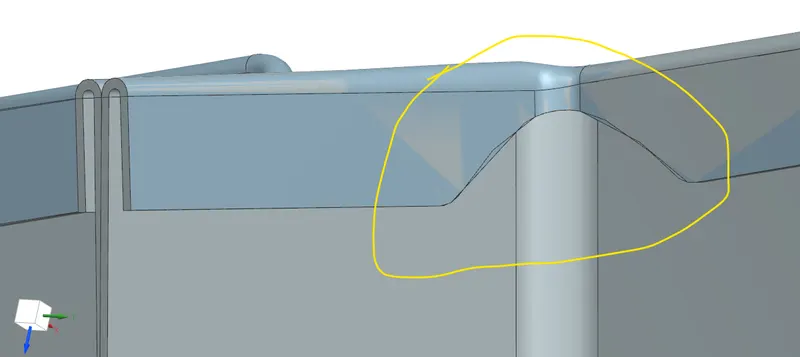
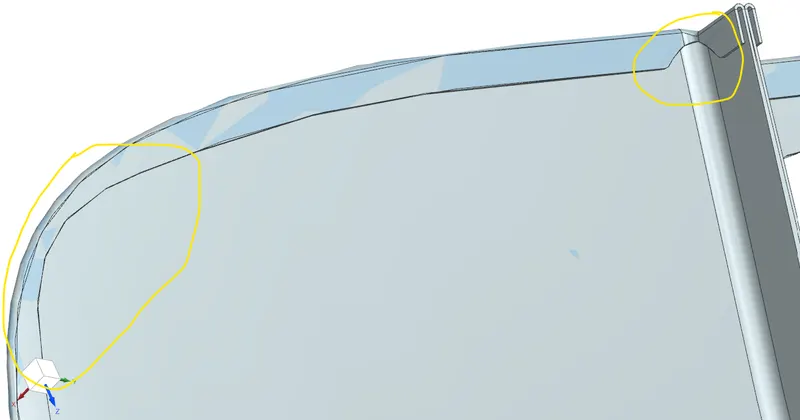
As we can see from above figures hemming has been done with proper relief (on those placess where stress concentration could happen) and gap.
Draft analysis-
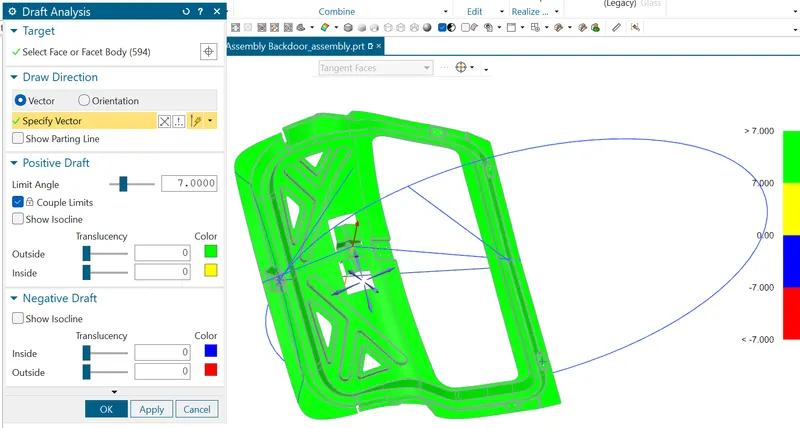
So from the draft analysis reasult we can see that the part is manufacturable through deep drawing process where menimum positive draft angle value is 7 degree.
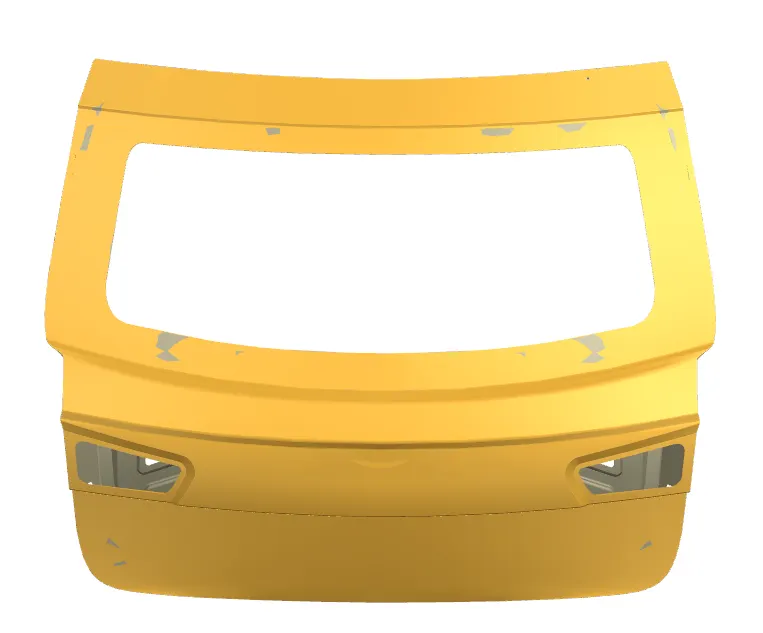
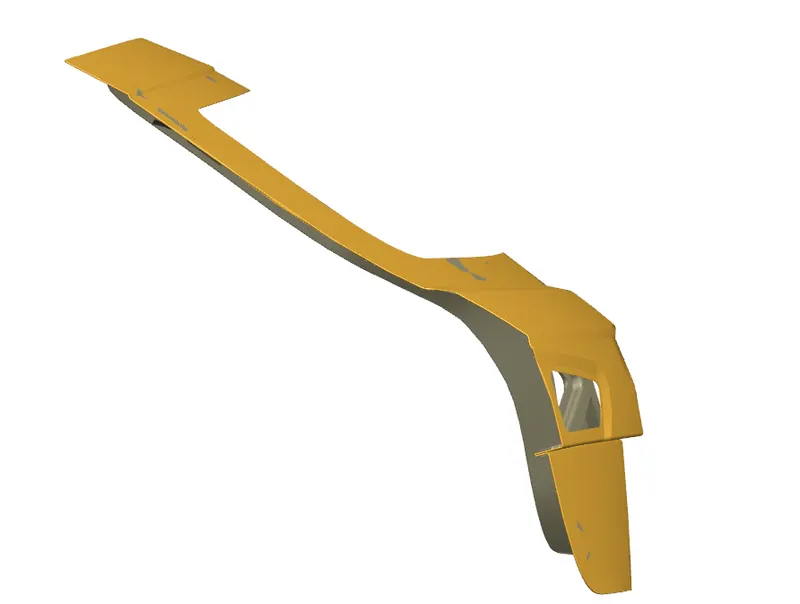
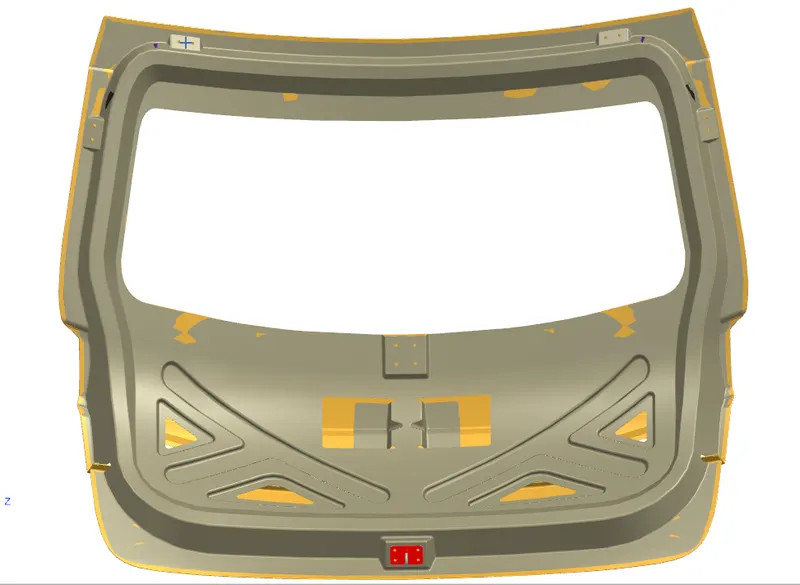
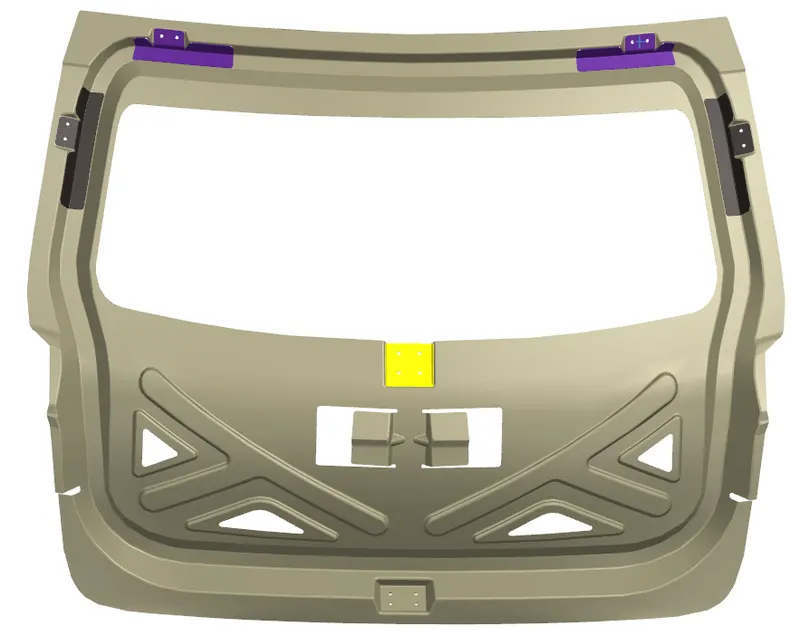
Some views of final model-
Files-
https://drive.google.com/file/d/18sZKF-bMpV-akHlYdNG6DbbaizF1-Ndc/view?usp=sharing
https://drive.google.com/file/d/1QCtrmE1giicE2epIg-RyDh1ZjomT3dwx/view?usp=sharing
Referance-
https://monroeengineering.com/blog/what-is-punching-in-the-manufacturing-industry/
https://www.autoform.com/en/glossary/hemming/