Design of backdoor
DESIGN AND DEVELOPMENT OF BACKDOOR USING CATIA V5
Introduction:
Backdoor/tailgate is one of the closure commodities in BIW sheet metal design.
The backdoor has a lot of components inside and space required for the luggage compartment as well as to accommodate the Latch and Striker motor and Wiper motor
Usually, Aluminium or Steel is used to manufacture the backdoor. While the Aluminium backdoor is lighter in weight and has a lesser number of components (since the part is “cast”, it has a varying thickness and therefore doesn’t require reinforcements), the Steel backdoor is “deep drawn” with uniform thickness, added reinforcements, and therefore is heavier. But the production cost of the latter is lesser and therefore a Steel backdoor is priced lower.
The Backdoor has to be designed without compromising the strength of the component.
Major parts and Design methodologies:
Outer Panel and Inner Panel:
The Outer Panel is the styling surface of the back door. It is the source of design of other parts of the back door, primarily the InnernPanel. It acts as the outer cover and deals with the aesthetics of the car. Its thickness is in the range of 0.65-0.75 millimeters
The Inner Panel provides strength to the back door. They are 0.65-0.75 millimeters (mm) thick. It is the Inner Panel where reinforcements and embosses are provided to justify its function. There are many cases where the Inner panel is subjected to stress due to frequent opening and slamming. These stress and depression
factors are compensated by features like embosses and reinforcements.
The inner panel accommodates the Latch and Striker actuator, Wiper motor actuator, Trims mounting, Hinge and Gas Stay embosses, V-Emboss, Latch, etc and therefore the necessary cut-outs are provided. Various reinforcements are also spot welded to the inner panel.
Aim:
Design the backdoor as per given skin requirements and also provide reinforcements for hinges, Latch, Gas Stay, and wiper motor areas.
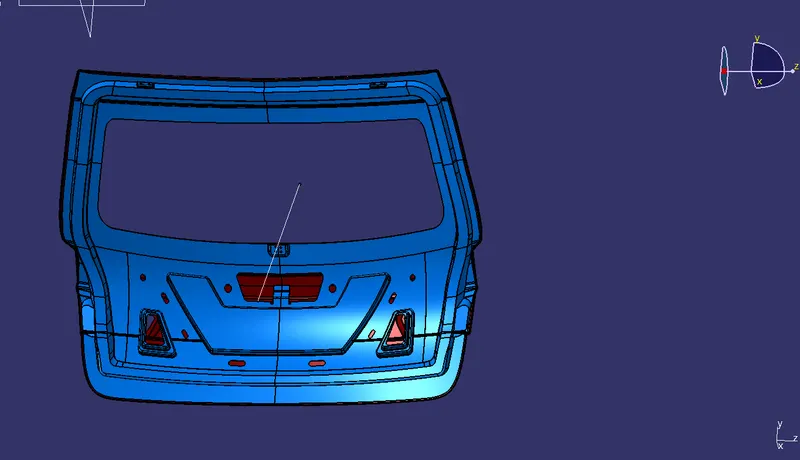
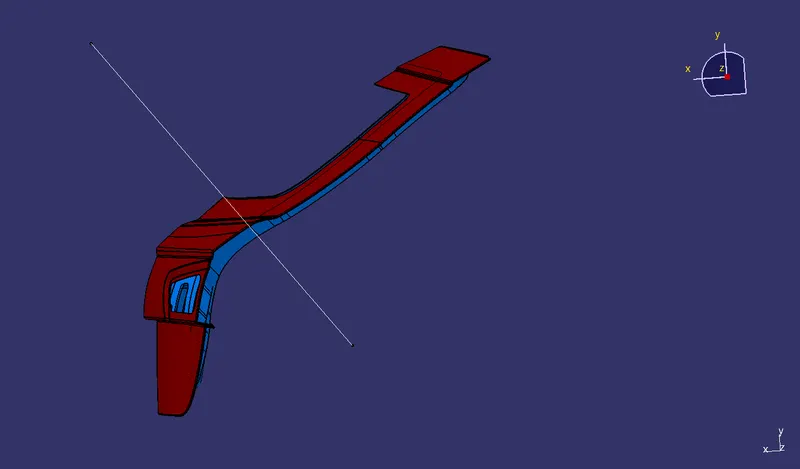
Design Consideration:
1. Rear Visibility
2. Latch and Stricker Reinforcement
3. Hinge and Gas Stay Reinforcement
Thickness and manufacturing requirements:
-
The thickness of the Inner panel: 0.75mm
-
Reinforcement Thickness = 1.5mm
-
Minimum draft angle to be maintained 7 degree
-
The minimum filet radius should be more than the 3mm+thicknes, i.e., above 3.75mm
-
No sharp corners inside the component.
Design Procedure :
Styling surface cleanup: It is necessary to check the given styling surface before using it to create the cad model. This is done to check the continuity in the skin
surface as sometimes the distance between the surface is more than 0.0001 mm.
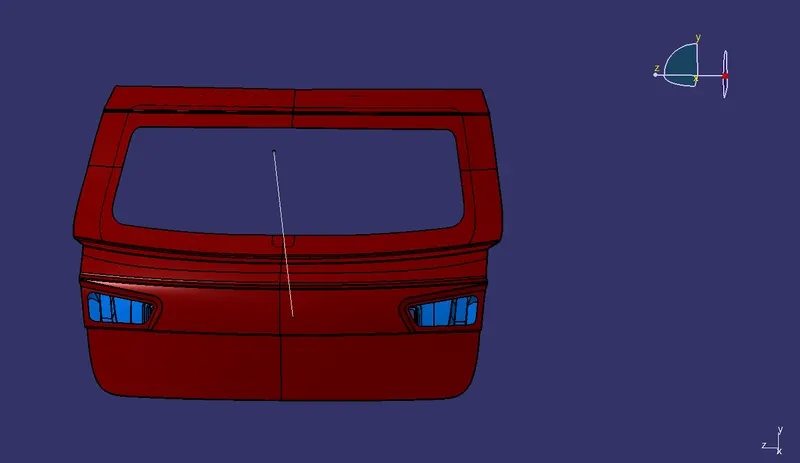
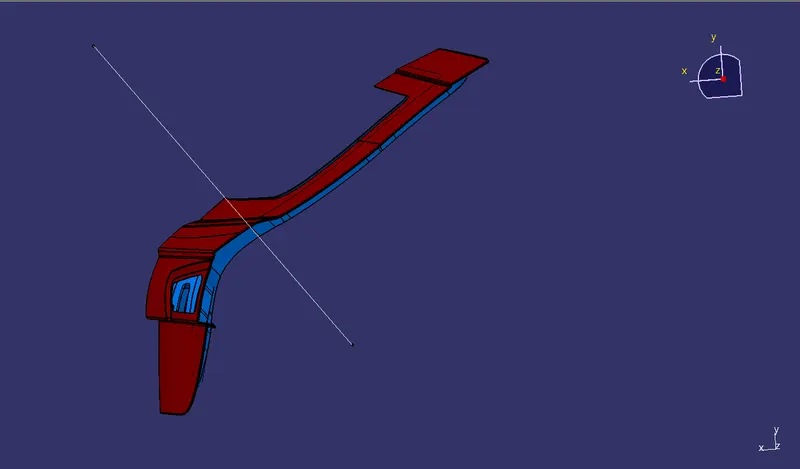
First developed the Inner panel of the Backdoor by taking the offset surfaces from the given styling, then developed the outer panels then created the reinforcements.
Inner Panel: Started with the creation of sealing flange area in the inner panel which is required for the sealing purpose to the outer panel then after developed the windscreen area using the styling surface then created the surface below the windscreen to accommodate latch and striker and its motor after that developed embosses to strengthen the inner panel and then created the embosses for mounting the Reinforcement parts of Hinges mount, Wiper mount, gas stay mounting and Latch and striker mountings.
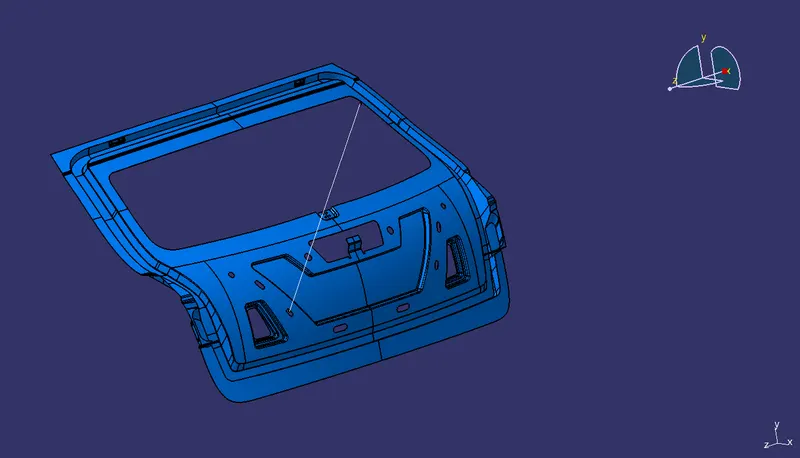
Outer panel Upper and Lower: Repaired the given styling surfaces to remove the gaps also created the new surfaces wherever required then joined all the surfaces. Prepared necessary hemming in the outer panels to join with the Inner panel and developed the corner relieves which are required at the corners to avoid the tearing of the material
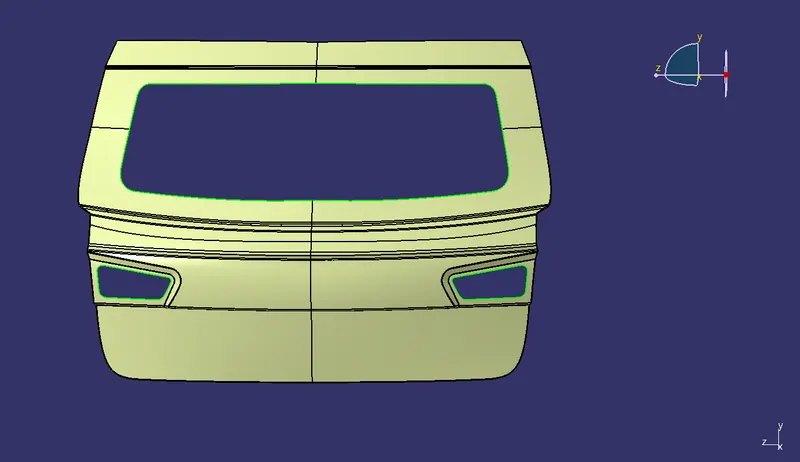
HEMMING:
Hemming is a technology used in the automotive industry to join inner and outer closure panels together (hoods, doors, tailgates, etc.). It is the process of bending/folding the flange of the outer panel over the inner one. The accuracy of the operation significantly affects the appearance of the car’s outer surfaces and is therefore a critical factor in the final quality of a finished vehicle.
Roll hemming - In roller hemming process, a robot guides a small roller across the flange to fold a sheet onto itself or onto another sheet. The process is oriented to low volume automotive applications, providing a distinct advantage in manufacturing closures and subassemblies with developed flanges.
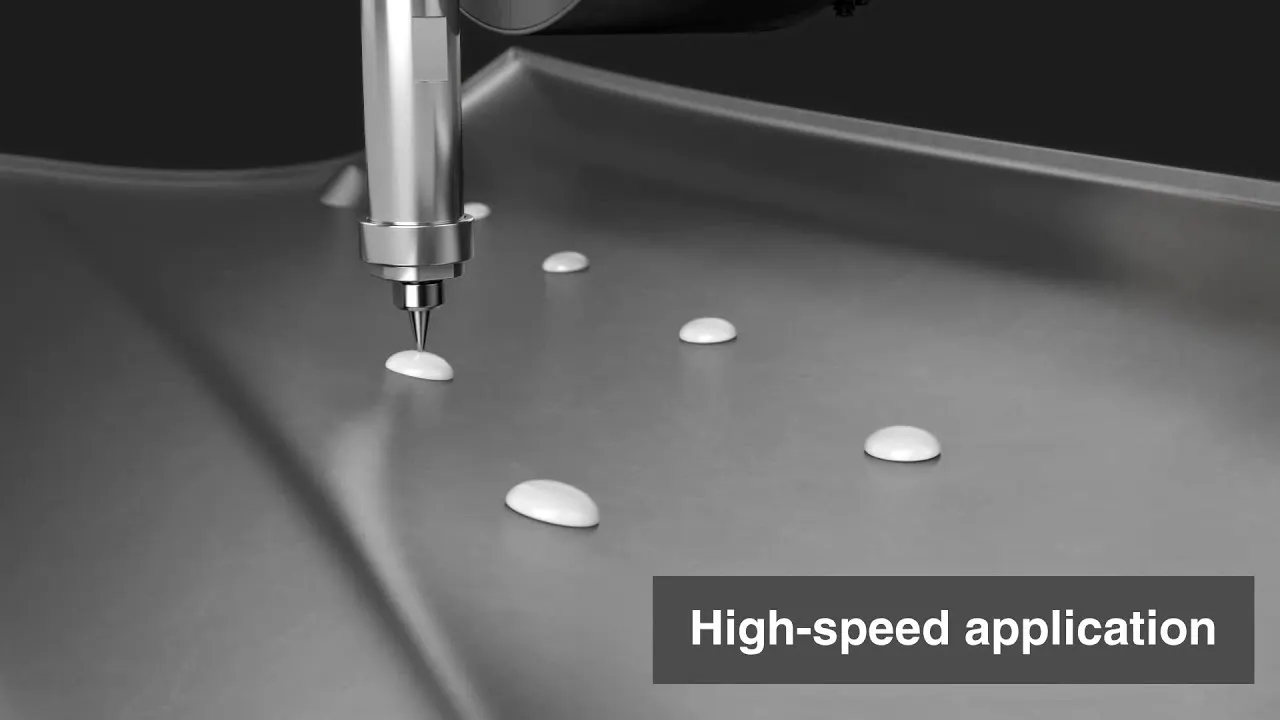
Mastic Sealant-
A mastic sealant is a type of liquid sealant that cures in an elastic state, thus making it flexible while holding the bond of the surfaces that has attached together. It adheres to just about any material making an all-purpose type of sealant.
- The main purpose of the outer panel is for the aesthetic looks. Thus we cannot use bolts or welding. This has to be done with the help of the hemming and mastic sealants. Mastic sealants are elastic compound that behaves like the rubber. It is placed between the outer and inner panel. Initially is it in paste form, but after the hot furnace bath it gets hardened thus joining the outer and inner panel. Mastic sealant has the tendency to increase the strength of the panel and has influence of 80mm diameter.
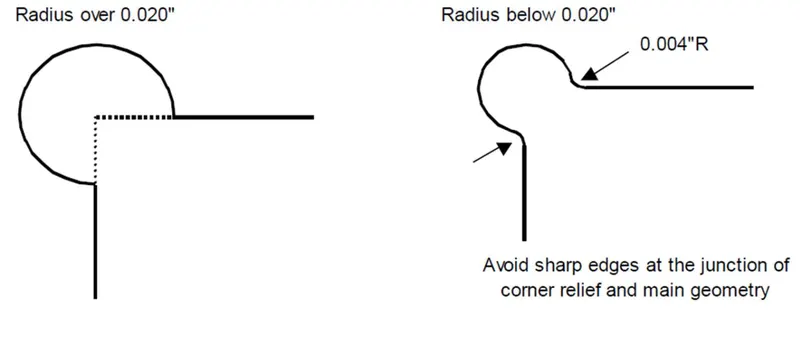
- Corner Relief-
Relief is provided onto the part or component in order to remove any stresses developed in a particular area i.e sharp corners that takes place during the hemming process is carried out. Thus corners are rounded or chamfered.
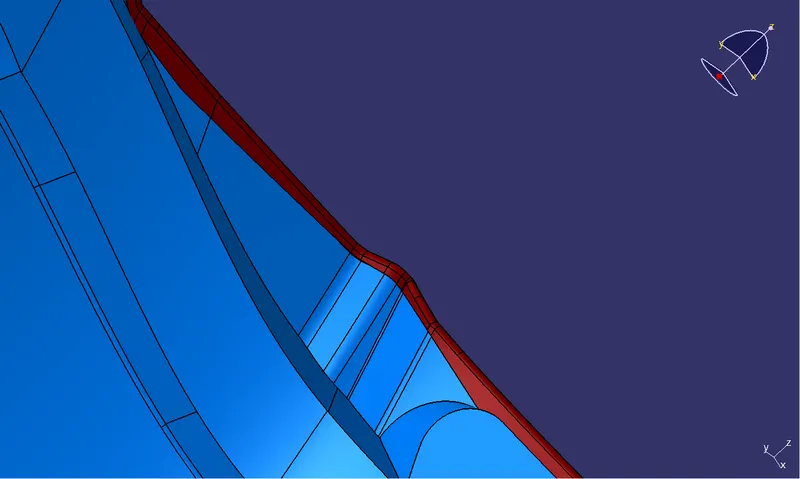
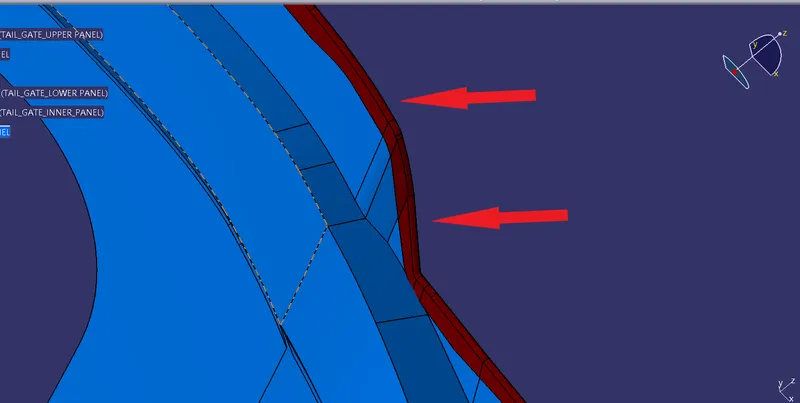
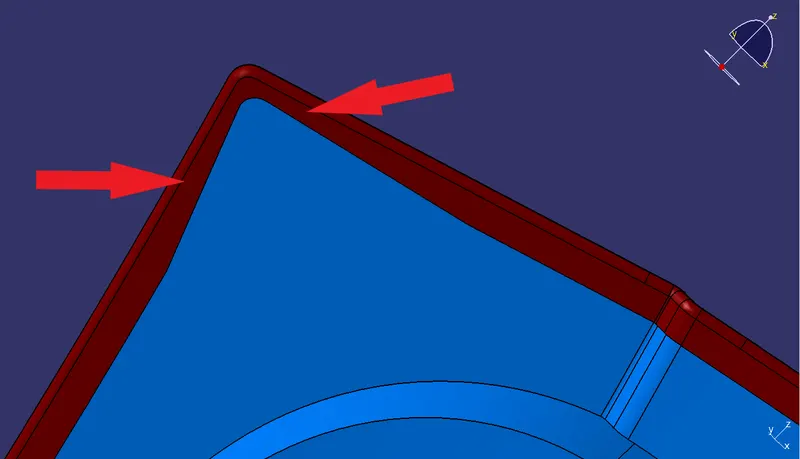
There is a 0.2mm gap between the two panels and 1-2mm clearance between the edge of the inner panel. Space is provided for the sealant to ooze out and spread properly between the panels after the hemming process.
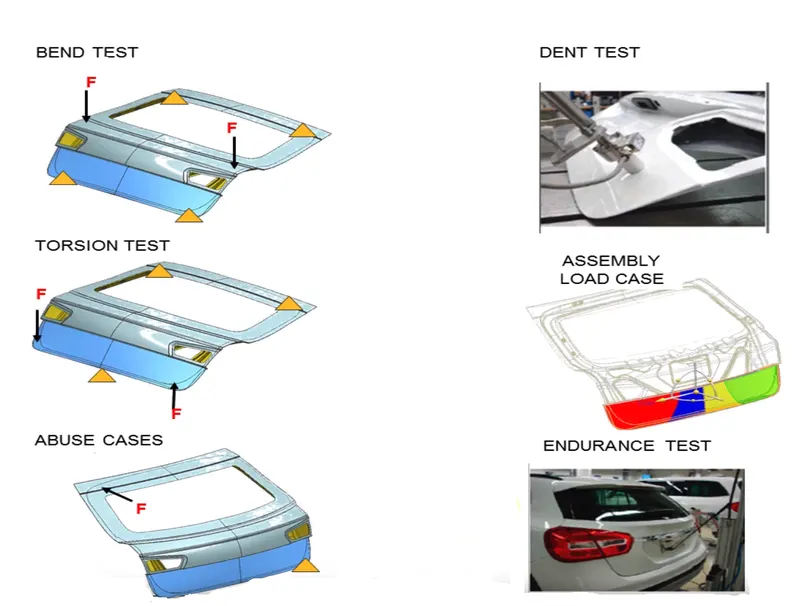
Some Tests that are performed on the Back door to check the strength, quality and durability.
Mastic Flange
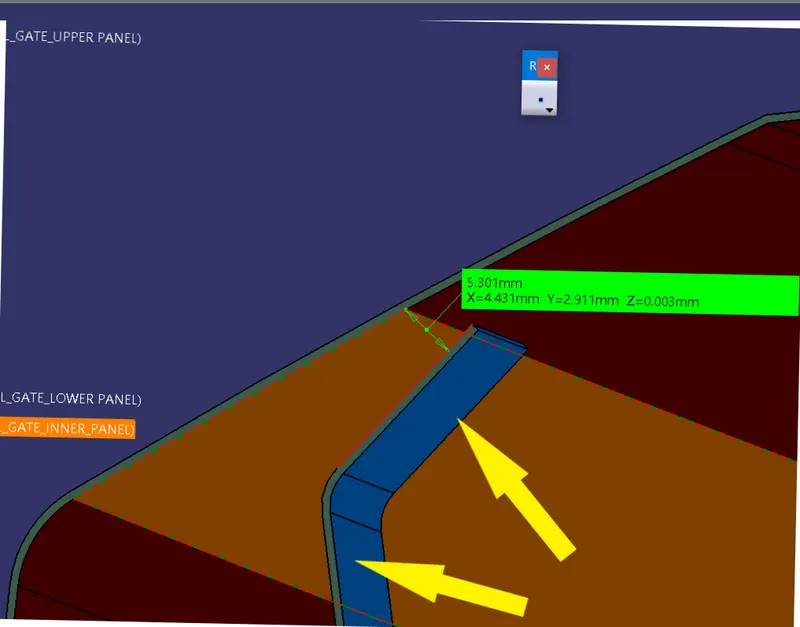
It is a connecting flange between outer panel and inner panel. The manufacturing process called "Lancing" produces this type of flange.
- The inner panel sheet will sheared in the specific created design.
- Then, the sheet will bend with the help of another die to make the flange in "L" shape.
- So, this flange will have the same or shorter size than the sheared size of the sheet.
- Thus, the flange will have somehow same design and the length will completely depend on the Cut-out, if we need more length of flange, then we need to cut more sheet.
Mastic flange with corner relief and darts for supporting strength
Design considerations
- Rear visibility
- Boot space & accessibility
- Sealing Flange
- Support structures like hinges and gas stays.
- Mounts for wiper motor, tail lamps and other wiring loops
- Rear crash regulations
- Joining techniques such as hemming, spot welding etc.
- Gap and flush requirements
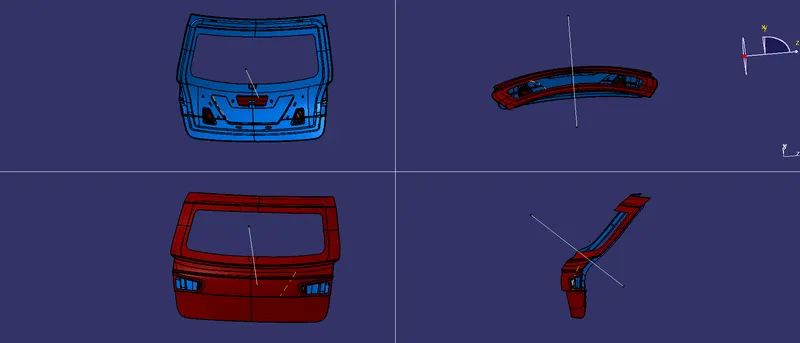
ASSEMBLY
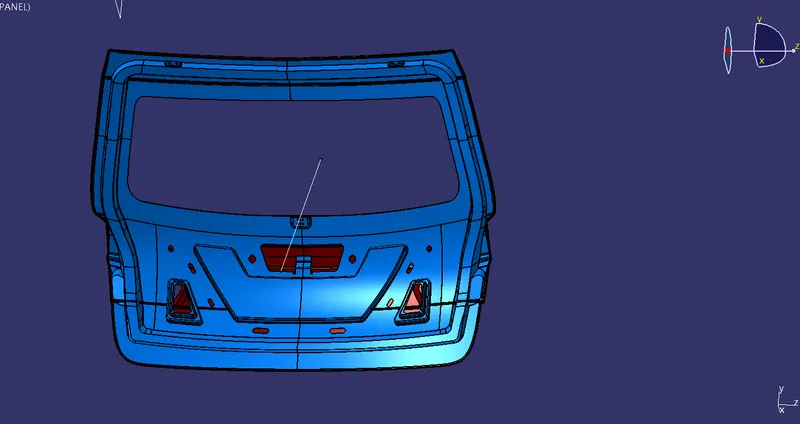
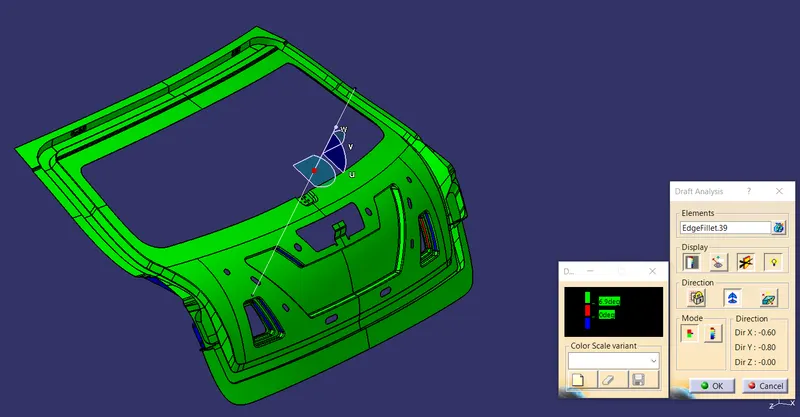
Analysis: Draft analysis
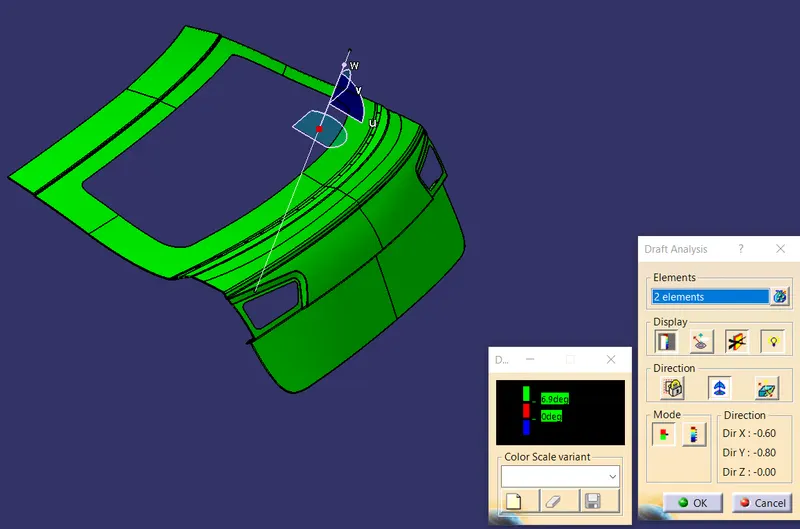
Every part which is manufactured from press tool or other forming tools require some positive draft on the faces which are parallel to the tooling direction. If we don’t give draft (Zero Draft) or give negative drafts on these faces it will stick to the mould surface and when the mould is in motion it will destroy surface thus reducing its surface finish. Thus Draft Analysis command enables us to detect if the part we have drafted can be easily ejected or not. It also give insights about the critical zones, so that appropriate changes in the design can be made if needed.
Conclusion
The Back door was designed in Catia V5 with all the possible known required design guidelines for back door design and manufacturing.