Design of backdoor
AIM
Use the provided styling surface to come up with a back door design, use appropriate design methodologies, and provide the necessary reinforcements and embosses.
BACKDOOR
Backdoor, located at the rear end of the vehicle, is used to access storage/luggage/boot space, sometimes spare wheels. It's design changes as per the shape of the car. It plays very important role for safety of passengers during crash from rear side. Therefore, design should follow rear crash safety norms as back door is the first thing that gets impacted. Inner panel of backdoor should be such that it should divert the force impact towards the outside.
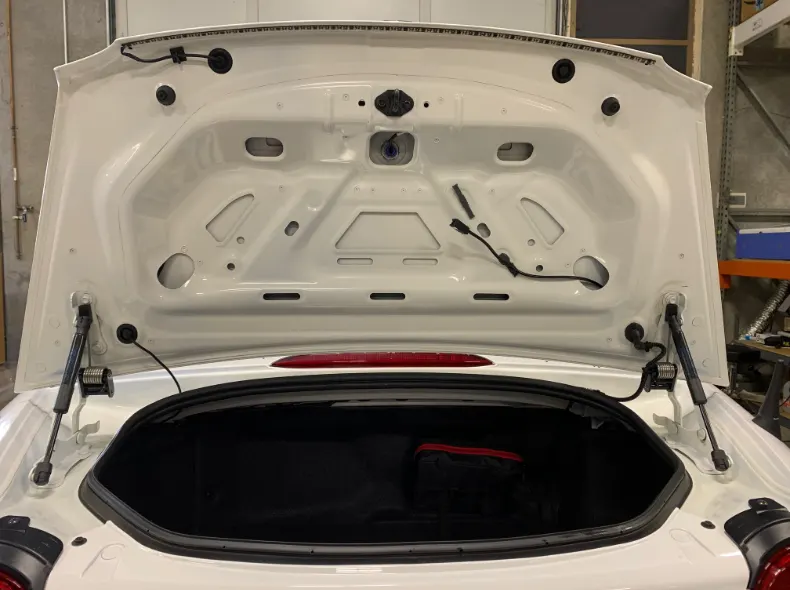
Backdoor has mountings for tail lamps, indicators, number plate, rear wiper, rear windshield etc. Backdoor is also known as Trunk lid, boot door, tailgate etc.. Backdoors are generallly elctrically powered or manually operated. From inside, it also has mountings for Gas stays to operate, hinge support and striker/ latch.
Till recent times, backdoors were made of steel material. Beacause steel is cheaper, production process is easier and overall production cost is also lower. So it is prefered material in lower end and cheaper car model. Now many OEMs are using aluminium. They are ligher in weight than steel, which reduces vehicle weight and improves fuel economy. Aluminium parts are manufactured using casting, so reinforcements are avoided, thickness can be varied as per requirement. But it is overall costlier than steel, so they mostly used in high end Cars.
Components of Backdoor Assembly
- Outer Panels
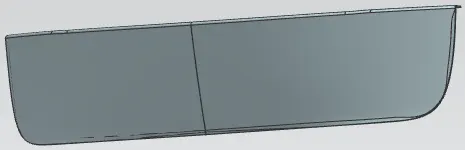
Outer panel is the reference for designing all trhe component in Backdoor assembly. Panel is provided styling team. It is divided into 2 parts-Upper and lower. Both are joined by spot welding on inner location which is not visible on outer surface. It has mountings for tails lamps, number plate, rear camera and sensors, and rear windshield.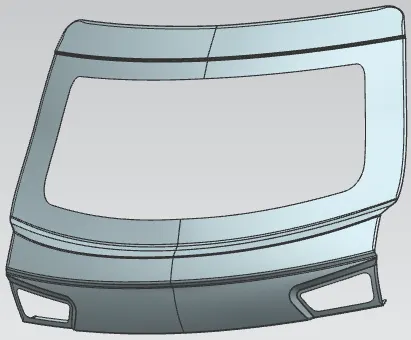
- Inner Panel
This panel is attached to outer panel by hemming operation and by mastic sealants to strngthen bonding. Embosses are created on inner panel to strengthen and designes such a way that forces are directed outwards after rear crash. Latch, hinges, gas stay are attched to inner panel. Embosses are created to mount reinforcements. Also all the electronic sensors, actuators or mounted on inner panel. It manufactured by deep drawing method if material is steel or casted if material is aluminum.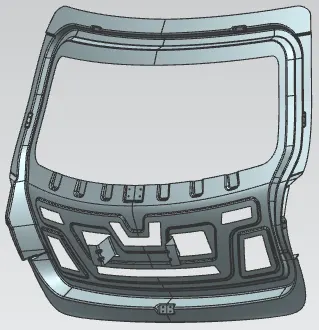
- Hinge Reinforcements
These are provided to support hinges as it takes full load of backdoor when open. It increases local thickness in that area and improves strength.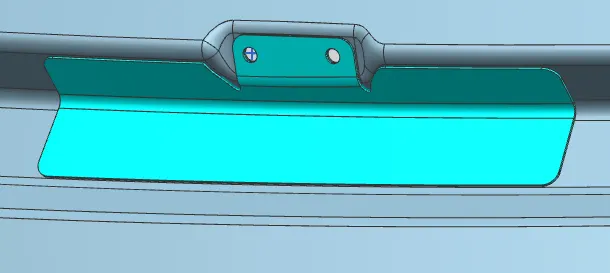
- Gas Stay Reinforcements
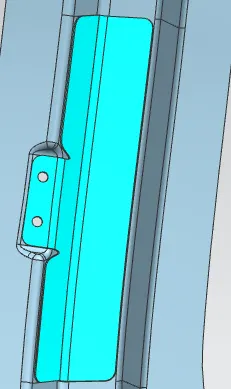
- Wiper motor Reinforcements
To clean rear glass, wiper is provided on the rear glass. It's motor is fittted on inner panel. This motor creates lots of vibration, noise and heat. To avoid tgis reinforcement is provided. An emboss is created on inner panel to fit it precisely.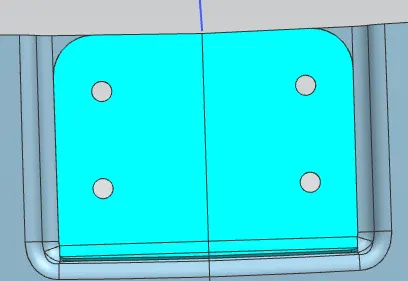
- Striker Reinforcement
Striker is attached to the inner panel. And generally inner panel thickness is 0.75mm. When we close the back door, we apply some force to close and back door is slammed on the car body. It created high impact on the striker and there is posibility of deformation of inner panel or striker due to lower thickness. So reinforcement is provided to strengthen that area.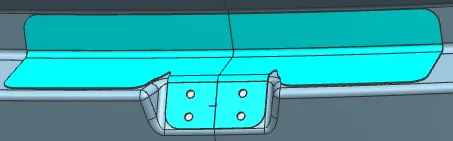
Design Procedure
- The outer surface provided by styaling team is checked for disjoints or defects. If any corrections need to be made, inform styling team and get foolproof surface.
- Both upper and lower outer panels are saved seperately. Firstly, An assembly is created and both outer panels are added as fixed components.
- A new file is added for Inner panel and both the outer panels are linked as reference part. From this drawing direction is decided, which is used in law extensions and emboss command for vector direction.
- First Sealing flange is created, by offseting reference surfaces by various distance and joined together by blends or creating new surface by brige curve or sketches.
- After this, a connecting flange is created joining sealing flange and later blended together.
- Now surface for windshield is created joining connecting blend. Flange for mastic sealant is created on this surface.
- Embosses are created in drawing direction for strength and distribute forces in outward direction. Some trims are provided for mounting of lamps or holes for cabling.
- Next step is creation of embosses for Hinge, gas stays, wiper mounting and striker.
- All the blends are given to edges, removed sharp corners, geometry is mirrored and sewed together and thickness is provided.
- Draft analysis is performed on inner panel to check back draft condition.
- After finishing inner panel, hemming surface is created in both outer panels by offseting surface and joined by swept command. Then blended, trimmed to provide reliefs, mirrored and thickened.
- Next, all the reinforcement created seperately one by one taking referencr from inner panel surfaces and embosses created. And striker proctory circle is created.
Results
- Draft Analysis
Draft analysis performed for the 7 degrees draft angle in tooling direction as shown in below image. From the image it can be seen that the part passes the draft analysis test.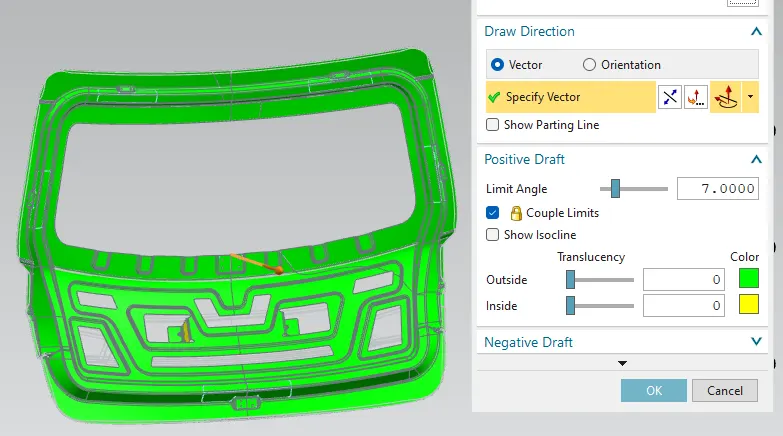
- Assembly Images
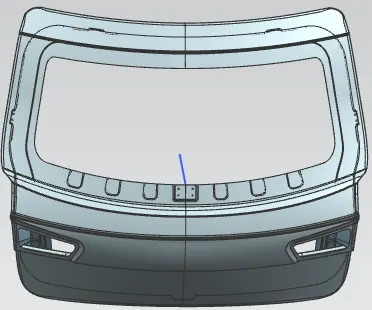
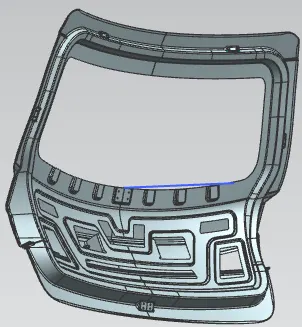
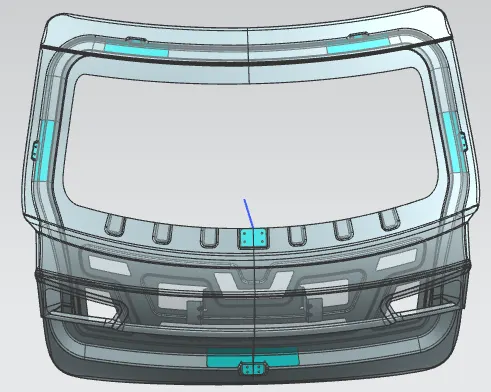
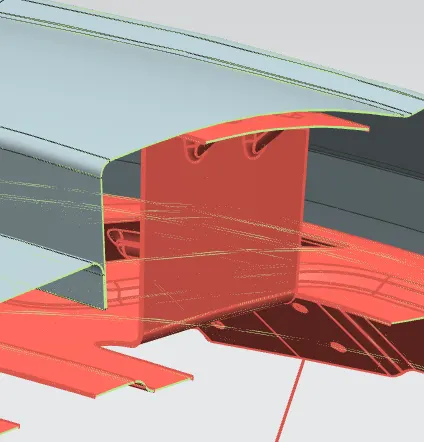
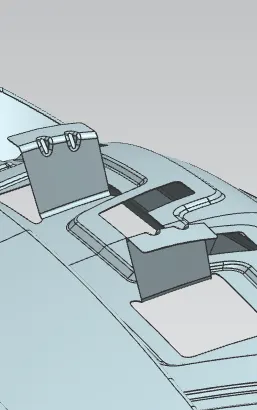
- Hemming
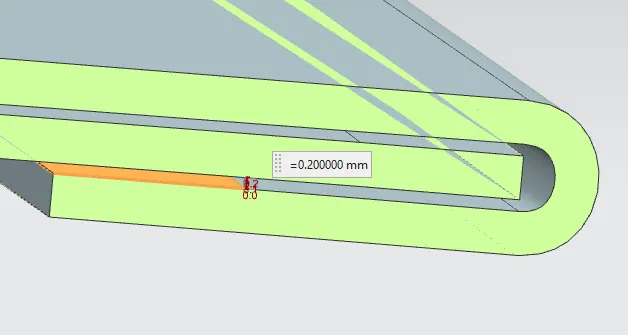
- Reliefs for hemming
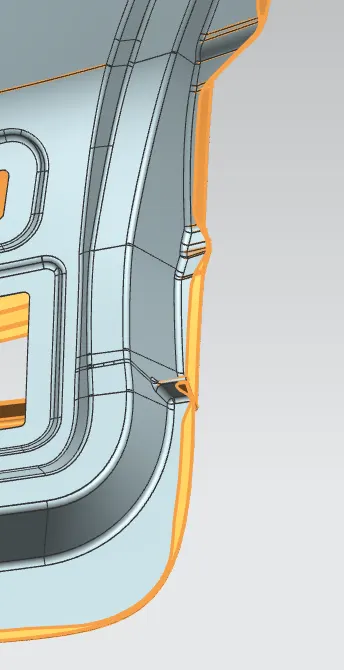
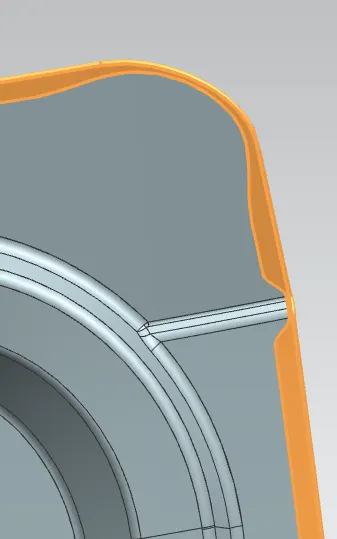
- Reinforcements
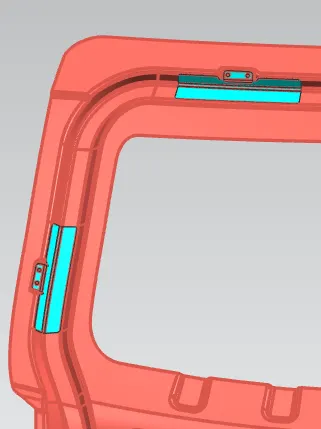
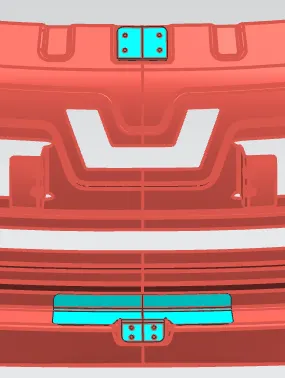
- Mastic Sealant Flange
Conclusion
Back door inner panel, all reinforcements and hemming for outer surface are successfully created from the given surface. Also, the inner panel surface passed draft analysis test for 7 degrees draft angle.