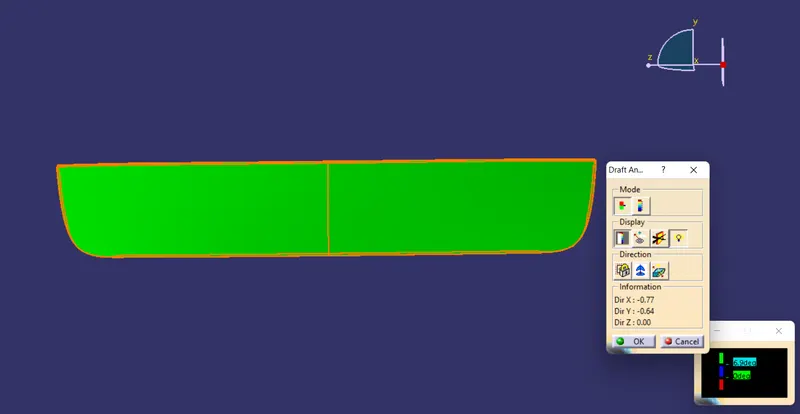
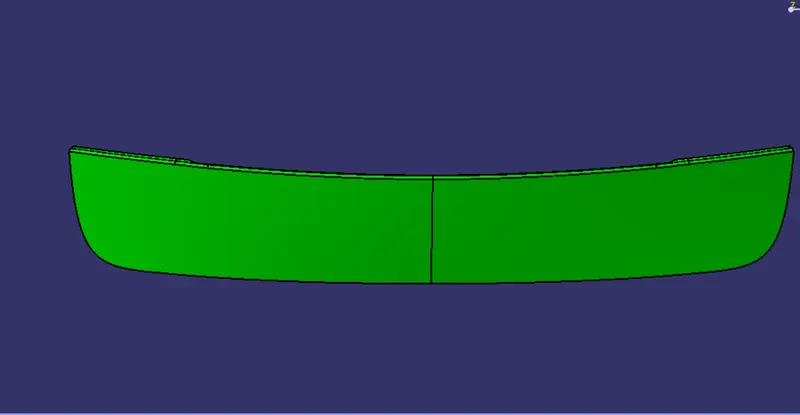
Design of backdoor
BACK DOOR DESIGN
OBJECTIVE:
- To design the car back door assembly by taking refrences from the class A surface of the Back door outer panel.
- To develop the back door inner panel by taking reference from the back door styling surface which is provided to us as an input.
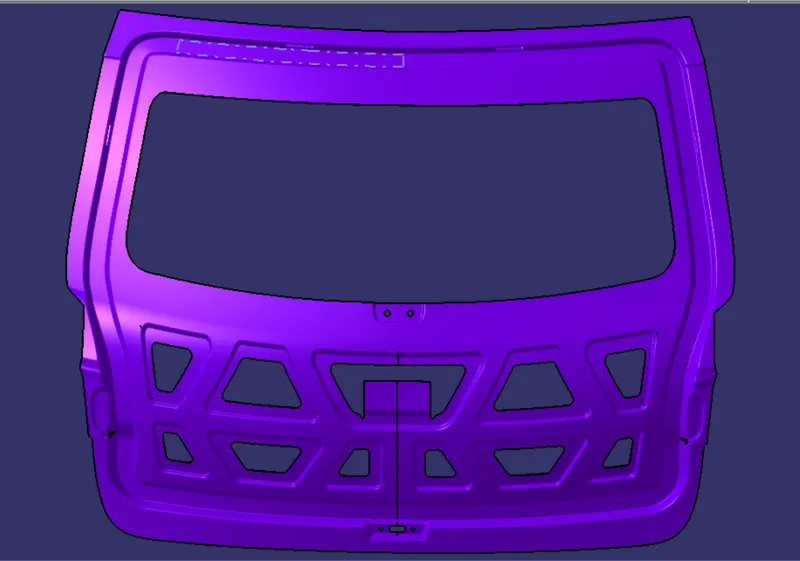
- To design all the necessary engineering features on the back door inner panel such as embosses for hinges, gastays, wiper motor and striker area, and additional embossing in the middle of the panel to increade its stiffness.
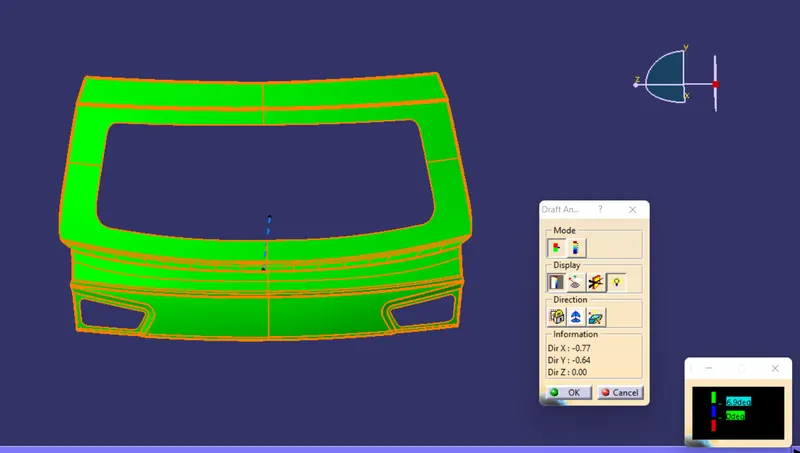
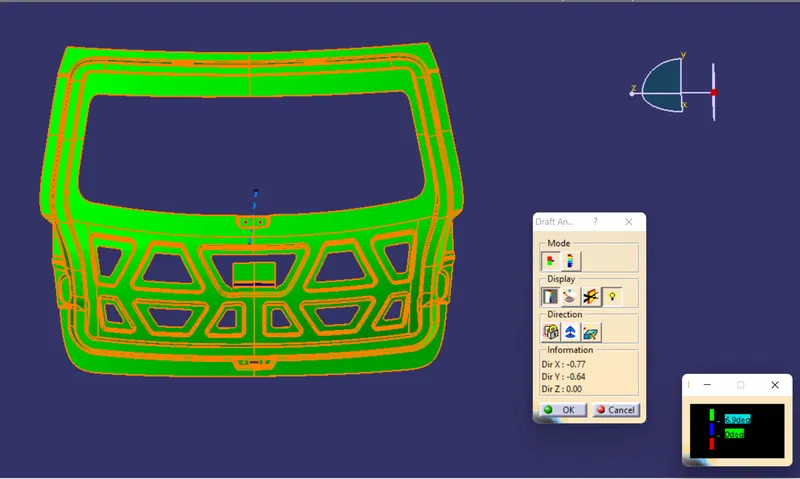
- To create hemming portion at the boundaries of back door outer panel and carry out draft analysis for each and every part of the back door assembly.
INTRODUCTION
BACK DOOR: A door in a vehicle is used to facilitate the ingress and egress by the passengers or loading and unloading of luggage. Back door is gererally positioned at the rear end of the vehicle and it is hinged from the the top edge and open up from bottom to top. In most of the cars these back doors are operated with the help of gas stay which in turn reduces the effort required to lift the door.
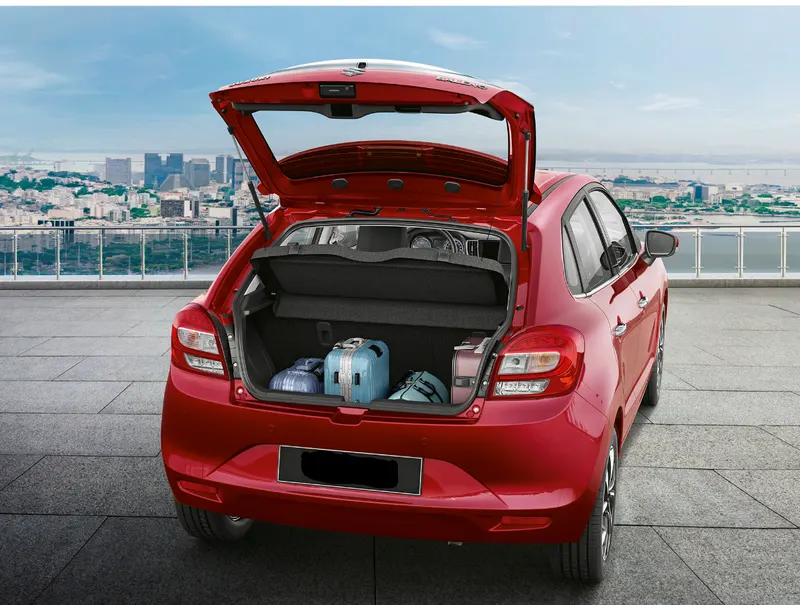
TAILGATE: A tailgate is the backdoor of a truck or an SUV, that may open downwards or sideways. The purpose of a tailgate is to make cargo or luggage loading and unloading convinent.
These days, most modern vehicles are quipped with power liftgates/tailgates, which basically serve the same purpose but with added sofistication. Power tailgates are electronically operated with the help of an electric motor. They are present in almost all classes of vehicles, whether it's hatchback, compack SUV, midsize SUV, or full-size SUV.
Such tailgates are used for hauling and taking down luggage, cargo, or anything else that we want to carry at the back of the car. They add up to the total weight of the SUV, so the vehichle will need more power to steer through the road, resulting high fuel consumption.
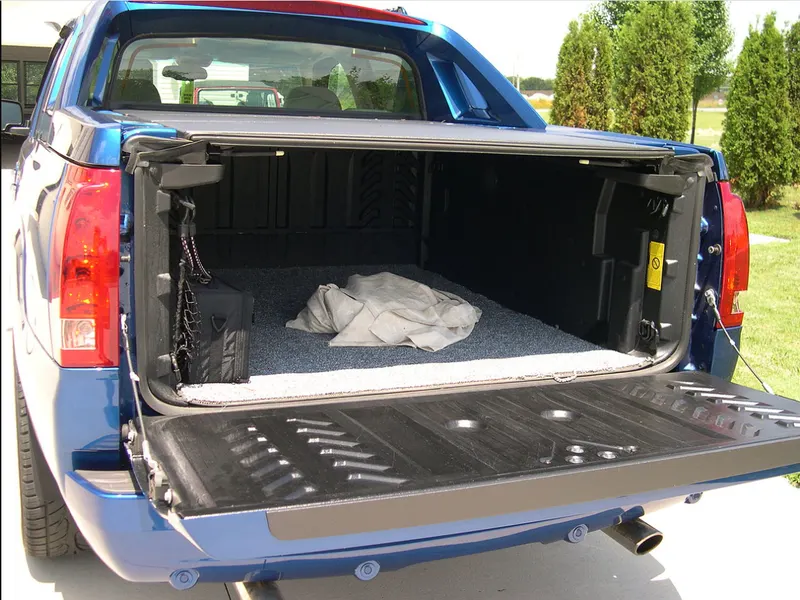
TYPES OF TAILGATES
SPLIT-TAILGATE: A split tailgate has two doors instead of one. They open from the two sides, making it easier to load and unload cargo. Some popular SUVs with split tailgares are Toyota Land Cruiser, Pontiac Aztek, Honda Element, and Mitsubishi Outlander.
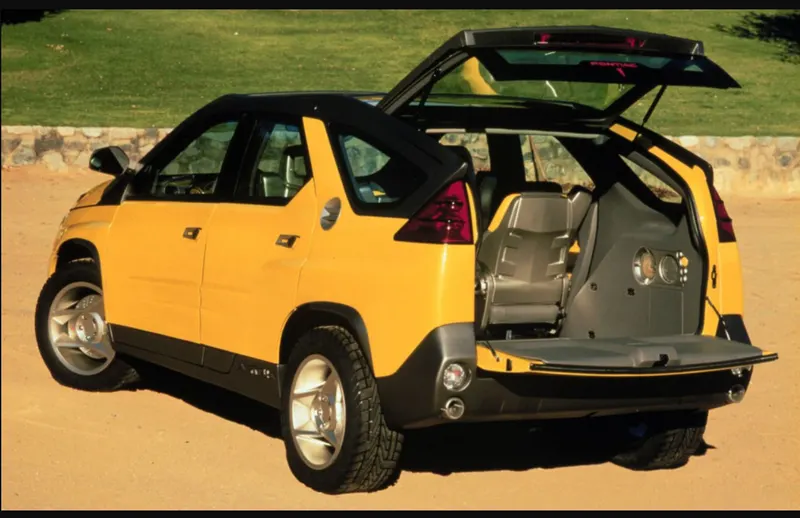
Subcompact and Small SUVs with Tailgates:
Even though tailgates are mostly found in bigger-sized vehicles. some automakers quip their subcompact and small utility vehicles with a tailgate. It bumps up their weight for sure and make the cargo space more accessible. Ford Escort, Audi Q3m and Hyundia Tucson are some of the popular vehicles having tailgate.
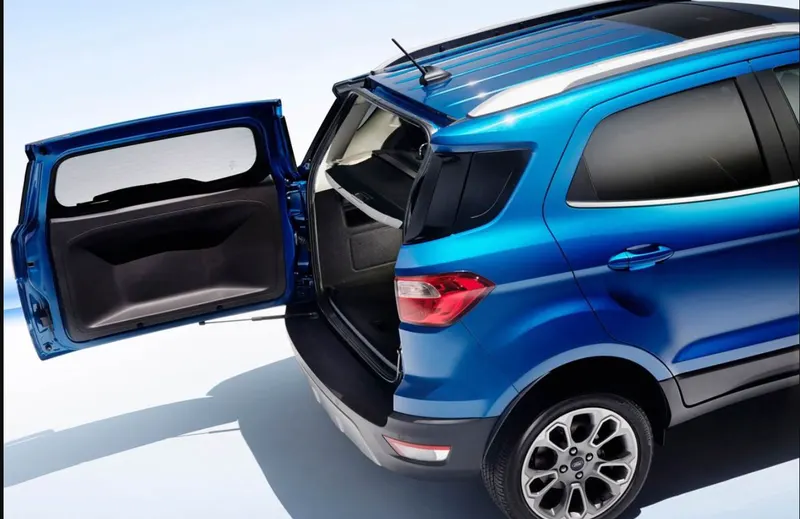
CONSTITUENT PARTS OF BACK DOOR ASSEMBLY
- OUTER PANEL UPPER
- OUTER PANEL LOWER
- INNER PANEL
- LATCH AND STRIKER EBOSSES AND REINFORCEMENT
- HINGE EMBOSSES AND REINFORCEMENT
- GAS STAY EMBOSSES AND REINFORCEMENT
DESIGN CRITERIA FOR BACK DOOR
- Rear Visibility Criteria
- Rear Crash regulations and requirements
- Gap and Flushness requirement.
- Boot space and accessibility.
- Funtional requirement of Hinge and Gas stay/Power lifter.
- Joining techniques followed like Hemming, and Spot Welding etc.
DESIGN METHODOLOGY:
INNER PANEL DESIGN
The approach to design the inner panel is similar to that of Hood inner panel, here we'll be taking refrences from the class A surface which is given to us as an input. we'll use offset command to offset the improved class A surface upto 20 to 25mm and we'll use that surface for the inner panel creation.
The important thing to note while designing the back door inner panel is creating the area on which the rubber sealant will be fixed. This area should be completly flat because rubber sealant will seated on it.
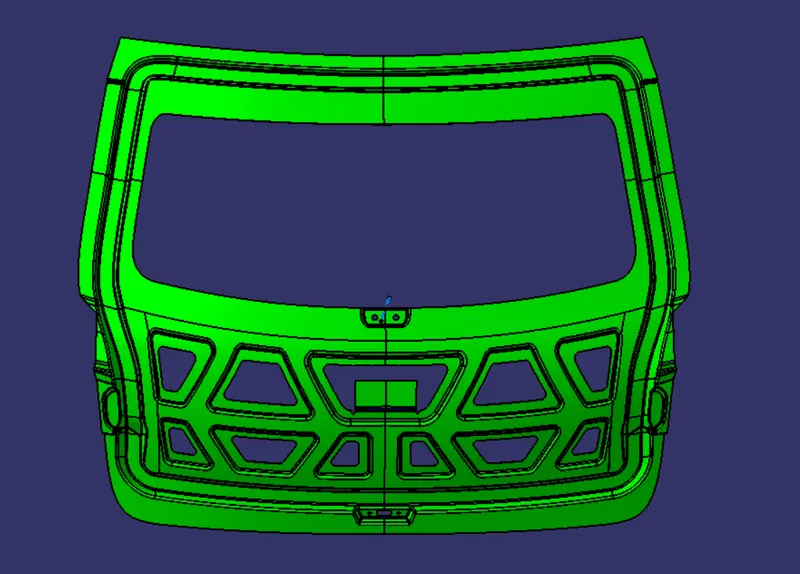
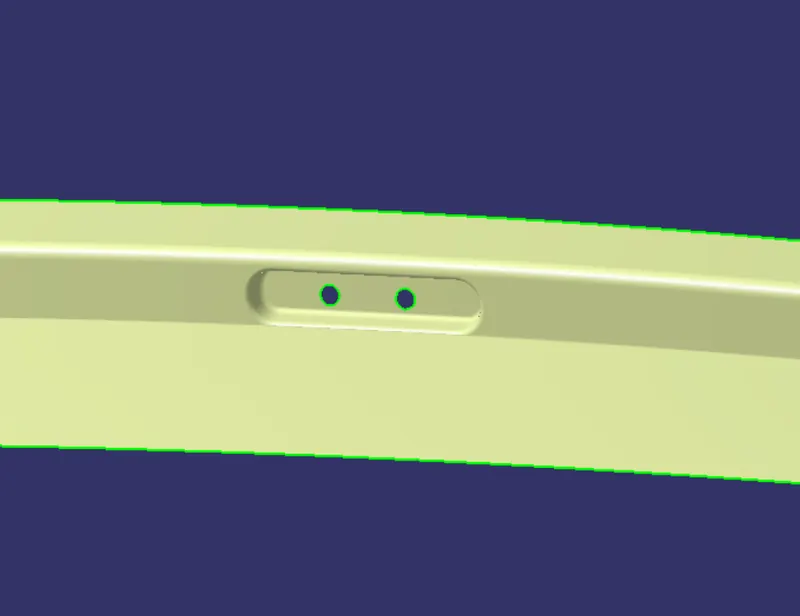
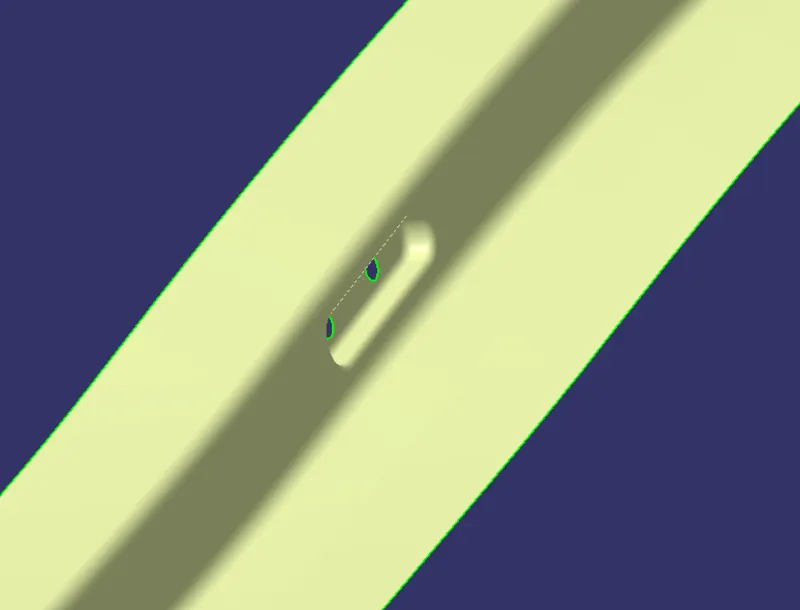
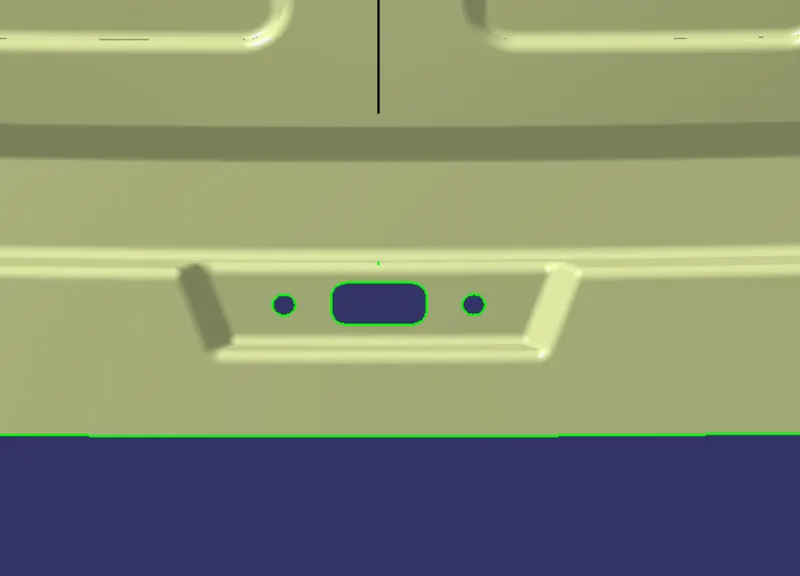
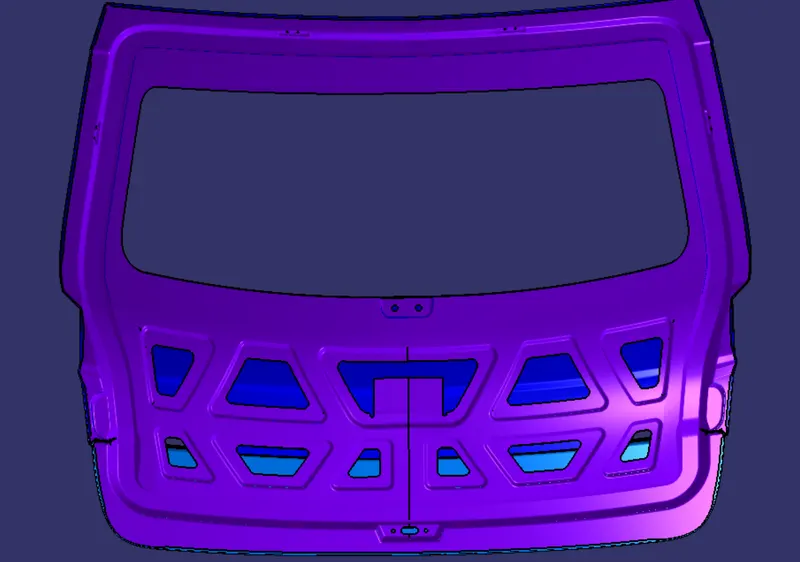
Apart from the rubber sealant area we'll provide embosses for hinges, gas stay fixation bracket and striker area. we'll also provide embossing on the major surfaces of the inner panel this would improve the stiffness of the inner panel and also helps in distributing the impact energy to all over the back inner panel.
INNER PANEL:
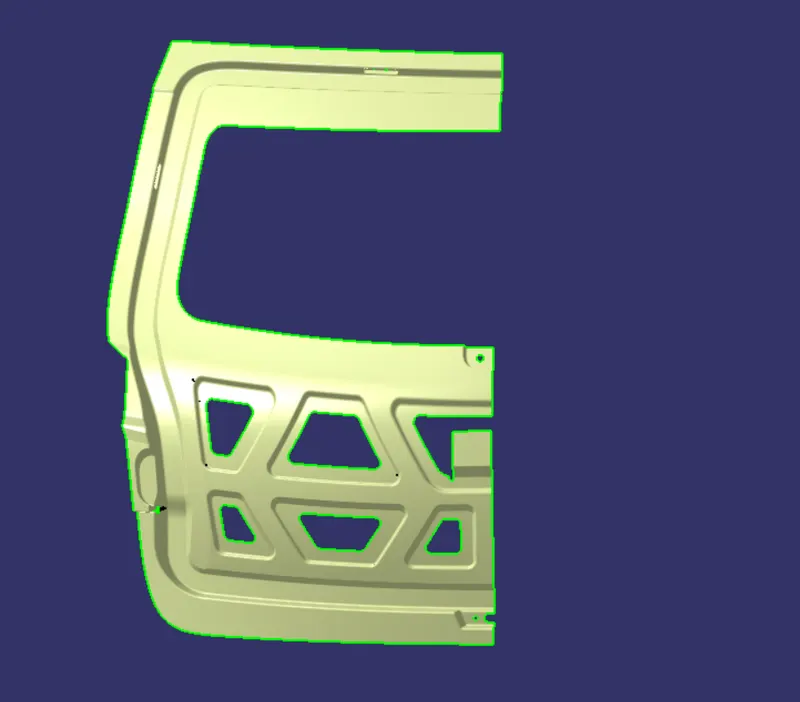
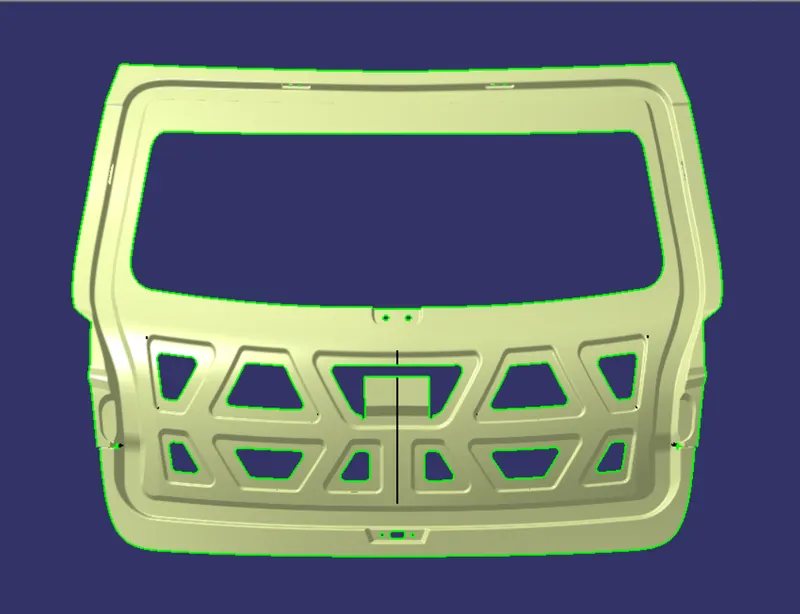
HINGE ENMBOSS:
GAS STAY EMBOSS:
STRIKER EMBOSS:
DESIGNING OF OUTER PANEL(UPPER):
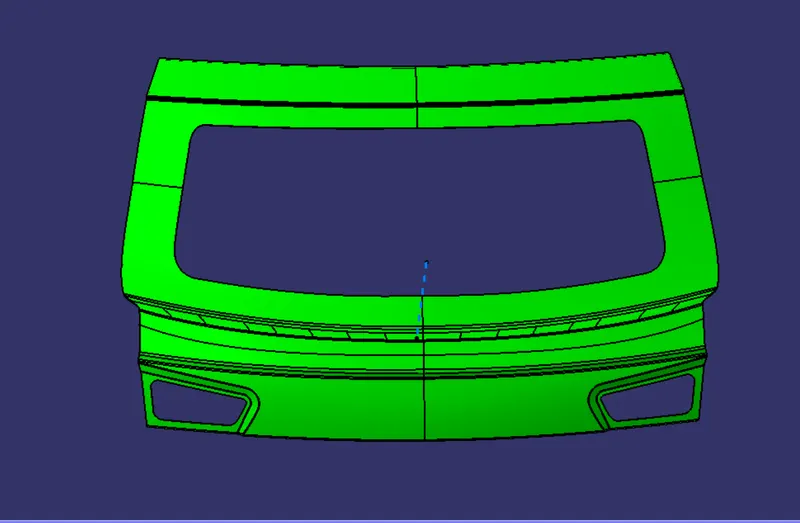
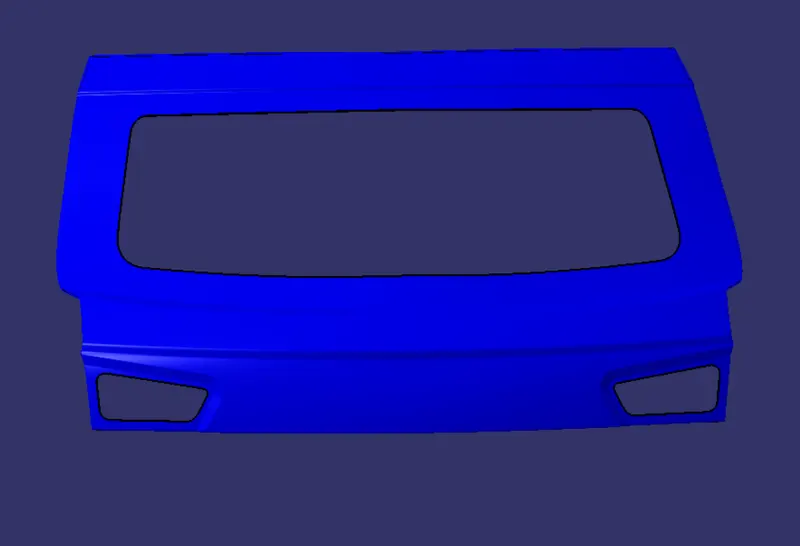
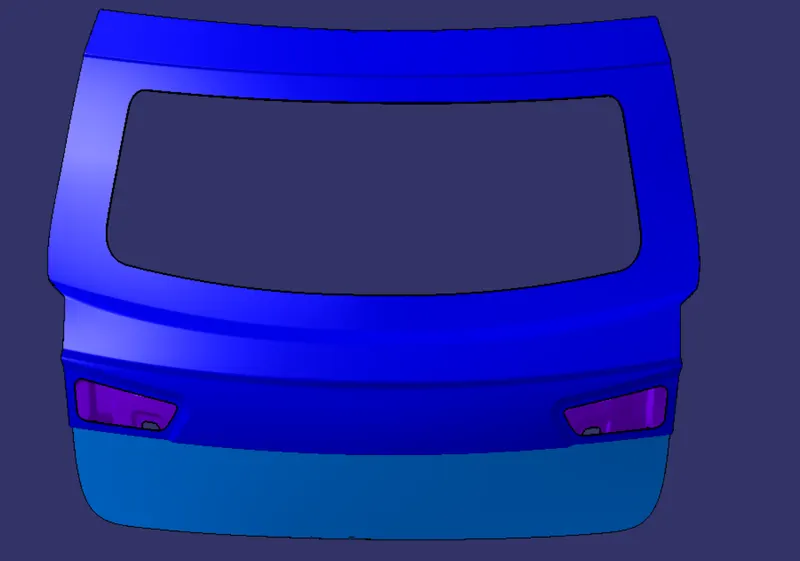
The outer panel of the back door is nothing but the class A surface itself but it needs to be improved as it is lacking some of the engineering features like hemming portion and corner relief areas.
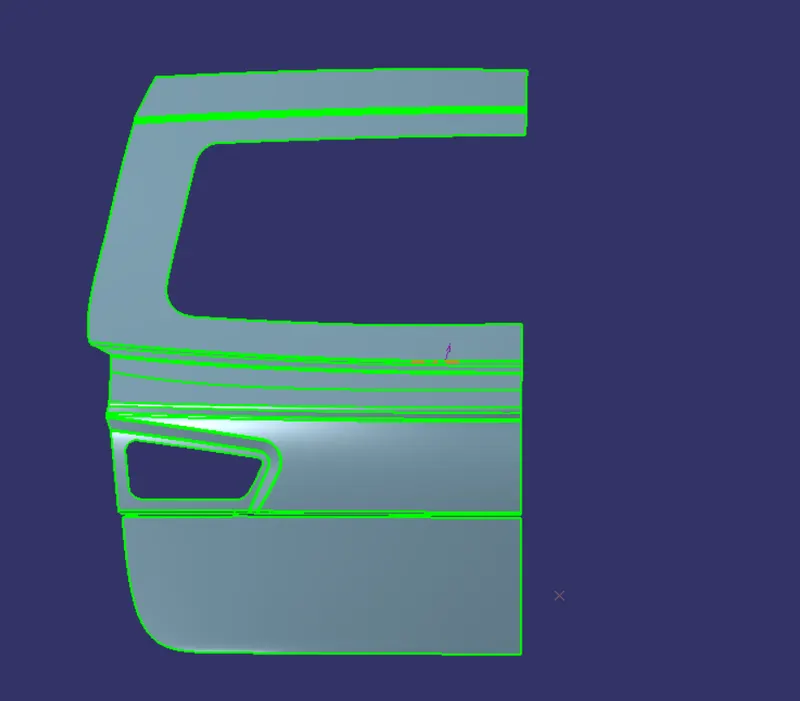
The class A surface we receive as an input is in ".igs" format which usually is not a proper surface and it requires a lot improvements and modifications so here also we'll start modifying the class A surface by extracting each surface excluding the fillets and we'll extrapolate those surfaces well enough so that they would intersect with each other and then we'll trim all the surfaces in order to come up with a single surface and finally we'll apply the fillets to the sharp edges same as that of the class A surface.
CLASS A SURFACE/INPUT SURFACE:
IMPROVED CLASS A SURFACE:
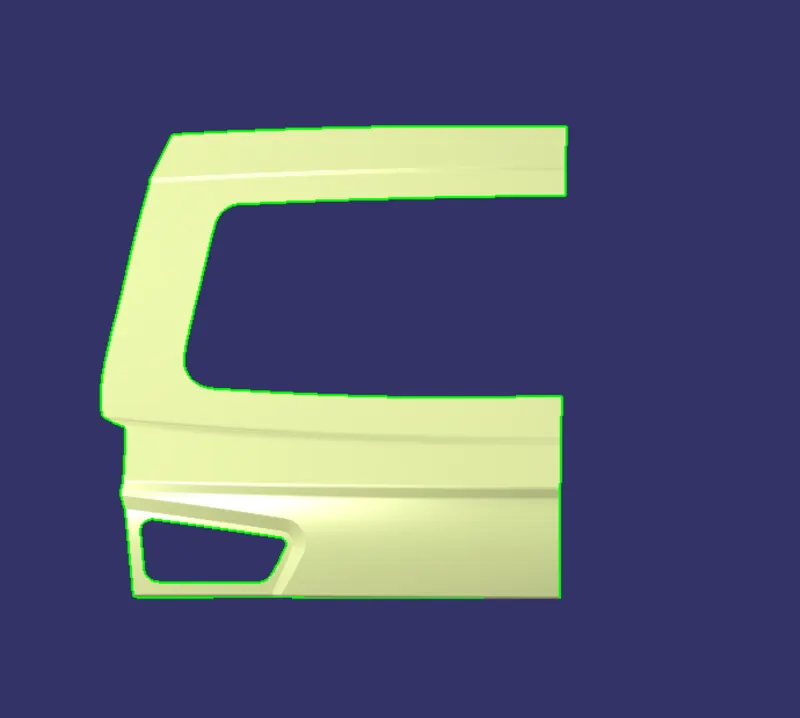
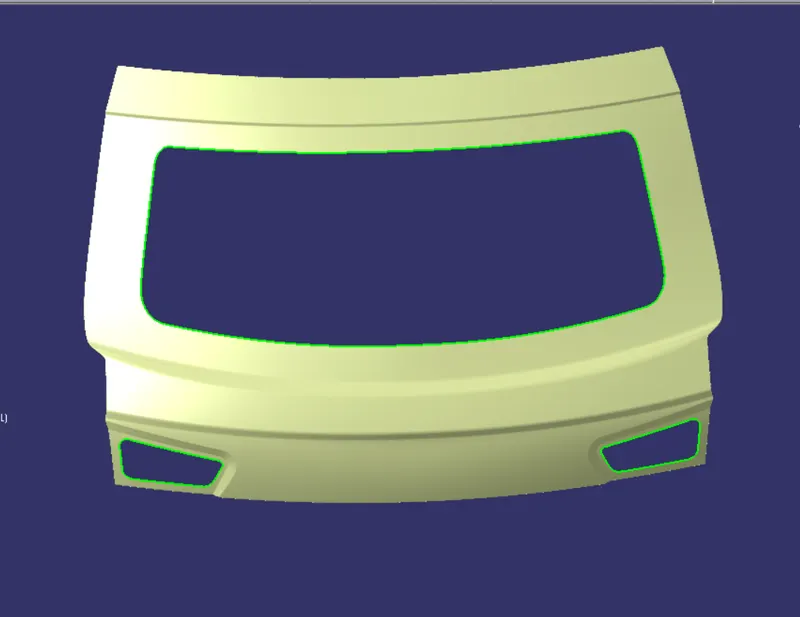
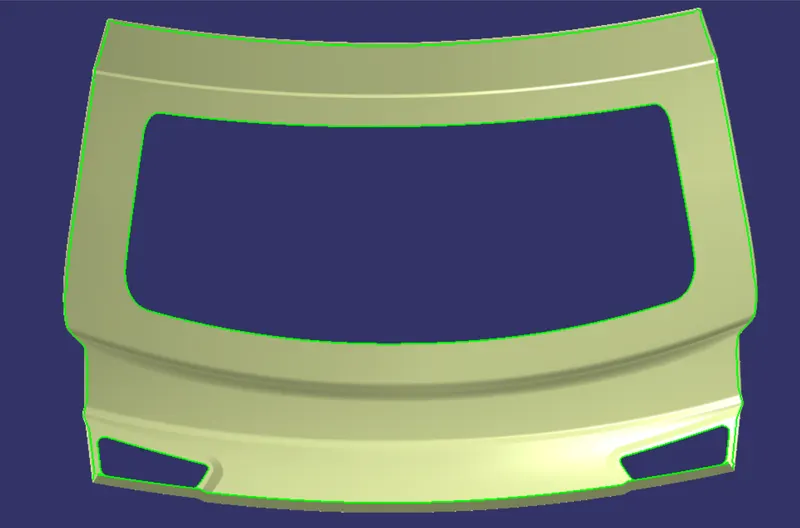
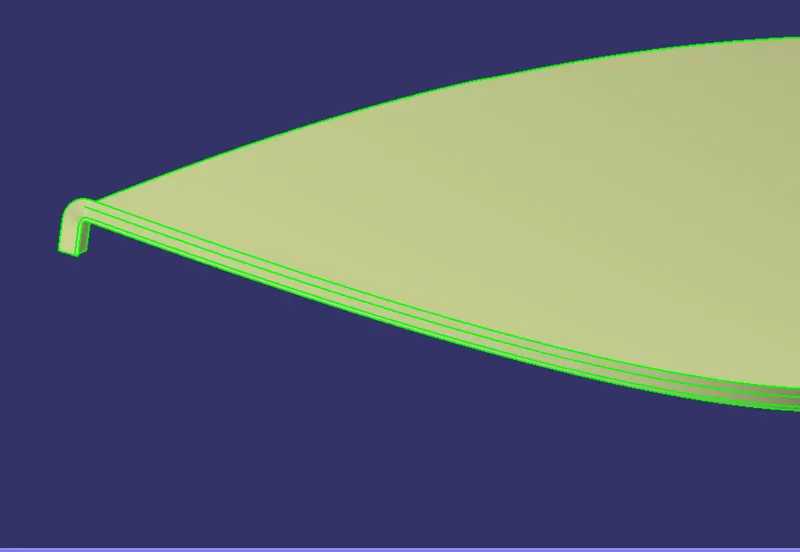
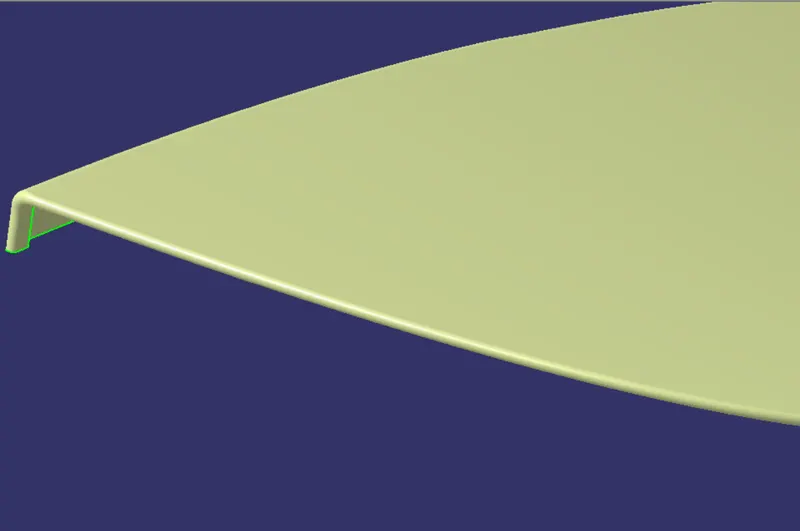
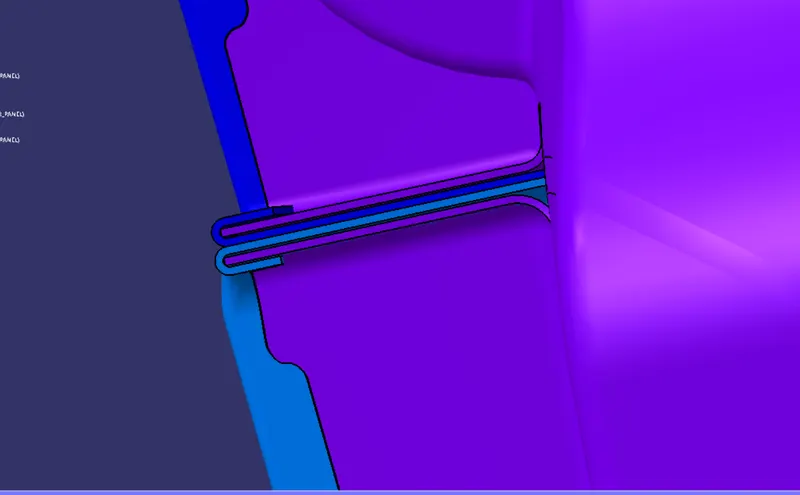
HEMMING PORTION:The approach to create the hemming portion of the back door is similar to that of the Hood outer panel case, but due to the complexity of the back door surface the hemming portion becomes quite tough to design, its boundary has a number of sharp edges and the surface has complex curves and that is why blend command won't work in this case.
In this case we'll take help of tritangent fillet command but even to make this operation successfull we have to make sure no sharp should be there on any of the surface used in the creation of tritangent fillet.
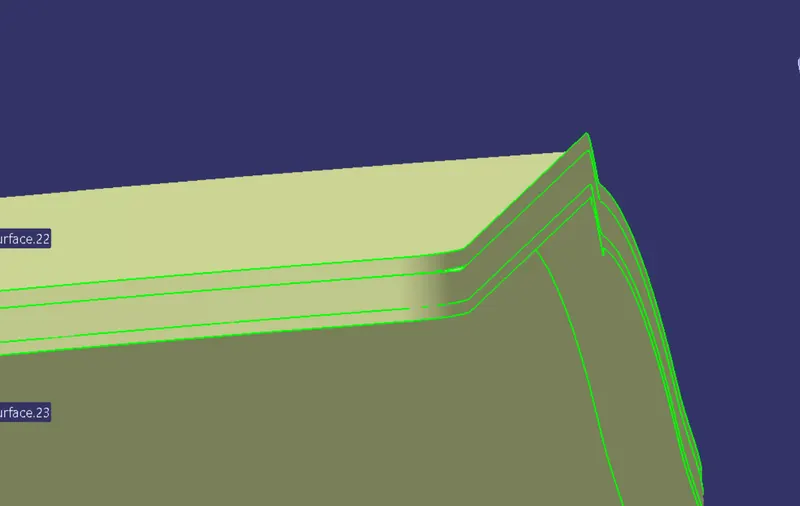
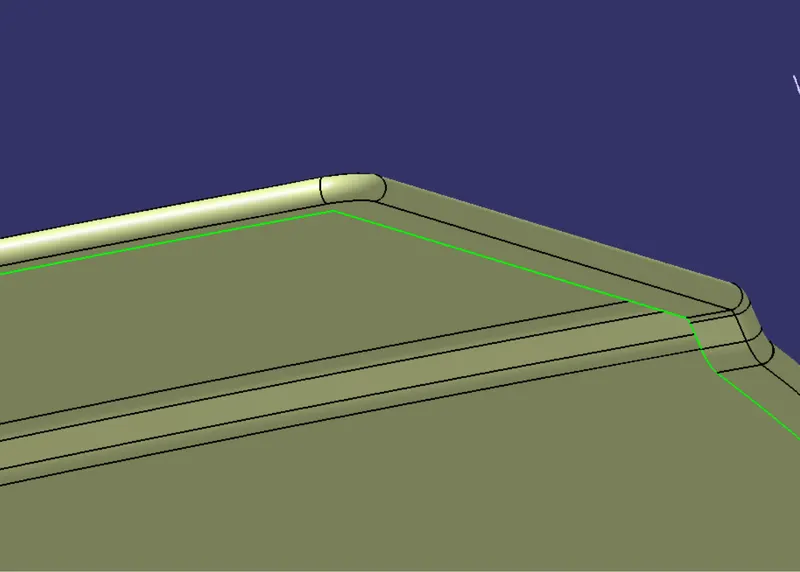
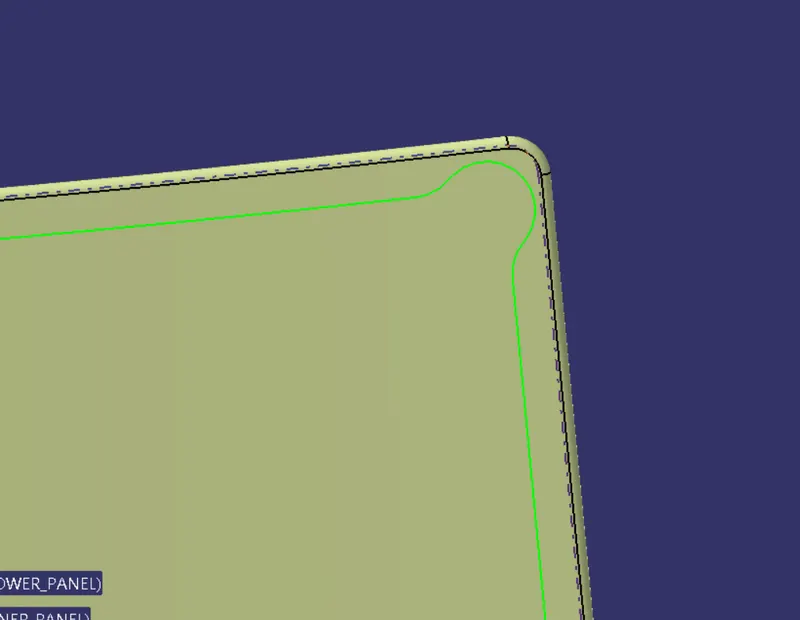
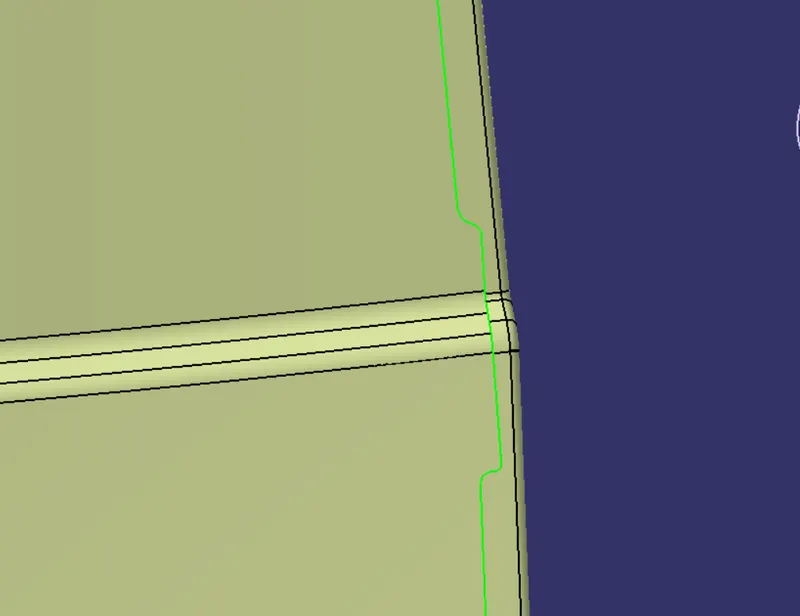
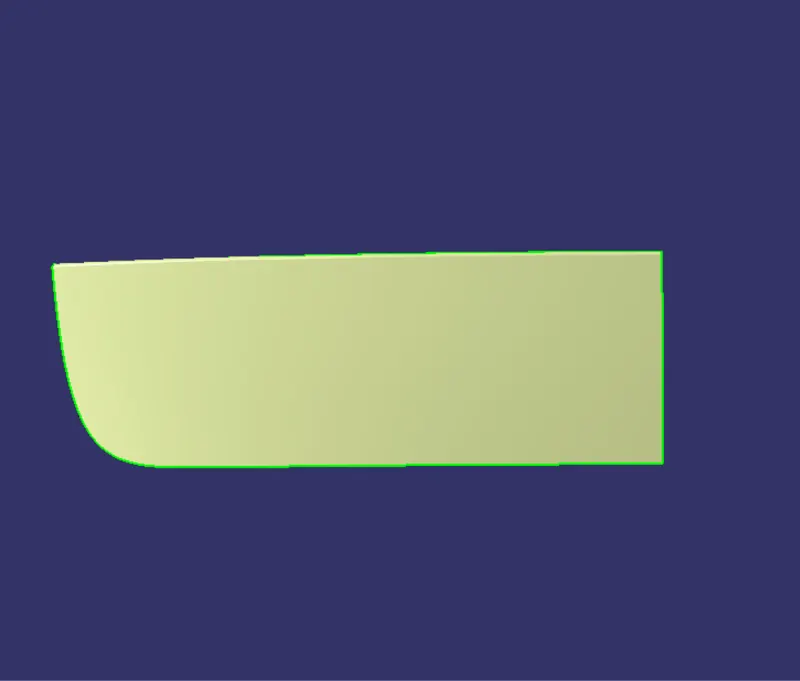
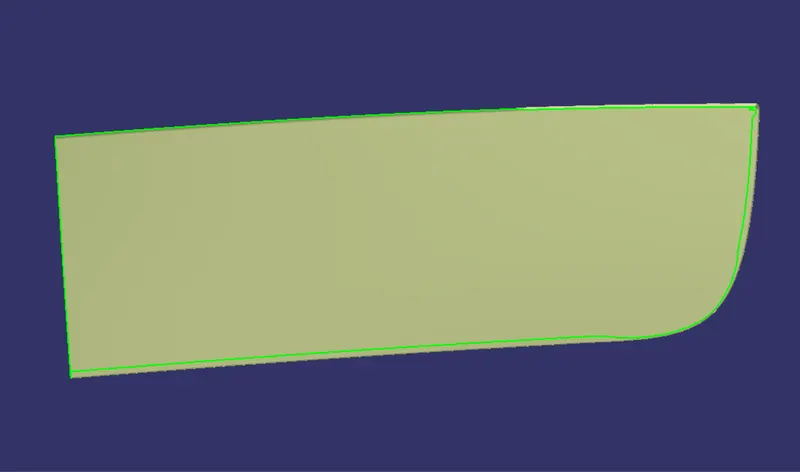
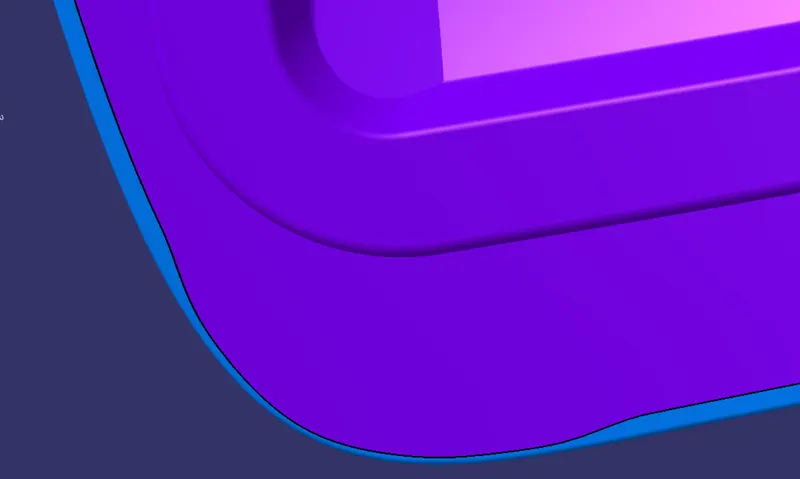
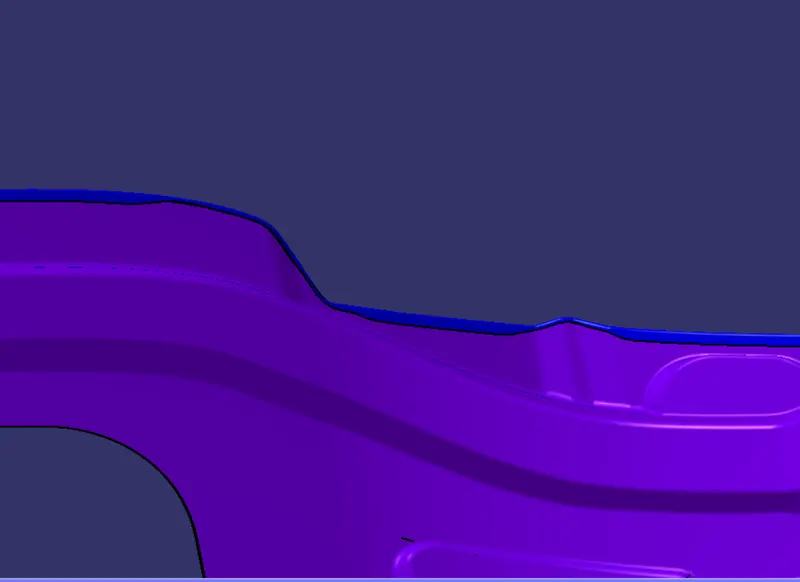
As we can clearly see from the pictures shown below that the back door surface have few bends and some curved boundary region so in such places we have to provide corner relief. The corner relief area can be easily created plotting points on the desired areas and creating splines with the help of such points and finally doing a split.
DESIGN OF OUTER PANEL(LOWER)
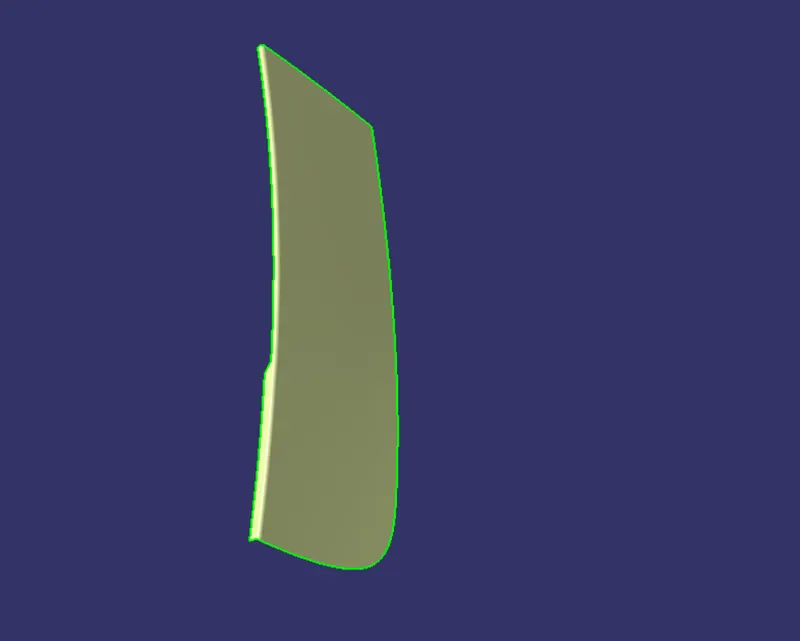
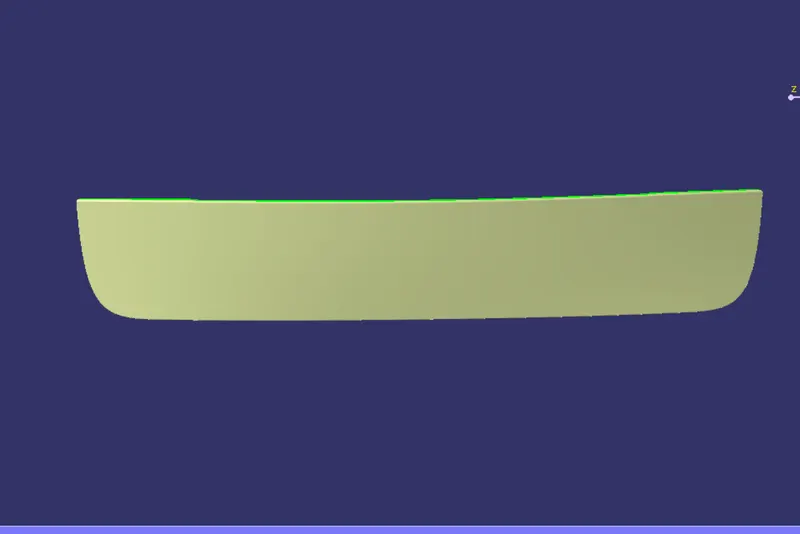
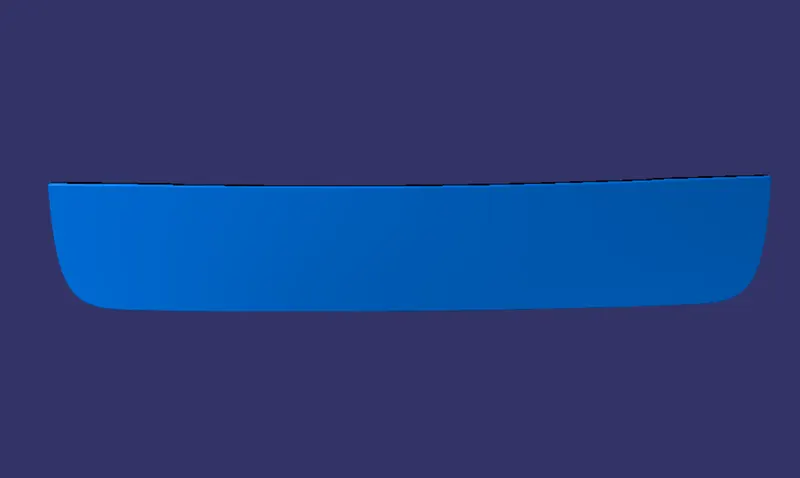
Design of lower part of outer panel is easier to design as it does not carry much details but when you'll go for offsetting this surface by normal means it won't happen because the curvature of this particular surface is such that it can't be able to maintain a uniform gap all over while doing an offset and even it can't be thickened also. For that we take help of "rough offset" command through which we can offset this surface.
The hemming portion will be create in a same manner as that of the upper panel.
THICKEN PART MODELS:
DRAFT ANALYSIS: