Design of backdoor
Design of Backdoor
Aim :
To design the Backdoor using the provided styling surface with the different design methodlogy and necessary embosses and reinforcements using NX cad.
Back Door :
The backdoor or Tailgate is the panel that covers the boot (or trunk) of an automobile. It enables access to the main luggage compartment. A hinge allows the boot lid to be raised, while devices such as springs or gas cylinders hold it up in the open position. In principle, tailgate have to fulfil similar requirements and are subject to the same design guidelines as bonnets. However, aluminium sheets are used much less for Tailgate than for bonnets.
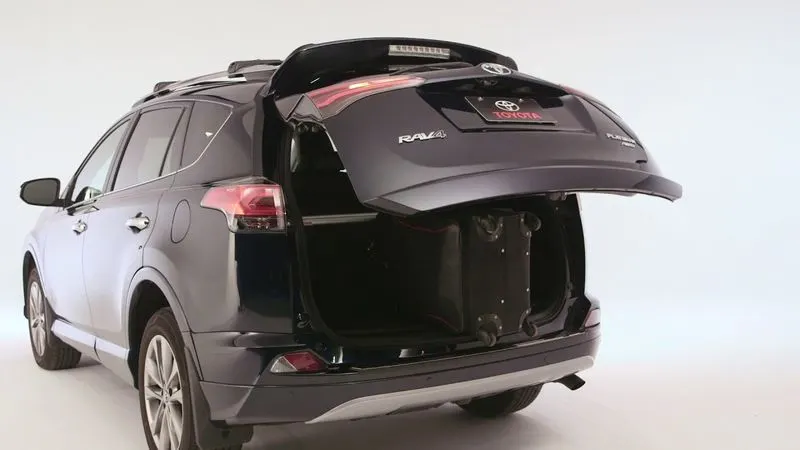
Backdoor are hinged at the top and open upwards, tailgates are lateral opening doors which are hinged at the left or right side. They greatly benefit from a reduced weight due to easier handling. In addition, a reduced weight can translate into significantly lower rear axle loads ( as these panels overhang the rear axle) and hence additional seating capacity.
Design consideration :
- Rear Visibility.
- Support structures like hinges and gas stays.
- Mounts for wiper motor, tail lamps and other wiring loops.
- Fit and clearances.
- Boot spaces.
- Rear crash regulations and requirements.
- Sealing and its functions.
- Joining techniques like hemming, spot welding etc.
Components of Backdoor :
- Inner panel
- Outer panel upper
- Outer panel lower
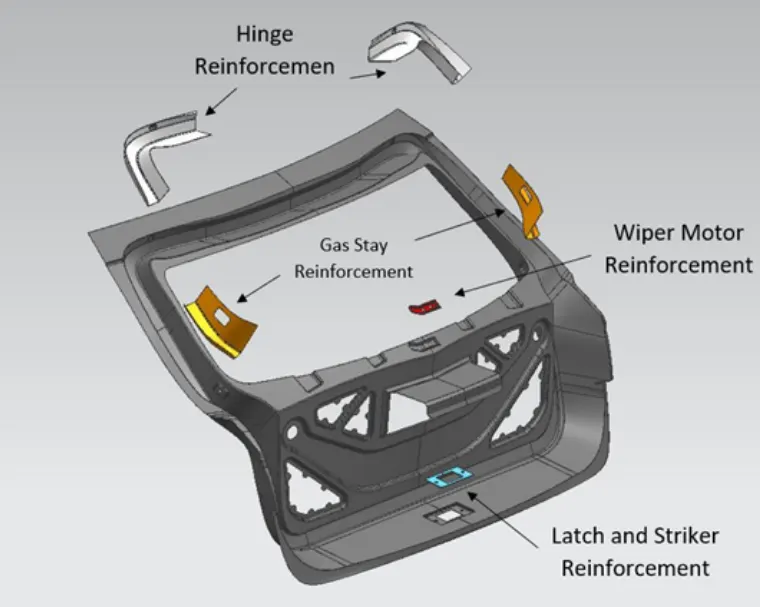
- Hinge reinforcements LH
- Hinge reinforcements RH
- Gas stay reinforcements LH
- Gas stay reinforcements RH
- Wiper motor reinforcement
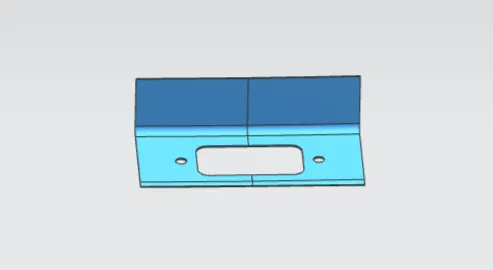
- Latch reinforcement
Design methodologies :
Embosing :
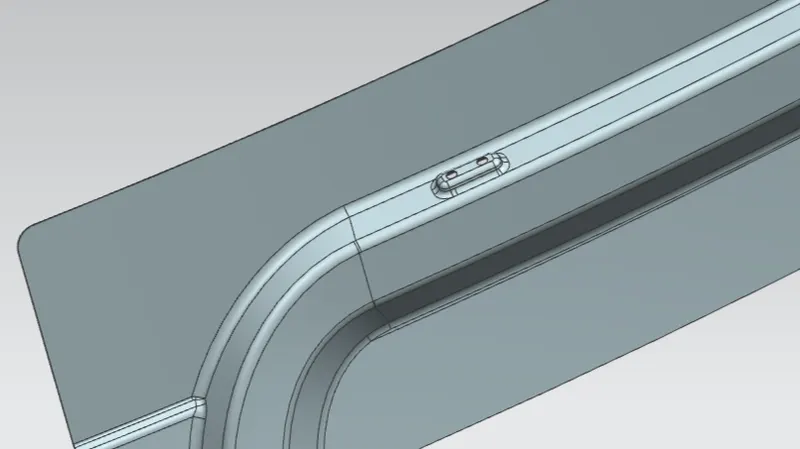
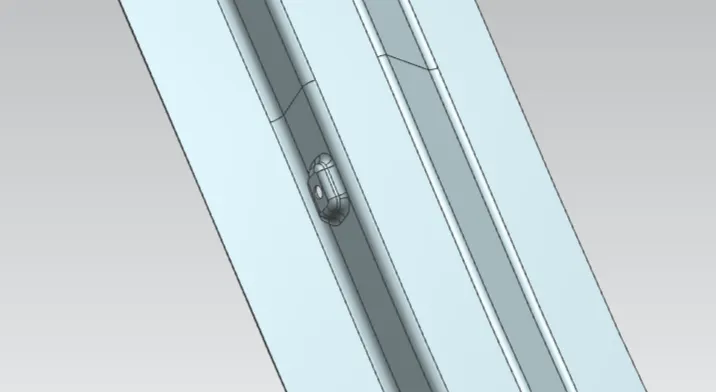
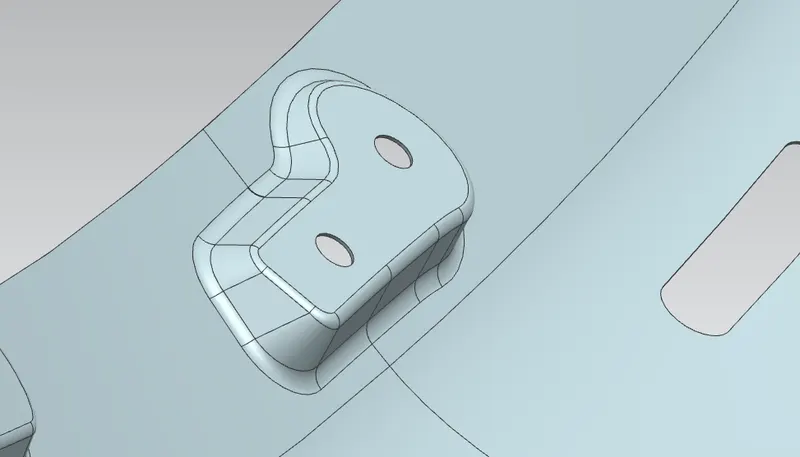
Embossing is a metal forming process for producing raised or sunken designs or relief in sheet material by means of matched male and female roller dies, theoretically with no change in metal thickness. Embosses are created to provided addition strength and to change in metal thickness. Embosses are created to provided additional strength and to direct the forces towards the hinge and body of the car.
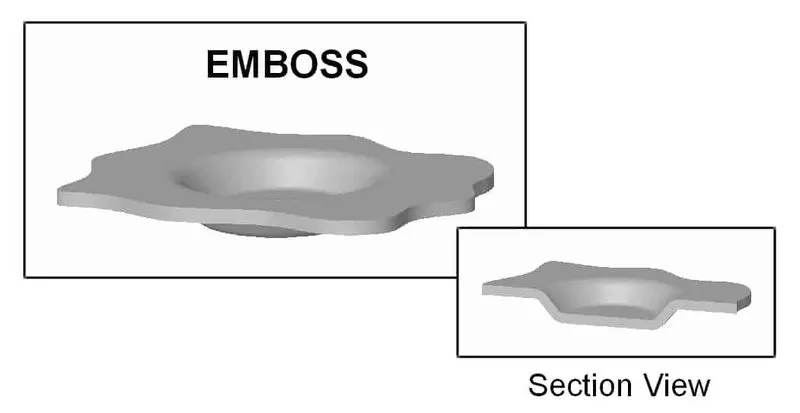
For inner panel to act as a good reinforcement, it needs to disoerse the stress outwards, hence the emboss was designed in such a way that the forces are directed outwards or away from the center.
Reinforcements :
Instead of making the whole inner panel of a thicker sheet, a sheet with less thickness in addition to local reinforcement is provided to increase the strength of the component and reduce the weight.
Mastic Sealings :
As we know that the main purpose of the outer panel is for aesthetic looks. Thus we cannot use bolts or welding. This has to be done with the help of the hemming and mastic sealants. Mastic sealants are elastic compound that behaves like the rubber. It is placed between the outer and inner panel. Initially is it in paste form, but after the hot furnace bath it gets hardened thus joining the outer and inner panel. Mastic sealant has the tendency to increase the strength of the panel and has influence of 80mm diameter.
Hemming :
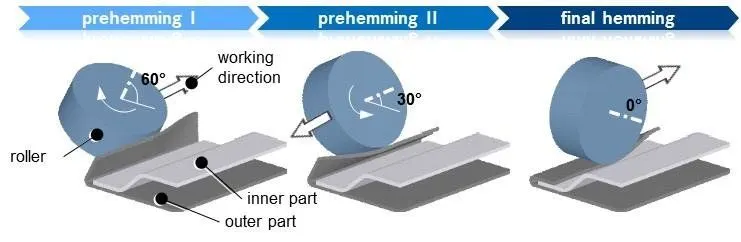
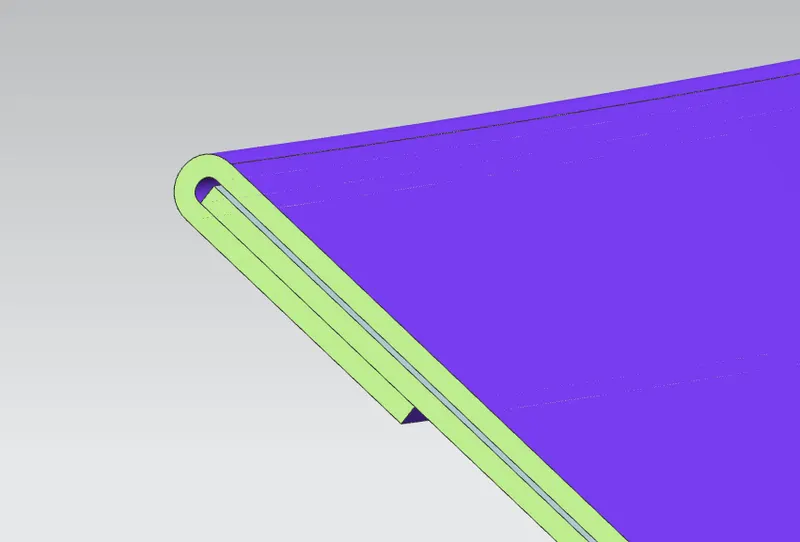
Hemming is the metalworking process in which a sheet metal edge is rolled into itself. The outer surface of the panel is rolled 2 or 3 times over the inner panel. In first roll the panel is bent slightly and in the second roll the sheet matel is rolled even more and in the last roll it completely fits or covered the inner panel. There must be a 0.2mm gap between outer and inner panel in both upper and lower side.
Spot welding :
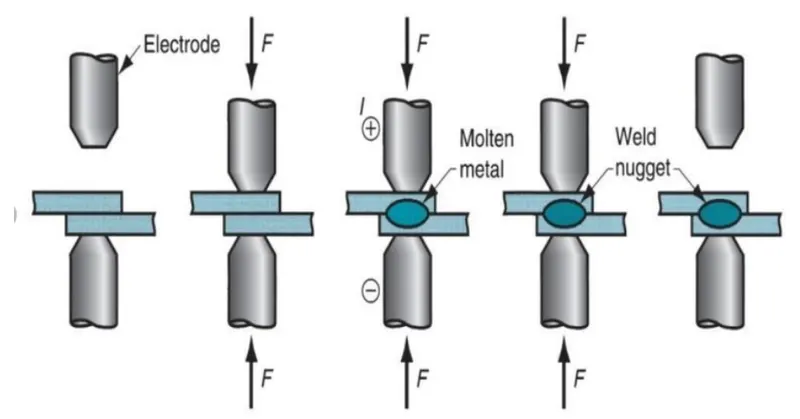
Spot welding is a form of resistance welding also known as resistances spot welding (RSW). Spot welding involves using heat produced by resistance to an electrical current to join meterials together. The current heats the materials to a point where they become maileable. The use of strong pressure bonds them together.
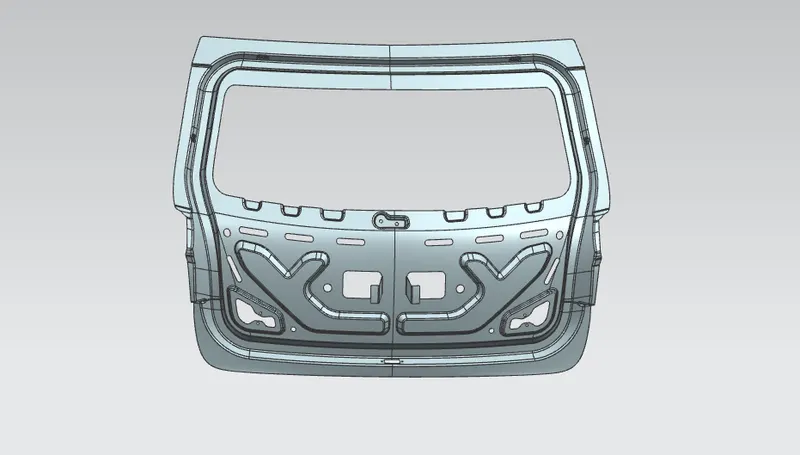
Inner panel :
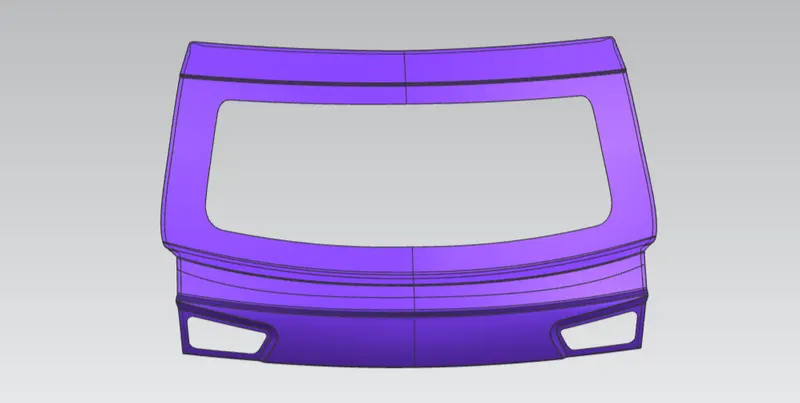
Outer panel upper :
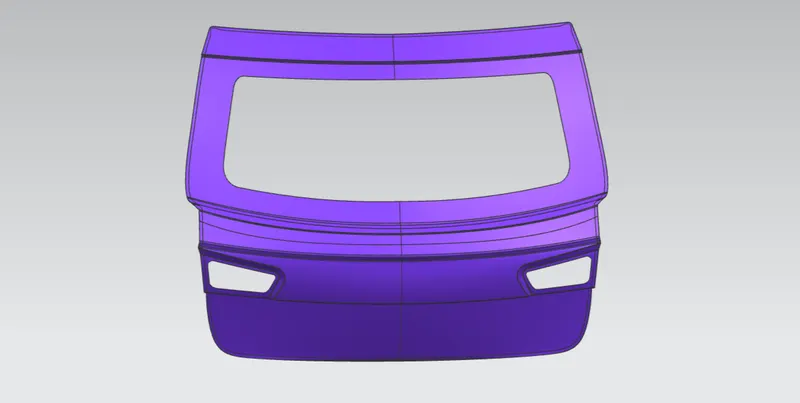
Outer panel upper and lower :
Hinge reinforcements LH :
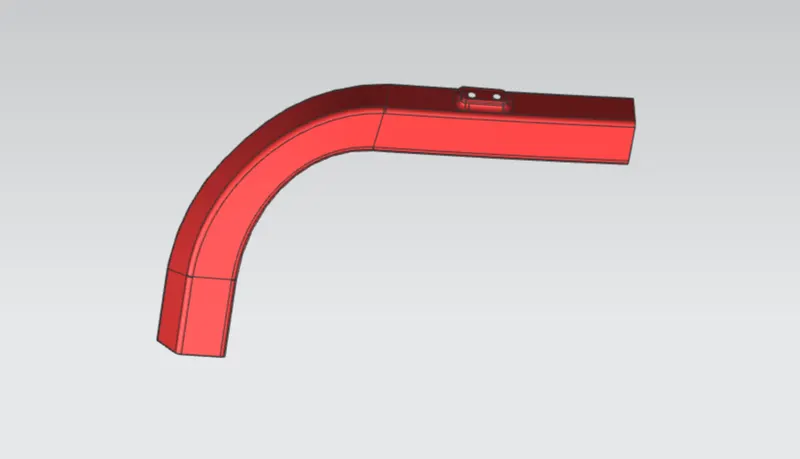
Hinge reinforcements RH :
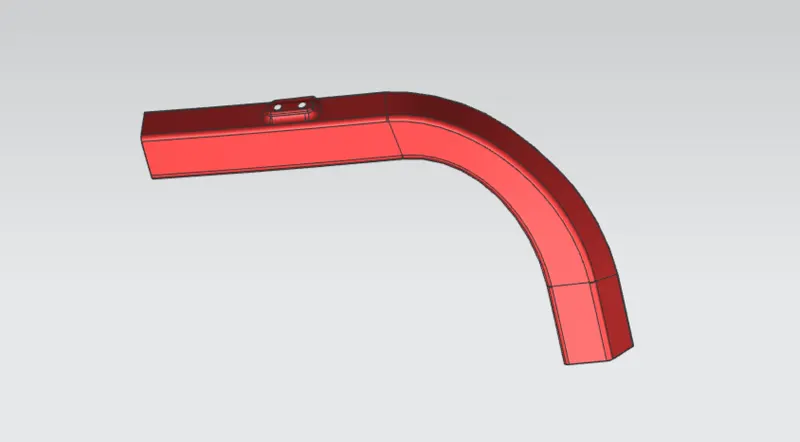
Gas stay reinforcements LH :
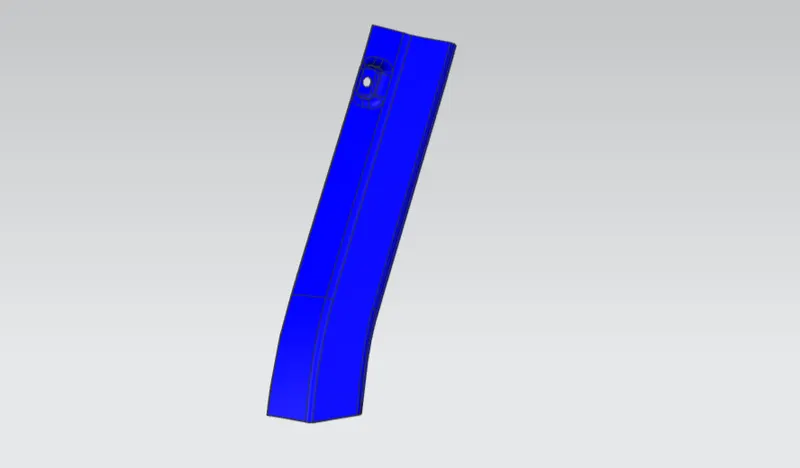
Gas stay reinforcements RH :
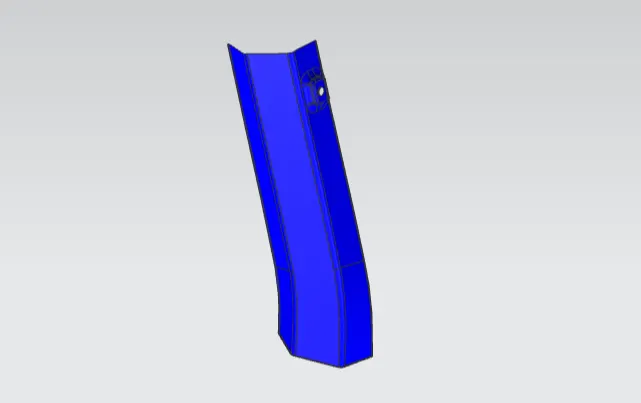
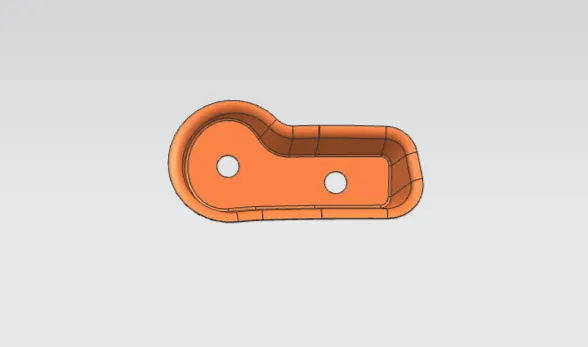
Wiper motor reinforcement :
Latch reinforcement :
Assembly :
Hinge Emboss :
Gas Stay Emboss :
Wipermotor Emboss :
Hemming :
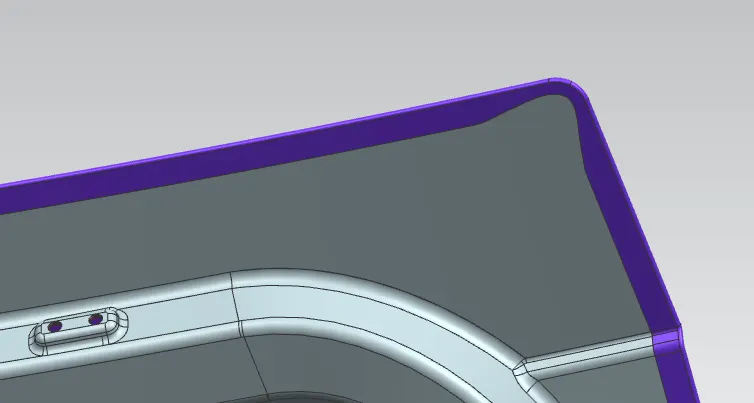
Corner Relief :
Inner panel draw direction :
The inner panel is produced by either casting or through deep drawn method. mostly alumininum panel is only casted, steel inner panel is made by deep drawn process only. If it is deep drawn then must be a tooling direction through which that direction the panel is deep drawn.
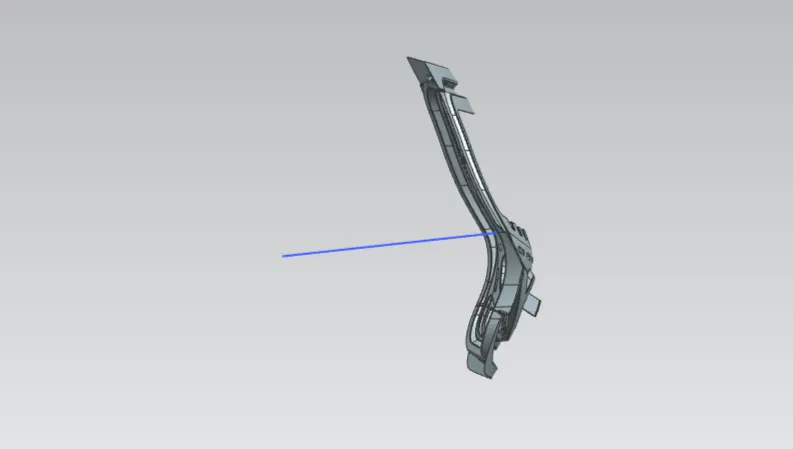
Draft Analysis :
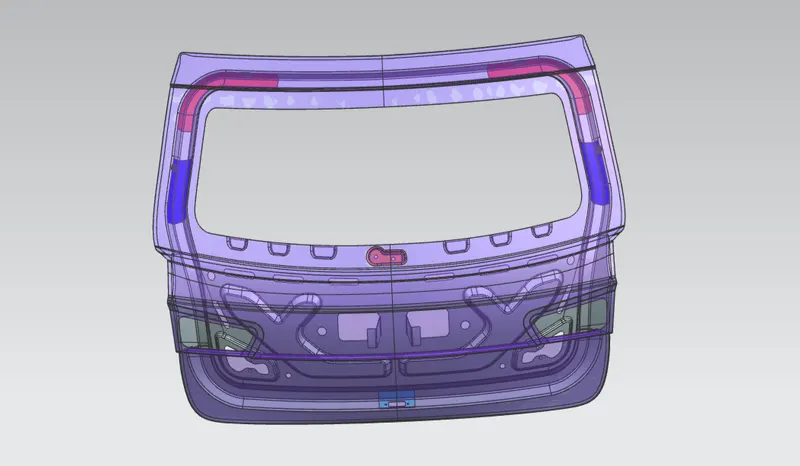
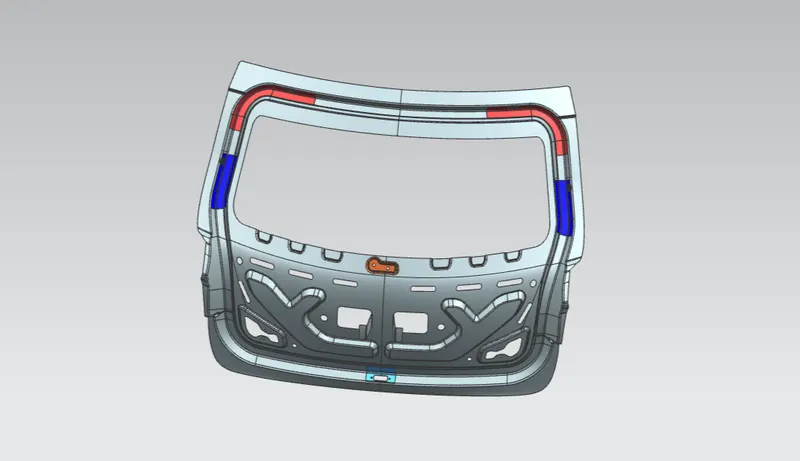
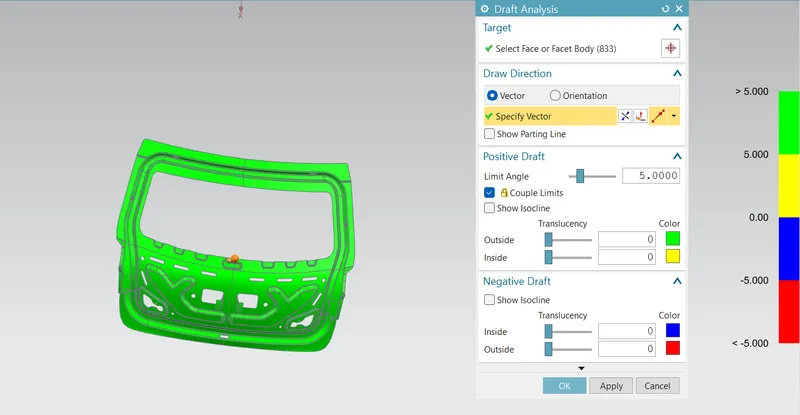
Draft analysis of inner panel is carried out through the tooling direction only. Only the green areas are acceptable and some cases yellow regions are accepted but the blue and red regions are never accepted.
The draft angle for aluminium casted panel is 2 or 3 degrees is enough but if it is steel then the angle is more than 7 degrees. In this we considered it as steel and used 5 degrees as draft angle and direction is used as tooling direction which is the deep drawn direction.
Conclusion :
Hence the back door was designed from the given styling surface and also designed the required embosses and reinforcements such as wiper motor reinforcement, Hinge reinforcement, Gas stay reinforcement and latch and striker reinforcement and its position. Draft analysis is also done on the inner panel to check the manufacturing conditions sucessfully done.
File Attachments :
- Backdoor Parts and assembly files (.prt)
- Backdoor Assembly file (.stp)