Design of backdoor
Design of backdoor
Aim: Use the provided styling surface to come up with a back door design, use appropriate design methodologies, and provide the necessary reinforcements and embosses.
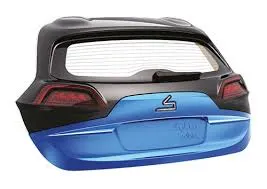
BackDoor is also known as Tailgate
A tailgate is a door at the Back of a truck or car, that is hinged at the top so that it opens upward.
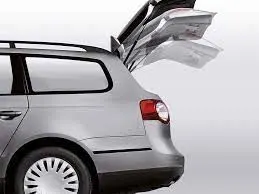
Some people use the terms "liftgate" and "tailgate" interchangeably. These parts are actually different, though. You lift a liftgate upwards, while you lower a tailgate. A tailgate is lowered for loading or unloading. Tailgates are found on pickup trucks and on a few SUVs.
What Is A Liftgate And Why Is It Important?
If you have a Toyota SUV, crossover, or hatchback sedan (like the 2013 Prius V 3), your vehicle has a liftgate.
- What a liftgate is
- The components of a liftgate
- The difference between a liftgate and a tailgate
- What to do if your liftgate fails
What Is A Liftgate?
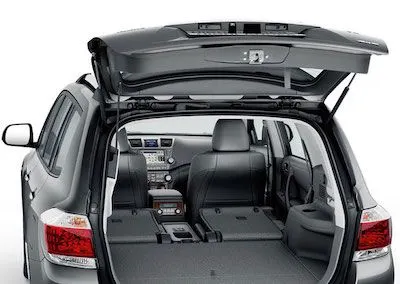
If you walk to the rear of a Toyota SUV, crossover, or hatchback sedan, you'll see a large door covering the rear of the vehicle. That's the liftgate. There are two types of liftgates:
- Power liftgates: Power liftgates are motorized liftgates that open and close electrically. You can open a power liftgate by pressing a button in the car, on the key fob, or on the liftgate itself.
- Manual liftgates: Manual liftgates are not motorized. Rather, they're lifted and supported by two lift cylinders (also called gas springs or liftgate struts). Manual liftgates can't be opened remotely. You need to physically engage the liftgate handle to open a manual liftgate.
The Components Of A Liftgate
A liftgate is a large part, but it has a pretty simple and straightforward design. We'll talk about the components of a Manual liftgate and a power liftgate.
The Components Of A Manual Liftgate
Let's talk about the main components of a manual liftgate:
1. Liftgate
The liftgate is the actual door covering the rear of the vehicle. The part is sometimes described as a panel, but most liftgates are supplied with:
- Built-in handles and lock mechanisms
- Built-in lights and wiring
A liftgate is a part of the vehicle's body, so it should last the lifetime of the vehicle. Once in a while, a liftgate gets damaged (usually from an accident) and needs replacing.
2. Lift Cylinders
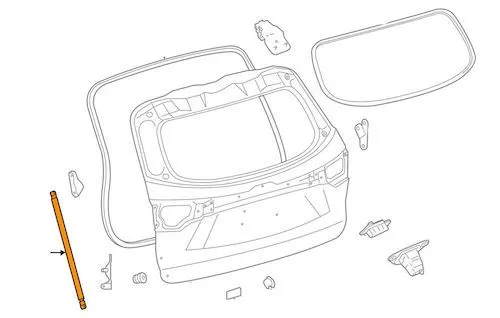
The lift cylinder definition is straightforward. A lift cylinder slender tube with a piston rod. Compressed gas powers the rod. They are very similar to shock absorbers but much smaller. There's one lift cylinder placed on each side of the liftgate. When you open the liftgate, the lift cylinders help lift the liftgate, and they support it in the open position. Lift cylinders look like simple parts, but they're actually quite strong. The gas springs can support a lot of weight.
If one of your lift cylinders fails, it's a good idea to replace both lift cylinders. It's to keep the hydraulic strength even on both sides. Luckily, lift cylinders are inexpensive.
One of our best sellers is this OEM lift cylinder for the Toyota Highlander. It's available at dealerships for about $60, but you can get it from us for just over $46.
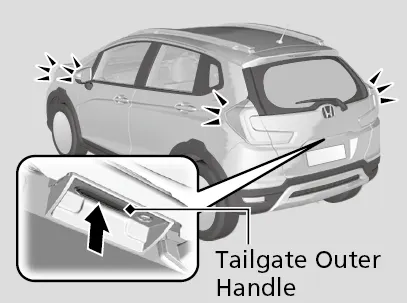
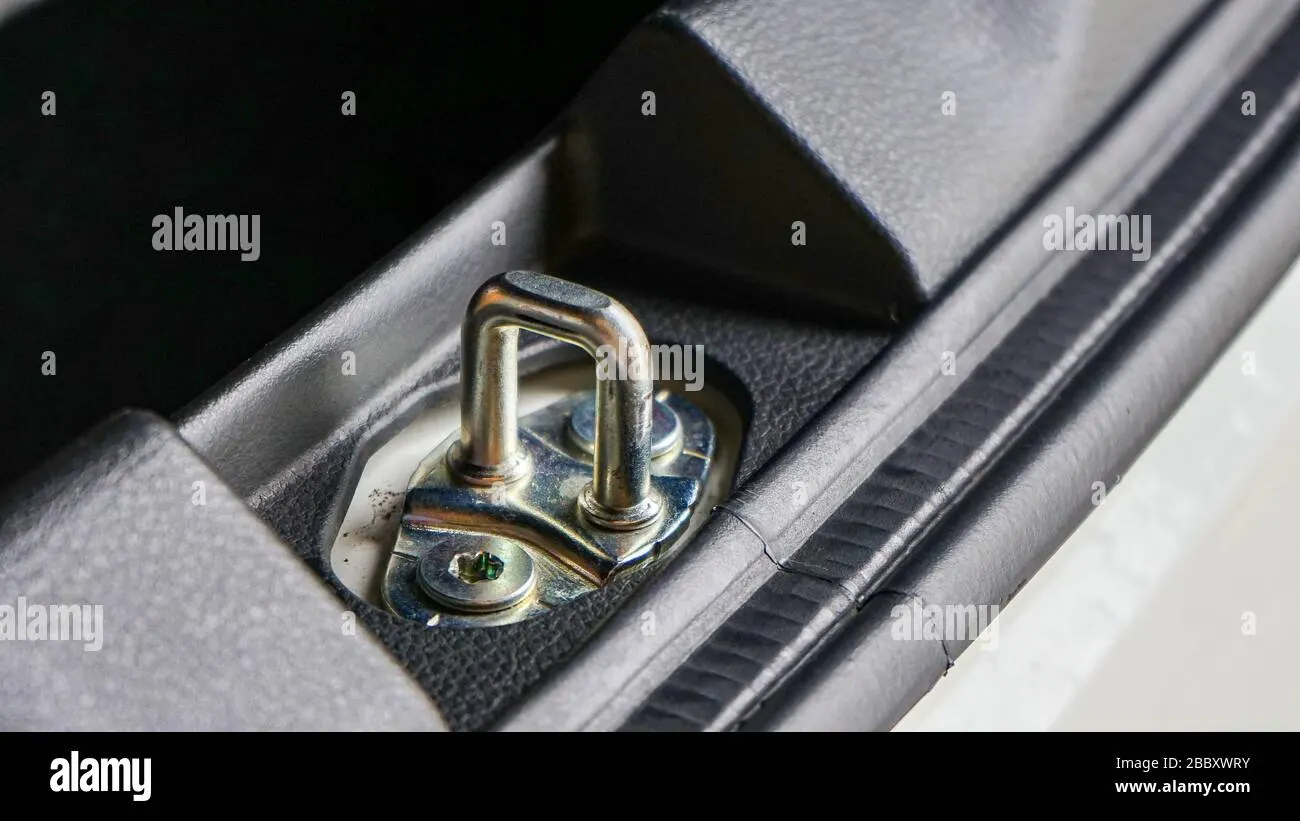
3. Handle And Lock Components
You can't open a manual liftgate without a handle. Also, all liftgates come with a lock to keep the vehicle secure.
4. Hinges, Brackets, And Other Hardware
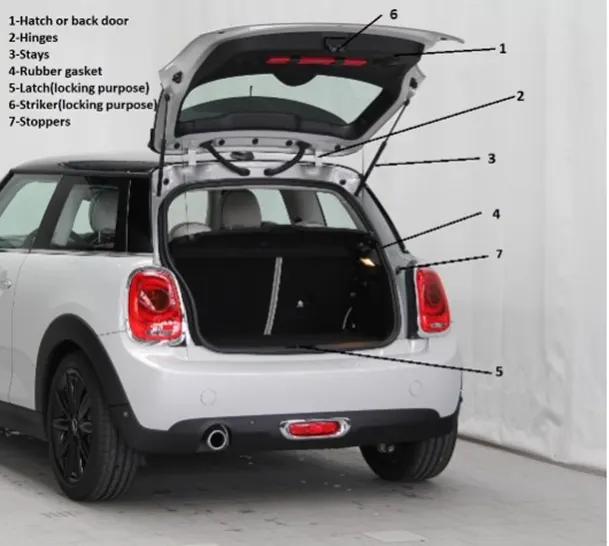
Your liftgate assembly also includes hinges, brackets, and other hardware. There are hinges at the top of the liftgate. You can find brackets attached to the lift cylinders, securing them in place.
The Components Of A Power Liftgate
If you're wondering which components on a power liftgate work together, I have the answer for you. A power liftgate assembly is more complicated than a manual unit. You'll find the following components in a power liftgate:
1. Liftgate
The liftgate is the actual door covering the rear of the vehicle. It's a panel with:
- Built-in lights
- Built-in lock mechanism
- Built-in wiring
2. Liftgate Motor
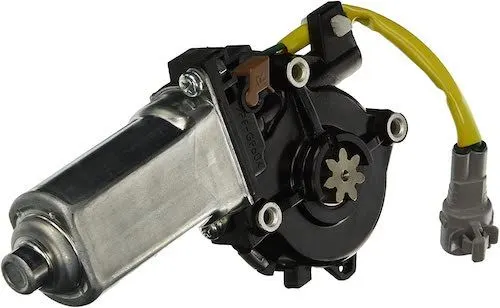
The liftgate motor is located on one of the rear body pillars at the side of the liftgate. It has a moving arm that pushes up and pulls down the liftgate when activated. The motor works with the liftgate latch to ensure that the liftgate closes gently.
The Difference Between A Liftgate And A Tailgate
Some people use the terms "liftgate" and "tailgate" interchangeably. These parts are actually different, though. You lift a liftgate upwards, while you lower a tailgate. A tailgate is lowered for loading or unloading. Tailgates are found on pickup trucks and on a few SUVs. Liftgates are very common on SUVs, crossovers, and hatchback sedans.
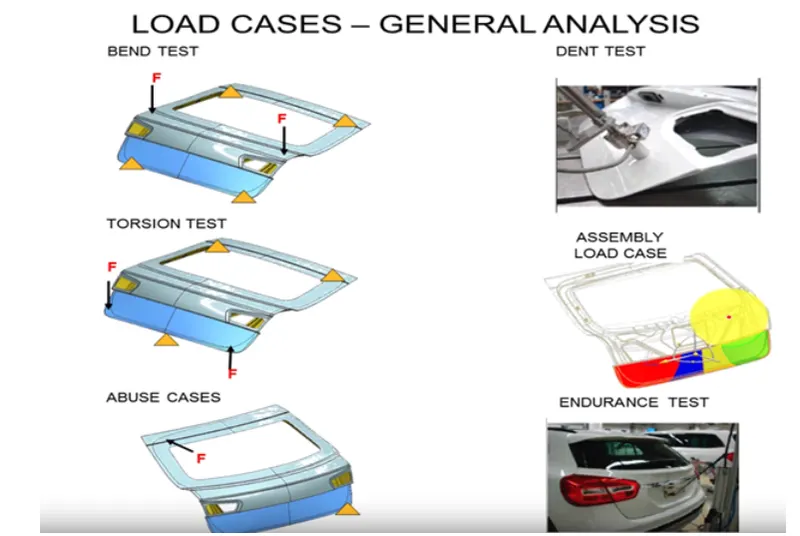
DESIGN CONSIDERATION WHILE DESIGNING BACK DOOR
• Rear visibility criteria
• Luggage volume
• Crash Analysis
• Bend Test
• Dent Test
• Torsion Test
• Endurance Test
• Abuse Case
• Assembly Load Case
Manufacturing processes required for Back Door-
The followings are some of the processes which are used to produce back door
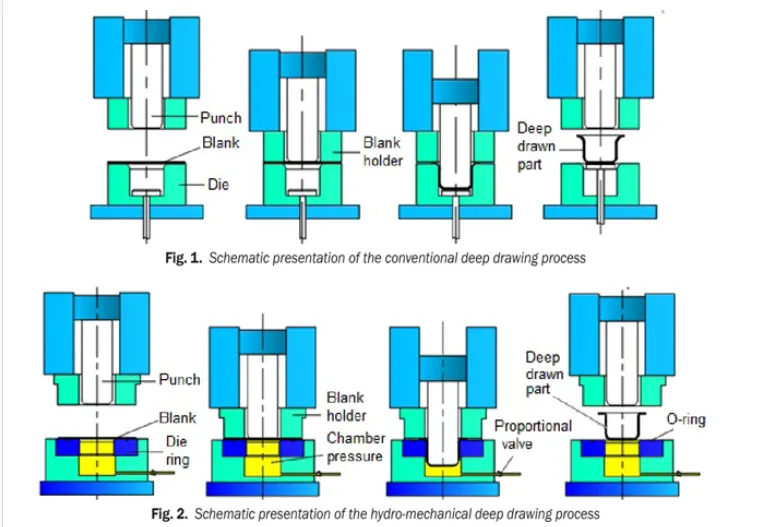
- Deep drawing-
The deep drawing process is a forming process that occurs under a combination of tensile and compressive conditions. A flat sheet metal blank is formed into a hollow body open on one side or a hollow body is formed into a hollow body with a smaller cross-section.
In the automotive industry, deep drawing is usually carried out using rigid tools.
- Hemming-
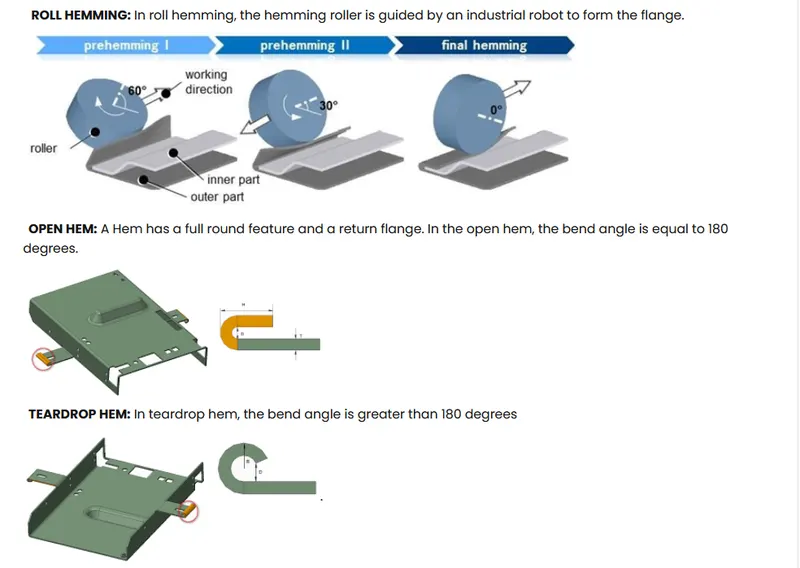
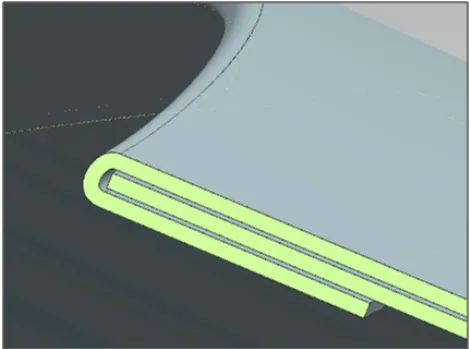
In conventional die hemming, the flange is folded over the entire length with a hemming tool. In roll hemming, the hemming roller is guided by an industrial robot to form the flange.
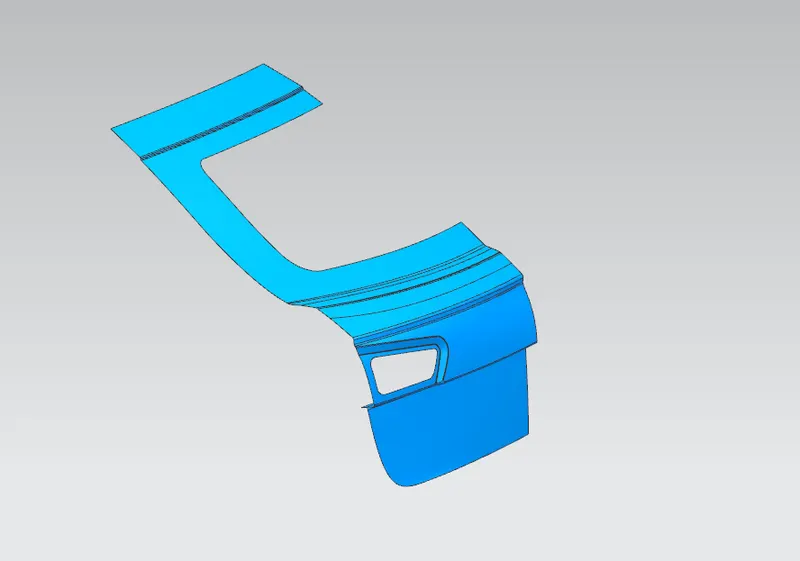
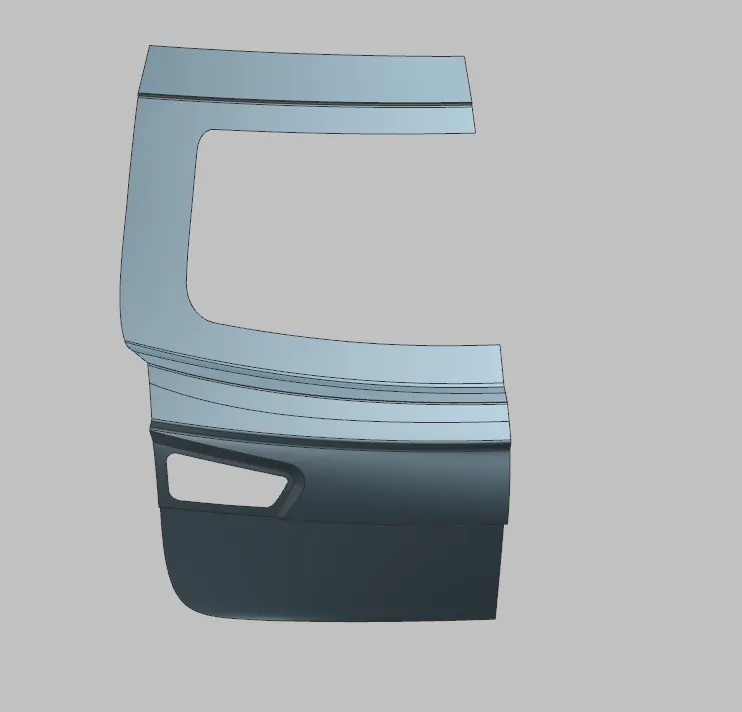
Reference Class A surface has been Given Back Door Outer Panel
OUTER PANEL:
The class A surface of the outer panel is provided to us by the styling team. From this surface, we have to develop the inner panel and all the other parts and finally assemble them.
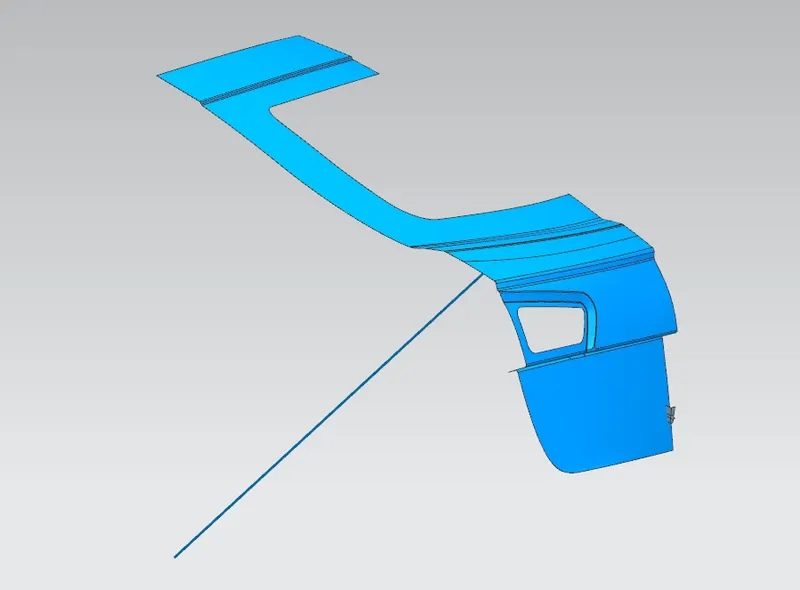
Tooling Direction
The Tooling Direction is basically the direction that the mold pulls apart. The mold is built in two separate pieces, basically. You have a Cavity side and you have the Core side. The Core pulls apart from the Cavity and that's the Dyeline or the Tooling Direction.
INNER PANEL:
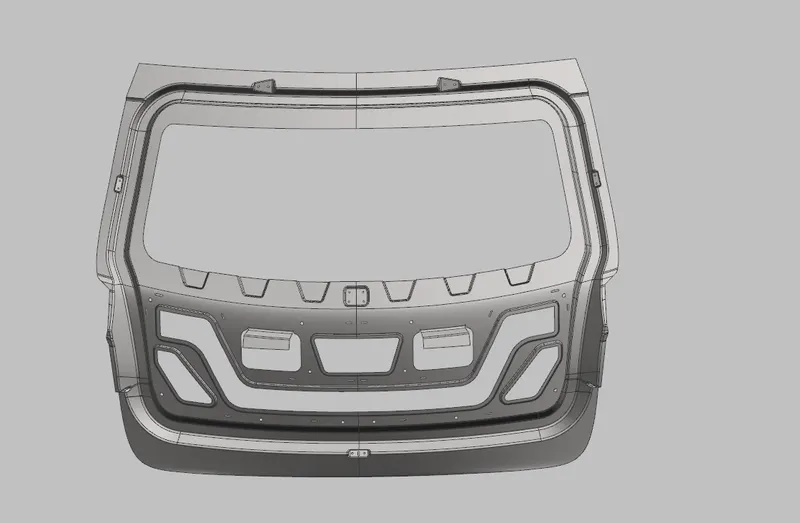
Considering the class A surface as a reference we have to create the inner panel of the backdoor. The most important part of the inner panel is the sealing flange which decides how the backdoor will be mounted at the rear side of the car. It also seals the rear side of the car and prevents the entry of dust and water from entering inside the car. The width of the sealing flange should be at least 25mm.
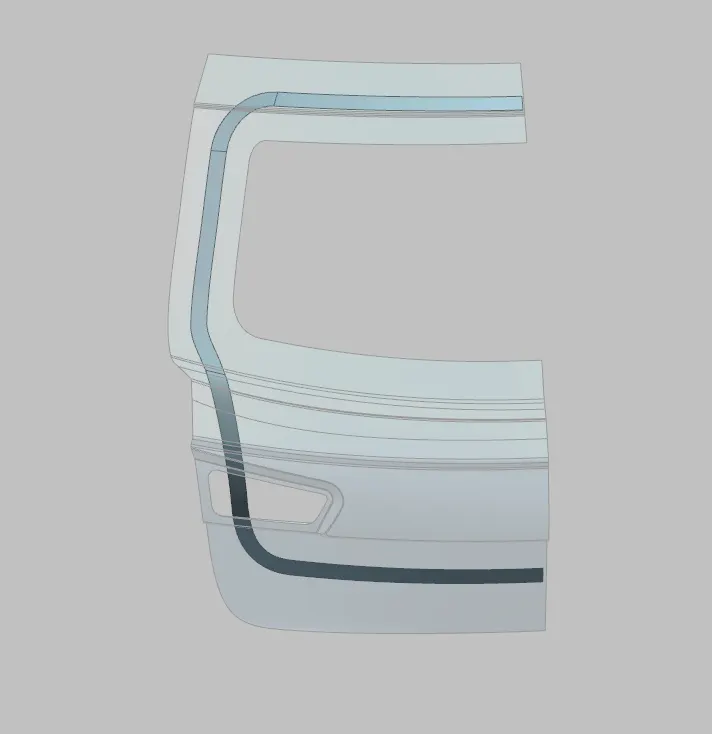
SEALING FLANGE
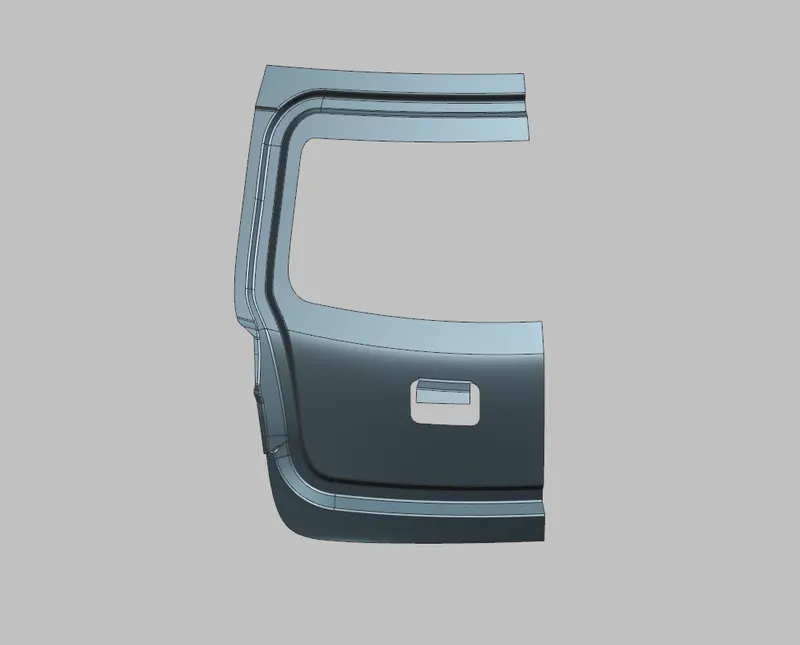
Embosses and Cut-Outs:
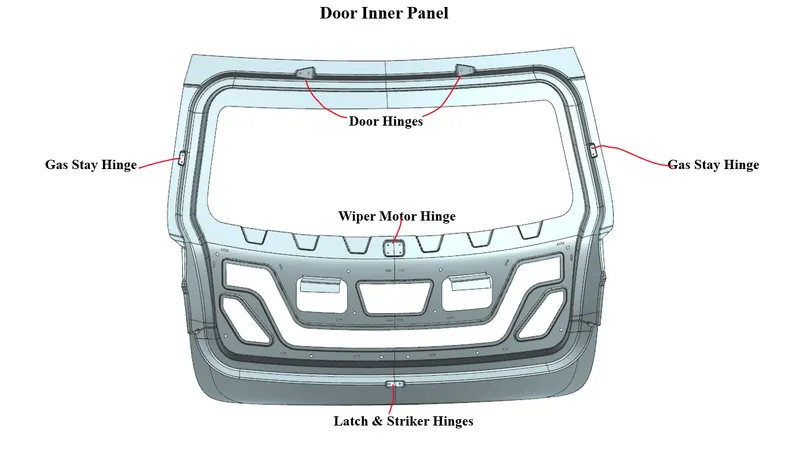
The embosses are provided in the inner panel for strengthening the part and also to dissipate the forces in case of a rear collision to the outside of the car. The cutouts are basically access holes for the fitment of the wiper motor and latch and striker motor. These are fitted mainly after the assembling of the inner panel with the outer panel. Sometimes holes are also provided in the panel to maintain the CG of the panel.
Emboss:
- Sheet metal embossing is a stamping process for producing raised or sunken designs or relief in sheet metal. This process can be made by means of matched male and female roller dies or by passing a sheet or a strip of metal between rolls of the desired pattern.
-
Embossing is done by pressing a sheet of per into a female die, Which has a design etched into it. This is usually done with a male counterpart underneath the paper so that the two and the design are transferred to the paper.
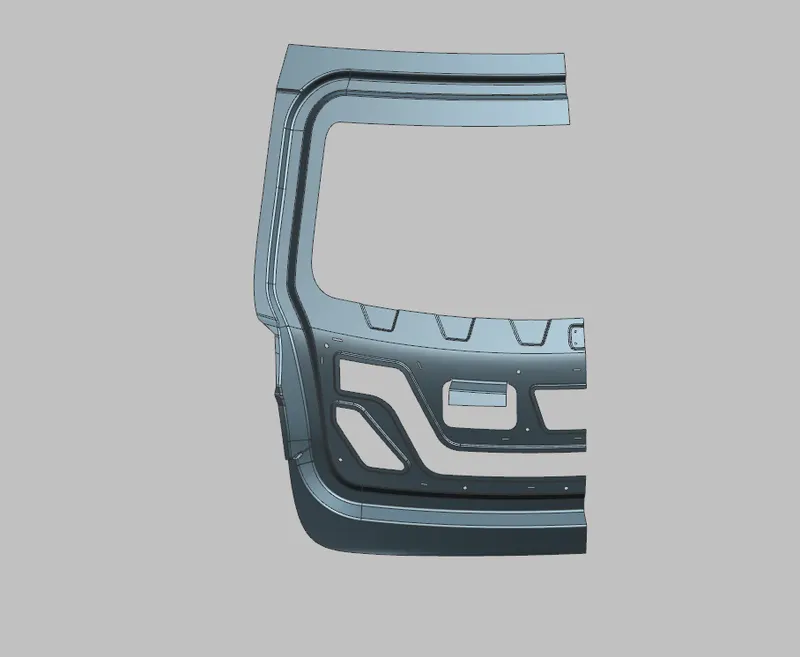
Force Distribution:
When the car hit the rear end, the force which acted should react outside. The Y/v emboss which is helps to move the force to the outer end.
Extension in Inner Panel
The inner panel is mainly fixed to the outer panel by the process of hemming but still, there will be a rattling noise. So to avoid that extensions are created in the inner panel which is fixed to the outer panel by applying a mastic seal. While designing make sure to give a 4-5 mm distance from the outer panel so that a mastic seal can be applied in that area.
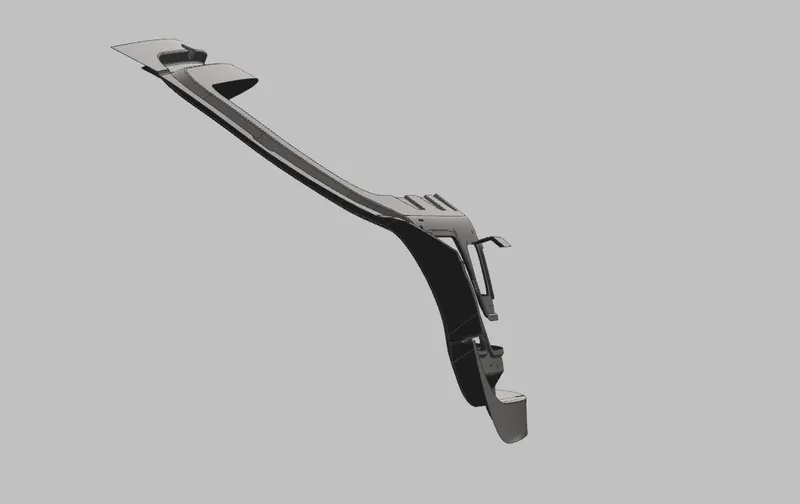
Extension in Inner Panel
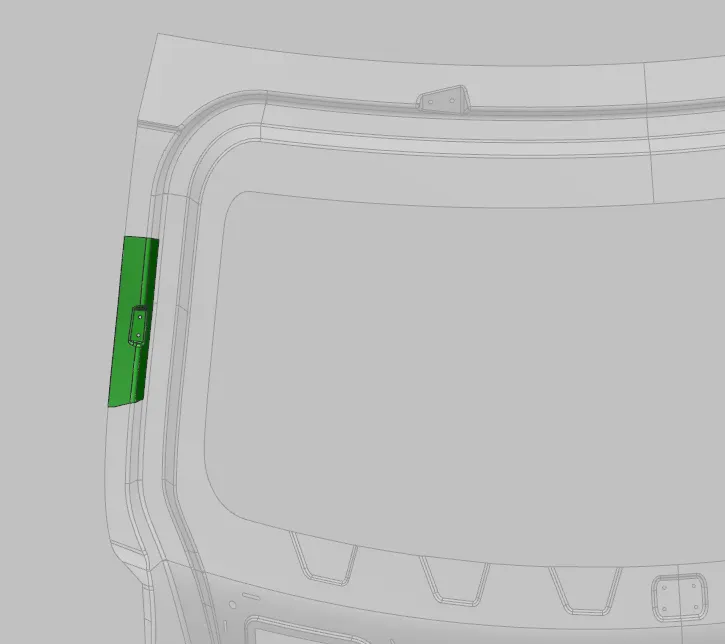
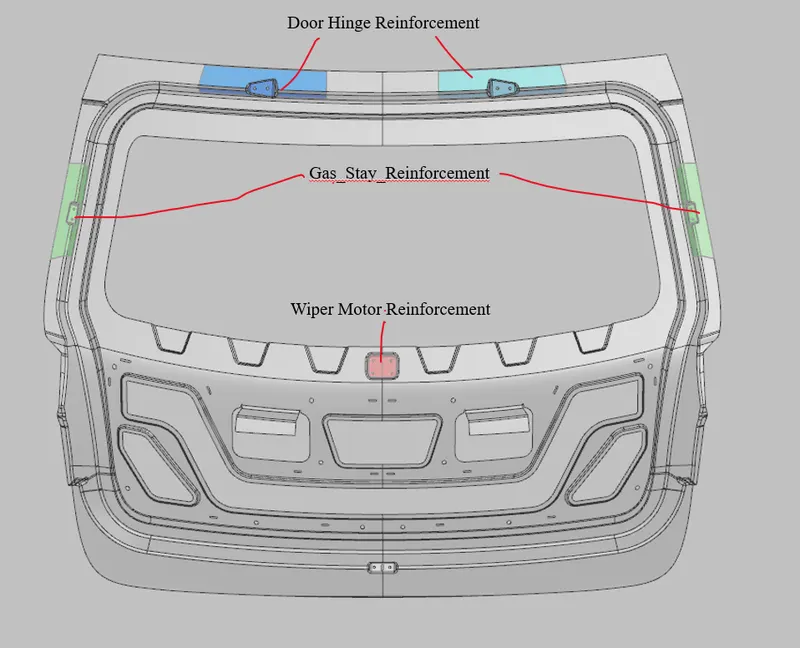
A door Hinge is created to attach the door to the Car and a Gas Stay Hinge is for open and close movement of the door and the wiper motor hinge is where the wiper motor is placed.
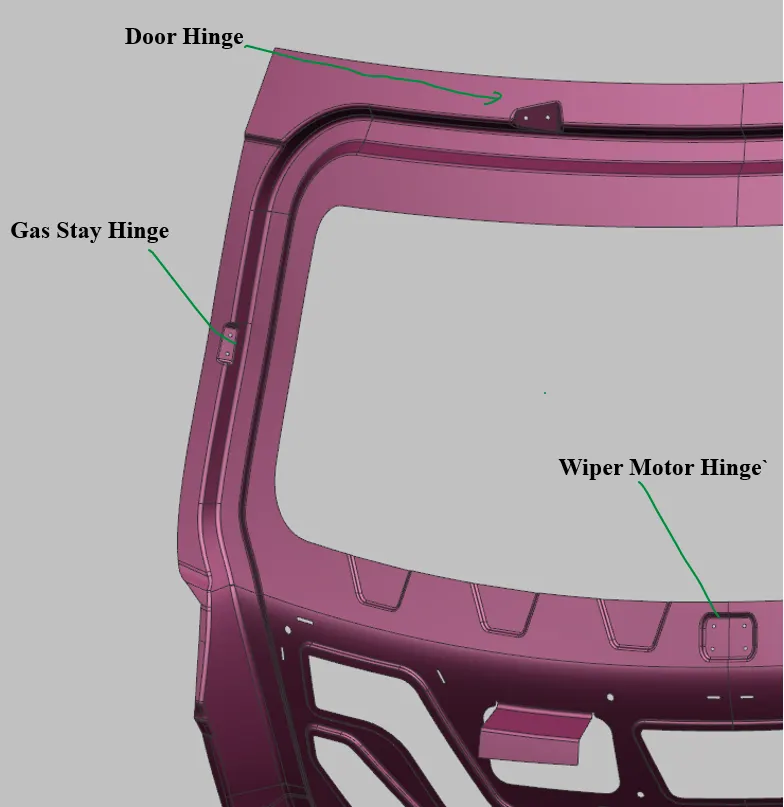
Tooling Direction
While designing there are some considerations to be implemented in the inner panel
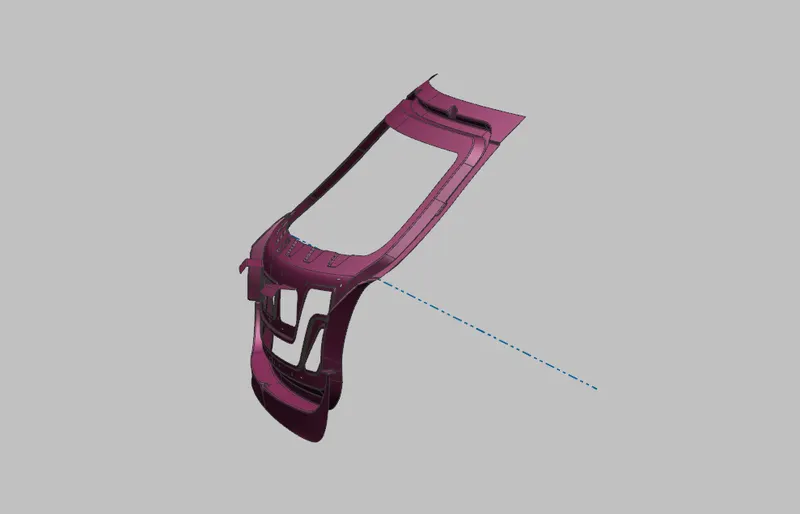
• Tooling direction- Tooling direction will ensure the proper manufacturing of the inner panel while the deep drawing process. So, while designing flanges we are going to use tooling direction as a vector.
- The sealing flange should be such that it will perpendicular throughout the length to the sealing rubber structure which will confirm the perfect closing of the back door.
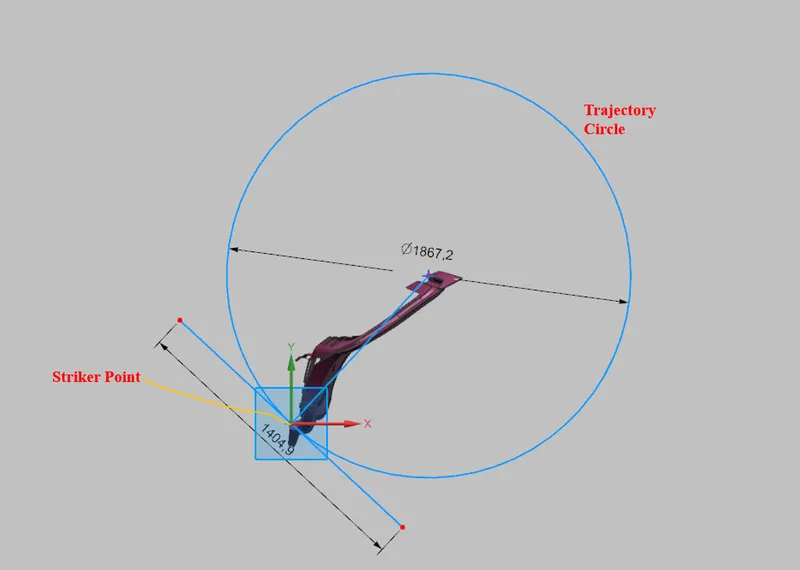
- The trajectory of the opening and closing of the door should be designed in such a way latch and striker are always perpendicular to each other as shown.
- The fitment of latch and striker plays an important role in the designing of the backdoor.
- At first, the hinge is fixed, and by taking the center point of the hinge axis and the center point of the latch, draw a circle. the center of the latch should
be perpendicular to the circular trajectory.
The thickness Given to the Inner Panel of the Door is 0.75mm
Hinge Mountings:
A door mounting method for an automobile, comprising: a door hinge-attaching step of preparing door hinges each comprised of a body-side hinge arm, a door-side hinge arm, and a hinge pin which connects said hinge arms to each other for rotation relative to each other, and attaching said body-side hinge arms to an uncoated automobile body, a temporary door-fixing step of temporarily fixing uncoated doors to said door-side hinge arms of said door hinges.
Hinge Reinforcement
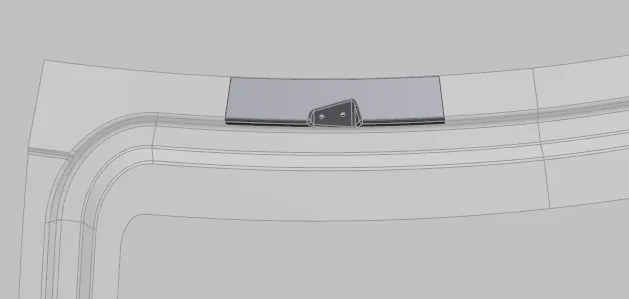
Hinges are essential that allow doors to pivot on one edge as open as they open and close. They are found on virtually all doors. It is a mechanical bearing that connects two solid objects, typically allowing only a limited angle of rotation between them.
GAS STAY REINFORCEMENT:
Gas Stay is that part that helps the backdoor to stay in the open position. It is either motor-operated or manually operated.
It is used to lift up the Tailgate.
They are two types of Gas stay reinforcement is there. That they are
• Manual System
• Power lift system
• Manual system
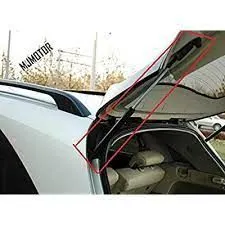
This mechanism is mostly used in Indian cars. It is operated man by on his own.
• Power Lift System:
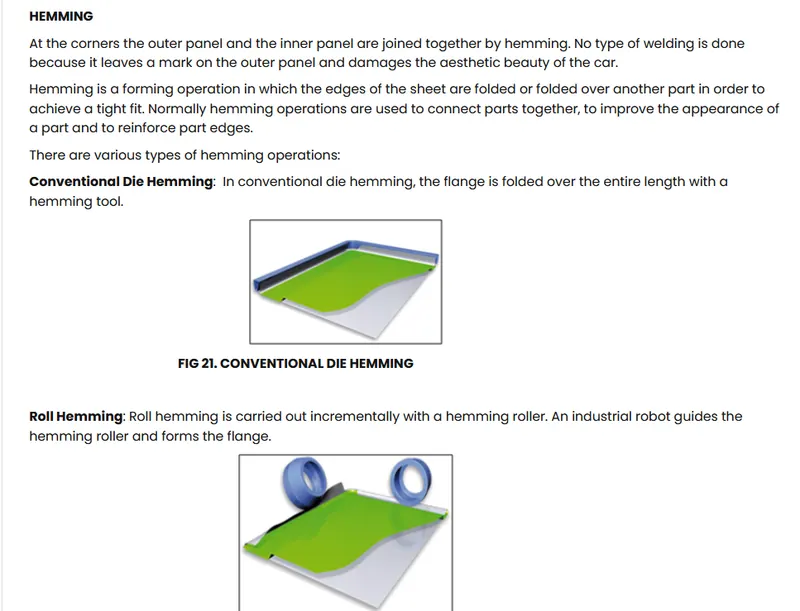
Hemming has been done on the Inner and Outer Panel of the Door between that 0.2mm gap is provided for joining with mastic sealants and the Door outer Panel
Force distribution in impact situation-
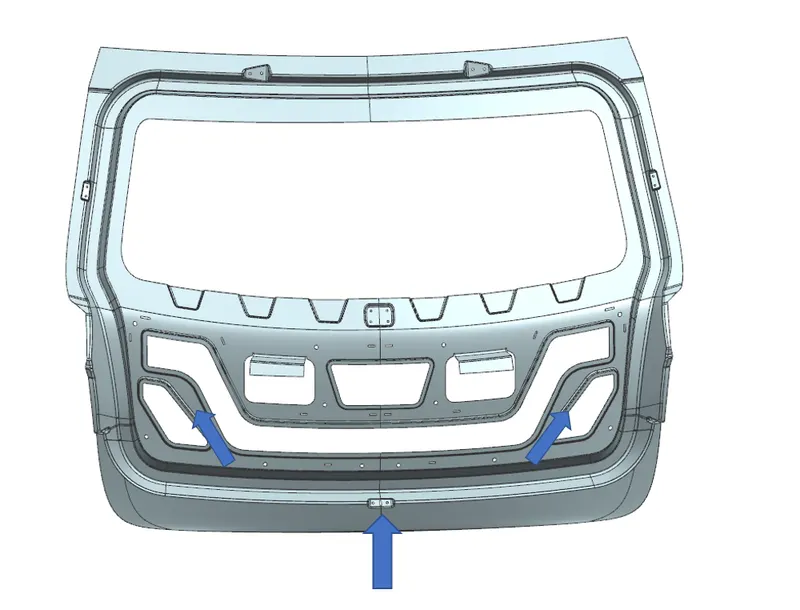
The back door design should be such that it will safeguard passengers and luggage on the rear side. Creating embosses on the back door inner panel will give extra strength to the whole assembly in impact situations.
V or Y shapes embosses are more effective for this situation because force will flow away from the center.
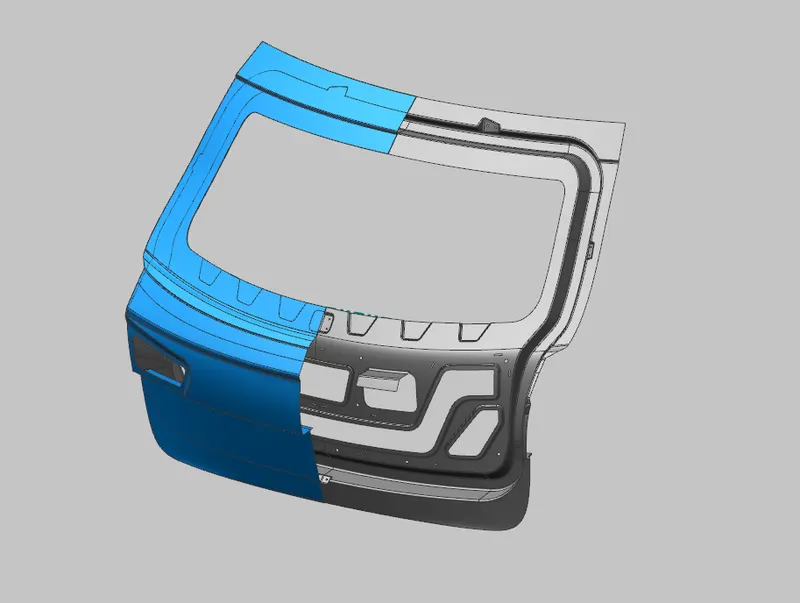
After Assembling
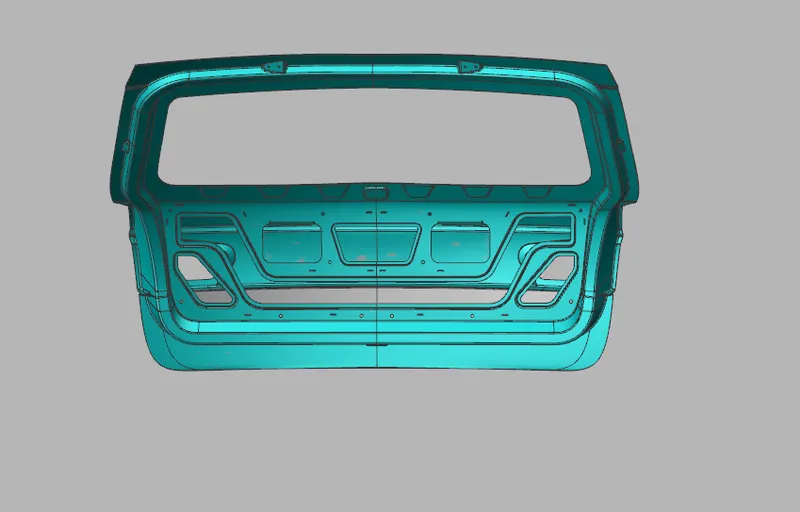
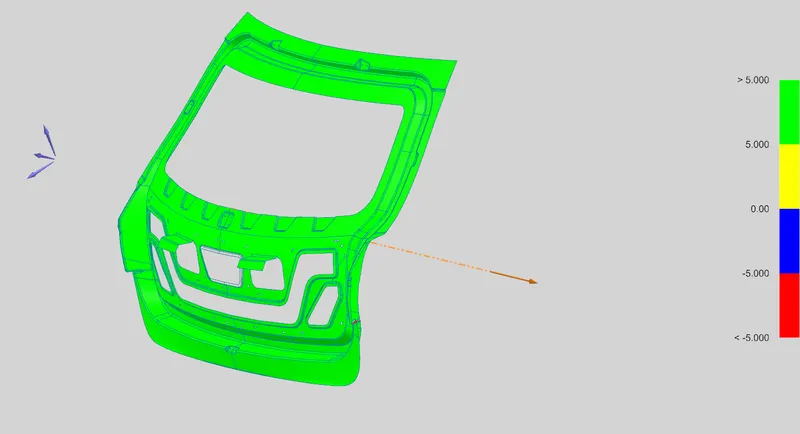
Draft analysis of Back Door Inner Panel
The Draft Analysis command enables you to detect if the part you drafted will be easily removed. This type of analysis is performed based on color ranges identifying zones on the analyzed element where the deviation from the draft direction at any point corresponds to specified values.
Conclusion
• Using input class A surface Back Door Assembly has been created with the help of NX-CAD.
• Reinforcements for Hinge, Gas stay, Wiper motor & Latch-striker to provide extra strength to the inner panel.
• Inner panel is found ok in Draft analysis.