Design of backdoor
BACKDOOR DESIGN
AIM:
- The aim of the project is to design the body in white parts of the back door of a suv vehicles.
- Along with designing the reinforcement for hinges, gas stay, latch and wiper motor for the back door.
INTRODUCTION:
- A door is a hinged part which is used for entry and exit of the vehicles. Back doors are one of the type doors of the vehicle which are located next to the passenger seat which provides access to the luggage compartment.
- In most of the cars, these back doors are operated with the help of gas stay which in turn reduces the effort required to lift open the door. Some luxury cars have powered backdoor which in turn is driven by an electric motor.
- This kind of system is also called a powered trunk lid system. Hatchback or station wagons are sold as 3 door or 5 door models. In this case, the rear hatch is classified as door this is because it enters the passenger compartment.
- The naming is mainly used in Europe countries. In case of safety, the back door designed should meet the safety requirement for the rear collision.

TYPES OF BACK DOOR:
- There are two type of back door:
- TAIL GATE
- BARN DOORS.
TAIL GATE:
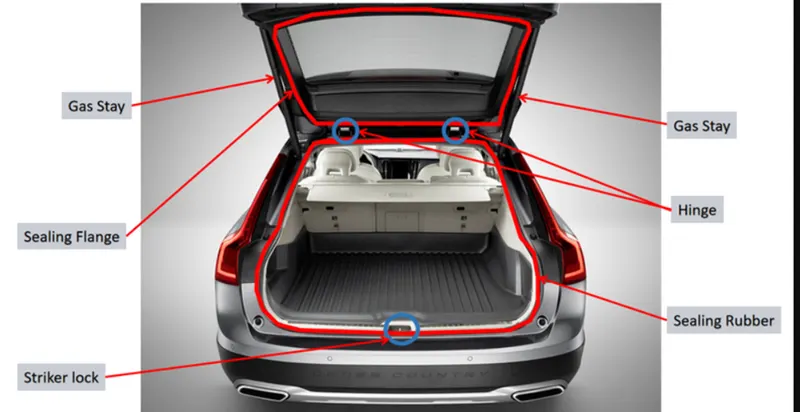
- Tail gate type of back doors is used in a station wagon, pickup truck and some of the sport utility vehicles. Today’s modern cars use top-mounted tailgating systems which are both powered and also gas stay supported.
- These top mounted tailgates provide greater rear visibility compared to side-mounted or bar doors which have canter pillars in it.
BARN DOORS:
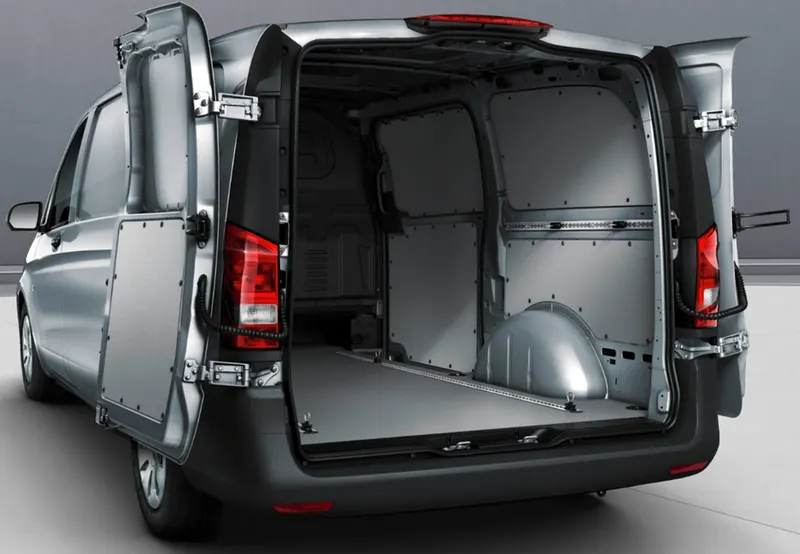
- Barn doors are the one which is used in the van type MPVs, SUVs, pickup truck vehicles. These side-mounted doors or barn doors are a lot easier compared to top-mounted doors.
- These doors are generally smaller in size and can be easily accessed. These doors are more convenient for the goods handlers for long pipe and lengthy components where one door is kept open.
- These doors also save accidental head impacts. It is a lot easier to load and unload items in the side-mounted doors.
COMPONENTS DESIGNED IN BACKDOOR;
- Back door outer upper panel.
- Back door outer lower panel.
- Back door inner panel.
- Hinge reinforcement.
- Gas stay reinforcement.
- Wiper motor reinforcement.
- Latch reinforcement.
PROCEDURE;
1.INPUT STYLING SURFACE:
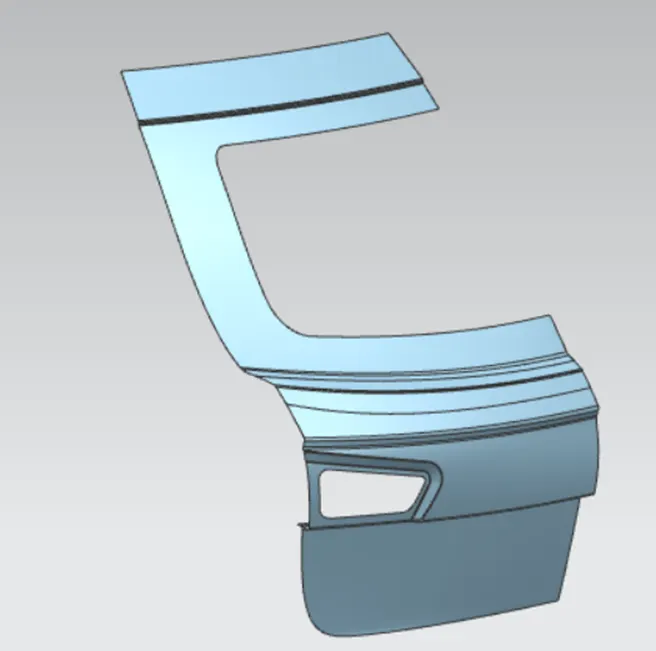
- The styling surface is the surface which is provided as input in order to design the back door as per requirement of the customer.
- The surface quality of the above class A surface was improved at the required positions using bridge curve and through curve mesh feature to improve the surface quality and then make the outer and inner panel of the back door panel.
BACK DOOR OUTER PANEL:
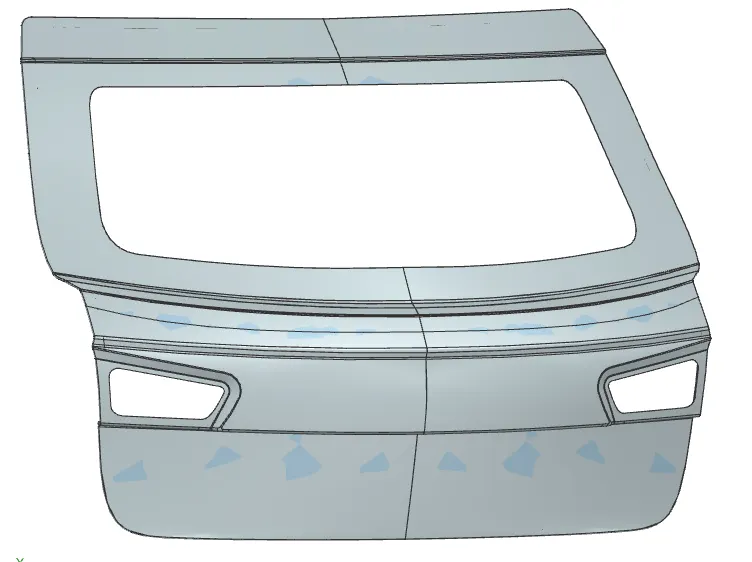
- The outer panel is the styling surface of the back door. It is a source of the design of other parts of the backdoor.
- It gives more aesthetics to the car. Its thickness is in the range from 0.65-0.75mm.
2.BACK DOOR INNER PANEL:
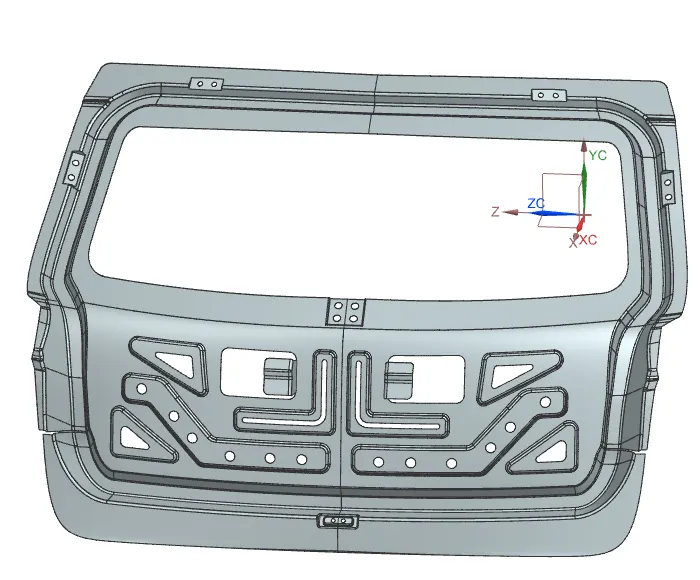
- The inner panel provides strength to the back door. There are many cases where the inner panel subject to stress due to frequent opening and slamming.
- These stress factors are compensated by features like embossing and reinforcements. It also has a thickness range from 0.65-0.75mm.
- In this project the tooling axis is made by making two lines touch the opposite ends of the styling surface and then a bisecting line is drawn between these two lines to determine the tooling axis line.
MASTIC SEALENT FLANGE:
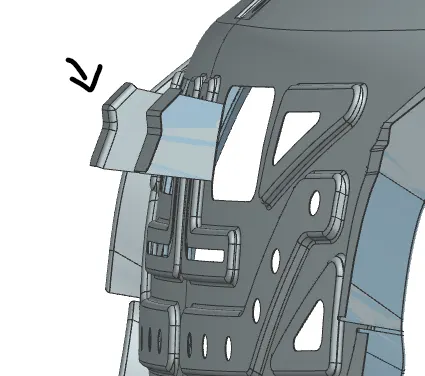
- the outer panel to the inner panel a mastic extension flange is protruded towards the outer panel direction so that mastic can be applied on it and then the outer panel and the inner panel will have more strength in the middle portion and stick with each other firmly.
EMBOSS SHAPE:
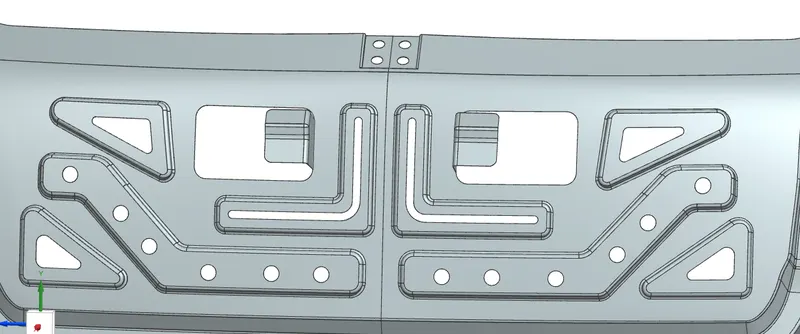
- An embossing is a metal forming process in which a high pressure is applied on a die to make a imprint on the working surface.
- The imprint can be raised or sunked. In this process it is assumed that the metal thickness remains the same while embossing.
- Throughout the inner panel we provide different embosses. We can increase the stiffness of the inner panel through these embosses.
- The shape and size of the embosses also determines the direction of the force distribution resulted from frontal collision. The force should be always distributed away from the passengers.
3.HINGE EMBOSS & REINFORCEMENT:
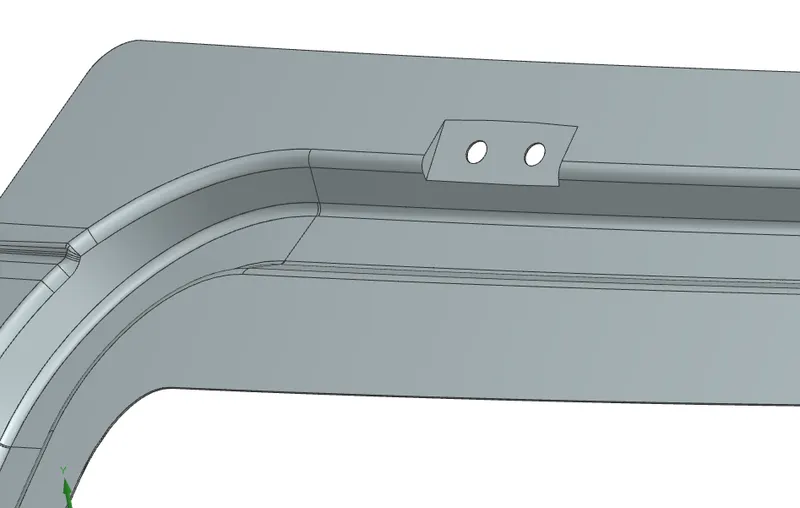
- Hinge enables the opening and closing of the back door. One end of the hinge is fixed on the backdoor and the other end on the roof on both sides. Hinge can be placed outside or inside the backdoor.
- The position of the hinges are determined by the midpoint of axis of the hinges called as hinge axis point, Which should be aligned with latch and strikes through the the trajectory of the back door opening and closing.
- If the striker is exactly perpendicular to the trajectory then the hinge can be fixed accordingly on the inner panel.
- The Hinge reinforcement will be placed on the embosses of the hinges which will enable it to fix the reinforcement firmly to the back door at required position.
4.GAS STAY EMBOSS & REINFORCEMENT:
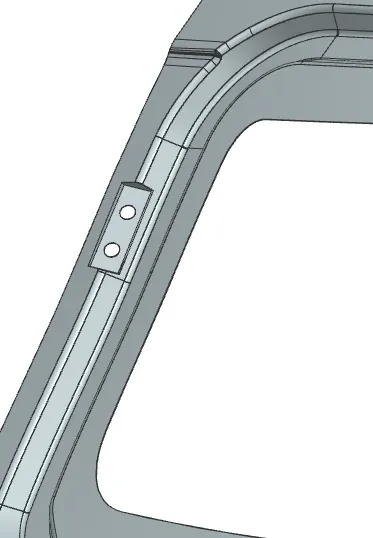
- Gas stay is the component which is used to lift and lower the back door automatically with the help of pressing a button. This is placed on both the left and right side of the back door.
- Gas Stay reinforcement are designed to provide strength to the region where the back door will get opened and closed with the help of gas stay rods.
5.WIPER EMBOSS & MOTOR REINFORCEMENT:
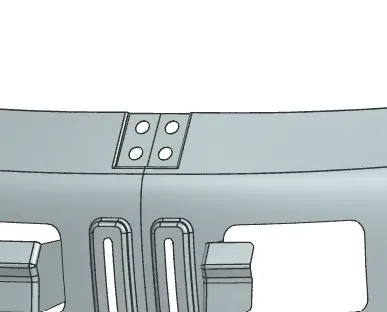
- In order to clean the glass of the back door this mechanism is used on the back door. The wipe motor emboss is designed at the middle of the back door where the wiper motor will be placed on the back door.
- It is placed at the middle portion of the back door to provide strength in this region.
6.LATCH EMBOSS & REINFORCEMENT:
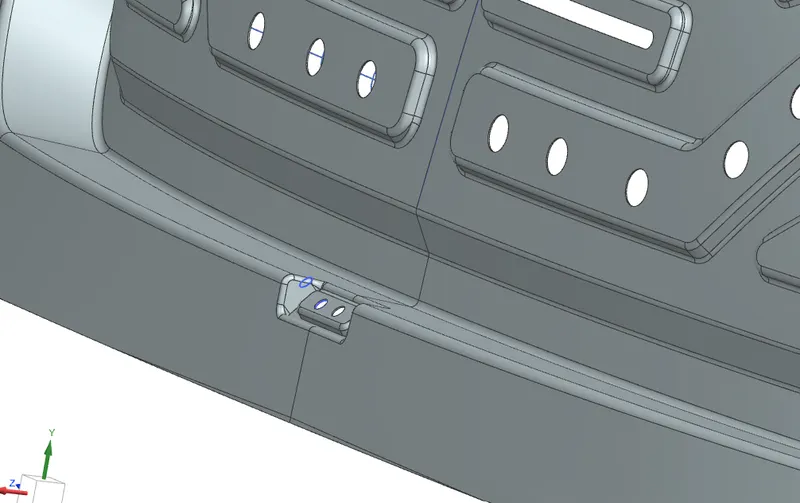
- In order to place the latch at correct position a trajectory is made so that the back door is opened and closed following a trajectory without facing any obstacles.
- A circular sketch is drawn first to and which will show the trajectory of the path that the back door will follow while opening and closing, the latch position will be perpendicular to this circular trajectory at all the positions of the movement of the back door.
HEMMING :
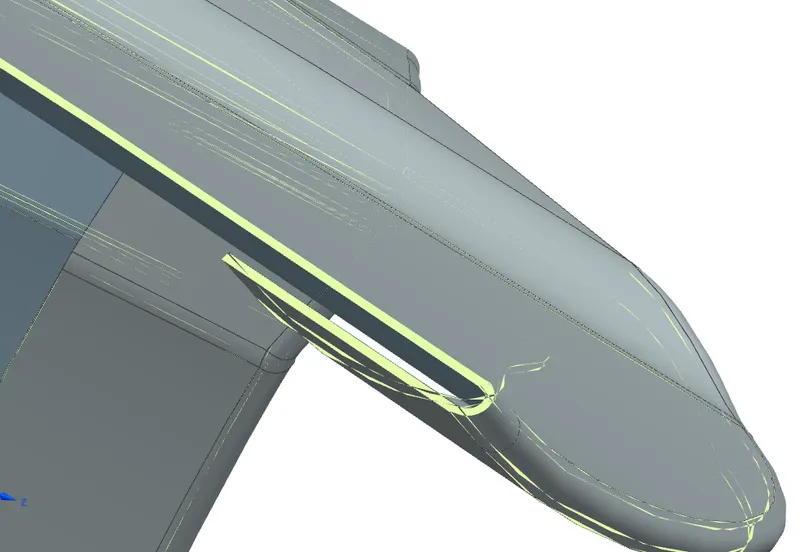
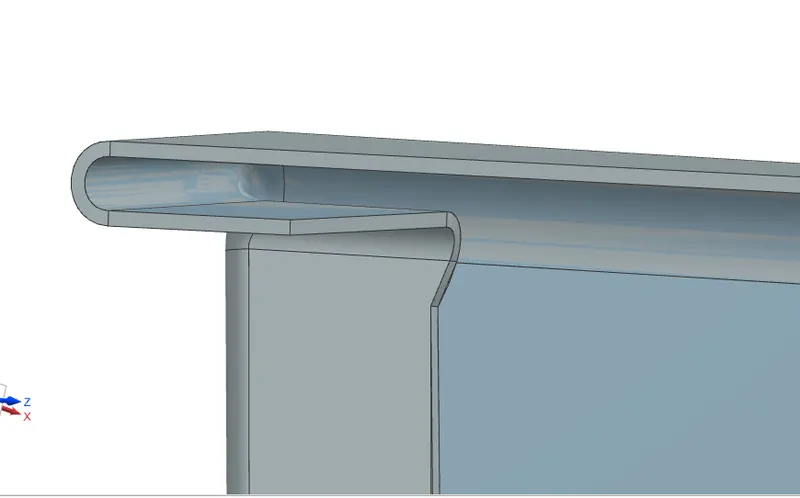
- It is the process of bending/folding the flange of the outer panel over the inner one.
- Hemming is a sheet metal forming process in which sheets are joined by bending it usually to 180°. Automotive body panels and automotive parts such as deck-lids, trunk-lids, doors, hoods and tailgates are formed by hemming process.
- Normally hemming operations are used to connect parts together, to improve the appearance of a part and to reinforce part edges.
- In this process the surface is bend and rounded around the inside surface so that it firmly holds the inside panel. Along with this mastic solvent will also be inserted inside this region for firmly sticking the outer panel with the inner panel.
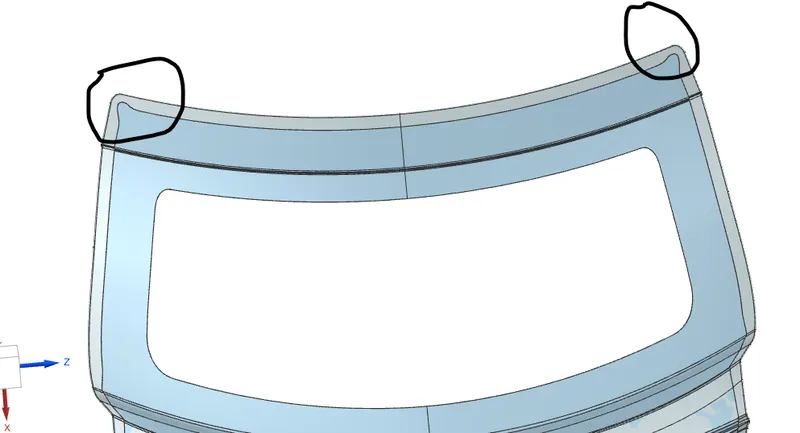
CORNER RELIEF:
DRAFT ANALYSIS:
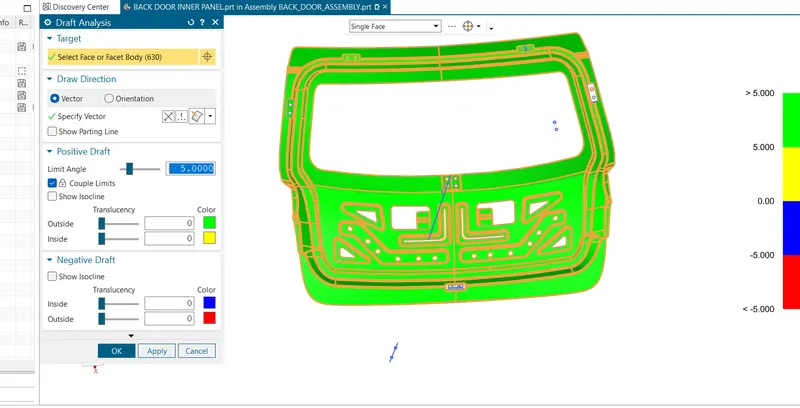
- Draft is used for providing angles or tapers on product features such as walls, ribs, posts, and bosses that lie parallel to the direction of release from the mold eases part ejection. Draught angles are designed in such a way that they will assist depart rejection.
- By doing so we have a reduced cycle time and improved productivity. Draft value for a particular part is mostly decided by the material used for making it.
- Generally, for the plastic materials draught value you are very from 0.25 degree to 2 degree.
ASSEMBLY OF BACK DOOR:
- FRONT VIEW
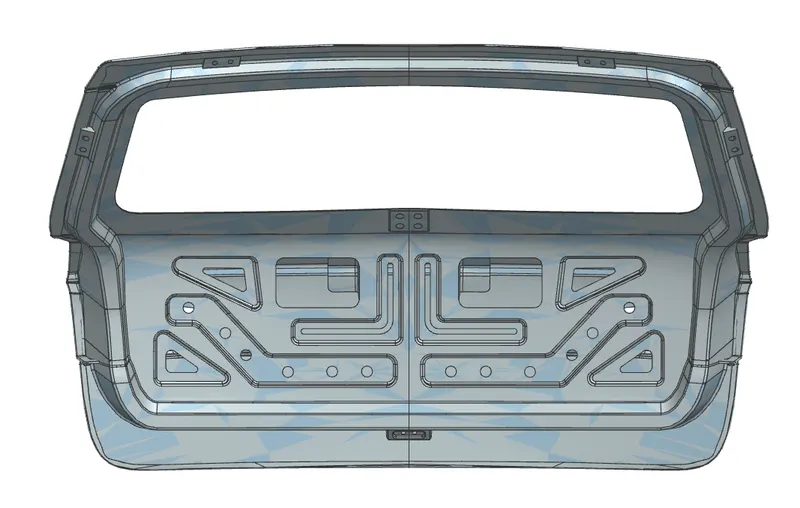
- BACK VIEW
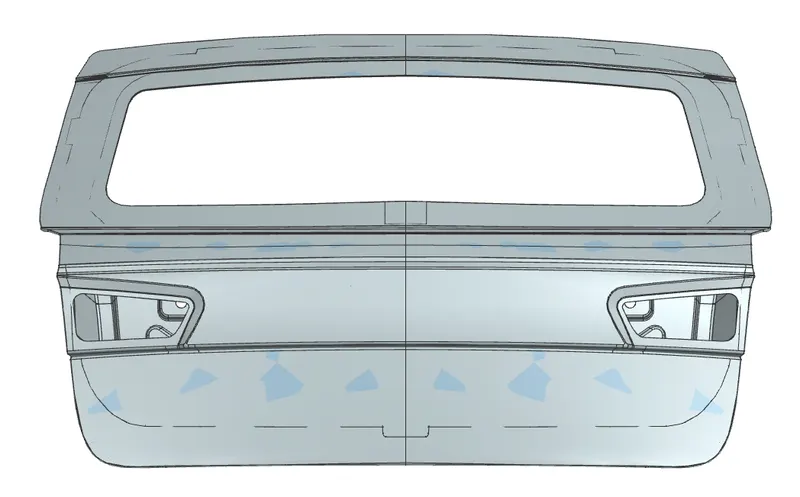
- TOP VIEW
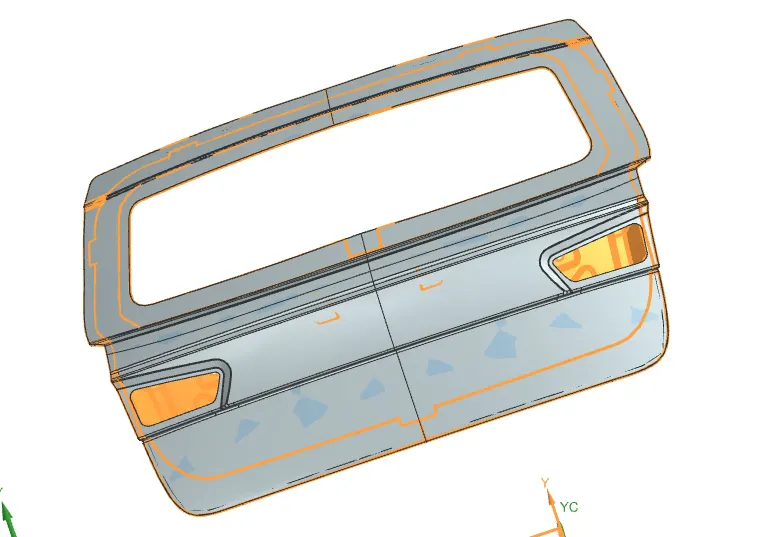
- SIDE VIEW
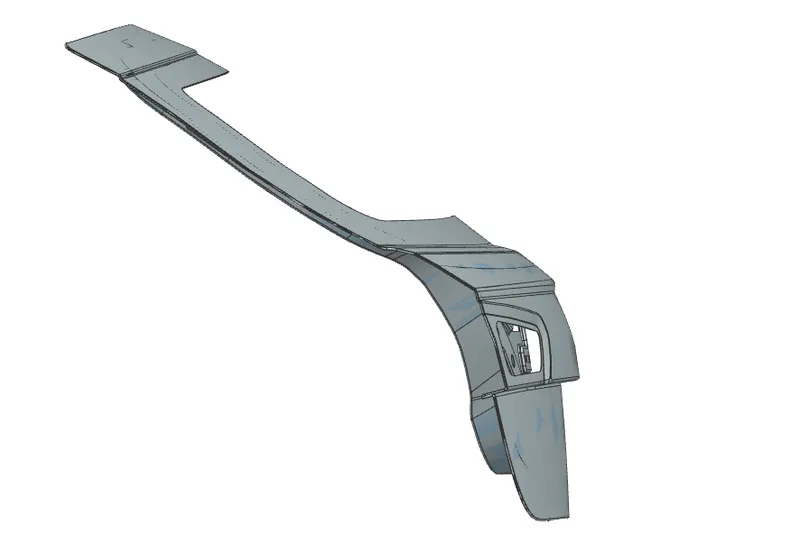
CONCLUSION:
- The back door outer and inner panel were designed with the help of the styling surface along the tooling direction.
- Draft analysis was performed on the inner panel and All the reinforcements were designed and placed at appropriate positions.