Design of backdoor
DESIGN OF THE BACK DOOR
Objective:
To design the back door with the help of provided styling surface and using appropriate design methodologies, and provide the necessary reinforcement and embosses.
About the Back Door:
The back door or tail gate is the rear part of the automobile which opens upwards, downwards or sideways to give access to luggage space or seating area and also cover the boot of an automobile. It is typically hinged to the roof and a gas stay support fixed at the body side outer to keeping the back door in open position.
Doors most often integrate glass window for visibility from inside the car to back.
Car doors may be manually operated or with power assist supplied by the vehicle
Most vehicle doors are secured closed to the vehicle body with latches that may be locked to prevent unauthorized access from the exterior. There are a variety of car door locking systems. Door locks may be manually, or automatically operated, and may be centrally or individually operated. Also, they may be operated by remote control, with the transmitter often integrated into the main vehicle access and a key for the ignition.
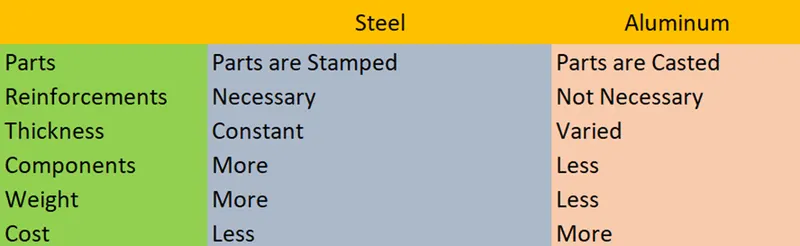
The Selection of the material will be depends upon the overall cost and weight reduction. For the back door, steel and aluminum is used.
The Main advantages of aluminum over steel is that the density of the aluminum is very less as compared to steel, so as to reduce the overall weight of the car. With using of aluminum, to improve the strength and can avoid the reinforcements. Aluminum parts are casted and we can vary the thickness of the part due to the reducing the number of the parts. The cost of aluminum, which is high as compared with steel.
The thickness of the steel parts cannot vary because the steel part are produced by stamping. It requires the more number of components which could leads to increase the weight of the part.
Most of the OEM’s are trying to use aluminum instead of steel which decrease the number of part leads to decreases the weight of the car drastically.
Design consideration:
- Rear visibility criteria
- Boot space
--The More thinner the panel provides the more luggage space.
- Backdoor Trajectory with hinge axis
Backdoor Opening and Closing Trajectory:
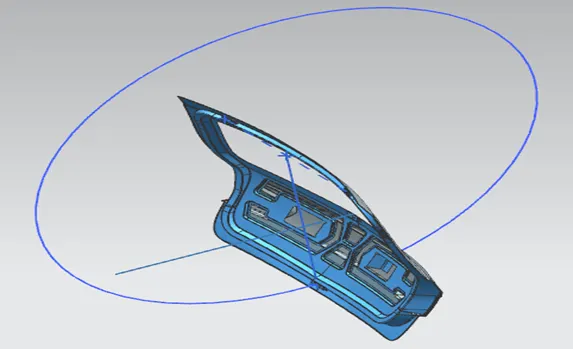
The backdoor is a swinging commodity which swings with the help of hinges on the hinge axis. The trajectory of the Backdoor is to be considered for the proper opening and closing of the Backdoor. First, we have to position the hinge axis and the trajectory of the hood is drawn. The trajectory helps to validate the positioning of the hinge and latch and to find whether the latch is correctly aligned with a Body part. This can be achieved by having a perpendicularity between the trajectory and the axis of the latch. In this way, hinge and striker point correlate with each other. If not, this can be achieved by moving the hinge axis back and forth.
Components of Back door:
- Inner panel
- Outer upper Panel
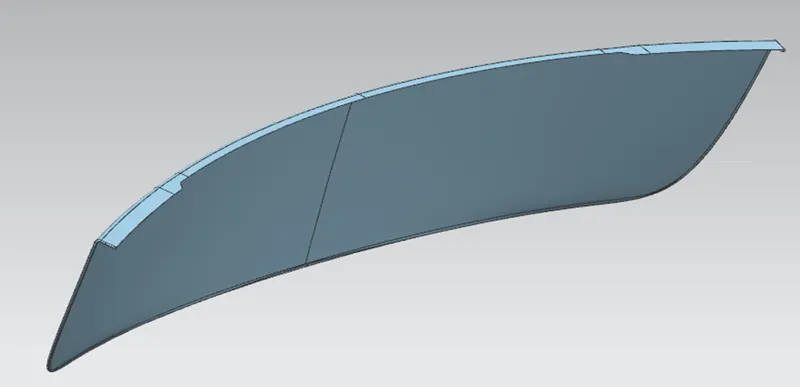
- Outer lower panel
- Hinge Reinforcement
Initially we have to check the Styling surface for presence of the irregularities. If any, we have to repair by using a bridge Curve, Through Curve Mesh and sew it together.
Inner panel:
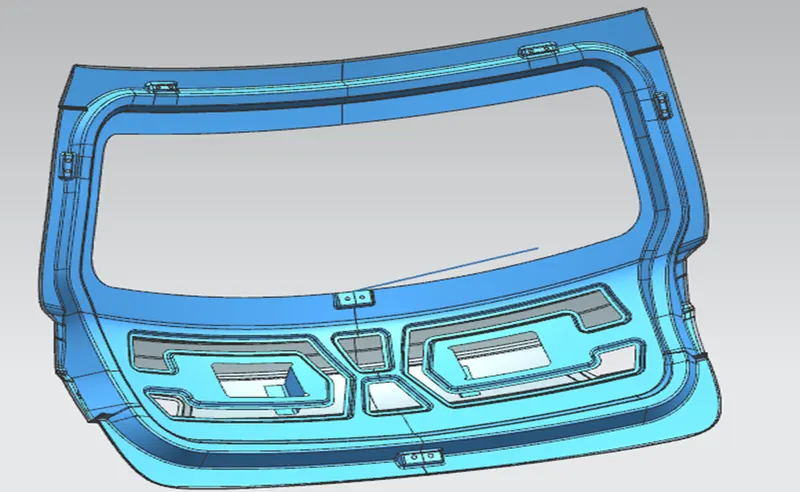
The backdoor will consists of two panel such as inner and outer panel combined together with help of hemming. While inner panel contributes to provide the backdoor with desired mechanical properties. The inner panel is given with emboss and cavities for the various purpose. Embosses help strength the panel so that it doesn’t twist or bend during its functional. The weight of the inner panel contributes to the total weight of the backdoor. The lower the weight needs the lesser the structure.
Outer upper panel:
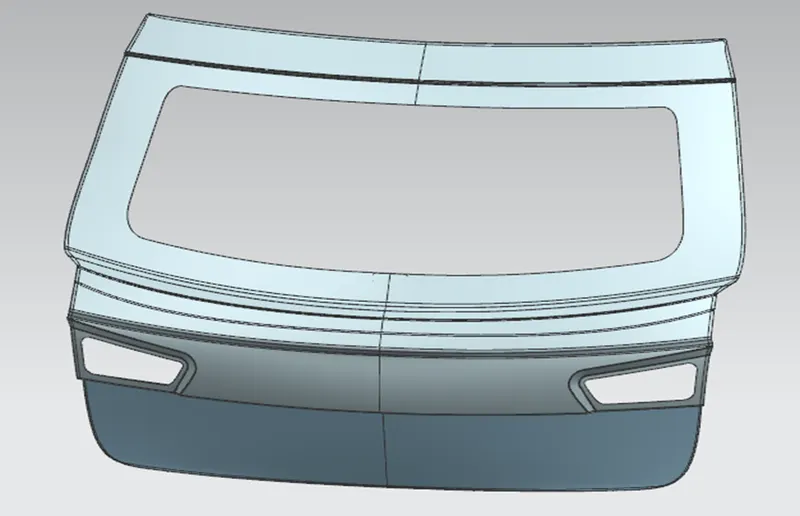
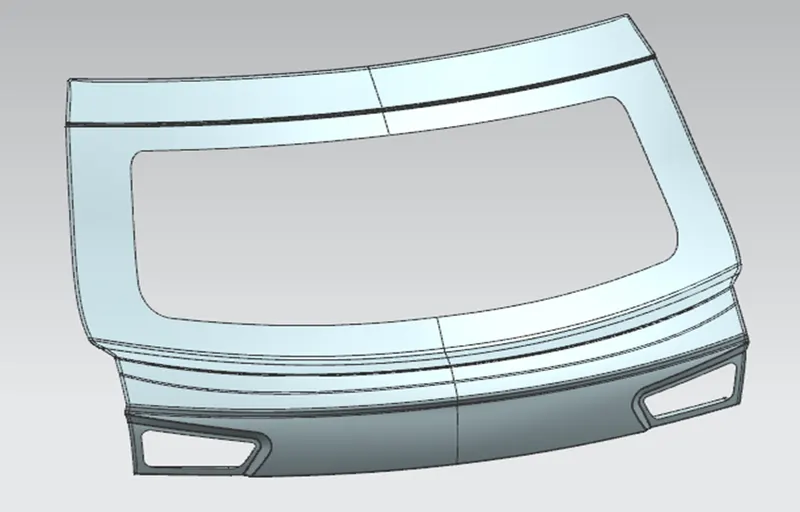
The outer panel provides the backdoor with an outer surface. It has space to incorporate the glass to provide rear visibility and to place the rear light.
Outer Lower panel:
Reinforcements:
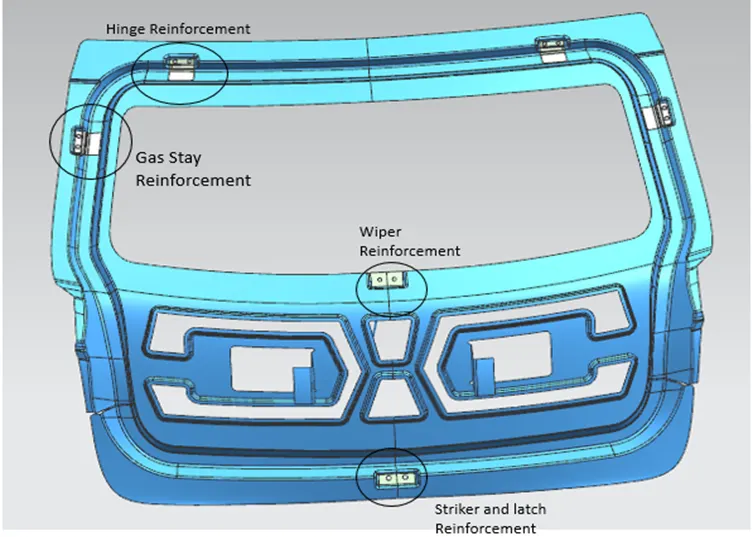
The reinforcement is provided to compensate the strength.
The reinforcement is provided to compensate the strength. The reinforcements will help to strengthening locally that are provided. Instead of increase the whole panel thickness, a thinner sheet with thicker local reinforcement is preferred. The reinforcements are usually 1 – 1.5mm thick whereas panel itself have 0.5 to 1 mm.
The back door has following reinforcement:
- Hinge Reinforcement
- Gas Stay Reinforcement
- Wiper mounting Reinforcement
- Striker Reinforcement.
Joining method:
The both inner and outer panel is joined with hemming process and at mid mastic sealant is applied to get reduce NVH issues.
Relief:
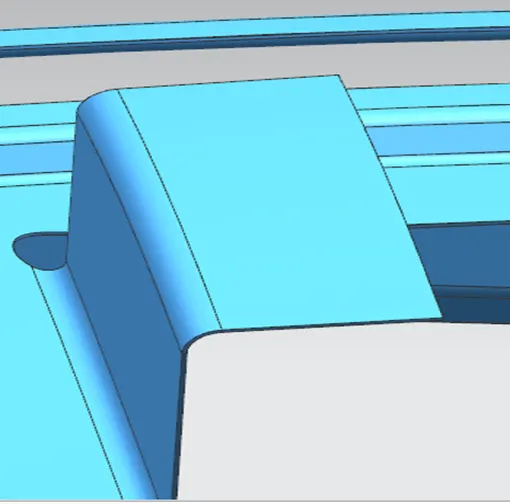
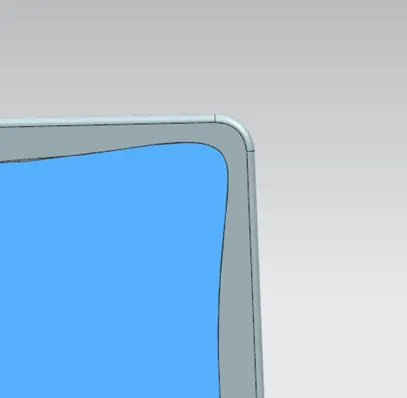
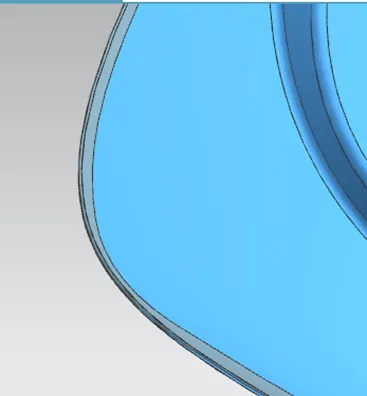
Relief is done to decrease the stress concentration along the corners also to decrease the clumping along the corners. This is done by trimming the corners by a minimum radius and allow roller to pass smoothly.
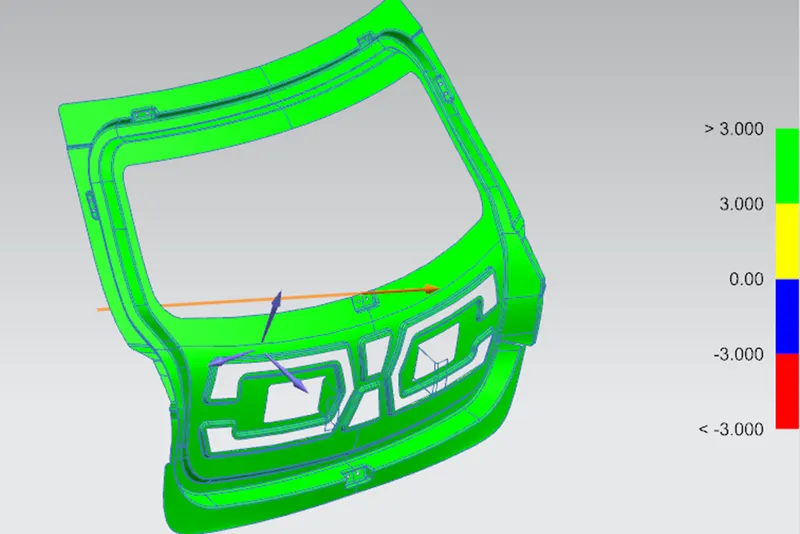
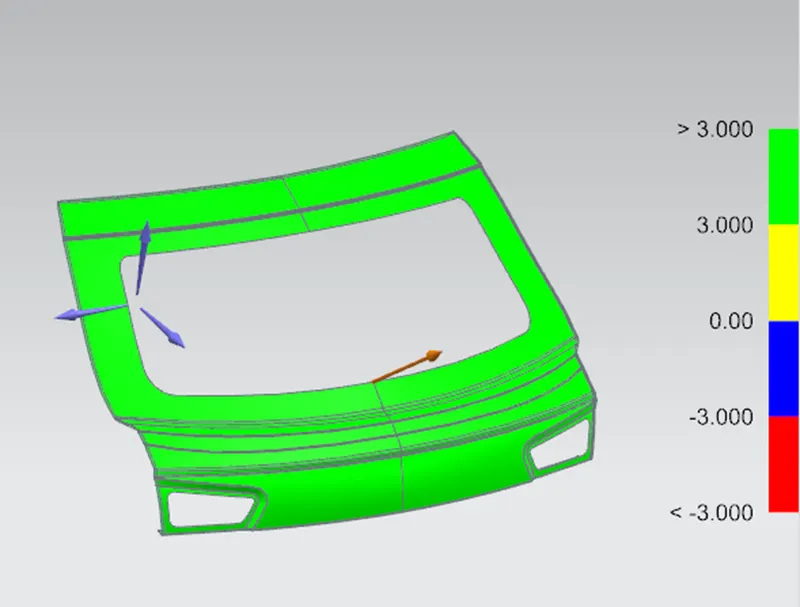
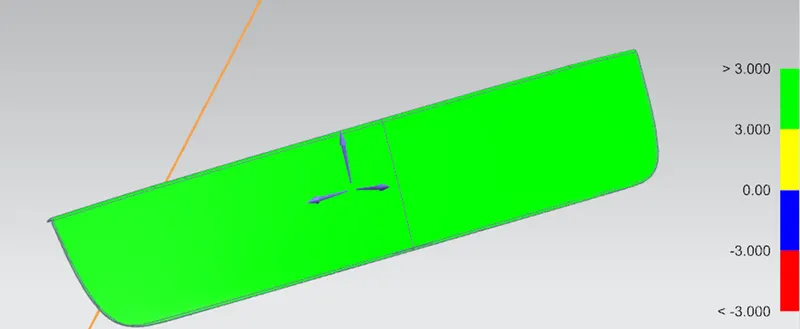
Draft Analysis:
Conclusion:
The design of the back door is done with given styling surface and provided the necessary reinforcement and embosses and the draft analysis is performed.