Design of backdoor
DESIGN OF BACK DOOR
AIM:To design the back door of car From Styling Class A Using NX CAD.
BACK DOOR:
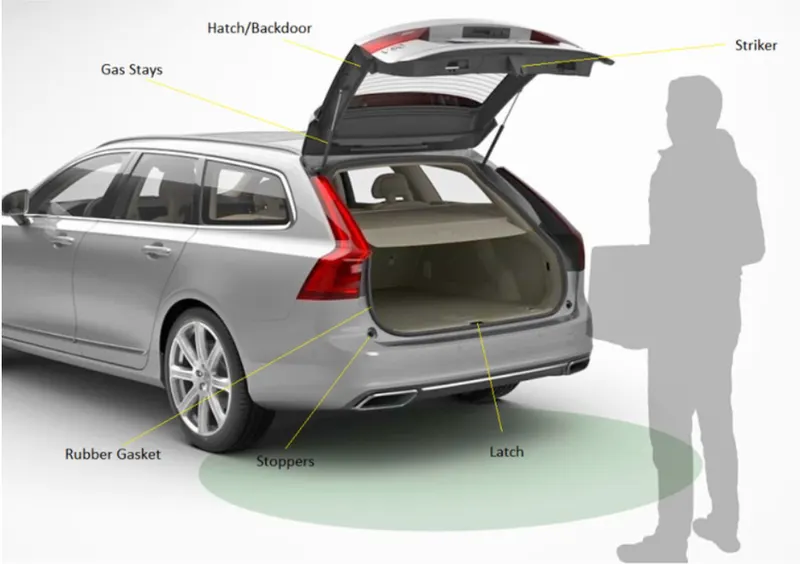
A Back door is a BIW component found in all automotive car generally used for opening and closing of the boot space.These doors can be operated manually or electric Power. Back door also called as 'Hatch' or 'Tailgate'. It is the rearmost part of the vehicle which gives access to the trunk and has mounts for wiper motor, Tail lamps, Hinges for Supporting its weight in opened position, GAS stays which help with its opening and keeping it open, radars and cameras etc. In case Safety, The back door designed should meet Safety requirement for the rear collision.
TYPES OF BACK DOOR:
TOP-Mounted Back door:
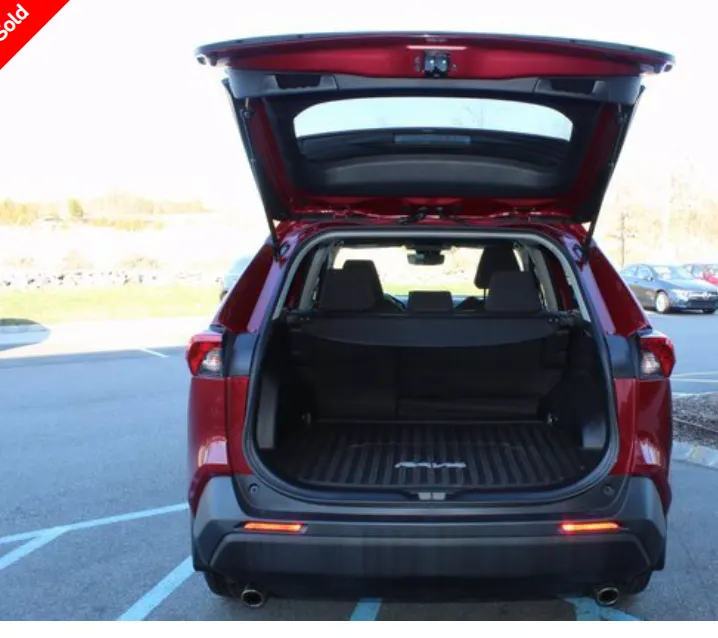
This type of back doors is used in a station wagon, pickup truck and some of the Sport utility vehicles. Todays modern cars use Top-mounted tailgating systems which are both powered and also gas stay supported. These top mounted tailgates provide greater rear visibility compared to side-mounted or bar doors which have canter pillars in it.
SIDE-Mounted Back door:
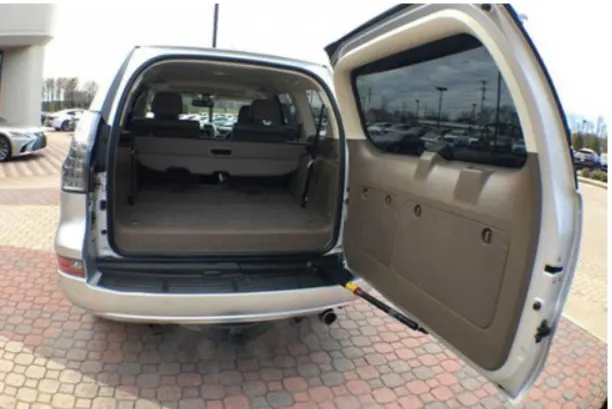
As Name suggested Side-mounted doors are the one which is used in the van type MPVs, SUVs, Pickup truck vehicles. These side-mounted doors or barn doors are a lot easier compared to top-mounted doors. These doors are generally smaller size and can be easily accessed. These doors are more Convenient for the goods handles for long pipe and lengthy components where one door is kept open. These Doors also save accidental head impacts.
BOTTOM Type Back door:
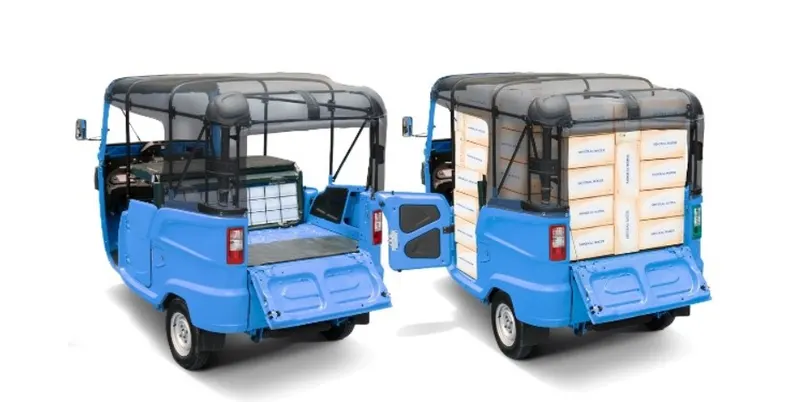
This Type of Back Door system are used in the car type such as estate type car, pickup trucks and some luxury SUVs. These are the most convenient type of back doors in which the bottom split is used as a Support or even as a table for the Tour going people.
TYPES OF BASED ON WORKING SYSTEM
Gas Stays Type:
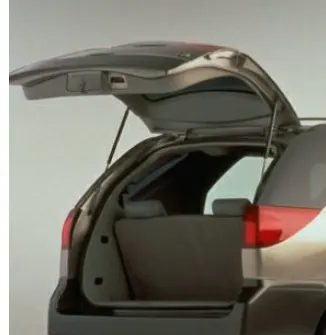
Gas stay types is an ideal and most commonly used tailgate mechanism from lower segment car to luxury car segment. The ideal components of tailgate consist of a hinge, Door, gas stay and some rubber beadings for sealing of door which is shown in the image below.
PowerLift Type:
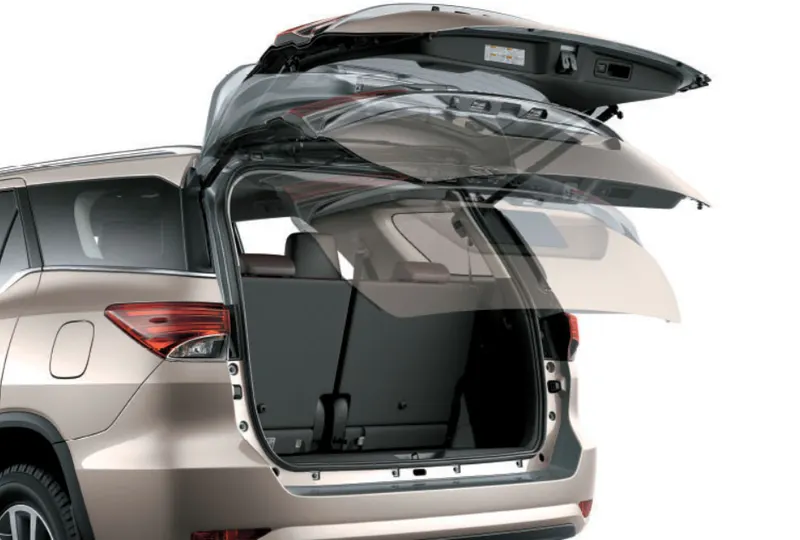
Power trunklid system is another sophisticated way of trunk opening mechanism which is to automatically open and close of the trunk and release of the latch by the touch of a button. Powered trunk lift system consists of a power latch, Anti-pinch switch, PTG ass'y, PTG main switch, when the switch is pressed in the compartment or outside the power latch releases the latch and the entire backdoor is opened. The anti-pinch switch is located in order to avoid accidental hand insertion during the Operation of the Door.
MANUFACTURING PROCESS:
Blanking:
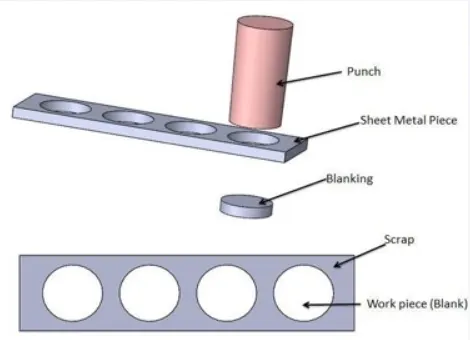
Blanking is a metal fabricating process, during which a metal workpiece is removed from the primary metal strip or sheet when it is punched. The material that is removed is the new metal workpiece or blank.
Deep Drawing:
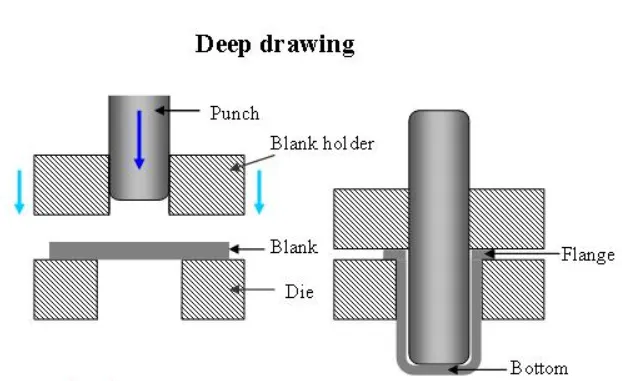
Deep drawing is a sheet metal forming process in which a sheet metal blank is radially drawn into a forming die by the mechanical action of a punch. It is thus a shape transformation process with material retention. The process is considered "deep" drawing when the depth of the drawn part exceeds its diameter.
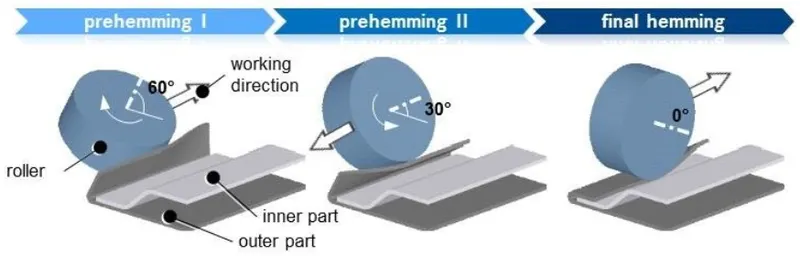
Hemming:
Hemming is a forming operation in which the edges of the sheet are folded or folded over another part in order to achieve a tight fit. Normally hemming operations are used to connect parts together, to improve the appearance of a part and to reinforce part edges
Design Consideration:
Component thickness=0.75mm
Reinforcement thickness=1.5mm
- Hinges and Gas Stays
- Rear Visibility
- Fit and Clearance
- Boot Spaces and Accessibility
PROCEDURE:
BACK DOOR ASSEMBLY:
The Back door Assembly of a car has the following Components.
- Inner Panel
- Outer Panel
- Hinge Reinforcement
- Gas Stay Reinforcement
- Wiper motor Reinforecement
- Latch/Striker Reinforcement
DESIGN OF INNER PANEL:
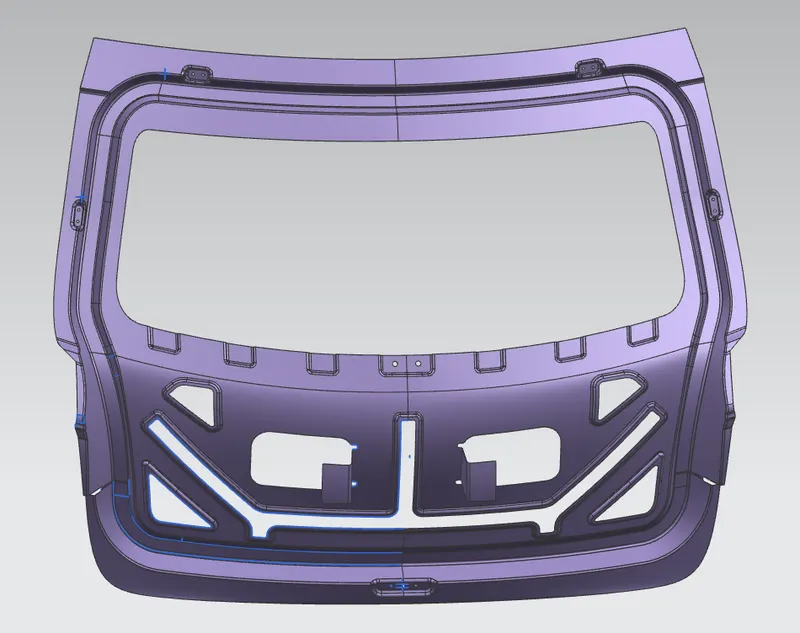
The inner door panel is a component which is used for strengthening the door assembly and it is one of the most important components on which all accessories are mounted that are hinges, glass guide channel, moulded trim, Latch etc. The possible method is the integration method. in the integration method, the part is stamped out of a single blank. this reduces the number of tools needed the assembly cost and eliminates any fit ability problem.
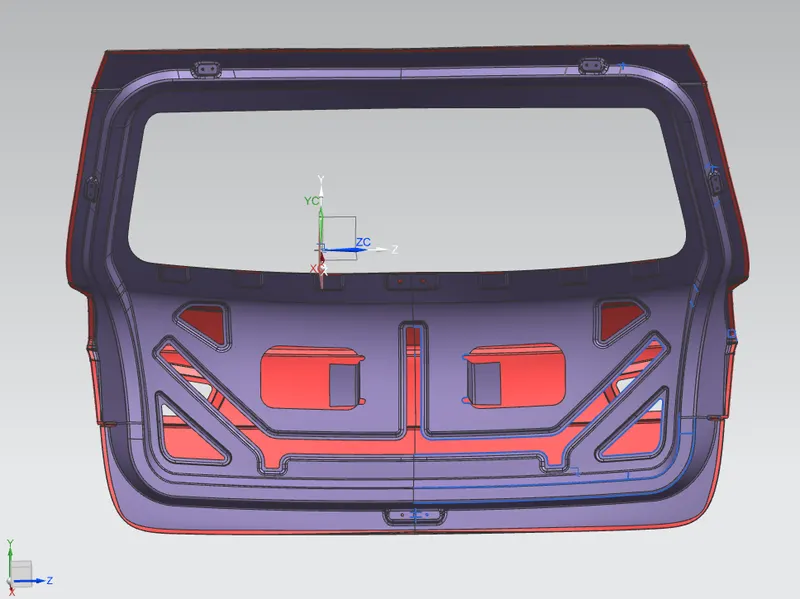
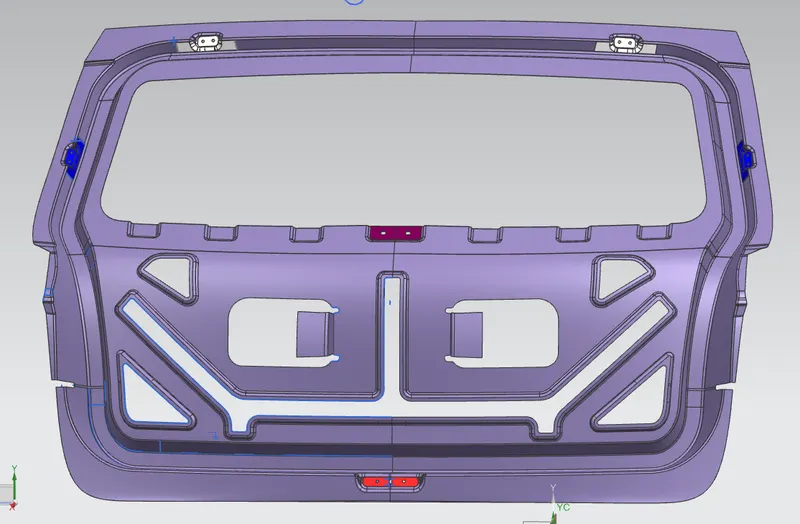
The inner panel was designed by offsetting the given Class-A surface as per the given master section.The inner panel consists of emboses and mastics.
Emboss and Cutout in Emboss:
Embosses has been given to create extra strength in inner panel and embosses design needs to be inspired by force dissipation. similarly Cutout in Emboss helps to reduce the Weight of the material.
DESIGN OF OUTER PANEL:
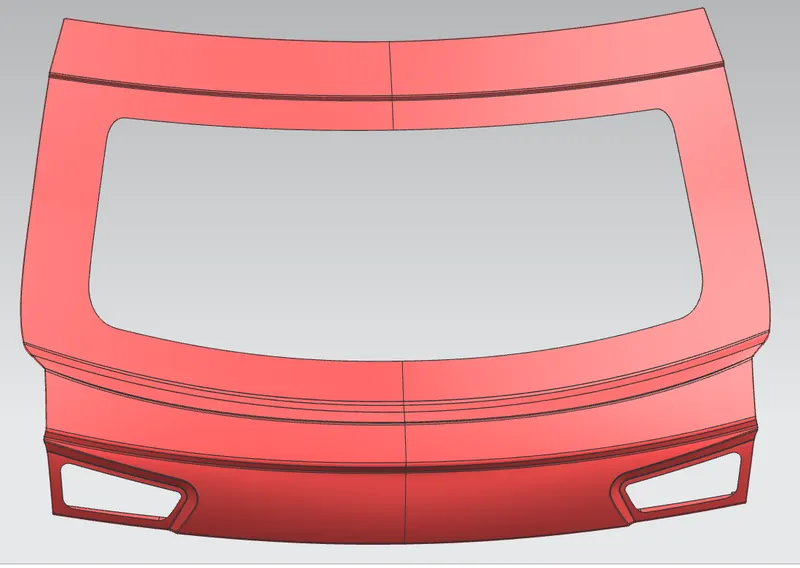
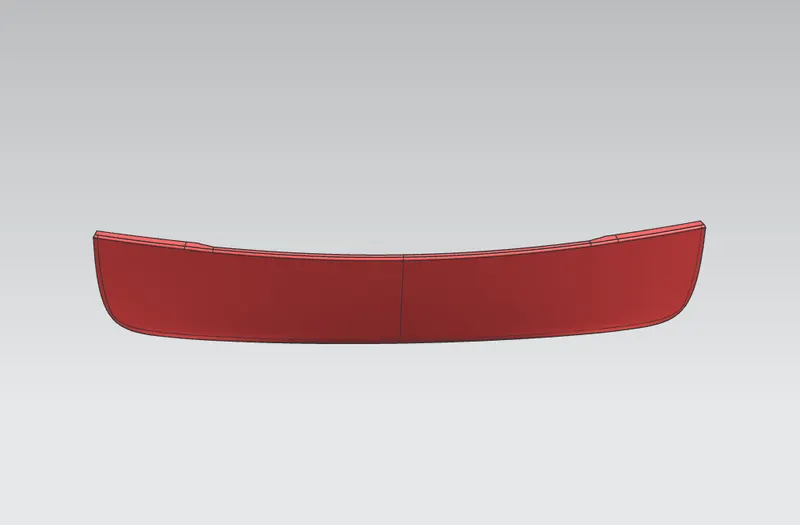
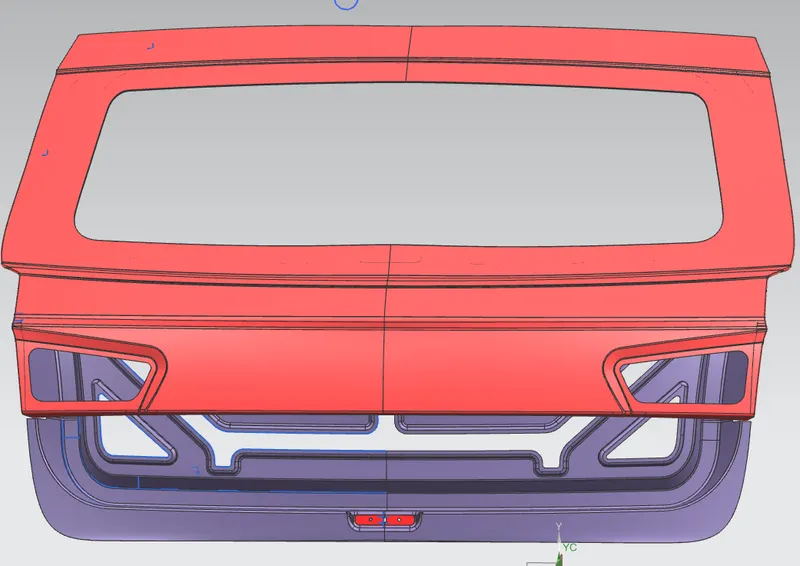
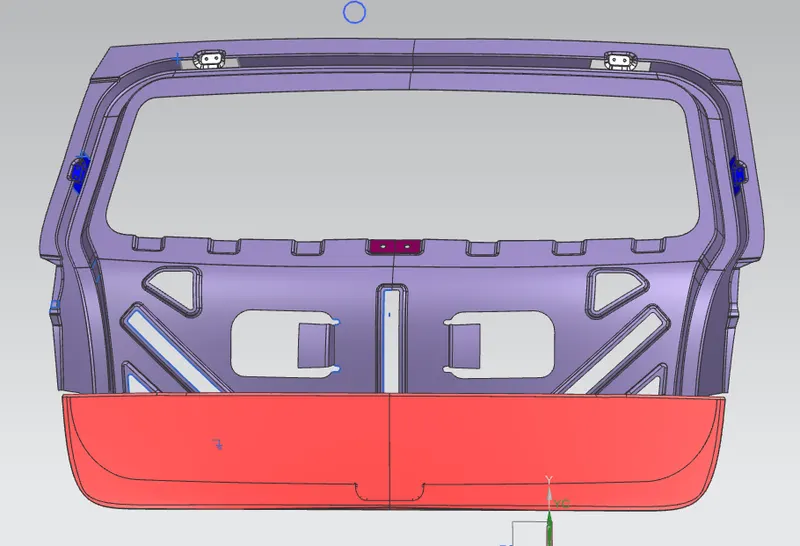
The Outer panel of the back door is similar to the Other BIW components where it is the aesthetic part of a vehicle. The coating provides which resists the scratches, rust prevention and smooth and attractive finishes. The outer panel also has the provisions for the tail lamp, Rear fog lamp and also has the provision for licence plate mountings. Most of the Hatchback cars have the provision for wiper motor.
Upper Panel:
Lower Panel:
DESIGN OF REINFORCEMENT:
Reinforcement basically strengths or increases the mechanical properties of the material. The hinge reinforcements are provided so that increases the strength of the component.
In Back Door There are 4 Reinforcements.
- Hinge Reinforcement
- Gas Stay Reinforcement
- Wiper motor Reinforcement
- Latch/striker reinforcement
- Hinge Reinforcement
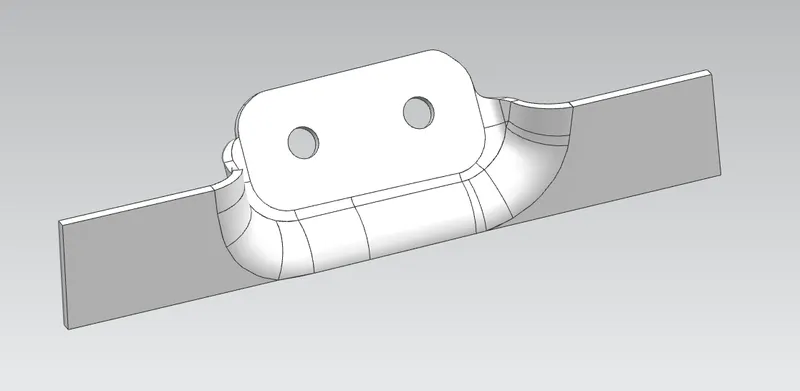
- Gas Stay Reinforcement
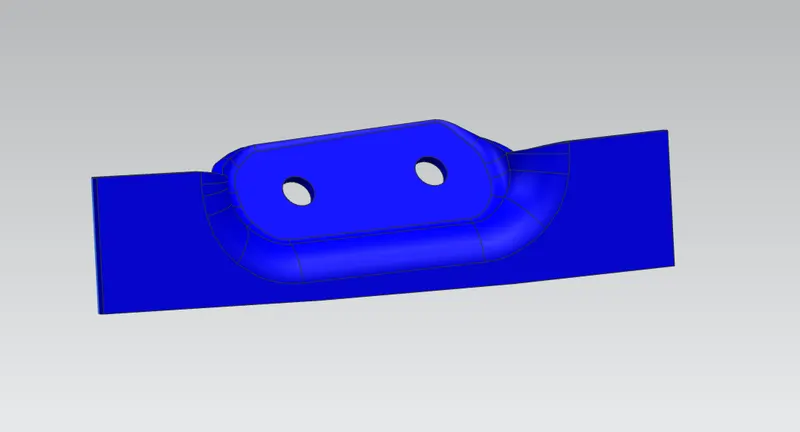
- Wiper motor Reinforcement
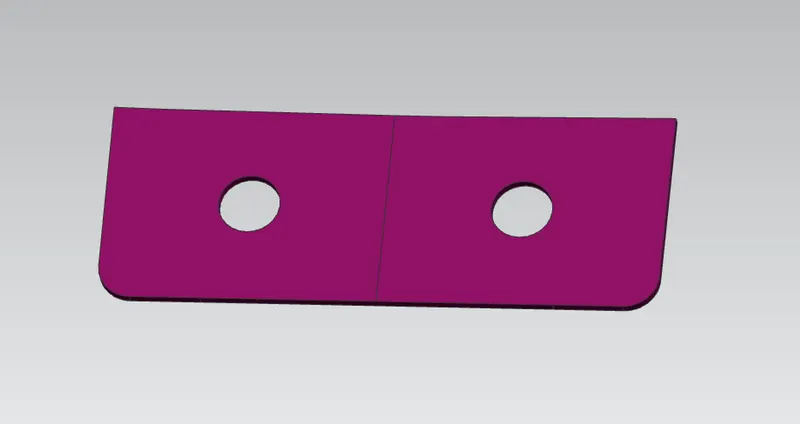
- Latch/striker reinforcement
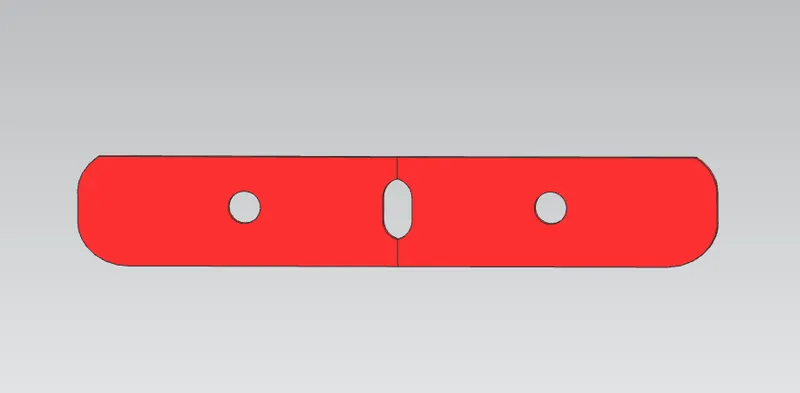
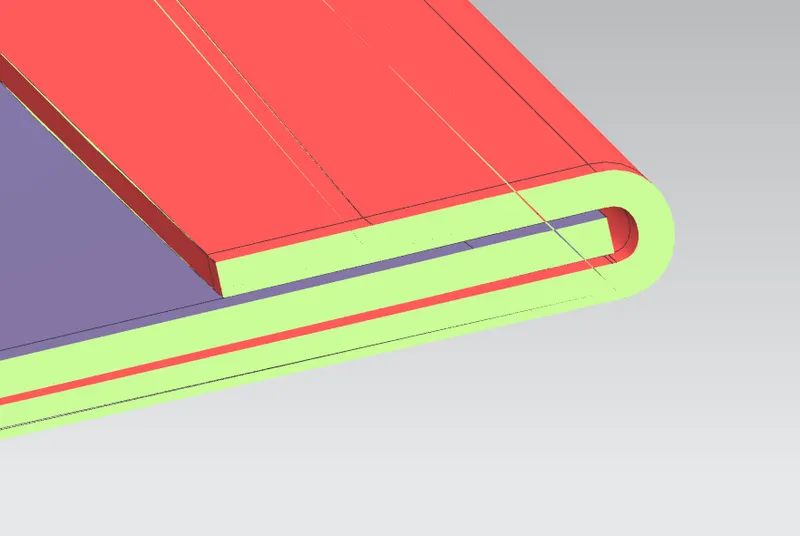
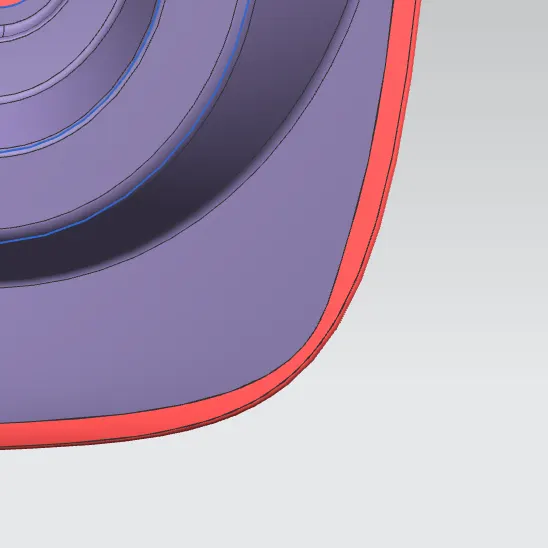
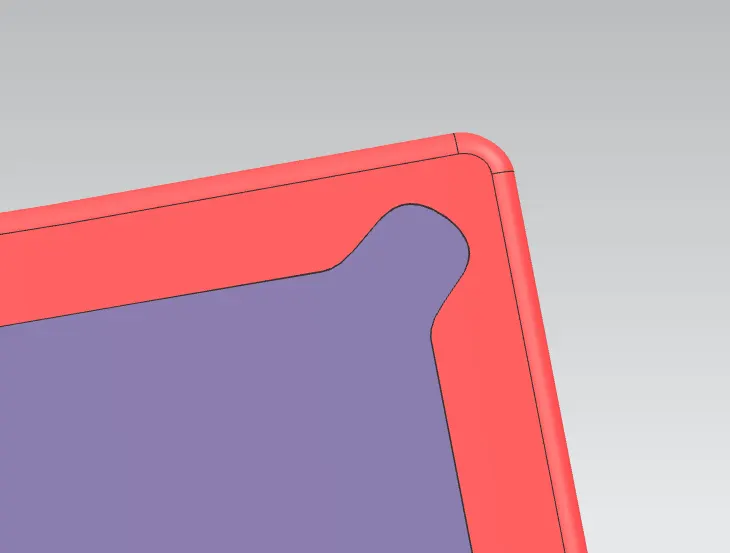
DESIGN OF HEMMING:
Hemming is a sheet metal forming operation in which the edge of the sheet is folded back on itself. Hemming is a forming operation in which the edges of the sheet are folded or folded over another part in order to achieve a tight fit. Normally hemming operations are used to connect parts together, to improve the appearance of a part and to reinforce part edges. Normally hemming operations are used to connect parts together, to improve the apperance of a part and to reinforcement part edges.
DRAFT ANALYSIS:
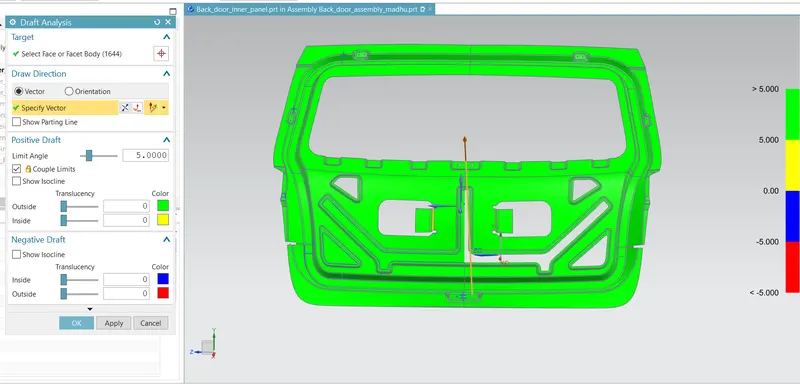
Every sheet metals or plastic parts which are manufactured or mould or shaped by casting parts, pressing Tools should have the minimum draft angle instead of having 0 or 90 deg. with minimum draft angle only part can manufacture without making any distortion in the Surface.
Draft is used for providing angles or tapers on product features such as walls, ribs, posts, and bosses that lie parallel to the direction of release from the mold eases part ejection. Draught angles are designed in such a way that they will assist depart rejection. By doing so we have a reduced cycle time and improved productivity. Draft value for a particular part is mostly decided by the material used for making it. Here we maintain more than 7 deg Draft angle.
DIFFERENT VIEWS:
CONCLUSION:
Thus the design of BIW Fixtures of a Backdoor of a car has been designed using NX-CAD.