Design of backdoor
AIM : To design a Car Back Door by using appropriate design methodologies of the given stylling surface.
INTRODUCTION
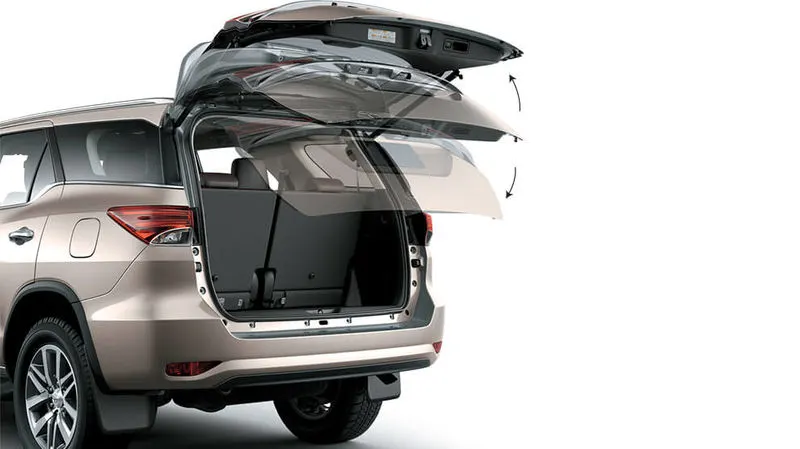
A Door is a hinged part which is used for entry and exit of the vehicle. The Back door is one of the type of door which are located next to the passanger seat and provides access to the luggage compartment. These Back Doors are operated with the help of gas stay which reduces the effort required to lift/open the door. These Back doors are having with the neccessity reinforcements. The material of back door varies as per the price range of vehicle like steel,aluminium. The premium vehicles use aluminium part which are usually die casted and hence having variable thicknesses, It also improves the strength and reduces the weight of the vehicle.
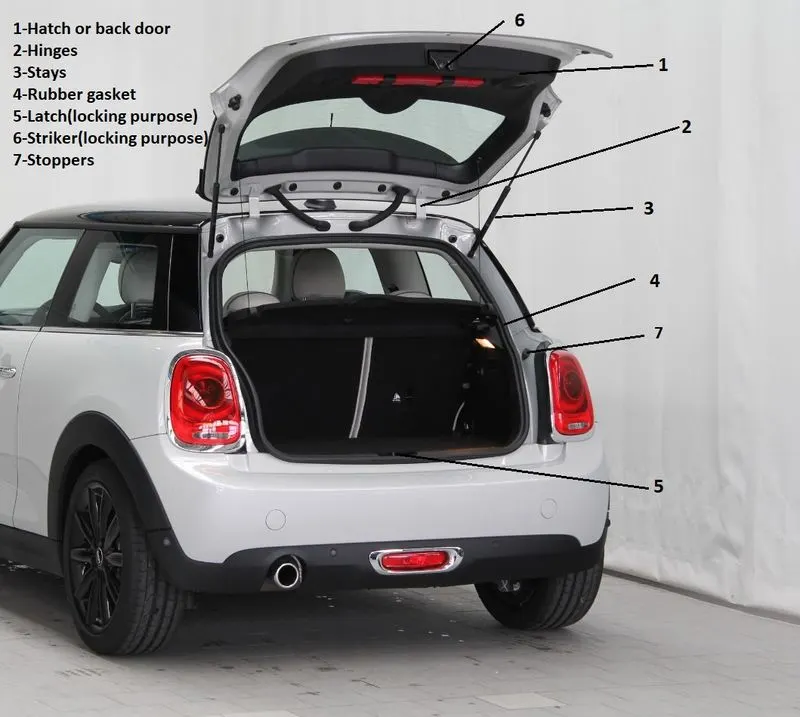
Components of Back Door
- Outer Panel - Upper
- Outer Panel - Lower
- Inner Panel
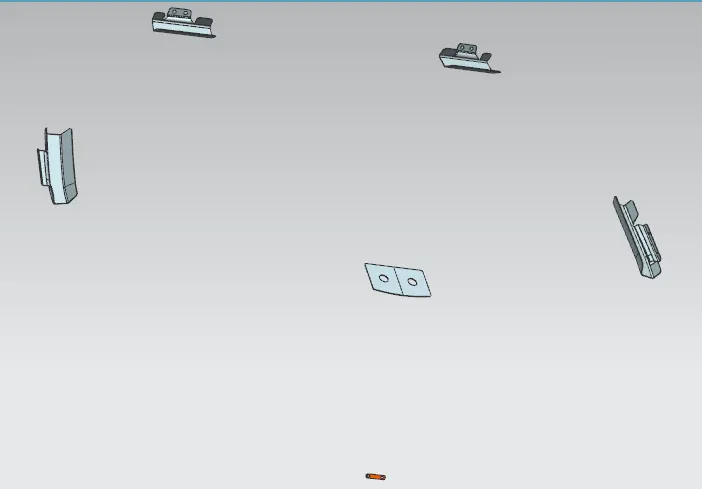
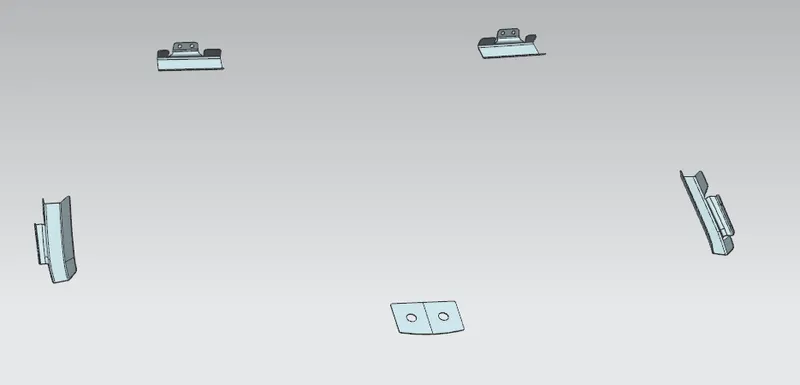
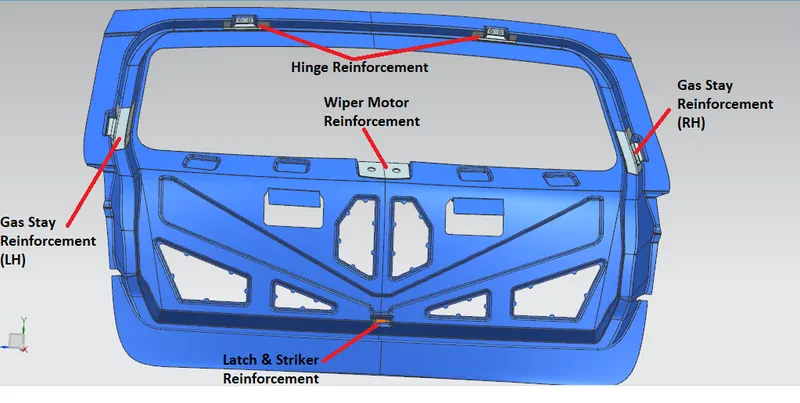
- Hinge Reinforcement
- Gas Stay Reinforcement
- Latch & Striker Reinforcement
- Wiper Motor Reinforcement
DIFFERENT SHEET METAL OPERATIONS
- Blanking & Piercing
- Deep Drawing
- Embossing
- Hemming
- Trimming
BLANKING & PIERCING
- It is the combination of a Die and Punch.
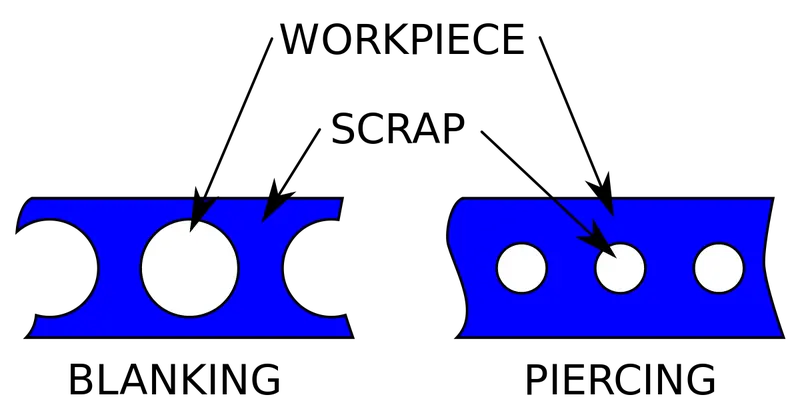
- the Blanking and Piercing are shearing process is which punch and die are used to produce parts from coil or sheets.
- BLANKING produces outer features of the component while PIERCING produces the internal holes or shapes.
- The terms "piercing" and "blanking = punching" can be used interchangeably.
DEEP DRAWING
Deep drawing is a sheet metal forming process in which a sheet metal blank is radially drawn into a forming die by the mechanical action of a punch.
EMBOSSING
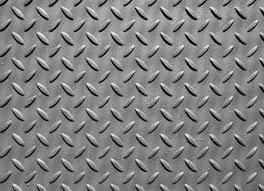
Sheet metal Embossing is a stamping process to produce the raisen design or the reliefs. It is the combination of two Dies- male & female. It is done by matching male and female dies or by passing sheet/strip metal between rolls of desired pattern.
TRIMMING
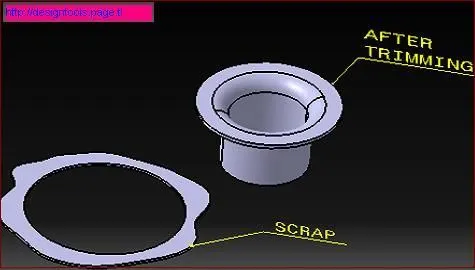
Trimming is a manufacturing process which is used as a finishing operation for forged parts ie; to remove the undesired parts.
HEMMING
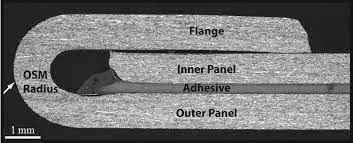
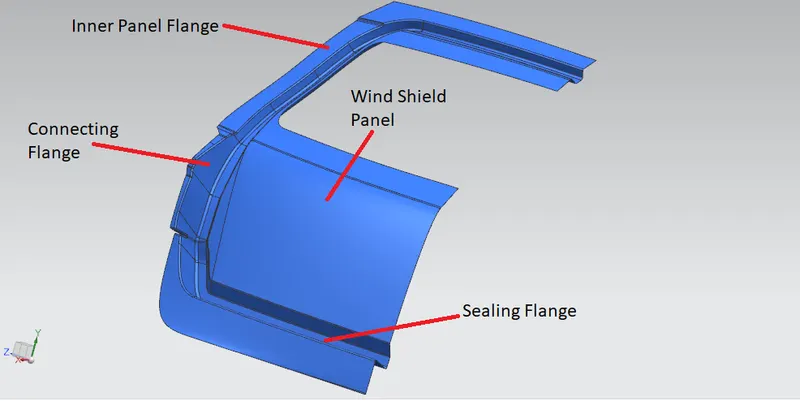
- HEMMING is a sheet metal forming process in which sheets are joined by bending it to 180degree.
- It is done in the Outer Panel which provides support to the Inner panel & also enhance Aesthatically.
- Automotive Panels/Parts like - doors, hood, deck-lids, trunk-lids
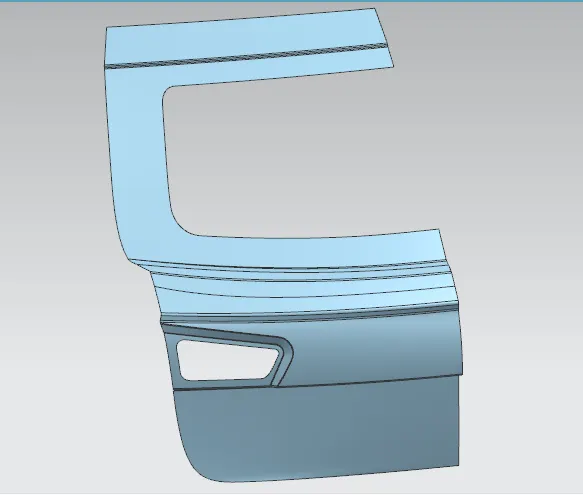
Given STYLLING SURFACE
PROCEDURE
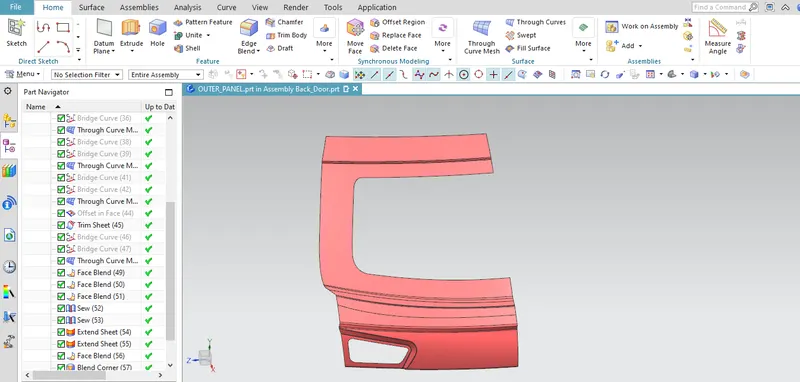
BACK DOOR_OUTER PANEL - UPPER
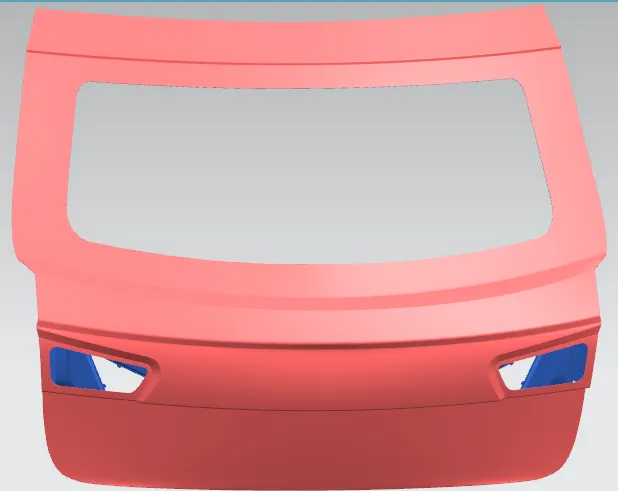
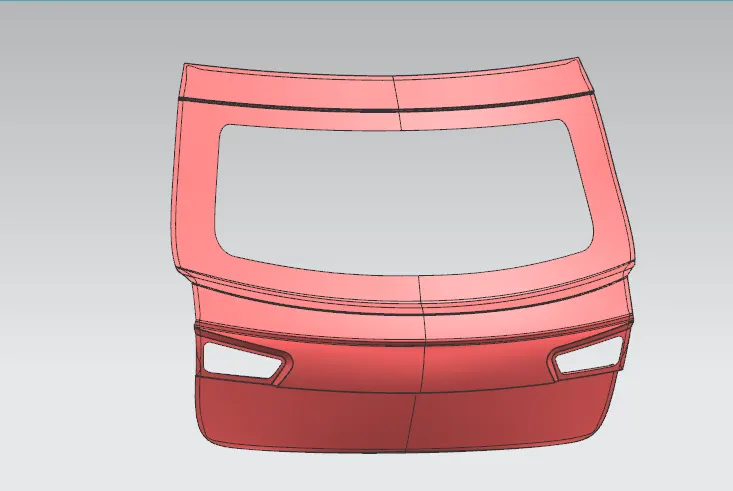
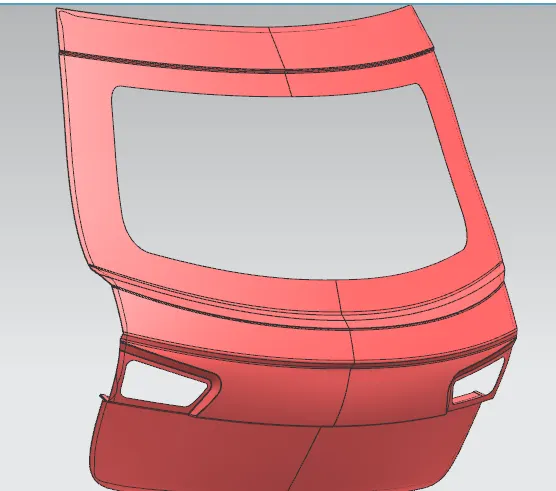
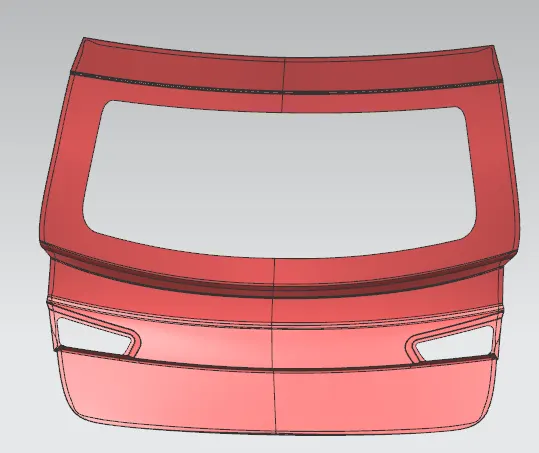
The Back Door outer panel is the aesthatic part of the vehicle. It has the provision for tail lamp, rear fog lamp and also the license plate mountings.
- From the given Stylling surface, Try to SEW the surface. If we get error while Sewing all the surface together then we have to modify our surfaces.
- Elliminate the bad surface and try to make better surface which SEW together.
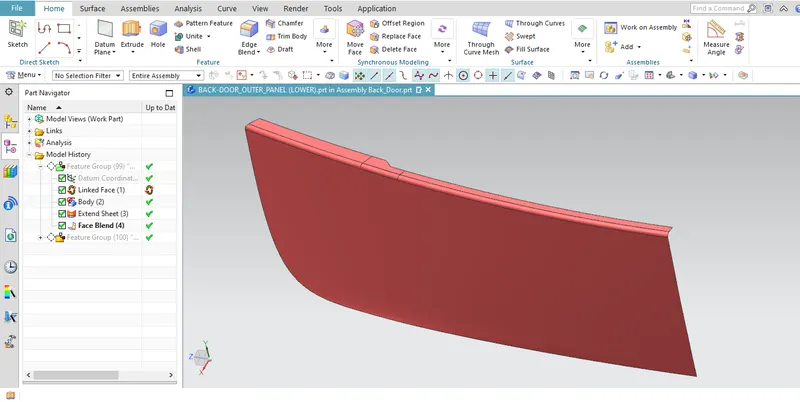
- Use commands : Bridge curve, Through curves, Through curve mesh, Trim sheet, Extend sheet, Face Blend, Sew
- after Sewing all the surface, apply Mirror Geometry by choosing appropriate plane.
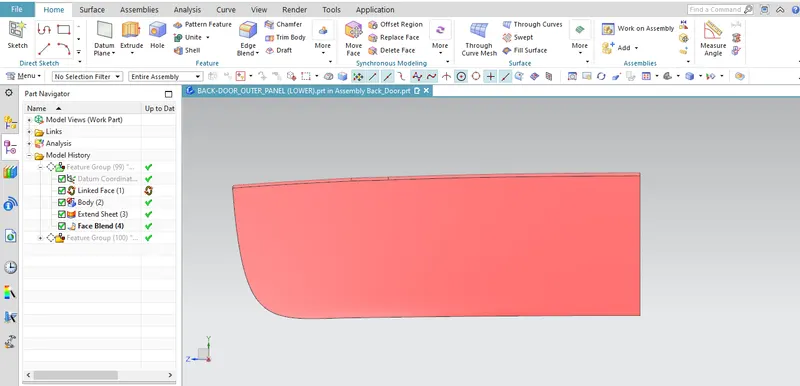
BACK DOOR_OUTER PANEL - LOWER
BACK DOOR_INNER PANEL
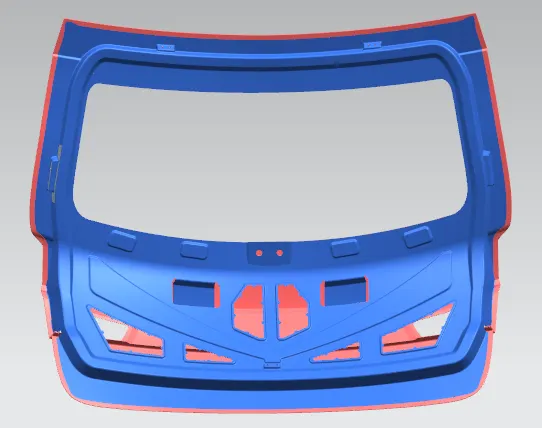
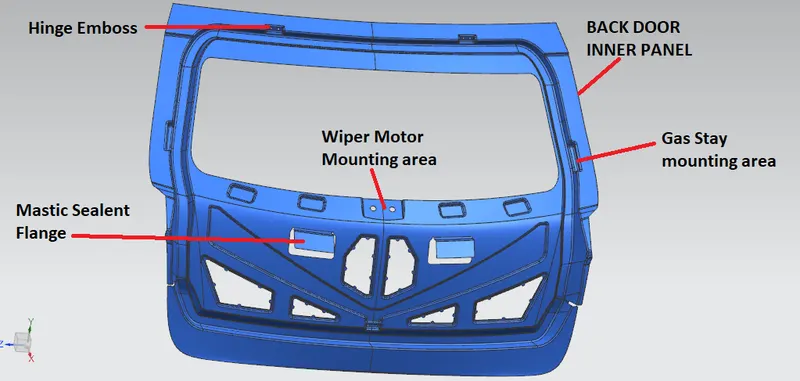
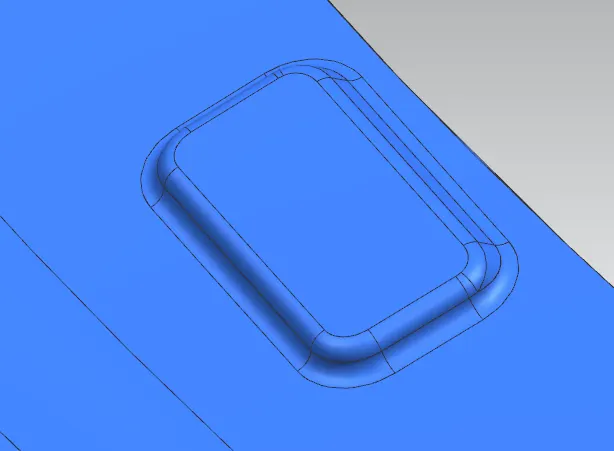
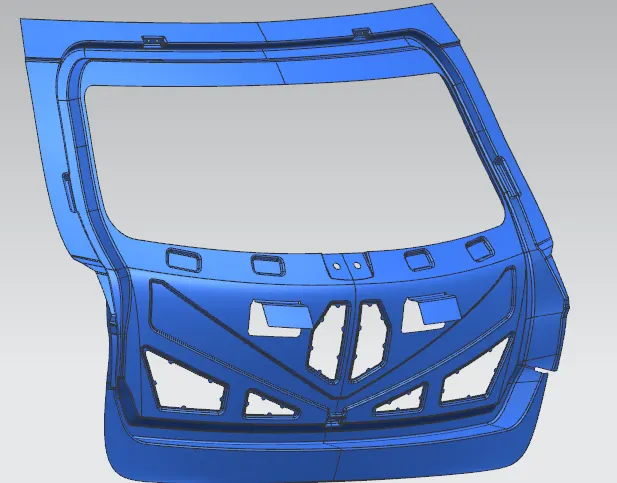
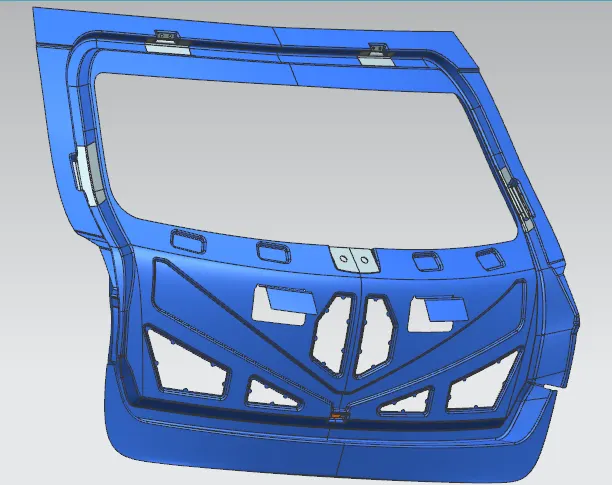
The Back Door Inner Panel is the component which is used for strengthening the door assembly. It is one of the most important component having accessories like- glass guide channel, mould trim, Latch etc. It also contains the EMBOSS for the mountings - Hinge, Gas stay, Wiper motor.
- first step is to OFFSET the class A surface as per desired inner panel.
- Use commands : Offset in face, Bridge curve, Untrim, Trim sheet, Through curve, Through curve mesh, Studio surface, Law Extension, Face blend, Edge blend, Sew, Trim and Extend, Extract Geometry, datum plane, Project curve, curve on surface, Offset curve, Intersection curve, Wave geometry linker
- apply Mirror and apply Thickness = 0.75mm
- for Mastic sealent, maintain the gap=5mm between the outer and inner panel.
EMBOSS
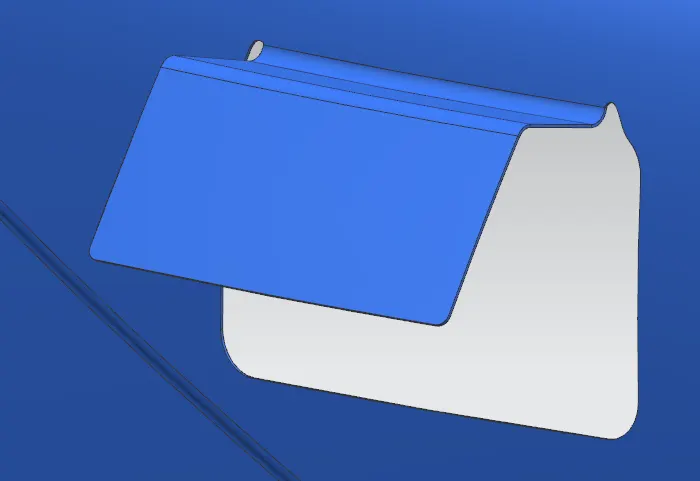
Mastic Flange
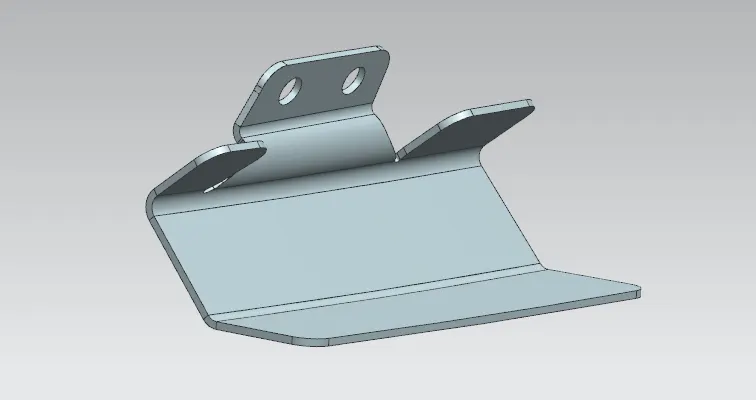
HINGE REINFORCEMENT
The Hinges support the weight of the Back Door. It is mounted over the Emboss and designed such a way that the Hinges should operate freely. It is connected with the rear roof of the car.
GAS STAY REINFORCEMENT
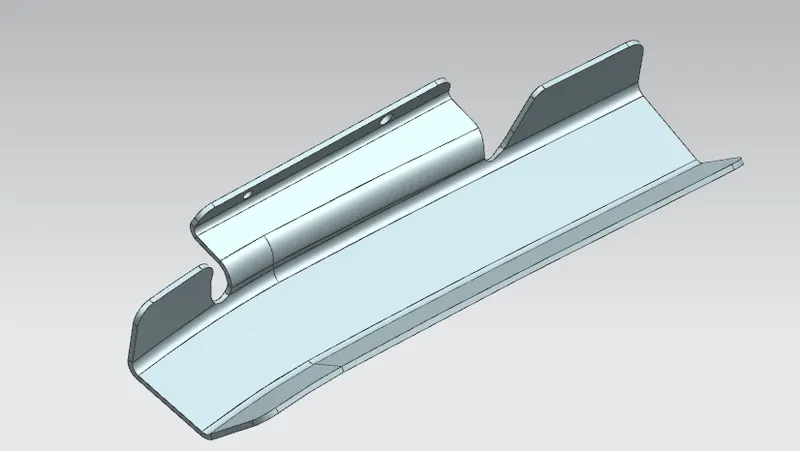
Gas Stay is used to lift the backdoor of the car automatically. It is of two type- Semi automated and fully automated Gas stay. The semi automated gas staay requires little force to lift after that it lift automatically while in fully automated - because of having power spindle, the back door lifts autumatically.
WIPER MOTOR REINFORCEMENT
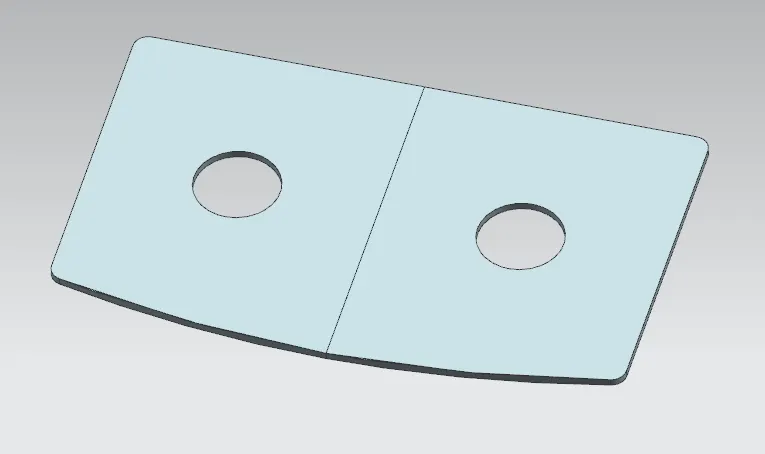
WIPER is used to wipeout the rain water falls on the back door window. It is operated by the motor; mounted on the inner panel. when the motor operates, it creates the vibration. so, to overcome this vibration, we provide the reinforcement.
LATCH REINFORCEMENT
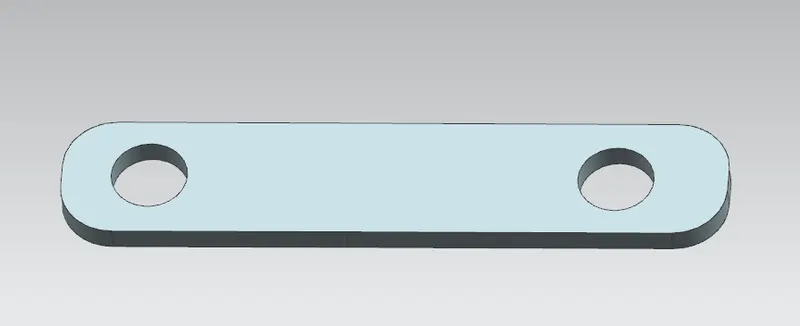
at the bottom of panel, reinforcement and emboss is given to accomodate the Latch and striker assymbly. It is used for controlling the angle of opening/closing mechanism of door.
HEMMING
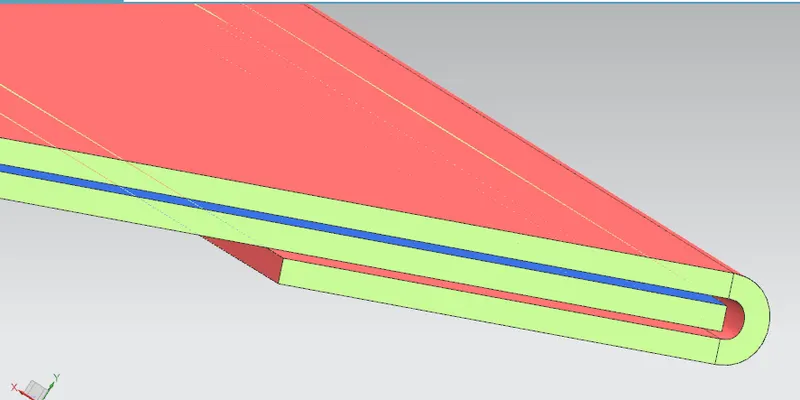
- Hemming is the process in which a sheet metal edge is rolled into itself by 180degree to bind the inner surface.
- It rolls over the inner panel and the gap should be 0.2mm between them .
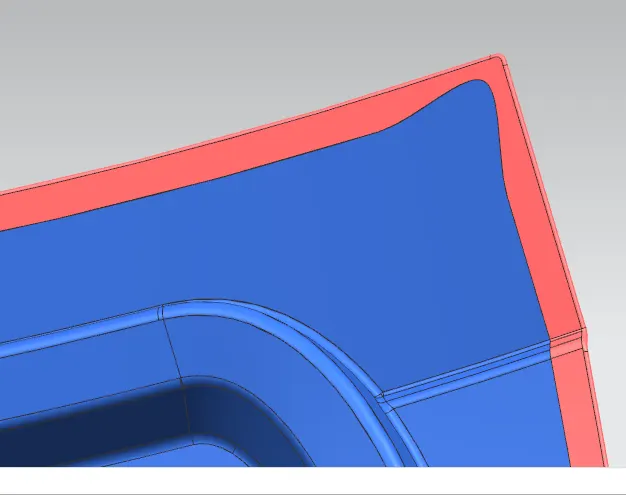
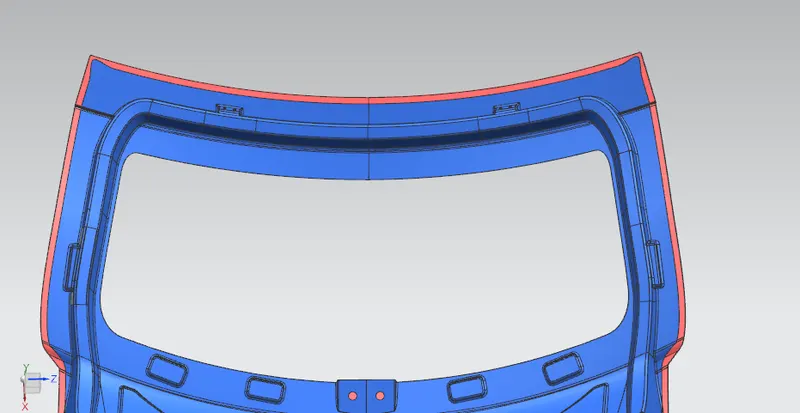
CORNER RELIEF
Relief helps to control sheet metal material behaviour. It has been given at the corner/end of panel so that the Hemming operation is performed properly.
DRAFT ANALYSIS
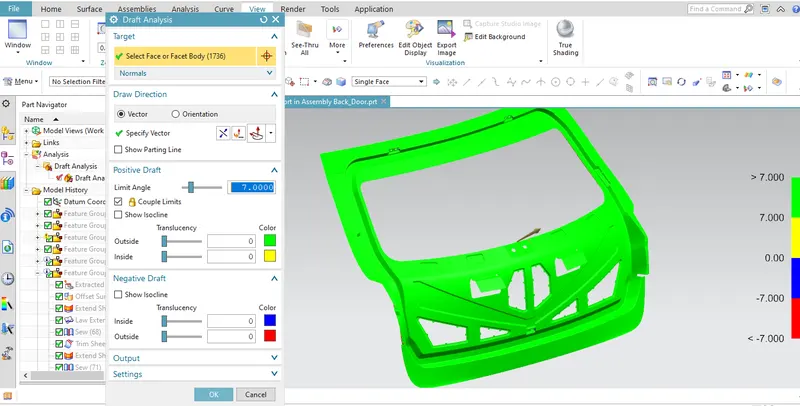
Every part like sheet metal parts which are generated from press-tool or some forming tools, may be plastic part come out from plastic mould and may be the casting parts; such kind of parts required some draft face on surface along the tooling direction. If we don't provide the draft, the part will stick with the mould; which can damage our desired surface.
FORCE DISTRIBUTION
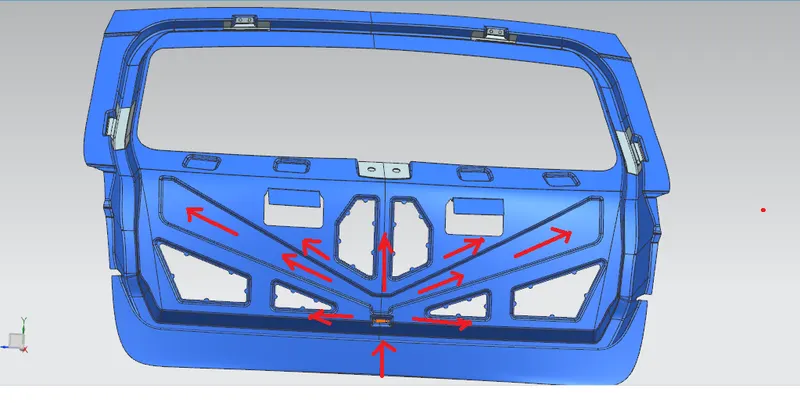
The major criteria in designing is the force dissipation during impact or a collision. Hence, The study is carried out in order to dissipate the force on sides and avoid/elliminate it to reach in the inner cabin of a car. here, we apply V or Y shape EMBOSS on the inner panel so that force get transmitted. It increases the stiffness and also dissipate force on sides.
DIFFERENT VIEWS
OUTER PANEL
INNER PANEL
REINFORCEMENT