Design of backdoor
BACK DOOR DESIGN
Design of car back door's outer panels, inner panel and necessary reinforcements.
DEFINITION-

Car's back door or trunk lid or tail gate is the cover that allows access to the main storage or luggage compartment. Hinges allow the lid to be raised. Devices such as a manually positioned prop rod can keep the panel up in the open position. Gas stays generally used to help elevate and hold open the trunk lid.
On cars with their trunk in the rear, lids sometimes incorporate a center mounted third brake light. A rear door may also have a decorative air spoiler. On many modern cars, the trunk lids can be unlocked with the car's key fob. Tail gates in india comes in two types, top mounted and side mounted . OEMs for top range premium vehichles incorporate Alumunium for manufacturing these BIW components because of it's light weight in comparision with steel without compromising wiht the strength.
COMPONENTS-
1. Outer panel
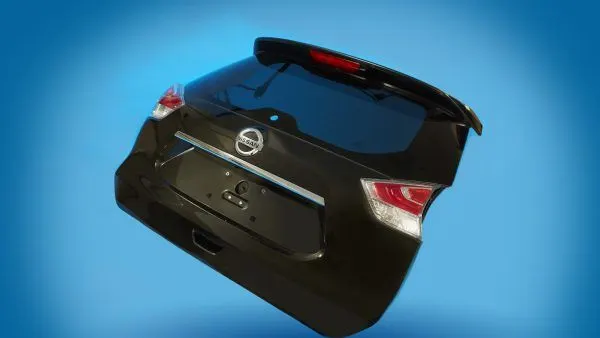
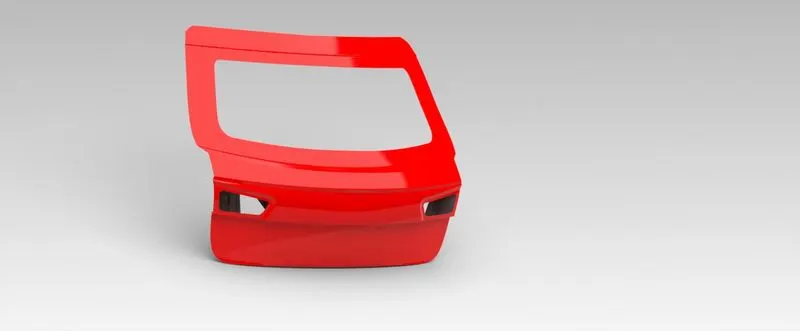
This is the visible part of the tail gate, it needs to look aesthetic to complement the outer body of a car. It contains holes for back lights, branding logo, license plate and windshield.
2. Inner panel
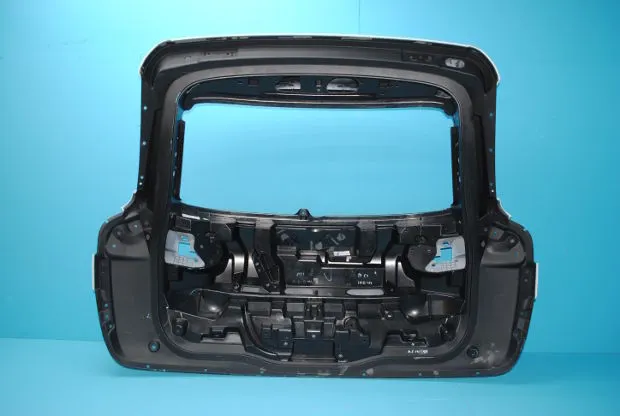
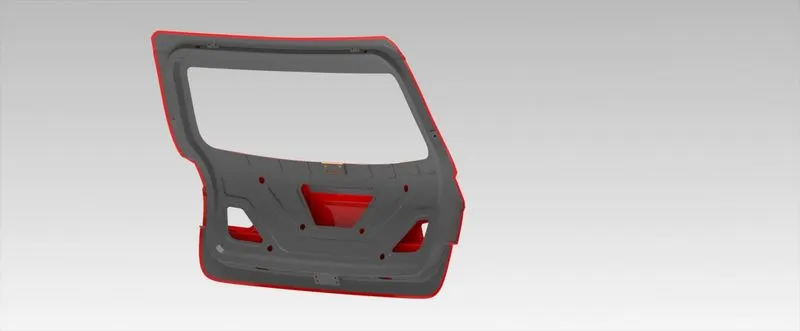
This is most complicated yet most important part of a back door. Inner panel provides the required strength to the outer panel without compomising the look of the outer panel a whole lot of R&D goes into developing this part to make it effecient and cost effective.
3. Gas stays
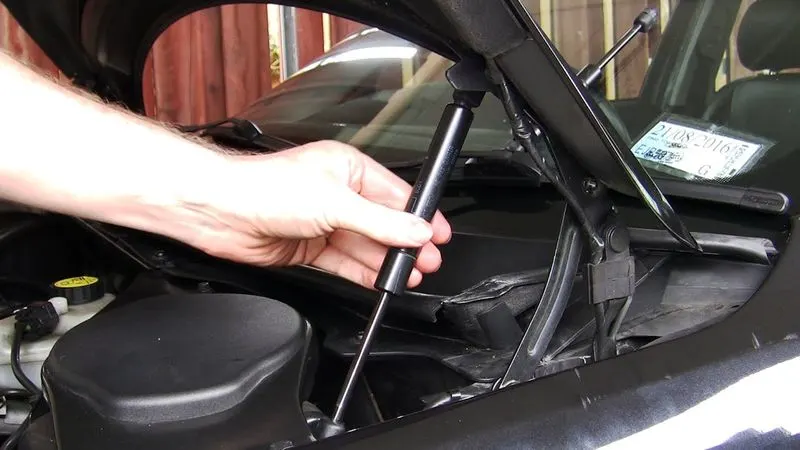
Gas stay enables the tailgate to keep in open state while loading & unloading the boot space. In high range cars gas stay comes it motors as actuators which makes it push botton type.
4. Hinges
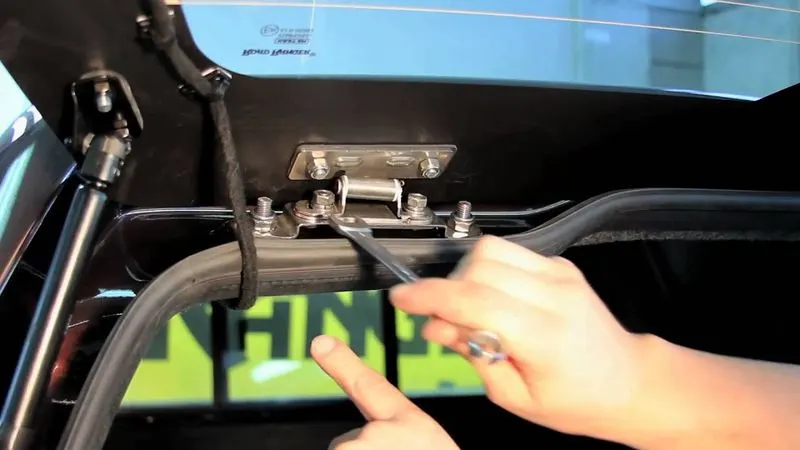
There are generally two hinges on both side of inner panel so that the tailagate can be open and close.
5. Latch
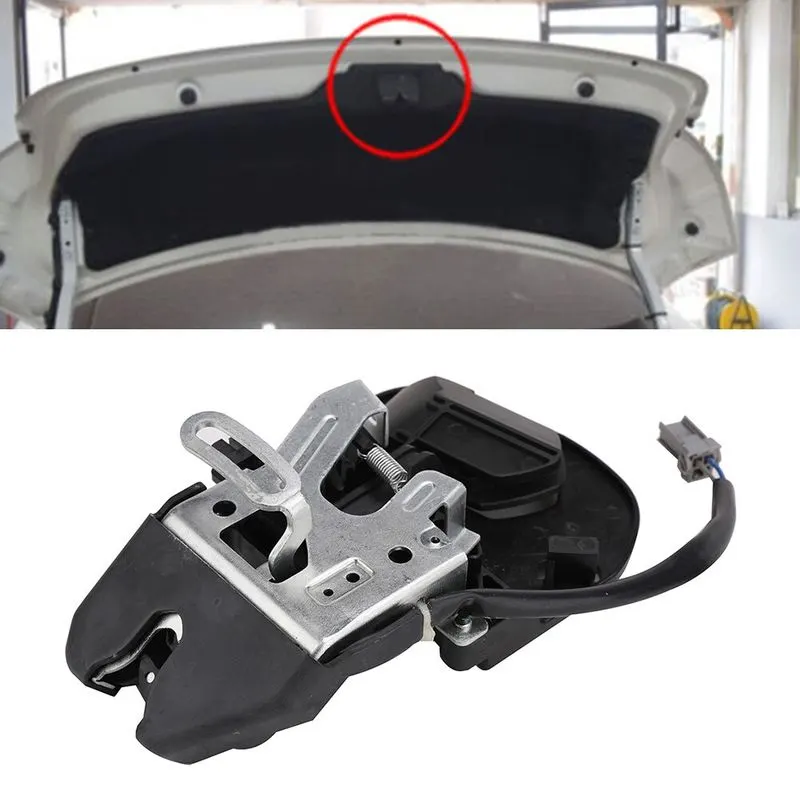
It helps to lock the tailgate by locking with the striker attached at the floor.
6. Wiper
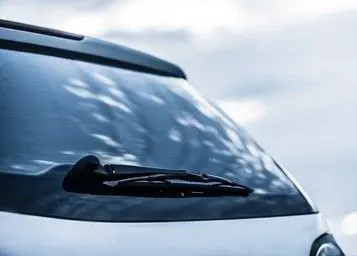
Some segement of cars have this feature.
7. Reinforcements
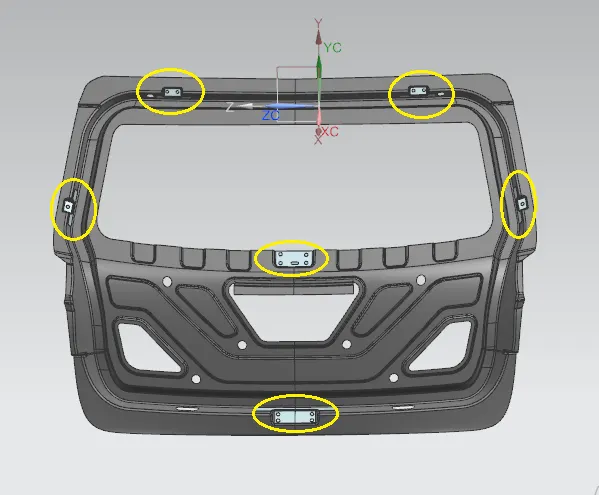
At the position of latch, viper motor mounting, gas stay and hinges the inner panel need to have more strength. So there come the role of Reinforcements, to strengthen the inner panel. Thickness 1.5 mm.
DESIGN OF BACK DOOR COMPONENTS USING NX CAD-
1. Outer panel and inner panel
1.Construct the surface of the tailgate outer panel with the provided skin.
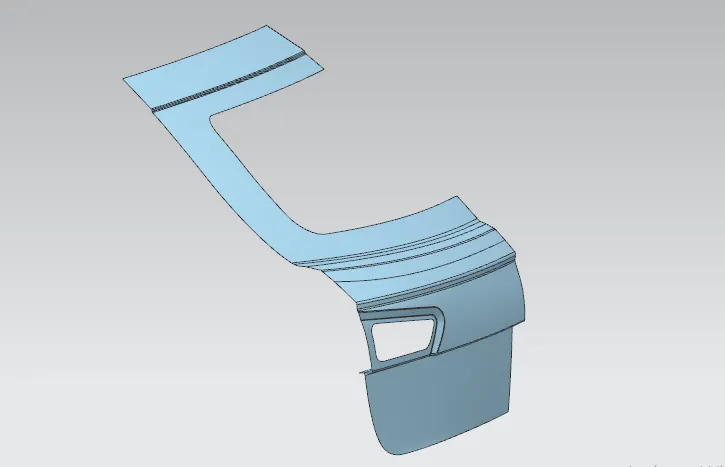
2.Using skin section prepare the flange of inner panel.
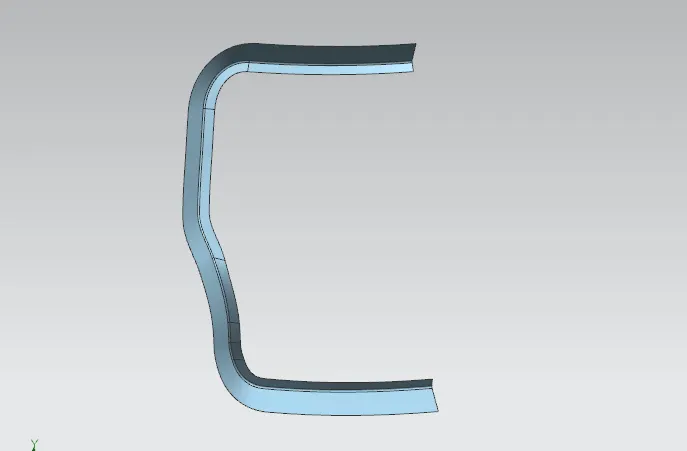
3. Connect it with outer panel offseted surface.
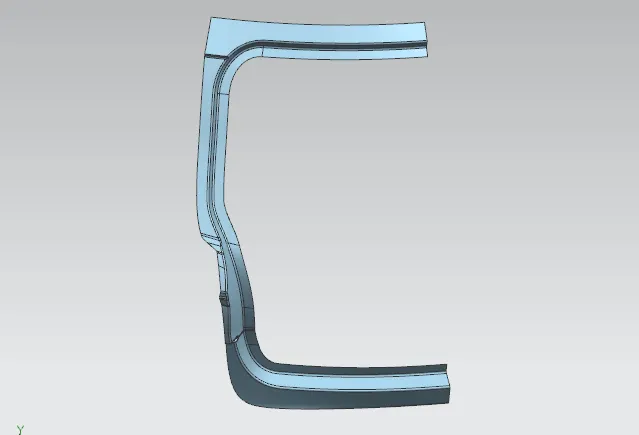
4. Create surface at middle portion by law extension.
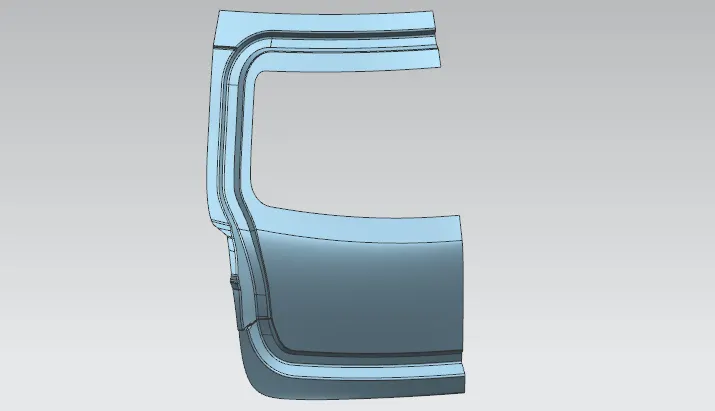
Emboss-
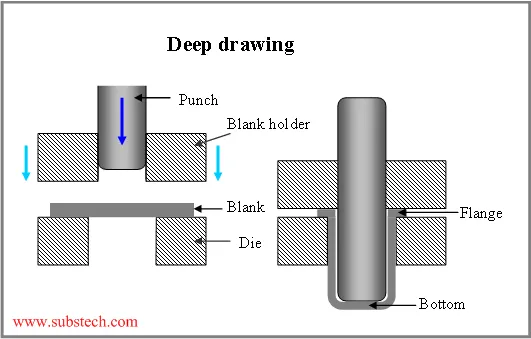
Emboss need to be design by taking manufacturing process deep drawing into the account. So it is necessary to provide required draft.
Further this design will be analyzed by CAE team and give their feed back.
- Provide each and every emboss by using the tooling direction as the vector.
5. Create embosses to provide strength.
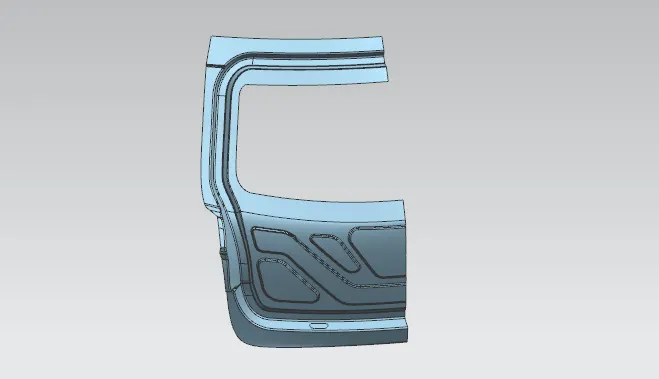
6. provide access holes to mount tail lights and wiper motor.
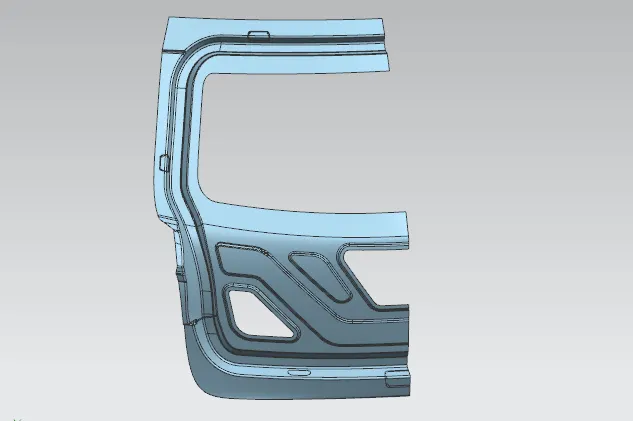
7. Provide emboss to mount the hinges at top most region.
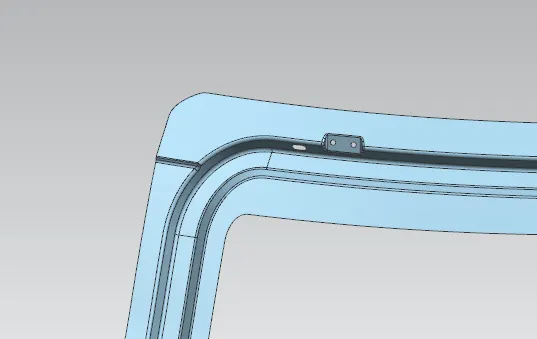
8. Provide emboss to mount the gas stay at sides.
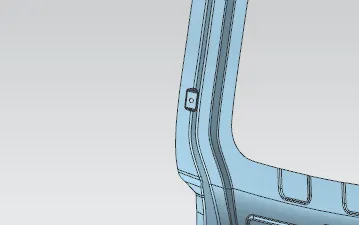
9. Provide emboss for latch mount at bottom most region.
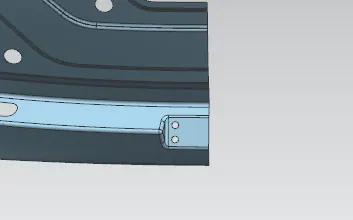
10.Mirror the sheet and prvide a flange to joint with the outer panel at middle for extra strength.
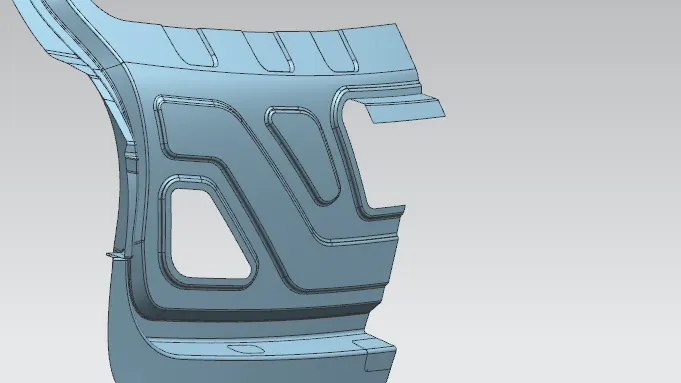
11. Provide last emboss for wiper motor mount.
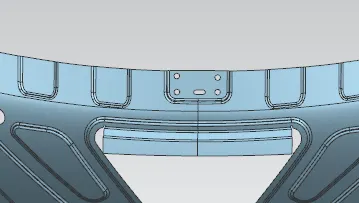
12. Sew the whole sheet and thicken it with 0.75mm.
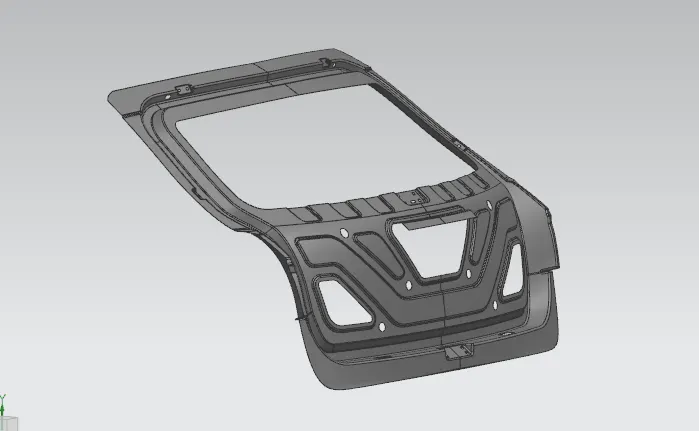
2. Hemming outer panel over inner panel.
Theory-
Hemming is a sheet metal forming process in which sheets are joined by bending it to 180°. Automotive body panels and automotive parts such as deck-lids, trunk-lids, doors, hoods and tailgates are formed by hemming process. In this process, usually a sheet is bent with the help of inner sheet in three different stages.
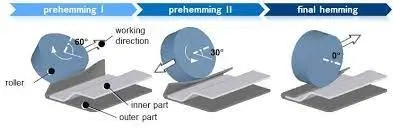
To keep the aesthetic looks intact while joining riviting or welding are not preferable. Here comes the role of Mastic, there is adhesive placed between two sheets to join them together. After this hemming process finla stage is to apply sealant.
To join properly and avoid NVH, outer panel join wiht inner panel by applying many adhesive at various portion called mastic points.
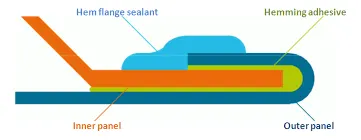
1. Offsetting the outer panel to make wrap around surface over inner panel considering the parameters given in the hemming data.
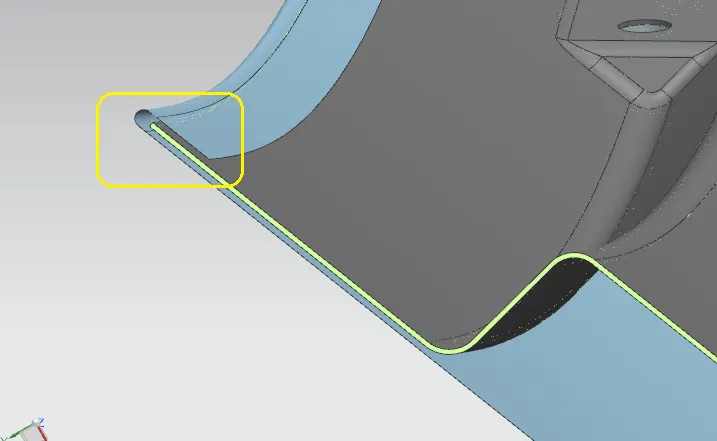
2. As this outer panel is in two sections similarly make a hem for the lower section.
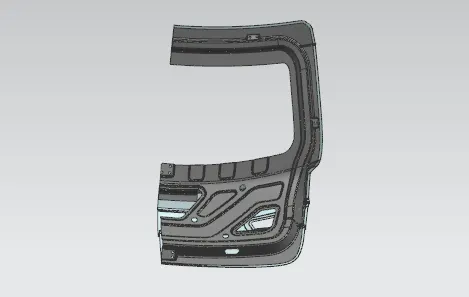
3. After mirroring thicken the surfaces with 0.75 mm.
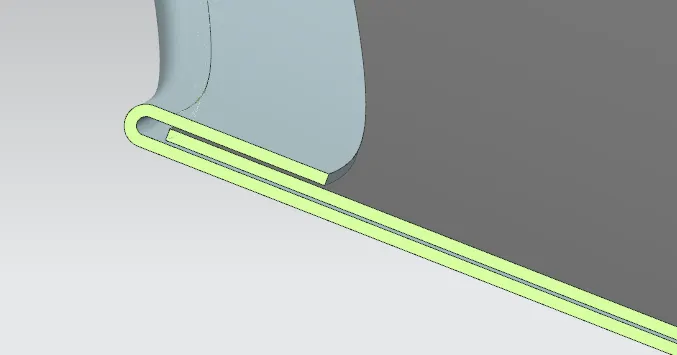
3. Create reinforcements for latch, viper motor , gas stay and hinges mountings.
1. Using Wave linker geometry create surface for Reinforcements behind the inner panel for all mountings as a seperate part it the assembly.
2. After positioning, thicken reinforcements by 1.5mm, and mirror the gastay reinforcement & hinge reinforcement.
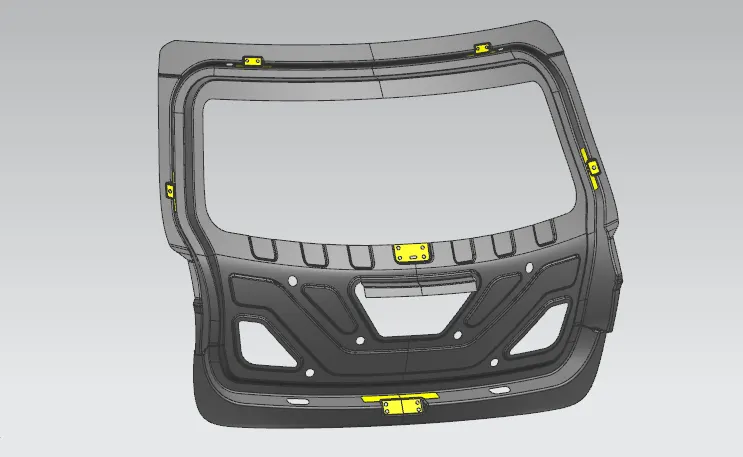
LATCH AND STRIKER TRAJECTORY-
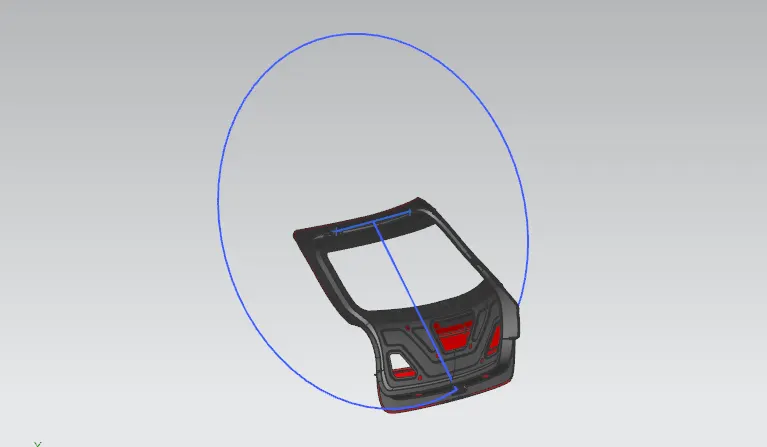
For every moving part like doors, tail gate and hood this study is applicable. In this we check wheather the position of the hinge axis is right or not by checking the perpendicularity of the trajectory and striker position.
DRAFT ANALYSIS-
1. Create tooling direction for the inner panel
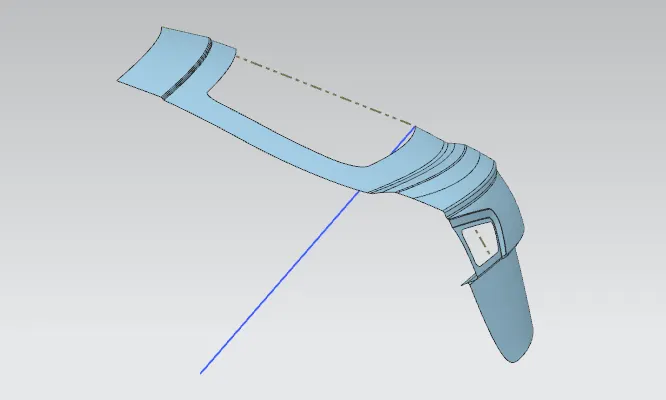
2. Using the tooling direction as the vector analyse the draft.
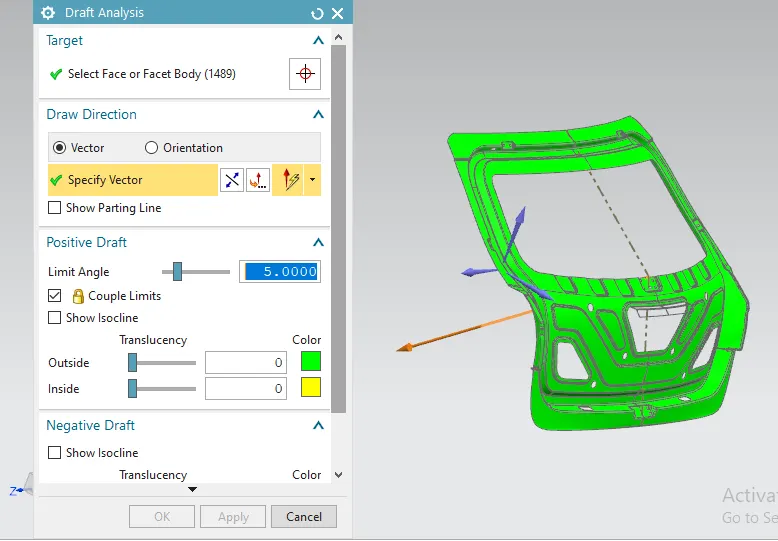
The result shows green at every section including the emboses for every mounting which suggests that the model is good for manufacturing, except one region.
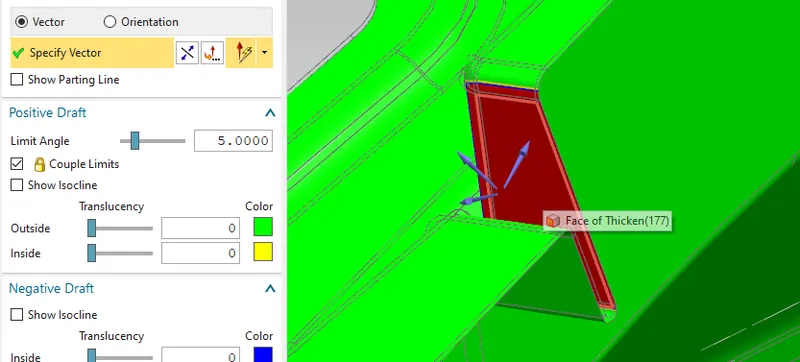
it is still possible to manufature this part with one extra step, or this section can also be removed.
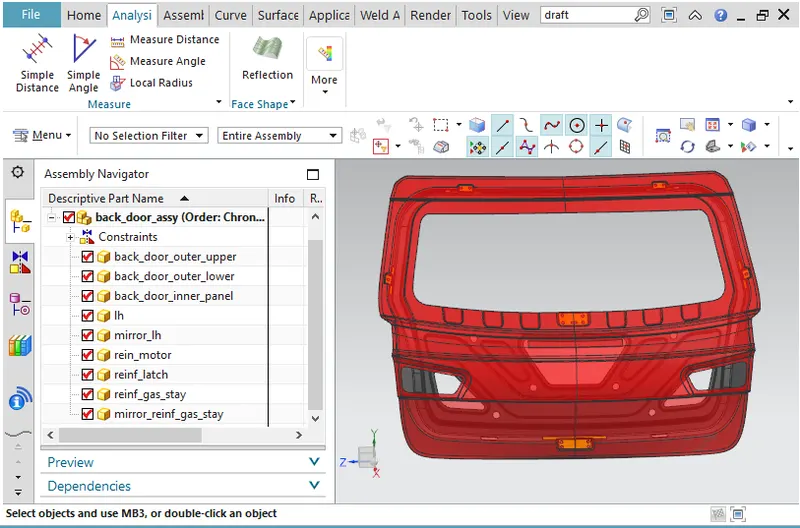
FINAL ASSEMBLY-
RENDERED-