Design of backdoor
Aim :
To Design and Assemble the Back Door outer panel, Inner panel and the necessary reinforcements.
Introduction :
Tailgate is the closing door of the luggage compartment.It provides the aesthetic outer appearance to the vehicle as well as wind flow aerodynamic surface.Tailgate is a single stamped or split outer panel.It integrates with the inner reinforcement panel.To avoid air rushing noise as well metal rubbing noise, protected with the sealer application process. Outer edges hemmed by Robot hemming process with 3 pass hemming to ensure sealer fill rate uniformly as well clinch tightness rigidly.In such a way easy to open at the same time, it should not pass external environmental noise inside the passenger compartment and should not lead to any water leak.High closing effort leads to improper locking. Gas Stay is used to easily access opening and closing.
Sheet metal operations on Back Door :
- Blanking and piercing
- Deep drawing
- Embossing
- Hemming
Blanking and piercing :
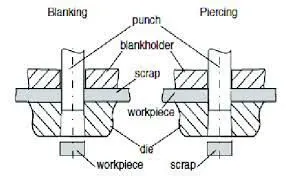
Blanking and piercing are shearing processes in which a punch and die are used to produce parts from coil or sheet stock. Blanking produces the outside features of the component, while piercing produces internal holes or shapes. The web is created after multiple components have been produced and is considered scrap material. The "slugs" produced by piercing internal features are also considered scrap. The terms "piercing" and "punching" can be used interchangeably.
Deep drawing :
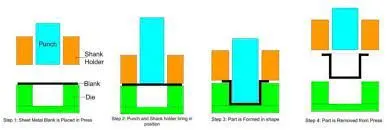
Deep drawing is a sheet metal forming process in which a sheet metal blank is radially drawn into a forming die by the mechanical action of a punch. It is thus a shape transformation process with material retention. The process is considered "deep" drawing when the depth of the drawn part exceeds its diameter.
Embossing :
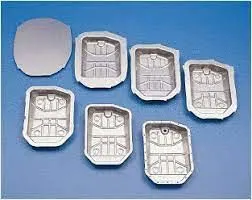
The metal sheet embossing operation is commonly accomplished with a combination of heat and pressure on the sheet metal, depending on what type of embossing is required. Theoretically, with any of these procedures, the metal thickness is changed in its composition.
Metal sheet is drawn through the male and female roller dies, producing a pattern or design on the metal sheet. Depending on the roller dies used, different patterns can be produced on the metal sheet. The pressure and a combination of heat actually "irons" while raising the level of the image higher than the substrate to make it smooth. The term "impressing" refers to an image lowered into the surface of a material, in distinction to an image raised out of the surface of a material.
In most of the pressure embossing operation machines, the upper roll blocks are stationary, while the bottom roll blocks are movable. The pressure with which the bottom roll is raised is referred to as the tonnage capacity.
Embossing machines are generally sized to give 2 inches (5 cm) of strip clearance on each side of an engraved embossing roll. Many embossing machines are custom-manufactured, so there are no industry-standard widths. It is not uncommon to find embossing machines in operation producing patterns less than 6 inches (15 cm) wide all the way up to machines producing patterns 70 inches (180 cm) wide or more.
Hemming :
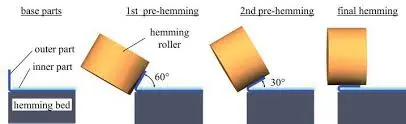
Hemming is a sheet metal forming process in which sheets are joined by bending it to 180°. Automotive body panels and automotive parts such as deck-lids, trunk-lids, doors, hoods and tailgates are formed by hemming process. In this process, usually a sheet is bent with the help of inner sheet in three different stages.
Automobile Back door consists of the following components :
- Back door outer panel upper
- Back door outer panel lower
- Back door inner panel
- Hinge reinforcement
- Gas stay reinforcement
- Wiper mounting reinforcement
- Latch and striker reinforcement
Back door outer panel :
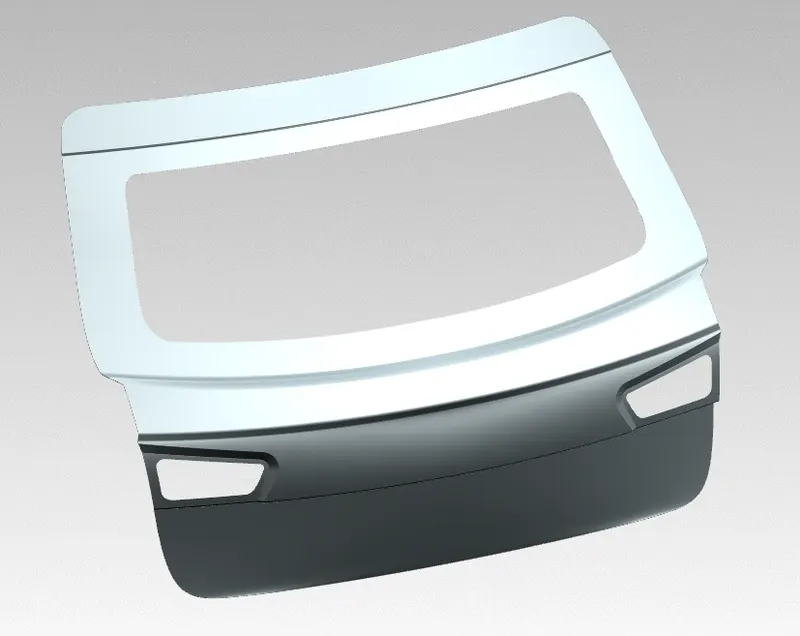
The outer panel is the styling surface of the back door. It is a source of the design of other parts of the backdoor. It gives more aesthetics to the car.
Back door inner panel :
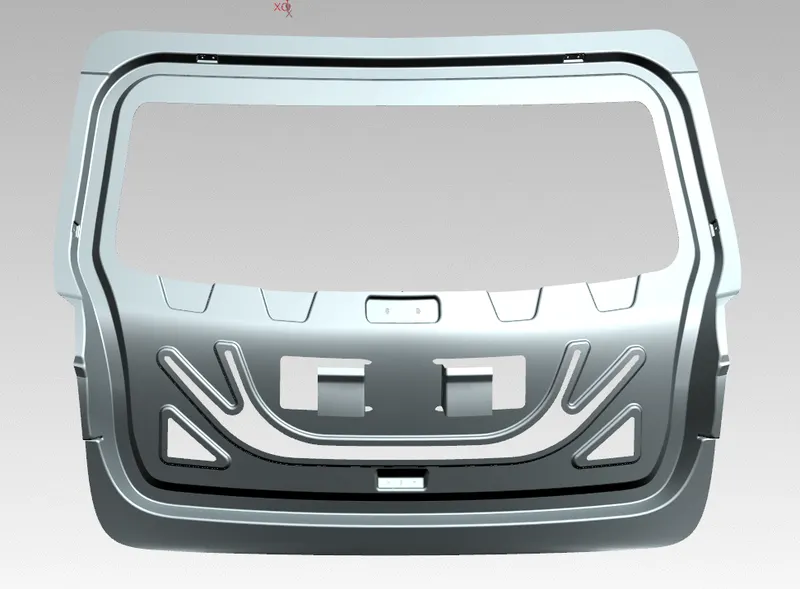
The inner panel provides strength to the back door. There are many cases where the inner panel subject to stress due to frequent opening and slamming. These stress factors are compensated by features like embossing and reinforcements.
Hinge, gas stay, wiper, latch and striker reinforcement :
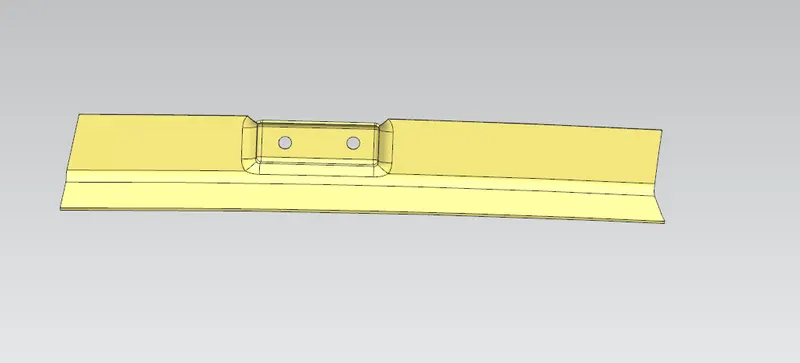
Hinge reinforcement
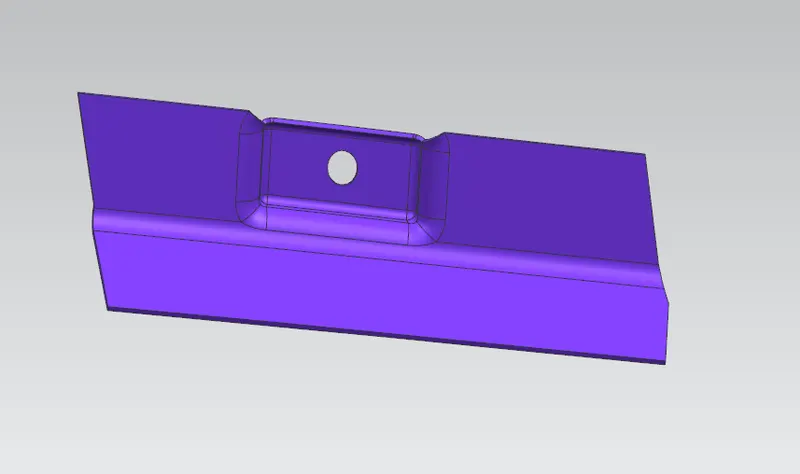
Gas stay reinforcement
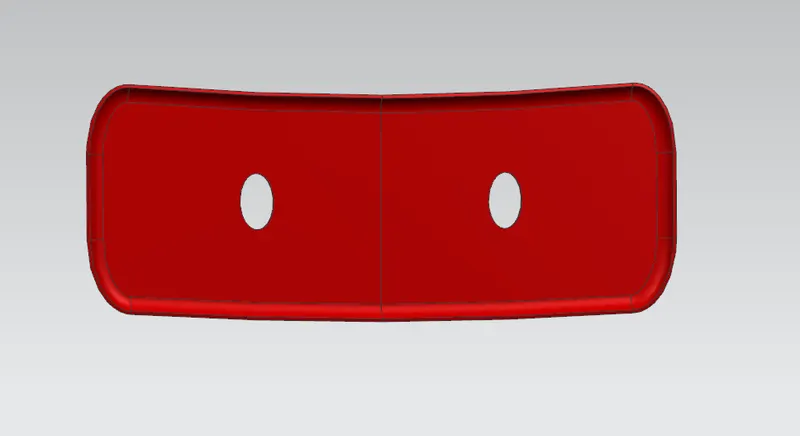
Wiper reinforcement
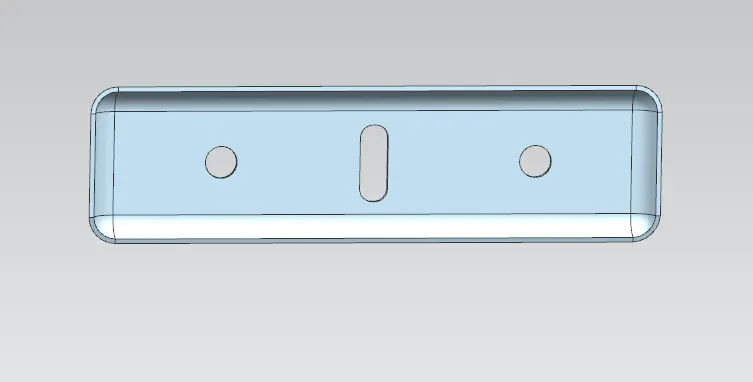
Latch and striker reinforcement
This reinforcements are provided for extra strength on the inner panel.
Draft analysis :
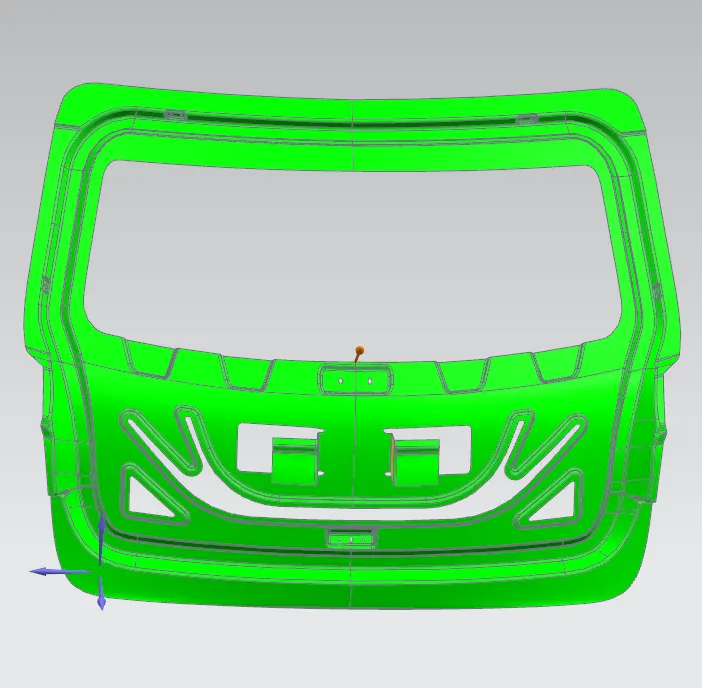
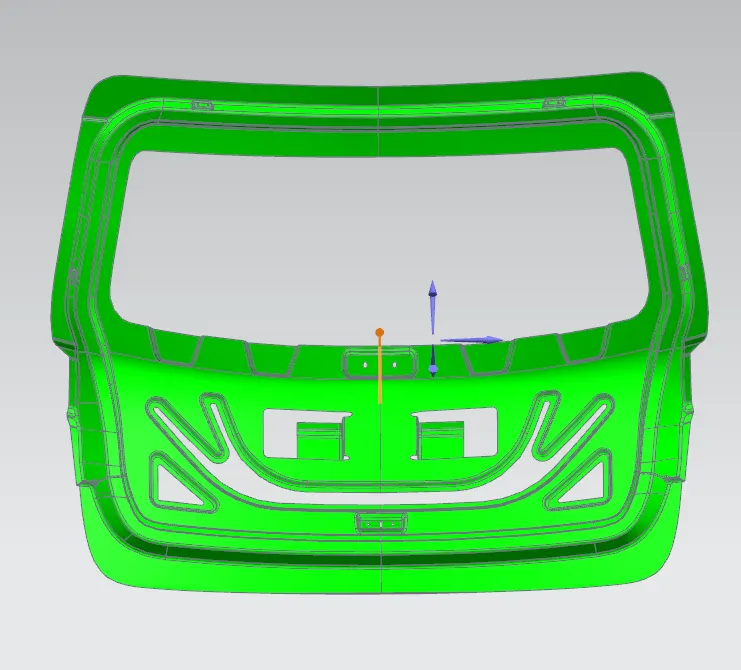
Draft analysis was performend on the surface along the tooling axis to analyse if the given component is toolabe along the tooling direction.We take maximum of 7 degree of draft angle for the surface.
Final output :
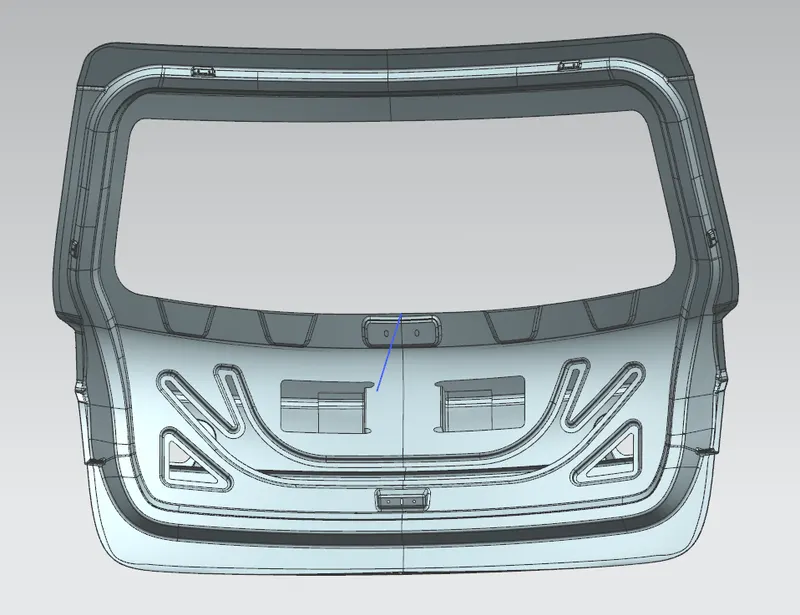
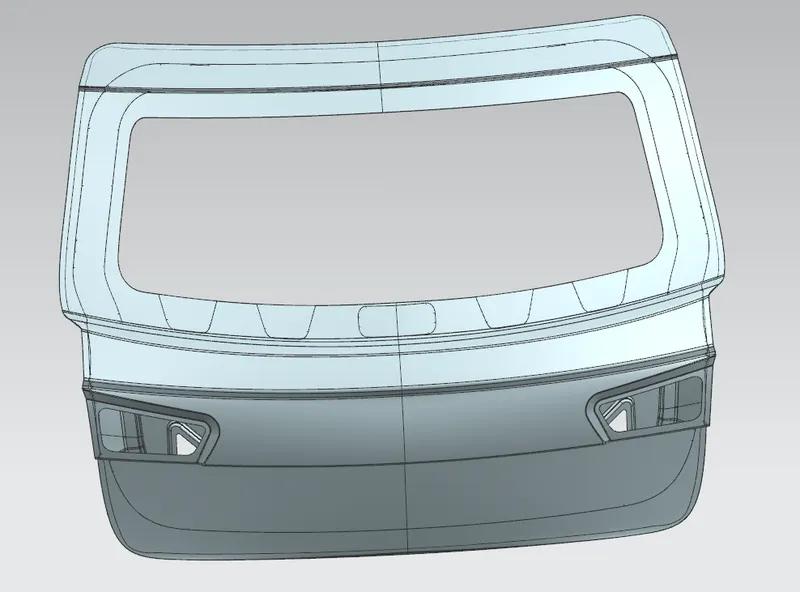
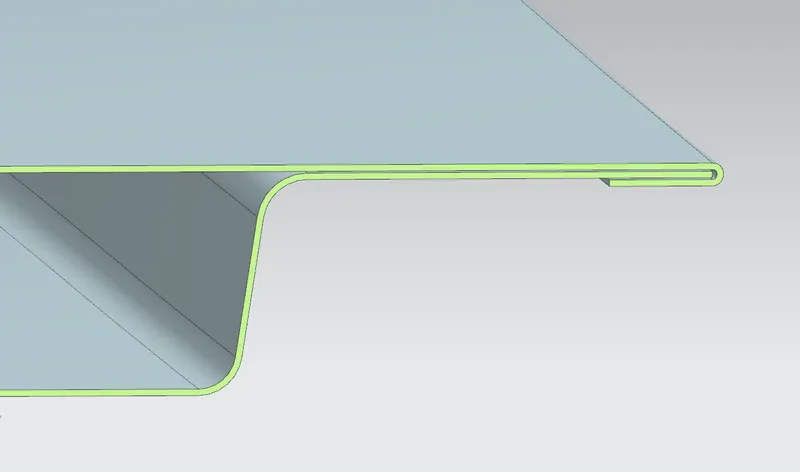
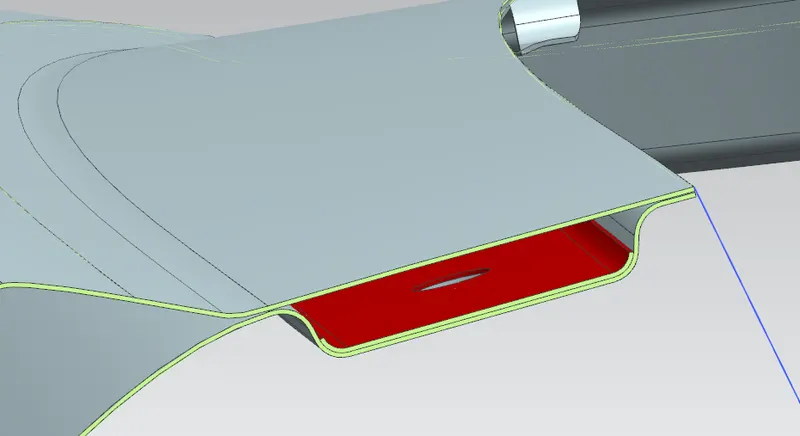
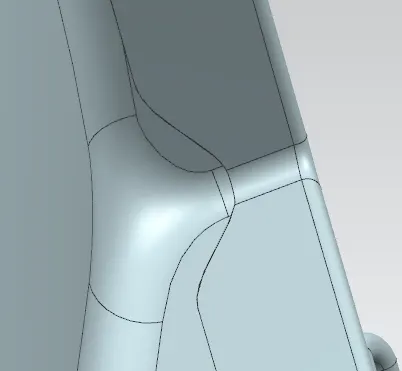
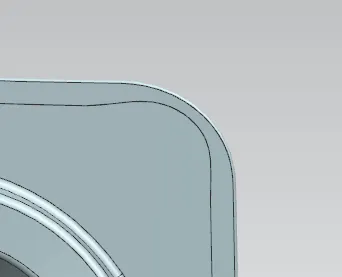
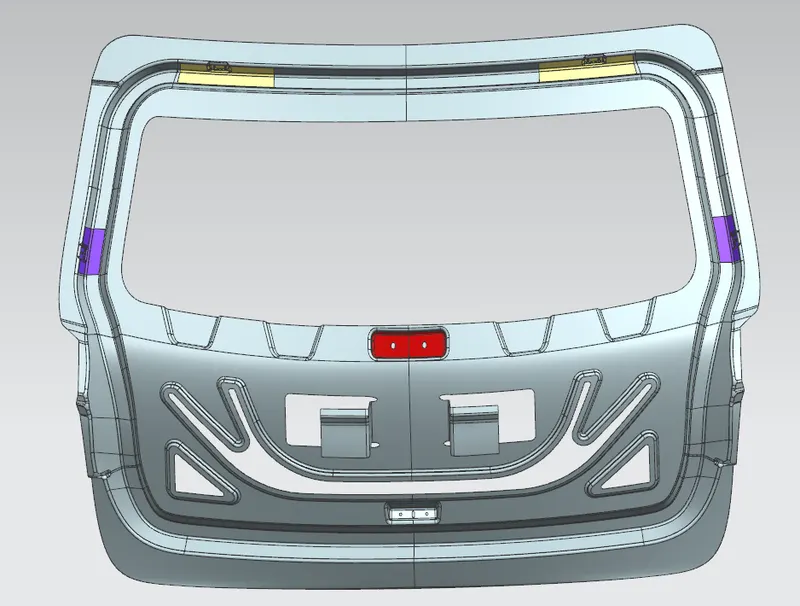
Conclusion :
Back door inner, outer panel and necessary reinforcements are developed From the given styling surface using NX CAD.