Design of backdoor
TITLE: TO DESIGN VEHICLE BACK DOOR ALONG WITH ESSENTIAL REINFORCEMENT
OBJECTIVE:
- From the given styling surface design a car backdoor with reinforcement like a latch and striker, Hinge, gas stay and viper motor reinforcements using appropriate design methodology.
- Learning the industrial approach of how the BIW car back door is designed in the industry.
- To be the industry ready for the role of mechanical design engineer.
INTRODUCTION:
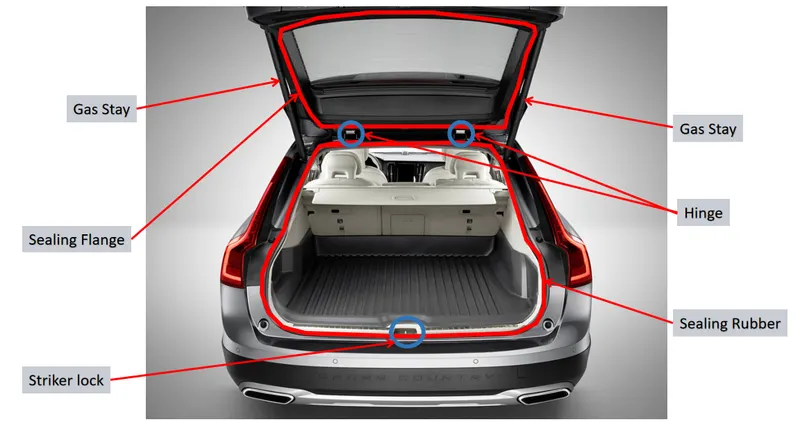
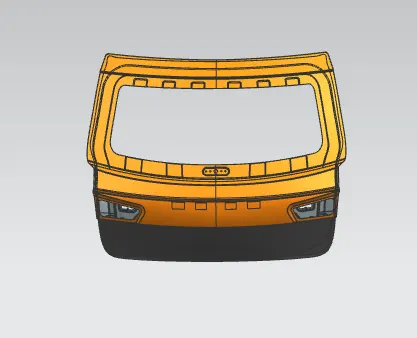
In this project I have designed the backdoor for hatchback car which is hinge to the roof. The backdoor is also the swinging commodity similar to the hood in car. The backdoor or the tailgate of a car is the door at the rear end of the car, which provides access to the luggage compartment. In most of the cars, these back doors are operated with the help of gas stay which in turn reduces the effort required to lift the door. Some luxury cars have powered backdoor which is driven by an electric motor. This kind of system is also called a powered trunk lid system. The backdoor is also responsible for dissipating the force created while rear collision.
Backdoor has to be designed by keeping in mind space required for luggage compartment as well as accommodate latch and striker, wiper motor without compromising the strength of the components.
Usually aluminum or steel is used to manufacture the back door. While aluminum backdoor is lighter in weight and has lesser number of components since, the part is cast and has varying thickness thus therefore does not required reinforcement. Steel backdoor is ‘deep Drawn’ and has uniform thickness added with reinforcement thus steel parts are heavier. But the production cost of steel is lesser than aluminum.
MANUFACTURING OPERATIONS FOR BACKDOOR:
Deep drawing:
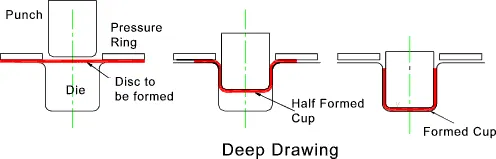
Deep drawing, or simply drawing, is a widely known manufacturing process and is used extensively in the forming of sheet metal. It assists in creating items such as pots and pans for cooking, containers, and automobile parts like panels and gas tanks.
the deep drawing of sheet metal is performed with a punch and die. The punch is used to achieve the desired shape. The die cavity matches the punch; however, it is slightly wider, allowing for passage and clearance. Similar to sheet metal cutting, the clearance is the lateral distance between the die edge and punch edge.
The sheet metal, called a blank, is placed over the opening of the die, where a blank holder surrounding the punch applies pressure to the entire surface of the metal, except the area under the punch. With the blank flat against the die, the punch then moves towards it and makes contact. The punch forces the sheet metal into the die, forming its shape. In siemens NX deep drawn areas has been represented by commands like Emboss, dimple and bead.
Trimming:
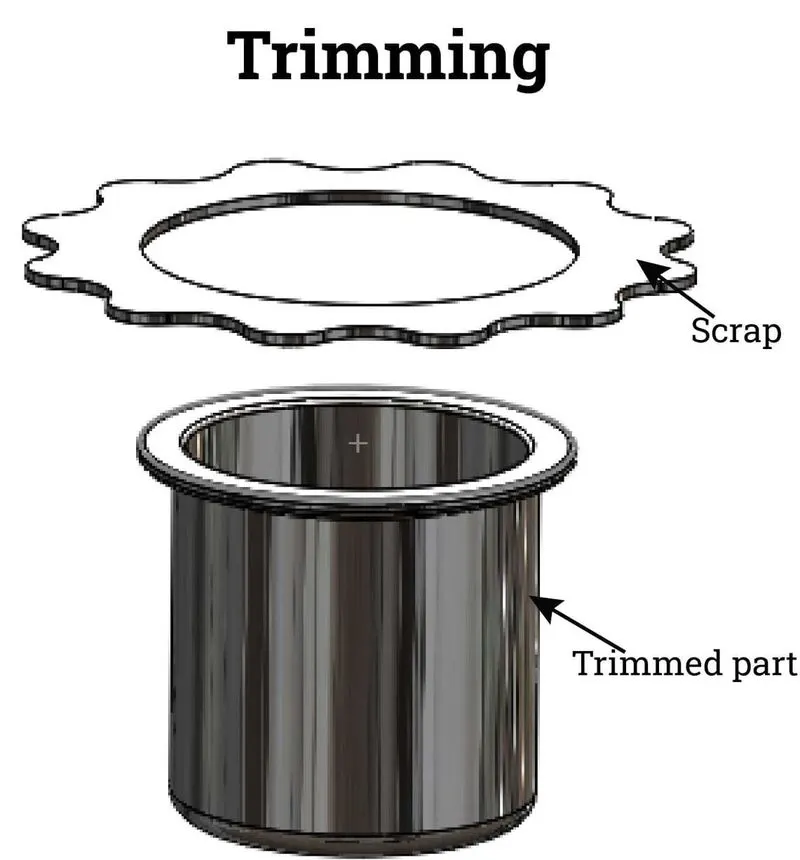
Trimming is the removal of excess metal from a stamped part to allow the part to reach the finished stage or to prepare it for subsequent operations.
Hemming:
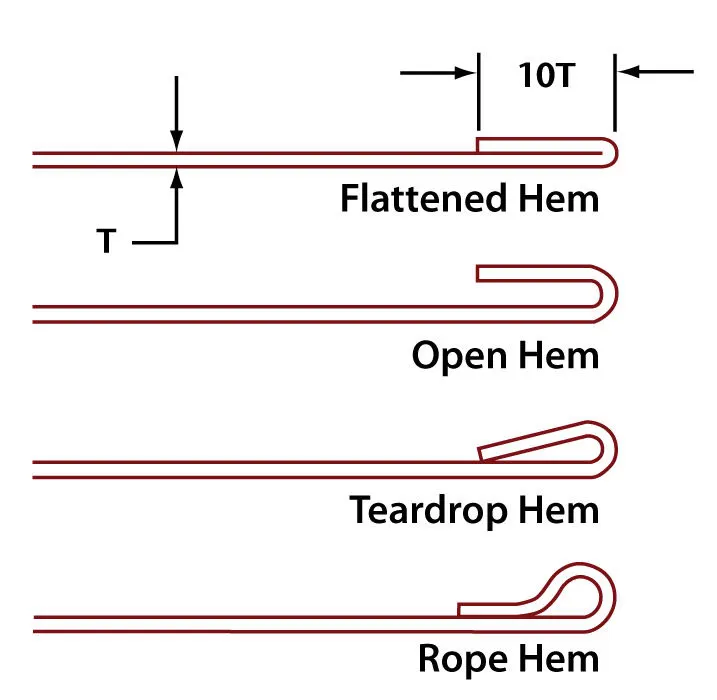
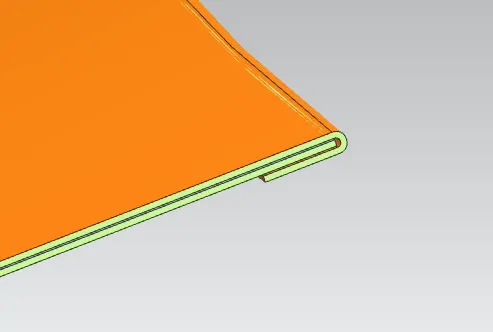
Hemming is a forming operation in which the edges of the sheet are folded over another sheet metal part to achieve a tight fit. Normally hemming operation is used to connect parts, to improve the appearance of part, and to reinforce part edges. The accuracy of the hemming operation is very important since it affects the appearance of the surface and surface quality. Material deformations, which occur during the hemming process, can lead to dimensional variations and other defects in parts. Typical hemming defects are splits or wrinkles in the flange, material overlaps in the corner areas, or material roll-in. thus it is needed to provide relief at the corners.
Design Methodology:
Class A surface has been provided to us, to design the backdoor. While designing I followed the top down approach in top down approach we have to create an assembly first, and then required parts in it. Top down approach is too much handy as we can easily active the part and change it according to the final assembly design required as we don’t have to worry about the position of parts the parts are easily position in proper way by the command called wave geometry linker.
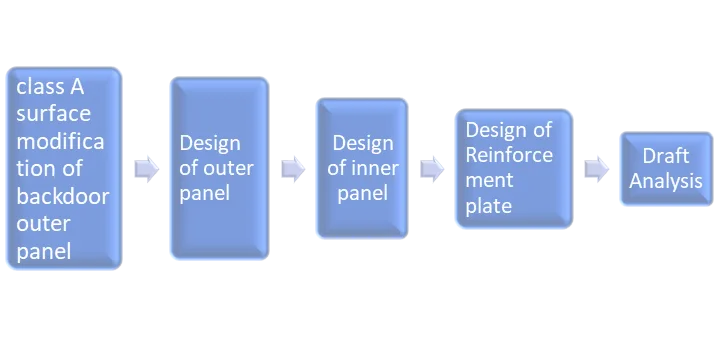
Outer Panel:
The outer panel is the styling surface of backdoor. It is the source of design for the other parts of the backdoor especially inner panel. It acts as the outer cover and deals with the aesthetic of the car. The outer panel is mainly divided into outer panel upper and lower panel lower. Outer panel has provision for the windshield glass, tail lamp, and license plate mountings. Firstly, I had to repair the surface by removing an irregular surface that is not able to sew properly, Then I proceeded for the further operations.
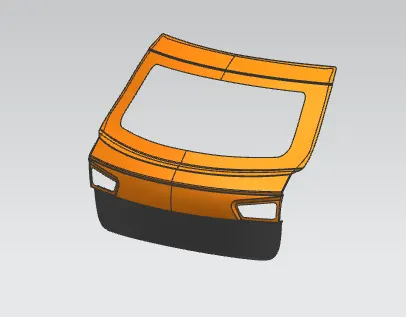
fig. Backdoor outer Panel
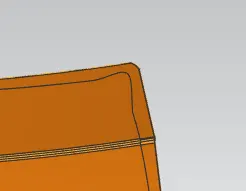
fig. Corner relief
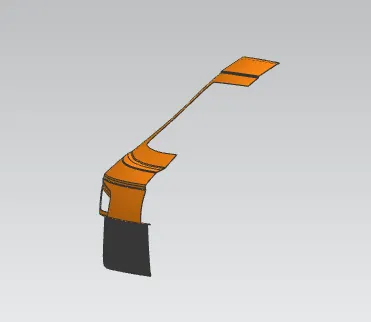
Fig. Section View
Hemming:
Hemming operation in NX was performed by using swept, studio surface and face blend. It is a kind of complex process so I have to give attention to the curves, 0.2mm clearance between top and bottom and 2mm clearance between the edge of the inner panel and the inner surface of the outer panel. This clearance is there because after the hemming, sealant is applied there for which it needs little space to lose out and get it stuck properly.
Tooling Direction:
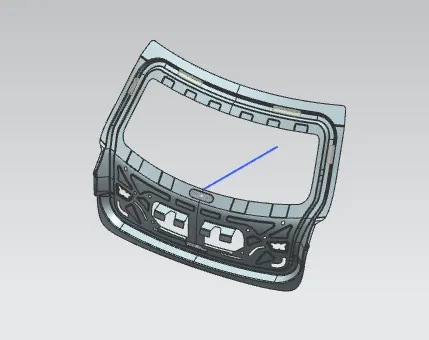
The inner panel is manufactured in the industry through a deep drawing process. Core and die are used for deep drawing, the core is a heavy part and it follows a single straight line which is also known as tooling direction. Core follows the tooling direction and punches the entire part in the die and the sheet metal part gets created. For creating tooling direction in the NX software I draw two connected lines from two end which follow the part and then bisecting these two lines I created tooling direction.
Inner Panel:
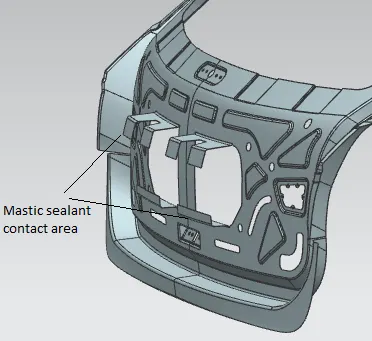
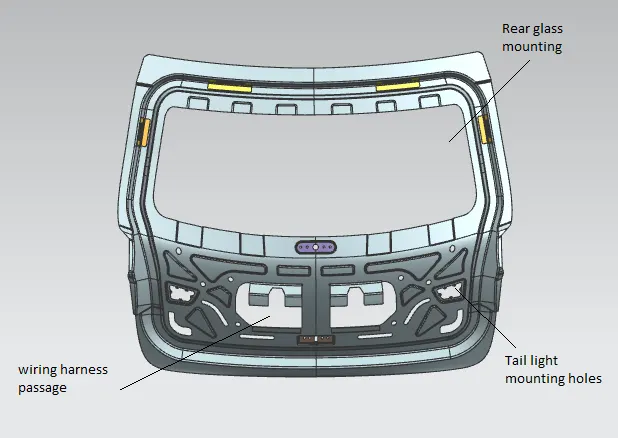
The inner panel is single sheet metal piece deep drawn to complex shape with ensure to withstand the impact force exerted transfer from outer panel during rear collision of the car. It is provided with embosses to add extra strength and it is designed in such a way to distribute the forces equally to all regions away from the center of inner panel towards the gas stay and hinges support area. In the middle flanges are kept to apply mastic sealants. Thickness of the inner panel consider 0.75mm.
Emboss on the inner panel are faced in outward direction so that, during rear collision projected emboss take the impact force before damaging the inner panel and divert the peak impact force toward the hinge and gas stay support areas.
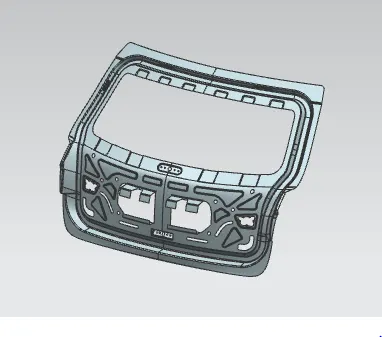
Fig. inner panel
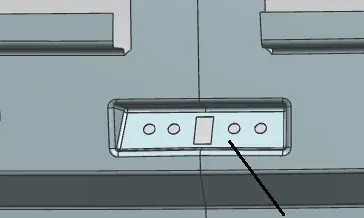
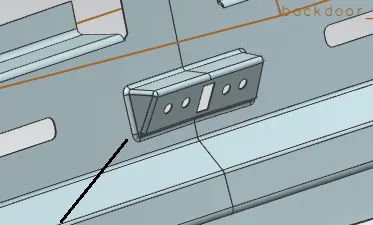
Fig. Latch emboss
Reinforcement Pad:
These are used to increase the local strength of emboss structure and provide strong base for the mounting components like hinges, gas stay, motor mounting and latch striker on inner panel. Various simulation tests are carried out like bend test, torsion test, abuse test on the backdoor, reveals that there a weak zone on those areas to compensate this, reinforcements are added on those areas. Thickness of all reinforcement pad are 1.25mm.
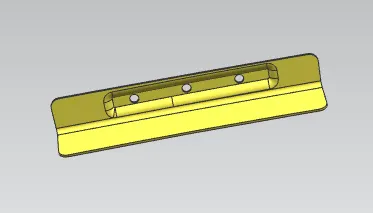
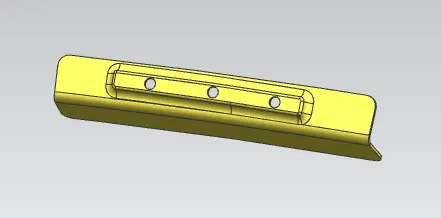
Fig. Hinge reinforcement pad
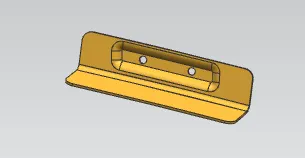
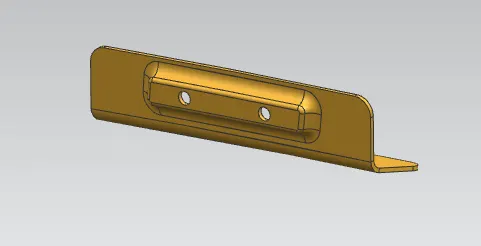
Fig. Gas stay reinforcement pad
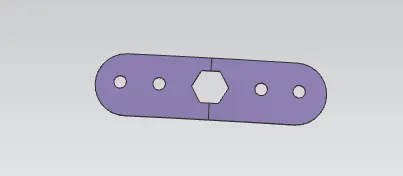
Fig. Vipor motor reinforcement pad
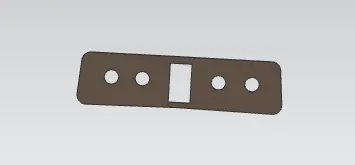
Fig. Latch reinforcement pad
Door trajectory:
This method is done to understand the backdoor’s trajectory for the latch and strike positioning during the opening and closing of backdoor. This method helps to locate the latch assembly parts properly with respect to striker.
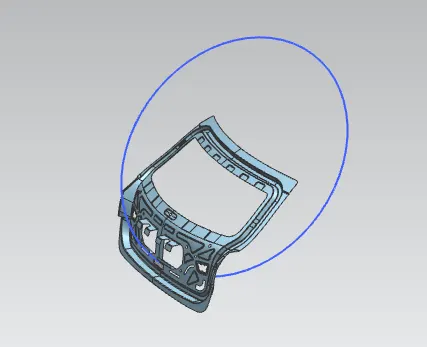
Draft Analysis:
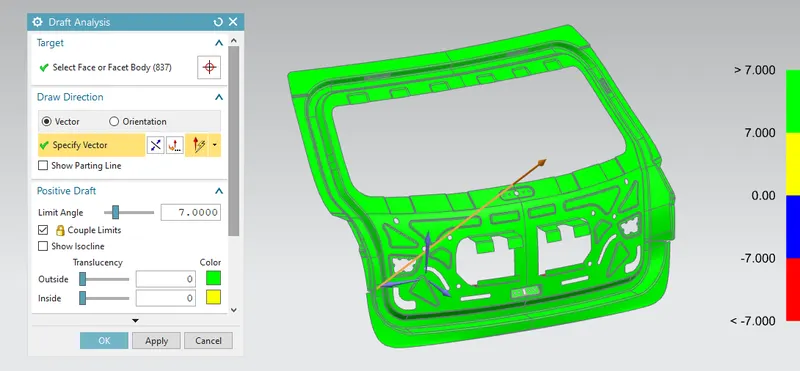
The draft analysis command enables us to detect if the part you drafted will be easily removed and manufacturable. This type of analysis is performed based on color ranges identifying zones on the analysed element where the deviation from the draft direction at any point, corresponds to specified values.
Minimum draft angle of 7 degree is considered for analysis. Green color infers on the parts that all face along the tooling direction has positive draft angle greater than 7 degree and passed the analysis.
Assembly View:
Front View:
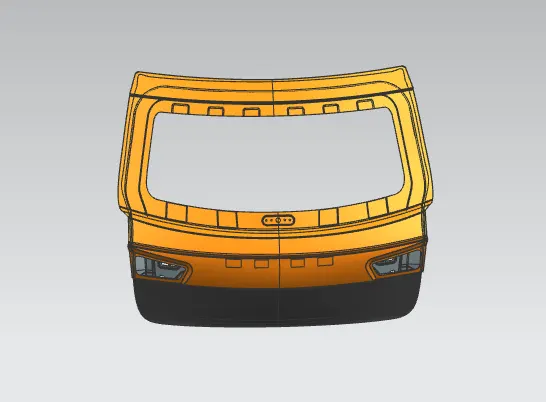
Rear View:
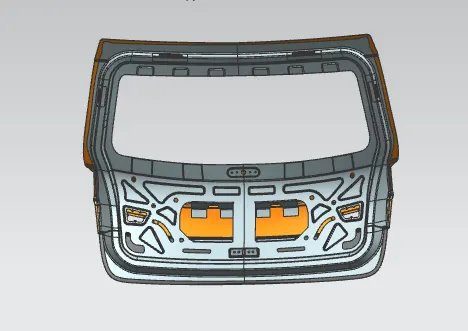
Inner panel with Reinforcements:
Conclusion:
- Successfully designed the backdoor with all the reinforcement by following the appropriate design methodology.
- The modelling of all BIW components of backdoor is designed and will be forward to CAE team to check the other parameter.
- This project helps me to enhance my designing skill and become industry ready for the role mechanical design engineer.