Design of backdoor
Back Door Design
Objective:-
To use the provided styling surface to come up with a back door and use appropriate design methodologies and male the necessary reinforcements and emboss.
Introduction:-
The truck or boot of a car is the vehicle's main storage or cargo compartment, often a hatch at the rear of the v vehicle. it is also called a tailgate.
In India, the storage area is known as a dickey and in south Asia as a compartment.
The trunk or luggage compartment is most often at the rear of the vehicle. Early designs had an exterior rack on the rear of the vehicle to attach the luggage trunk. Later designs integrated the storage area into the vehicle's body and eventually became more streamlined. The main storage compartment is normally provided at the end of the vehicle opposite to which the engine is located.
Types of Backdoor mounted:-

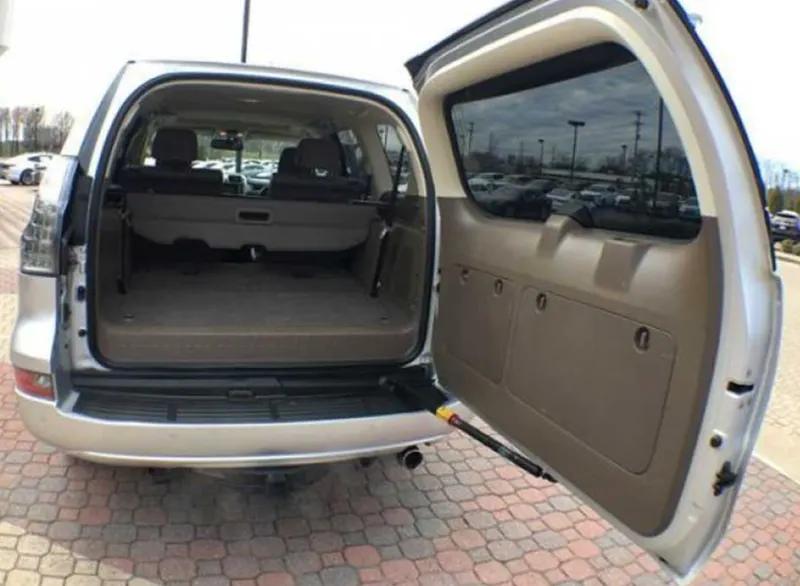
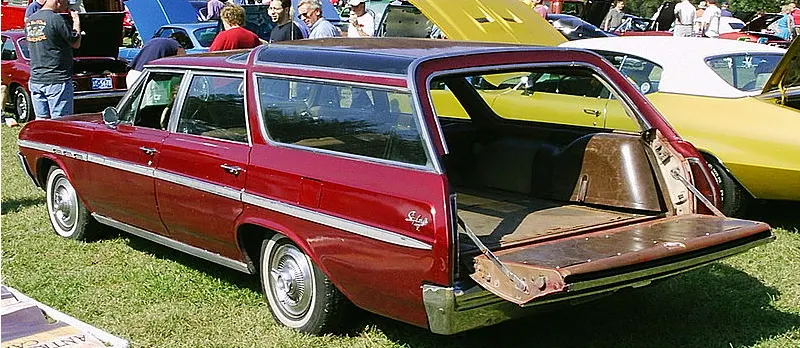
The door or opening of a cargo area may be hinged at the top, side, or bottom.
If the door is hinged at the bottom it is called a tailgate, particularly in the United States. They are used on station wagons and pickup trucks, as well as on some sport utility vehicles (SUVs). Traditional drop-down station wagons and pickup tailgates can also serve as a mount for a workbench.
Traditional U.S. station wagons included a roll down window retracting into the tailgate to load small items or to allow the tailgate to be opened down on its bottom-mounted hinges. Because of the potential for carbon-monoxide fumes, the tailgate window on station wagons should be closed whenever the engine is running.
Two-way station wagon tailgates may be hinged at the side and the bottom so they can be opened sideways like a regular door, or drop downwards as load platform extenders. They are designed with special handle(s) for opening in the selected direction on special hinges after the window is lowered.
A three-way design that was also used by Ford allows for the tailgate to be opened like a door with the window up.
General Motors developed a clamshell-style "disappearing" design where the rear window rolls up into the roof and the tailgate slides down and beneath the load floor.
If the door is hinged at the top it is termed a hatch and is used on a hatchback. A bottom opening door is now common on SUVs.
Design Considerations:-
The windscreen should give good visibility.
the door should be strong to sustain the impact during a collision.
The door should be thin to maximize the boot area.
Door should be light Weight for opening manually.
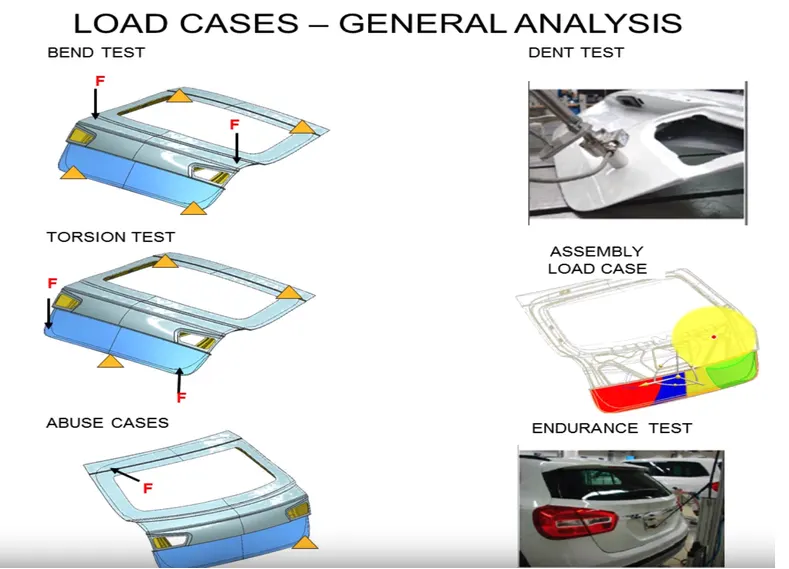
Some of the load cases are Bend test, Dent test, Torsion test and Endurance test.
Design Methodology:-
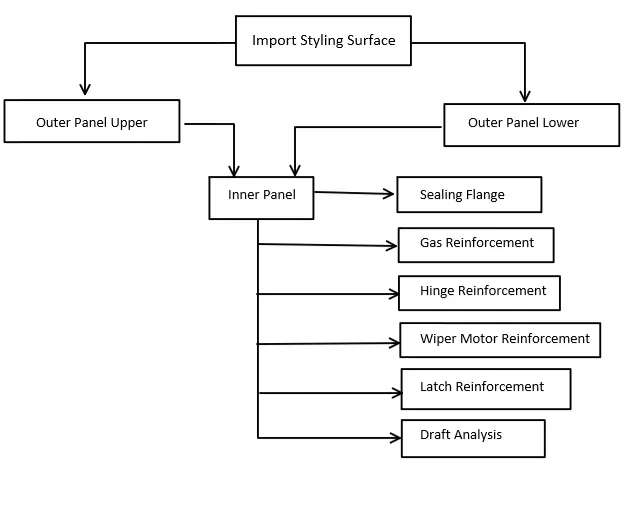
These are the following parts consists of back door
- Outer Panel Upper
- Outer Panel Lower
- Inner Panel
- Hinge Reinforcements
- Gas Stay Reinforcements
- Latch Reinforcement
- Wiper Motor Reinforcement
Outer Panel Upper
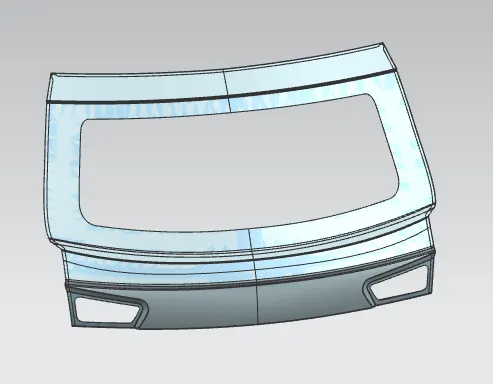
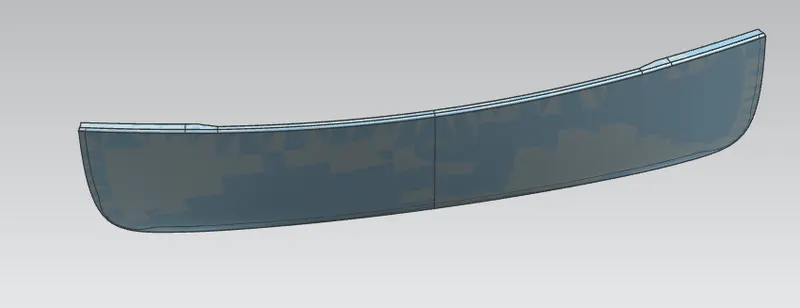
The Outer panel of the back door is similar to other BIW components where it is the aesthetic part of a vehicle. the outer panel also has the provision for the tail lamp, rear fog lamp, wiper motor and also has the provision for licence plate mountings.
Inner Panel
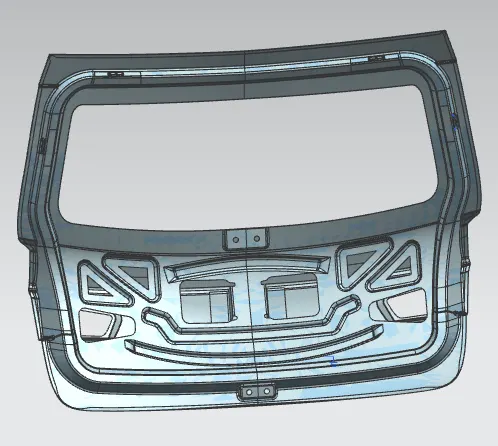
The Inner panel is a component that is used for strengthening the door and it is one of the most important components on which all accessories are mounted like hinges, glass guide channel, mounted trim, latch etc. the possible method is the integration method. the part is stamped out of a single blank. this reduces the number of tools needed the assembly cost and eliminates any fit ability problem.
Hinge Reinforcement
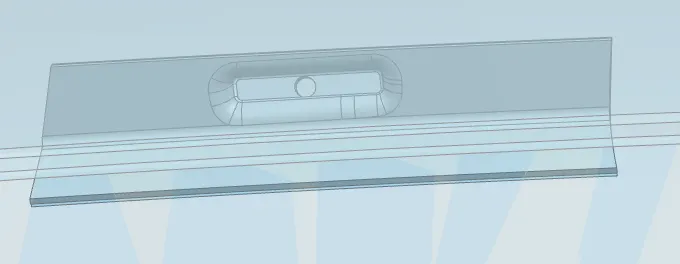
Hinges Support the weight of the whole backdoor. Emboss is designed such that the hinges should be operated freely. The electrical Wiring looms are through the holes along the peripheral to keep them hidden.
Gas Stay Reinforcement
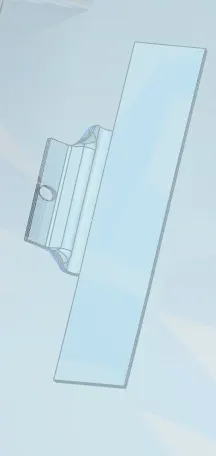
An angle or diabolic emboss is provided for the gas stay mounts. the angle makes it easy to be machine and stamped it is reinforcement with a thicker sheet.
Wiper Motor Reinforcement
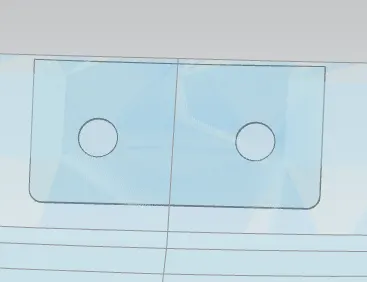
A cavity is placed in the middle of the panel for necessary components in the assembly as well as other accessories. The holes or cavities are placed strategically to accommodate wiring looms, tail lamp mounts, and other accessories. embosses help stiffen the panel and act like local reinforcements. extension are provided around holes that are attached to outer panels and acts are crumple zone elements in case of rear impacts.
Latch Reinforcement
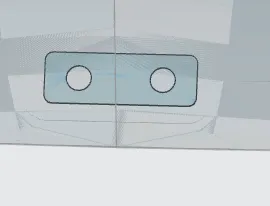
At the bottom of the latch and assembly generally, a key-operated or automatic remotely controllable locking mechanism is used to keep the door closed and open.
Back Door Assembly
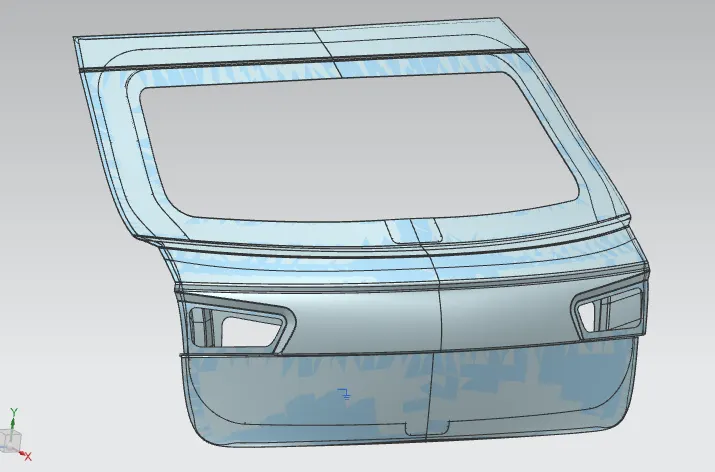
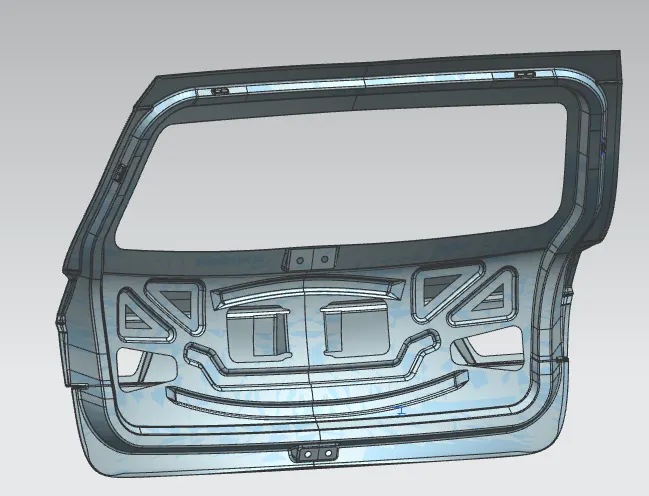
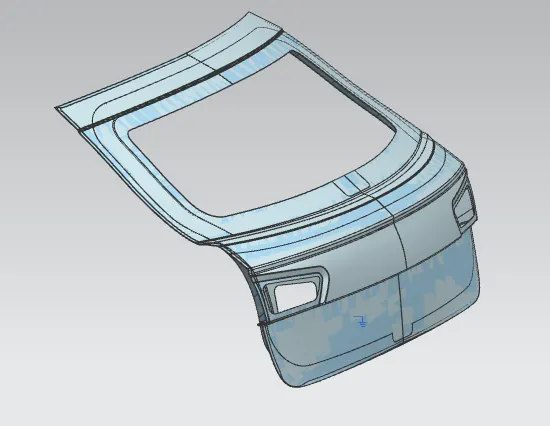
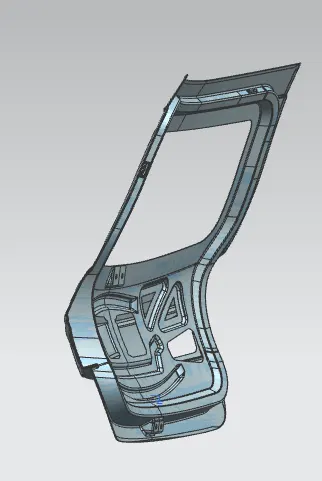
Draft Analysis
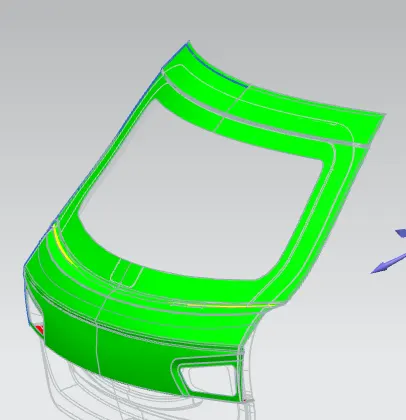
The Draft analysis is performed go check whether part satisfies for manufacturing process on basis of the tooling direction created initially.
The draft analysis command enables us to defect that the part drafted will be easily removed or not.
this type of analysis is performed based on color ranges identifying zones on the analyzed element.
Hemming
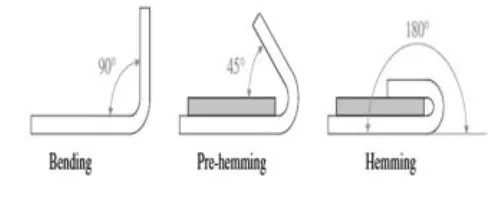
Hemming and seaming are two similar metalworking processes in which a sheet metal edge is rolled over onto itself. Hemming is the process in which the edge is a rolled flush to itself.
Corner Relief
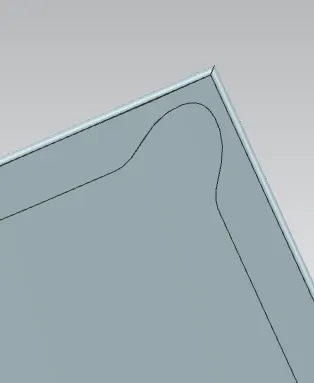
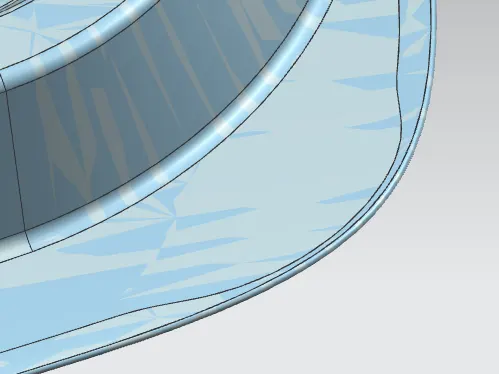
Conclusion
Here, the parts of the back door were designed using the top-down approach in NX Cad. All the required reinforcements were designed and assembled.