Design of backdoor
DESIGN OF BACKDOOR
INTRODUCTION:
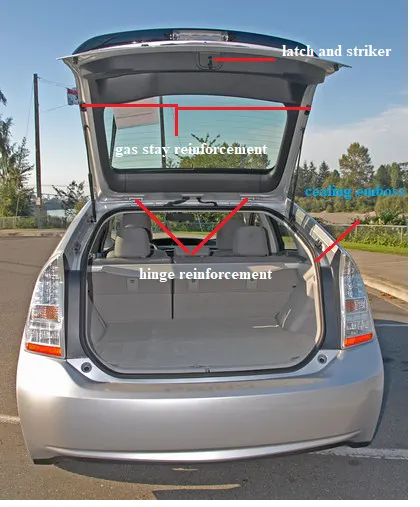
The back door of a car is also called as tail gate. Back door is generally used to cover luggage in the boot space which is available in car. The back door generally consists of outer panel and inner panel. The complete assembly part of backdoor has wiper motor reinforcement, hinges reinforcement, latch reinforcement and gas stay reinforcements. Generally, back doors are made of steel or aluminium, based on the design considerations and aluminium parts. By using the aluminium material, the strength of the back door can increase. But there are some considerations needs to be followed.
- Manufacturing cost of aluminium is high as compared to steel.
- Time taken to manufacture with aluminium is greater than steel.
- Strength of aluminium part is more than steel.
- The thickness provided for aluminium is 2.5mm and thickness and thickness of steel sheet to manufacture back door is 0.75mm.
If steel material is used to manufacture back door of a car, the design must satisfy the draft analysis of deep drawing process where as tooling direction is generally used to press the sheet along the tooling direction.
BACK DOOR
DEEP DRAWING:
The deep draw forming process begins with metal blanks. Typically, single blanks are used in order to facilitate the creation of parts or products with deeper shapes. Sometimes, these metal blanks will be placed on a reel to enable the metal to form efficiently. At each step in the deep drawing process, the metal blank is shaped through pressure applied by a metal die.
Though deep drawing is similar to metal stamping, the terms are not interchangeable. Stamping does not leave a single machine until the metal has completely formed. In general, deep drawing is used to fabricate parts and products that are deeper than metal stamping can accommodate.
OBJECTIVE:
- The objective of this project is to design and develop a BIW design of backdoor or tail gate with inner panel, outer upper panel, outer lower panel and hinge, latch and gas stay reinforcements.
- The inner panel must satisfy the draft analysis weather it satisfies the deep drawing requirements of tooling direction.
- Creating a perfect latch to compromise the hinge axis and striker alignment.
DESIGN CONSIDERATIONS OF BACK DOOR:
- Rear visibility criteria
- Force distribution on back door
- Perfect fit and clearance of the back door
- Exact alignment of hinge axis and striker mechanism
- Support structures like hinge and gas stay requirements
- Wiper motor mounts and tail lamps fittings
Parts required for back door and its reinforcement:
- Inner panel
- Outer panel upper portion
- Outer panel lower portion
- Wiper motor reinforcement
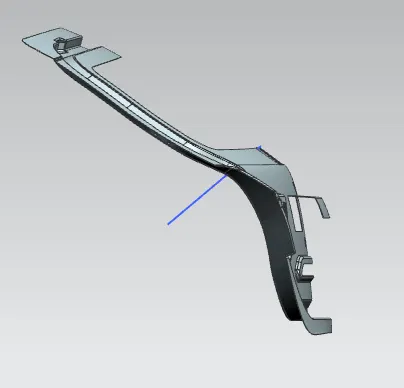
- Hinge reinforcement (left-hand side and right-hand side)
- Gas stays reinforcement (left-hand side and right-hand side)
- Latch and striker reinforcement
DESIGN OF INNER PANEL:
The inner panel is the major component of the back door. Inner panel consist of major alignment parts and even also for load distribution purpose. Inner panel consist of hinge emboss, gas stay embosses striker mechanism and mastic sealants. The sealing emboss act as a major role for perfect fit and to store language in a clean way. Wiper motor is also situated along this inner panel only. But the wiper motor should not in symmetry part because, the universal wiper motor is situated only one side but the shat should be in exact centre.
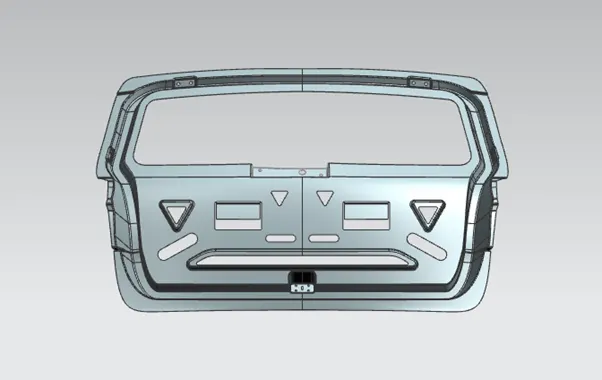
The placement of hinge axis and striker trajectory is placed as shown in figure.
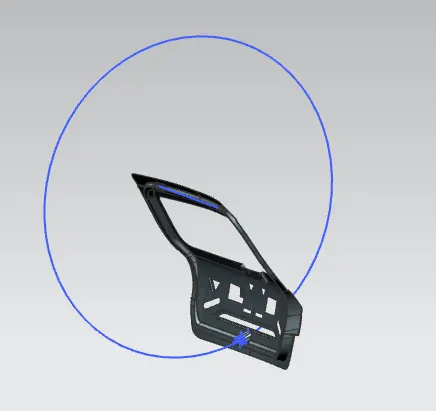
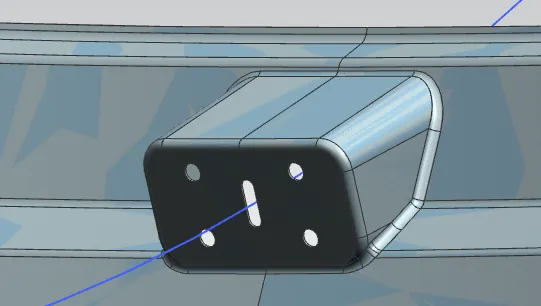
The striker (hook part) is designed in the surface of car, but the trajectory part and alignment is placed on the inner panel. This is because, we can avoid dust along the car and this dust may leads to corrosion. So that hole is designed in inner panel.
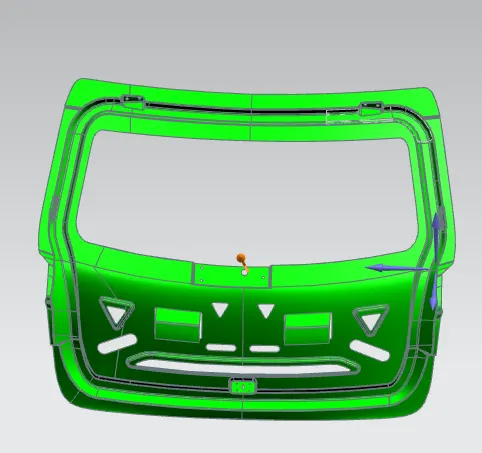
DRAFT ANALYSIS OF INNER PANEL:
OUTER PANEL UPPER PORTION:
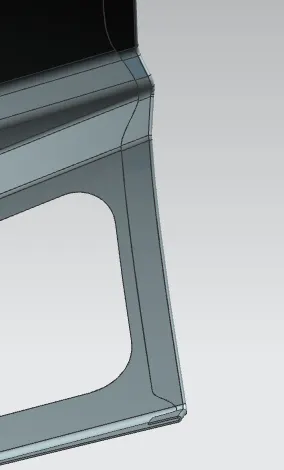
The outer panel is extracted from the given designed surface. And this styling surface is alternated for providing hems along all required sides and must need to satisfy 0.75mm thickening purpose. Such that the minimum radius of fillet is required on the design. the thickness of the outer panel is 0.75mm on all portions. Corner relief is also provided in the inner panel .
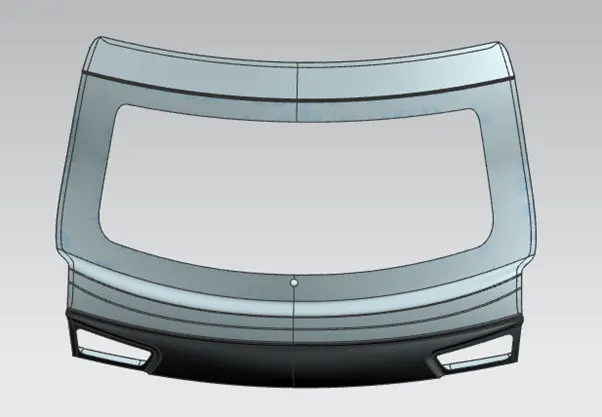
Corner relief along the outer panel.
OUTER PANEL LOWER PORTION:
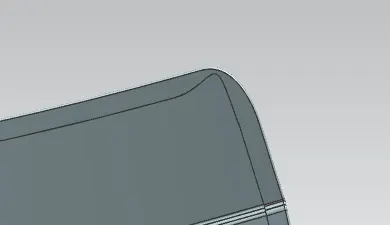
The outer panel of lower portion is fitted in the inner panel of the back door. Hemming is also provided for fitting in the inner panel. The thickness of the outer panel of lower portion is 0.75mm thickness.
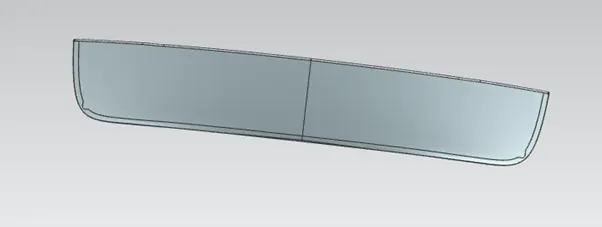
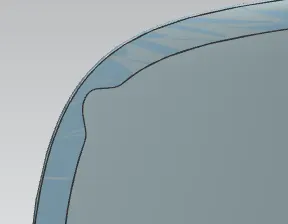
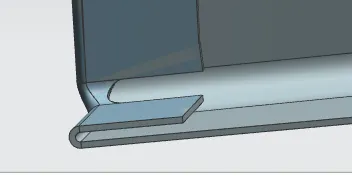
corner relief and hemming is also provided along the outer panel as shown in figure.
REINFORCEMENT STRUCTURES:
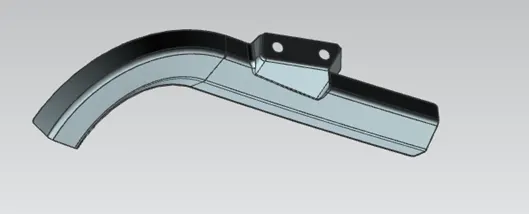
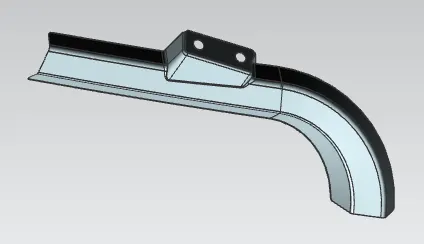
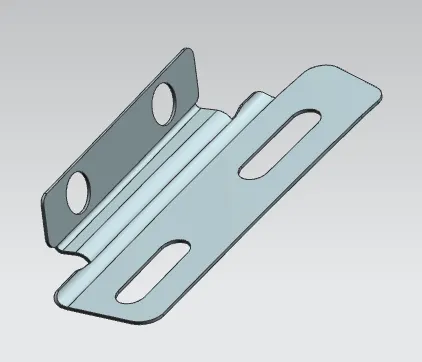
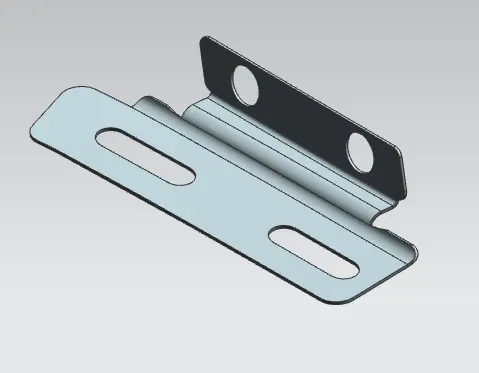
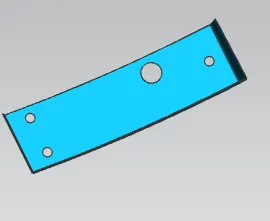
This reinforcements are the steel structures to provide suppourt and strengthen the inner panel and also hinges attached to the inner panel.
HINGE REINFORCEMENT STRUCTURES:
GAS STAY REINFORCEMENTS:
LATCH REINFORCEMENT:
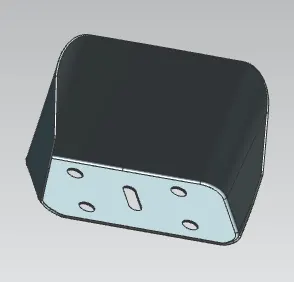
WIPER MOTOR REINFORCEMENT:
HEMMING:
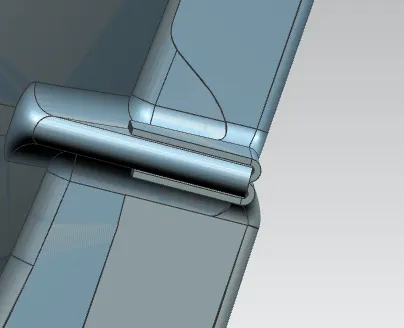
Hemming is a forming operation of sheet, which the edges of the sheet are folded over another sheet to get a tight and good fit. Normally, hemming operations are used to connect parts together to improve the appearance of the part and to reinforce the edges
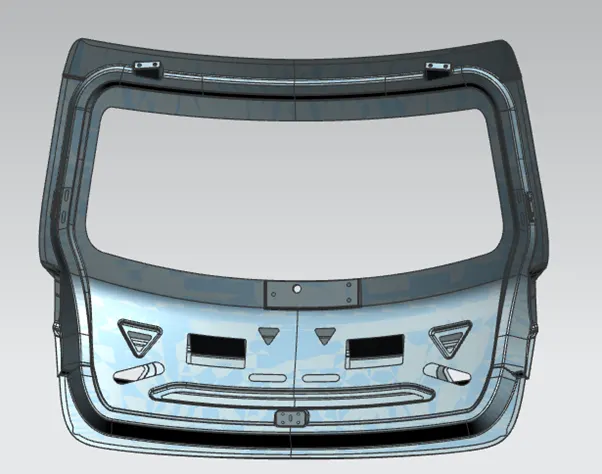
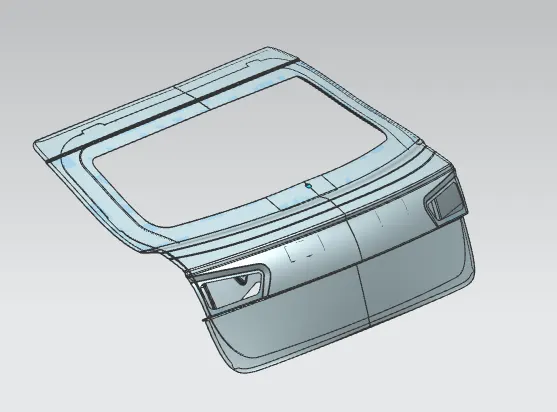
IMAGES OF ASSEMBLY OF BACK DOOR:
CONCLUSION:
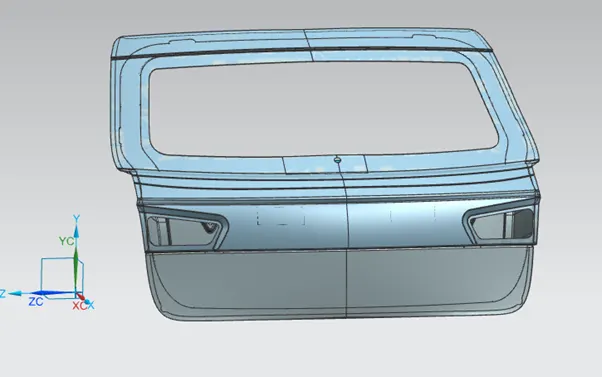
- the design of back door and its assembly was done as per the standards and 0.75mm of thickness is provided for each and every part as per the sheet metal standards.
- Draft analysis is done by following the tooling direction.