Design of backdoor
DESIGN OF BACKDOOR
OBJECTIVE : The main aim of the project is to design a backdoor for given styling surface of the backdoor. The inner panel with all the necessary embosses, cut-sections and reinforcements are to be designed. Also, all the necessary points regarding the approach are explained well.
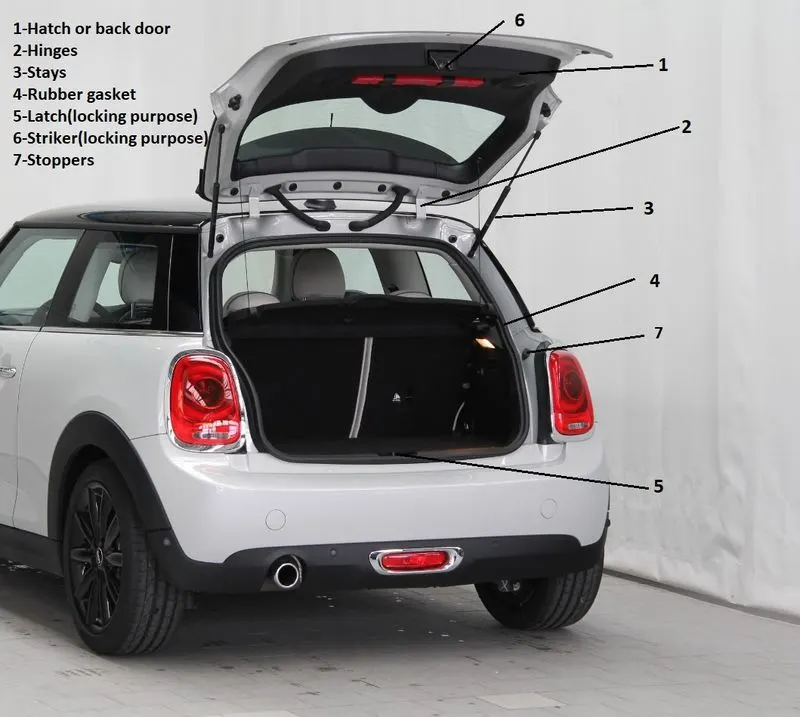
INTRODUCTION : As we know, backdoor or tailgate is the rear end door in the car, which is mostly used for the luggage compartment. In some high performance cars where the engine is at back side, this works as a door for engine compartment. Also, this has to be strong that can avoid damage from the rear collision. Normally, these are hinged to the roof top and have gas stays that helps for effortless opening and closing of it. Some cars are provided with electric motor too which can be called as powered tailgate. The rear visibility also plays a role in designing of one. So, we will keep everything in mind and see a detailed report over the approach in design in Siemens NX CAD.
Material Selection :
Other parametre that should be taken into considertion is the material selection for the backdoor. Material selected should be high in strength that protects the inner body and the passengers inside during collision, light weight that reduces the overall weight of the car and manufacturing cost of the product. Normally, the materials used for this product are steel, aluminium and carbon fibre.
Aluminium and fibre are lighter in comparison with steel, but the actual manufacturing cost for them is more. Also, being on heavier side and low cost manufacturing, steel is better in terms of strength also. So, majorly for mass production, steel is preferred.
Deep Drawing :
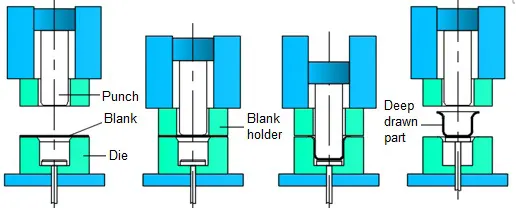
The major part of the backdoor is manufactured by deep drawing process. Deep drawing is a sheet metal forming process in which a sheet metal blank is radially drawn into a forming die by the mechanical action of a punch. It is thus a shape transformation process with material retention.
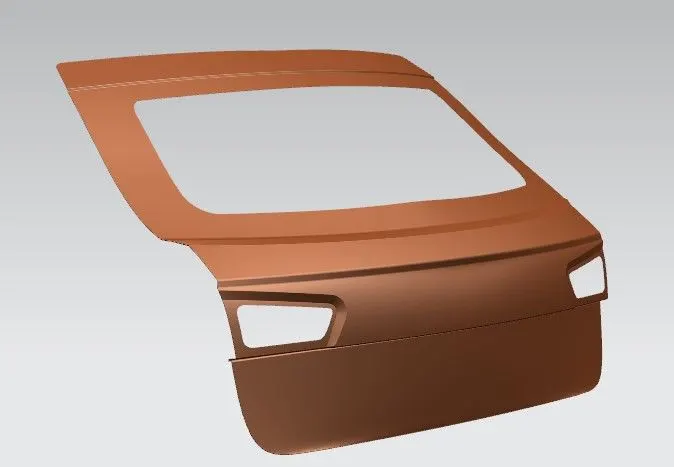
The Approach : We are provided with a surface styling on basis of which we have to design further. Shown pictures are the backdoor outer upper and lower panels.
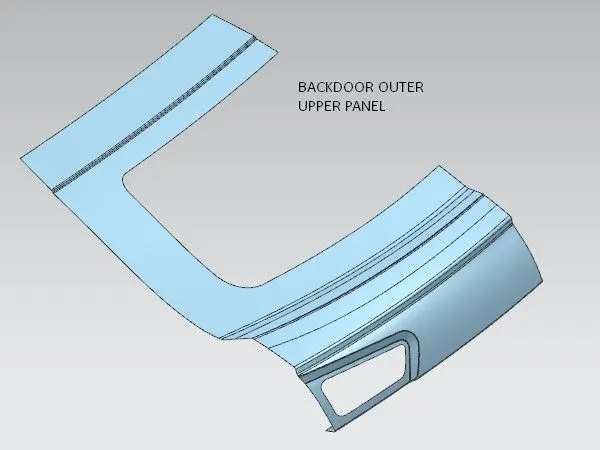
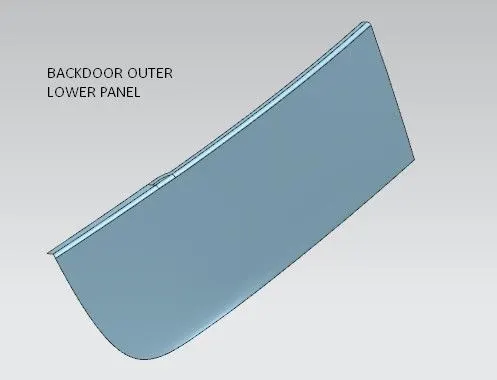
First we have to rebuild it if there is some discontinuity, by checking all the surfaces, keep tangency between them and sew later. As the working surface gets ready, we can approach for the design of inner panel. The deep drawing angle of the entire part has been decided, that will help us in getting positive draft.
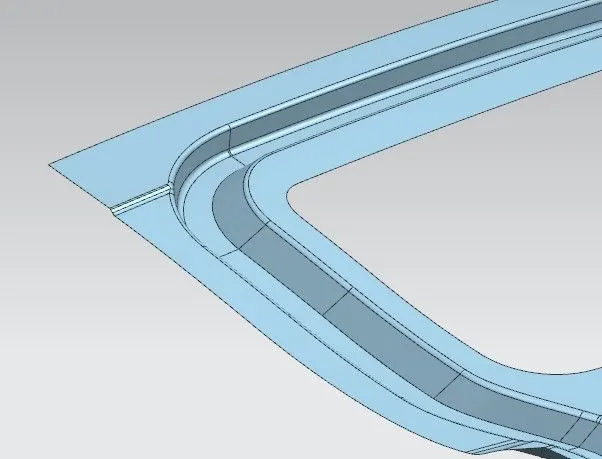
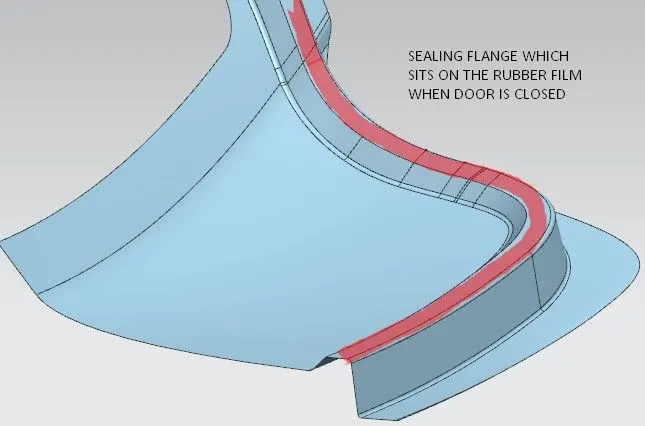
Here, by using tools like offset surface, offset curve in surface and trim sheet, a component is created. This will be the sealing flange, the part that sits on the rubber film when door is closed and prevents the water from coming inside the cabin. At the lower half, a deeper section is considered as motor and tail-lamp body needs to come.
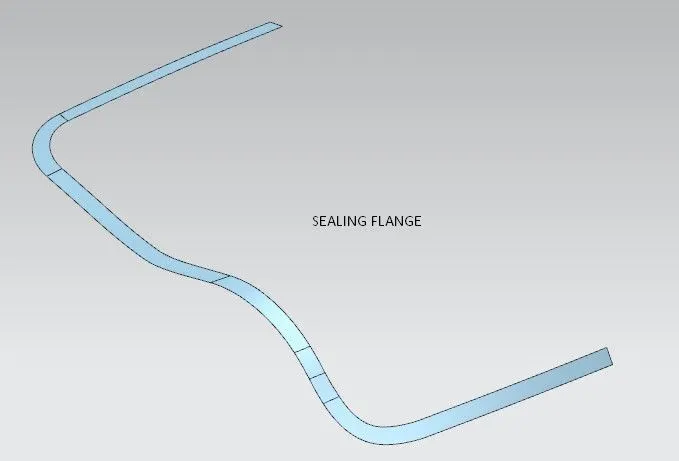
Now, flanges are added to the outer edge, leaving adequate space (~8-10mm) for hemming with the outer panel at end.
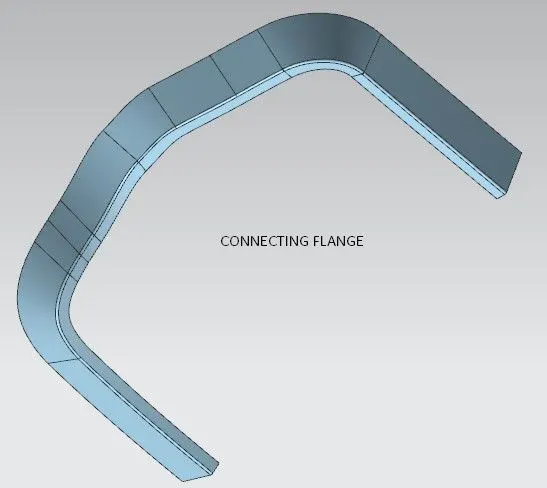
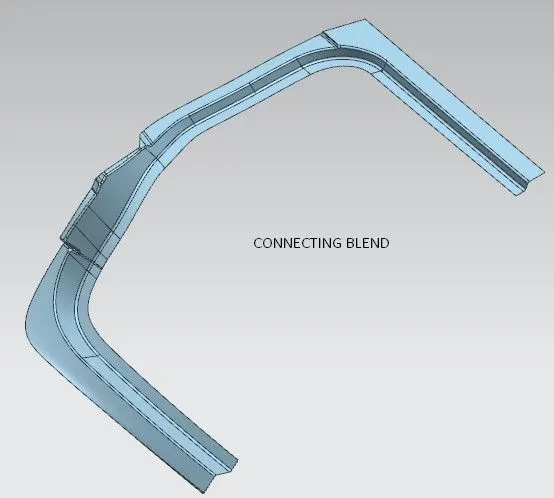
As the outer flange is ready, now we will proceed for the inner part that includes windshield area and the lower half. While designing this, we have to consider the rear view area which should be broad, so the driver feels comfortable while using it.
By offsetting the working surface and adding law extensions, bridge curve and surfaces, a section is created inside. The law extension is kept such way, that it passes through the draft analysis.
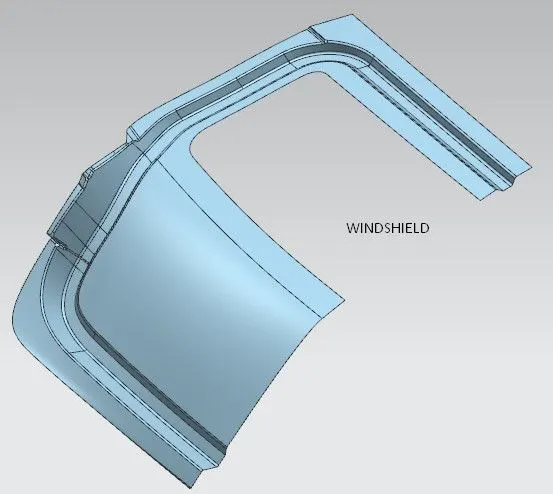
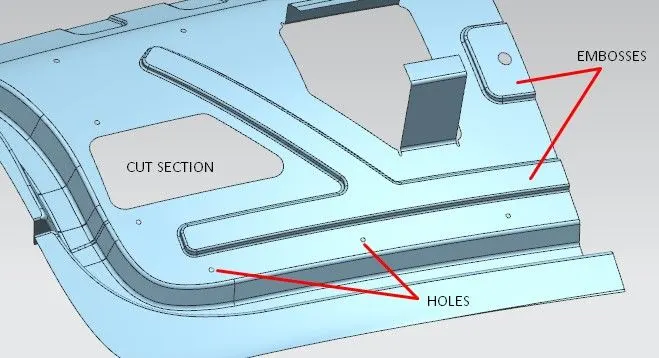
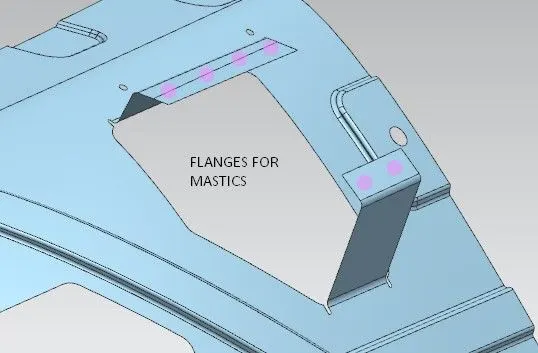
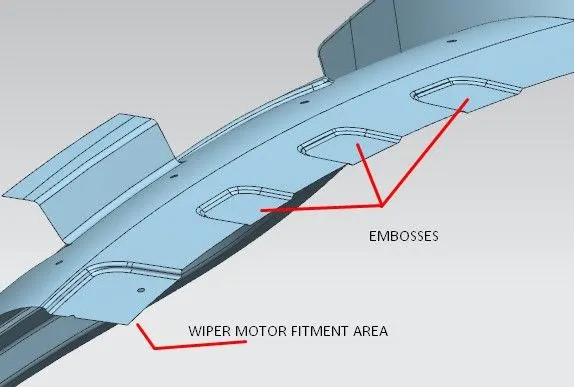
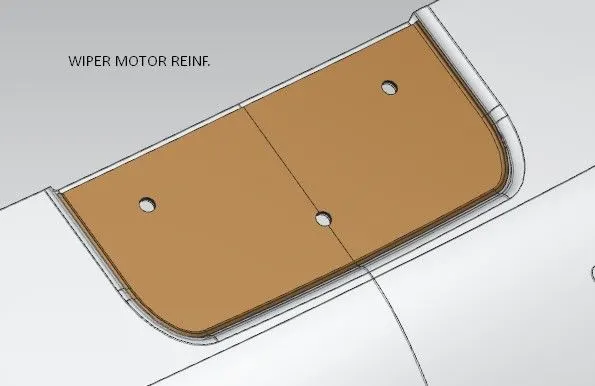
Now, for the lower half, a sketch is created and projected which will act for different features. There be a cut-section which is used for the fitment of tail-lamp. Embosses are given for overall strength of the section which can withstand the impact from rear collision. Also there be a huge gap between outer and inner panel as required, so flanges are added such way where mastic points can be placed for extra strength. Holes are also given for the inner cover fitters/fasteners. On the edge of the windshield, embosses are given for that broad and long sheet face and the centre is provided with emboss and holes for the mounting of wiper motor.
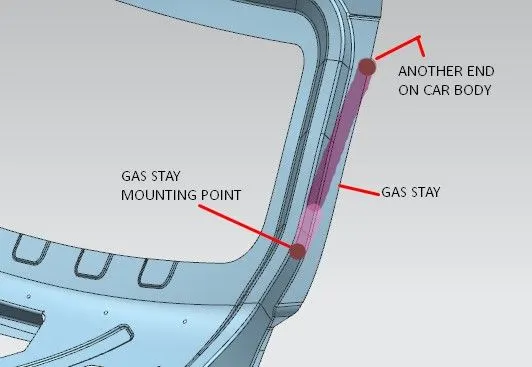
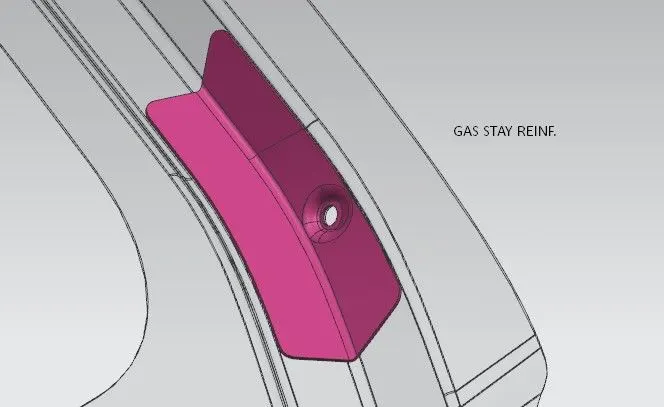
Now, the gas stay is used to ease the effort while opening and closing of the door. One end of a gas stay rod is mounted on the inner panel while the other on car body. The placement can vary according to the desgin, i.e. the upper end can be mounted on body or the inner panel too and the lower end be on opposite to it accordingly. Here, lower mounting point has been added as an emboss.
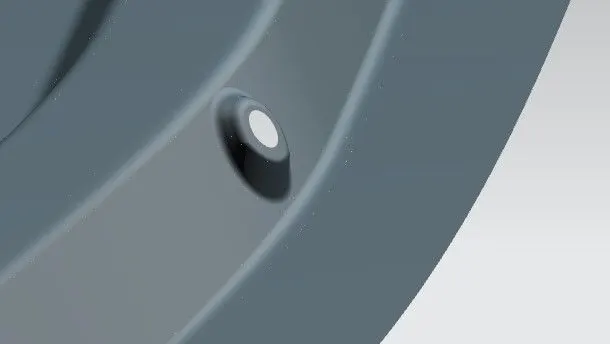
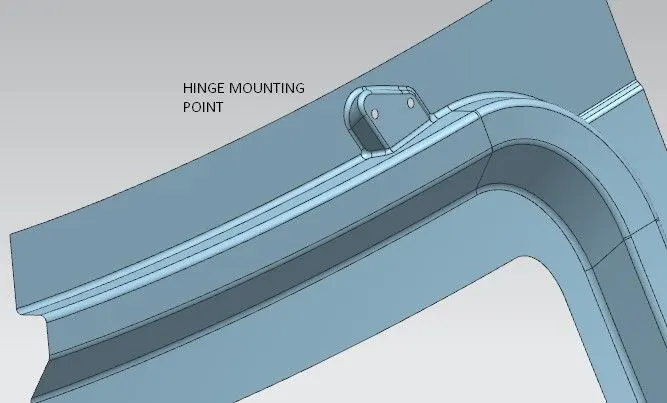
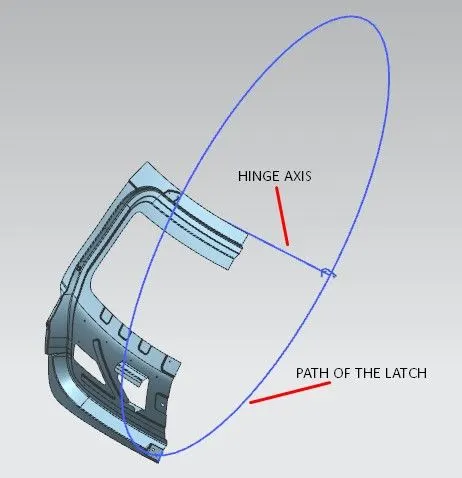
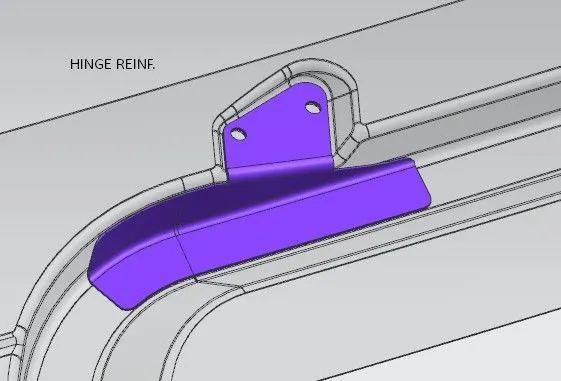
After this, emboss for mounting the hinge is created. The other end connects the roof end. The emboss face is made such that the axis of rotation of two hinges remains same.
For the Latch and striker assembly, an axis of rotation of hinges is created and a circle is formed with centre at axis' midpoint and the latch position should be such that it follows the path perpendicularly. A mounting surface is formed such way that it follows the path accurately.
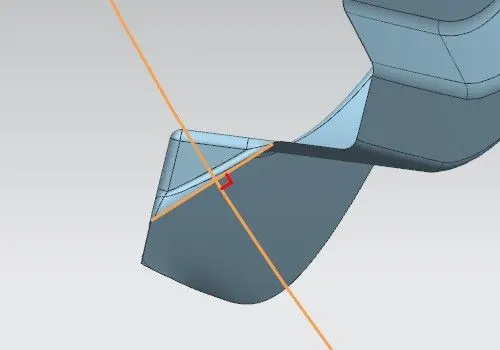
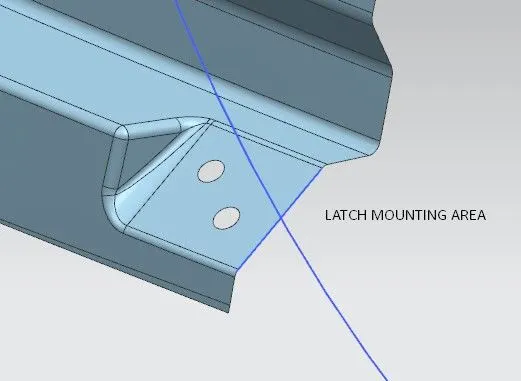
The angle accuracy is checked by draft analysis. As we know, sheet metal parts are generated from press tool or some forming tools, all such kind of tools require some space when after forming they come back to their initial zero point location. If we dont provide a draft angle, then the tool will not be able to come out easily and the movement will destroy the generated surface or reduce the finish. 3 degrees is the minimum value for sheet metal.
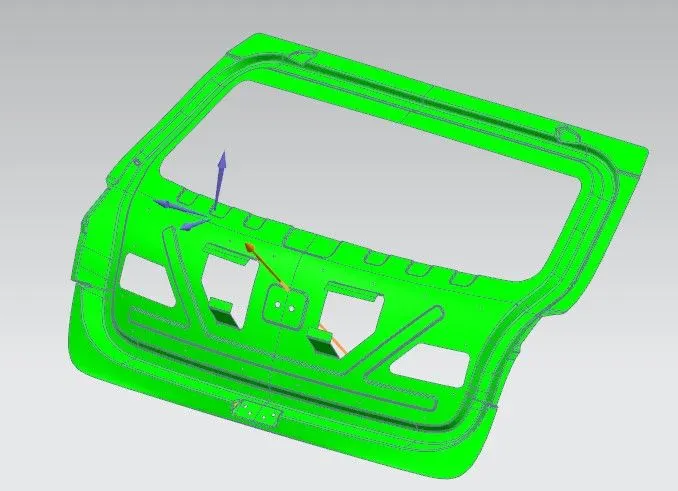
Here, we have achieved green surface, so the design is fine. Now, it is thickened by 0.75mm.
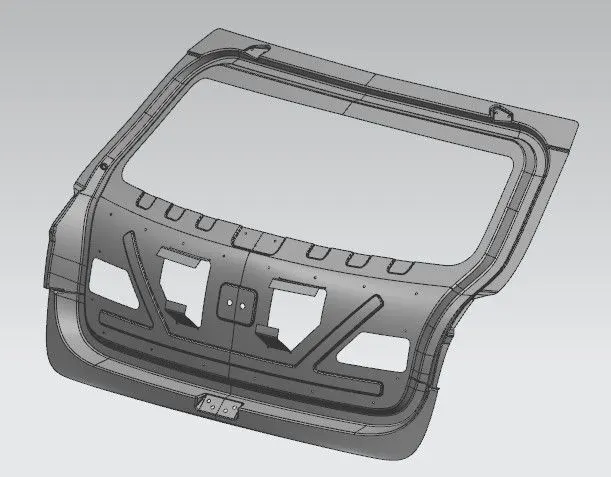
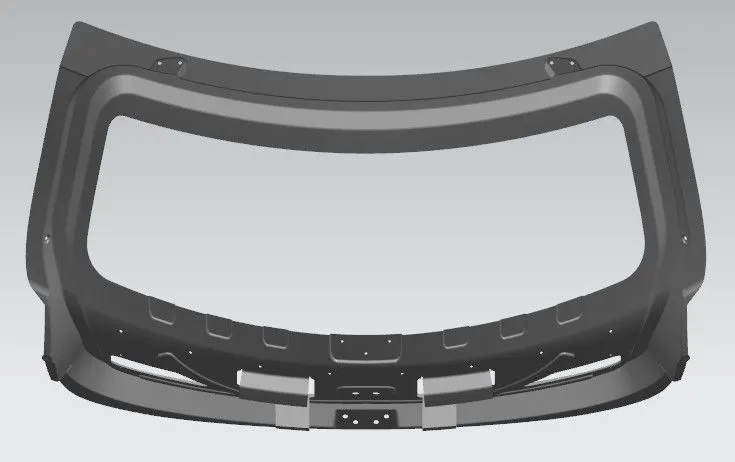
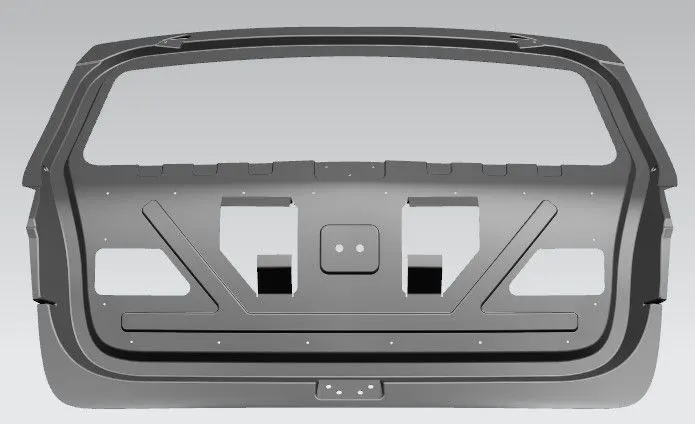
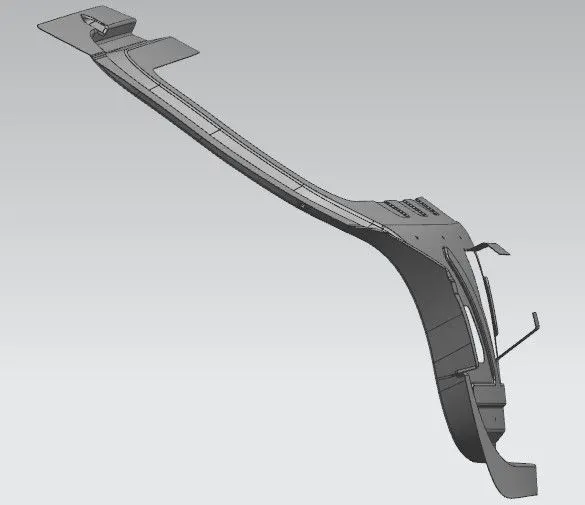
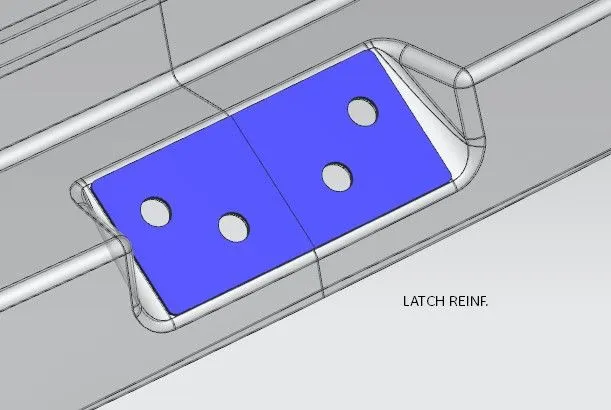
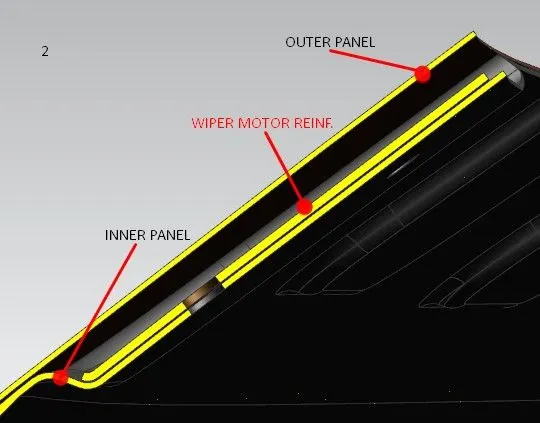
Next, the required reinforcements are created. They are for hinges, gas stay, wiper motor and latch assembly. The thickness for the same is kept 1mm. These reinforcements are joined by laser brazing.
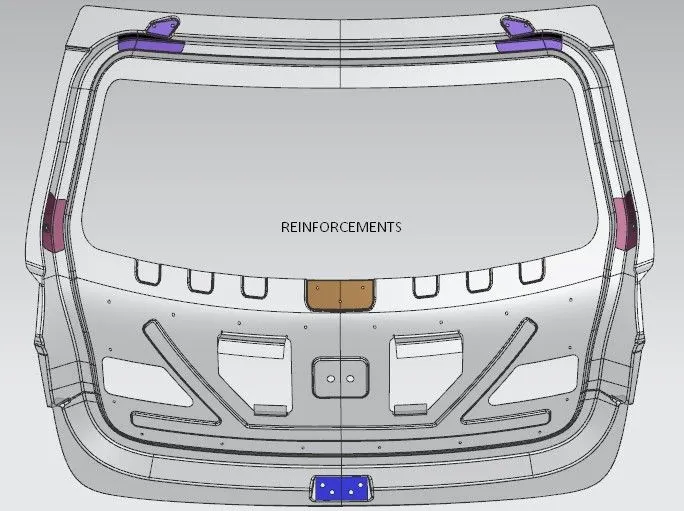
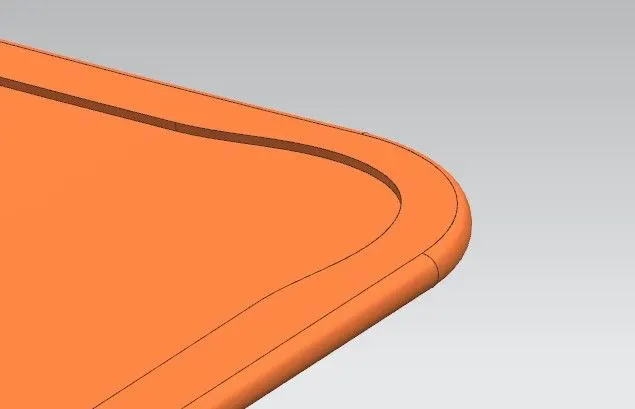
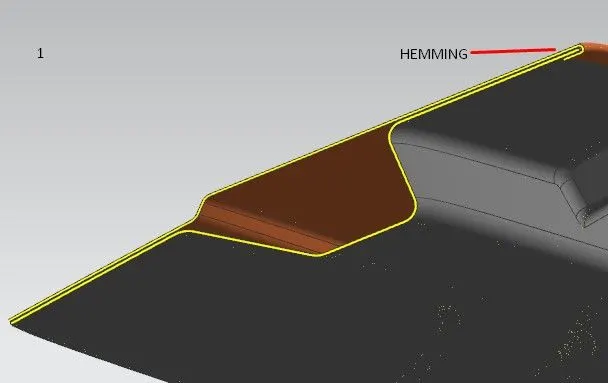
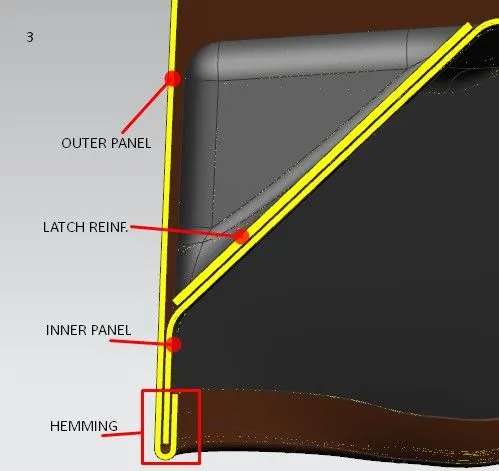
After creating all the components, how its time to assemble them with outer panel. To join both the panels, hemmimg is created with 0.2-0.3mm gap between panels.
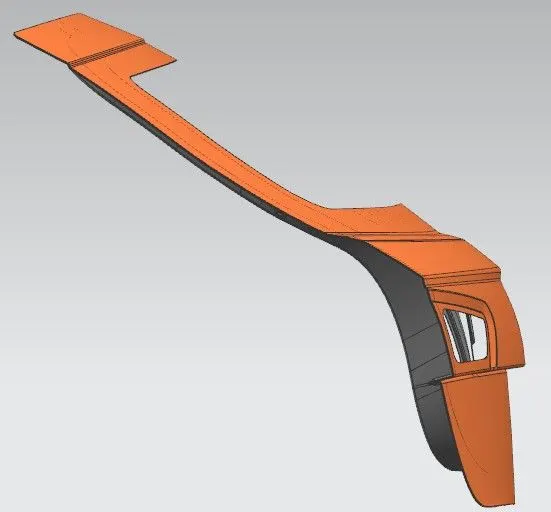
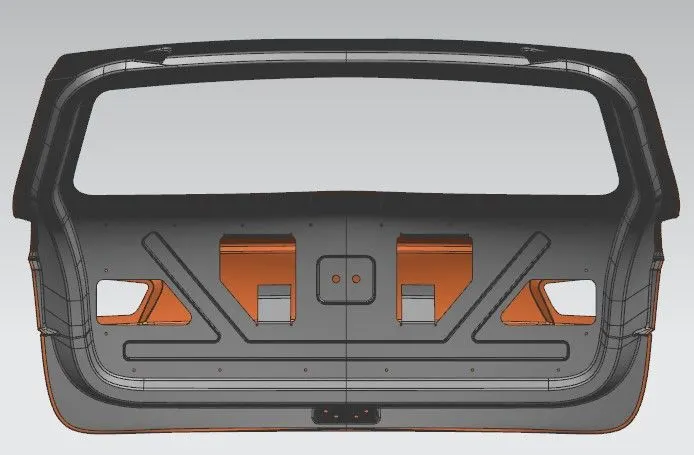
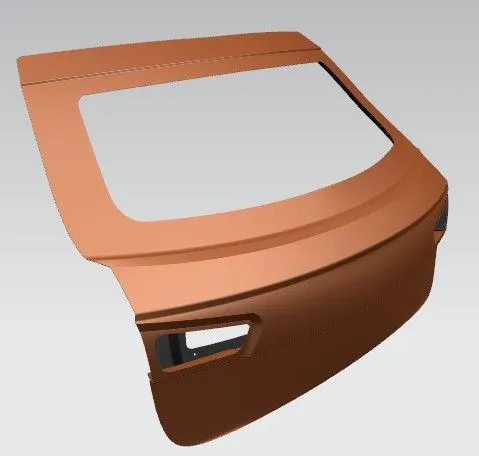
The sectional view is shown below and we can see how nicely both panels are fitted along with reinforments. Sides other than hemming, are joined by laser brazing for good finish.
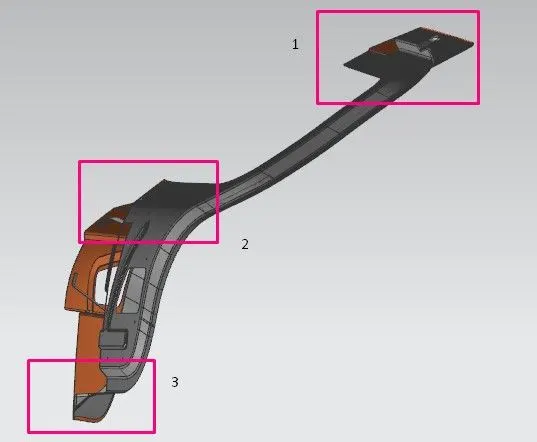
Conclusion : BIW of backdoor has been designed successfully by following all the design and engineering considerations.