Design of backdoor
BACK DOOR DESIGN
OBJECTIVE:- Design a back door of car which fulfills the visibility criteria for the passenger.
INTRODUCTION:-
- Back door is access to the boot space of the car. Back is designed as such that it increases the space of boot and do not hinder in the visibility of passenger.
- Back door can be of different type based on their positioning of their hinge. They can be tailgate( hinged at the bottom) , hatchback( hinged at the top).
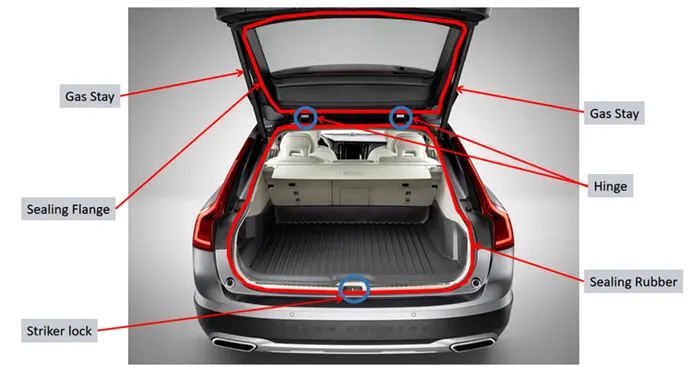
- Design of back door has wiper motor area, gas stay, hinge, sealing flange and latch and striker.
- Design of inner panel of back door is crucial as it has to takes the entire B-side feature.
- The most important area that needs to be taken care while designing of inner panel is sealing flange area.
DESIGN METHODLOGY:-
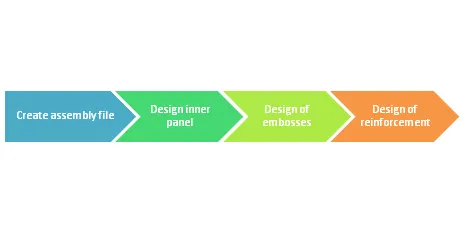
We are going to design inner panel first and the embosses for all features will be coming on the inner panel itself. Then design of reinforcement will be done for the emboss area.
MATERIAL USED:-
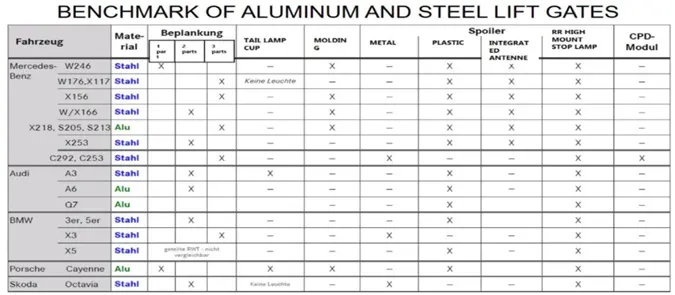
We have used steel for our tail gate/back door but now a days many companies have started using Aluminum because they are lighter in weight, easy to manufacture and as it can be easily casted so wastage of material can be avoided.
Below table provide information of companies are choosing aluminum over steel
DESIGN PROCEDURE:-
INNER PANEL
- Design of inner panel is most crucial part as it is the most important part.
- First we create a reference surface and working surface from the given styling surface by the styling team.
- Working surface has some gaps and irregularities which was improved to start off the design.
- We are given two surfaces as input which is upper outer panel and lower outer panel.
- We need to extend the lower panel and create flange.
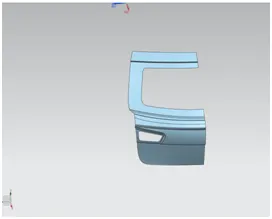
- Tooling axis is being created for the inner panel as it very important parameter for manufacturing purpose.
- We use bisecting method to create tooling axis.
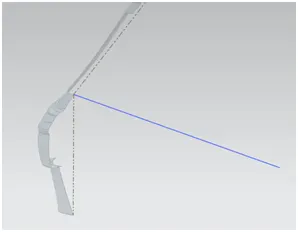
- Now come important part, the design of sealing flange. We offset the working surface by 25mm ( depth of sealing flange ).
- After creating sealing flange, we will create a connecting surface where we want to create the wiper motor area and other area.
- Now we will create the blends so to get all surface as one and also good surface finish at the edges,
- After getting the wind shield area and wiper motor region now we have to create the embosses for wiper motor, latch and striker, gas stay and hinges and trim for the rear lamp and other trim to make our door lighter and stiffer.
- We have to keep checking our component by thicken it by 0.75mm.
- After creating embosses and holes, extend the geometry and trim it by the mid-plane so that we don’t get any error while mirroring it.
- After mirroring we get our final product. Now sew it and thicken it by 0.75mm.
SURFACE TOOLS USED
- Wave linker geometry
- Offset surface
- Law Extend
- Trim
- Untrim
- Through curve mesh
- Studio surface
- Trim and extend
- Edge blends
- Face blend
- Sew
- Mirror geometry
SKETCH TOOLS USED
- Datum plane
- Line
- Circle
- Sketch Fillets
CURVE TOOLS USED
- Bridge curve
- Offset curve in face
- Project curve
ERROR OCCURRED AND IT’S SOLUTION
- While creation of connecting surface using law extend lot many bad surface occurred in the gas stay region.
- To resolve that we trimmed that area off by using offset curve in face and by creating the surface again using through curve mesh.
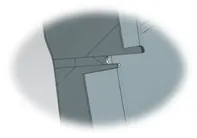
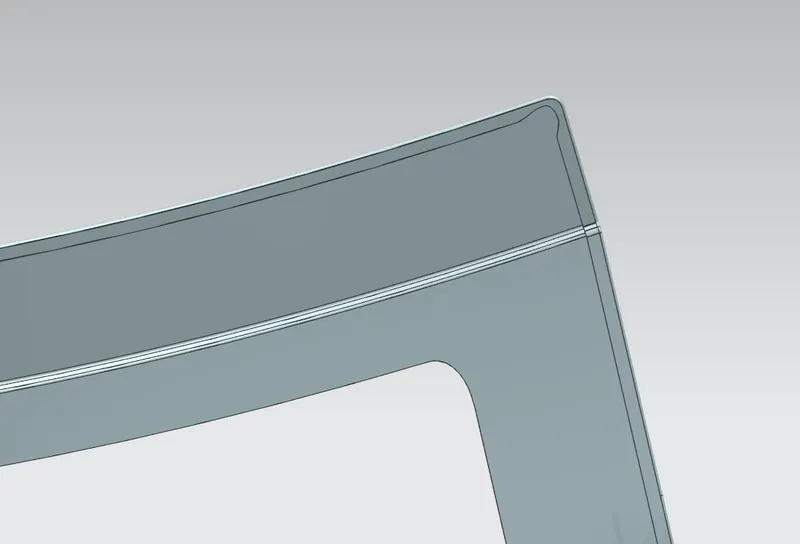
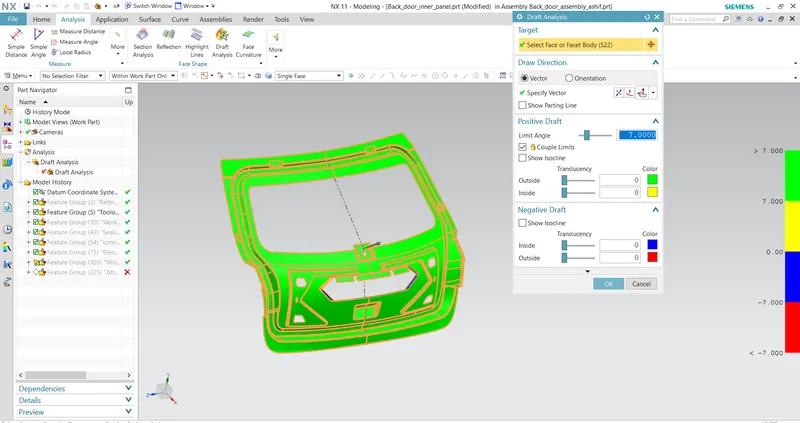
- We can remove the area where upper outer panel and lower inner panel is going to meet because it is not going to clear our draft analysis.
- It can be manufactured but extra process is need to be carried out which may increase the component cost.
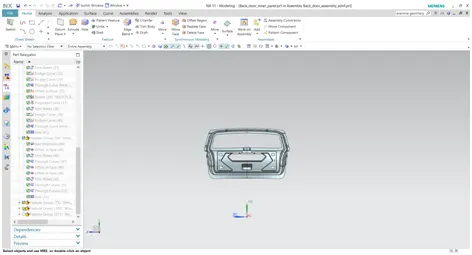
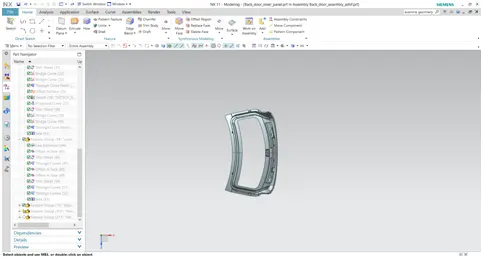
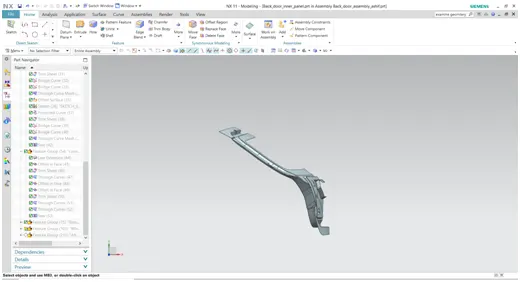
ORIENTATION OF INNER PANEL
REINFORCEMENT
- Take extract of the area like wiper motor surface and make offset of 0mm.
- Now trim the extra portion that you want and thicken it by 0.75mm.
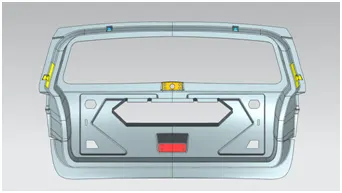
Note:- For creation of reinforcement for the other part same procedure is followed.
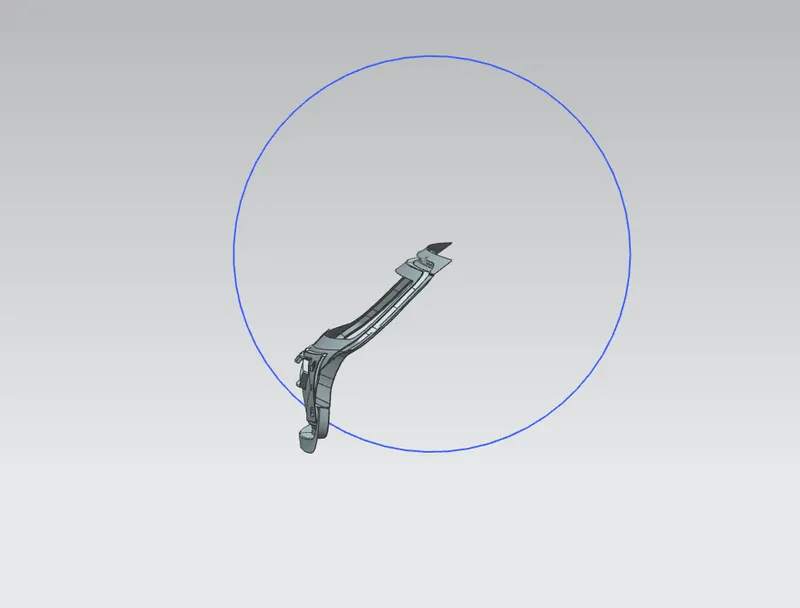
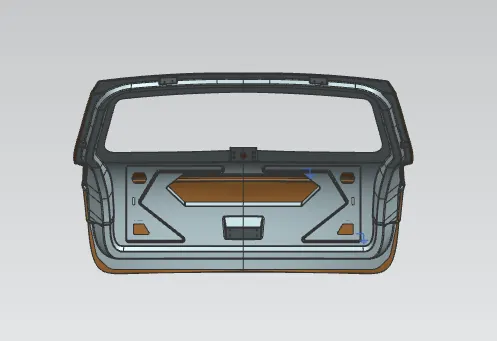
LATCH AND STRIKER POSITION :-
OUTER PANEL
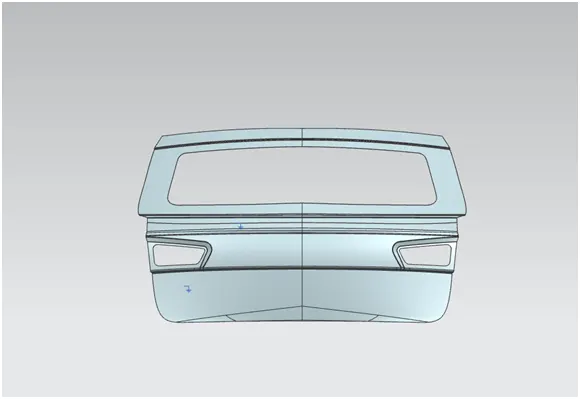
- We need to extract the given input and offset by 0mm to create working surface.
- Now just thicken the working surface by 0.75mm inward to get outer panel.
HEMMING
Hemming is a forming operation in which the edge of sheets are folded or folded over other part in order to assemble and achieve a tight fit. Normally hemming operation is used to connect parts together, to improve the appearance of the part and to reinforce the part edges.
In automobile industry, hemming is used as assembly as a secondary operation after deep drawing, trimming and flanging operations to join the outer panel with the inner panel for hood, back door or side door.
DRAFT ANALYSIS
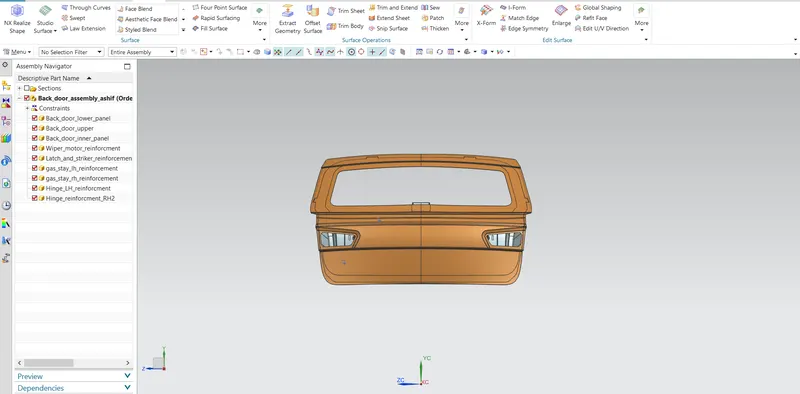
ASSEMBLED VIEW OF BACK DOOR
CONCLUSION
This project gives exposure how back door is designed in automotive industry and manufactured. The design was completed with engineering standards used in the industry.
THANKYOU