Design of backdoor
Design of Back door
Objective-
By the given styling surface data, we need to design the back door of an automobile with reinforcements and an inner panel.
Introduction-
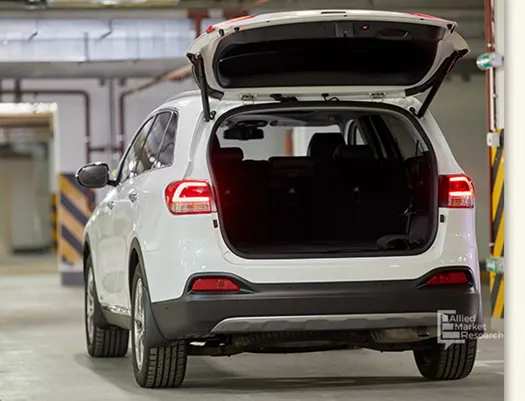
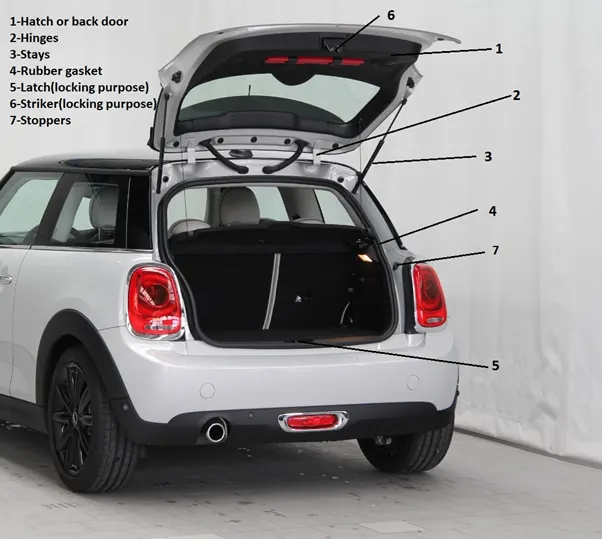
The back door is an automotive part, also called a tailgate located behind the car.
It equips the inner panel and reinforcements as well for the latch, hinge and gas stays. It is made of steel or aluminium depending on the budget. This is also designed for strength requirements by adding necessary reinforcements and embossed.
Considerations for designing a back door-
- Rear visibility.
- It should open and close for luggage movement.
- It should also seal properly to avoid water leakage.
- It should have good strength to resist the impact during a collision.
Designing of Back door-
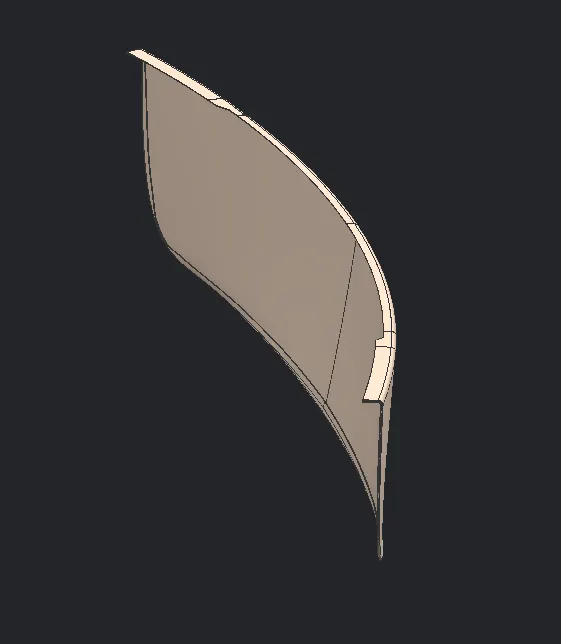
The first Class A surfaces are made like 2 different parts, Outer panel upper and lower.
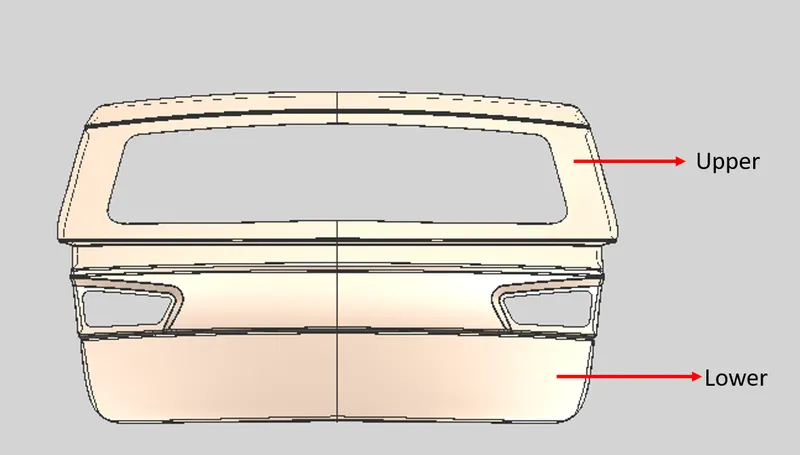
Outer upper panel
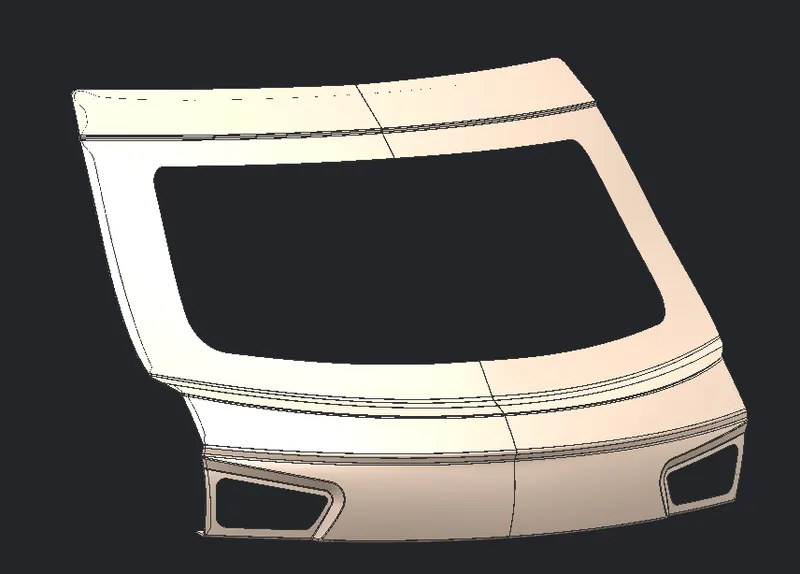
Outer lower panel-
Inner panel-
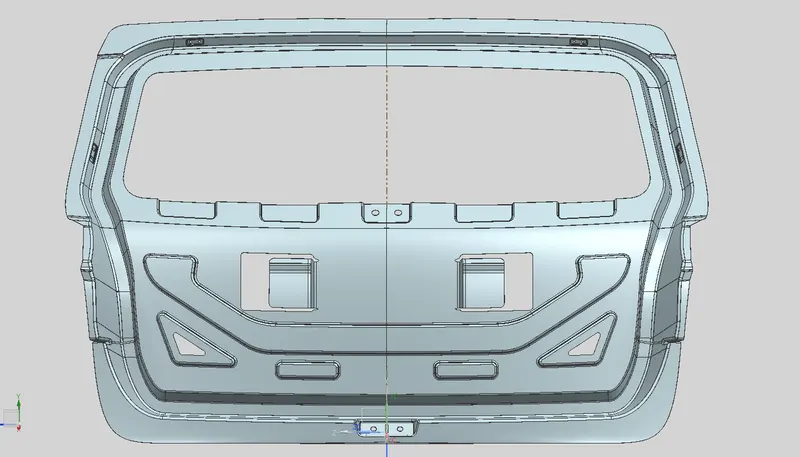
Using that surface the inner panel is designed, and further reinforcements are designed after designing the inner panel with respect to inner panel surfaces.
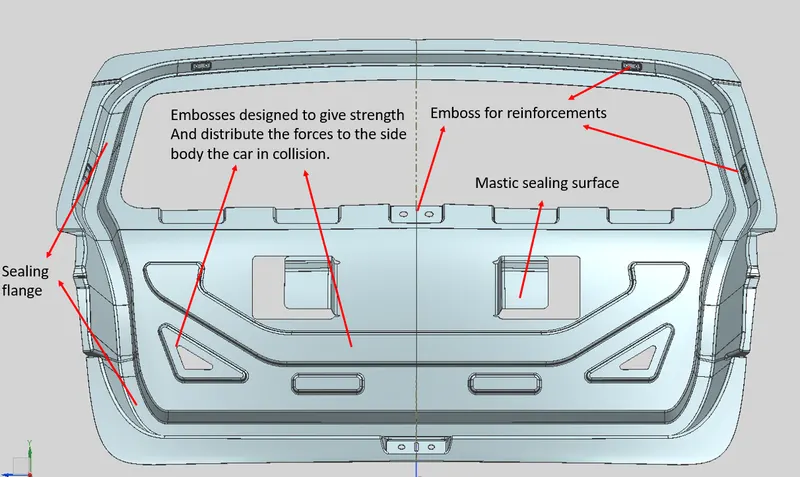
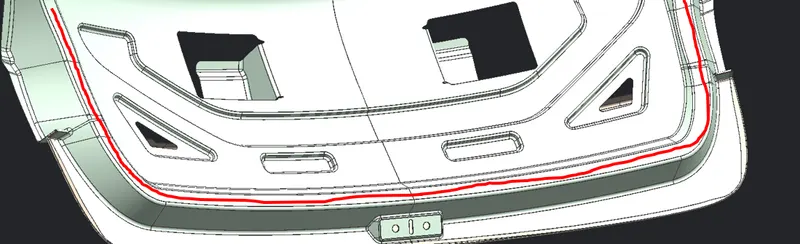
The marked region is a sealing flange. this flange is developed and will connect to the rubber in the car body and seals the door region and become leakproof so that no rain or water will enter from that door.
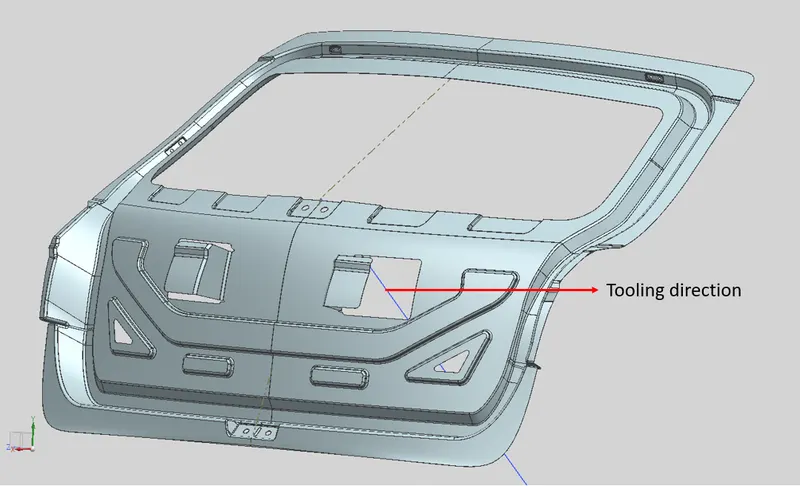
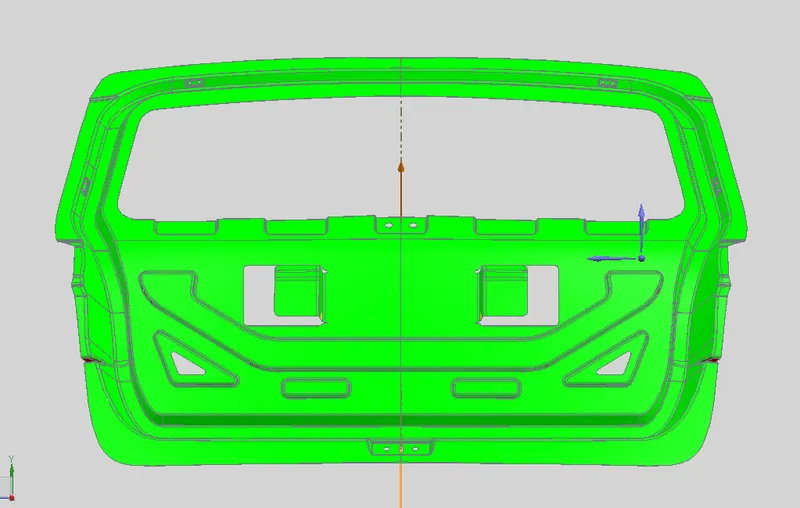
The inner panel will undergo a deep drawing process hence it is designed to have an angle inclination to give enough draft angle during manufacturing
Lancing operation -
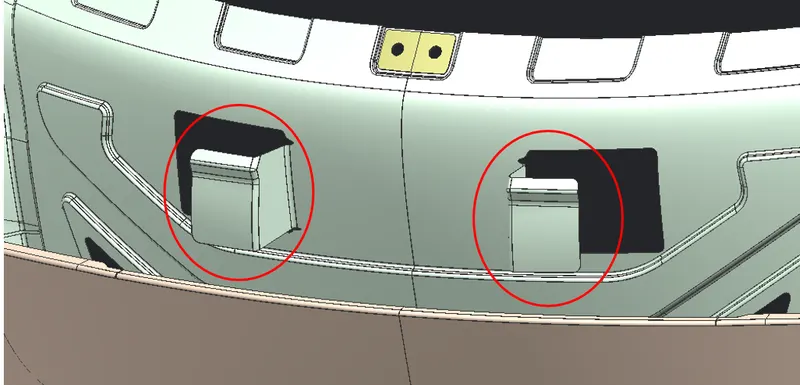
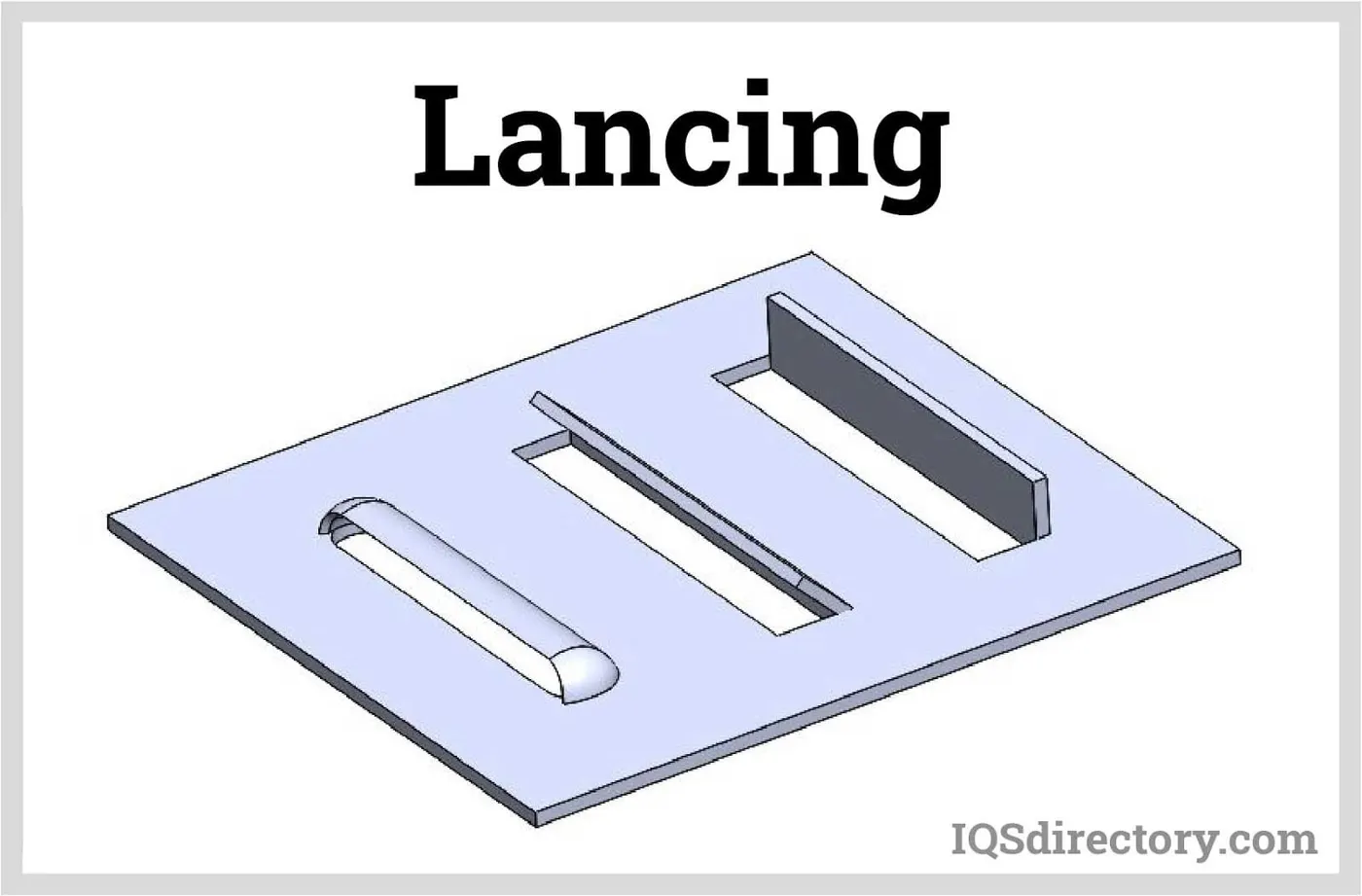
Lancing is a press operation in which a single line cut or slit is made on the part way across the strip stock, without removing any metal. A key part of this process is that there is not reduction of material, only a modification in its geometry. The geometry marked below is manufactured by the Lancing process.
The surface formed will be joint to the outer panel by mastic sealant.
Draft analysis-
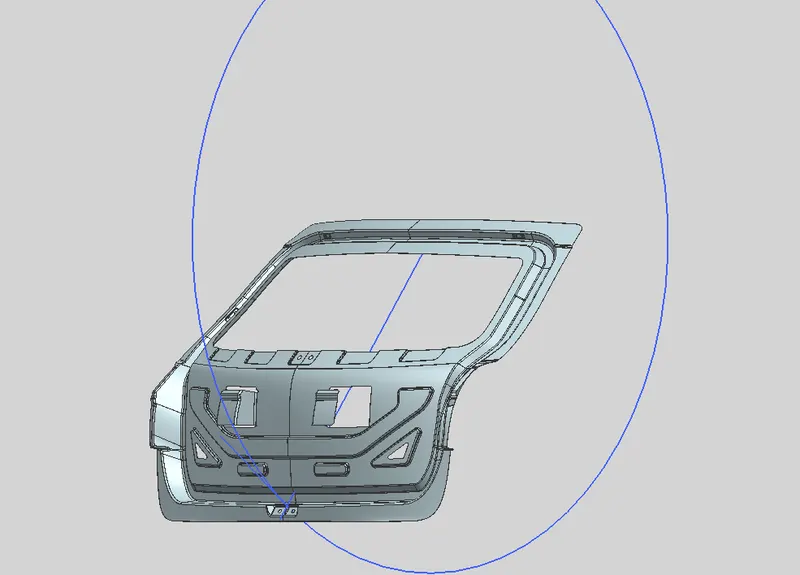
Trajectory circle for Latch assembly-
The hinge axis line is the centre of this circle. The latch is then modelled perpendicularly to the circumference of the circle at the point.
Reinforcements-
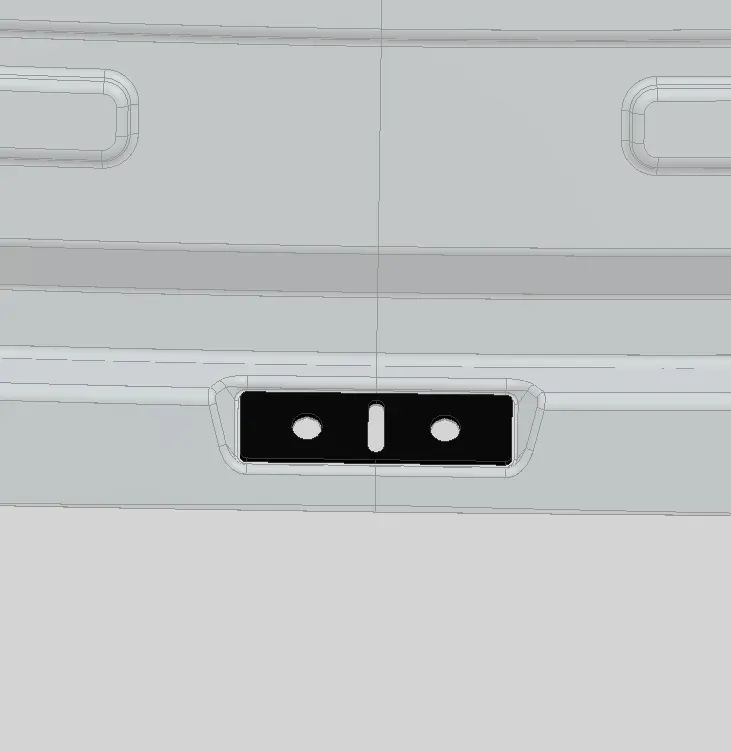
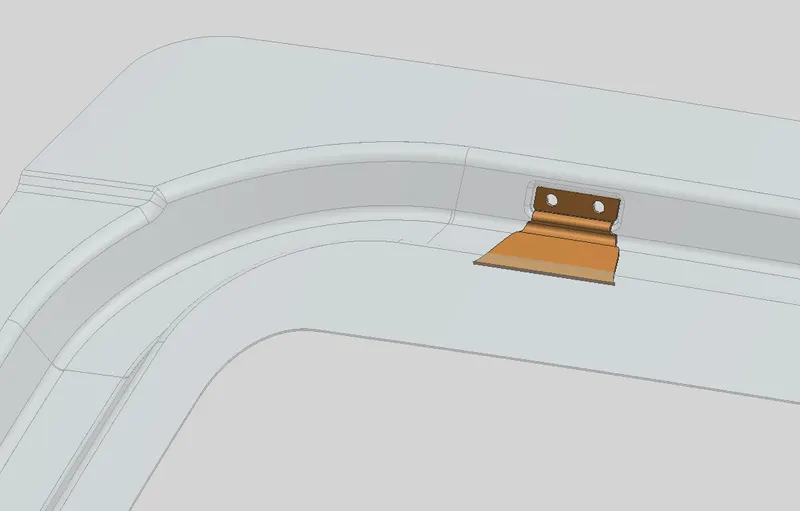
The reinforcements are made at particular locations with respect to functionality and strength. The reinforcements at the gas stay and hinge region provide strength at the region when the door is open and closed.
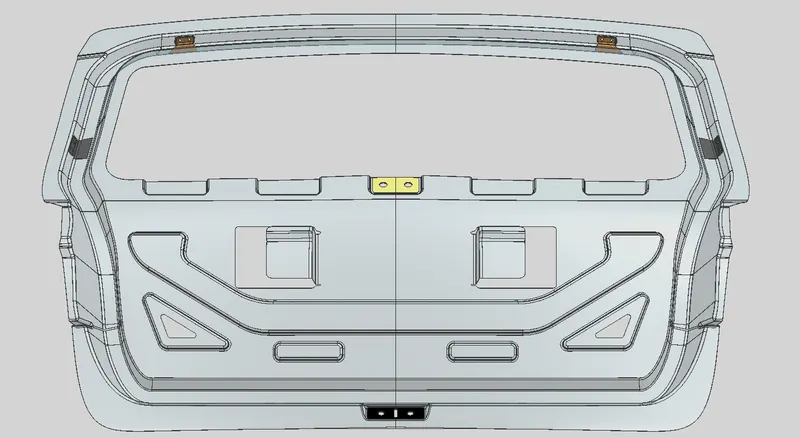
Gas stay reinforcement
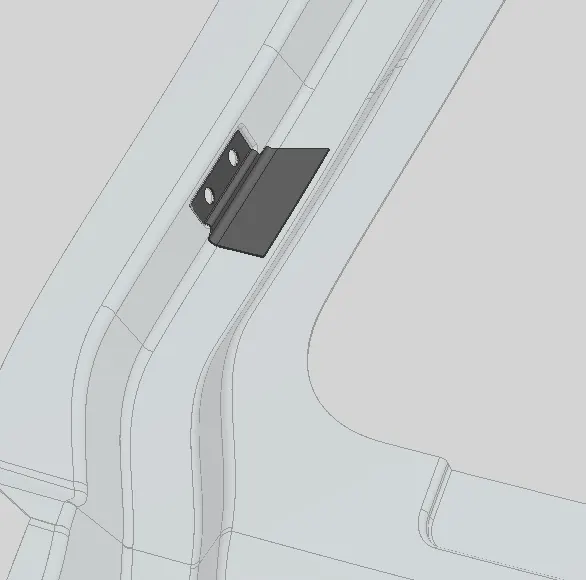
Wiper motor reinforcement-
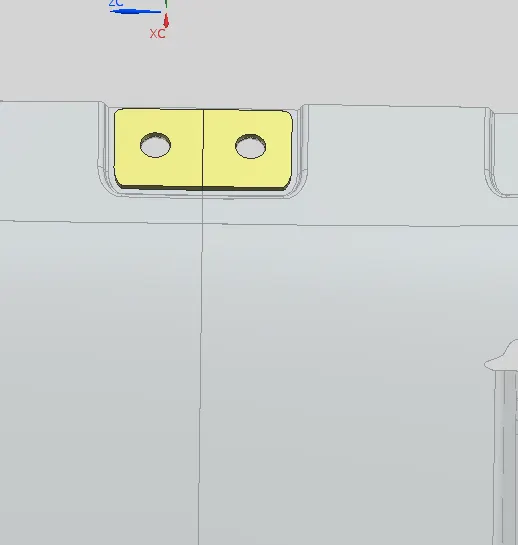
Latch reinforcement
Hinge reinforcement
The thickness of all components-
Outer panel thickness=0.75mm
Inner panel thickness=0.75mm
Hinge reinforcement thickness=1.1mm
Gas stay reinforcements thickness= 0.75mm
Wiper mount thickness=1.5mm
Latch portion thickness=1.5mm
Hemming
How is hemming done?
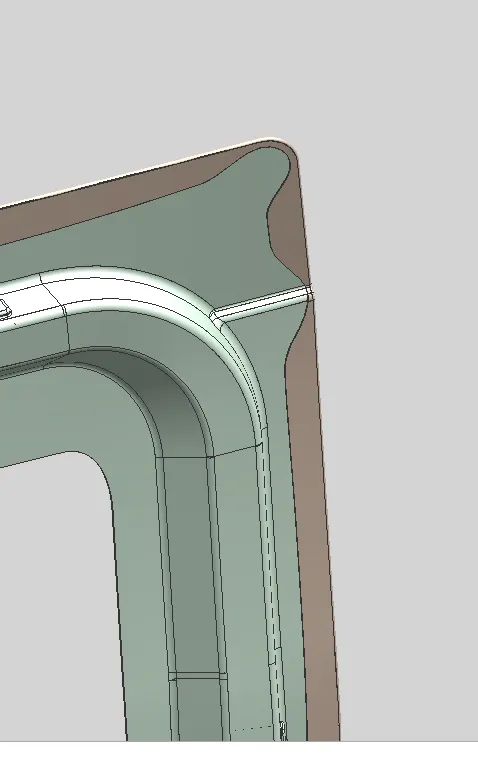
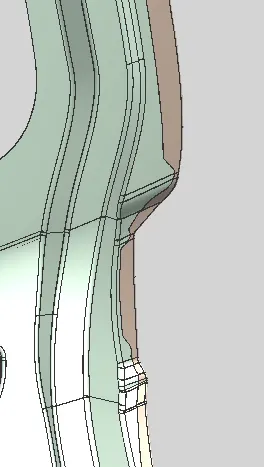
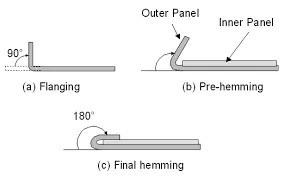
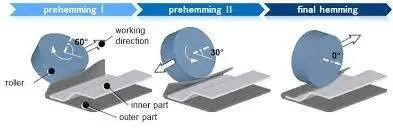
Hemming is a forming operation in which the edges of the sheet are folded or folded over another part in order to achieve a tight fit. Normally, hemming operations are used to connect parts together, to improve the. the appearance of a part and to reinforce part edges. In-car part production, hemming is used in assembly as a secondary operation after deep drawing, trimming and flanging operations to join two sheet metal parts (outer and inner) together. Typical parts for this type of assembly are hoods, doors, trunk lids and fenders.
Deep drawing operation-
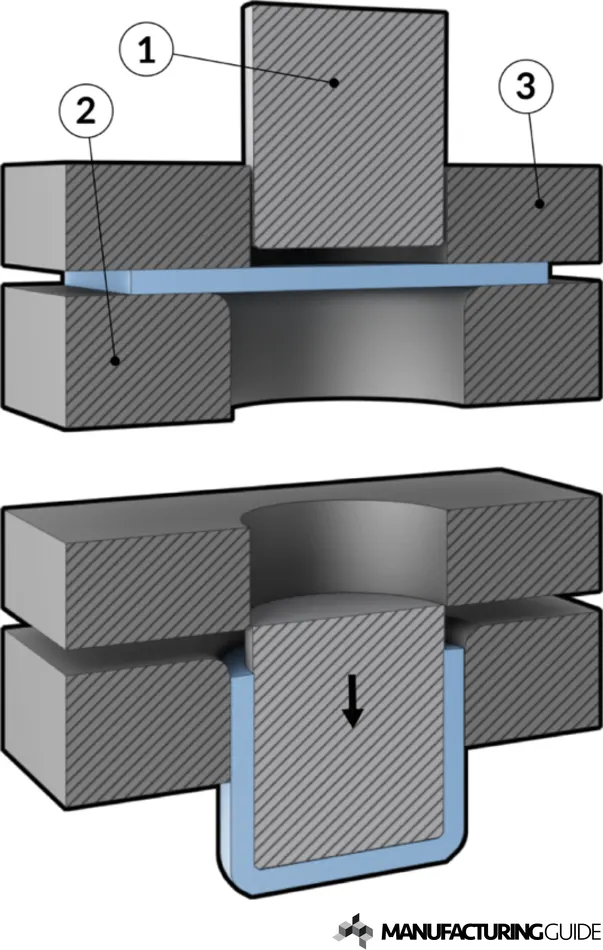
Deep drawing is a sheet metal forming process in which a sheet metal blank is radially drawn into a forming die by the mechanical action of a punch. The process is considered "deep" drawing when the depth of the drawn part exceeds its diameter. This is achieved by redrawing the part through a series of dies.
Conclusion-
This back door design is completed as per the input given by the styling team and is designed with safety and other automotive standard requirements.