Design of backdoor
Introduction
A door is a hinged part which is used for entry and exit of passengers and commodities from the vehicle. Back door is located behind the passenger seat which provides access to luggage compartment. In almost all the cars back doors are operated with the help of gas stay which in turn reduces the effort required to lift and hold the door. These doors most often integrate back window for visibility from inside the car and can be locked to secure the vehicle. Following image shows the back door and luggage compartment.
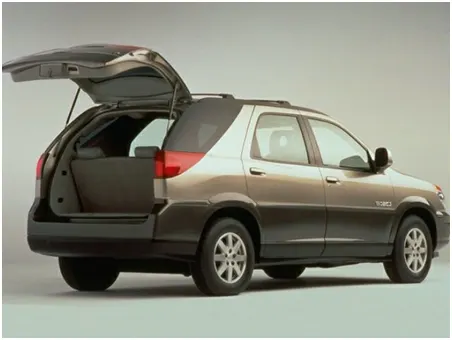
Design of backdoor
A Back door assembly consists of following components:
- Inner panel
- Outer panel
- Hinge reinforcement
- Gas stay reinforcement
- Wiper motor reinforcement
- Latch and striker reinforcement
All these components are designed according to design guidelines and the procedure is explained below.
- Inner Panel Design
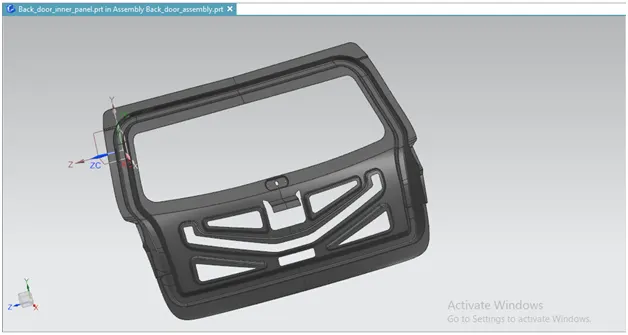
The inner panel is a component which is used for strengthening of the door and it is one of the important component of the backdoor upon which other accessories are mounted. Inner panel design process is carried out in following steps:
- Before starting the design, an assembly file is created in NX12, in which all the components are designed. Given class A is imported into the assembly file. ‘Add’ and ‘Create New’ commands are used to create each part file directory.
- The given class A has to be further improved. Commands used are ‘Bridge Curve’, ’Through Curve Mesh’, ‘Sew’ etc.
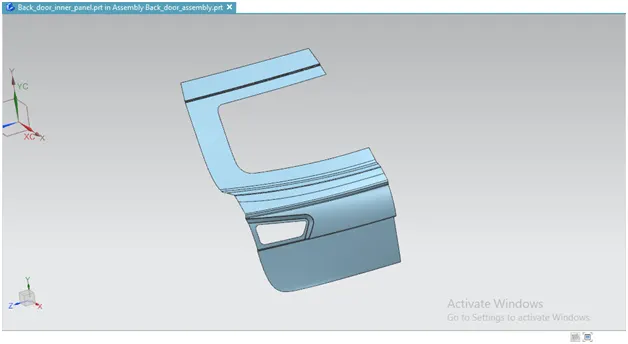
- Sealing flange is the portion where the sealant is placed so that it prevents the entry of water into the car. Sealing flange is created by offsetting the class A to suitable dimensions and trimming off the extra portions. Also side flange is created using ‘Law Extension’ command. Both are shown below.
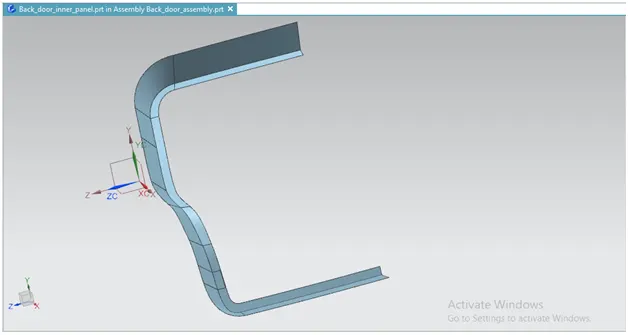
- Extract the given class A surface. Use ‘Trim and Extend’ command to get the inner panel outer surface. Similarly Back glass space is designed using ‘law Extension’ and ‘Trim sheet’ commands
- Bottom portion of inner panel is designed using ‘Bridge curve’, ‘Law Extension’ and ‘Through Curve Mesh’ commands.
- Embosses: Sheet metal embossing is a stamping process for producing relief in sheet metal. This process can be made by means of matched male and female roller dies or by passing sheet or strip of metal between the rolls of the desired pattern. In NX12 embosses are designed according to design guidelines, providing proper draft and blends at the surfaces.
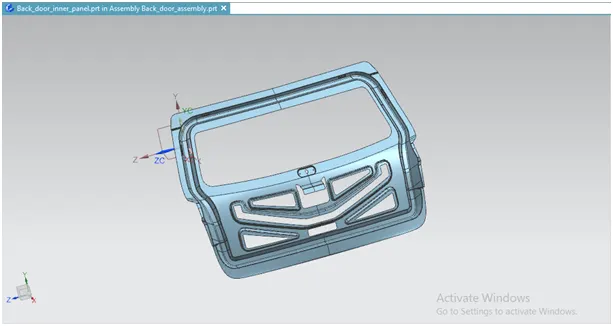
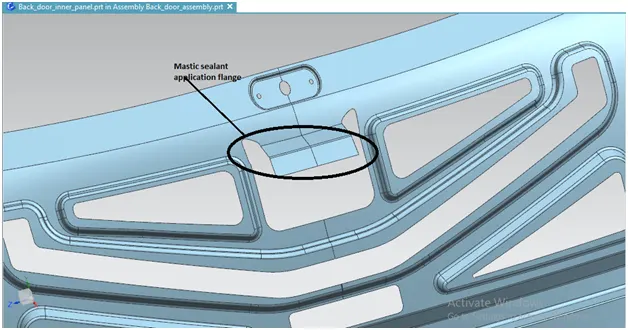
- Mastic sealant: A flange portion is designed on the inner panel to ensure attachment between inner panel and outer panel. Corner relief is provided while designing the flange.
- ‘Mirror geometry’ command is used to get other side of inner panel. Thickness of 0.75mm is added using ‘Thicken’ command
Design of Outer panel
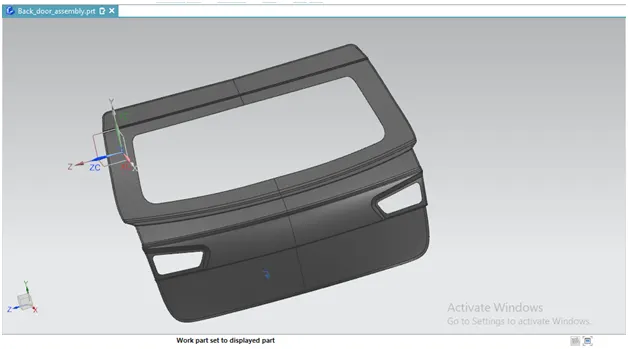
- Outer panel is the aesthetic surface of the back door. Given class A surface is used as the aesthetic surface. The outer panel has the provisions for tail lamp, rear fog lamp and license plate mountings. It is provided with the multilayer coatings to improve its scratch resistance, rust prevention and to get the smooth surface finish.
- Hemming: It is a forming operation in which edges of the sheet are folded over another part in order to achieve a light fit. This process is used to connect parts together, to improve appearance of a part and to reinforce part edges.
- Design for hemming:
- The class A is offset to 2.65 mm (This includes thickness of inner panel and outer panel and space between the two panels).
- ‘Swept’ command is used to attach class A surface and offset surface.
- Providing 6mm space for hemming, extra portion in offset surface is trimmed off.
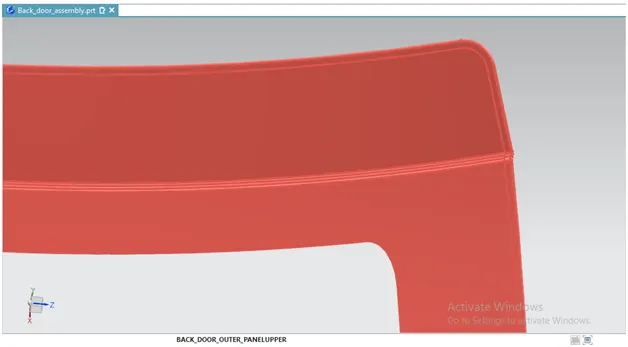
- Design for Spot welding: A gap of 0.2 mm is provided between outer panel lower and upper surfaces.
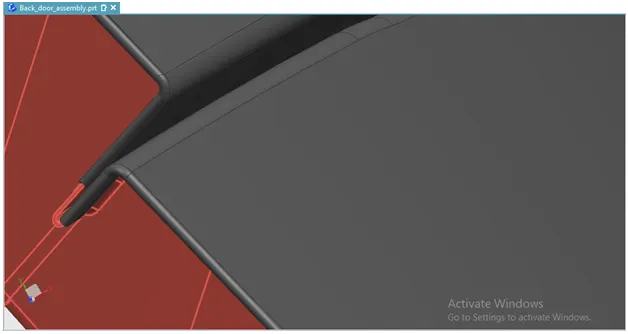
Hinge reinforcement
Hinges support the weight of whole back door. Hence reinforcements must be provided. Embosses are created such that the hinges should operate freely. Hinges are mechanical bearings that connect two solid objects typically allowing only a limited angle of rotation.
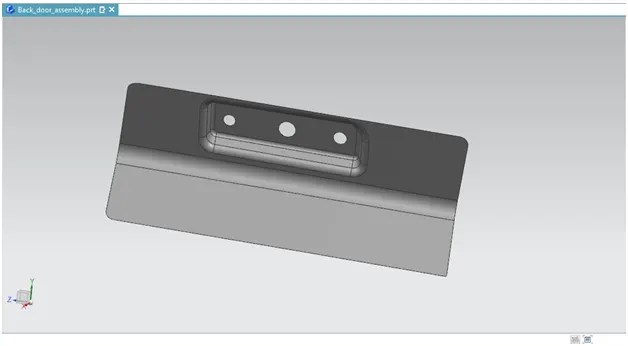
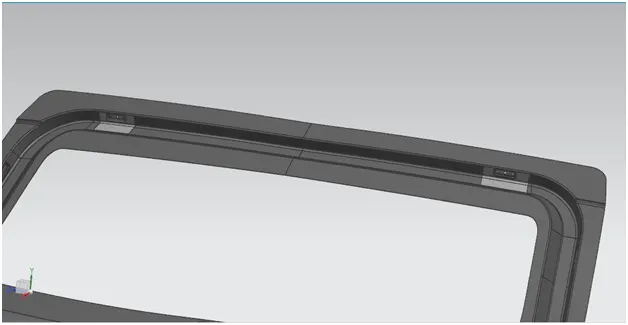
Gas stay reinforcement
It is used to lift up the back door and holds in the open position. Hence reinforcements must be provided. Embosses are created such that the gas stay should operate freely. Reinforcement sheet thickness is 0.75mm. A gap of 0.2 mm is designed to allow for spot welding attachment.
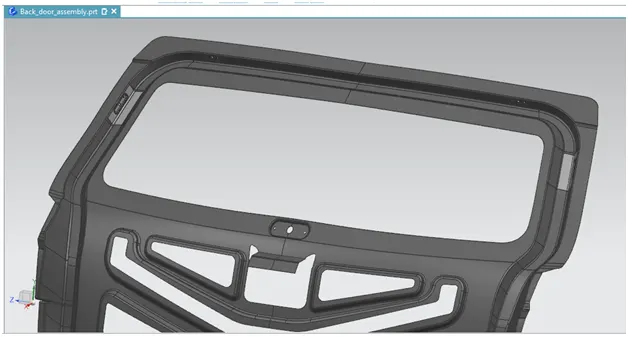
Wiper motor reinforcement
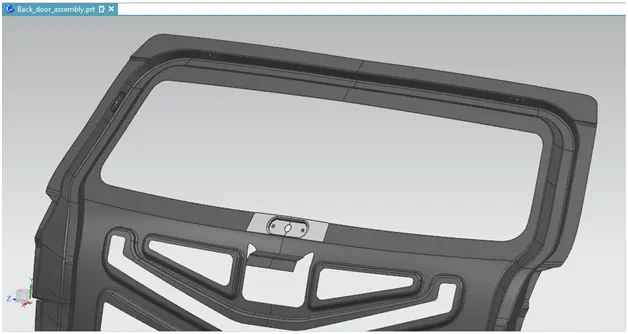
A dedicated place near the back glass is provided for wiper motor assembly. A cavity is provided in the middle of the panel to ensure attachment. Other design procedure is same for the design of wiper reinforcement
Latch and striker reinforcement
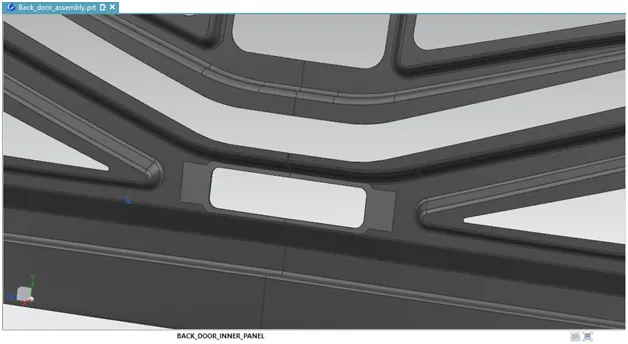
At the bottom of the back door, space for latch and striker placement is provided. Reinforcement sheet metal thickness is 0.75mm. A gap of 0.2 mm is designed to allow for spot welding attachment.
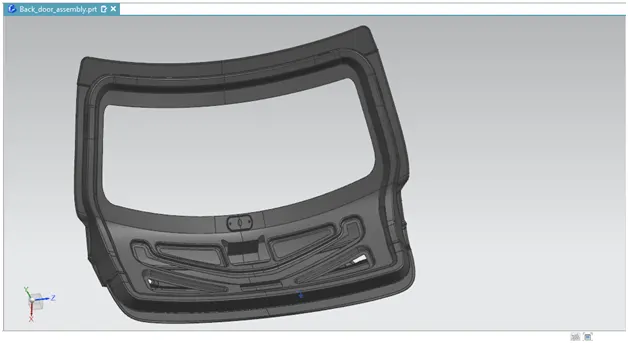
Final assembly of Back door
Draft analysis results
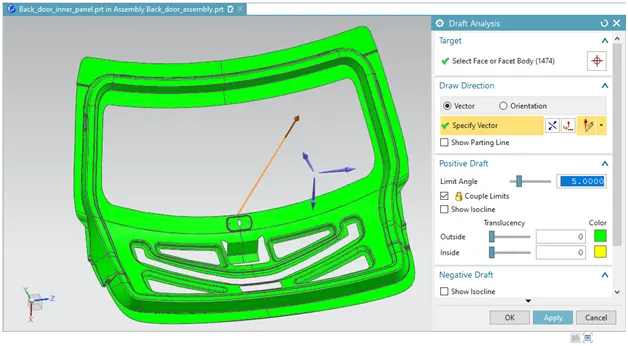
Result: Draft analysis is performed to check the tooling feasibility. The designed component fulfill draft analysis criteria. All surfaces are observed in green color which means surfaces have draft angle of 5 degree.
Conclusion
- Back door is designed according to design guidelines.
- Necessary reinforcements are designed
- Draft analysis is performed to check tooling feasibility. Results are satisfactory.