Design of backdoor
BACK DOOR ASSEMBLY DESIGN:
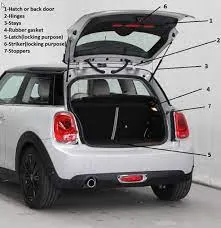
The requirements for the tailgate and its components
- functional requirements
- rear visibility criteria
- rear crash regulation and requirement
- sealing and its function
- joining technique’s followed like hemming, spot welding
- manufacturing technique using a casting part
- gap and flushness requirements
- functional requirements of
- hinge
- gas stay/ powerlifter.
INTRODUCTION.
- In the project, I have designed a back door for a hatchback car hinged at roof level.
- similar to the hood and side doors, the back door is a swinging/closure commodity in a car.
- it is consists of an outer and inner panel.
- consider the safety measure required.
- Make sure output should be less wight and requirements changes, cast efficiency is less.
- the operation performed in NX cad:
- SKIN DATA provided by taking this reference of the skin data.
- have to create the back door panel inner lower panel and the upper panel is made.
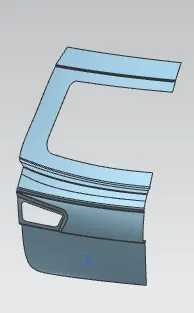
SKIN DATA FIGURE.
OUTER PANEL :
- the outer panel is the styling surface done the door.
- created like number plate and coloring and required operation done on the outer panel.
- hemming is created apply mastic in between two-panel,
- thickness maintained at o.75mm.
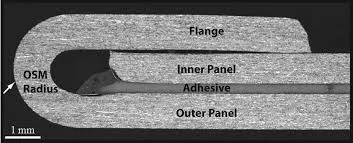
- by used the bridge curve and through curve command hemming are created.
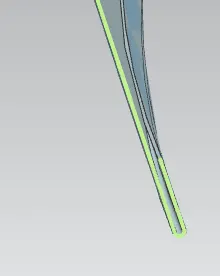
Hemming figure.
- mirror geometry command used to create the same panel to project the other side by using the datum plane.
- After going through the required operation, the final output of the outer panel.
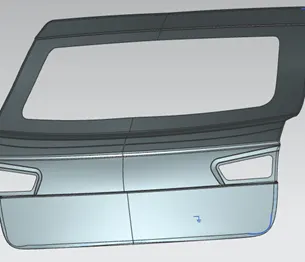
INNER PANEL:
- INNER PANEL IS made by using the outer panel reference.
- Offset them at the required length.
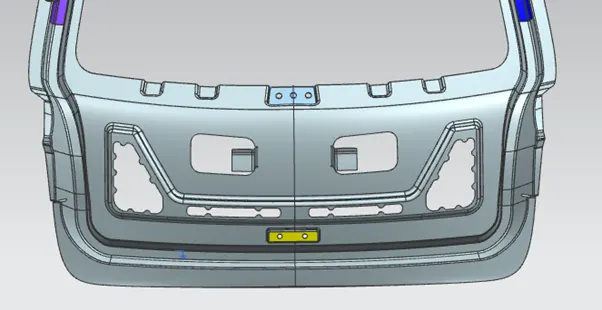
- by using the law extension create the embosses to strengthen that area.
- by creating the embosses panel to increase the strength of the panel remove the metal to decrease the strength.
MASTIC SEALANT:
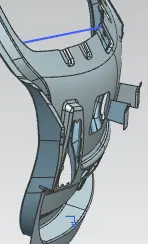
- MASTIC SEALANT is used to increase the strength between the outer and inner panel
- distance is maintained 5mm between the inner and outer panel.
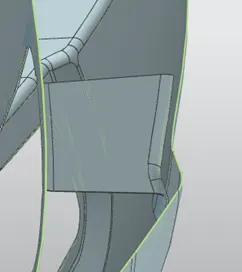
- you see the gap between the inner and outer panel is about 5mm...
- to improve the strength hard rubber is also used.
- mastic sealant is preferred over the spot welding join.
HINGE REINFORCEMENT:
- hinge reinforcement created by using the inner panel surface.
- hinge reinforcement is used to improve the strength of the inner panel and outer panel.
- There is a method of amplifying door hinges by creating a special design loop for armored vehicles
- the mating parts of the door body, which is not always possible.
- the entire load is concentrated on a small area, equal to the incorporation of inserts
- This objective is achieved in that the fastening of the door hinges is made on the sheet protects the inside of the body, with water on a path with a fixed threaded fasteners loops,
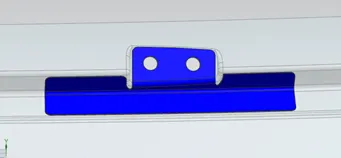
hinge reinforcement figure.
GAS STAY REINFORCEMENT:
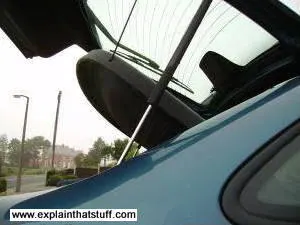
- GAS STAY is partly used for supporting the back door in its opening position.
- gas stay doesn’t require the manpower to lift the tailgate.
- gas stay fixed on the backdoor.
- create a specific area to place the gas stay.
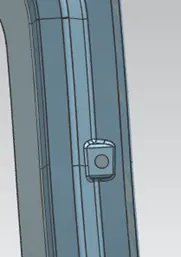
gas stay figure.
- embosses are created to increase strength.
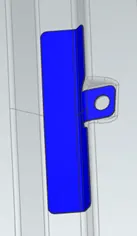
Gas reinforcement figure.
- create both sides.
Wiper motor reinforcement:
- wiper motor reinforcement is created to mount the wiper motor reinforcement.
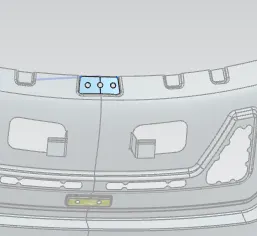
WMR figure.
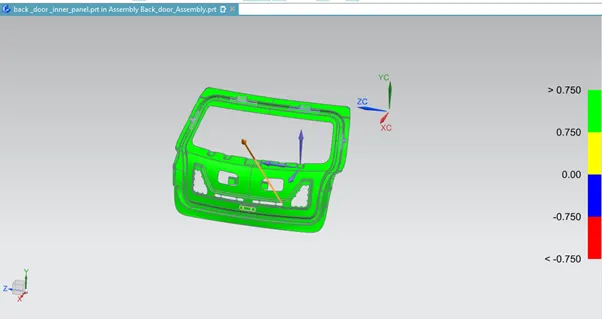
DRAFT ANALYSIS:
while designing a component a design engineer must make sure that the component can product by any means of manufacturing methods with the least amount of time material, manpower, and power. so that we can reduce the overall cost of a car.
when the back door is considered, it is manufactured by deep-drawing at most of the time deep drawing is the process where the single sheet of metal is placed over the die which has the desired shape of the final output
for the tool to come out from the part usually pressing relief of the min 5 to 10 degrees will be provided during modeling itself
in the draft, analysis can be done after modeling so that we can verify whether the product is manufacture by pressing or not
one side green is highlighted by green and another side by the red color that the model can be manufacture
draft analysis done after thicken.
the draft analysis is shown in the figure.
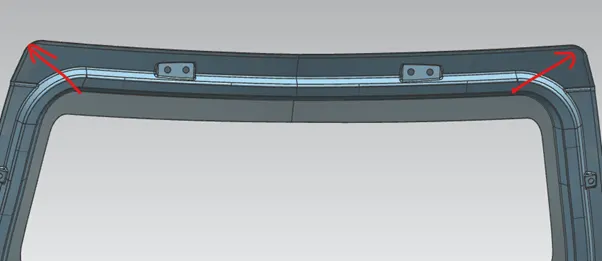
corner reliefs:
- The reliefs are proved at the corner of the hemming flanges to avoid stress development.
the final output of the back door assembly:
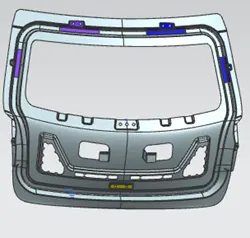
Inner panel :
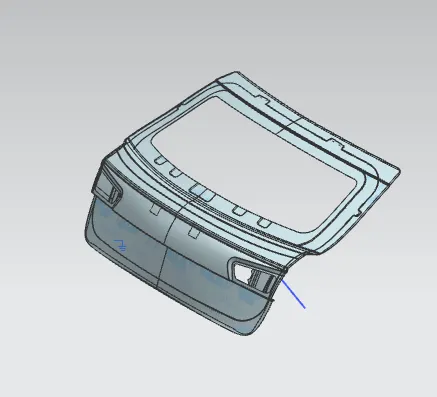
Outer panel.
BACK DOOR ASSEMBLY OPERATION DONE NX CAD 12