Design of backdoor
Back Door Design
Aim:
To design a backdoor of the car on sheet metal using the appropriate design and provided skin data by considering design parameters.
Objective:
- To design a back door of a car with an inner panel, outer panel and reinforcement for hinges, gas stay, Wiper motor and latch.
- The inner panel is subjected to the draft analysis to ensure whether it is satisfying the deep drawing requirements for the tooling direction that is created in the design.
Back Door :
The Back door is typically hinged, but sometimes attached by other mechanisms such as tracks, in front of an opening which is used for entering and exiting a vehicle.
A vehicle door can be opened to provide access to the opening, or closed to secure it. These doors can be opened manually, or powered electronically. Powered doors are usually found on minivans, high end cars, or modified cars.
Types of Back Door :
- Top Mounted
- Side Mounted
- Bootom Mounted
Top Mounted Back Doors :
These type of back doors are used in a station wagon, pickup truck and some other sports utility vehicles. Today’s modern cars use top mounted tailgating systems which are both powered and also gas stay supported. These tailgates provide greater rear visibility compared to other types.

Side Mounted Back Door :
It is generally used in van type MPVs, SUVs, pickup truck vehicles. These side mounted door/barn doors are a lot easier compared to top mounted ones. These doors are generally small in size and can be easily accessed. These doors are more convenient for the goods handlers carrying lengthy objects, long pipes where one door is kept open. It also saves accidental head impacts. It is a lot easier to load /unload things in vehicles having side-mounted doors.
Bottom Mounted Back Door :
Bottom type or split type backdoor system is used in estate type cars, pickup trucks and some luxury SUVs. These are most convenient type of backdoor in which the bottom split is used as a support or even as a table for the touring people.
Different types of Sheetmetal operations are done in the Back Door
Deep Drawing:
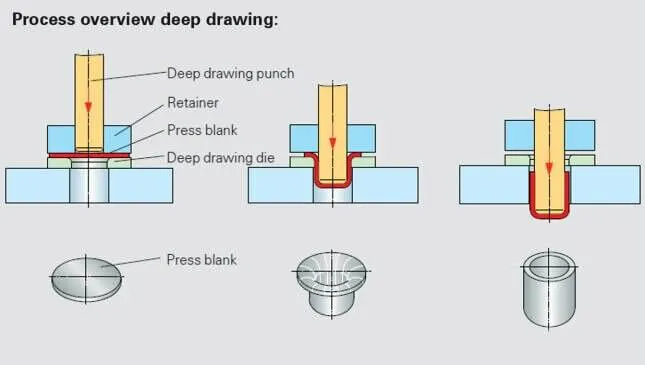
The metal deep drawing process is an effective method of manufacturing of cups, cans and other similar deep drawing products. The deep drawings having two main categories.
First- stage drawing:
The blank shape of metal is placed on the die and contact with the punch. When the metal specimen is flat piece of sheet metal used in forming and finish the product. Initially the punch moves in downward direction. The outer rim of blank is subjected to pure radial drawing (drawing toward in vertical axes) between die and blank metal. The metal become a bend and sliding over die and also stretched between die and punch. The metal in vicinity of punch head and contact with it bend and slide over radii and stretch over punch head.
Redrawing:
The components drawn from first stage again it is redrawn convert into more depth to form a cup shape in the die and punch. The second stage of drawing is called as redrawing.
Embossing:
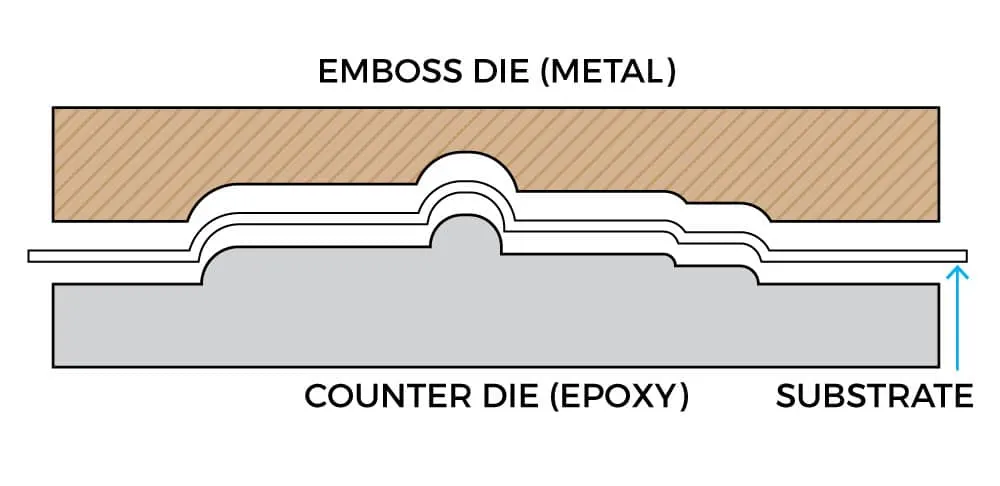
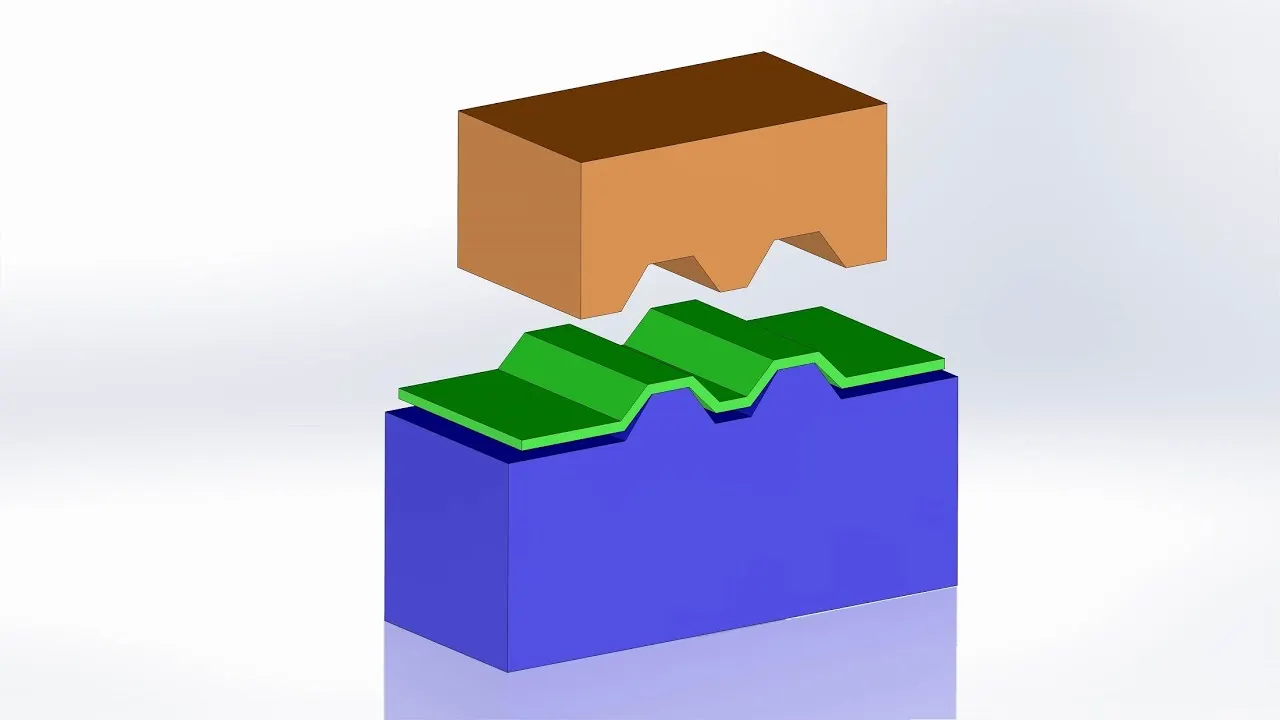
Embossing is a metal forming process for producing raised or sunken designs or relief in sheet materials by means of matched male and female roller dies, theoretically with no change in metal thickness or by-passing sheet or a strip of metal between rolls of the desired pattern. Metal sheet is drawn through the male and female roller dies producing a pattern or design on the metal sheet. Depending on the roller dies used, different patterns can be produced on the metal sheet.
Materials commonly used in the metal embossing process include:
- Aluminum alloys
- Steel alloys
- Zinc
- Copper
- Galvanized steel
- Brass
Hemming:
Hemming is a forming operation in which the edges of the sheet are folded or folded over another part in order to achieve a tight fit. Normally hemming operations are used to connect parts together, to improve the appearance of a part and to reinforce part edges.
In car part production, hemming is used in assembly as a secondary operation after deep drawing, trimming and flanging operations to join two sheet metal parts (outer and inner) together. Typical parts for this type of assembly are hoods, doors, trunk lids and fenders.
There are various types of hemming operations:
Conventional die hemming: In conventional die hemming, the flange is folded over the entire length with a hemming tool.
Roll hemming: In roll hemming, the hemming roller is guided by an industrial robot to form the flange.
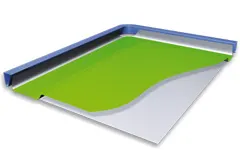
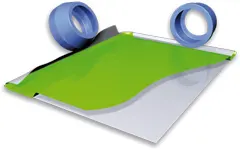
Open Hem: A Hem has a full round feature and a return flange. In open hem bend angle is equal to 180 degrees.
Tear drop Hem: In tear drop hem the bend angle is greater than 180 degrees.
Closed Hem: Hems without any inside radius are called as closed hem. Closed hems are not recommended if the hem geometry is to be painted or if the material used is SST or Aluminium.
Blanking:
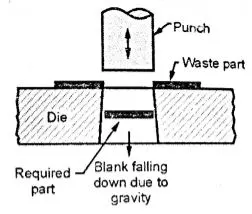
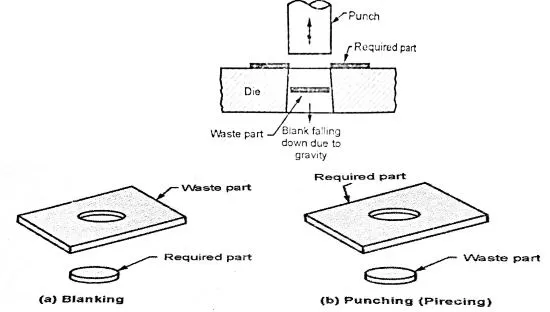
Blanking is a cutting operation of a flat metal sheet and the article punched out is known as blank. Blank is the required product of the operation and the metal left behind is considered as a waste.
Punching:
It is similar to blanking only the main difference is that, the hole is the required product and the material punched out from the hole is considered as a waste.
Stamping :
Sheet metal stamping is used to transform flat metal sheets into specific shapes. Stamping of sheet metal is a process based on permanent deformation by cold forming to produce a variety of complex three-dimensional shapes.
Tensile forces with a high ratio of surface area carry out the process to thickness. The stamping of sheet metals is very common: this is the reason why many objects in your house are the result of a metal stamping process.
An example?
The metal parts of your automatic coffee machine, your pots and many components of your car.
Sheet Metal stamping Process and Types:
In sheet metal stamping processes are included a wide variety of associated operations:
- Metal blanking: sheet blanking on iron, aluminum, copper, brass and special alloys is carried out with punching and matrixes.
- Sheet metal deep-drawing: which can turn flat metal sheets transforming them into metal components such as cylinders, hemispherical caps, or finished products such as pots and pans or other kinds of containers.
- Sheet metal bending: used to obtain semi-finished products through the pressure exerted by the mold during the metal working.
- Sheet metal punching: achieved by using automatic CNC machines and standard or special punches and tools, is performed on iron, stainless steel, aluminum, copper, brass and special alloys.
- Metal threading: used to fix together two or more metal parts.
- Sheet metal laser cutting: performed using numerical control machines, capable of achieving the precision cutting standards foreseen during the design & engineering phase.
As you can see, there’re many processes linked to sheet metal stamping; these are the main processes involved to manufacture metal parts in all industries fields: automotive, household appliances, medical, logistic and plant system sectors and infinite others.
Inputs for designing of backdoor:
- Outer Panel - 0.75 mm
- Inner Panel - 0.75 mm
- Reinforcements - 1.5 mm
Design Consideration :
- Visibility Criteria
- Latch and Stricker Position
- Hing Position
- Gas Stay Position
- Space Avalibility
- Drain Holes
- Hemming and Relief area's
Parts of Backdoor
- Back door outer panel (upper and lower)
- Back door inner panel
- Hinge reinforcements
- Gas stay reinforcements
- Latch and striker reinforcements
- Wiper motor reinforcements
Steps Involved in Back door design
1. Back door outer panel
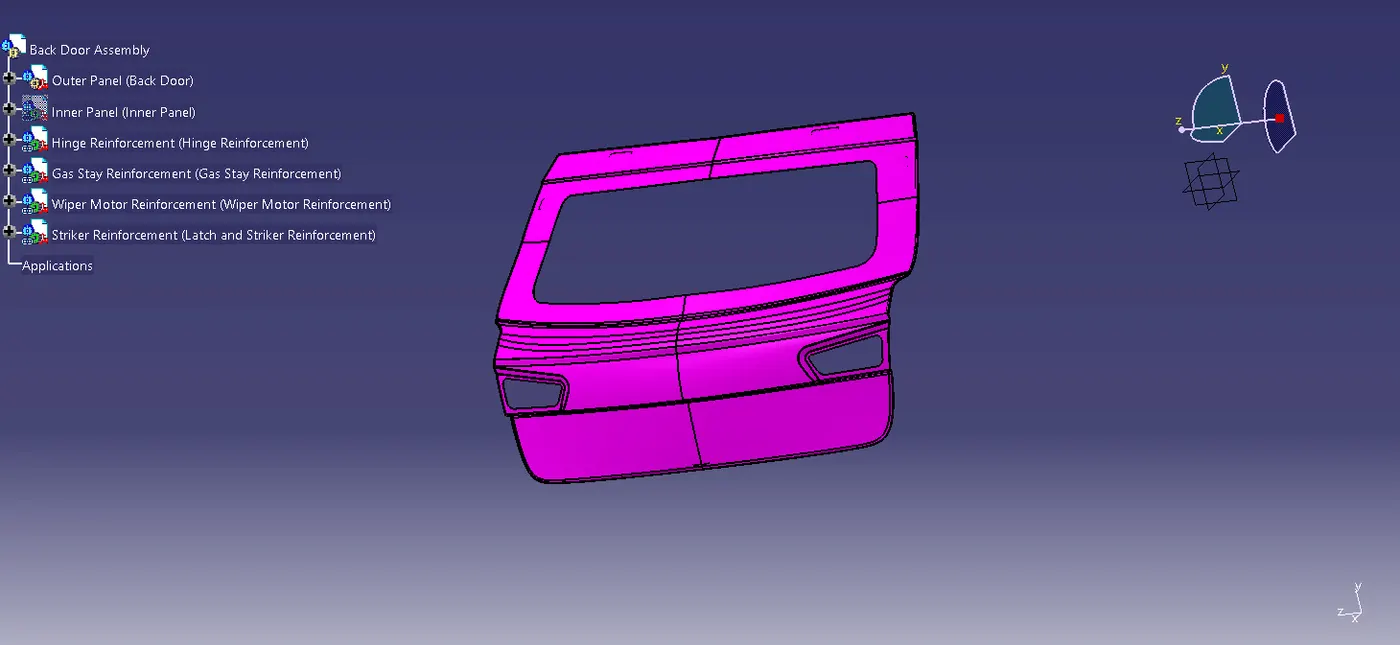
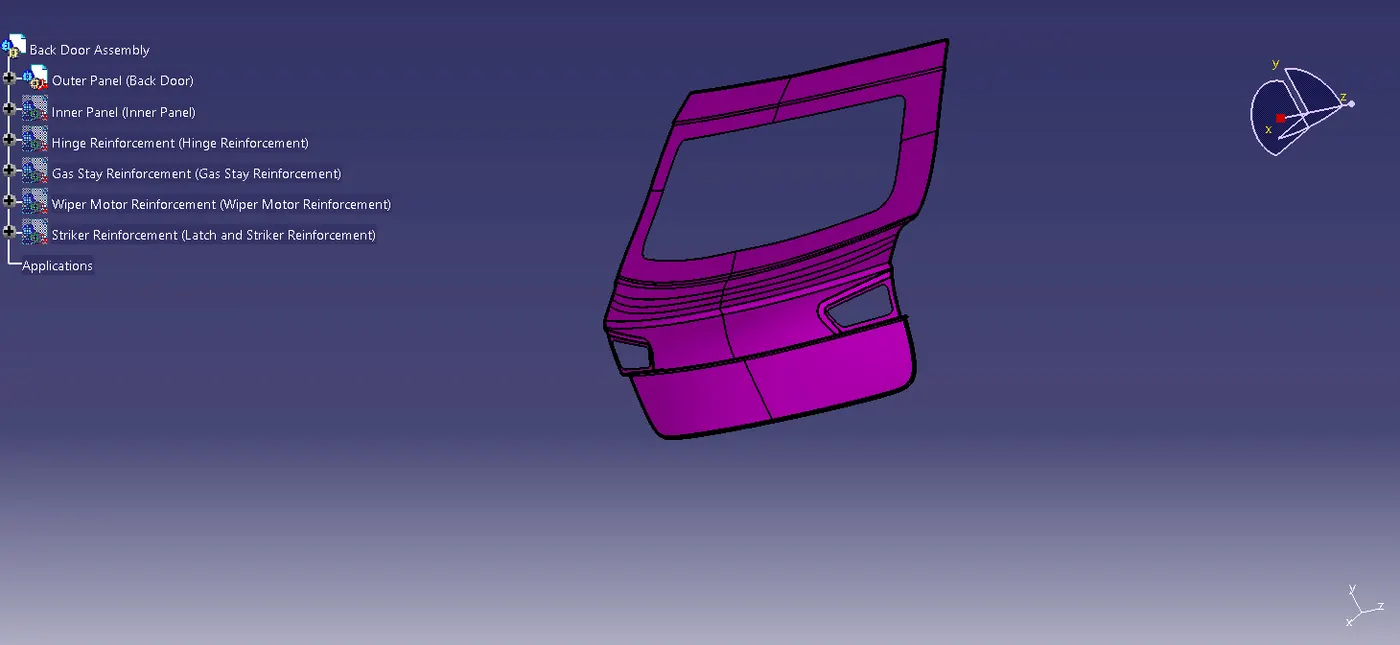
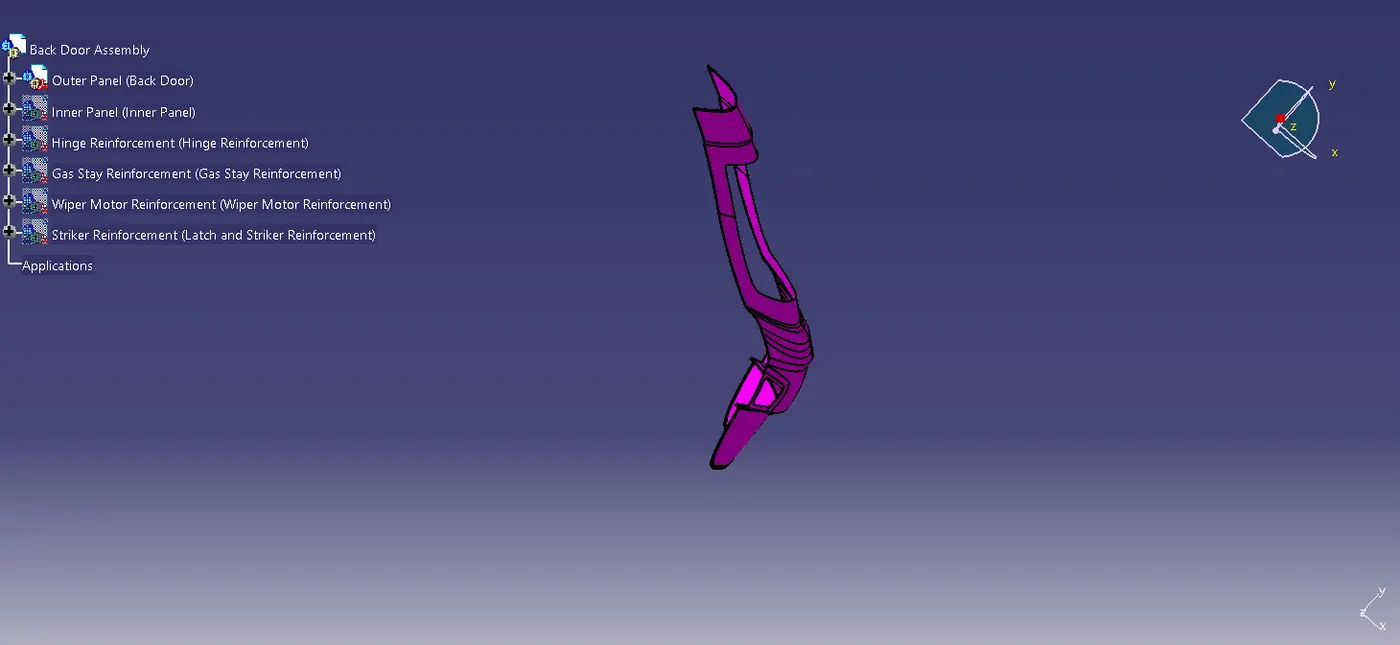
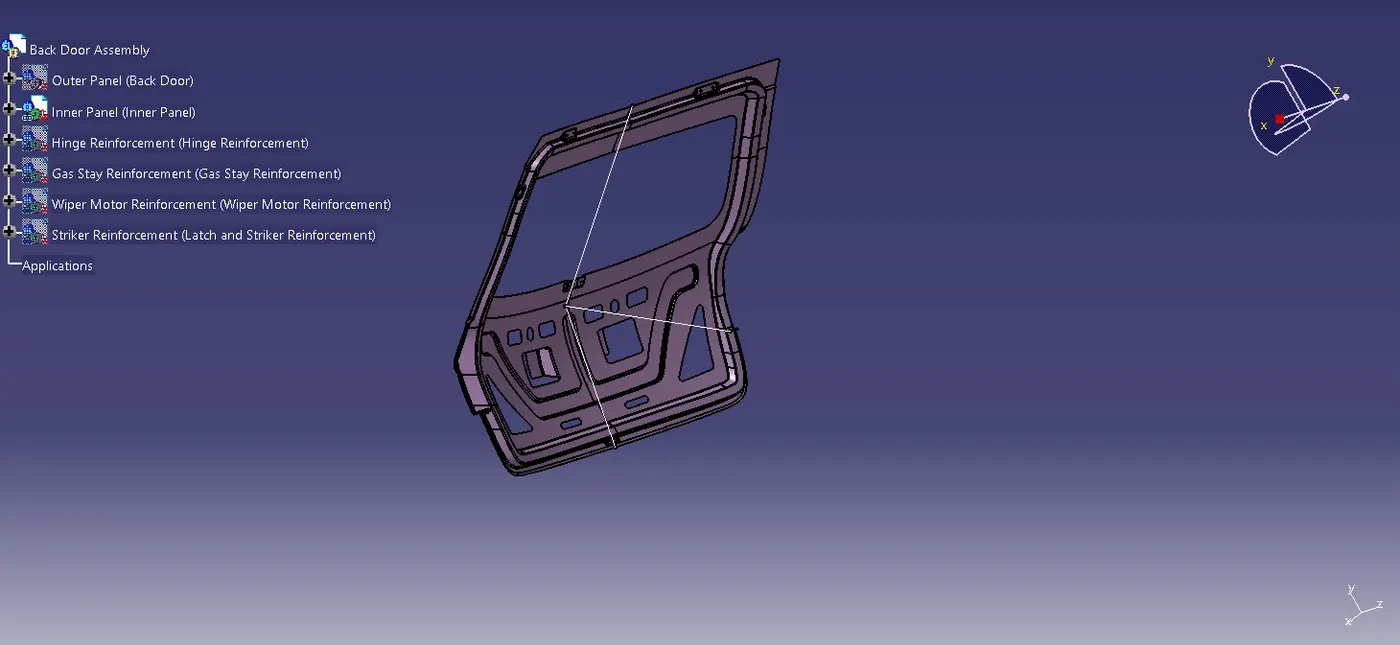
In this design back door is created as two different parts back door outer panel upper and lower. This outer panel designed based on visibility criteria and proper reliefs provided at the corner for hemming operation .The thickness of outer panel is 0.75 mm .
2. Back door inner panel
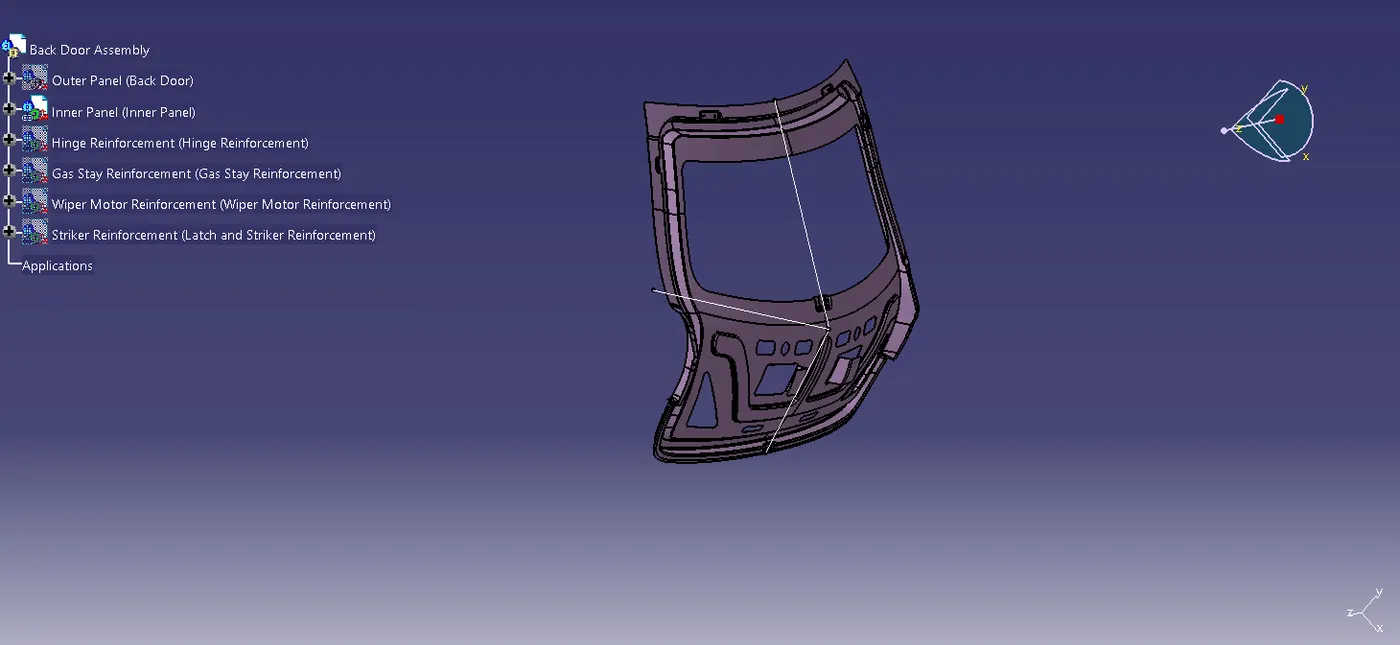
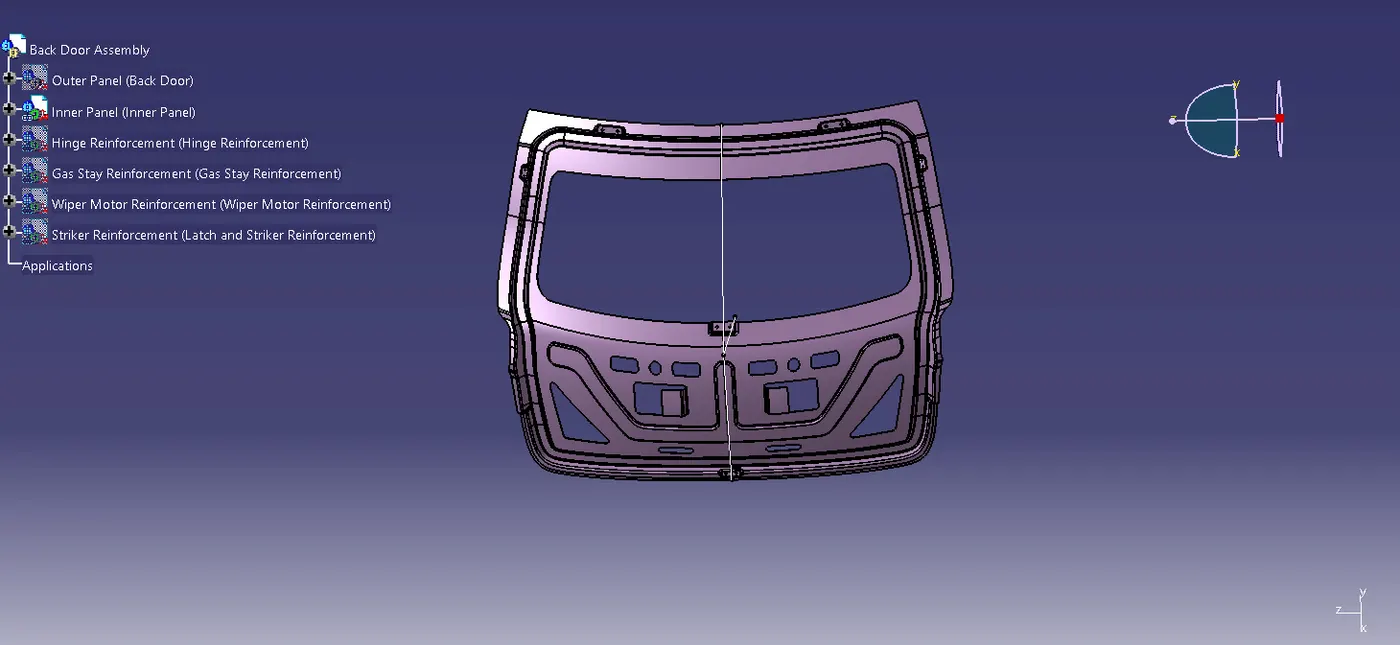
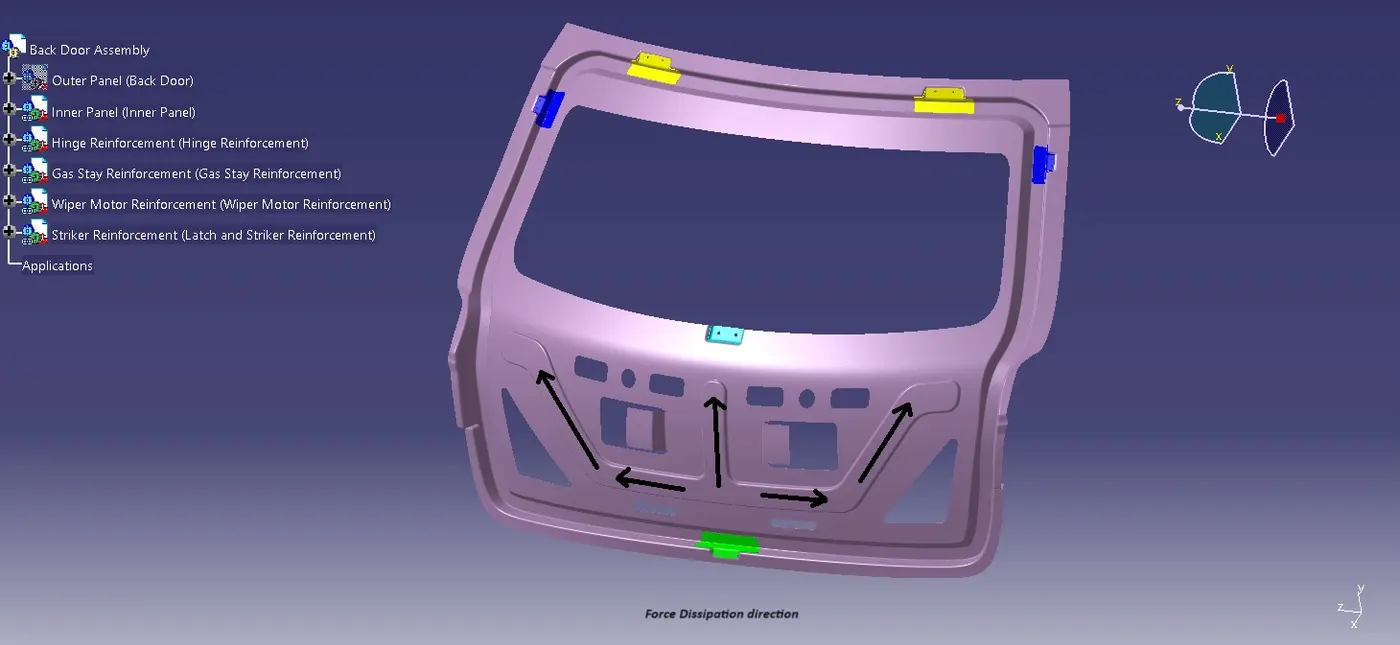
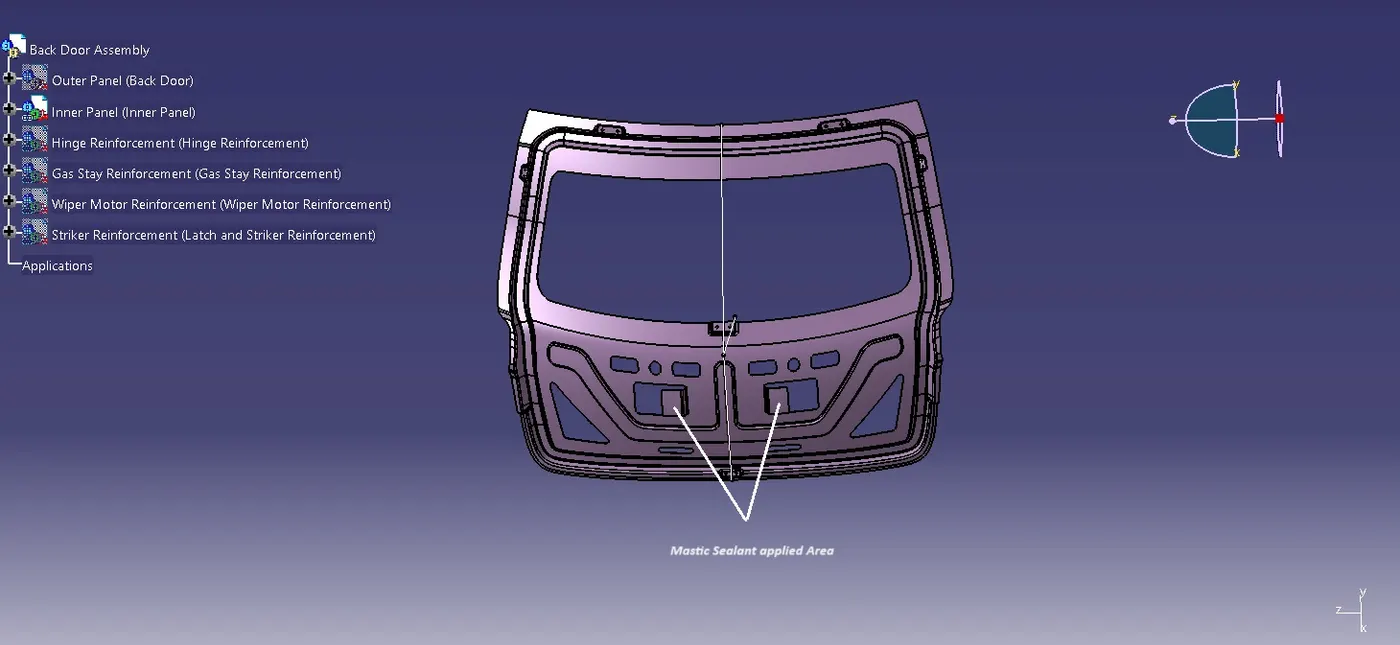
Back door outer panel designed based on hinge, gas stay, wiper motor position and reinforcement as well as visibility criteria .Suitable tooling direction is created for trouble free manufacturing process.In this design stamping operations created based on this tooling direction. Embosses are provided in this design for force dissipation. In this design appropriate clearance given in mastic areas .The inner panel thickness is 0.75 mm
- Force dissipation
This inner panel design created by considering the force dissipation criteria.The embosses are created in such a manner that force will dissipate in to sides of the back door during a collision and prevent reaching inside the passenger cabin.Y and V embosses provided in the back door for force dissipation and improve the strength of the metal.
- Mastic Area
Mastics sealants used for joining of outer panel and inner panel. It increase the strength of back door and good NVH. So accurate clearance given for mastic sealant.
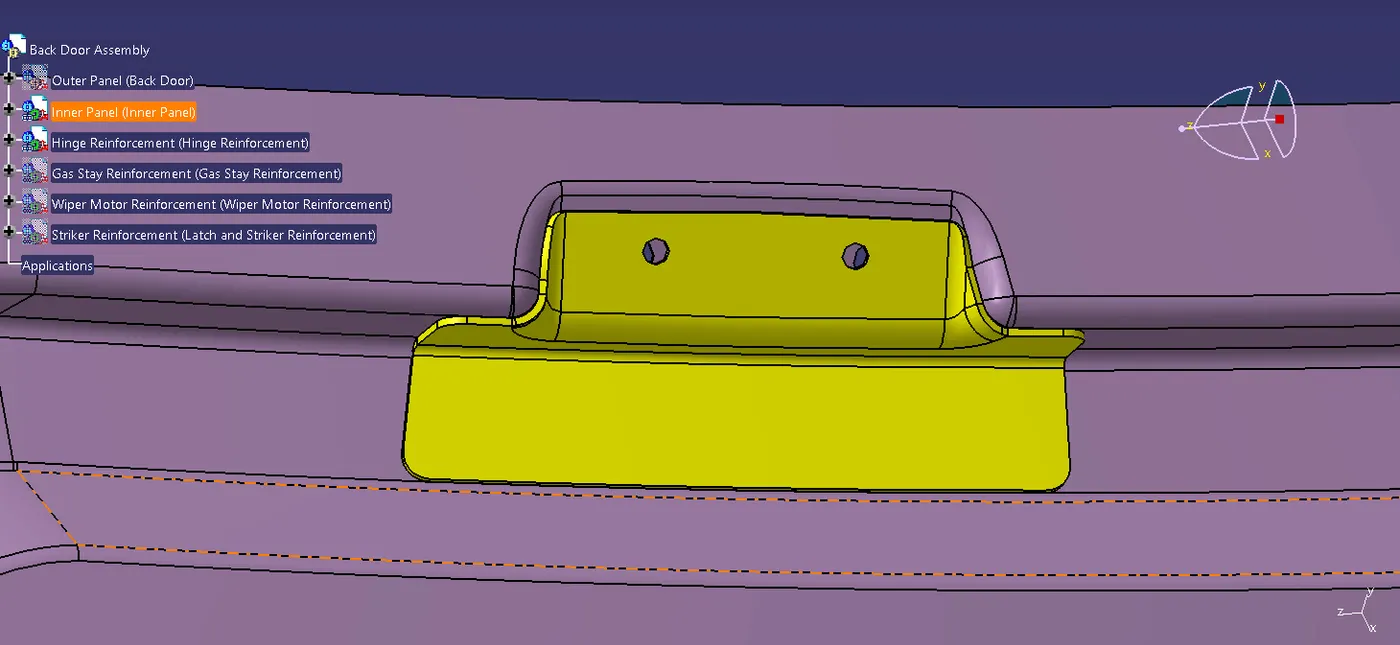
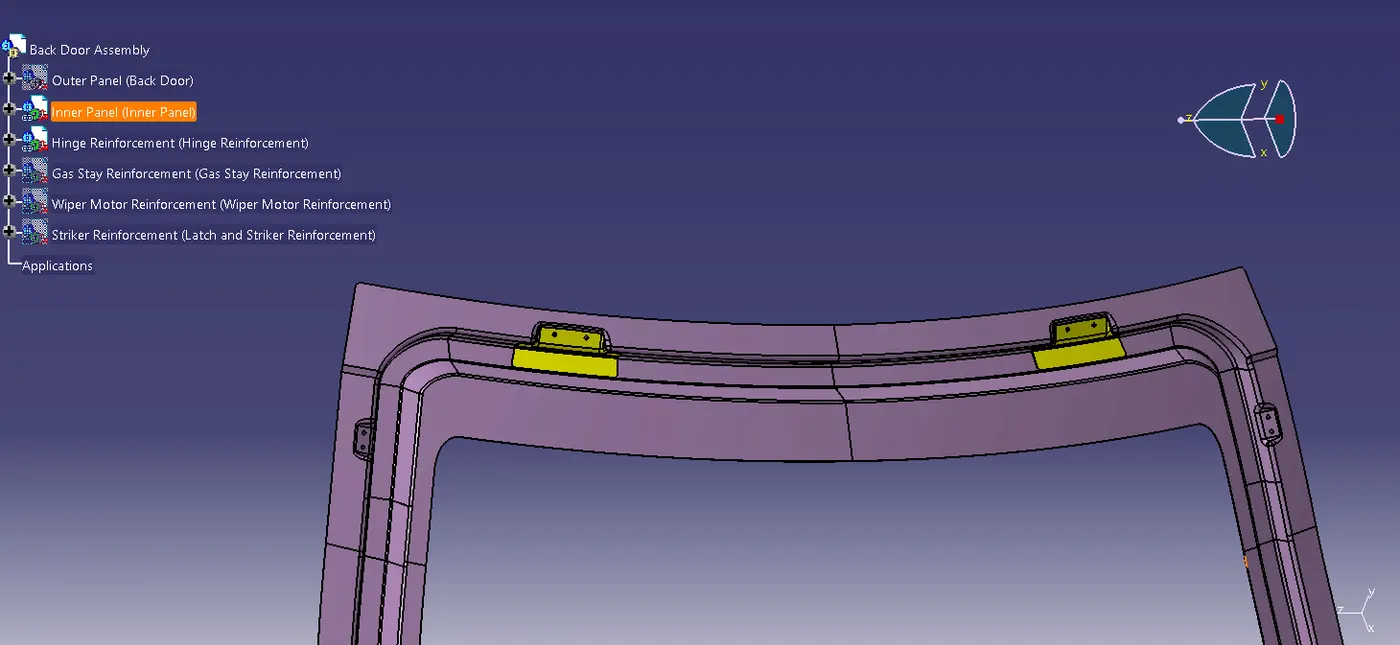
3. Hinge reinforcements
In this design hinges provided on the top side of the door. Appropriate reinforcement given for hinge mounting areas to improve the strength.
4. Gas stay reinforcement
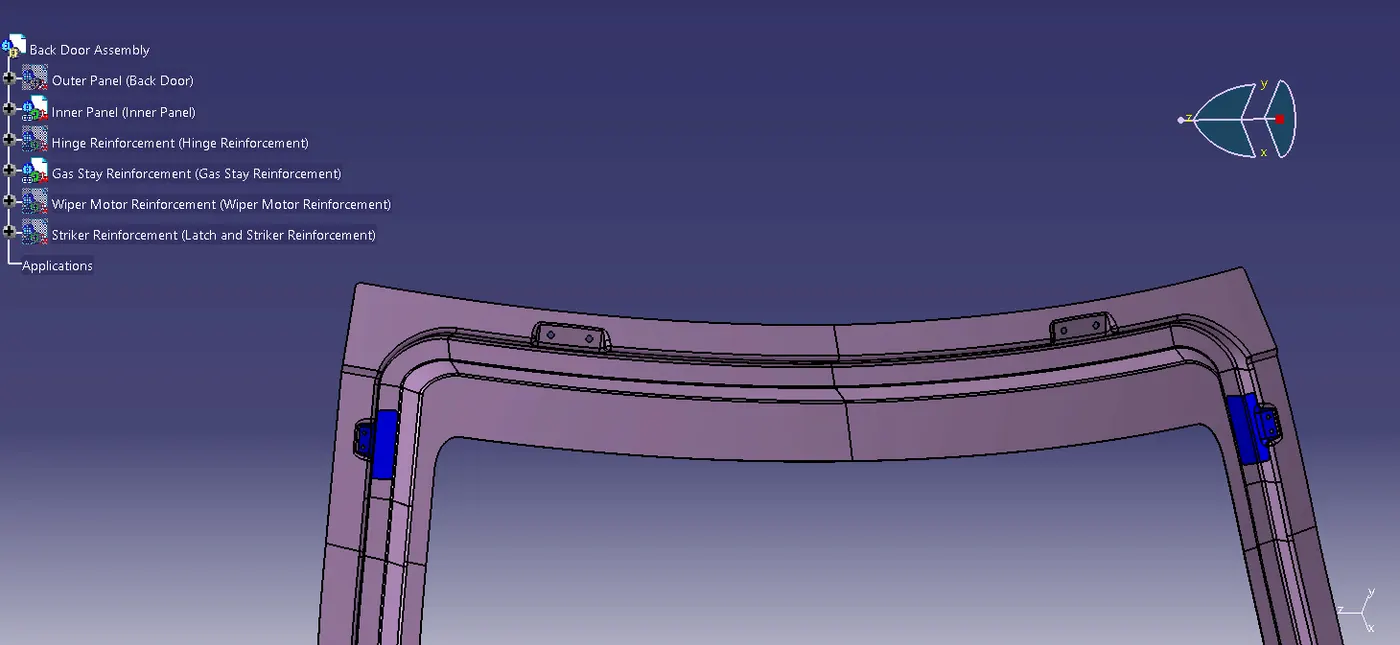
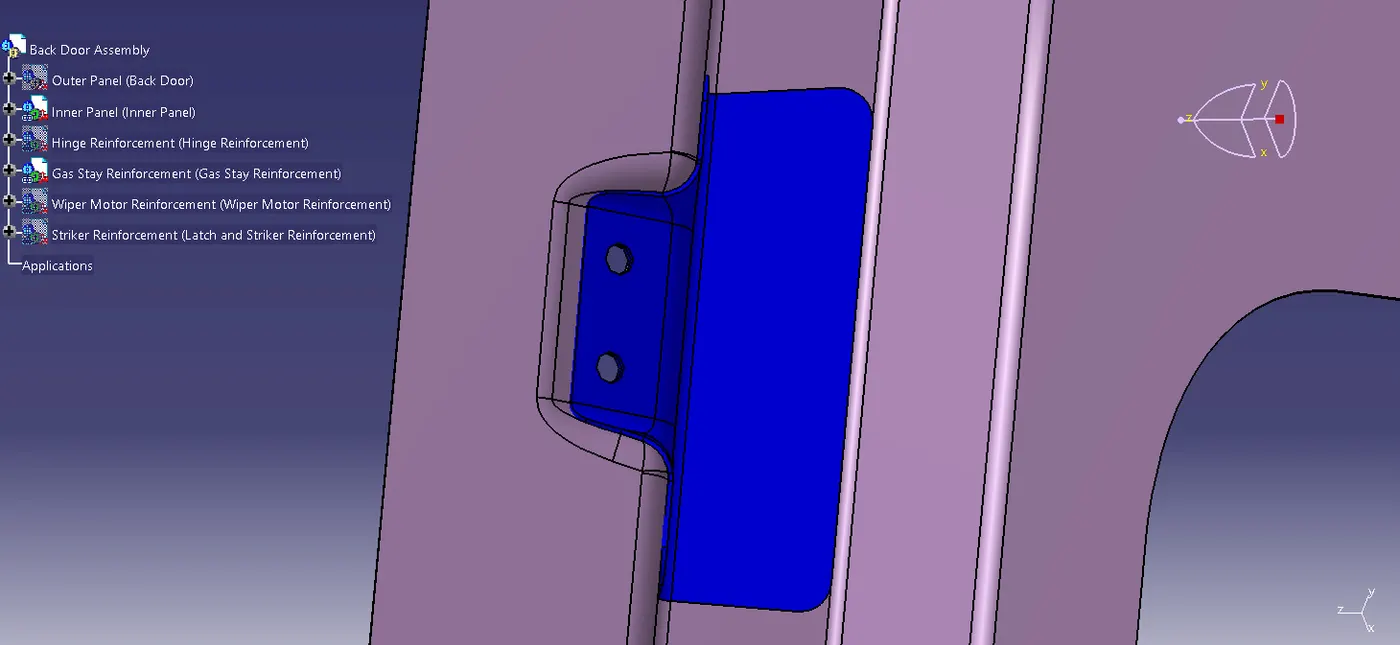
Gas stays support the weight of the back door while they are open. More load act on this region ,So suitable reinforcement provided for better strength
it is spot welded on the inner panel.
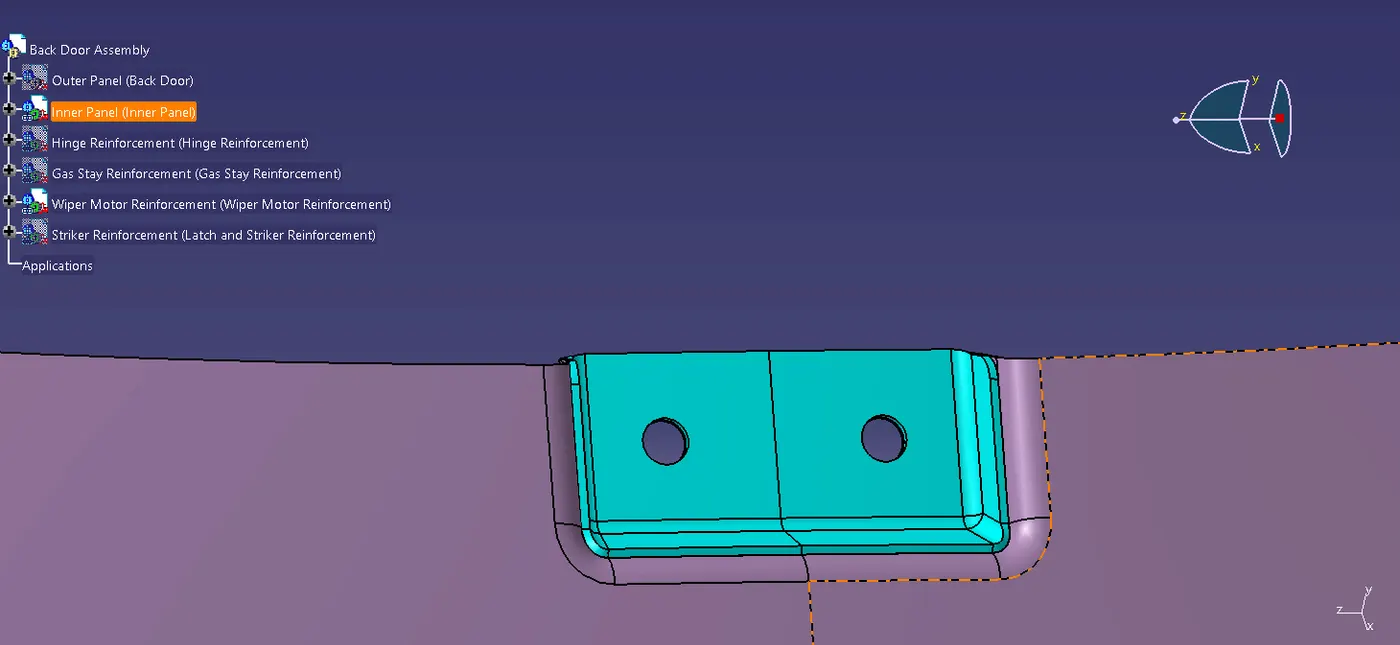
5. Latch and striker reinforcement
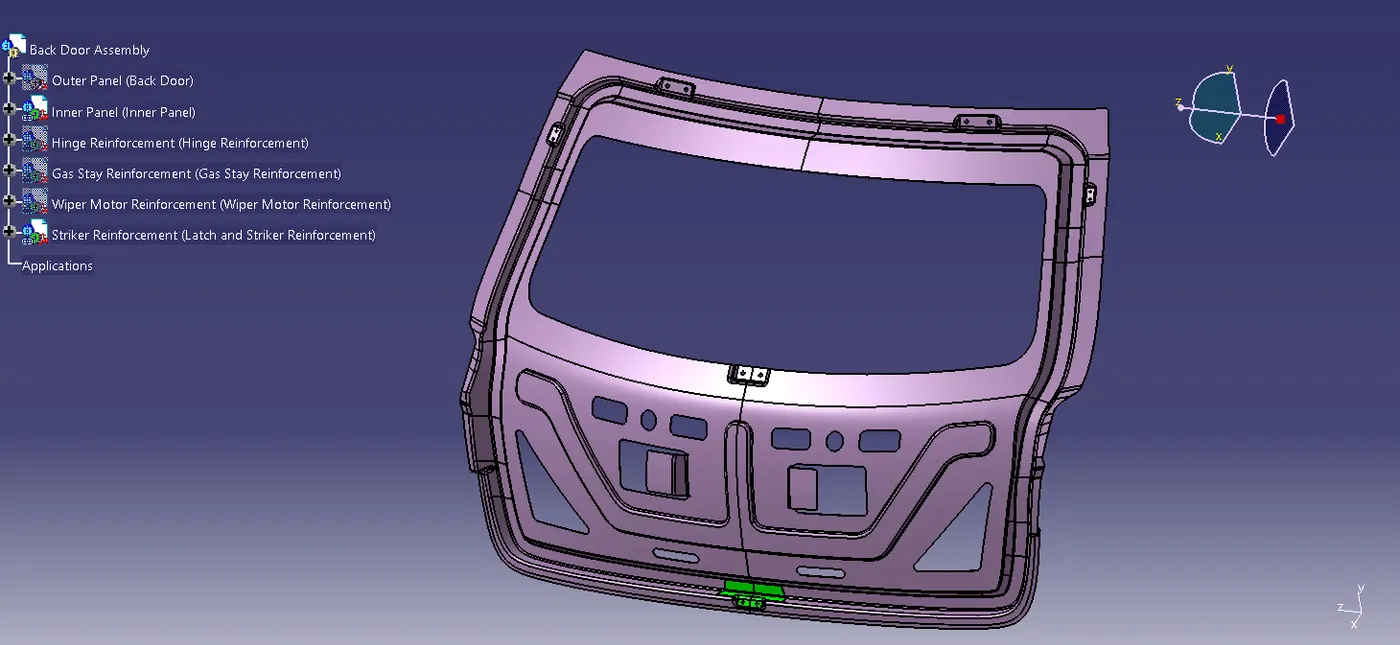
The striker is designed to create a tight fit between the door and the seal on the cab. The door open and shut several times in a day.So more force acting on this area.The reinforcement given in the latch and striker mounting area to increase the strength.it is spot welded on the inner panel
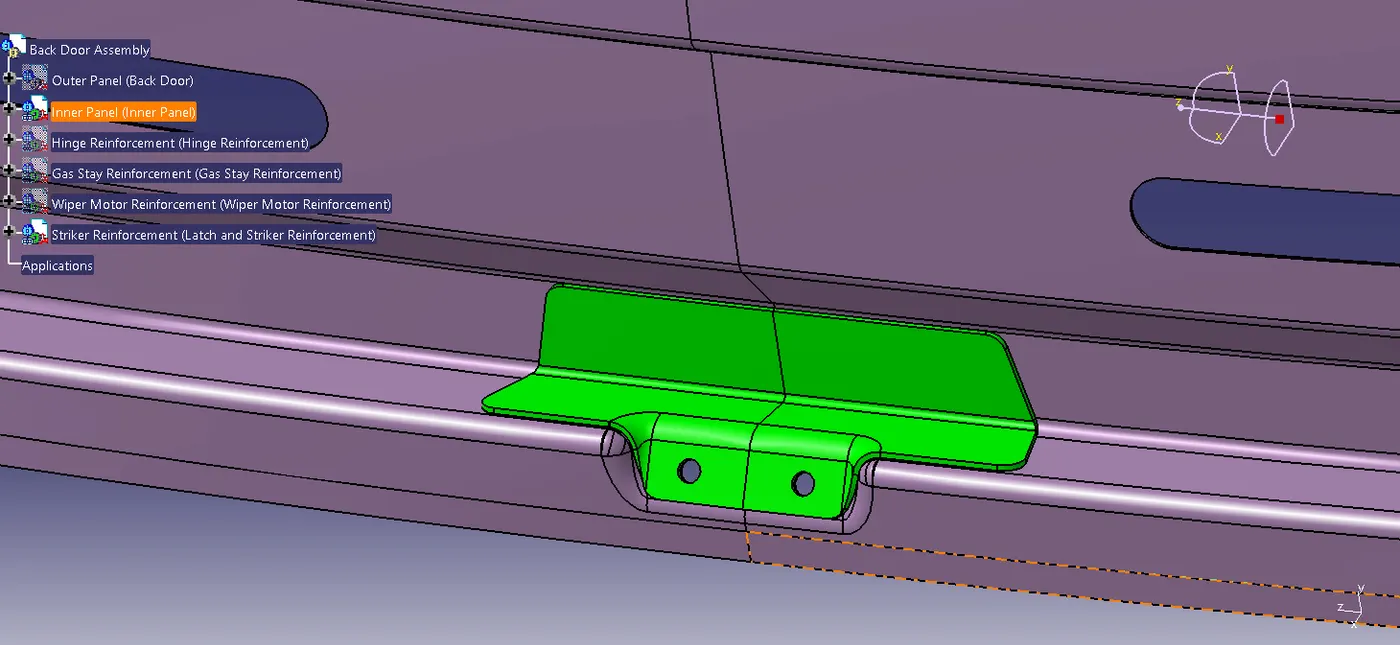
6. Wiper motor reinforcement
Reinforcement provided in this region for fixing the wiper motor.
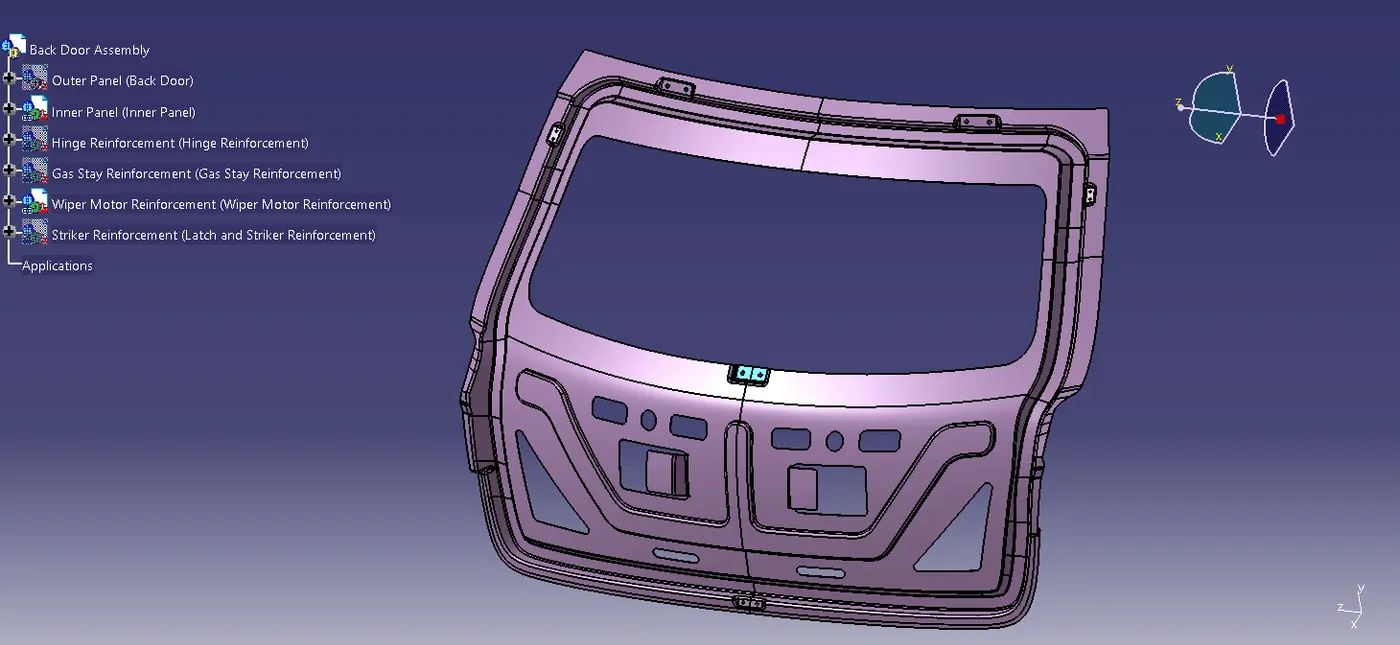
- Trajectory
The trajectory is created to position the latch and striker .latch system must be able to catch the striker of the door the while closing. Circle is drawn from the hinge axis. The striker follow this path.
- Hemming
Hemming is a technology used by the automotive industry to join inner and outer closure panels together (hoods, doors, tailgates, etc.).In addition adhesive bond provide for excellent joining of panels it also reduce vibration .here this design 0.2mm clearance provided for hem glue .
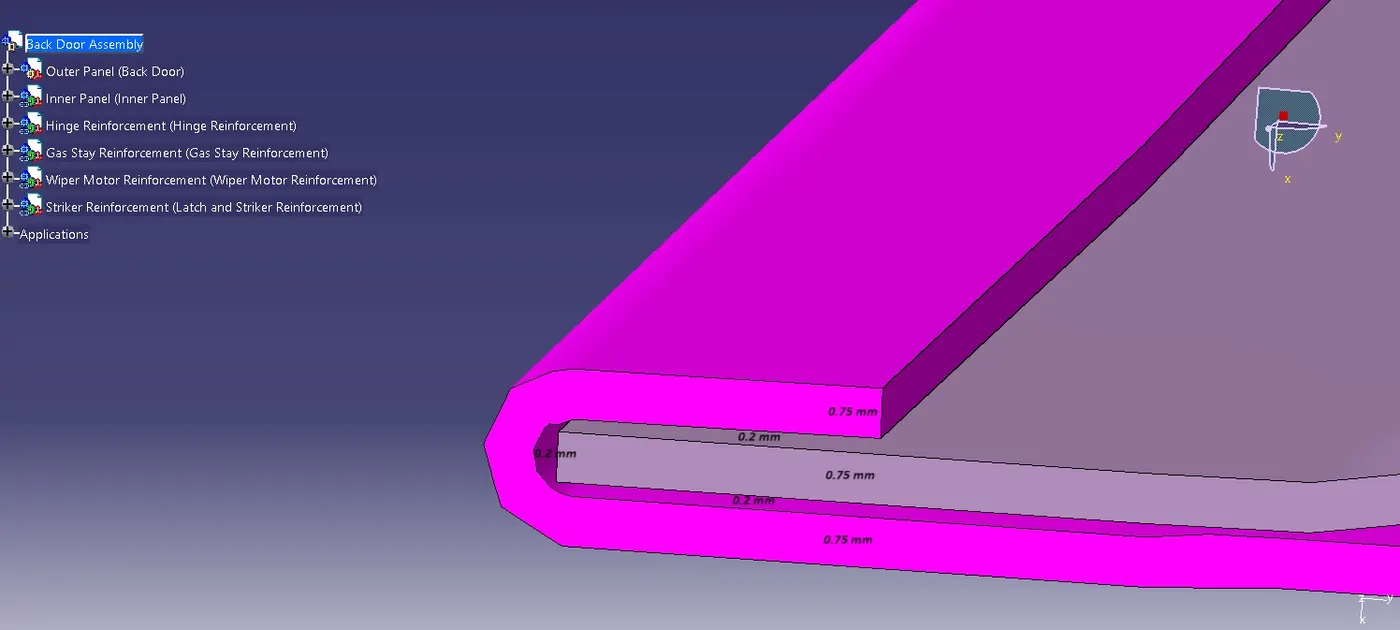
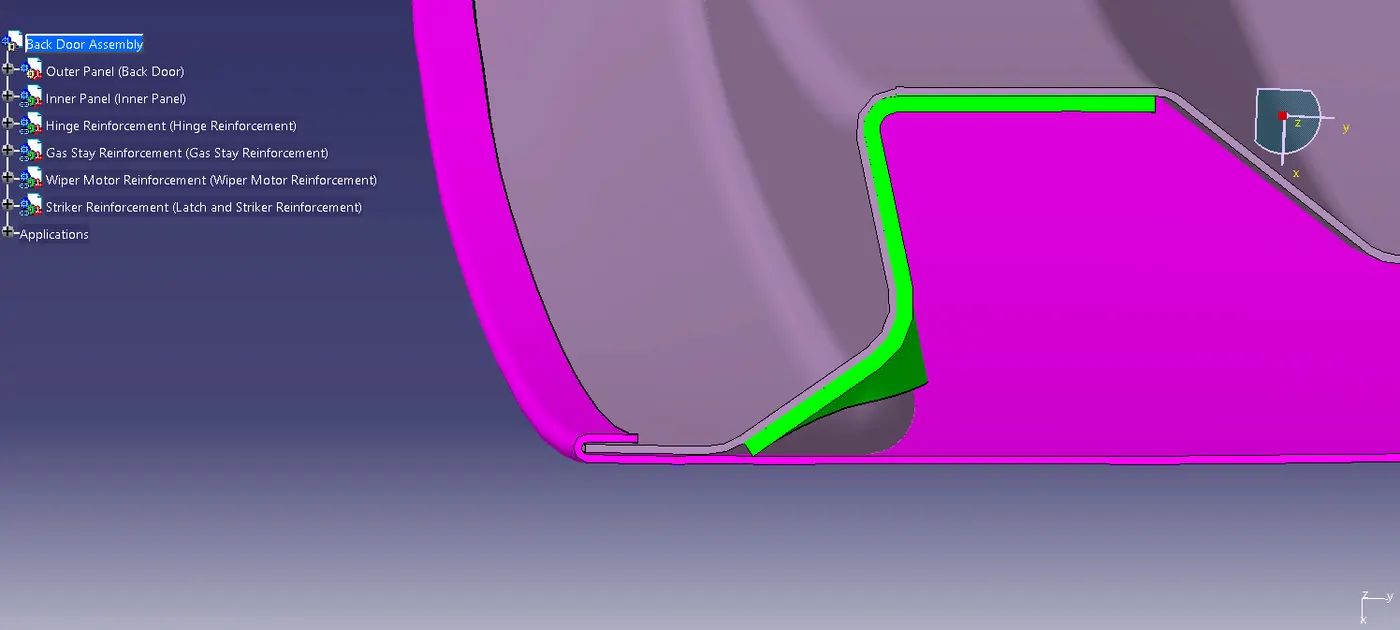
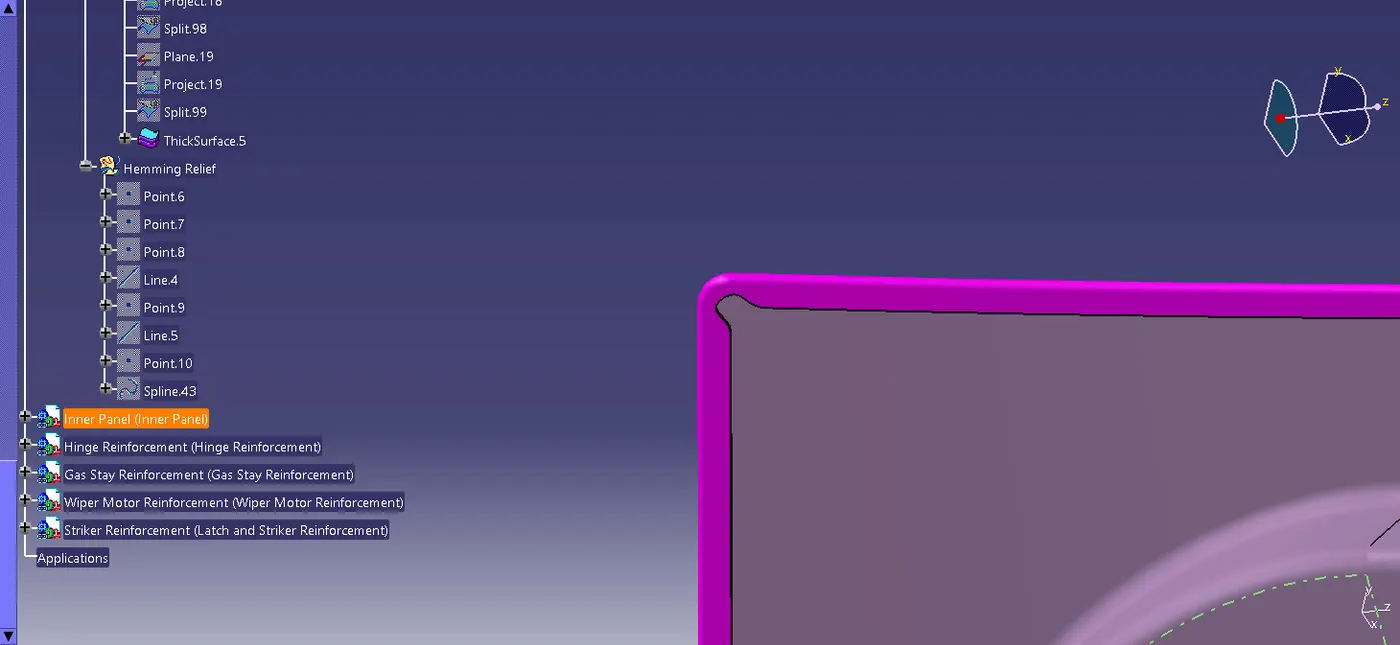
- Proper corner relief provided for trouble-free hemming operation
Draft Analysis
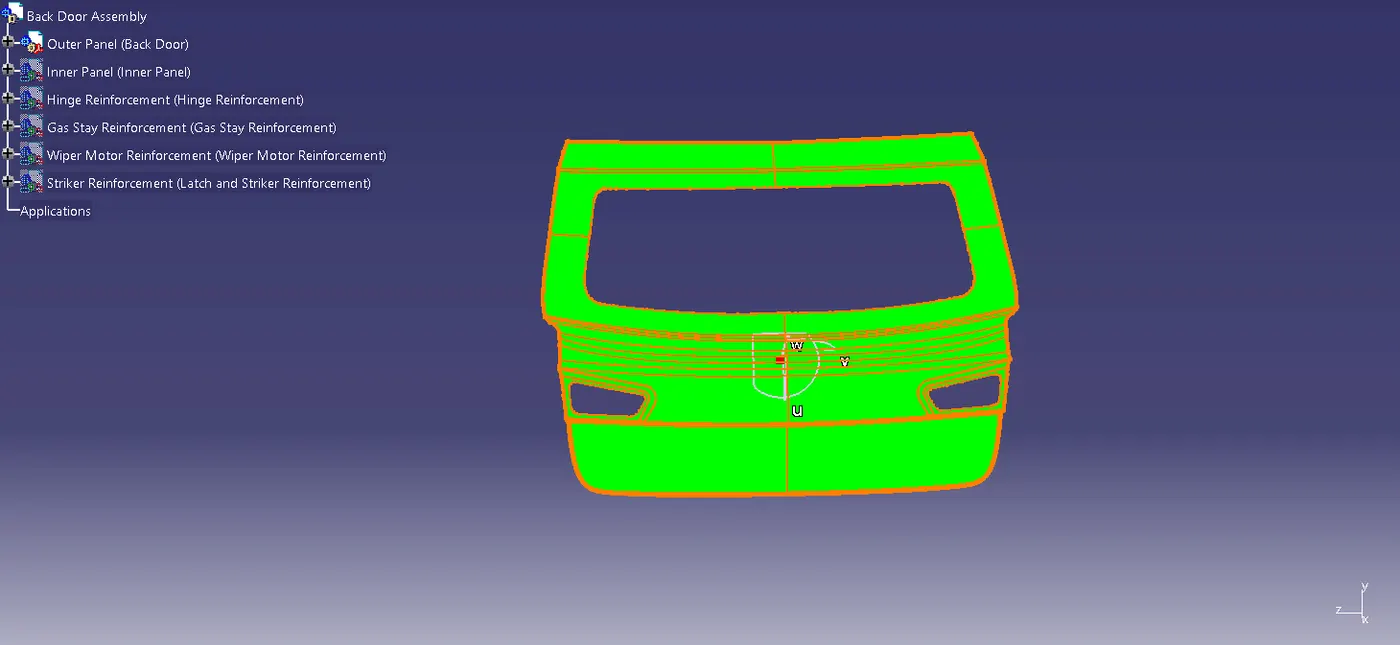
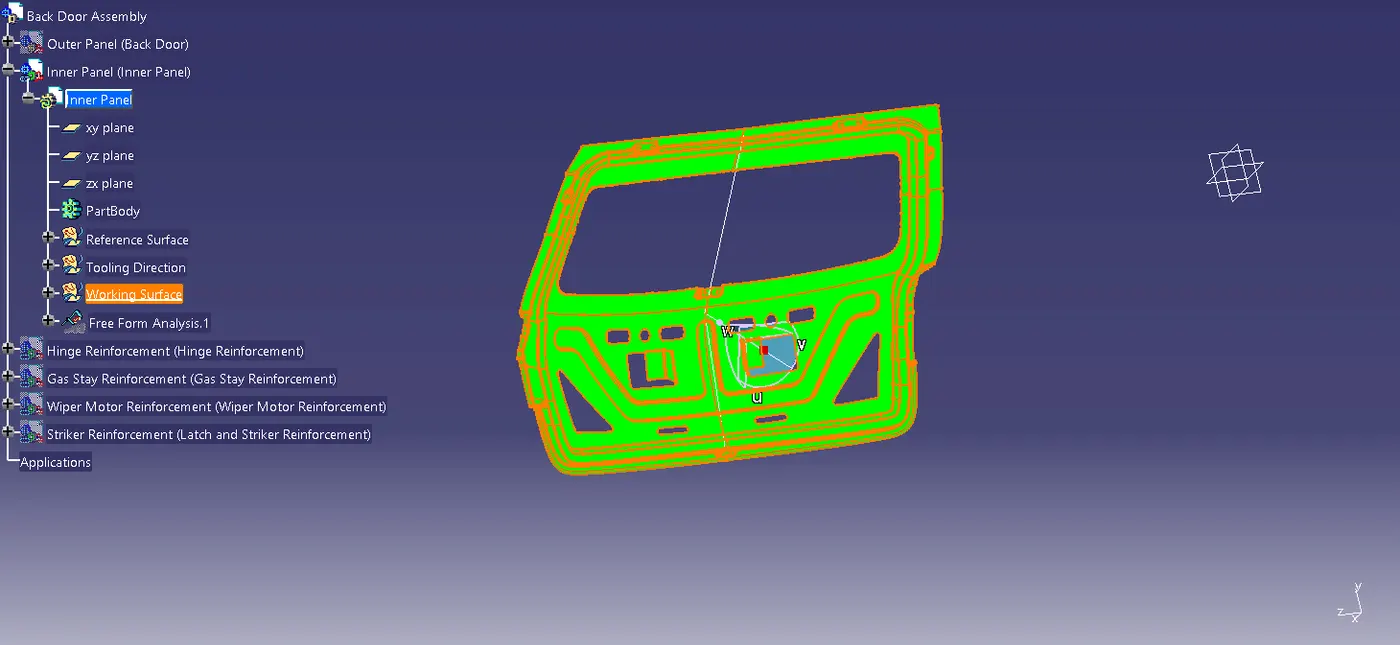
draft analysis performed to check the designed part is suitable for stamping operation with respect to the tooling direction.We can find out the errors by using this feature.The minimum draft angle is 7.The negative draft is denoted by different colour so we can easily find out the unsuitable areas. Every part which is manufactured from press tool or other forming tools require some positive draft on the faces which are parallel to the tooling direction. If we don’t give draft (Zero Draft) or give negative drafts on these faces it will stick to the mould surface and when the mould is in motion it will destroy surface thus reducing its surface finish. Thus Draft Analysis command enables us to detect if the part we have drafted can be easily ejected or not. It also give insights about the critical zones, so that appropriate changes in the design can be made if needed.
Conclusion:
The backdoor is designed based on design considerations .Required reinforcement provided on inner panel. The design is checked by using draft analysis feature .