Design of backdoor
Aim: To design back door of a car including the necessary reinforcements from the given class “A” surface.
Given data:
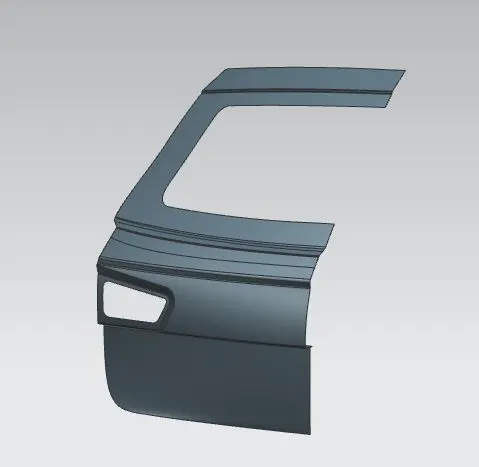
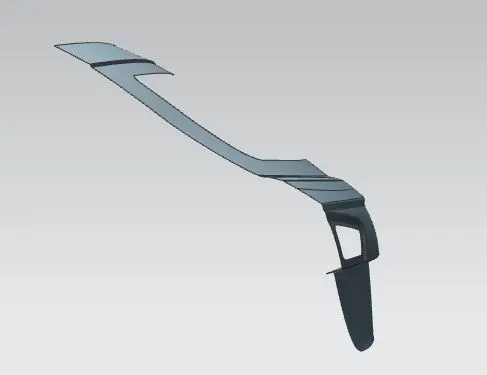
Fig: Given class “A” surface
The given outer panels (upper and lower) are first repaired before proceeding for the inner panel. The surface is then trimmed and the sharp edges are resolved to get smooth working surface. The thickness values used for designing are:
- Outer panel – 0.75mm
- Inner panel – 0.75mm
- Reinforcements – 2.2mm
Introduction: A door which is located at the rear end of the car which gives access for the boot space to store luggage, hold spare parts etc. The backdoor is usually made up of 1 or more panel stacked one above the other joined together by hemming and spot welding processes. These doors can be operated manually or are electrically powered. The inner panel of the door is provided with various reinforcements and embosses to improve the structural integrity of it. The material used for these panels varies from vehicle to vehicle. Most of the premium vehicles use aluminium as the basic material which is lighter in weight and has good strength to weight ratio.
Design considerations while designing the inner panel:
- Rear visibility
- Support structures
- Various mountings
- Required fits and tolerences
- Proper sealing between the panels
1. Inner panel:
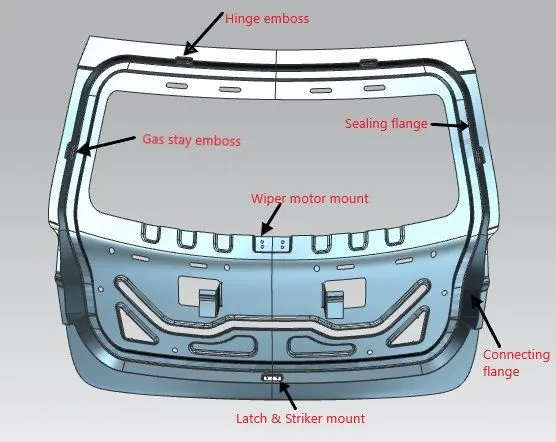
Fig 1.1 Front view of the inner panel
After creating the tooling direction we then proceed for creation of sealing flange by offsetting the outer panel. Then the inner flange joining the sealing flange is created. Finally the connecting flange is created which joins the sealing and inner panel. Further the required embosses and cut- outs are provided to impart strength, rigidity and maintain the weight of the panel.
2. Hinge reinforcement: Hinge supports the weight of the back door. The position of the latch and stiker is decided upon the hinge axis and the trajectory passing through the latch and striker center.
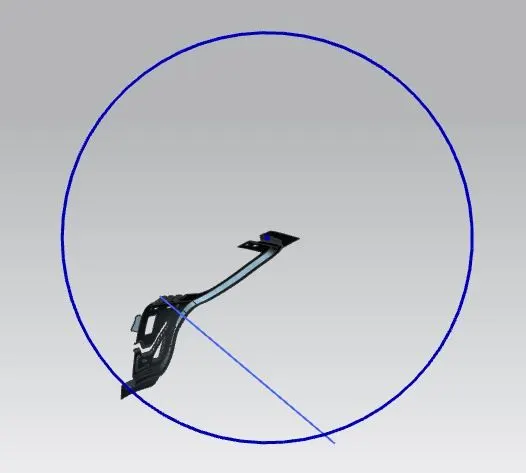
Fig 2.1 Trajectory for positioning the latch & striker
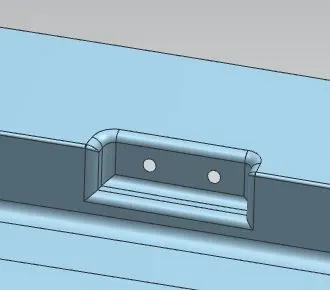
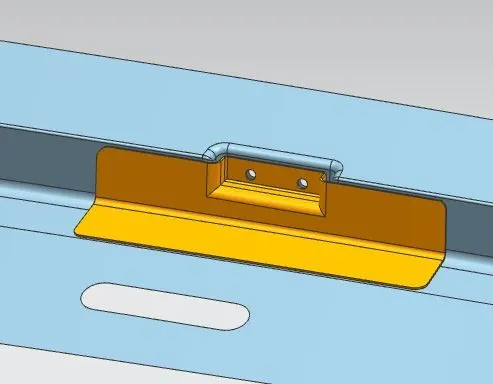
Fig 2.2 Hinge emboss Fig 2.3 Hinge reinforcement
3. Gas Stay reinforcement: Gas stay is a support mechanism used to lift the back door. There are basically two types of gas stay one is fully automatic and the other being semi-automated.
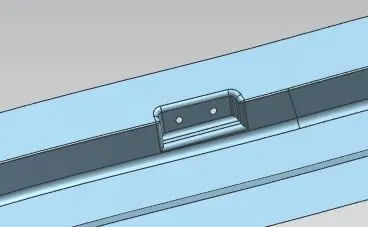
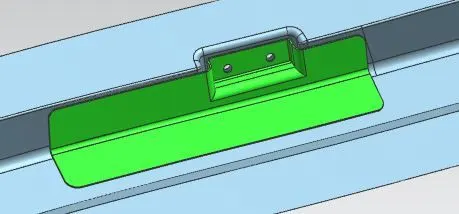
Fig 3.1 Gas stay emboss Fig 3.2 Gas stay reinforcement
4. Wiper motor reinforcement: Rear wiper is used to provide clear visibility to the driver from rain, dirt etc. The wiper mechansim is actuated by a motor which is mounted onto the inner panel. To strengthen its mechanism a reinforcement is provided.
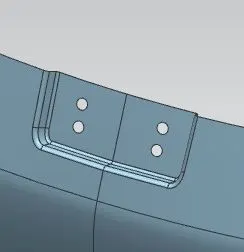
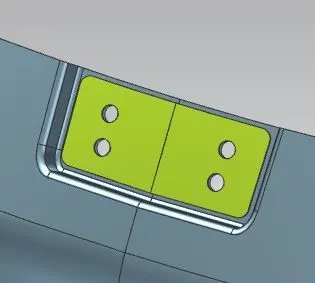
Fig 4.1 wiper mounting emboss Fig 4.2 wiper mount reinforcement
5. Latch & Striker mount: The mechanism of opening and closing the door with the help of latch is striker is placed at the bottom most part of the panel. To ensure smooth transition while opening and closing of the door the latch should be positioned properly.
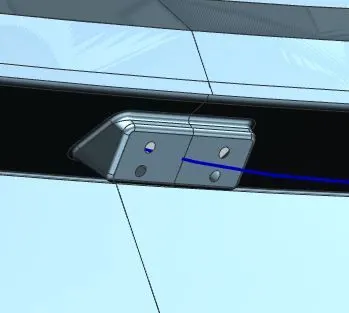
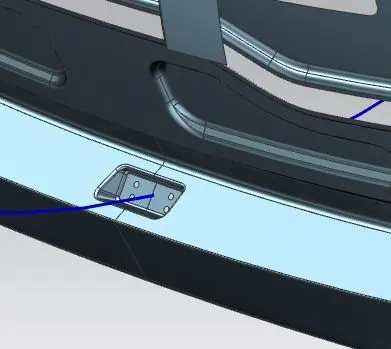
Fig 5.1 Fig 5.2
6. Draft analysis
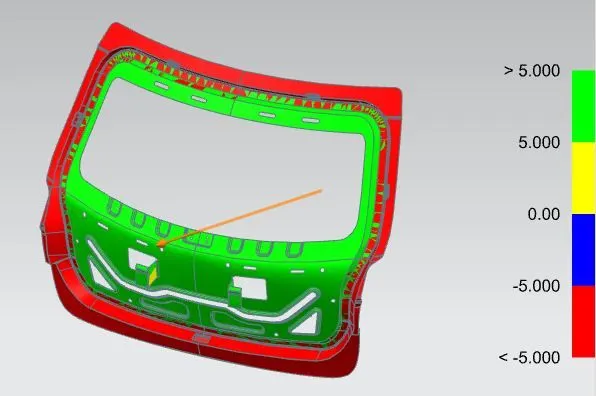
Fig 6.1 Draft analysis of inner panel
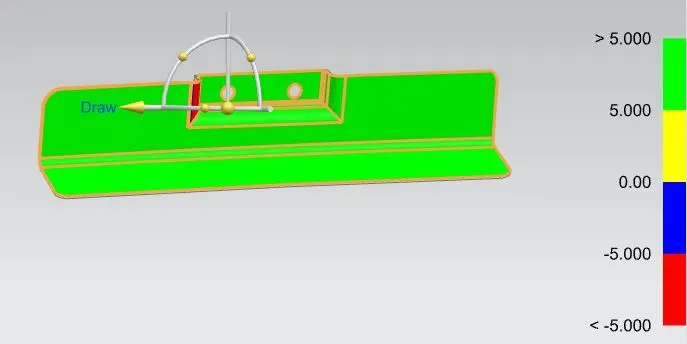
Fig 6.2 Draft analysis of hinge reinforcement
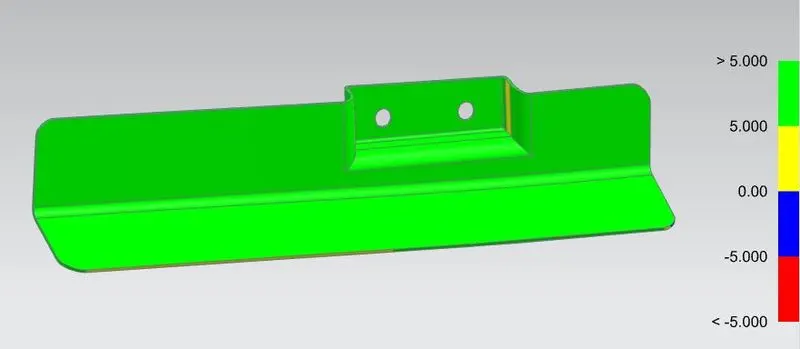
Fig 6.3 Draft analysis of Gas stay reinforcement
7. Final Assembly:
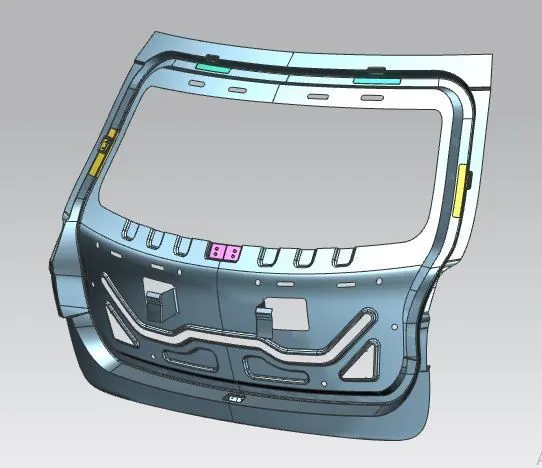
Fig 7.1 Inner panel with reinforcements
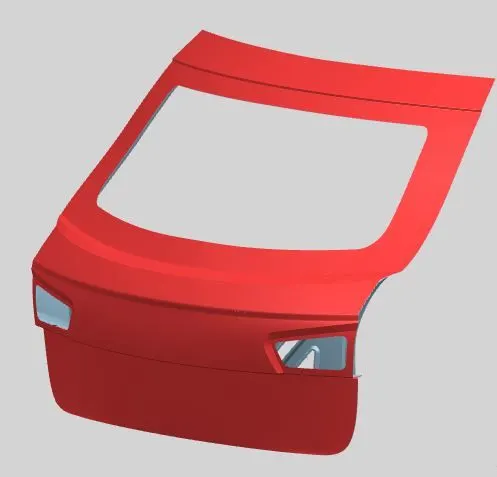
Fig 7.2 Final assembly
Conclusion: All the aspects were considered for designing of the panel, hence can be considered for manufacturability.