Underbody Coating
1. UnderBody coating: The Underside of the vehicle serves as an intermediate between metal components of a vehicle and the outer environment. Underbody coatings are applied on the underside of vehicles to provide a protective layer of protection between the vehicle’s underside and damaging forces such as moisture, corrosion, stone chip damage, and weather resistance. Automotive underbody coatings are generally applied on areas such as wheel arches, inside wing panels, and the undercarriage of the vehicle. They provide a barrier between the metal component and its outside environment.
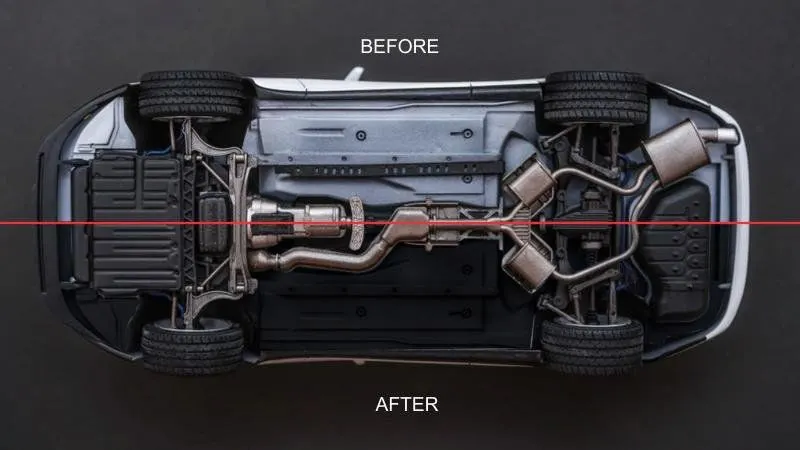
Fig 1.1 Underbody coating before and after
2. Steps Involved in Coating Process:
- Pre-treatment: Cleaning the body surface to remove oils and residues
- Surface Conditioning: Creates nucleation sites for phosphate crystal growth
- Electrodeposition: To prevent corrosion a layer is deposited onto the metal underbody and frames
- Sealer/PVC: To prevent Air & water entry, noise-proofing, Vibration. Applied around and inside of doors, hood, trunk, etc
- Primer: To improve weather resistance, appearance, and chipping resistance
- Topcoat: To provide a protective coating against environmental effects, corrosion, and UV light degradation
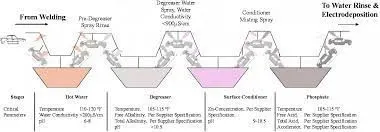
Fig 2.1 Sequence of Coating process
3. Advantages of Underbody Coating:
- Prevents corrosion
- Easy maintenance of the vehicle
- Chipping of the underbody
- Water damage
- Provides Heat insulation
- Increases life span of the car
4. Disadvantages of Underbody Coating:
- The process of coating is costly
- Creation of Slush if water in the parts is retained
- Addition to the vehicle weight
- If coating is not done properly it may lead to air/water/residues entry points
5. Different types of Underbody coating:
- Rubberized underbody coating
- Polyurethane underbody coating
- Wax or Paraffin based underbody coating
- Asphalt based coating