Design of backdoor
AIM:-
To design the Back door as per the given skin requirements and also provide reinforcements for hinges, Latch, Gas stay, and wiper motor mounting areas.
INTRODUCTION:-
- Design of back door is also called as the Tail gate. A car back door which is consist of Inner panel, Outer panel. Basically the car parts are made of Steel or Aluminium based on the budget of the car.
- Using Aluminium improve the Strength where we can avoid the reinforcements. Aluminium parts are casted and we can very the thickness of the part, because of this avoid or reduce the number of parts as compared to Steel. Only drawback is the cost of aluminium, which is high cast As compared to steel.
- Steel Parts are stamped, we cannot vary the thickness of the part because of more number of parts are added. which could increase the weight of the part. So now a days most of the car manufacturers are trying to use Aluminium instead of Steel and they reduce the number of parts and weight of the car drastically.
Back Door Assembly:
- Inner panel
- Outer panel
- Hinge and its reinforcement
- Wiper motor reinforcement
- Latch & stricker and its reinforcement
- Gas stay reinforcement
Design Methodologies:-
- Outer Panel: The outer pannel is the styling surface of the back door. It is a source of the outer parts of the back door. It gives more aesthetic to the car. Its thicken is in the range of 0.65-0.75 mm.
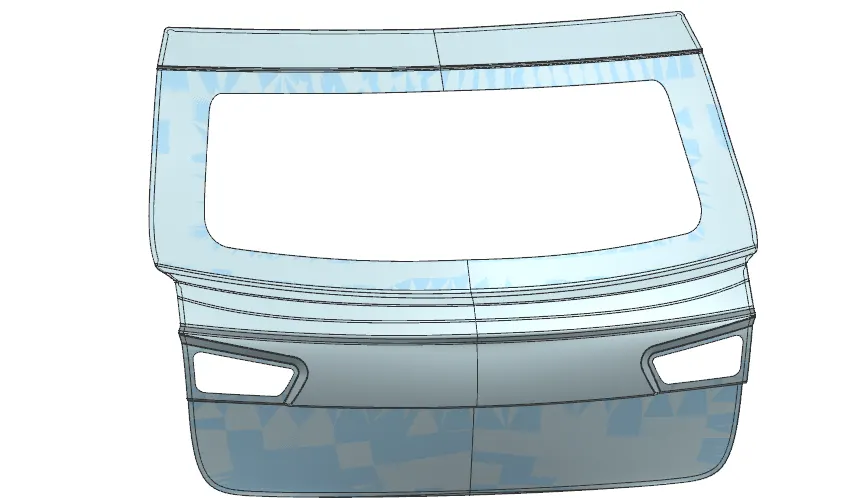
The above surface was analyzed and it was observed that the surface provided was having uneven surface quality.
- Inner Panel: The inner panel provides strength to the back door. There are many cases where the inner panel is subject to stress due to features opening and slamming. These stress factors are compensated by features like embossing and reinforcements. It also has a thickness range from 0.65-0.75 mm.
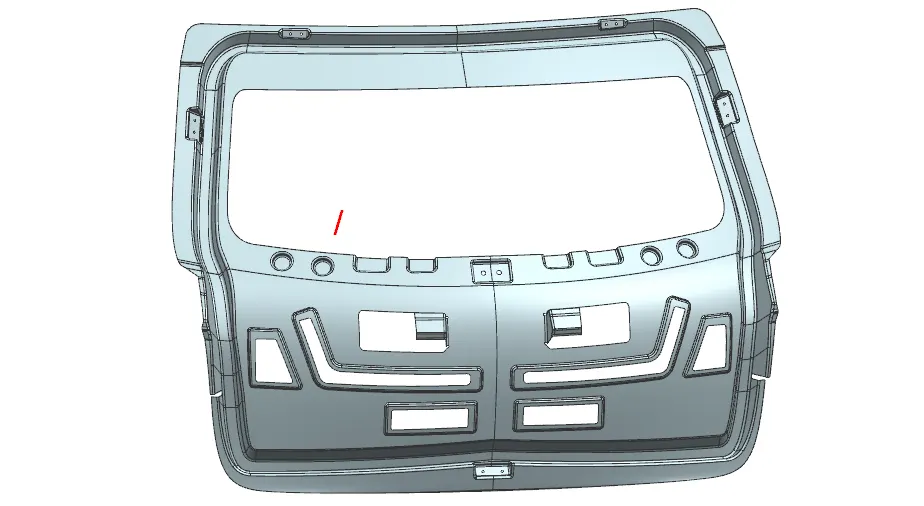
Determination of Tooling Axis:
The tooling axis plays an important role while making a component. It is the axis of the line along which the components will be extracted after the component is been molded.
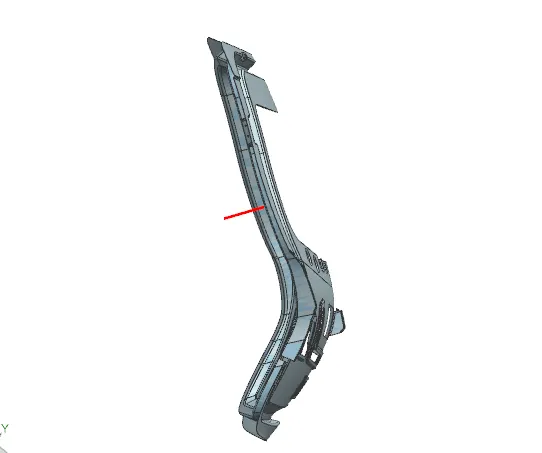
In this project, the tooling axis is made by making two lines touch the opposite ends of the styling surface, and then a bisecting line is drawn between these two lines to determine the tooling direction.
Determination of embossing shape and direction:-
As the back door opens and closes in the upwards and downwards direction, during this time force is generated on it which might affect the durability of the back door panel. This generated force is dissipated in the outwards direction with the help of creating an emboss.
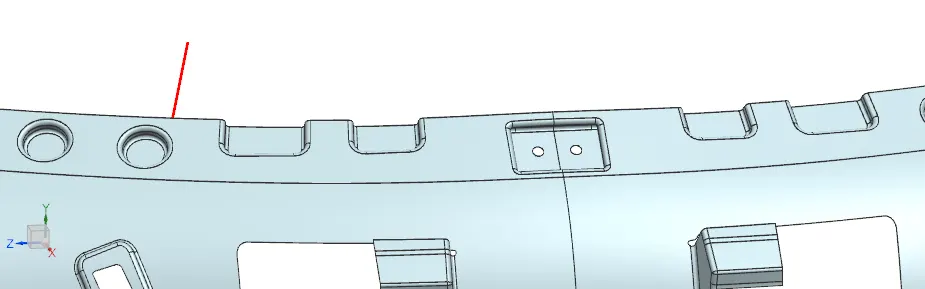
To firmly fix the outer panel to the inner panel a mastic extension flange is protruded towards the outer panel direction so that mastic can be applied on it and then the outer panel and inner panel will behave more strength in the middle portion and be stuck with each other firmly.
Embosses:
To provide strength to the inner panel, various embosses are designed on it to fix the reinforcement on the inner panel firmly.
- Hinge Emboss
- Gas Stay Emboss
- Wiper Moter Emboss
- Latch Emboss
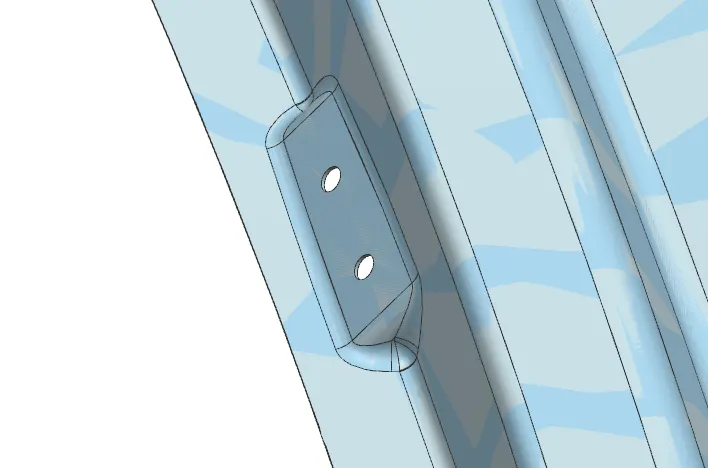
Hinge Emboss:
Hinges are placed at the top of the inner panel on the left side and right side to fix the hinge to the inner panel embosses are designed on the back door inner panel.
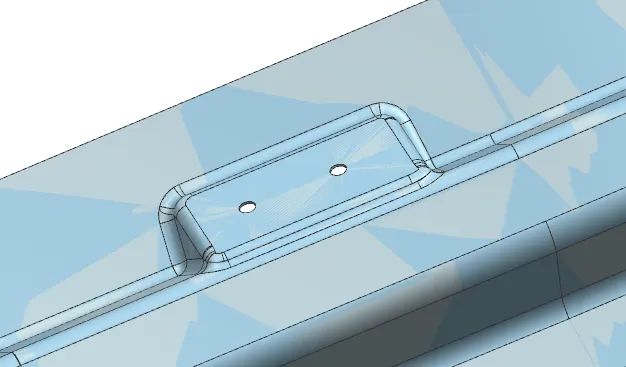
Gas Stay Emboss:
Gas stay is the component that is used to lift and lower the back door automatically with the help of pressing a button. This is placed on both the left and right sides of the back door.
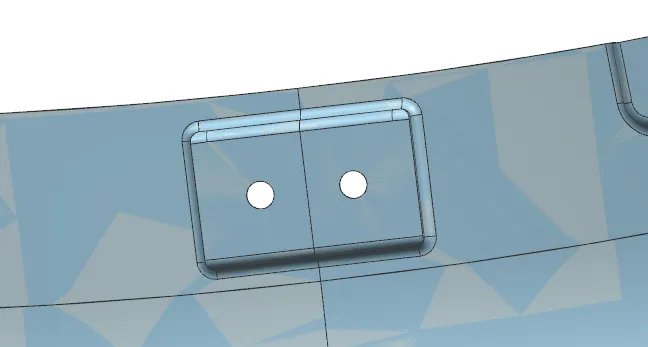
Wiper Motor Emboss:
The wipe motor emboss is designed at the middle of the back door where the wiper motor will be placed on the back door. To clean the glass of the back door, this mechanism is used on the back door.
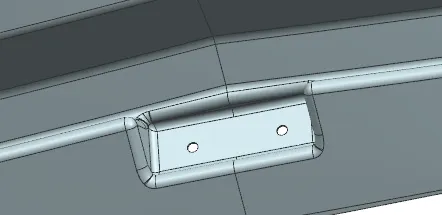
Latch Emboss:
This embossing is designed at the bottom portion of the back door. This system is used for locking the back door to the car.
REINFORCEMENTS:-
Reinforcements are the components that are used to add strength to a particular region.
The reinforcement designed for the back door is
- Hinge Reinforcement
- Gas Stay Reinforcement
- Wiper Motor Reinforcement
- Latch Reinforcement
Hinge Reinforcement: The Hinge Reinforcement will be placed on the emboss of the hinges which will enable it to fix the reinforcement firmly to the back door at the required position.
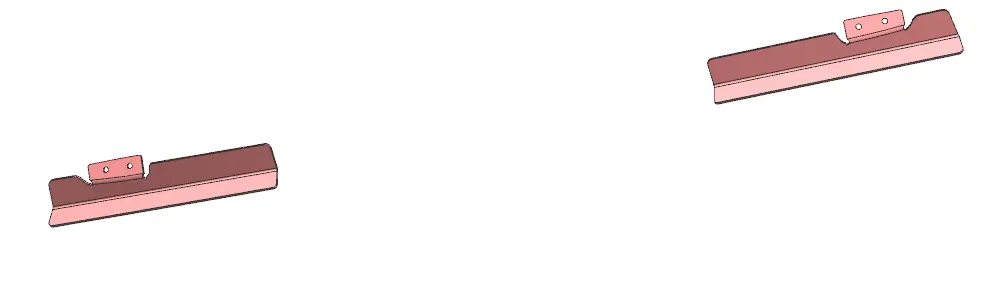
Gas Stay Reinforcement: Gas stay reinforcement is designed to provide strength to the region where the back door will be get opened and closed with the help of a gas stay rod. For durability, these reinforcements are placed where the gas stay will be fixed with the back door panel.
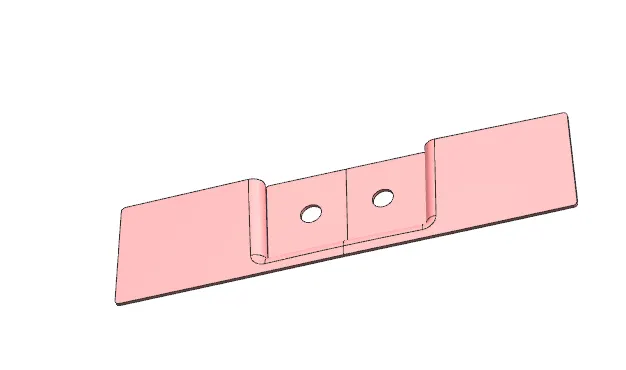
Wiper Motor Reinforcement: Wiper Motor Reinforcement is placed at the middle portion of the back door to provide strength in this region for the placement of the wiper motor.
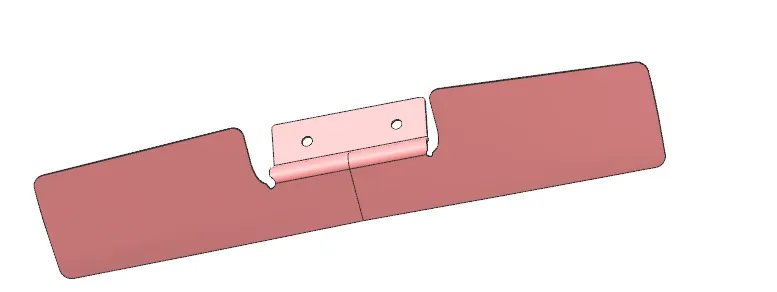
Latch Reinforcement: To place the latch at the correct position, the latch position is perpendicular to this circular trajectory at all the positions of the movement of the back door. To provide strength in this region, a latch reinforcement is placed which is shown in the below image.
HEMMING:-
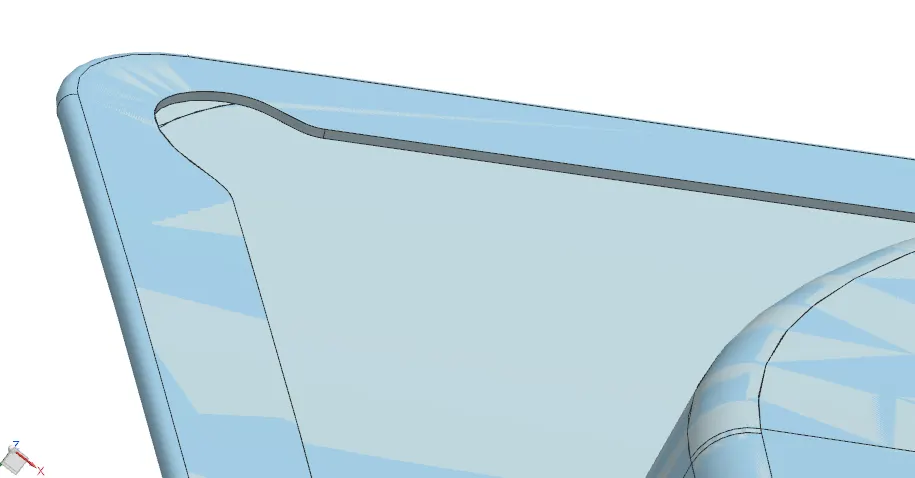
Hemming and seaming are two similar metalworking processes in which a sheet metal edge is rolled over onto itself. Hemming is the process in which the edge is rolled flush to itself.
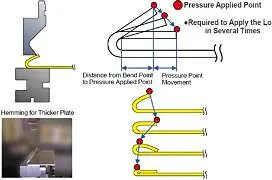
The back door outer panel will be fixed with the back door inner panel with the help of hemming which will be done on the outermost edges of the outer panel. In this process, the surface is bent and rounded around the inside surface so that it firmly holds the inside panel. Along with this music, the solvent will also be inserted into this region for firmly sticking the outer panel with the panel.
DRAFT ANALYSIS:-
Draft Analysis of the inner panel is carried out through the tooling direction only. Only the green areas are acceptable and in some other worst cases yellow regions are acceptable but the blue and red regions are never accepted.
The drat angle for the aluminum casted panel is 2 to 3 degrees is enough but if it is steel then the angle is more than 7degrees.
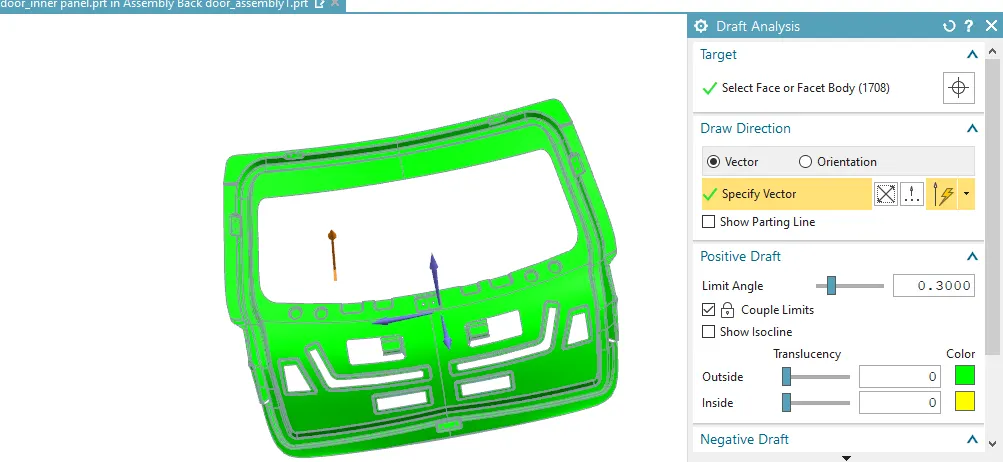
In this project, I considered it as steel and used 7 degrees as draft angle and direction I was chosen as tooling direction which is the deep-drawn direction.
CONCLUSION:-
Thus the Body In White Back Door of a car was designed following the engineering standards and also the deep drawing requirements were satisfied. The back door outer and inner panel were designed with the help of the styling surface along the tooling direction and Draft analysis was performed on the inner panel and All the reinforcements were designed and placed at appropriate positions.