Design of backdoor
Design of backdoor
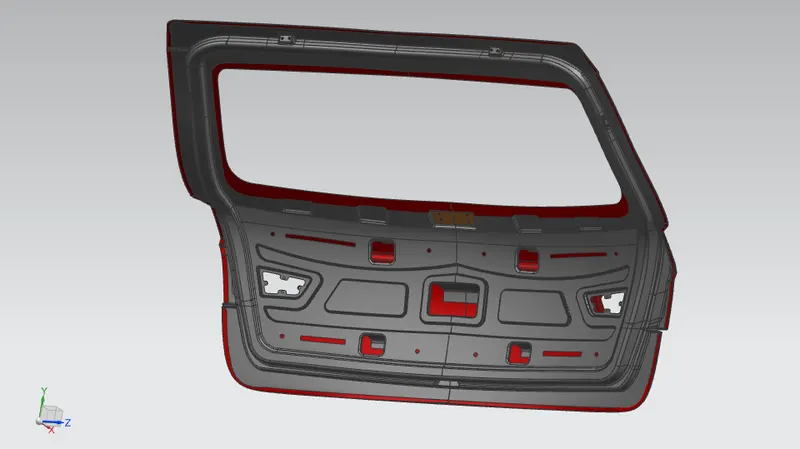
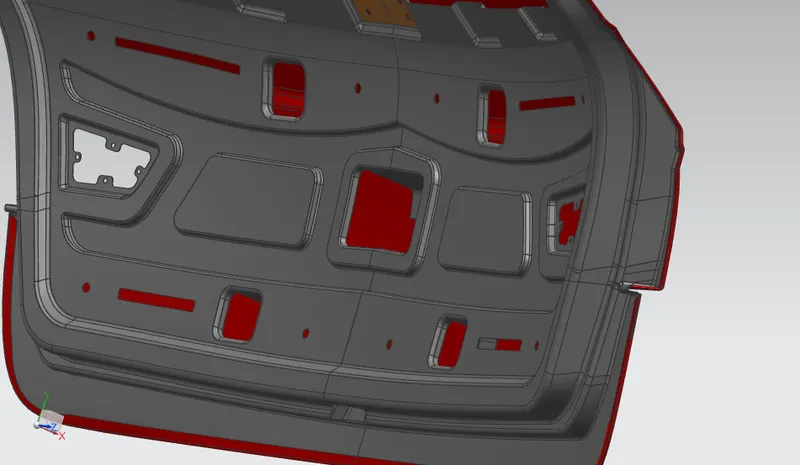
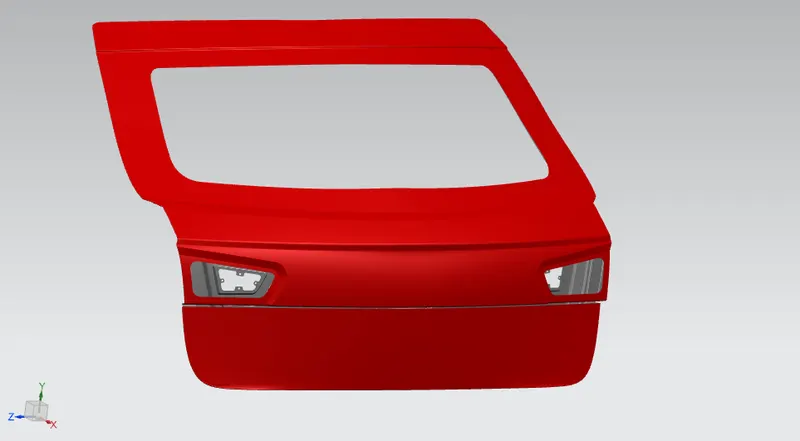
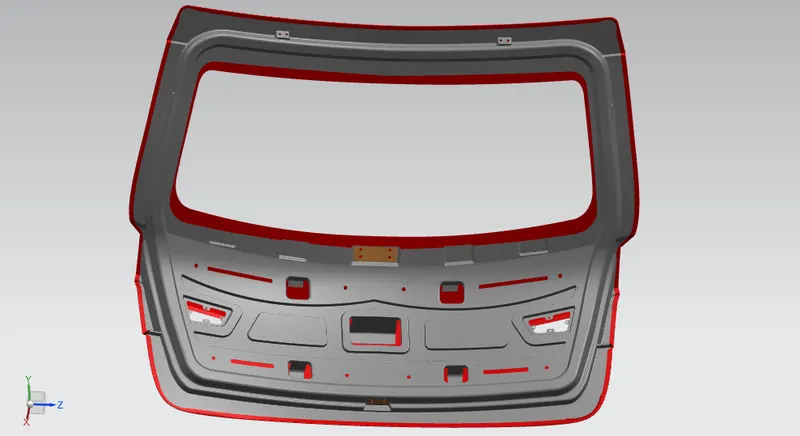
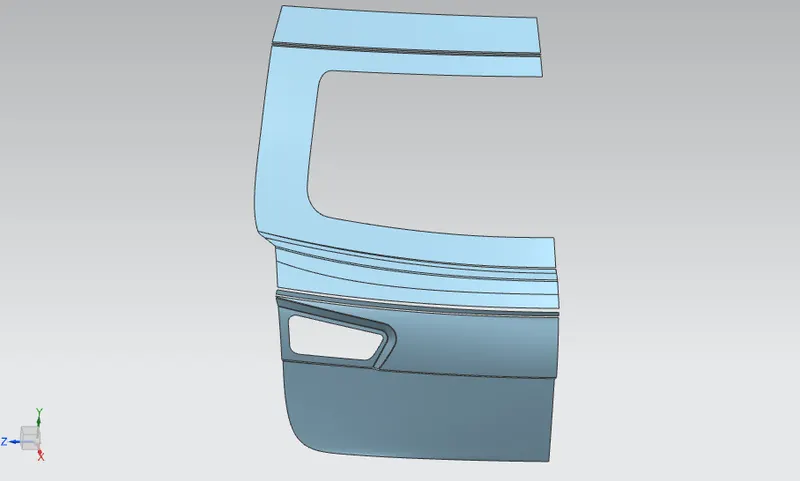
Objective:- To Design the tailgate of a hatchback car in NX12 using the given master section (skin data) and follow necessary automobile manufacturing standards while designing.
Introduction
Usually, a normal hatchback contains 5 doors, of which 4 doors are for the purpose of human entry and one for luggage. The tailgate of a hatchback has many accessories attached to it such as
1. Rear windshield
2. Tail light units
3. Rear windshield wiper and washer
4. Defogger
Conventional tailgate assemblies are made from stamped metal panels welded together to form a tailgate. Latches are added on either side of the tailgate to engage a striker on the pickup sides. A handle operates the latches to open and close the tailgate assembly. Steel tailgate assemblies provide a durable and secure closure for the pickup bed.
Design Features of Tailgate
1. Emboss
Embossing is a metal forming process for producing raised or sunken designs or relief in sheet materials by means of matched male and female roller dies, theoretically with no change in metal thickness or by-passing sheet or a strip of metal between rolls of the desired pattern. The metal sheet is drawn through the male and female roller dies producing a pattern or design on the metal sheet. Depending on the roller dies used, different patterns can be produced on the metal sheet.
Sheet metal embossing, an essential technique in the manufacturing industry, plays an instrumental role in automotive manufacturing, especially in the production of automotive heat shields. The process of embossing enhances the structural integrity and thermal performance of these shields, making it a crucial component in the manufacturing process.
Embossed offers several advantages over their non-embossed counterparts. The embossing process not only gives these components a unique aesthetic appeal but also contributes to their functionality in significant ways.
- Enhanced Heat Dissipation
One of the primary benefits of embossing is the increased surface area it provides. The patterns created during embossing allow more space for heat to disperse across the shield’s surface, thereby enhancing heat dissipation. This is particularly beneficial for parts of the vehicle that generate a lot of heat, such as the engine or exhaust system.
- Improved Structural Integrity
They add rigidity and strength to the body panel, helping it to maintain its shape under extreme conditions and resist warping or deformation.
- Aesthetic Appeal
Embossing can also enhance the appearance of the body, giving it a more refined and high-quality look. This can be an essential factor in the automotive industry, where the aesthetics of vehicle components are increasingly valued.
- Customizability
With embossing, manufacturers can easily customize the body to suit specific applications or design preferences. The pattern, depth, and complexity of the embossing can be tailored to meet specific requirements, offering a high level of flexibility
2. Hamming
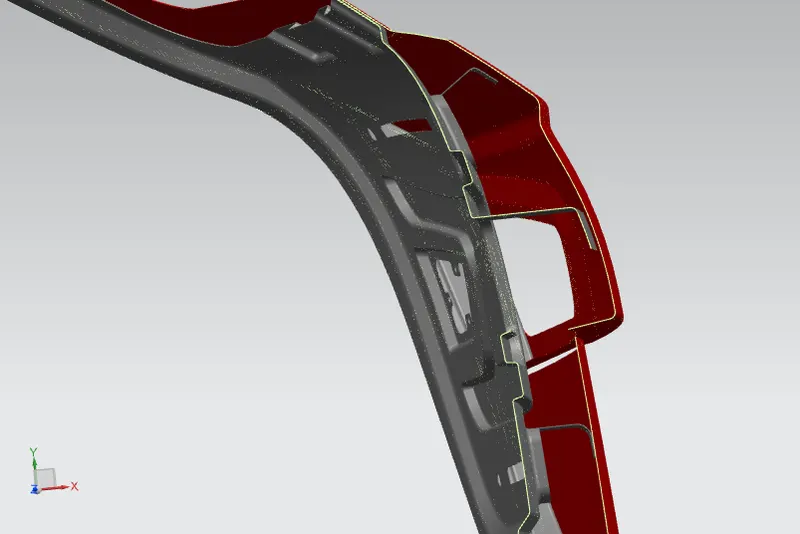
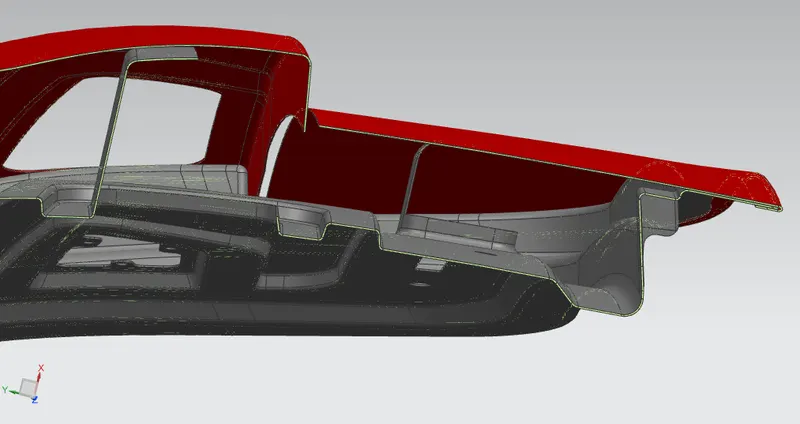
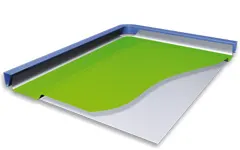
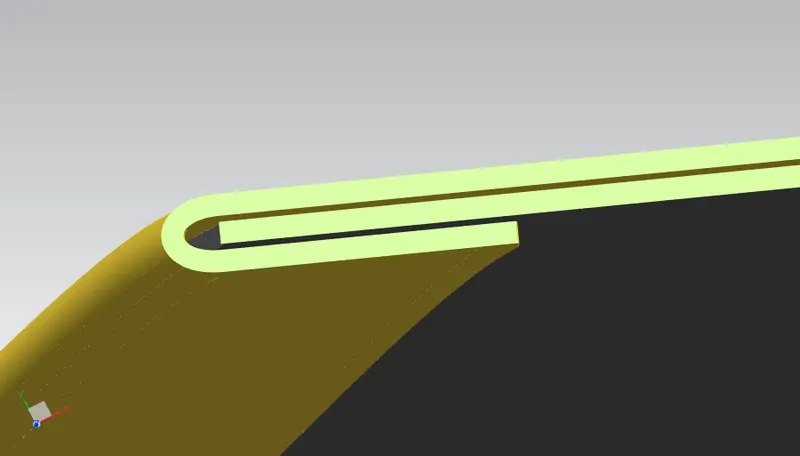
Hemming is a forming operation in which the edges of the sheet are folded or folded over another part in order to achieve a tight fit. Normally hemming operations are used to connect parts together, to improve the appearance of a part, and to reinforce part edges.
In car part production, hemming is used in assembly as a secondary operation after deep drawing, trimming, and flanging operations to join two sheet metal parts (outer and inner) together. Typical parts for this type of assembly are hoods, doors, trunk lids, and fenders.
The accuracy of the hemming operation is very important since it affects the appearance of the surface and surface quality. Material deformations, which occur during the hemming process, can lead to dimensional variations and other defects in parts. Typical hemming defects are splits or wrinkles in the flange, material overlaps in the corner areas, or material roll-in. This is why it is important to use simulation tools in order to, on the one hand, better understand the hemming process and, on the other hand, significantly reduce the number of “trial and error” loops during tryout and production.
There are various types of hemming operations:
- Conventional die hemming
- Roll hemming

Conventional die hemming
Conventional die hemming is suitable for mass production. In die hemming, the flange is folded over the entire length with a hemming tool. Normally the actual hemming is a result of a forming operation in which the flange is formed with a hemming tool after the drawing and trimming operations have been completed. The formed flange is then hemmed in several process steps. These steps include, for example, the pre-hemming and final hemming depending on the respective opening angle of the flange. Production plants for conventional die hemming are very expensive, but the cycle times are very low.
Roll hemming
Roll hemming is carried out incrementally with a hemming roller. An industrial robot guides the hemming roller and forms the flange. Roll hemming operation can also be divided into several pre-hemming and final hemming process steps. Roll hemming is very flexible to use and tool costs are significantly lower as compared to those of conventional die hemming. However, the cycle times are much higher since the hemming is realized using a hemming roller that follows a defined path.
3. Reinforcement
The use of adhesively bonded localized reinforcements is a relatively new concept in the automotive industry. Although use of this reinforcement method is in its early stages, these reinforcements are now used for a variety of applications in the automotive industry for improvements in crashworthiness, fatigue resistance, and NVH characteristics. This approach can provide relatively fast, easy, non-intrusive, and cost-effective solutions for OEMs when compared to traditional reinforcement methods. Also, the overall weight can be reduced simultaneously since the reinforcement is placed only where needed instead of filling an entire section with foam or changing the metal thickness along an entire body member. Materials and concepts have been developed that can be used to improve the structural stiffness and the resulting NVH performance of the vehicle.
4. Draft angle
A draft angle is a taper applied to the vertical walls of the injection-molded component to assist with releasing the part from the mold.
Draft angles are a required feature of injection-molded custom parts. A functional part for injection molding has to have draft angles that face both the cavity and core sides. This will reduce the risk of damage to the parts and ensure that they can be ejected from the machine.
As the molten plastic flows into the closed die and fills the cavity, the material shrinks inside the mold upon cooling and as a result, grips the core.
Without any taper, not only will the part come out scratched, but also the mold will endure unwanted wear and tear. This will in turn shorten the life of the tool. On top of all of this, you may not be able to eject the part in this case, meaning you’ll have to grind production to a halt to manually peel the part out of the mold.
What’s also important is to overcome the vacuum forces by letting air in between the metal and the plastic for the part to release properly. Adding an adequate draft angle ensures that warpage upon ejection is prevented while maintaining a decent cosmetic finish.
Manufacturing Materials
When it comes to auto parts manufacturing, a variety of different metals can be used in the production process. Each metal has its own unique set of properties that make it ideal for specific applications. Metal materials have long been used as reliable and durable materials for car parts due to their strength, durability, and low cost. Metal parts are generally easier to manufacture than other materials, making them particularly attractive for the mass production of car components.
1. Easy Maintenance
As metal is an excellent conductor of heat, it helps keep sensitive electronics in the engine bay cool and prevents them from overheating. Metal parts are also resistant to damage from oil, fuels, and other chemicals meaning they require very little maintenance over their lifespan.
2. Suitable for complex design
Metal materials can be easily shaped and formed into complex shapes for intricate designs that would not be possible with alternative materials. This makes them ideal for use in all sorts of car components such as fuel systems, brakes, and suspension. Metal car parts are also incredibly strong and lightweight making them safe and reliable for all types of vehicles.
3. Cost-effective and Recyclable
In comparison to other materials, metal is often cheaper to work with as it requires fewer specialized tools, machines, and processes to create a finished part or component. Furthermore, many metals such as aluminum, steel, or iron can be recycled or upcycled for use in other parts, making them an environmentally friendly option for car owners.
In addition, metal materials tend to have a longer lifespan than other types of material and are much more resistant to wear and tear from everyday use. As such, they can help reduce the overall cost of replacement over time.
Manufacturing companies face several challenges, including keeping costs down and raising product quality. In addition, they must also ensure that their products meet the highest standards for quality and reliability. When it comes to auto manufacturing, this means using materials that are strong and resistant to corrosion but that are also affordable and easy to work with. The auto manufacturing industry relies on many different types of metals to meet these needs.
1. Aluminum for Car Parts
Aluminum is an essential metal in auto manufacturing and is used in everything from engine blocks to wheels and other auto parts. It’s a light, strong, easily workable metal that’s also highly corrosion-resistant. The most common applications for aluminum car pat in the auto industry include engine blocks, wheels, transmission housings, suspension systems, body panels, and interior trim. It is also often used as a reflector or heat shield in car headlights and taillights.
The most common type of aluminum used in auto manufacturing is called alloys, which are mixtures of different metals that are melted together to form a new, unique kind of metal with specific properties. Aluminum can be either soft or hard, depending on the alloy used. Soft aluminum is used in many auto parts, including wheels, engine blocks, transmission housings, and engine mounts. More rigid aluminum is used in other parts, such as the car’s chassis. Each metal has different uses and is combined with other metals to create the desired properties.
2. Steel for Car Parts
Steel is one of the most common metals in auto manufacturing and is found in everything from engine blocks to car seats. It’s a strong, durable metal that can be easily formed into desired shapes and sizes. There are many different types of steel, each with different properties that make them suitable for various purposes. The 9- and 10-carbon steel alloys are the most common types of steel in the auto industry and are used for many different components and parts.
Depending on its intended use, engineers can select the type of steel and its grade to create a part with the exact properties needed. Some examples of steel used in manufacturing automobile parts are high-strength low-alloy steels, advanced high-strength steels, and ultrahigh-strength steels. These types of steel are used to improve vehicles’ safety and performance. High-strength low-alloy steels are used in body panels, while advanced high-strength steels are used in suspension components. Ultrahigh-strength steels are typically found in roll cages or other safety features.
3 Titanium for Car Parts
Titanium is a corrosion-resistant metal that’s extremely strong and durable. It’s a complicated metal to work with, but technological advancements have made it easier to process and work. This metal is used to make parts that need to be strong, lightweight, and corrosion-resistant.
Some common uses for titanium in the auto industry include brake rotors and wheels. Titanium parts are often used in place of steel or aluminum parts to reduce the vehicle’s overall weight. This can result in improved fuel economy and reduced emissions. Titanium parts are also used in the construction of racing vehicles.
4. Iron for Car Parts
Iron is more affordable than many other metals and can be quickly melted, molded, and forged. The low cost associated with iron compared to other metals makes it an attractive option for carmakers looking to remain competitive in price while still delivering quality products. Many parts of a car can be made from iron, such as the frame, axles, wheels, and engine components.
Iron-based alloys are widely used in the auto industry. They’re created by mixing iron with other metals such as copper, zinc, or nickel. This adds properties to the iron, such as corrosion resistance and increased strength. Iron alloys are used in various auto parts, from cylinder heads to crankshafts, connecting rods, gears, and bearings.
5. Magnesium for Car Parts
Magnesium is a strong, durable metal that’s also corrosion-resistant. It is difficult to work with, so it’s not often used in parts that require molding and forging, like iron. Instead, it’s most often used in high-end sports cars like the Corvette and Lamborghini. It’s used to make the car lighter while maintaining its desired strength and durability.
While magnesium does have some disadvantages relative to other materials (such as cost and difficulty of fabrication), its overall benefits make it an attractive option for many automotive applications. It is one of the metal materials for a car chassis, doors, and hood. Also, magnesium can be easily cast into complex shapes, making it ideal for creating custom automotive components.
6. Copper for Car Parts
Due to its inherent properties, copper is a popular choice for manufacturing automobile parts. Copper is an excellent conductor of electricity and heat, making it ideal for electrical components and engine cooling systems. Copper-based alloys are commonly used in the auto industry. They’re created by mixing copper with other metals such as zinc, nickel, and silver. This adds properties to the copper, such as corrosion resistance and increased strength.
Copper-based alloys can be used in various applications, including exhaust systems and brake pads. In addition to their superior strength and durability, copper-based alloys offer excellent thermal conductivity, making them ideal for high-heat applications.
Comparation between Aluminium and Steel
| Aluminium | Steel |
| Parts are casted | Parts are stamped |
| Reinforcement can be neglected | Reinforcement are necessary |
| Local thickness can be varied | Has only uniform thickness |
| Lighter in weight and less number of components | Heavier in weight and more number of components |
Different Sheetmetal processes used for manufacturing the Back Door
Deep Drawing:
The metal deep-drawing process is an effective method of manufacturing cups, cans, and other similar deep-drawing products. The deep drawings have two main categories.
- First-stage drawing: The blank shape of metal is placed on the die and in contact with the punch. When the metal specimen is flat piece of sheet metal is used in forming and finishing the product. Initially, the punch moves in a downward direction. The outer rim of the blank is subjected to pure radial drawing (drawing toward vertical axes) between the die and blank metal. The metal becomes bent and slides over the die and also stretches between the die and punch. The metal in the vicinity of the punch head and contact with it bends and slides over radii and stretches over the punch head.
- Redrawing: The components drawn from the first stage again it is redrawn and converted into more depth to form a cup shape in the die and punch. The second stage of drawing is called redrawing.
Design Process
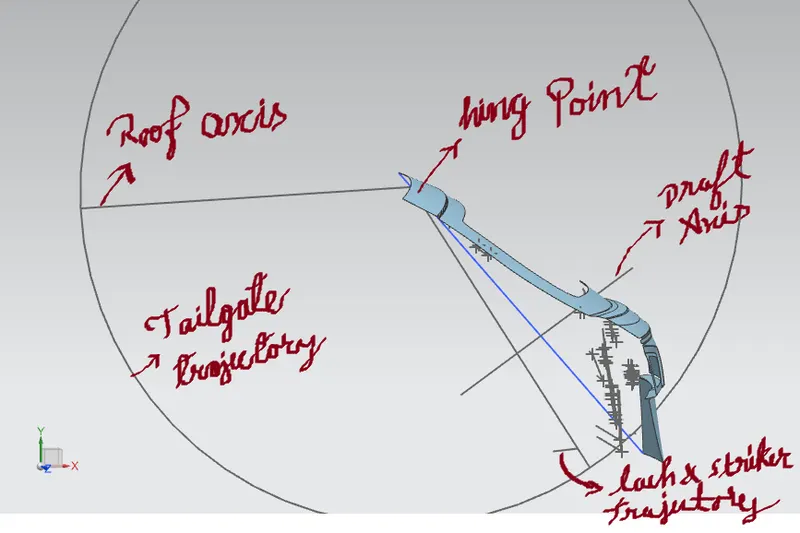
1. First we open given skin data of tailgate in NX2 and go through deep analysis of it. Then we will draw tailgate open close trajectory, lach and striker trajectory and draft direction.
2. Now we go throught top-down approch and each part in assemble while taking reference from master setion.
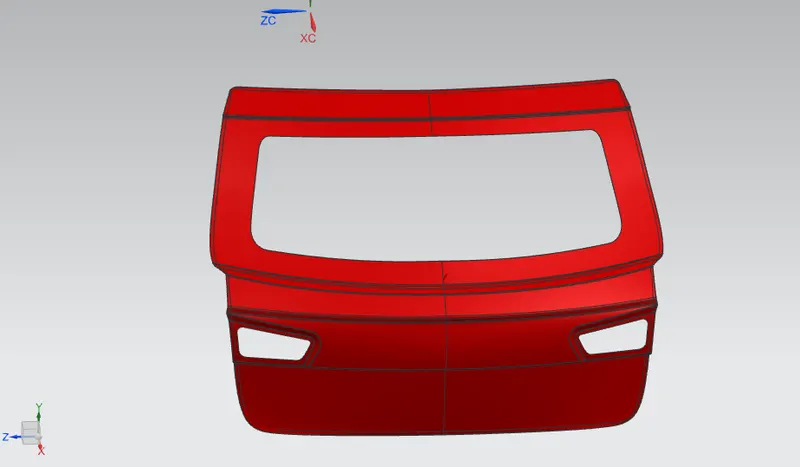
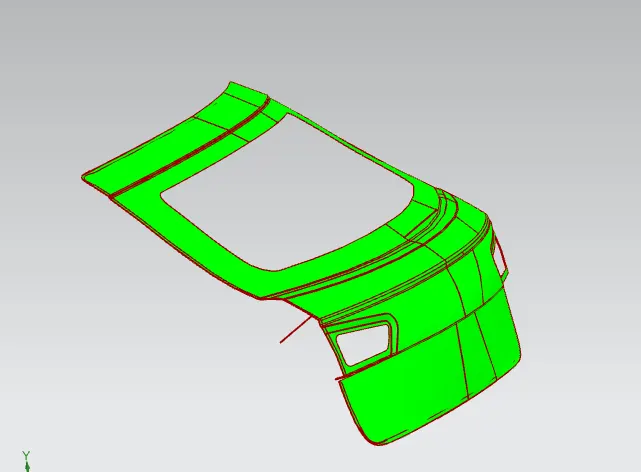
3. First we will create tail-gate outer panel. In this we will take reference from master section by using WAVE linker tool. Then we will repair our outer section so that we can able to provide smooth surface then able to provide 0.75 mm thickness. Then we will also done draft analysis of tailgate.
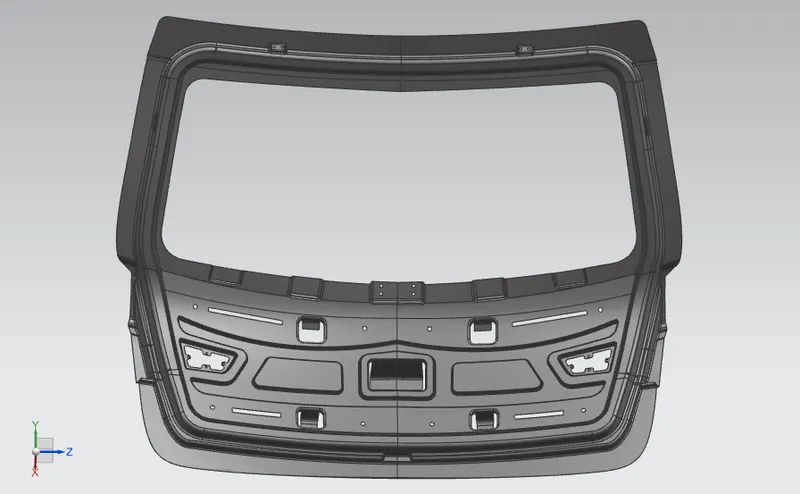
4. Then we will create tailgate inner panel by going throught following steps:-
a. First making a copy of tailgate by using WAVE Geomatry linker.
b. Then we will create flange by offsetting single faces.
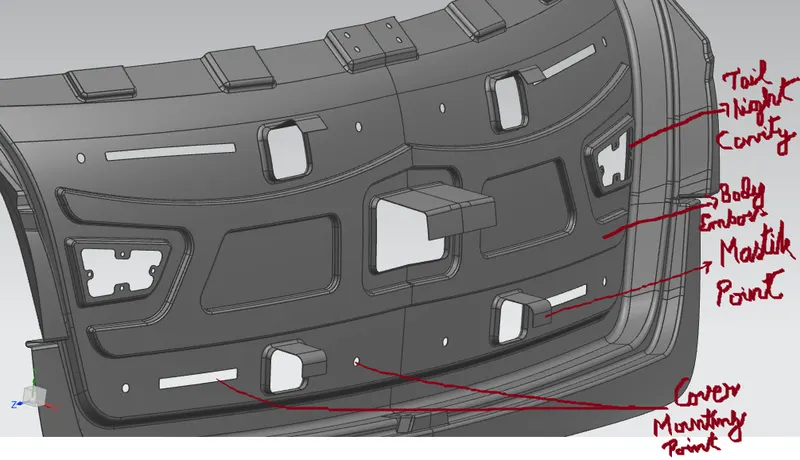
c. Then we will create inner body features like emboss, mastik point, etc.
d. Then we will create taillight mounting cavity.
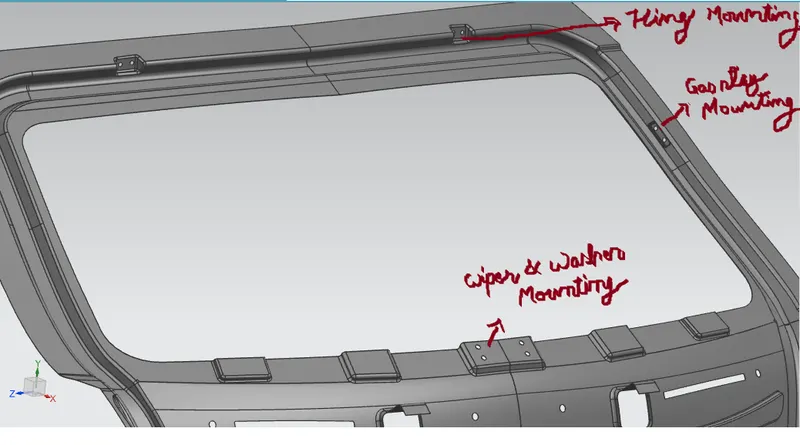
e. Then we will create mounting like hinge, gas stay, and lach and striker.
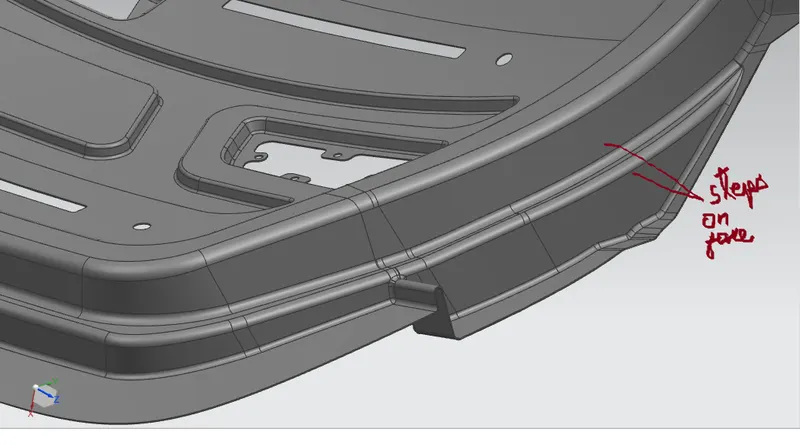
5. Then we will done draft analysis on it.
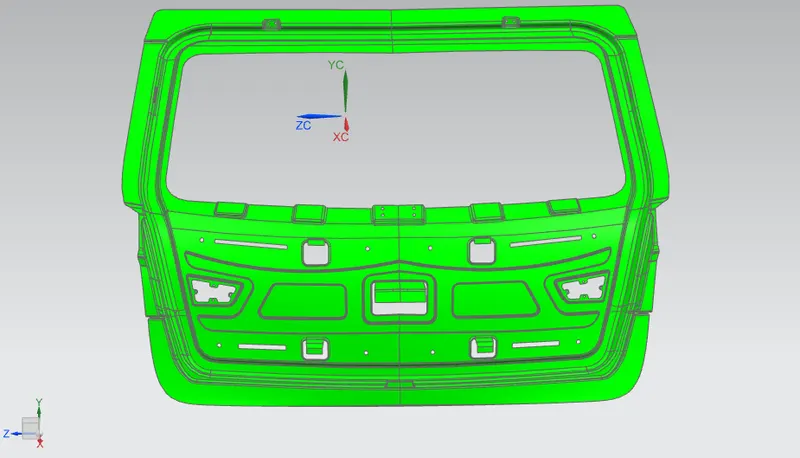
6. Then we will create Reinforcements for mountings.
a. Hinge mountings
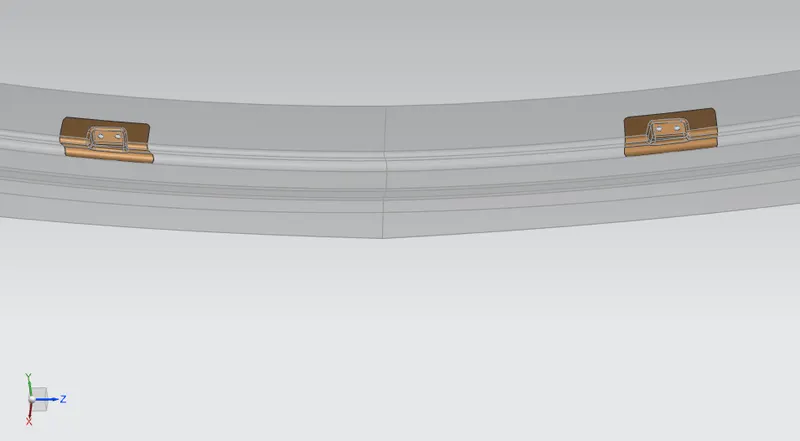
b. Gas stay reinforcement
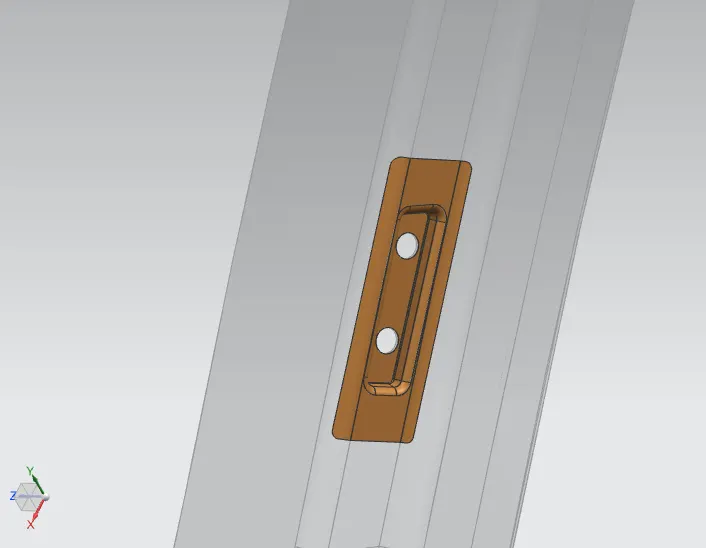
c. Wiper and washer mounting Reinforcement
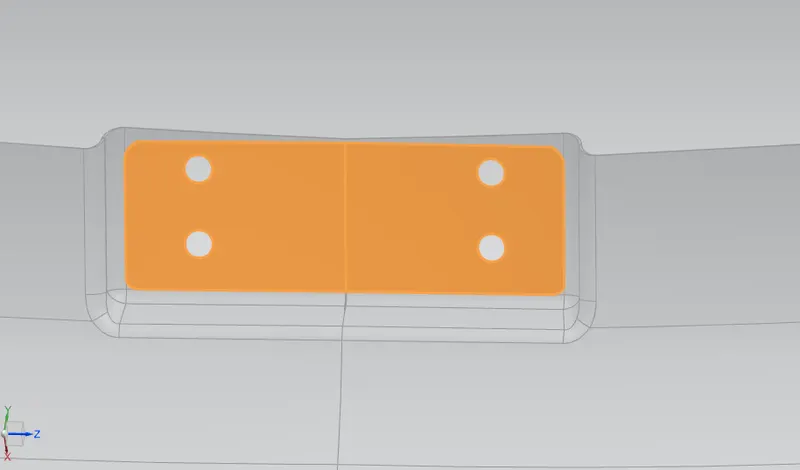
d. Lach and striker mounting reinforcement
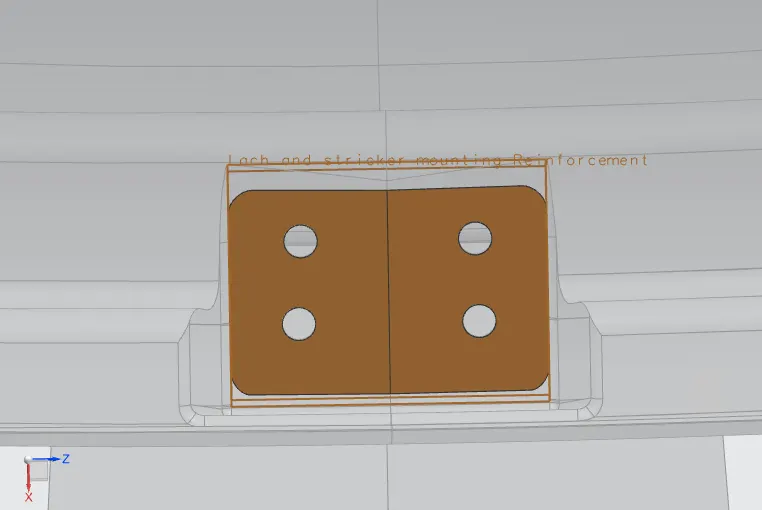
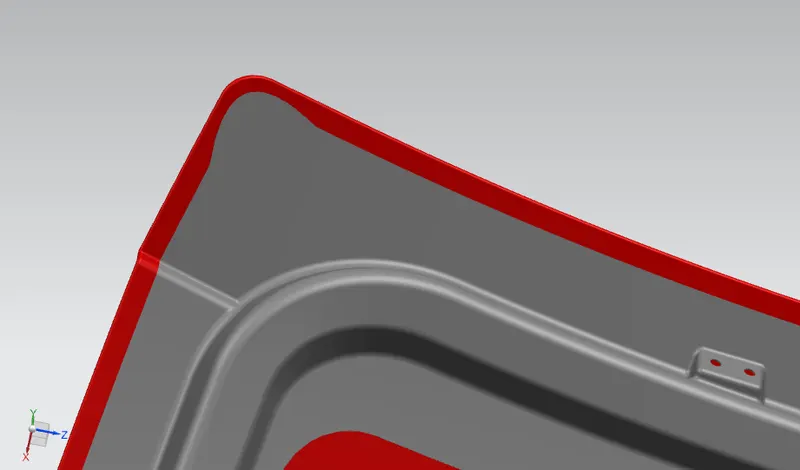
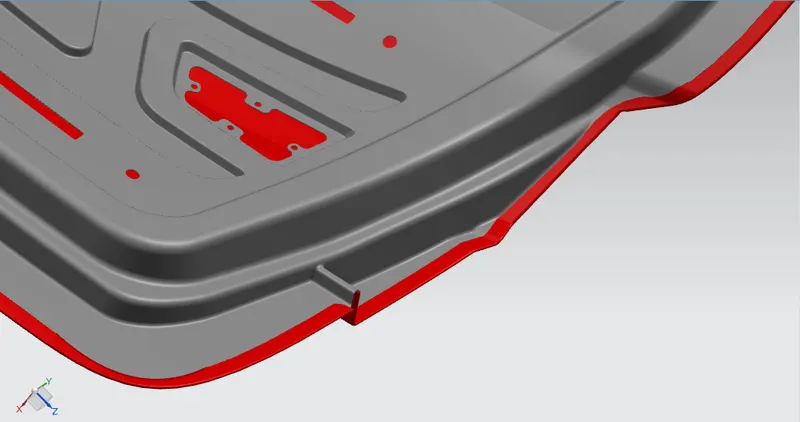
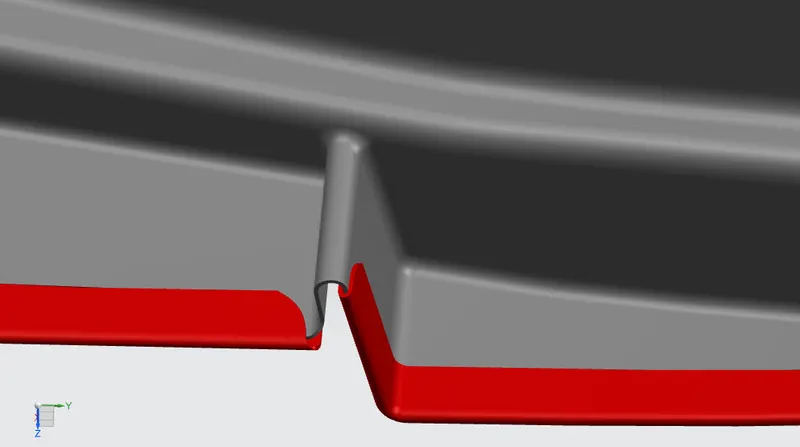
7. Then we will create hamming on outer panel.
Final Assembly