Design of backdoor
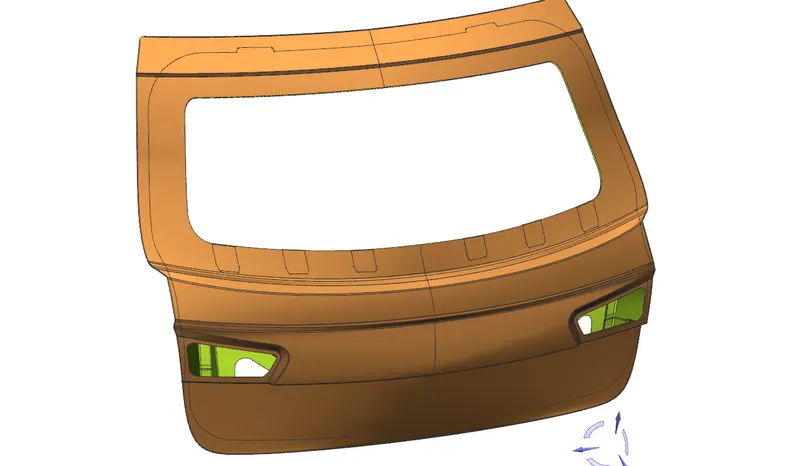
AIM: To create back door assembly which includes Outer Panel, Outer Panels with all the necessary mounting sections and reinforcements from given Class A surface.
Back Door:
It is the hinged door at the rear section of vehicles. This door is hinged at the upper side or at te sides. It is also referred as 'Hatch' or 'Tailgate' or 'Trunk-lid' or 'Boot-door'. It gives access for the boot space to store luggage, spare wheel etc. In some vehicle it is electonically operated, an in some it is manual.
Types Of Back Doors:
- Top Mounted Door
- Side mounted Door
- Bottom Door
1. Top Mounted Door
These type of back doors are used in a station wagon, pickup truck and some other sports utility vehicles. Today’s modern cars use top mounted tailgating systems which are both powered and also gas stay supported. These tailgates provide greater rear visibility compared to other types.
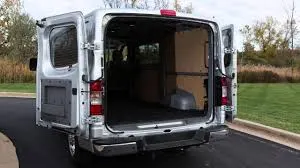
2. Side mounted Door
It is generally used in van type MPVs, SUVs, pickup truck vehicles. These side mounted door/barn doors are a lot easier compared to top mounted ones. These doors are generally small in size and can be easily accessed. These doors are more convenient for the goods handlers carrying lengthy objects, long pipes where one door is kept open. It also saves accidental head impacts. It is a lot easier to load /unload things in vehicles having side-mounted doors.
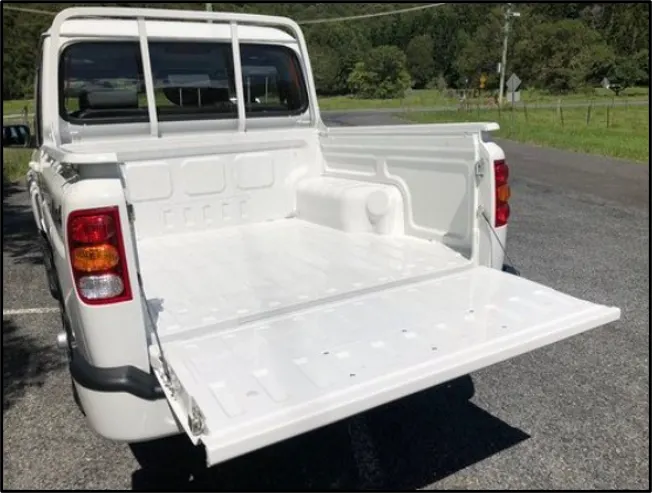
3. Bottom Door
Bottom type or split type backdoor system is used in estate type cars, pickup trucks and some luxury SUVs. These are most convenient type of backdoor in which the bottom split is used as a support or even as a table for the touring people.
Design Considerations for BAck Door Designing:
- Rear visibility
- Boot space & accessibility
- Sealing Flange
- Support structures like hinges and gas stays.
- Mounts for wiper motor, tail lamps and other wiring loops
- Rear crash regulations
- Joining techniques such as hemming, spot welding etc.
- Gap and flush requirements
Manufacturing Processes Used for Back Door:
Deep Drawing:
The metal deep drawing process is an effective method of manufacturing of cups, cans and other similar deep drawing products. The deep drawings having two main categories.
- First- stage drawing: The blank shape of metal is placed on the die and contact with the punch. When the metal specimen is flat piece of sheet metal used in forming and finish the product. Initially the punch moves in downward direction. The outer rim of blank is subjected to pure radial drawing (drawing toward in vertical axes) between die and blank metal. The metal become a bend and sliding over die and also stretched between die and punch. The metal in vicinity of punch head and contact with it bend and slide over radii and stretch over punch head.
- Redrawing: The components drawn from first stage again it is redrawn convert into more depth to form a cup shape in the die and punch. The second stage of drawing is called as redrawing.
Embossing:
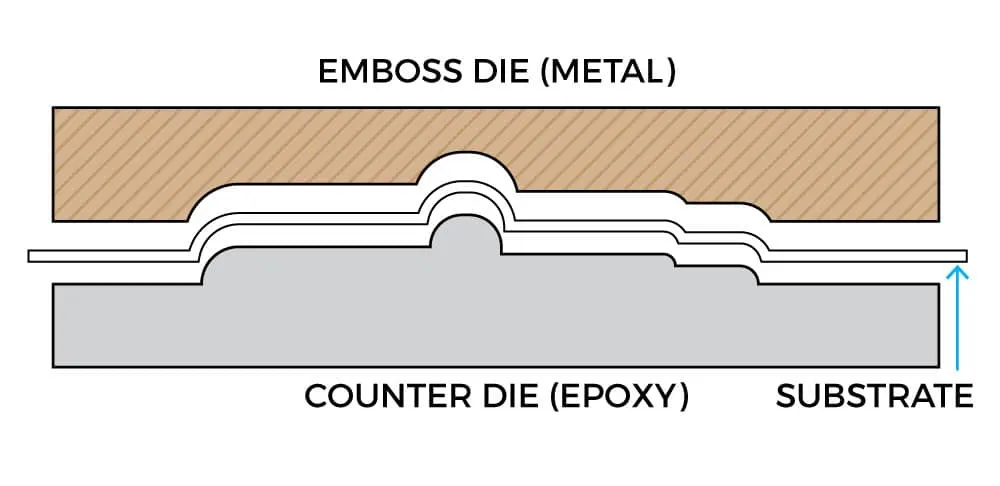
Embossing is a metal forming process for producing raised or sunken designs or relief in sheet materials by means of matched male and female roller dies, theoretically with no change in metal thickness or by-passing sheet or a strip of metal between rolls of the desired pattern. Metal sheet is drawn through the male and female roller dies producing a pattern or design on the metal sheet. Depending on the roller dies used, different patterns can be produced on the metal sheet.
Materials commonly used in the metal embossing process include:
- Aluminum alloys
- Steel alloys
- Zinc
- Copper
- Galvanized steel
- Brass
- Cold rolled steel
Hemming Process:
Hemming is the process in which hems are formed on the edges on sheet metal for joining two sheets together. The hems are fromed with the help of rollers. The rollers roll over the sheet edges multiple times ( approx 3-4 times).
Hemming process helps to join the sheets without compromising the surface quality of the sheets.
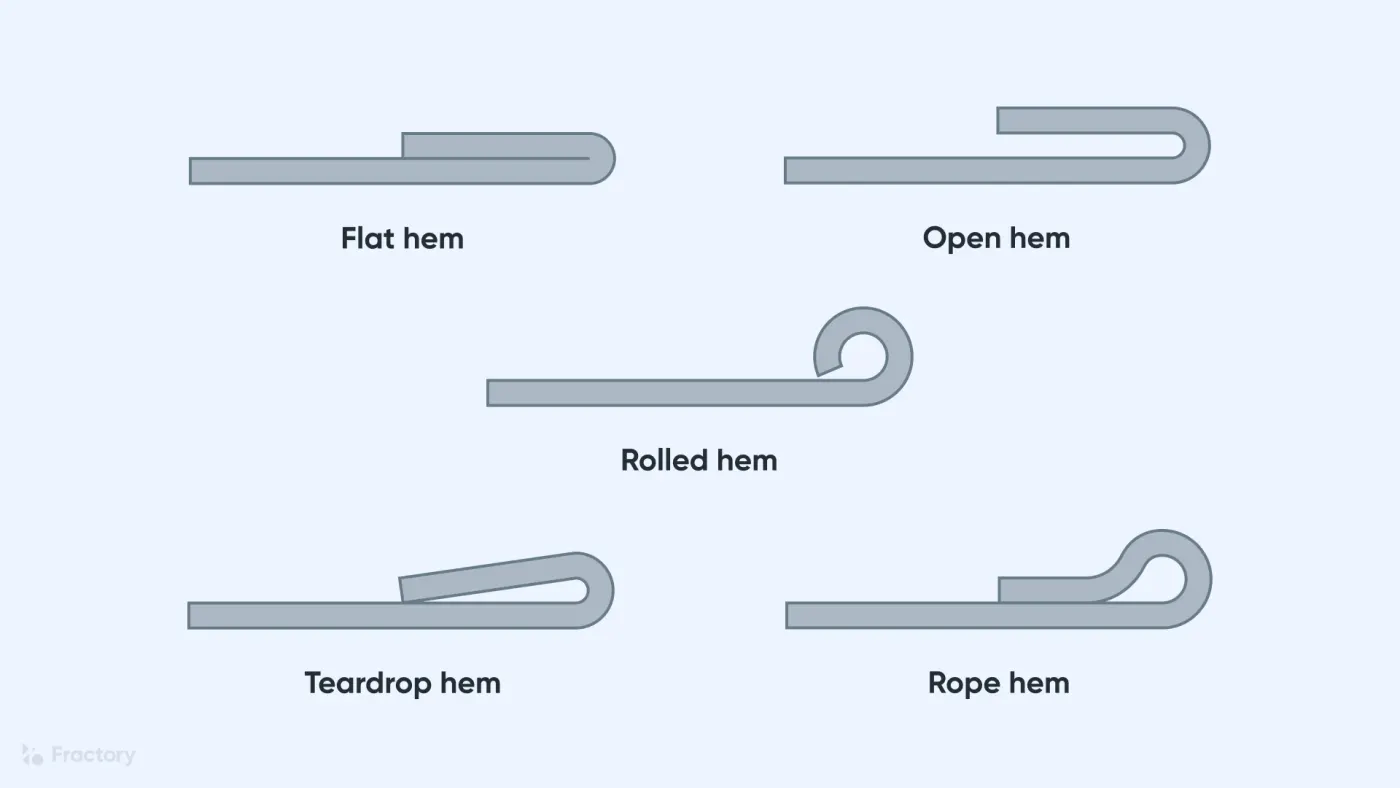
There are different types of hems
- Open Hem
- Flat Hem/ Closed hem
- Rolle Hem
- Teardrop Hem
Blanking:
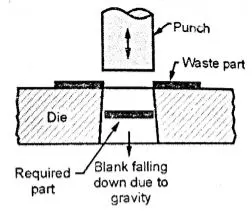
Blanking is a cutting operation of a flat metal sheet and the article punched out is known as blank. Blank is the required product of the operation and the metal left behind is considered as a waste.
Punching:
It is similar to blanking only the main difference is that, the hole is the required product and the material punched out from the hole is considered as a waste.
Spot Welding:
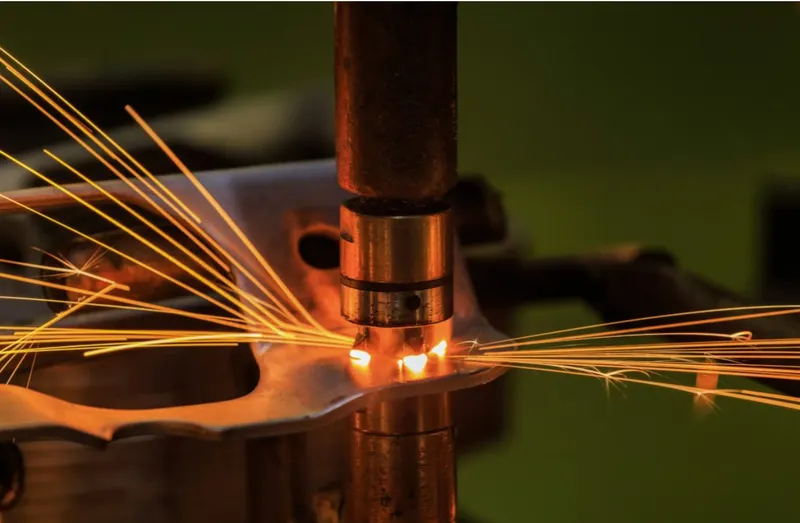
Spot Welding is a form of resistance welding also known as Resistance Spot Welding (RSW). Spot Welding involves using heat produced by resistance to an electrical current to join materials together. The current heats the materials to a point where they become malleable. The use of strong pressure bonds them together.
Design Procedure of Back Door:
- The given class A surface is analysed and repaired as per requirement. Repairing is done for the mismatch, discontinuity of surface.
- to cretae the inner panel of back the using the class A surfcae, firstly the sealing surface is created. and using the law extension the connecting flanges are crretaed. After that, windshield region and the inner panel panel is created.
- To strengthen the panel embossing is done on the panel.
- To join the inner panel to the outer panel hemming process is used, the outer panels are modified with the hemmings on it.
- Mounting points are created for hinge, gas stay and striker mountings. As per the mounting points Reinforcements are created.
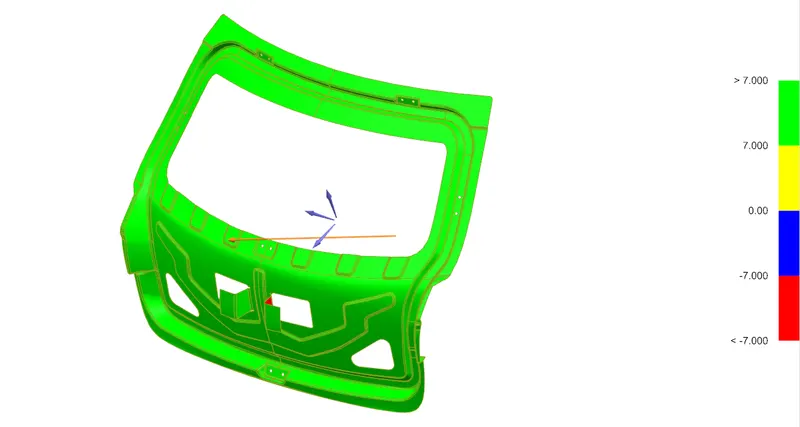
- Draft analysis is peroformed to chexk the drawability of parts.
Screenshots:
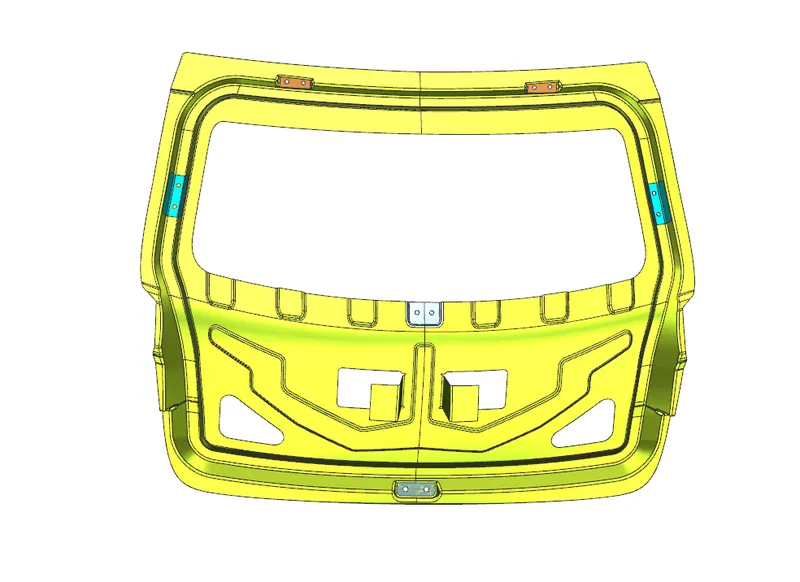
Inner Panel:
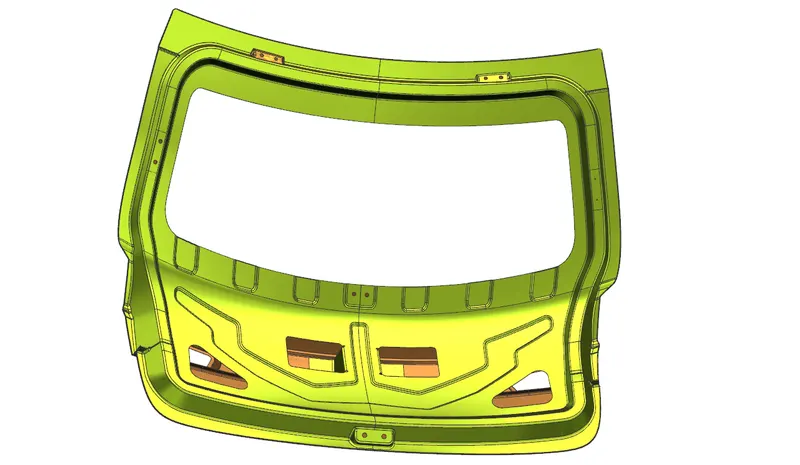
Assembly:
Draft Analysis:
Conclusion:
Back door assembly is successfully created from the given Class A surface with all mounting points and reinforcements.