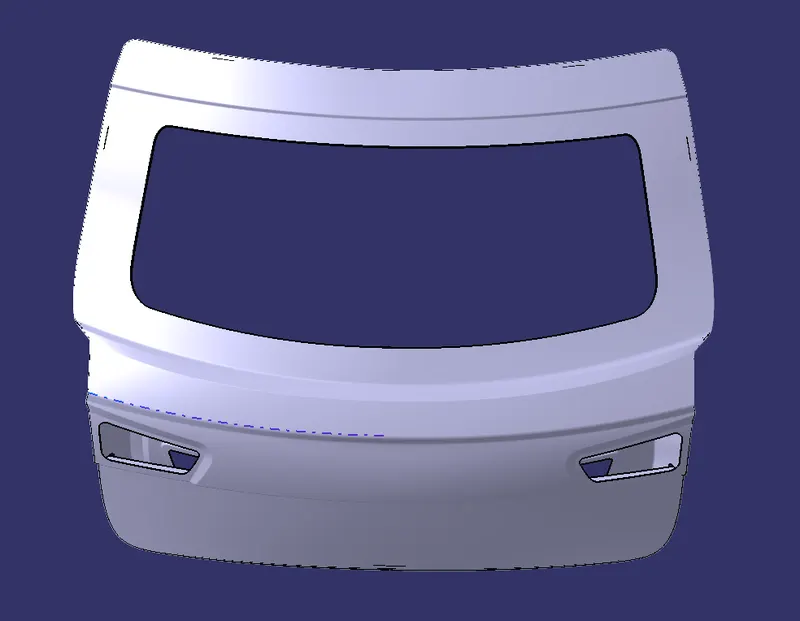
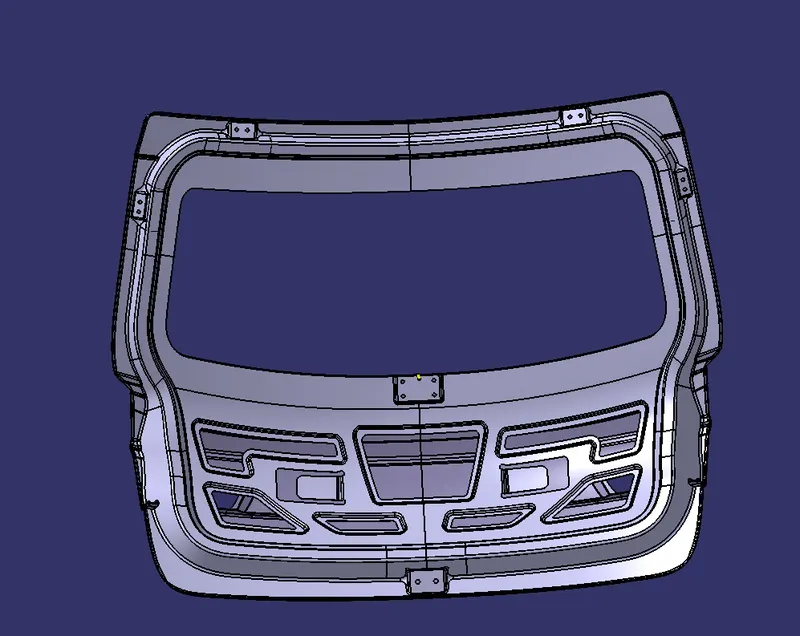
Design of backdoor
DESIGN OF BACKDOOR
AIM
To create a backdoor assembly from given CLASS A surfac,also to provide necessary reinforcement and to carry out draft analysis
BACKDOOR
Backdoor of a car is the opening in the rear end of the car that provides access to either boot space or passenger compartment depending the design of the car.It is attached to the body using a hinge and opened using gas stays mostly in modern cars which helps us in reducing the effort to open the door and also it keeps the backdoor in the opened position without any other works to be done.
There are three types of backdoors that are mainly used
1.Top mounted backdoor
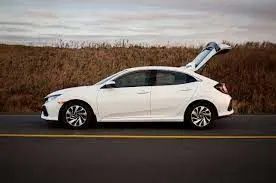
2.Side mounted backdoor
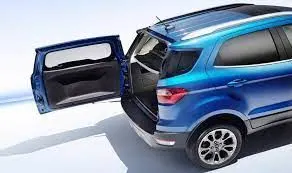
3.Bottom mounted backdoor
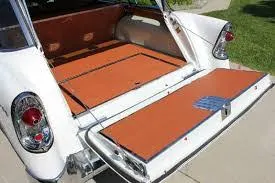
Its BIW component consists of Backdoor outer panel,inner panel,hinge stay,wiper motor mounts,gas stays and also their re inforcements
DESIGN CONSIDERATIONS
FUNCTIONAL REQUIREMENTS
The main function of the door is definitely opening and closing.It should be capable of closing the passenger cavity and keep it locked until someone wants to open it.The other functional requirement of the door is to prevent debris and rainwater from entering the passenger cavity and sealing it from dust and water that is there outside.This is made possible in backdoor by appling dynamic sealant or rubber sealant so it keeps the door closed and seals it from the debris outside.
REAR VISIBILITY
The design of backdoor should be in such a way that through the windshield in the back there must be proper visibilty so that we will be aware of what is behind us and also for better visibility during rain times and also in dusty conditon,a wiper is attached to the back door windshiled and it clears the water and dust once it is activated.
REAR CRASH REGULATIONS AND REQUIREMENTS
The rear end of the car should also be a crumble zone as the front end so that when an accident takes place the rear end or backdoor must absorb maximum energy and get crumbled so that the passenger cavity must get minimum impact.It gives the passenger much more safety but the car will get crumbled.
SEALING AND ITS FUNCTION
Dynamic sealant or rubber sealant provided on the backdoor does the sealing function which prevents any water drops or dust from entering the passenger cavity as it is tghe primary function of a door.It works the same as the door of a refidgerator, it comes in contact with the sealing flange that we provided to the inner panel of the backdoor and because of the vaccum pressure it holds on there and prevents anything from outside to enter inside.
JOINING TECHNNIQUES
There is three different types of joining techniques used in backdoor assembly,which are;
- MASTIC SEALANT
The mastic sealant can act as a protecting layer between elements. The features of this sealant and how it works makes it different from the others. It forms a smooth exterior which makes the surface flexible while maintaining a hard plastic beneath the surface.Due to its flexibility, the sealant can be sued on different surfaces without preparing the surfaces first. To improve NVH (noise, vibrations, harshness), mastic sealants were provided on the inner panel to attach with outer panel. Here mastic points on the inner panel plays a major role to avoid Noise and Vibration into the cabin. NVH is measured by the instruments, namely microphones, accelerometer and force gauges, or load cells. Component and sub-assembly NVH tests are most commonly performed using a vibration shanker while entire vehicles usually on the test track or road simulator test-beds.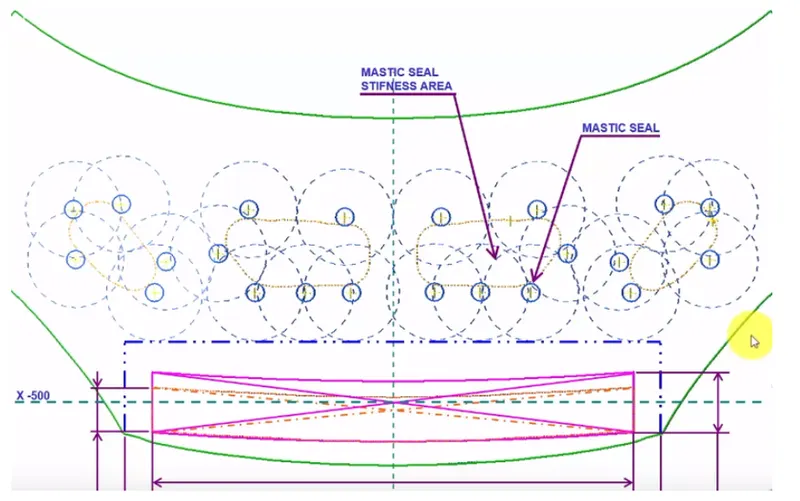
Mastic sealants are provided to the parts that are visible outside because it won't leave any marks on the external surfaces.For those parts where we will use mastic sealants as joining technique then we will maintain a 5mm gap between parts which will allow us to insert the mastic sealant.
- SPOT WELDING
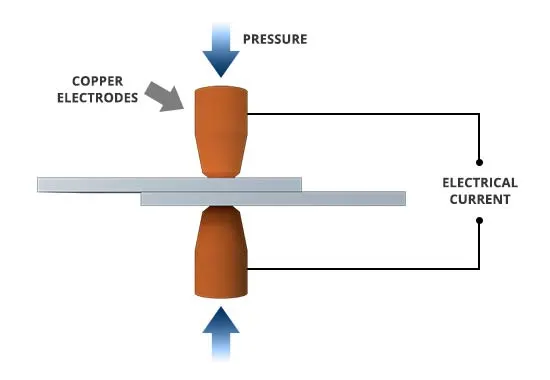
Spot welding (also known as resistance spot welding) is a resistance welding process. This welding process is used primarily for welding two or more metal sheets together by applying pressure and heat from an electric current to the weld area.Spot welding is done for the part which is not visible outside and for these parts there will be no clearance between provided as the parts should be in contact to carry out the welding process that is there will be 0mm clearance between parts.
- HEMMING OPERATION
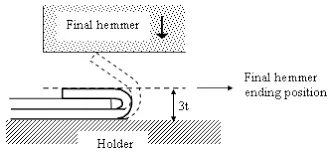
Hemming is a forming operation in which the edges of the sheet are folded or folded over another part in order to achieve a tight fit. Hemming is a technology used in the automotive industry to join inner and outer closure panels together (hoods, doors, tailgates, etc.). It is the process of bending/folding the flange of the outer panel over the inner one. The accuracy of the operation significantly affects the appearance of the car’s outer surfaces and is therefore a critical factor in the final quality of a finished vehicle.
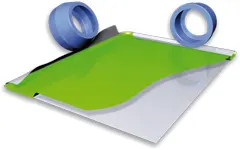
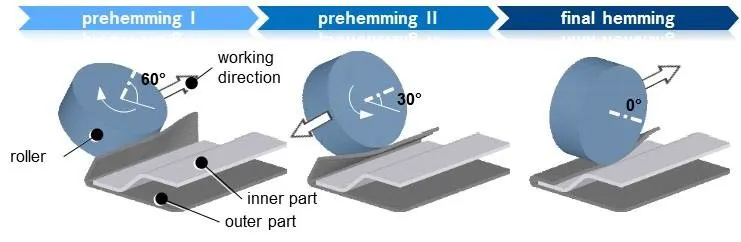
- In roller hemming process, a robot guides a small roller across the flange to fold a sheet onto itself or onto another sheet. The process is oriented to low volume automotive applications, providing a distinct advantage in manufacturing closures and subassemblies with developed flanges.
MANUFACTURING PROCESSES
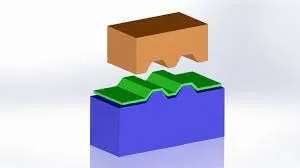
EMBOSSING:
Embossing is a metal forming process for producing raised or sunken designs or relief insheet materials by means of matched male and female roller dies, theoretically with nochange in metal thickness or by-passing sheet or a strip of metal between rolls of thedesired pattern. Metal sheet is drawn through the male and female roller dies producing apattern or design on the metal sheet. Depending on the roller dies used, different patternscan be produced on the metal sheet.
HEMMING:
Hemming is a forming operation in which the edges of the sheet are folded or folded overanother part in order to achieve a tight fit. Normally hemming operations are used toconnect parts together, to improve the appearance of a part and to reinforce part edges.
In car part production, hemming is used in assembly as a secondary operation after deepdrawing, trimming and flanging operations to join two sheet metal parts (outer and inner)together. Typical parts for this type of assembly are hoods, doors, trunk lids and fenders.
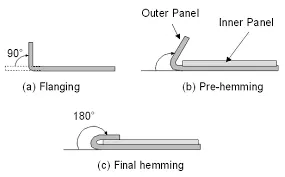
There are various types of hemming operations:
1.Conventional die hemming: In conventional die hemming, the flange is folded over theentire length with a hemming tool.
2.Roll hemming: In roll hemming, the hemming roller is guided by an industrial robot to formthe flange.
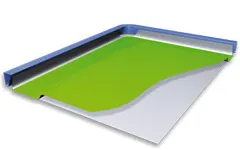
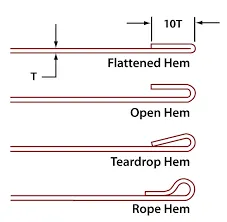
Open Hem: A Hem has a full round feature and a return flange. In open hem bend angle isequal to 180 degrees.
Tear drop Hem: In tear drop hem the bend angle is greater than 180 degrees.
Closed Hem: Hems without any inside radius are called as closed hem. Closed hems arenot recommended if the hem geometry is to be painted or if the material used is SST or Aluminium.
BLANKING:
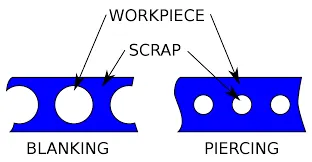
Blanking is a cutting operation of a flat metal sheet and the article punched out is knownas blank. Blank is the required product of the operation and the metal left behind isconsidered as a waste.
PUNCHING:
It is similar to blanking only the main difference is that, the hole is the required product andthe material punched out from the hole is considered as a waste.
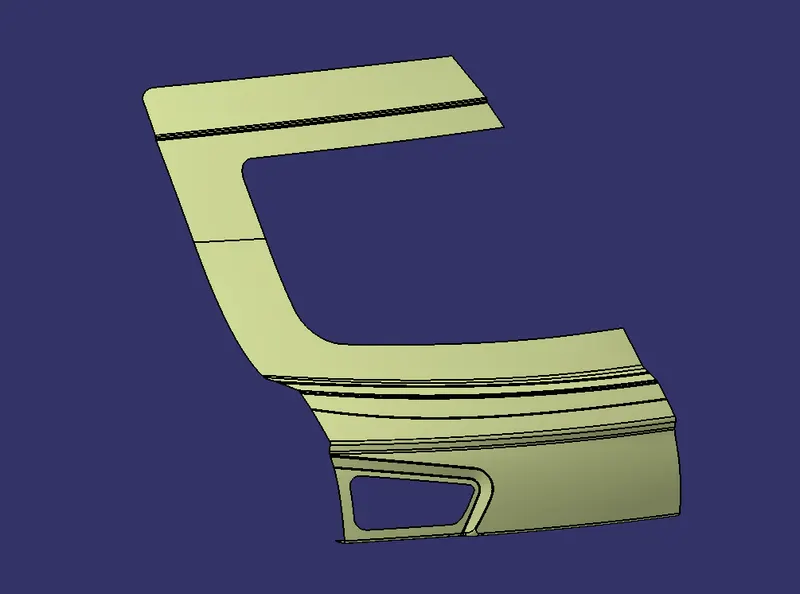
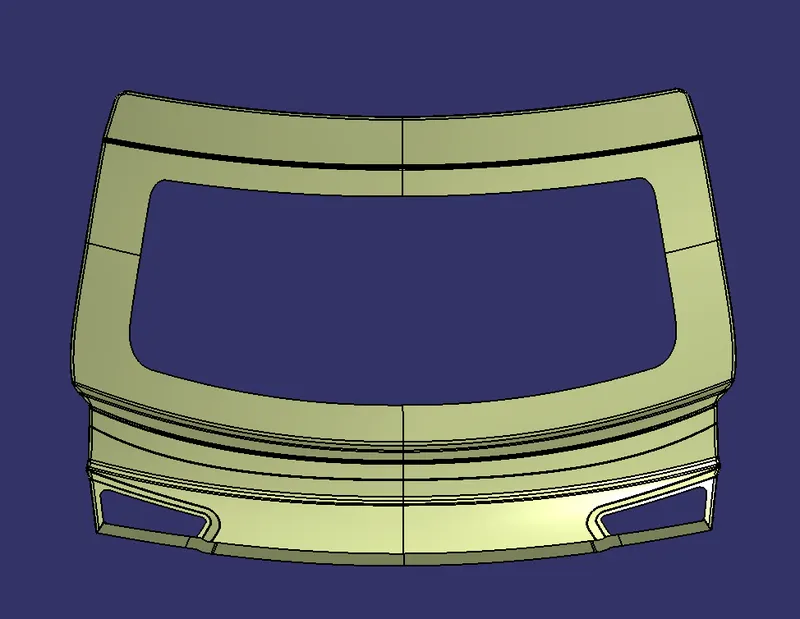
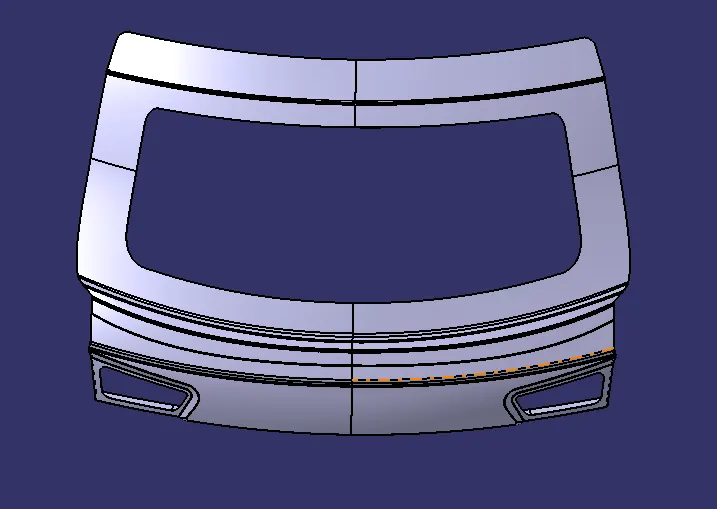
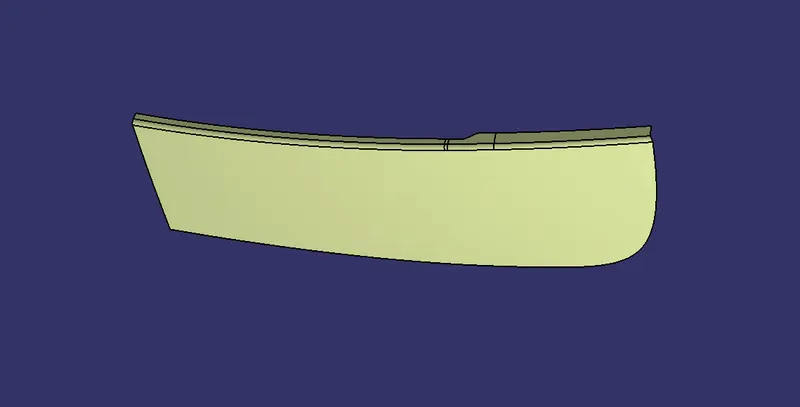
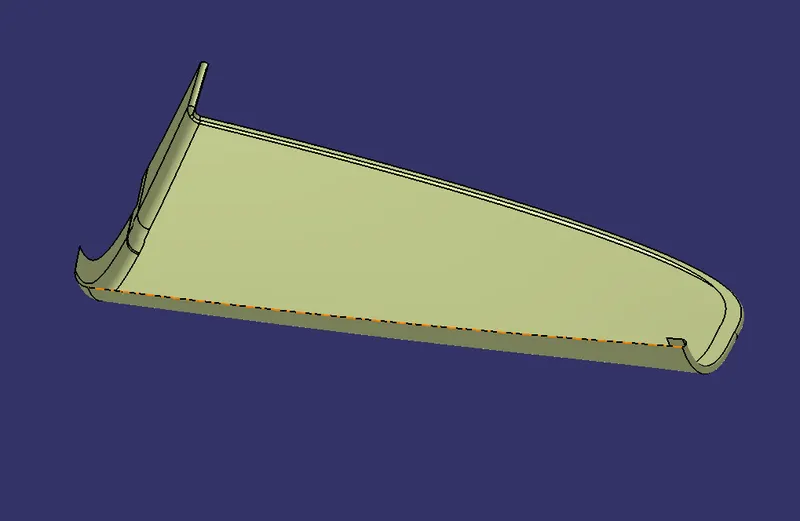
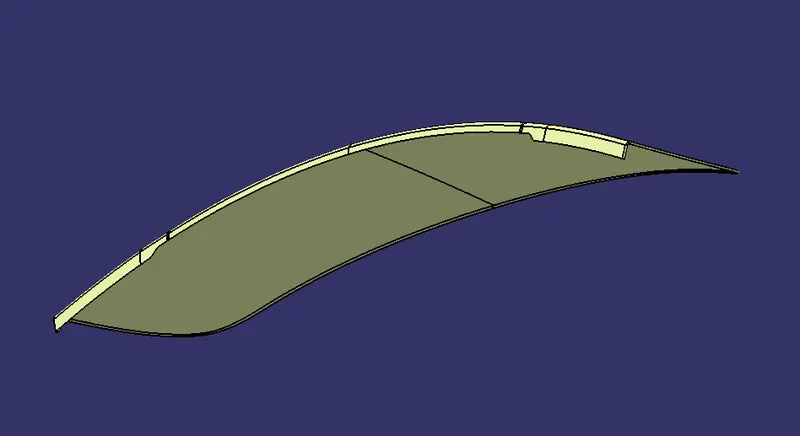
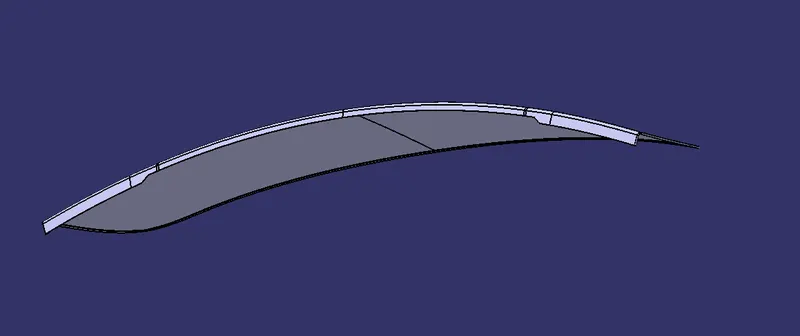
BACKDOOR OUTER PANEL UPPER
- Backdoor outer panel upper is created from the given styling surface by checking the connectivity of the given surfaces and by repairing the surface in parts where it is not continous using shape fillet and multisection
- The surface is made without any sharp edges
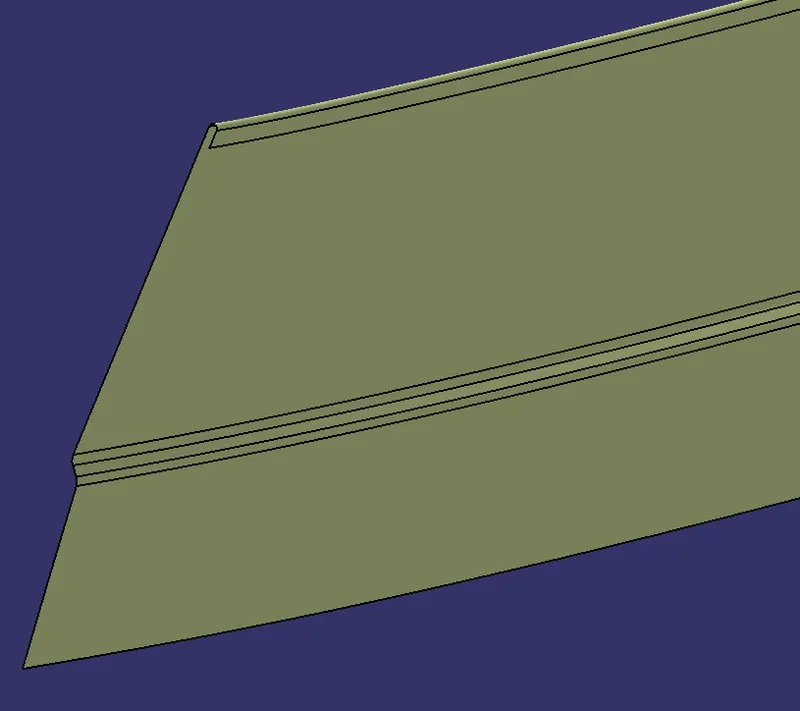
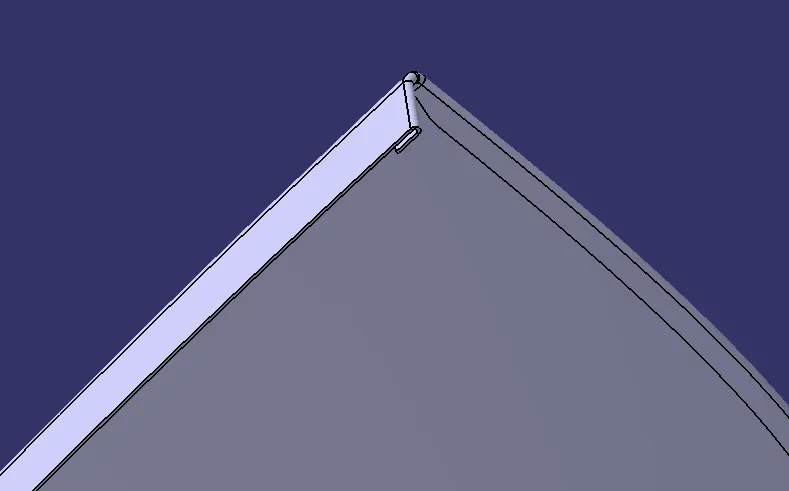
- Carried out the hemming operation by offseting the outer upper surface to 2.65mm
- On that offset created a hem flange of 7mm
- By extracting the upper boundary created a sweep that intersects the hem and applied TRI-TANGENT FILLET between those three to create the hem
- Given reliefs for the corners after hemming operation
- Extrapolated the middle boundary and splitted that using the datum plane and using that plane made a symmetric part and joined them together
- Applied thickness of 0.75mm to inside of the surface
BACKDOOR OUTER LOWER
- The horizontal part of the bottom area of upper part we will extract and the other part of the lower part from the given styling surface also we will extract
- The distance for the horizontal part from the fillet must be a minimum of 10
- Apply shape fillet between those two parts
- Do the hemming process as done in the upper parts and also apply reliefs in the corners where needed to reduce the stress concentration
- Extrapolate the middle part and split it using the datum plane and using the same datum plane apply symmetry to other part and join each other
- Then apply thickness to inside of surface 0.75mm
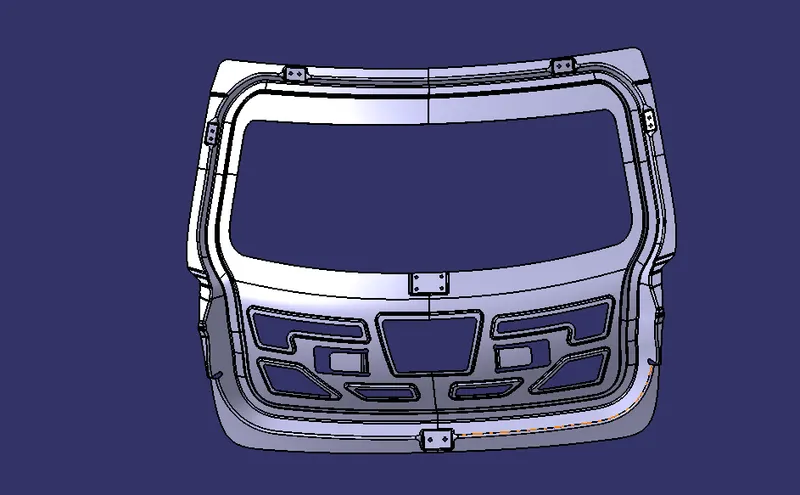
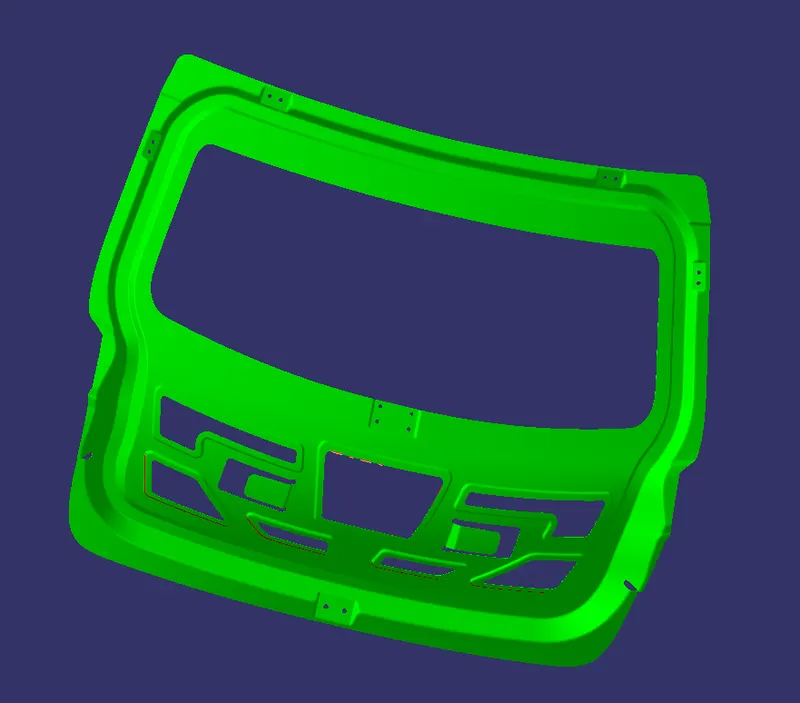
BACKDOOR INNER PANEL
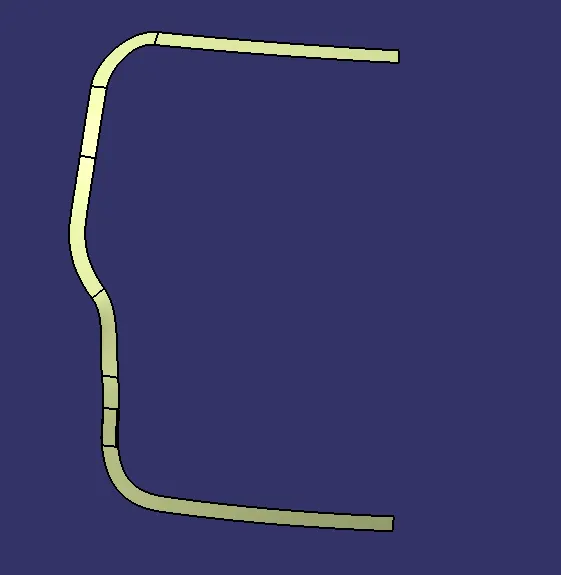
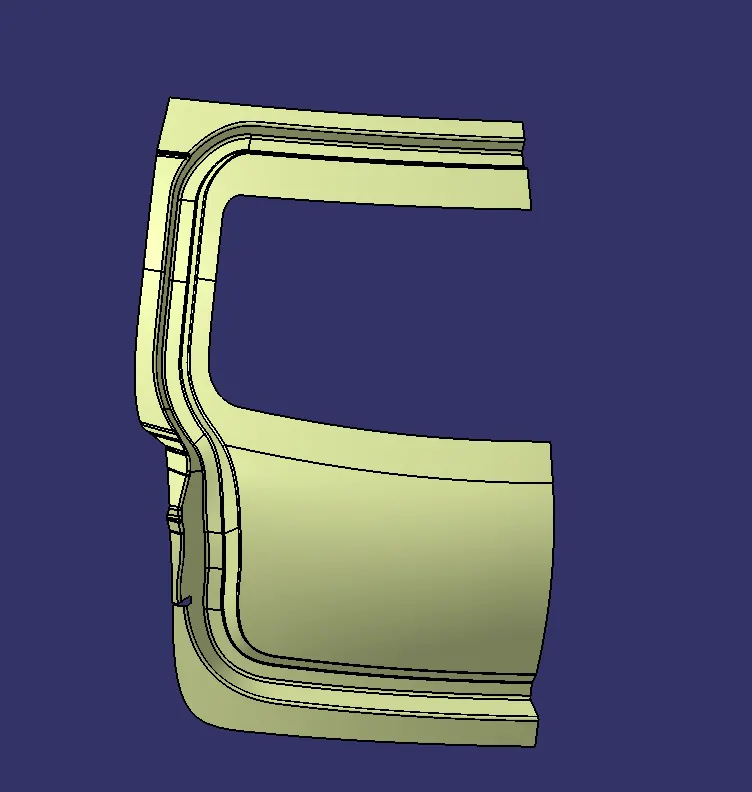
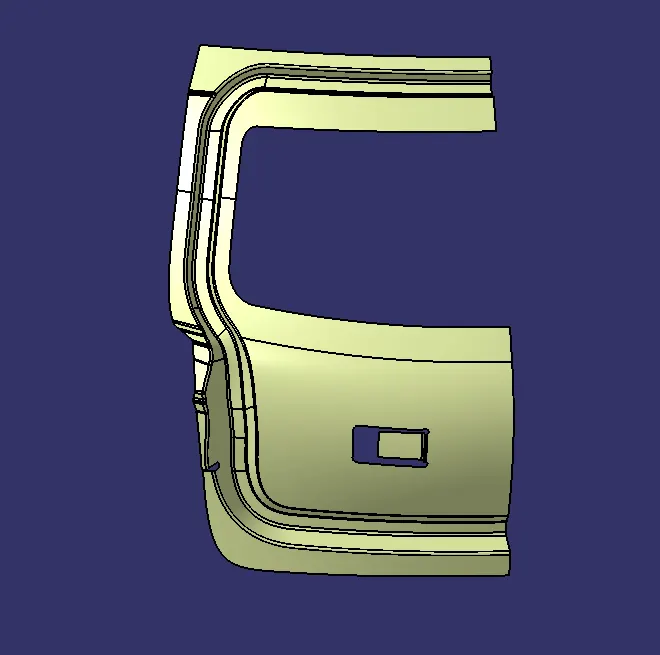
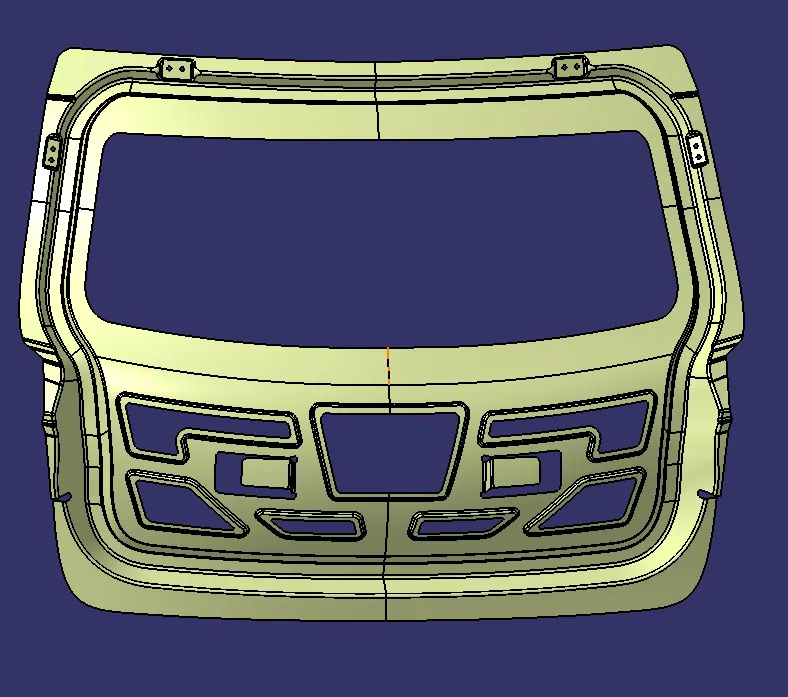
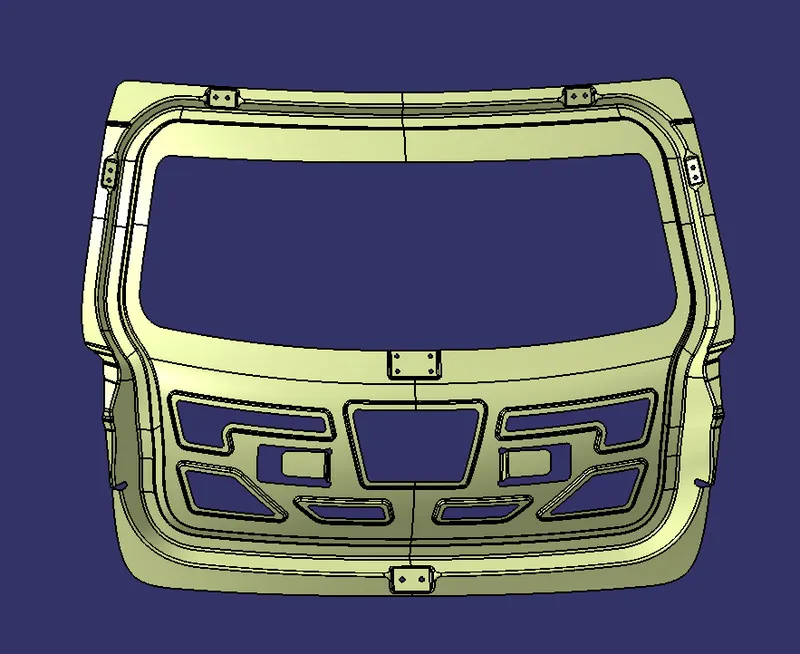
- Backdoor inner panel is created by extracting the surface from gthe ref.surface we craeted at an offset of 2.7mm and again offseting them to desired distances to create the required shapes
- In the inner panel we created a sealing flange by offsdeting the surface to particular distances while we do it part by part
- From the sealing flange we sweep on to the extreme side and use shape fillet between those
- We extract the wind shield region and extrapolate its top part
- Create another sweep from the sealing flange in this directon
- Create a spline between the extreme edge of the windshield extract and the sweep from the sealing flange in the bottom part
- The create multisection surface on the bottom part and extrapolate that before we apply shape fillet between the sweep and the surface that created after joining it with the windshield region
- create a mastic flange on that surface by creating a cut out by considering that the length of the sweeps shopuld not be more than that of the cut out and that surface on the top of the flange must be at an offset distance of 6.5mm from the outer surface so that after thickening the required mastic width of 5mm will be there
- Create embosses on the surface to improve the strangth and provide cutouts on the embosses
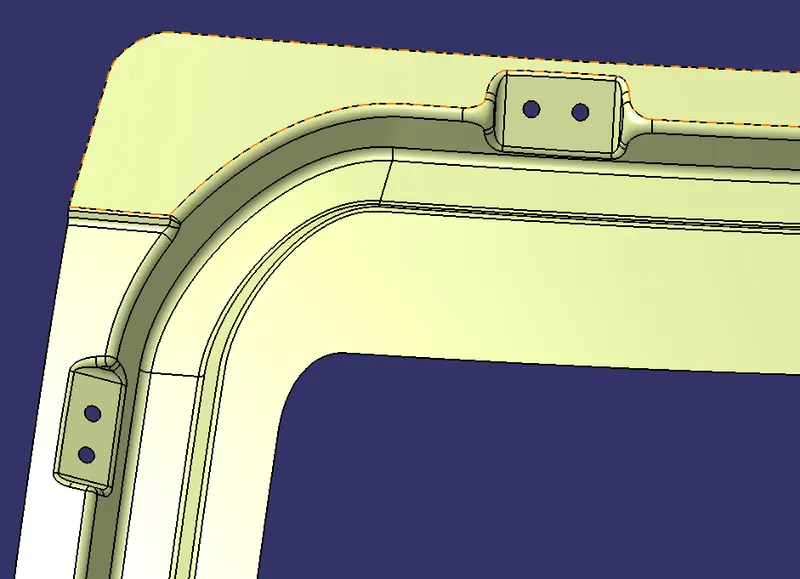
- Create mountings like hinge stay,gas stay,wiper motor and striker mounts by making sure that the mountuing surface is planar and give necessary mounting features on the surface as required
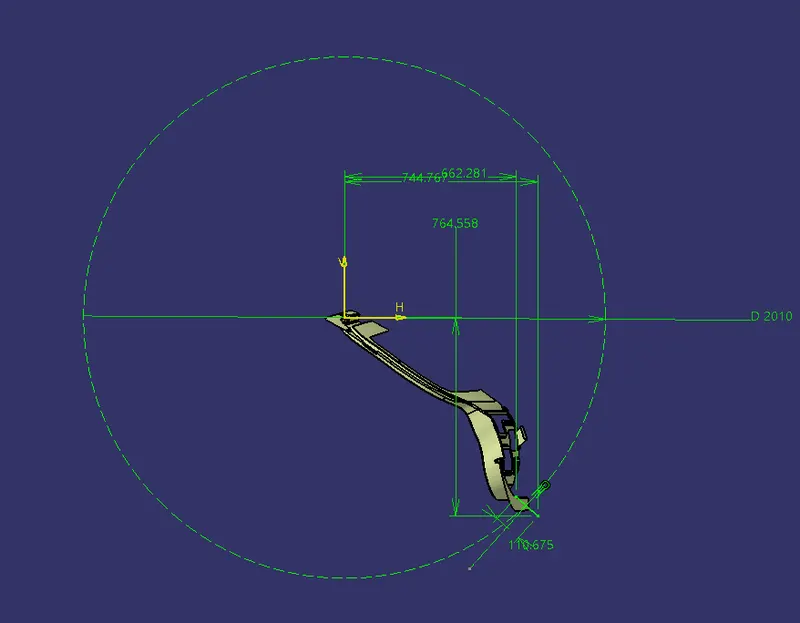
- For creating the striker mounting create a datum plane in the middle of a line between the holes on hinge mount and in that plane create a trajectory circle,draw a tangent to the circle at the point which we need the striker mount and draw a perpendicular line to that tangent line
- Apply symmetry and join the surface before creating the wiper motor mount and also striker mount
- Apply thickness of 0.75mm to upwards
REINFORCEMENTS
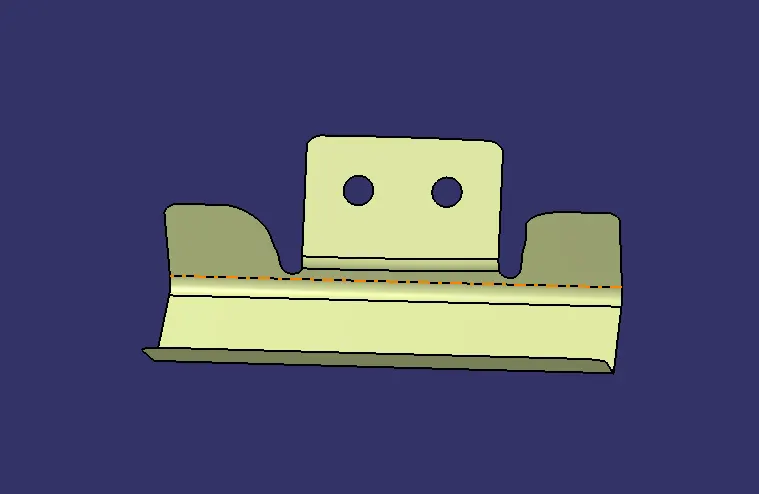
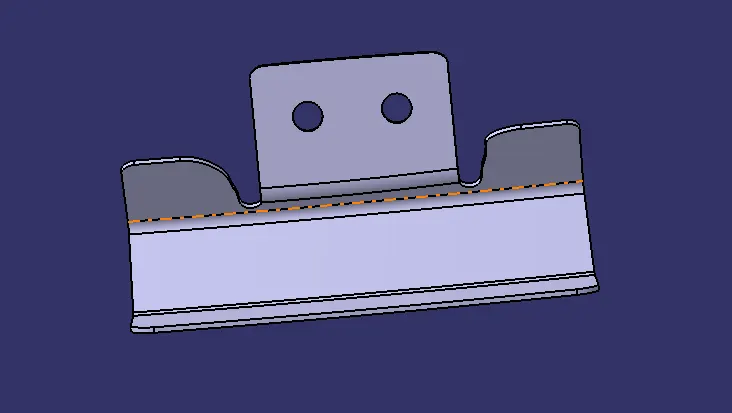
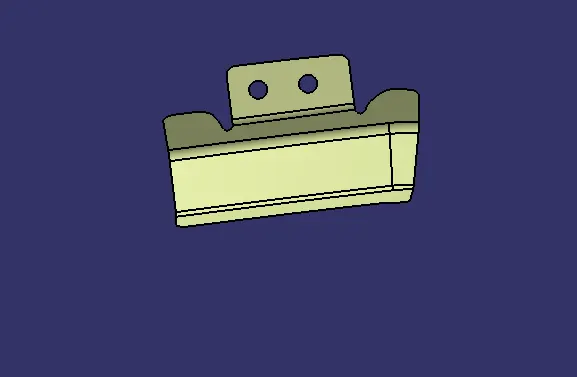
- Reinforcements for each mounting part should be done with providing an additonal thickness of 1.5mm
- Reinforcement should be given for each of the hinge mount and gas stay mount on right and left and also for both wiper motor mount and striker mount
- The process for giving reinforcement is the same for all
- Extract the surfaces those which is not at a distance 1.7mm and create planes on the curves and split them at required distances
- Remove all the sharp corners by creating splines and give reliefs at places where it is needed
- Apply thickness of 1.5mm to upwards
HINGE MOUNT REINFORCEMENT
GAS STAY REINFORCEMENT
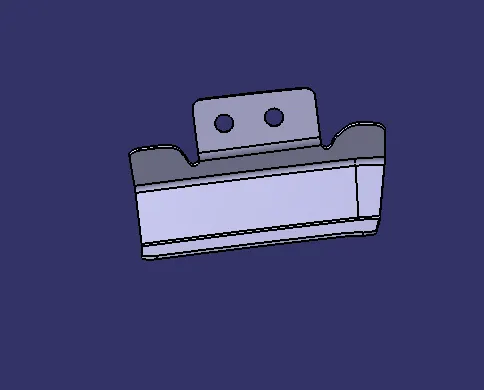
WIPER MOTOR MOUNT
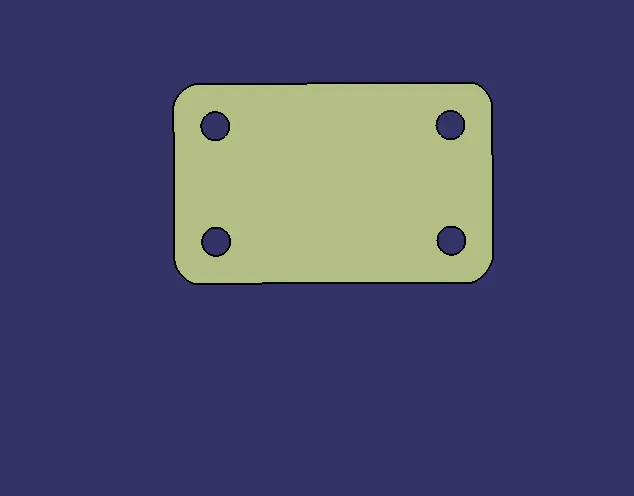
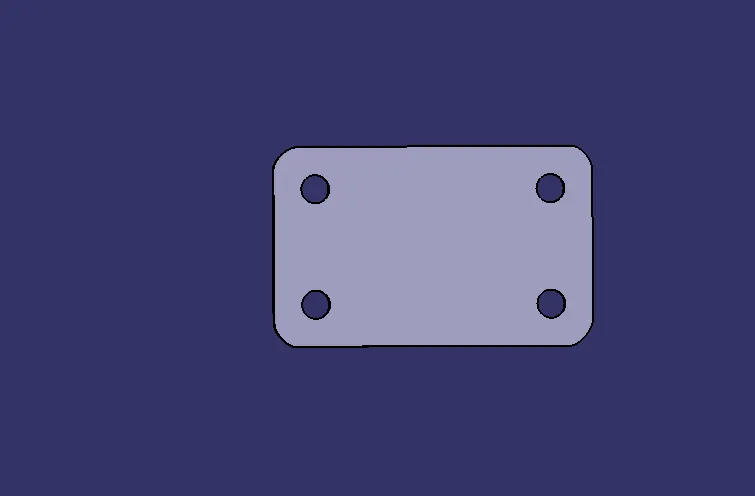
STRIKER MOUNT

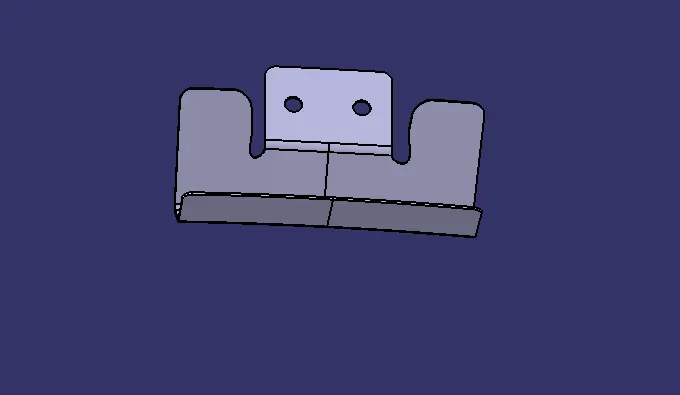
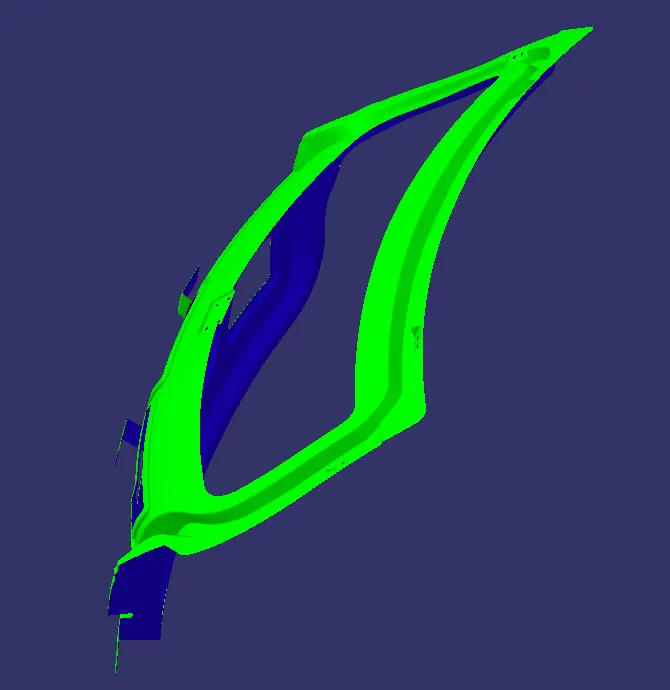
DRAFT ANALYSIS
HINGE MOUNT
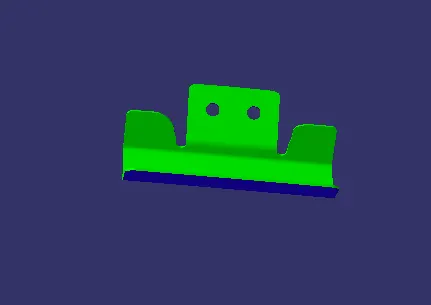
GAS STAY MOUNT
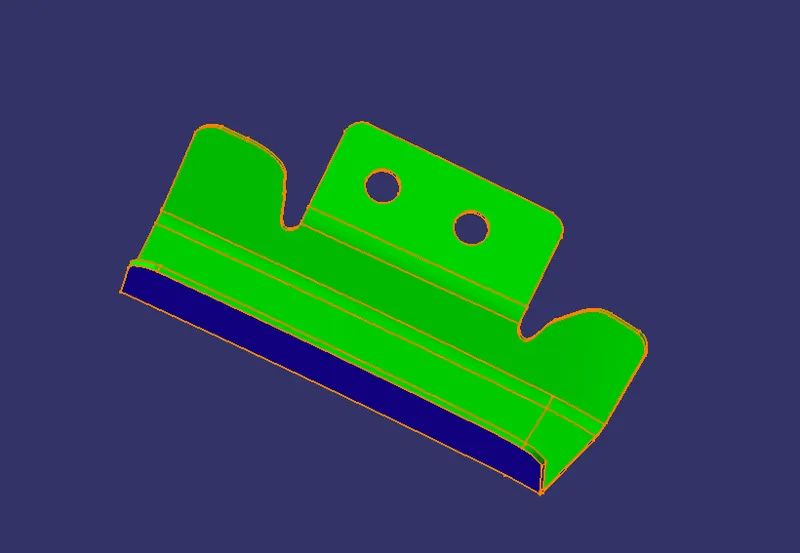
STRIKER MOUNT
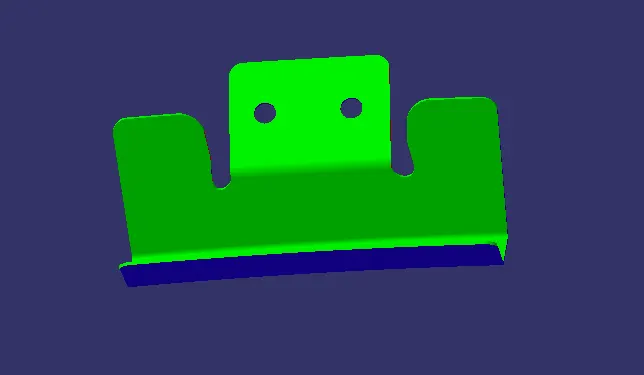
ALL MOUNTS
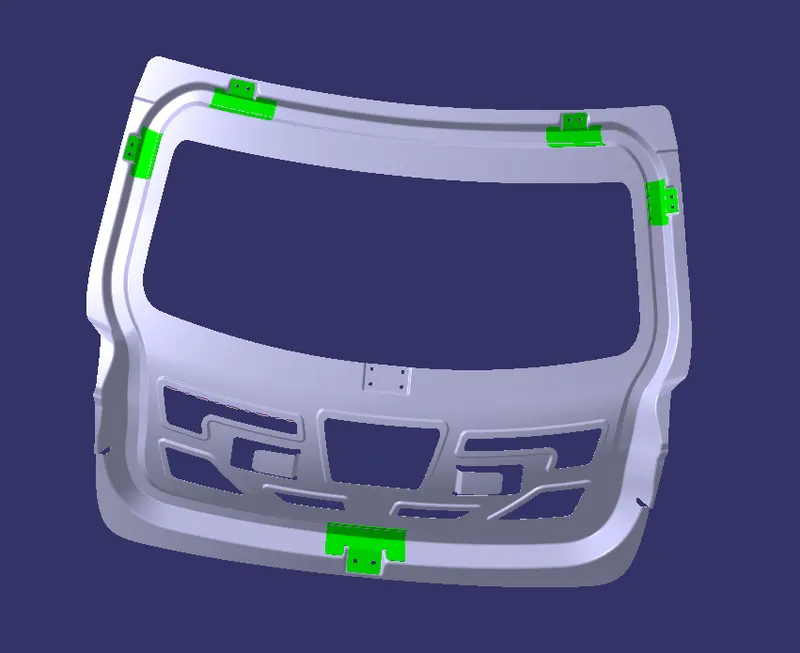
BACKDOOR INNER PANEL
CONCLUSION
Backdoor assembly is created by using the given styling surfaces and given appropriate gaps between the parts so that it can be joined properly using different joining methods that are used.Carried out draft analysis for each part to check the manufacturing feasibility as well.