Design of backdoor
Design of Backdoor
Aim
- To repair the given class A surface and check for any irregularities in the surface
- To design the inner and outer panel of the backdoor from the given class A surface
- To consider various design aspects required to design a proper backdoor
- To create the latch trajectory for the striker
- To create reinforcements for the hinge, gas stay, wiper motor and latch mountings
- To create an assembly of all the components
Introduction
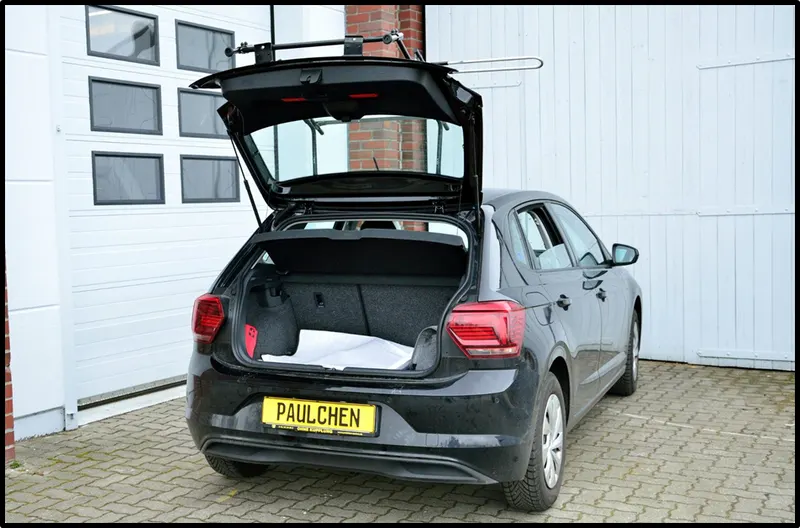
A car door is a hinged part which is used for entry and exit of passengers. Backdoor is one such type of door located at the rear of the vehicle and provides access to the luggage compartment and the tire Stepney which is located below the luggage compartment in most passenger vehicles. The backdoor is supported by gas stays which helps in easy movement of the backdoor and they are also responsible to keep the backdoor in stationery position while it is opened .Some backdoors can be operated electrically by a switch in the cars remote or with a button present in the cars cabin area. The backdoor also incorporates the rear windshield and wipers for it.
Components of a backdoor
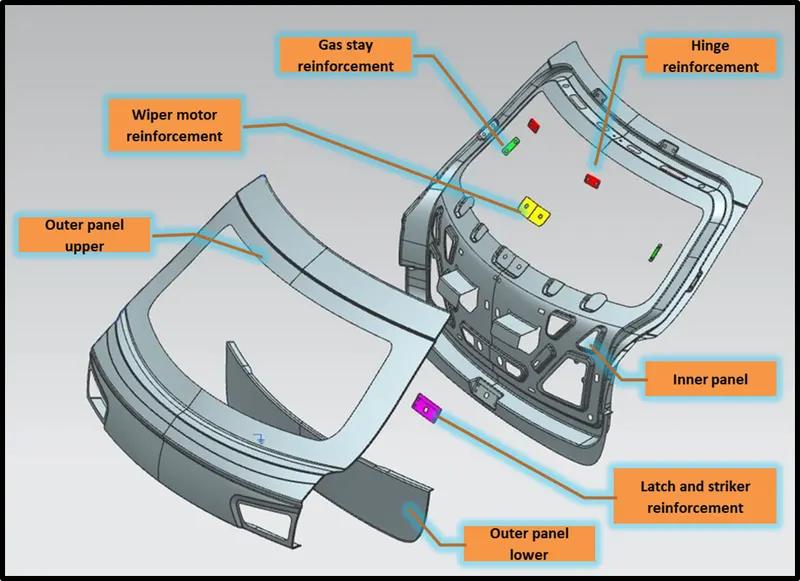
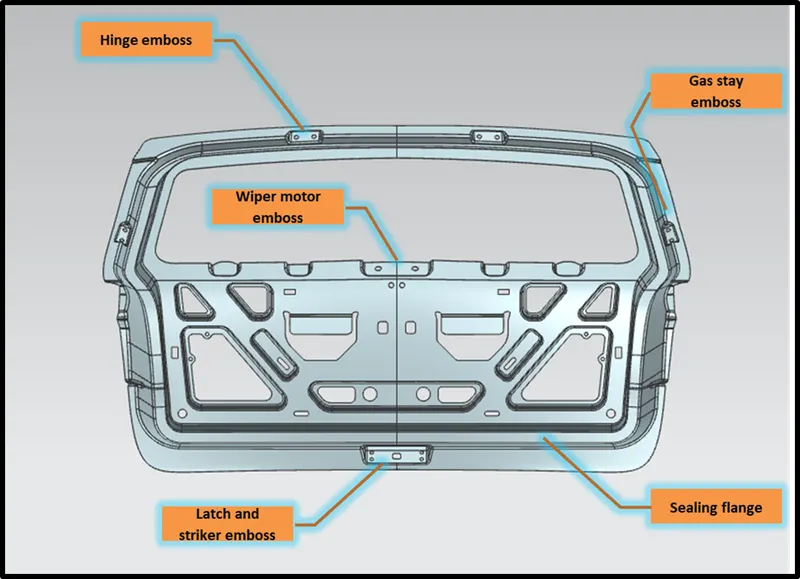
The backdoor assembly is made up of several components which can be seen in the picture below. The design has been created using the top-down approach which means all the components are created with reference to one another in the assembly.
Backdoor outer panel
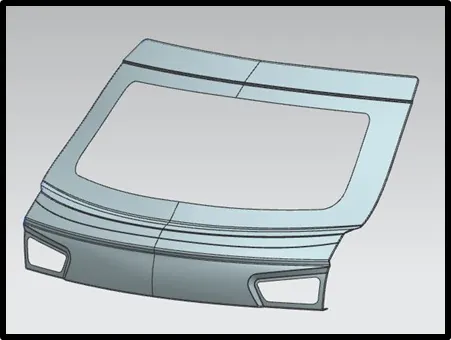
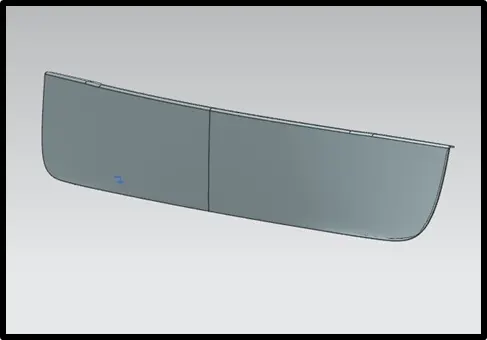
The outer panel of the backdoor is the aesthetic structure which is visible to the customer and hence the look of the surface and the air flow (aerodynamics) of the outer panel are two main considerations while designing it .The outer panel is generally divided into two panels which are the upper and the lower panels to aid the process of manufacturing it.The outer panels are attached to the inner panel by the aid of hemming and mastics
Backdoor inner panel
The inner panel is the actual engineering structure which provides strength to the backdoor assembly. The inner panel is not visible to the customer during closed condition of the backdoor and hence appearance is not much of a deciding factor for the inner panel. Although, inner panel is the most important part of the complete assembly since it has a direct impact on the overall safety of the structure and also the direction in which forces are transmitted during collision along the backdoor.
Hinge assembly
Hinge assembly attaches the backdoor to the car body with the help of fasteners .The hinge assembly helps the backdoor to open and close along a pivot axis which passes along the two hinge assemblies. The hinge assembly carries the majority weight of the backdoor along with the gas stay and is a major structural member. For this reason it is provided with reinforcements to further strengthen its purpose.
Latch and Striker Reinforcement
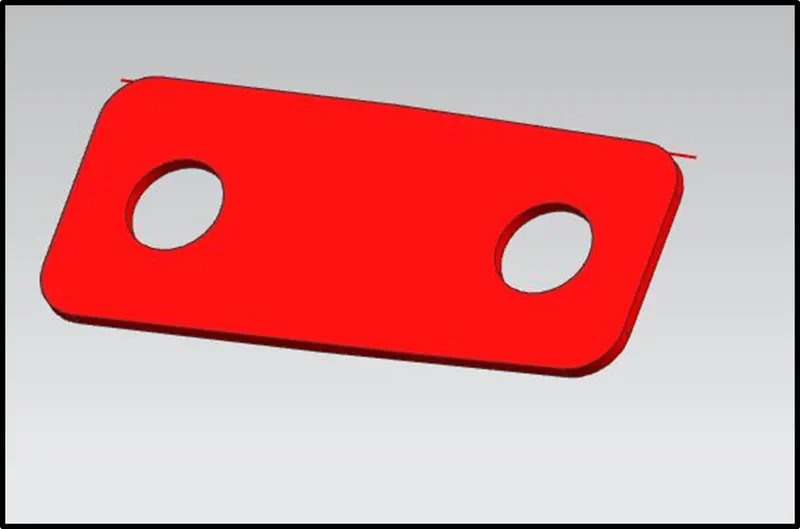
The striker is placed over the backdoor & gets attached to the slot provided in engine compartment. Thus it is used for locking purpose of backdoor with the car body. The striker is provided with reinforcement to further increase its strength and prevent any chances of failure during rough operation of the backdoor.
Gas stay
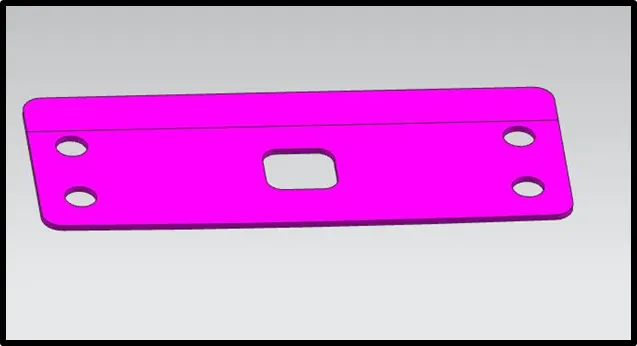
Gas stays are gas filled telescopic cylinders which require an initial action after which it can lift the backdoor on its own and can keep the backdoor in open position without any manual movement. They must be capable of lifting the weight of the backdoor and also few external forces like vibration, wind etc. These are helpful in keeping the backdoor open for easy access to the luggage compartment and also during maintenance of the vehicle
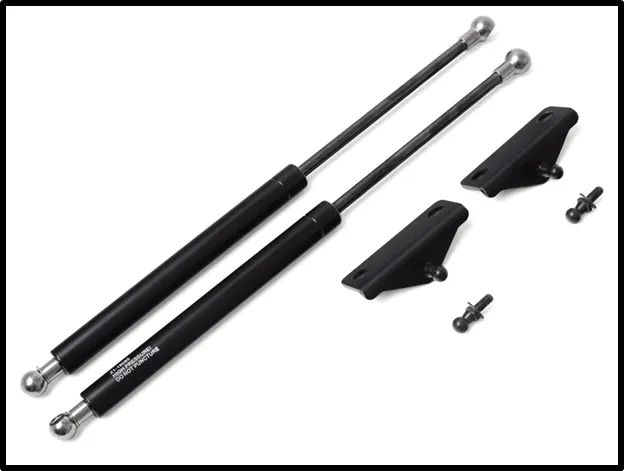
Gas stay along with the hinge assembly has to carry the entire weight of the backdoor and must also absorb many forces during rough operation of the backdoor and hence the gas stay is provided with reinforcement to make sure no failure occurs during operation
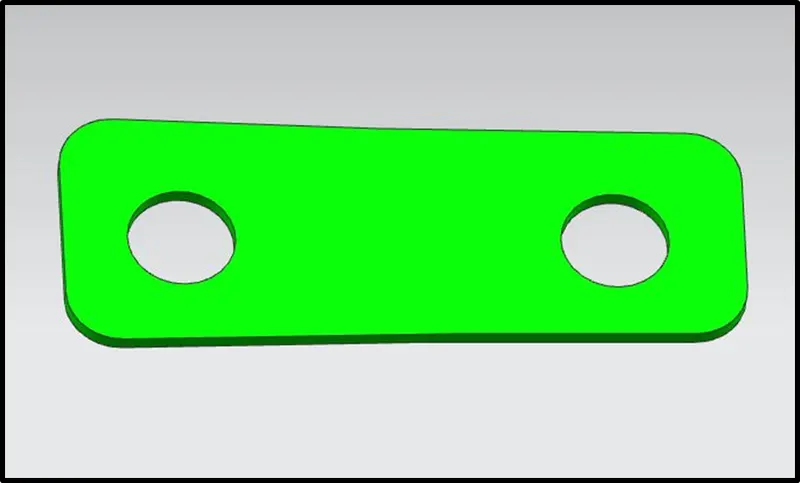
Wiper motor reinforcement
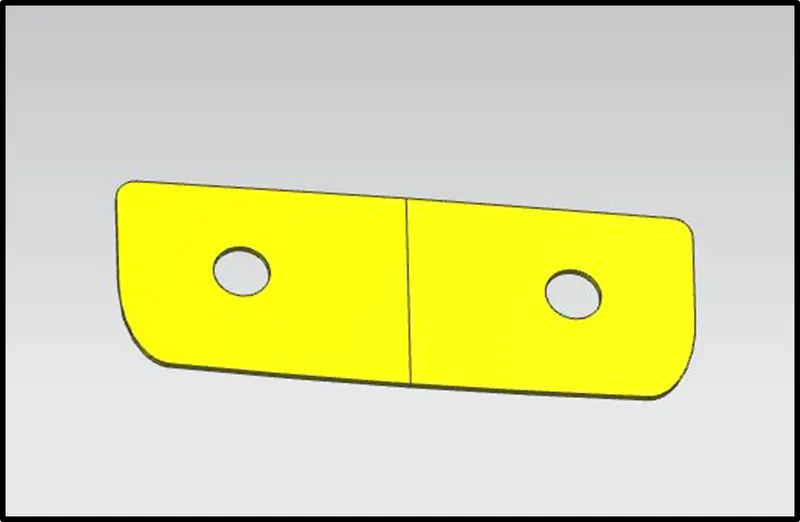
Design factors considered for hood
Tooling direction
The tooling direction decides the direction along which the part will be stamped and the direction along which the various sheet metal operations will take place in order to get the final result. This is one of the most important consideration before starting the design of any component and is crucial in the manufacturing point of view for the part
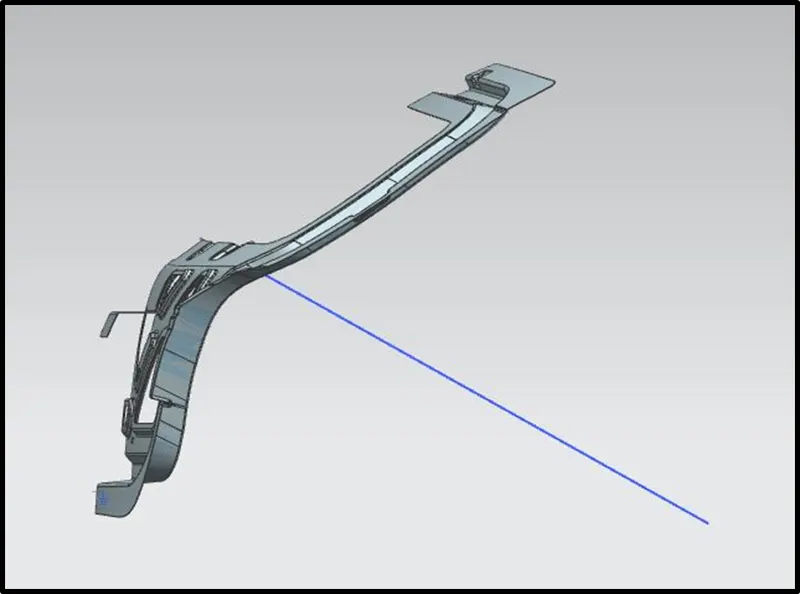
Master section:
The master section provides us with the basic dimensions of the inner panels and its embosses.it also provides the distance of each surface of the inner panel from the outer class a surface of the backdoor. These dimensions must be strictly followed to ensure there is no interference between components during the final assembly process
Latch trajectory:
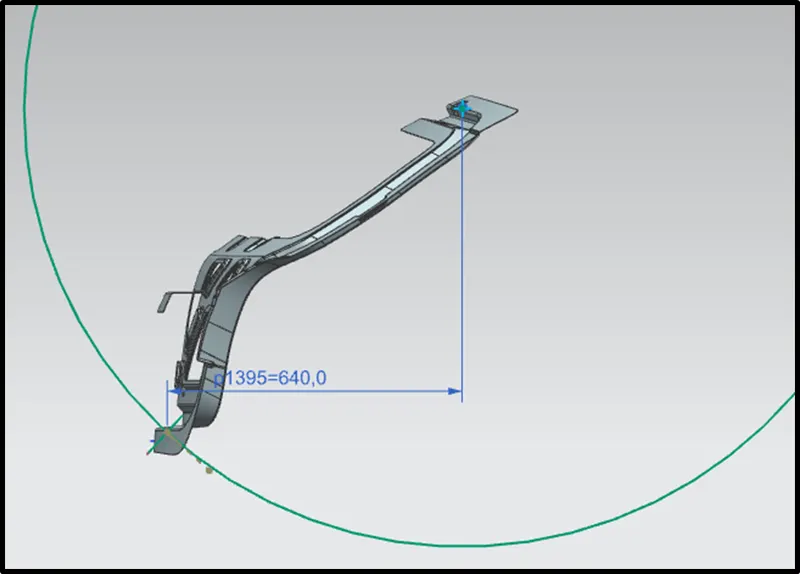
The latch trajectory is the path along which the striker moves during the movement of the backdoor. It provides us the opening and closing angle of the backdoor and also helps in the placement of the locking mechanism in the tailgate area which will engage with the striker. The following steps are followed to create the latch trajectory:
- First and foremost the hinge emboss is created and is then mirrored along the centre plane
- A line is created which passes through both the hinge embosses. This line is known as the hinge axis
- A circle is drawn from the midpoint of the hinge axis created and it is assigned a radius. On the other hand a tangent line is created for reference
- Another perpendicular line is created form the tangent line which can be used to create the latch and striker emboss
Safety
Safety is one of the most important criteria while designing automobile components and backdoor plays a major role in the safety of the occupants. Keeping this in mind the hood inner panel is designed to ensure maximum possible safety can be achieved
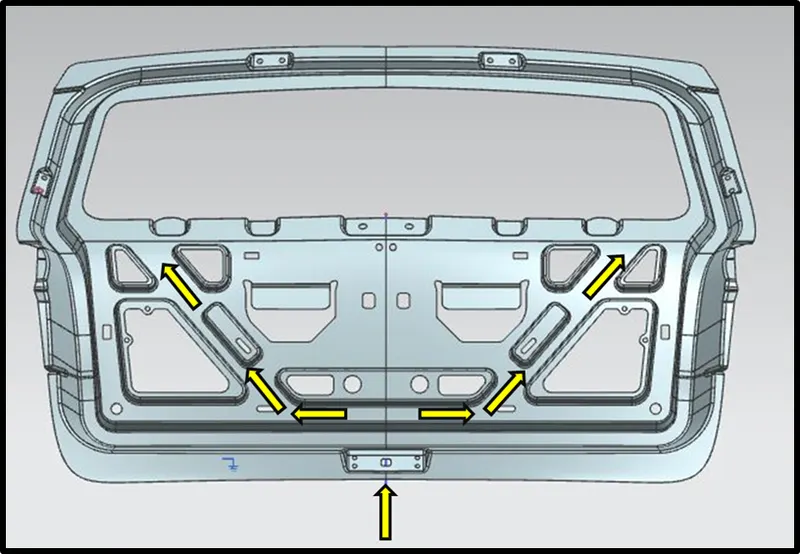
During rear end collisions the backdoor must be able to absorb most of the impact forces and deform itself while ensuring the least amount of forces are transferred to the cabin of the vehicle. Embosses are provided in the inner panel which help deflect the forces acting on the backdoor towards the hinge assembly. This ensures that the most of the impact force is transferred toward the structure of the car so the occupants in the cabin do not experience it, thus decreasing the chance of injuries and fatalities
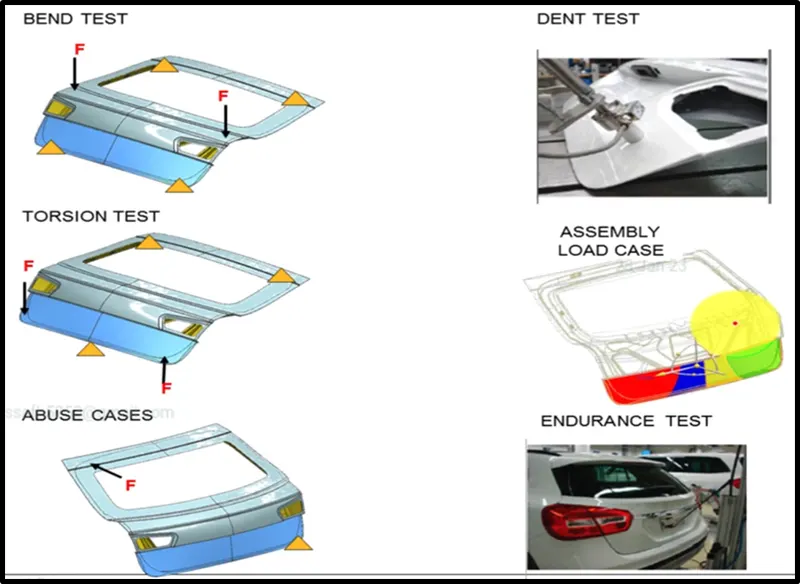
Several testing is also done on the backdoor to analyse the various forces and impacts during rough opening and closing of the door.
Design for manufacture:
Draft angle:
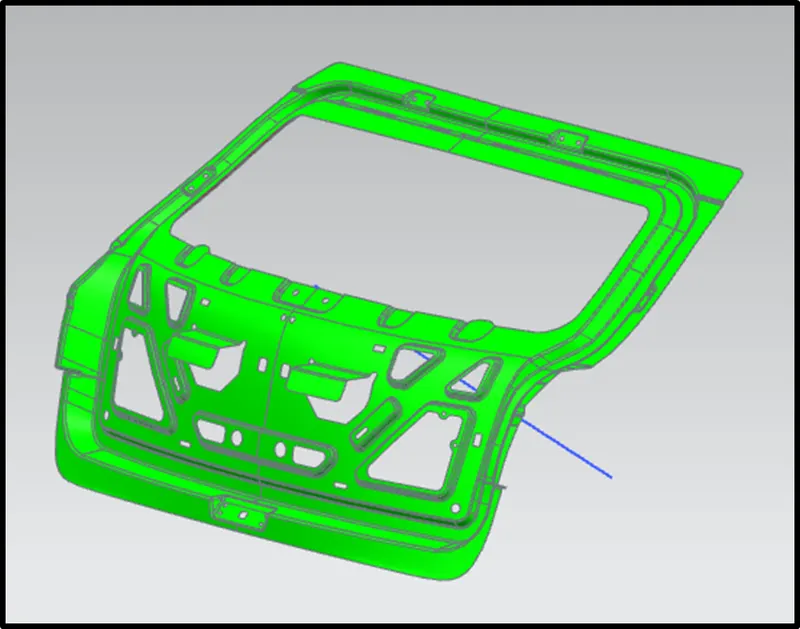
Positive draft angle is provided over all the surfaces of the inner panel to facilitate easy separation of the part and tool and reduce any chances of damage to the part during ejection. In most cases a minimum draft angle of 7 degrees is required for sheet metal components to ensure no problems occur during the processing of the sheet metal.
Mastics:
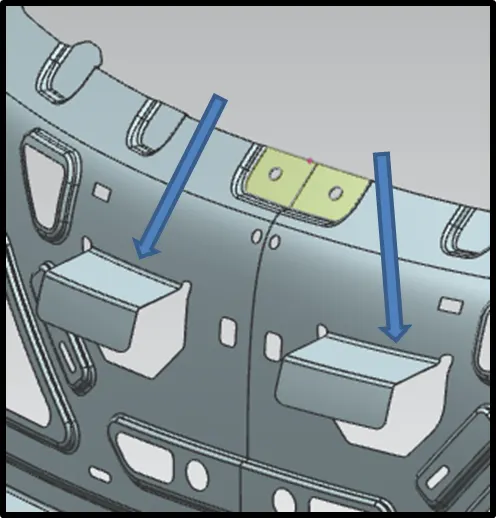
Mastic sealants are basically gluing agents placed between the inner and outer panels of the backdoor. They are initially in liquid state when applied and are solidified once they are heated in the in the hot furnace. Mastics help increase the stiffness of the area in which it is placed and it also helps in reducing the NVH.A single mastic sealant covers a diameter of 80 mm and hence based on this the positions for mastics are decided and placed. A mastic flange is especially designed in the backdoor inner panel to apply mastics.
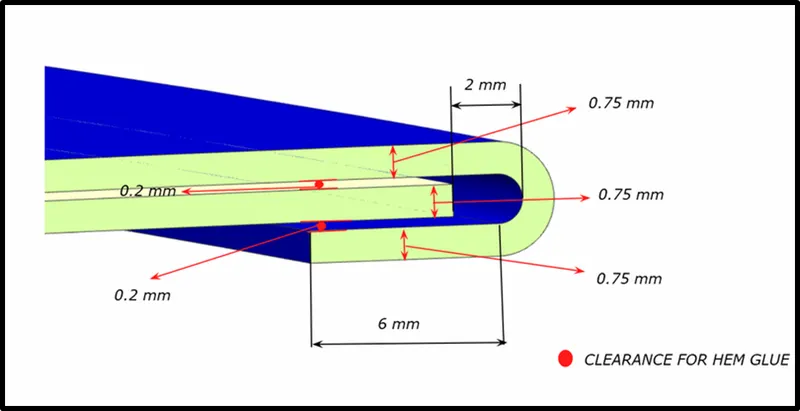
Hemming:
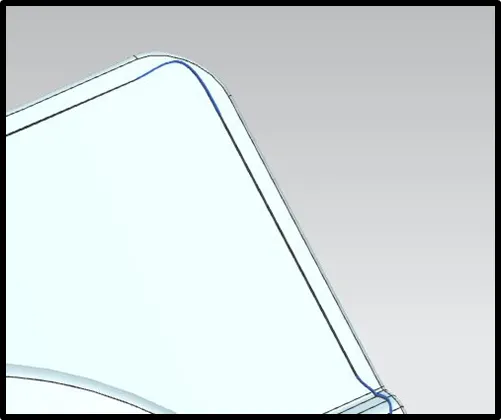
Hemming is a forming operation in which the edges of the sheet are folded or folded over another part in order to achieve a tight fit. In car part production, hemming is used in assembly as a secondary operation after deep drawing, trimming and flanging operations to join two sheet metal parts (outer and inner) together. The edges of the outer panel are folded and wrapped around the inner panel to join them together.
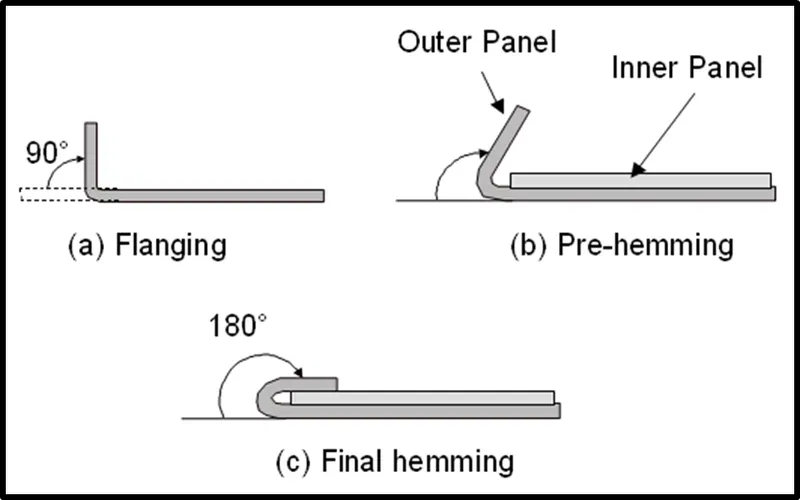
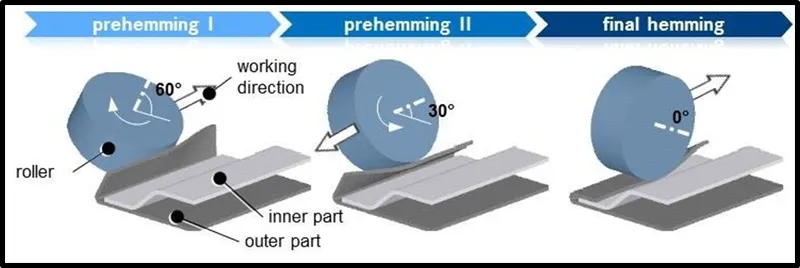
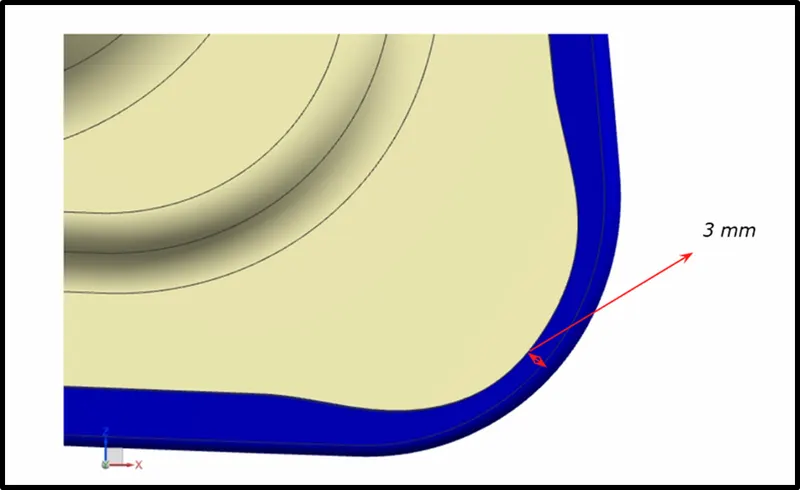
Hemming operation has a great influence on the surface and dimensional accuracy of the sheet metal and hence precise hemming operation is necessary to obtain the best possible finish. Hem reliefs are provided along the curved areas of the backdoor ensuring the hem is tightly secured along the edges without any damage due to stress caused near the curved areas.
Ergonomics:
Ergonomics is one of the most important factors considered while designing automobile components. In case of a backdoor the opening and closing angle as well as the maximum height of the top portion of the backdoor from the ground are the major considerations taken before starting backdoor design. It is very important to make sure that during the open condition the backdoor or the striker should not hit the head of the person who is operating it and hence it must be considered. These considerations are based on standards which defer from country to country and they must be adhered by the manufacturers while designing the hood
Material:
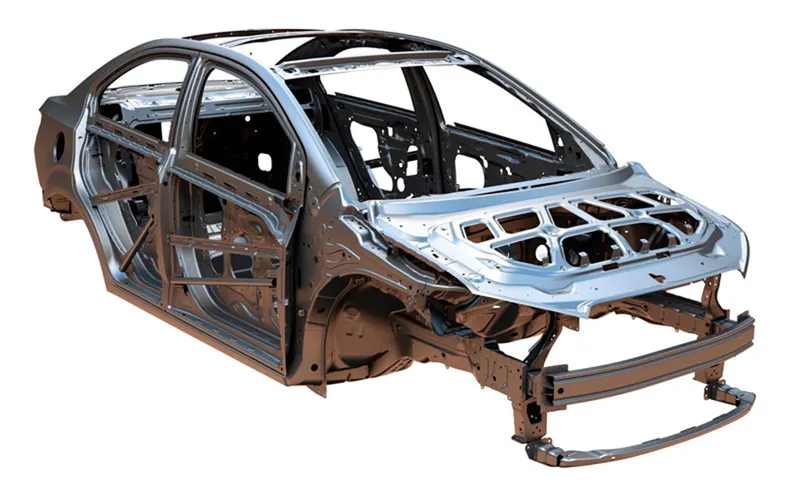
Material selection is one of the toughest and most important criteria for any product since it has a direct impact on the overall cost, safety, manufacturability, recyclability and the weight of the final product. Car backdoors are typically constructed from steel and sometimes from aluminium. Aftermarket car backdoor may be constructed from various other materials like CFRP (Carbon Fibre Reinforced Plastic) which is very light in weight and a vastly used in material in the field of motorsports.
Aerodynamics
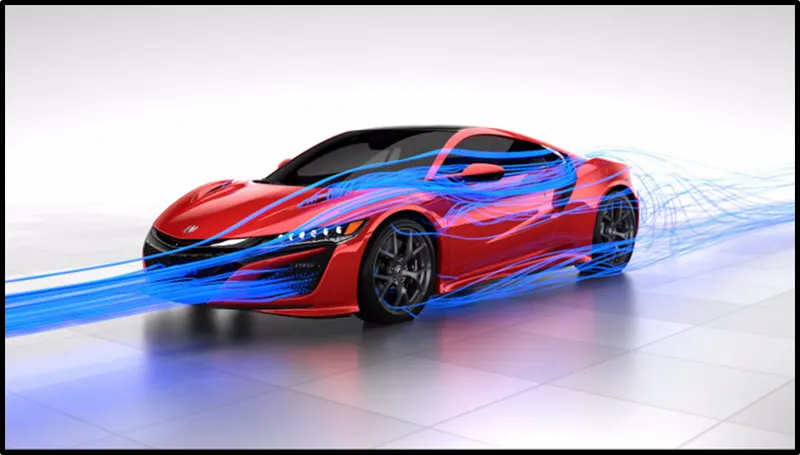
The backdoor is the area where the air from the roof and the under body start to come together and It is very important that the air stays attached in order to prevent form drag which can be observed in box shaped vehicles. This has a direct impact on the overall efficiency of the car and hence it is a very important aspect to be considered during the hood design
Styling
Aesthetic look of the car is enhanced by the backdoor and the tail lights and hence a lot of importance is given to it while designing to make sure all functional aspects are satisfied without disturbing the aesthetic looks. The aesthetic look of the backdoor is decided by the styling team and it may require some changes based on the feedback provided by the engineering team.

Commonly used sheet metal operations:
Shearing:
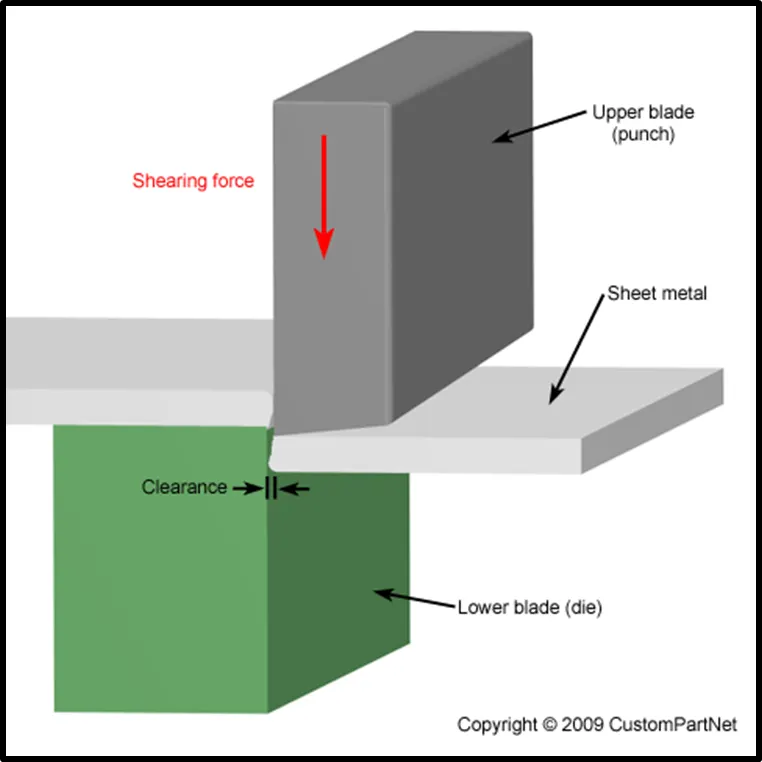
Shearing is performed by slicing through a piece of sheet metal with a blade that’s most often affixed to a tool or machine. The location of the cut is controlled by a squaring arm that allows a sheet of metal to be placed in a precise location.
Once the sheet metal is placed with the squaring arm, the top blade is lowered and compresses the metal against a lower blade, creating an exact cut.
Blanking:
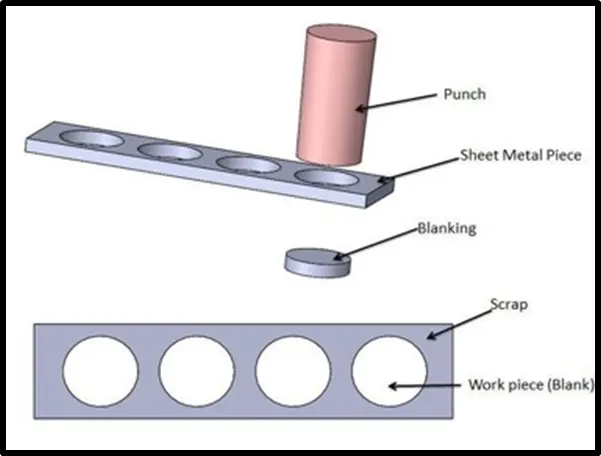
Blanking is a metal production process, during which a metal work piece is removed from the primary metal strip or sheet when it is punched. The material that is removed is the new metal work piece or blank. The metal strip is now the scrap.
Punching:
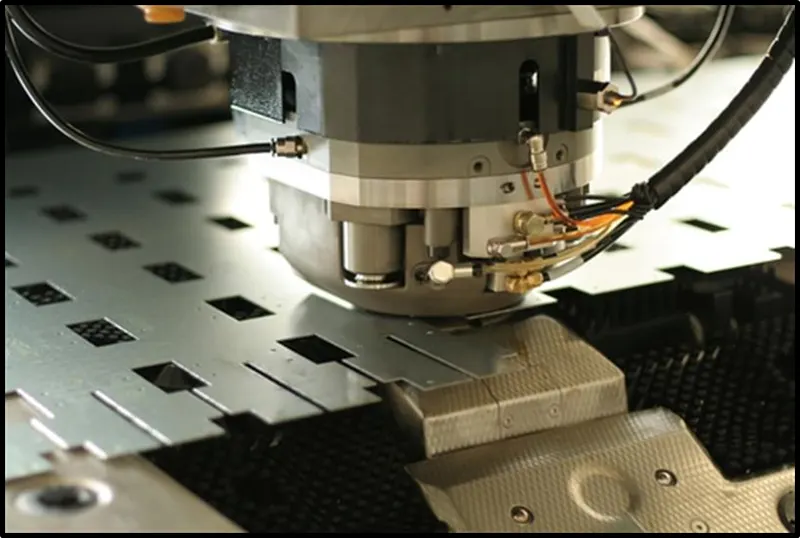
Sheet metal punching is a cutting process in which material is removed from a piece of sheet metal by applying a great enough shearing force. CNC Punching can be used to produce holes and cutouts of various shapes and sizes
Piercing:
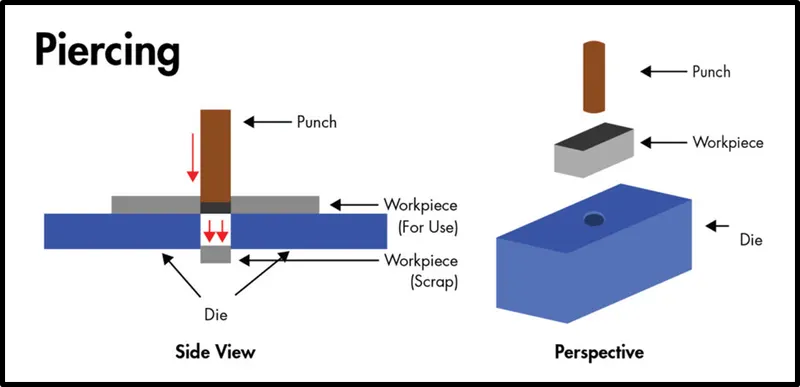
Piercing is a shearing process in which raw metal is pierced with a machining tool, resulting in the creation of a circular or other shaped hole. As the raw metal is pierced, the metal from the newly created hole is considered scrap
Deep drawing:
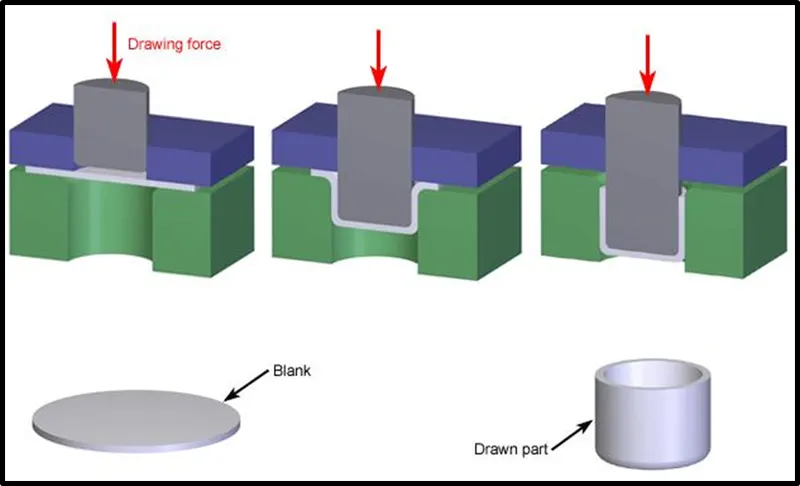
Deep drawing is a sheet metal forming process in which a sheet metal blank is radially drawn into a forming die by the mechanical action of a punch. It can also be called as a shape transformation process with material retention. The process is considered "deep" drawing when the depth of the drawn part exceeds its diameter.
Embossing:
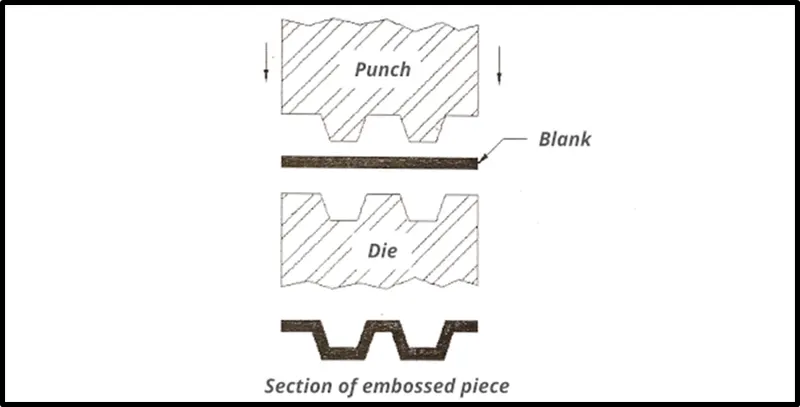
Metal embossing is used to impart a design of different profiles upon metal sheets. The metal is pushed with an embossing tool or a punch in order to create a raised effect on the opposite side
Final assembly:
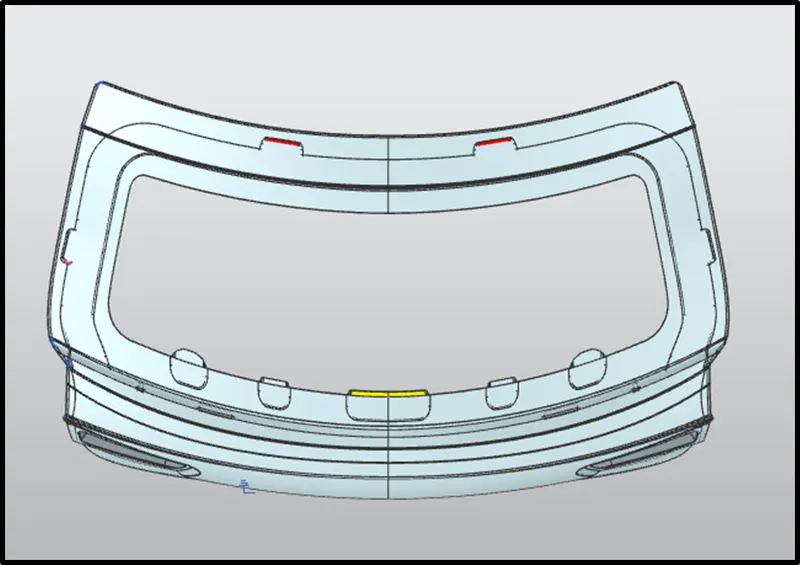
Top view
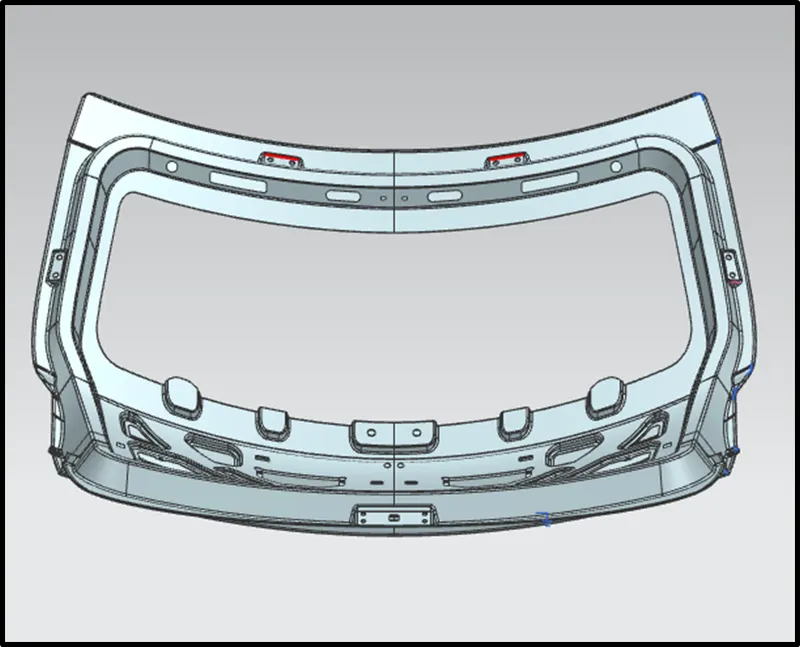
Bottom view
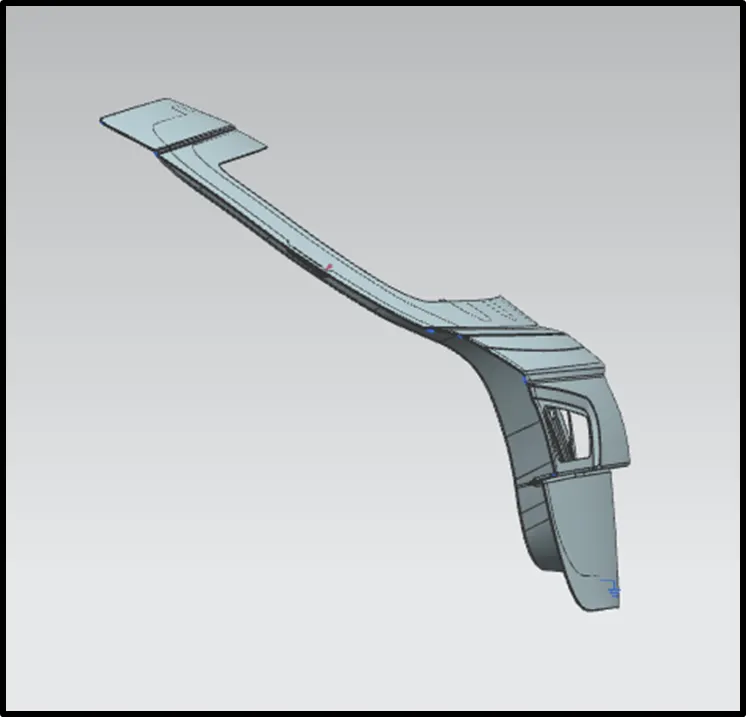
Side view
Front view
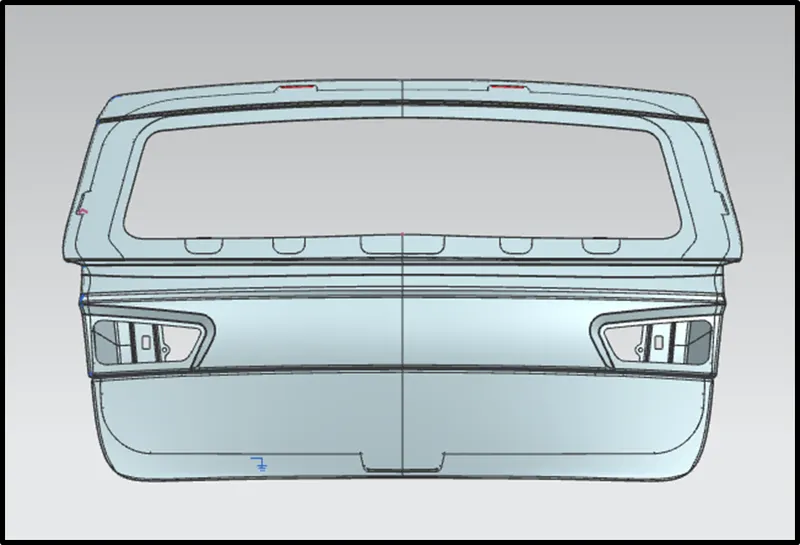
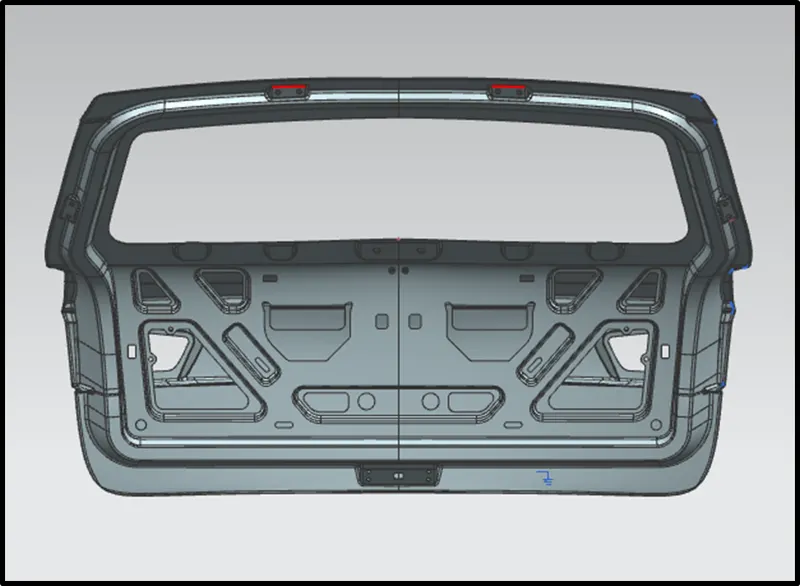
Back view
Isometric view
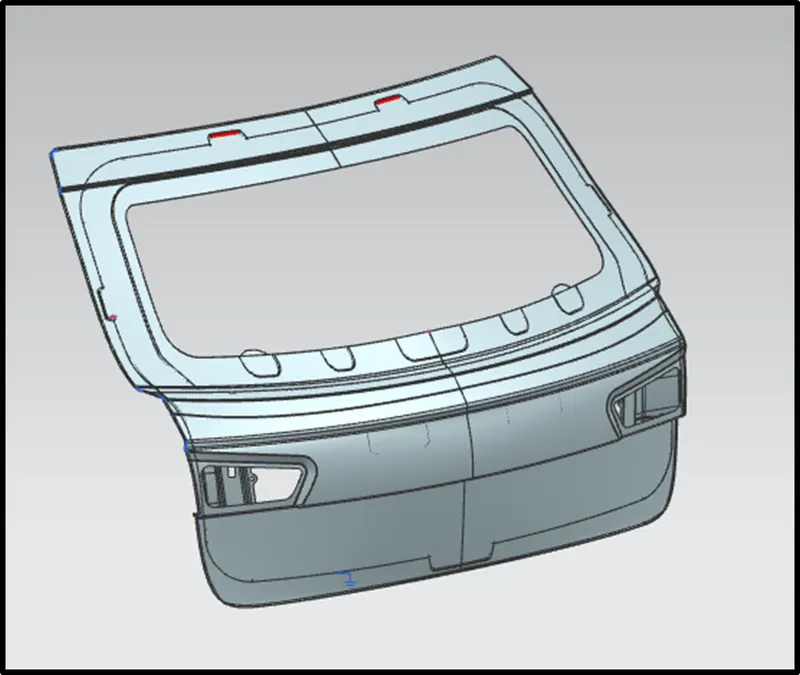
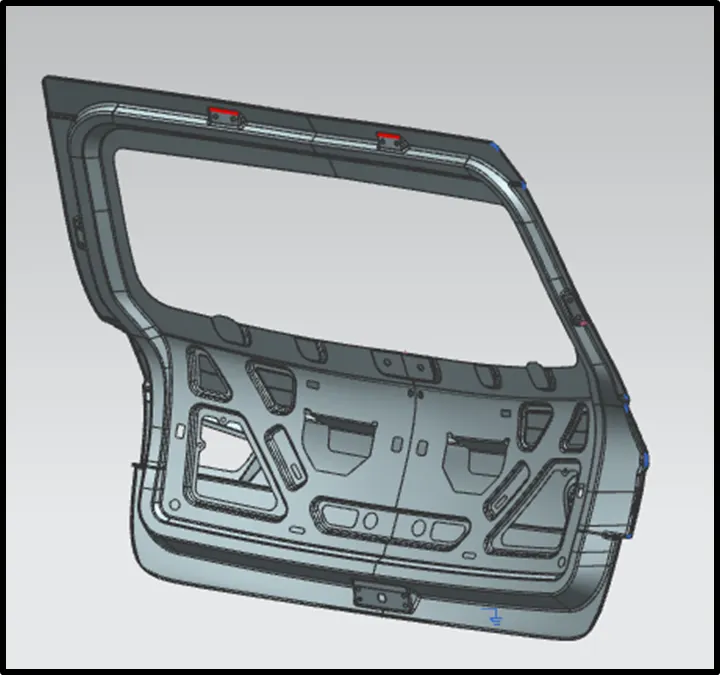
Conclusion:
- The given class A surface is repaired and is checked for any surface irregularities
- The inner and outer panel of the backdoor is designed from the given class A surface
- Various design aspects required to design a proper backdoor have been considered
- Latch trajectory for the striker has been created
- Reinforcements for the hinge, gas stay, wiper motor and latch mountings are created
- An assembly of all the components has been created