Design of backdoor
AIM:- To create a backdoor design by using a given CLASS A surface & by following a appropriate design methodology.
OBJECTIVE :-
- Use the provided styling surface to come up with a back door design, use appropriate design methodologies and provide the necessary reinforcements and embosses. Need to include all Part files and assembly file as a zip file along with the report.
- Develop a detailed report for the Back door design by explaining the design methodologies and about the components developed in the design 15
- Perform Draft Analysis along the tooling direction and include the snapshot in the report 10
- The report should be well formatted and should have a good flow of content. Add all the relevant images in the answer box provided
INTRODUCTION-
Backdoor are one of the type of door of the vehicle which are located next to the passanger seat which provides access to the luggage compartment. In the most of the cars, these back door are operated with the help of gas stay which in turn reduces the effort required to lift the door. It is located next to the rear passenger seats and it gives access to the luggage space by opening it in an upward direction, it is also called a trunk compartment as it provides space for storage of goods and luggage. If the rear door is mounted on top then it is called a tailgate, it is mostly used in station wagons, Sport utility vehicle and hatchback-type cars.
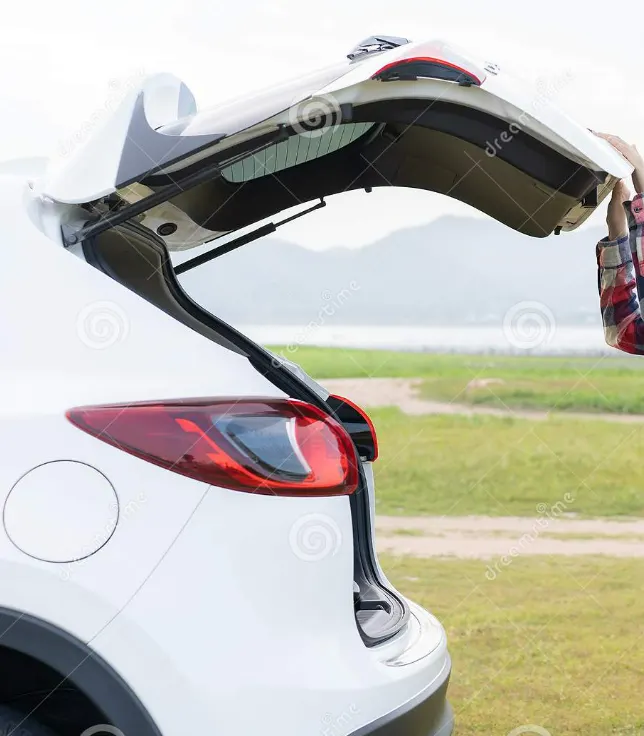
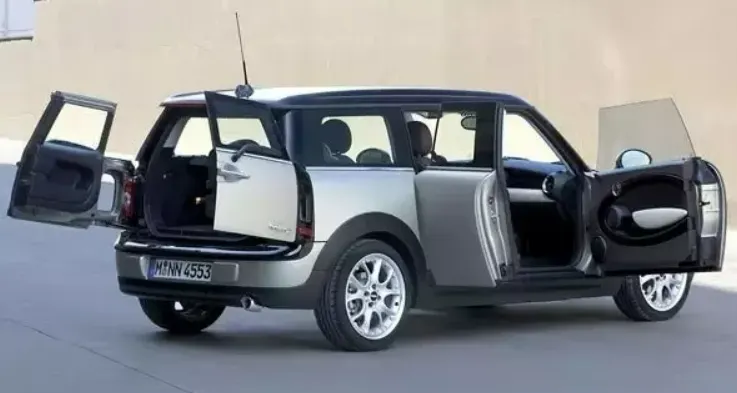
- Types of door based on opening/closing condition
- Side-mounted
- Top-mounted
- Bottom mounted
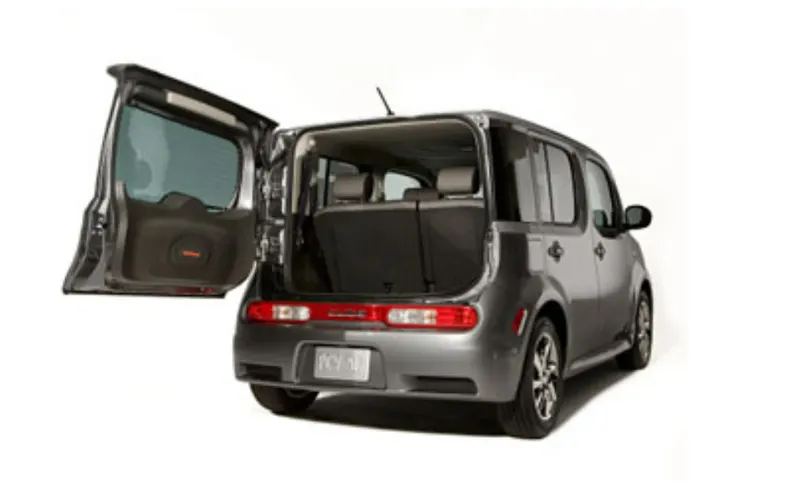
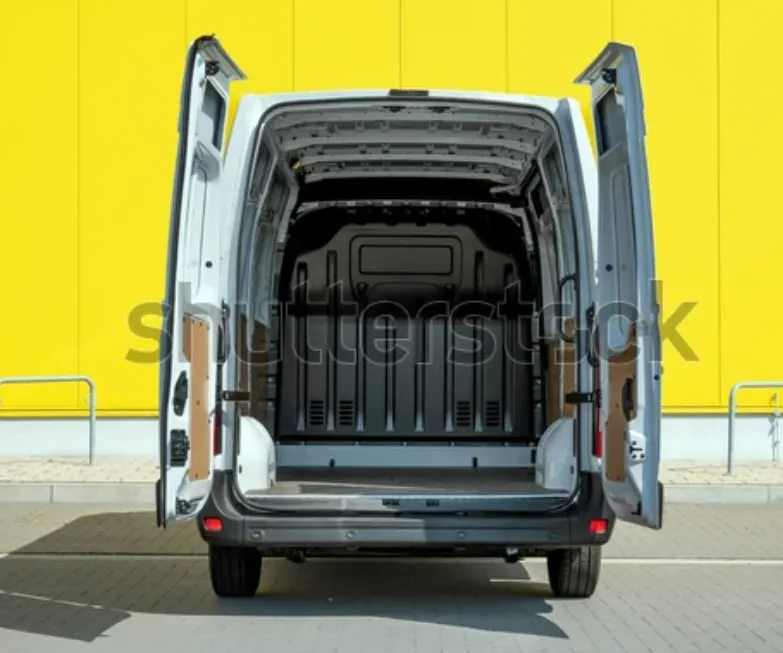
Side mounted door:
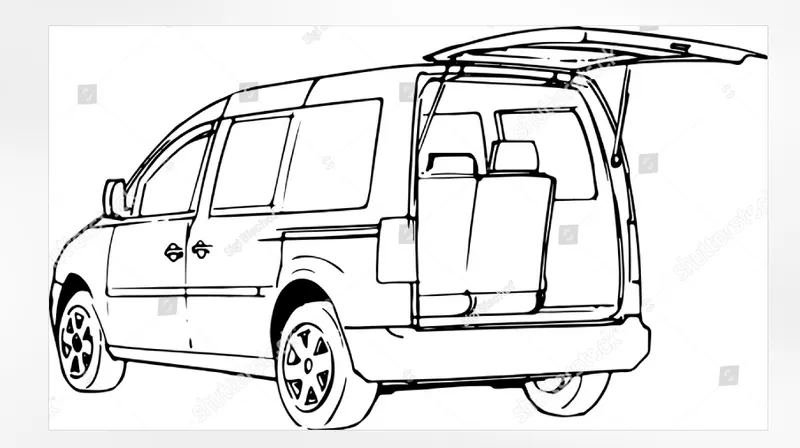
A side mounted doors are the one which is used in the van type MPVs, SUVs, pickup truck vehicles. These type of doors are easier to operate as compare to top mount door. These door are smaller in size as compare in top mount so it san be easily accessed. These types of doors are more convient to handle the handle. It is easir=er to load and unload items in a side mounted door.
Top Mount Door:-
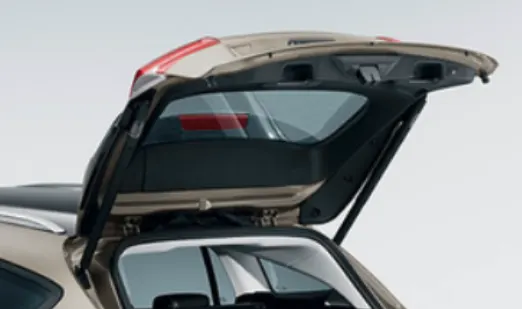
This type of back doors is used in a station wagon, pickup trunk and some of the sport utility vehicles. Today's modern cars use top mounted tail gating system which are both powered and also gas stay supported. These top mounted tailgates provide greater rear visibility compared to side mounted or backdoor which have center pillars in it.
Bottom type:
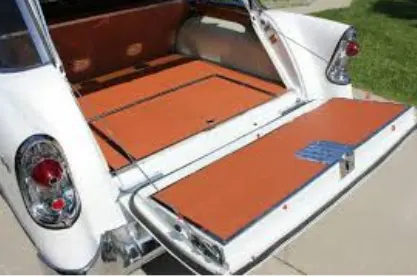
This bottom type backdoor system are used in the car type such as car, pickup truck and some luxuary SUVs. These are the most convenient type of back door in which the bottom split is used as a support or even as a table for the tour going people.
Manufacturing process:-
Backdoor is a BIW component which is generally manufactured by metal forming process. There are no. of manufacturing process used for metal forming that are bending, forming, stamping, forging, extruding, embossing, etc.
Mostly stamping is used to produce the door panels, here a die and punch are used in a press machine and a component is manufactured in a single or multiple presses. In this method there is not require separate tools to manufacture the component and also it is less time consuming and requires less material for the part which is to be produced with precision and accuracy.
In a forming of sheet metal there is important process are-
- Bending- To bend The with some angle by using a force
- Drawing - To produce a vessel shaped or thin walled hollow parts from workpiece
- Squeezing - To perform reduce the overall thickness
- Cutting - To cut a sheet
There are no. of operations are used for sheet forming in under these operation
- Cutting Operation
- Punching
- Blanking
- Perforting
- Shearing
- Trimming
- Notching
- Slitting
- Cutting off
- Pating off
- Slotting off
- Lancing
- Bending
- Straight Fanging
- Shrink Flanging
- V Bending
- U Bending
- Offset Bending
- Metal Spinning
- Dimpling
- Doming
- Necking
- Embossing
- Hemming
- Curling
JOINING TECHNIQUES USED IN SHEET METAL
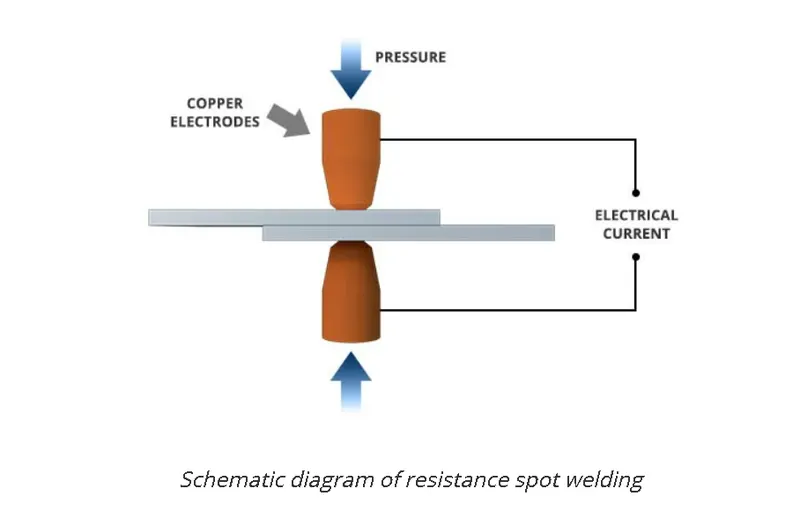
In a sheet metal a mostly s Resistance welding used, this joining process is done by applying pressure and passing current for a length of time through the metal area which is to be joined. The key advantage of resistance welding is that no other materials are needed to create the bond, which makes this process extremely cost effective.
There is such type of resistance welding and each one has different specific welding application-
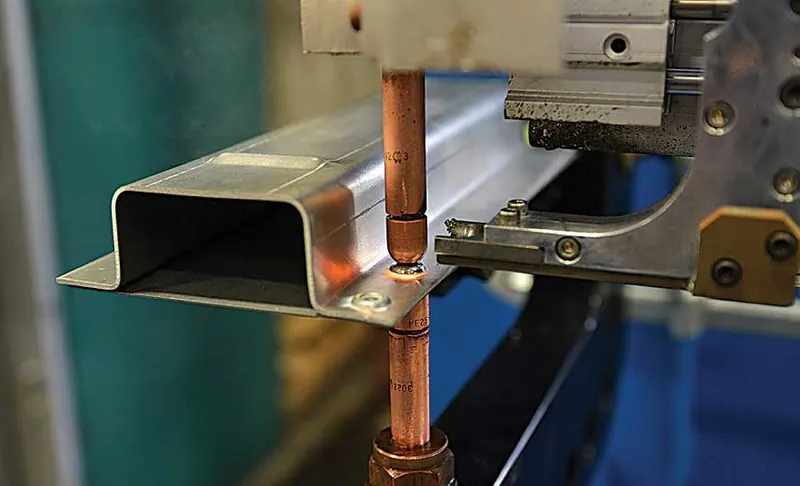
Spot Welding
Spot welding is mostly used in a automotive industry for joining of a sheet metal. It is the oldest method that is used in undustry in this two or more sheet metal are join together with/without filler material.
The process involves applying pressure and heat to the weld area using shaped alloy copper electrodes which convey an electrical current through the weld pieces. The material melts, fusing the parts together at which point the current is turned off, pressure from the electrodes is maintained and the molten “nugget” solidifies to form the joint.
The welding heat is generated by the electric current, which is transferred to the workpiece through copper alloy electrodes. Copper is used for the electrodes as it has a high thermal conductivity and low electrical resistance compared to most other metals, ensuring that the heat is generated preferentially in the work pieces rather than the electrodes.
The amount of heat depends on the thermal conductivity and electrical resistance of the metal as well as the amount of time the current is applied
Seam Welding
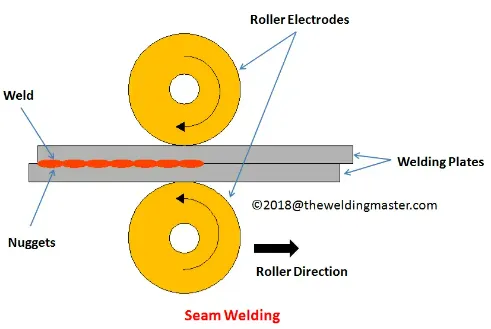
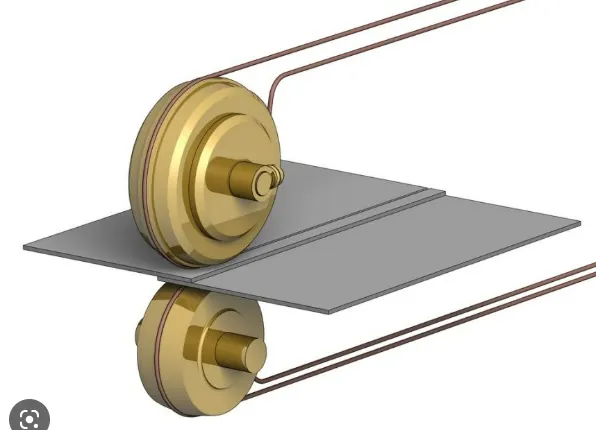
Seam welding is a process of joining of sheet metal made of similar or dissimilar materials along a continuous seam. This process is same as spot welding the only difference is here we used a rolling disc shaped electrode wheels for create a continuous welding . Resistance seam welding can either use an intermittent motion, where the speed of the roller is not predetermined, or continuous motion seam welding where the speed of the electrode roller is predetermined before the current is supplied.
In a seam welding there is no need to use a filler materials to make the join. This is fully automated process but for maining a roller speed a create a best joinig need a highly professional operator.
Materials Selection:
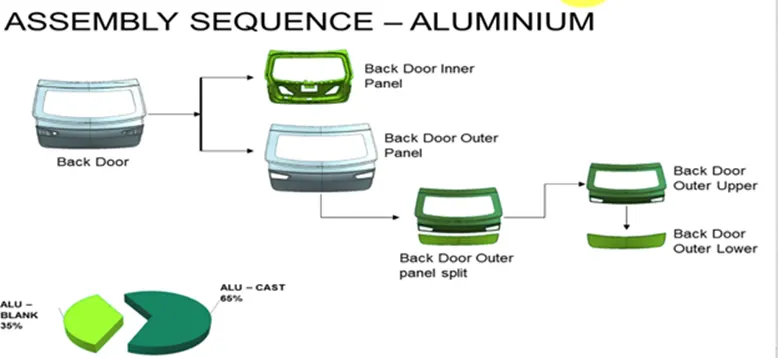
Material is more important thing for manufacturing of a BackDoor , major role of a material is for determining a weight of it. Normally 2 type of material mostly used in a manufacturing of backdoor that is Steel & Aluminum. Here the Steel has more density than aluminum so i.e steel has a more weight than aluminum. And the cost of aluminum is also more than steel.
Material selection is depends upon the budget of the car, A low cost vehicles mostly uses steel and because it is cheaper as compared to Aluminum.
In a manufacturing of backdoor by steel there is deep drawing process is used so here we need a reinforcement but in case of aluminum, it is manufactured by using a casting so there is no need of using a reinforcement.
Benefit of using a aluminum, it increase performance of vehicle, reduce weight, no need of reinforcement and use less no. of component.
Possible number of parts in backdoor -
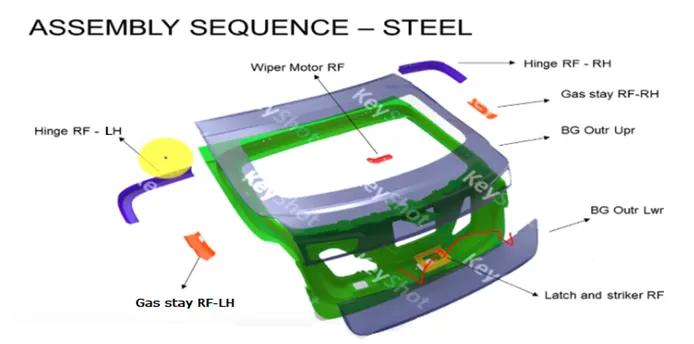
Comparisoin between Aluminum & Steel
|
Aluminium |
Steel |
|
|
Parts |
Parts are casted |
Parts are stamped |
|
Reinforcements |
Reinforcements can be neglected |
Reinforcements are necessary |
|
Thickness |
Thickness can be varied |
Thickness should be uniform |
|
Weight |
Lighter in weight |
heavier in weight |
|
Cost |
Costly as compared to Steel |
Cheap as compared to Aluminium |
|
No. Of components |
Less No. of components |
More No. of components |
Different Parts of the Back Door: -
- Outer panel
- Top outer Panel
- Bottom outer Panel
- Inner panel
- Wiper motor reinforcement
- Gas stay reinforcement
- Hinge reinforcement
- Latch/striker reinforcement
- Hemming
Outer Panel
The outer panel is a visible part of a car from a outside it is responsible for aesthetic of vehicle. A coating has been done on outer panel for make is scratch resistance, rust proof and for good aesthetic finishes. Outer panel connected to inner panel by hemming at the edges and by mastic sealant in center. Outer panel also have tail lamp, rear fog lamp, wiper motor & number plate mountings. We are consider our outer panel in two part top outer panel & bottom outer panel. Thickness for outer panel is 0.75 mm.
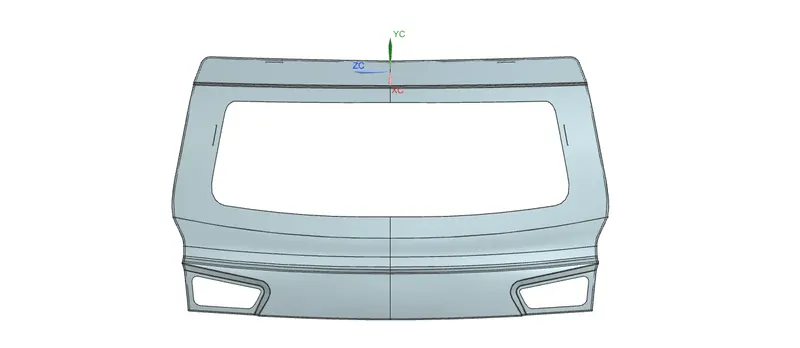
fig. - Top Outer Panel
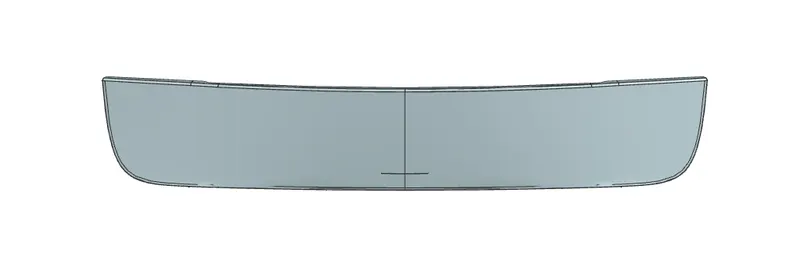
fig. - Bottom Outer Panel
Inner Panel
The inner panel, as the name suggests, is the inner part of the door.the main purpose of the inner panel to provide astrength in a door. It is a important part because all the mounting are fix on it i.e. hhinges, support rod, wiper motor, all reinforcements etc. Two different material can be used for panel manufacturing like aluminum or steel. Both have different process of manufacturing. Thickness of inner panel is 0.75 mm.
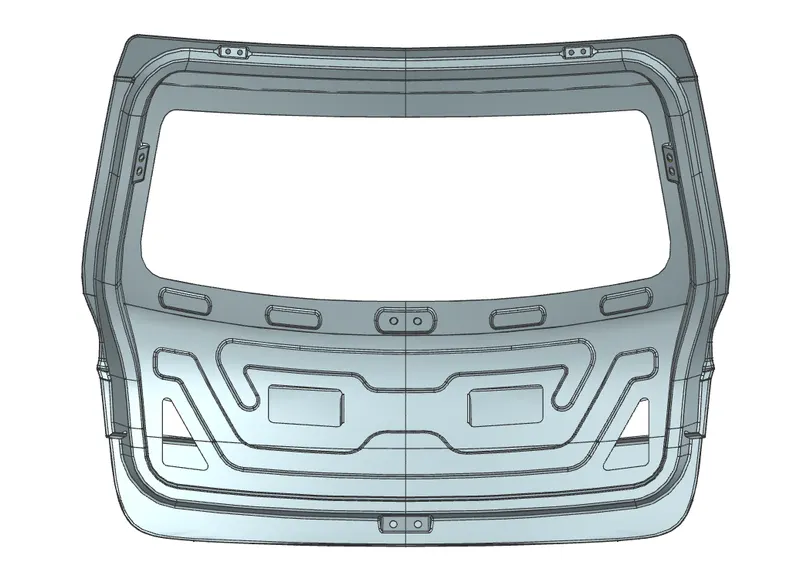
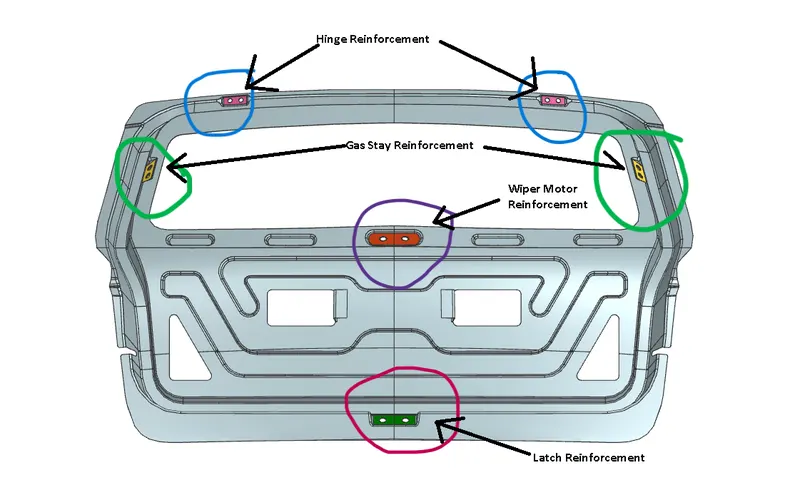
Reinforcements
Reinforcements is a extra material which add in a sheet metal part to increase its strength near component installation and also for minimize the collisions impact. Thickness of all reinforcements is taking as 1 mm.
In our component four reinforcement created-
- Hinge Reinforcement
- Gas Stay Reinforcement
- Wiper Motor Reinforcement
- Latch Reinforcement
Mountings:-
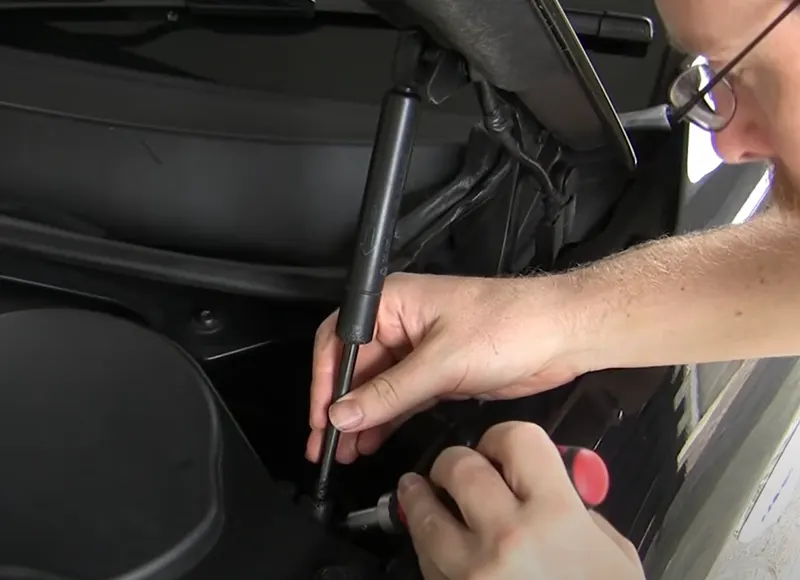
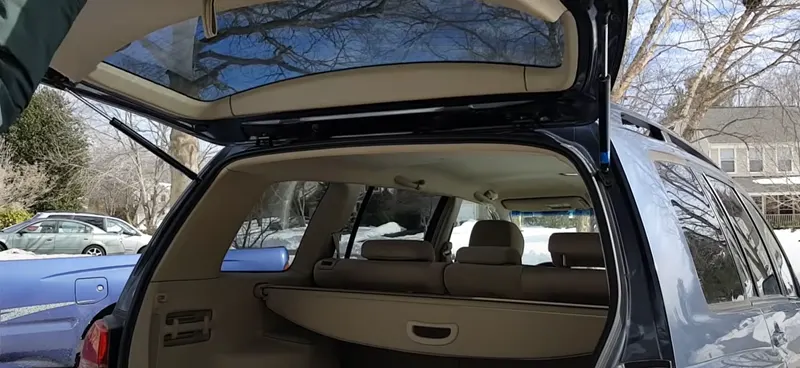
Gas Stay
Gas stay is basically a gas spring that relies on elastic deformation of a compressed gas which is enclosed in a cylinder. It is used to reduce required effort while opening the back door. A gas stay mostly used in tail gate mechanism from lower segment car to luxury segment car.
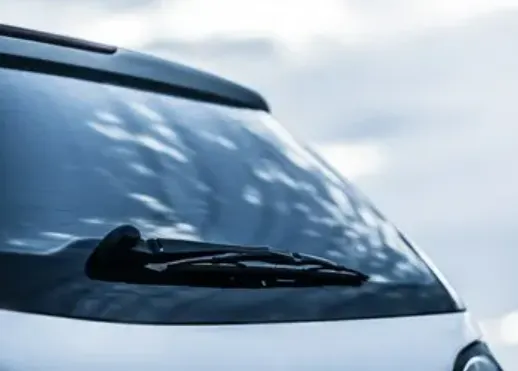
Wiper and wiper motor mounting
A wiper is used to wipe off the dust and water from the rear wind shield glass of the vehicle.
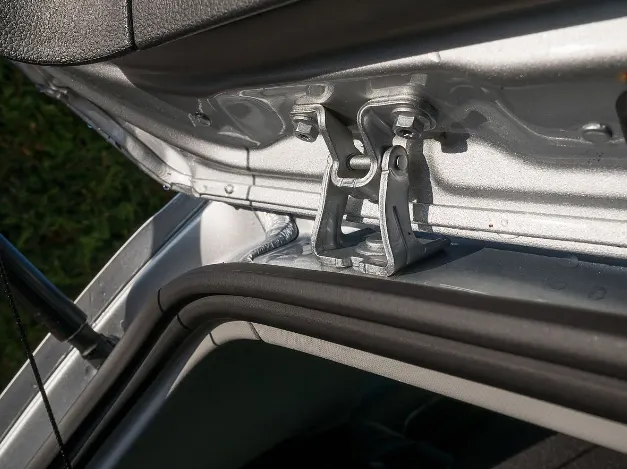
Hinges
Hinges connect the door with the vehicle body and allow the door to rotate around a fixed axis for opening and closing movement. Generally, hinges are a 2-part assembly, where one part is bolted to door and other is bolted to vehicle body.
Latch and Striker:
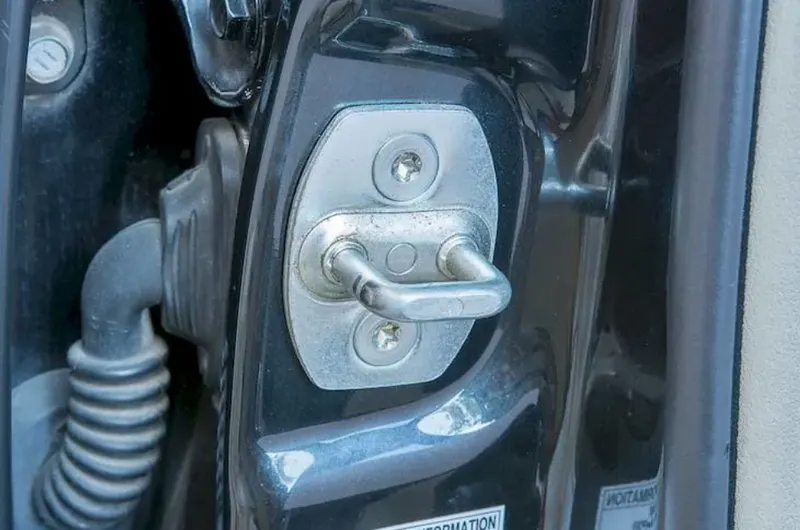
The Latch & Striker is a locking mechanism of the car door with the car. A striker has a U shaped clips that hold the door. There is a regular opening& closing of the backdoor do due to this a more stress is developed in this area. To compensate for the same, reinforcements are added in this area.
Hemming Operation:
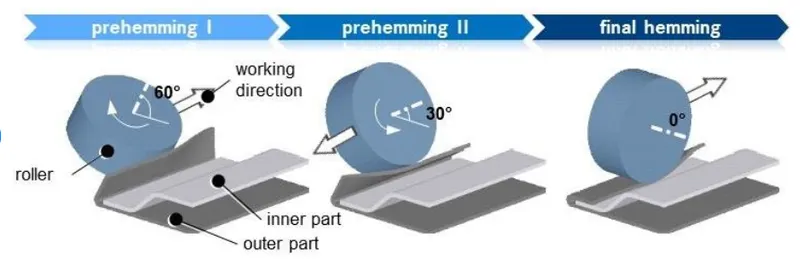
Hemming is a mechanical joint design which is used for joining inner and outer closure panels as To increase crash resistance the gap between the hemmed panels is filled with a high-strength adhesive which also prevents from corrosion.
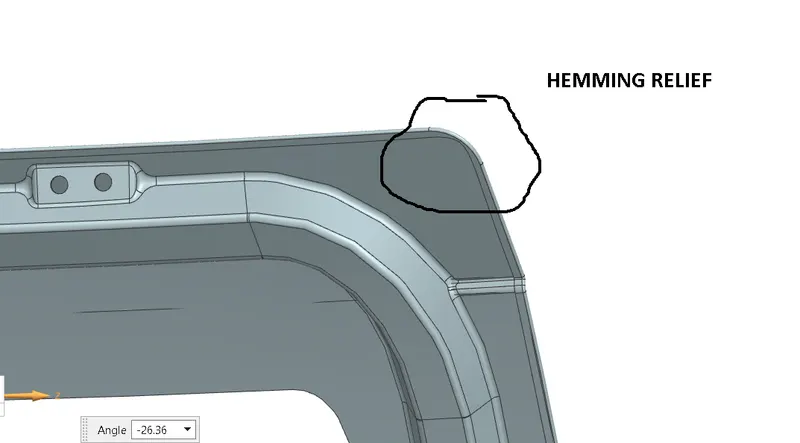
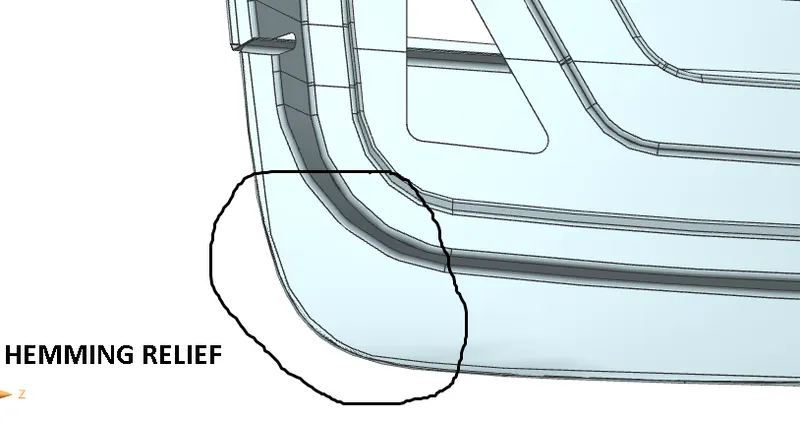
Hemming relief:
Hemming reliefs are cut-outs which are provided on the hemmed corner of the panel assembly which in turn to avoid some of the hemming defects such as wave-like OR wrinkle formed surface. During hemming process multiple rollers are used which causes vibrations and stress concentrations at the some locations dur to it there can be a spring back effect in rolling process. So at a corners a relief is provided for this situtation.
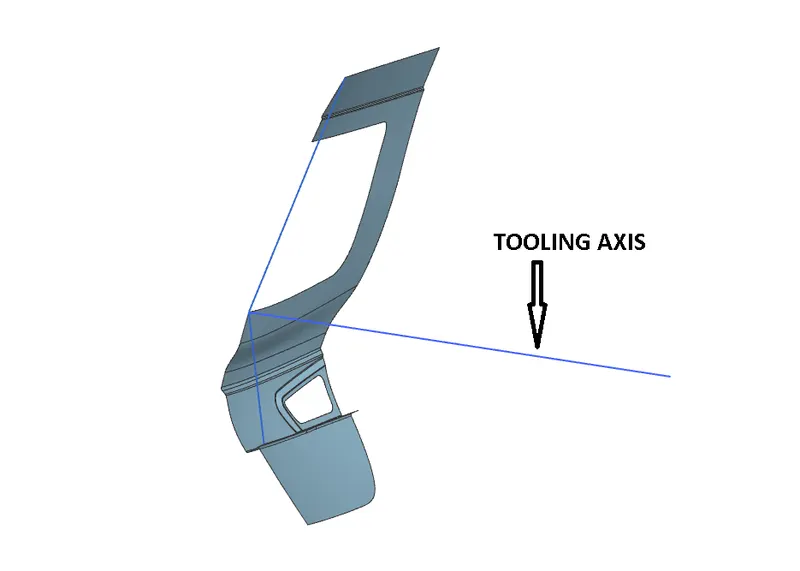
Tooling Axis:-
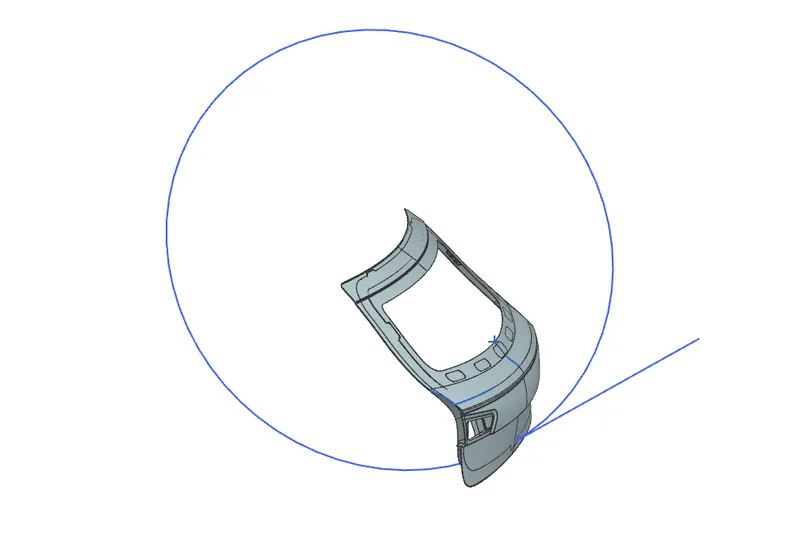
In a sheet metal forming there is a punch and die, Punch is move in a straight direction so a tooling axis basically a direction of moving a punch.
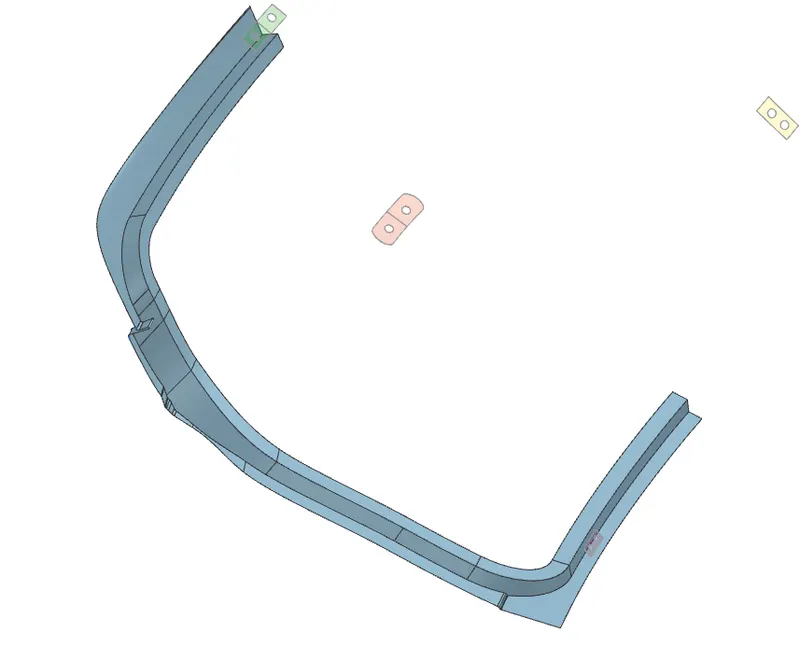
Sealing Flange:-
A sealing flange is a section which is fix on main body in a close condition of a door and it also for stop a water to comein in a car. A rubber is also provided in outer side to prevent rain, mud, dust from outside into a cabin.
Emboss:-
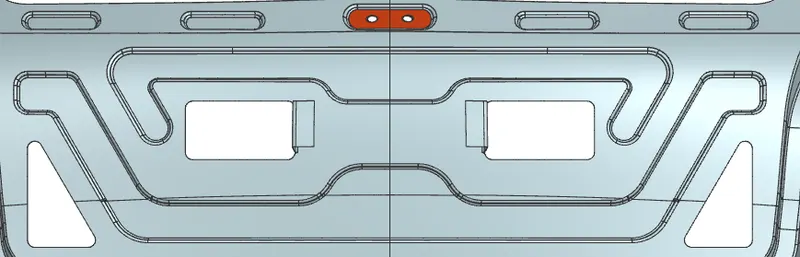
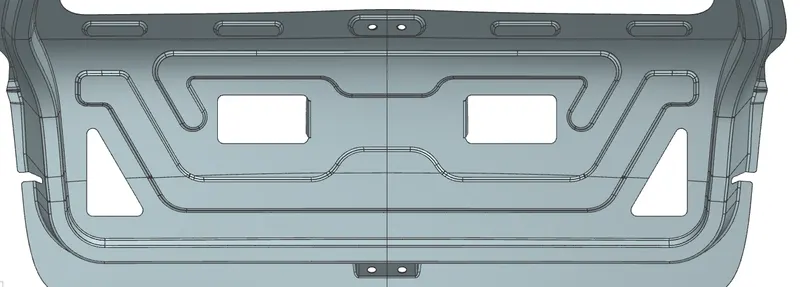
Embosses are provided in a sheets to improve/ add extra strength to sheet metal and in a automobile a emboss is provided for passenger safety. Emboss is created in such a way that, during a colliosion a force will goto in a outward direction. Due to it a less impact force exerted on a passenger body. The minimum angle of embossing is 7 degree.
Mastic sealent:-
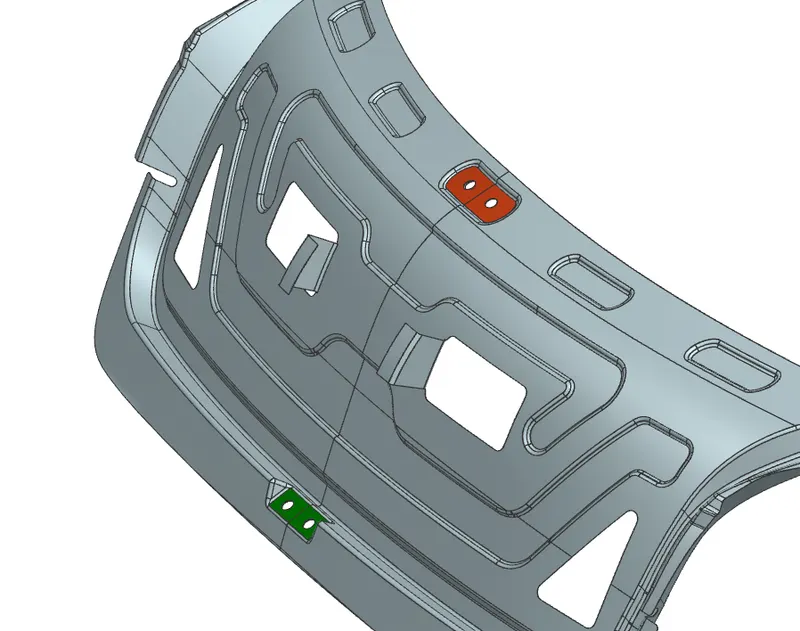
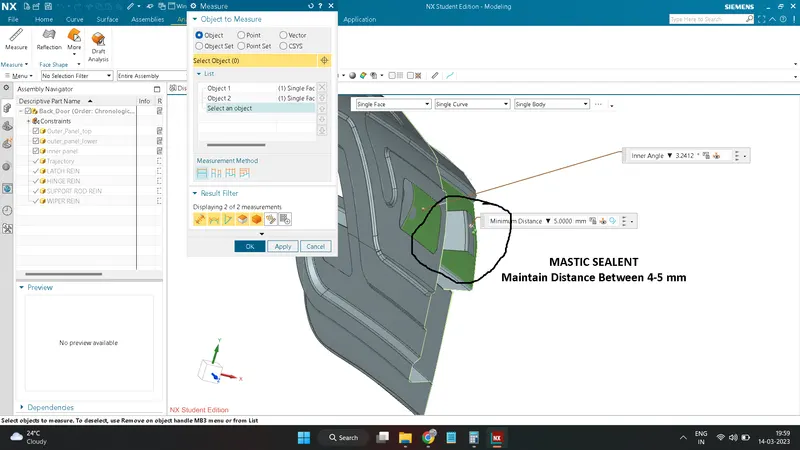
Important role of a outer panel is to provide a asthetic look to a vehicle so in a outer panel we try to ignore use of bolt, rivit or any weld join mechanism. Thus a megnatic sealent is used for joining of outer panel to a inner panel element. there is a maximum 5 mm gap should be provided between parts where mastic is applied.
Important features used while designing:
- Face Blend – Creates fillets between faces.
- Edge Blend – Creates fillets on edges.
- Extend Sheet – Allow you to extend an existing surface to required distance.
- Bridge Curve – It helps to create a tangent blend curve between two objects. The objects may be edges or sketch curves.
- Sew – It is used for joining of two sheet, only condition is there should not be any gap between sheet or overlapping.
- Unsew – It is used to disjoint or separate two sheet bodies.
- Offset Surface – It is used for create a new surface at a given distance.
- Offset Curve in Face – This command will allow you to offset particular edges or curves on selected faces.
- Trim Sheet – It is used to trim a sheet by any face,
- Through Curves – It will allow you to create a body Through multiple sections, where it’s shape changes to pass through each section.
- Law Extension – This command extends a curve or edge to create a sheet body at desired angle length by changing the rules under angle law and length law.
- Wave Geometry Linker – With this you can create, associative or linked copies of any entity of a part into other parts. It may be a surface, edge, curve, body, sketch etc. The changes made to the original entity will be reflected in the copy of that entity.
- Extract Body – It is used to create an associative body by extracting faces, entire body or region of faces.
- Projected Curve – It is used to project an existing curve/curves on a selected plane or surface by selecting a direction for projection.
- Trim Body – It is used to trim one or more bodies using a face or plane. You can also specify the bodies to retain and the bodies to discard.
- Trim and Extend – It helps you to trim and extend intersecting surfaces and make corner at their intersection.
- Emboss – Emboss command creates an embossing by modifying a body with faces created by projecting a curve/section along a direction. You can modify the emboss using options like endcap location and draft angle.
- Mirror Geometry – As name suggests, it allows you to mirror geometries about selected plane or surface.
- Thicken – It is used to convert a surface to solid body by providing thickness.
- Extrude – It helps you to create a feature from a sketch. You are also able to create thin feature using a sketch or curve under this command.
Draft Analysis:-
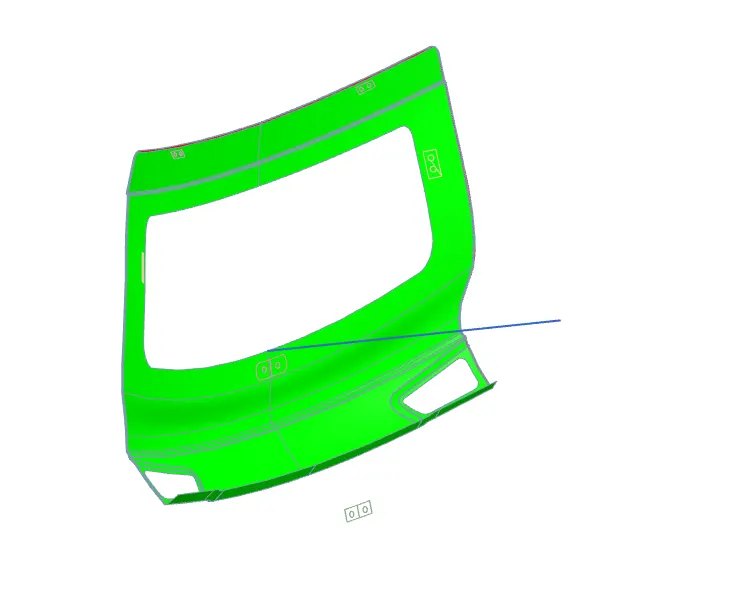
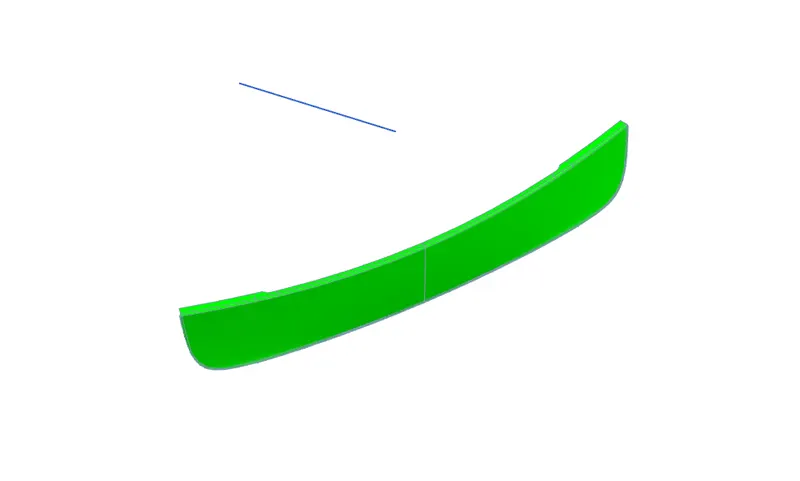
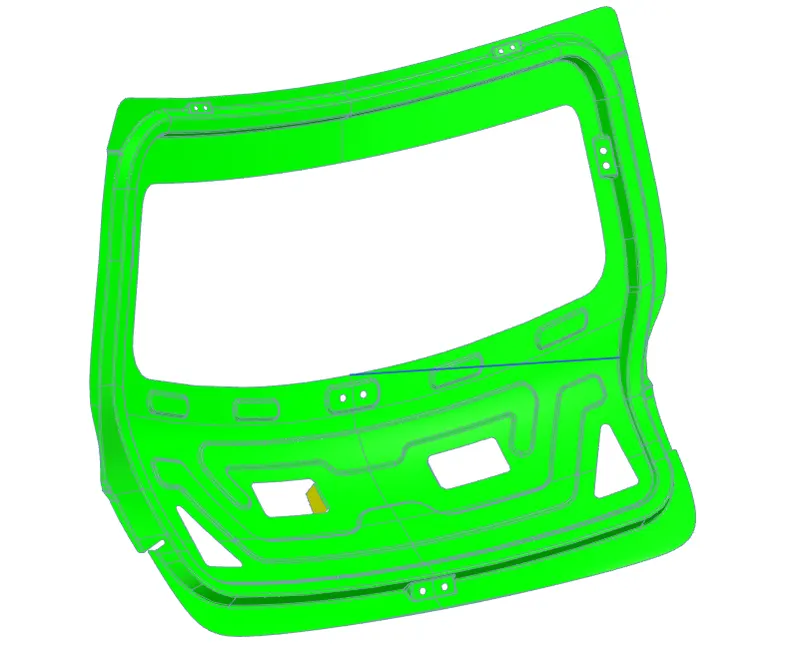
Every part which is manufactured from press tool or other forming tools require some positive draft on the faces which are parallel to the tooling direction. If we don’t give draft (Zero Draft) or give negative drafts on these faces it will stick to the mould surface and when the mould is in motion it will destroy surface thus reducing its surface finish. Thus Draft Analysis command enables us to detect if the part we have drafted can be easily ejected or not. It also give insights about the critical zones, so that appropriate changes in the design can be made if needed.
Draft Analysis of Top Outer Panel:-
Draft Analysis of Bottom Outer Panel:-
Draft Analysis of INNER Panel:-
Conclusion:-
By using a appropriate disign methodology created a Back Door Assembly in "Siemens NX Cad".Created reinforcement and important Embosses on Backdoor.